
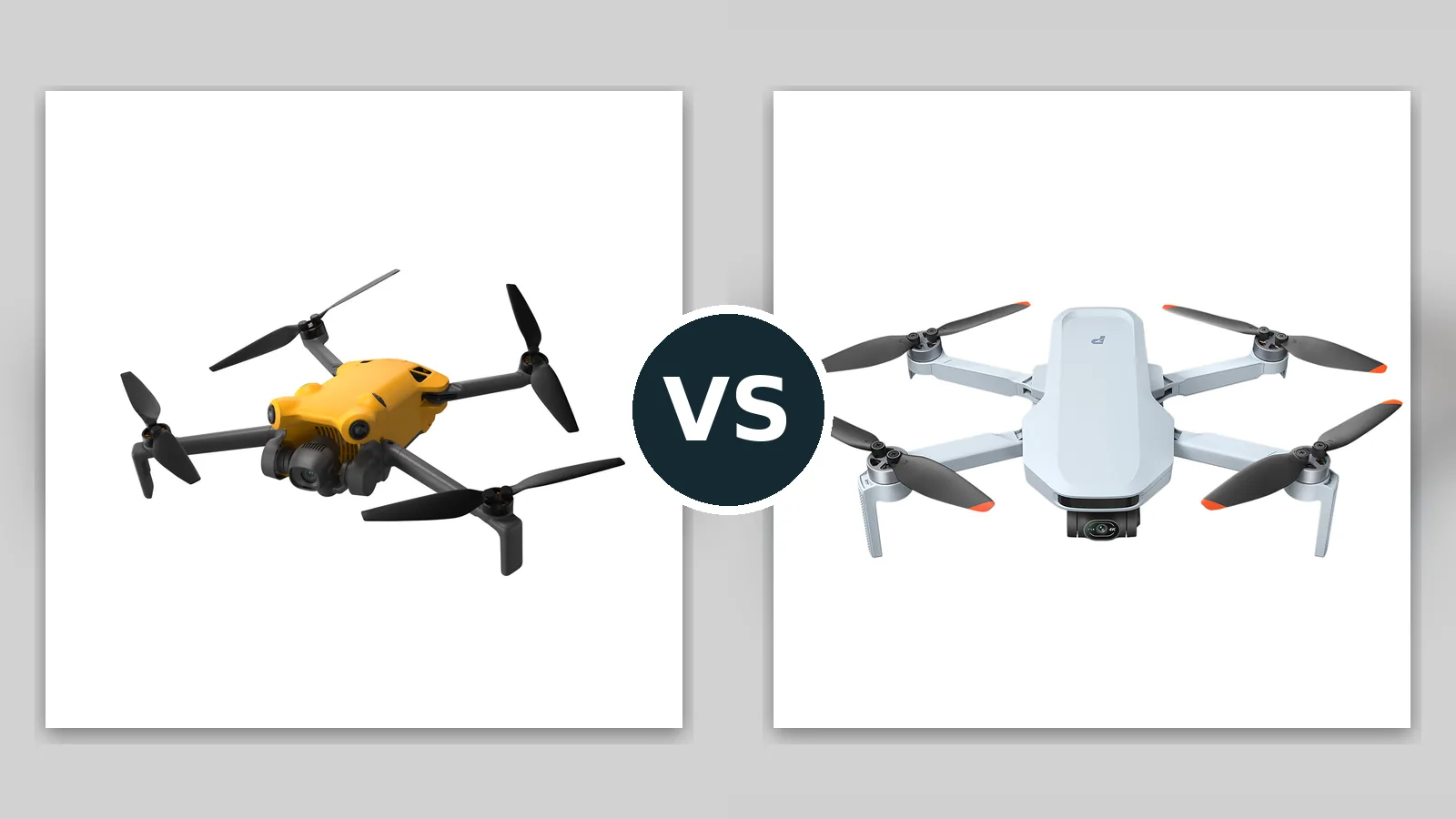
The skyrover x1 vs potensic atom 2 matchup is one of the most interesting budget battles in the sub-250g drone world. On paper these two look like twins: both weigh under 249 grams, both shoot 48MP stills and 4K HDR video, both promise around 32 minutes of flight time, and both skip FAA registration headaches for recreational pilots. But the spec sheets hide a real gap. The Skyrover X1 is the premium play, with a larger 1/1.32-inch sensor, true 4K/60fps video, 360-degree obstacle sensing, and a 15-kilometer transmission range at roughly $459. The Potensic Atom 2 is the value play, launching at $329 and now listed around $320 on the official store, with a smaller 1/2-inch Sony sensor, 4K/30fps video, and no obstacle sensing beyond its downward vision system. We compared the cameras, flight performance, sensing, intelligent features, and kit value so you can decide whether the X1 is worth the extra money.
Affiliate disclosure: As an Amazon Associate I earn from qualifying purchases. This page contains affiliate links. If you buy through them, we may earn a commission.
Skyrover X1 (premium camera) and Potensic Atom 2 (best value):
X1 wins on capability. Atom 2 wins on price.
Skyrover X1 is the better drone for most buyers who can stretch the budget: a larger 1/1.32-inch sensor, 4K/60fps HDR, 360-degree obstacle sensing, and 15-kilometer range are upgrades you will notice in every flight. Potensic Atom 2 is the smarter buy if your budget is firm: 48MP stills, 4K/30fps HDR, 10-kilometer PixSync 4.0, and a mature app at roughly $140 less. Camera: X1. Flight time: Tie. Range: X1. Sensing: X1, by a mile. Value: Atom 2.
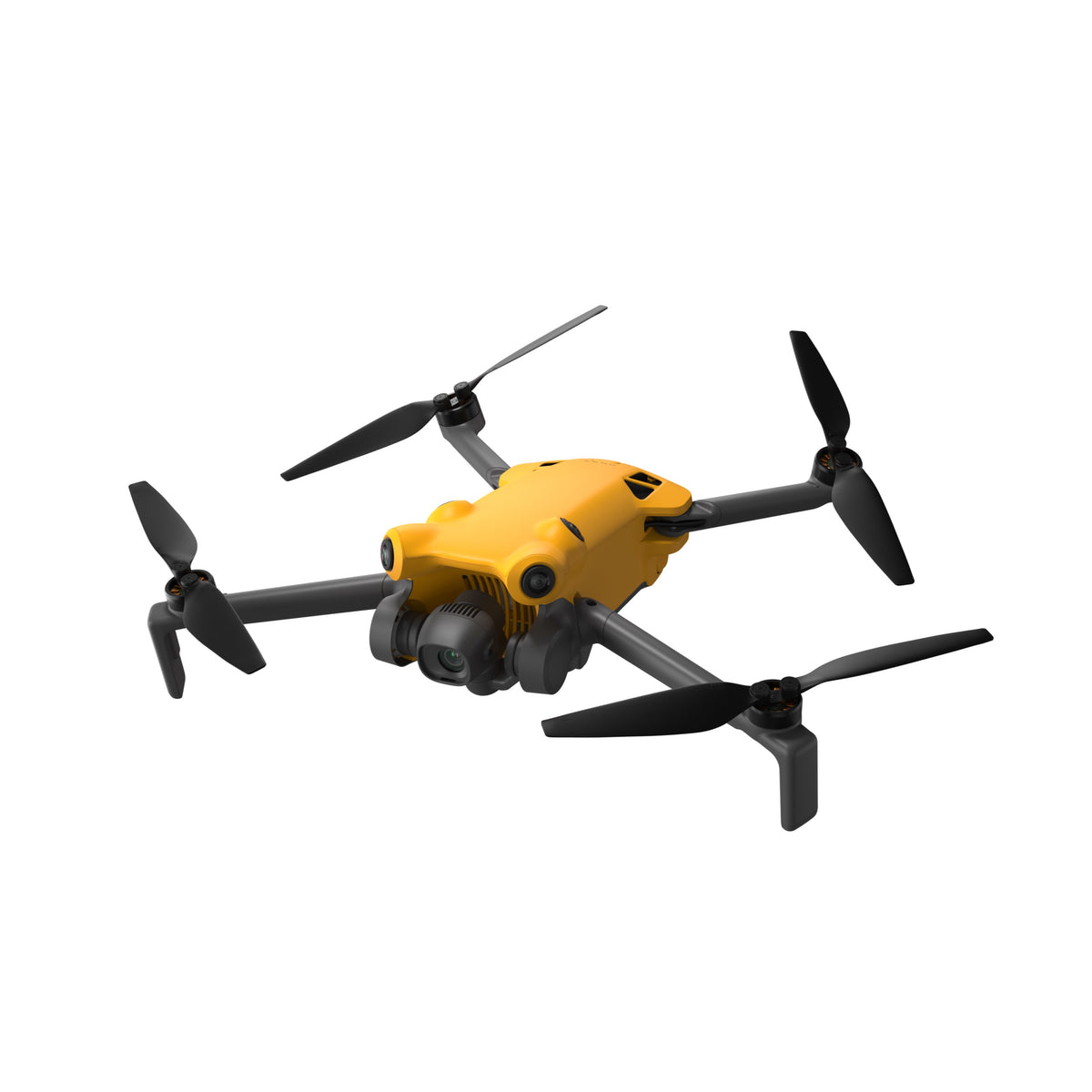
Skyrover X1
For creators who want flagship-grade camera specs and sensing in a sub-249g drone
- Larger 1/1.32-inch sensor with 4K/60fps HDR, 4K/100fps slow motion, and true 4K vertical video
- True 360-degree obstacle sensing for confident flying in tight locations
- Costs roughly $140 more than the Atom 2, and the brand is newer with a shorter track record
Check current price and available bundles on Amazon
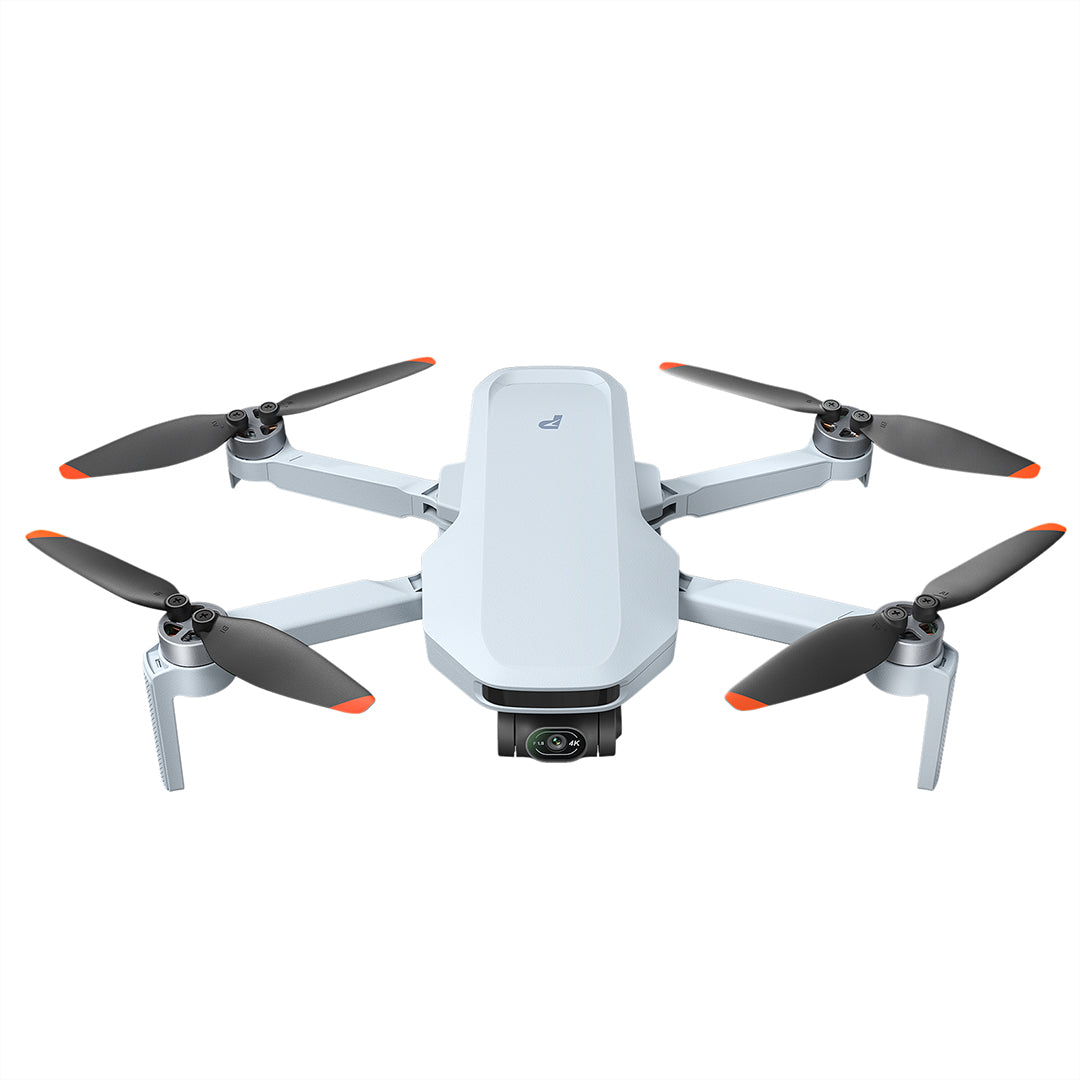
Potensic Atom 2
For budget-conscious pilots who want 48MP stills and 4K HDR at the lowest price
- 1/2-inch Sony sensor with 4K/30fps HDR, P-Log color, and 2.7K vertical shooting at a lower price
- PixSync 4.0 transmission up to 10 km plus waypoint flight, Dolly Zoom, and a mature app
- No forward or side obstacle sensing, so you fly it with more care and attention
Check current price and available bundles on Amazon
Which drone fits your flying?
Start with your main use case. The best choice solves your needs without charging you for features you will rarely use.
Most people comparing the skyrover x1 vs potensic atom 2 want the same thing: a travel-friendly camera drone under 249 grams that shoots footage worth sharing without costing DJI money. Both deliver that core promise. Both fold down small, shoot 48MP stills, record 4K HDR video, and are rated for about 32 minutes per battery.
The difference shows up in how you fly. The Skyrover X1 is built for pilots who want to push further and worry less: 360-degree obstacle sensing watches every direction, the 15-kilometer link holds where weaker signals stutter, and the bigger sensor keeps footage clean when light gets difficult. That is the drone for coastlines, forests, and rooftops, where obstacles appear from nowhere.
The Potensic Atom 2 is built for pilots who want the essential camera-drone experience at the lowest price. It gives up the sensing and the bigger sensor but keeps the 3-axis gimbal, AI tracking, waypoint missions, and 10-kilometer range. It is the drone for open spaces and planned shots, and it leaves about $140 in your pocket for batteries or a weekend trip.
Choose Skyrover X1 if…
- Camera quality and flight safety are your main concerns, and the budget stretches to about $459.
- You shoot in complex environments: trees, buildings, cliffs, and tight spaces where 360-degree sensing earns its keep.
- You value higher frame rates: 4K/60fps for smooth motion and 4K/100fps for real slow motion.
- You can accept a newer brand with a shorter track record.
Choose Potensic Atom 2 if…
- Value for money is your main concern, and you want proven 48MP/4K performance near $320.
- You need waypoint flight planning and a mature app with a long update history.
- You value the Potensic Eve app, SmartTransfer sharing, and a large owner community.
- You can accept no obstacle sensing and 4K capped at 30fps.
Skyrover X1: The Premium Spec Sheet
SKYROVER is the newcomer here, and the X1 is its statement product: flagship numbers in a sub-249g drone.
Overview and positioning
The Skyrover X1 is the flagship of a young brand trying to do what DJI does, minus the DJI price. It sells direct from skyroverdrone.com, where it holds a 4.91 out of 5 rating across 118 reviews, and through B&H Photo, Best Buy, and Amazon. It comes in gray and a distinctive yellow. The official store lists the standard kit at $459, a three-battery Combo at $529, and a Combo with a screen-equipped remote at $699, which puts it against the DJI Mini 4K on features while undercutting it on price.
What makes the X1 interesting is the completeness of the package: a large-for-class sensor, generous video modes, genuinely omnidirectional sensing, and a 15-kilometer range. The trade-off is brand maturity. SKYROVER cannot match Potensic’s years of firmware updates, but it offers local support, a Care protection plan, and a swap-not-repair replacement policy.
Camera system
The camera is the X1’s headline act. The 1/1.32-inch CMOS sensor captures 48MP stills, marketed as 8K photos, in JPEG and DNG RAW per retailer listings. The 26mm-equivalent f/1.7 lens helps in low light. Video runs to 4K/60fps HDR, with 4K/100fps slow motion and 1080p up to 200fps, and the 3-axis gimbal rotates for true 4K vertical shooting with no cropping.
For grading, the X1 offers SR-LOG, SKYROVER’s flat profile, plus 10-bit HLG for real latitude in post. The Super AI Night Mode promises cleaner night footage through AI processing rather than just boosted ISO. Photo modes cover single shot, auto exposure bracketing for HDR composites, burst, and interval shooting, with official ND filters available for bright daylight.
Flight performance
SKYROVER rates the X1 at 32 minutes per battery, with 29 minutes of hovering. Wind resistance is Level 5, up to 22 mph, and the 5°F to 104°F operating range is wider than most competitors claim. Top speed hits 34 mph (15 m/s), and the 4.5 km maximum takeoff altitude covers just about any mountain road you may legally fly near.
The tri-band transmission link is rated at 9.32 miles (15 km) with a 1080p/60fps live view, noticeably sharper than the 1080p/30 feeds common in this class. Fast Wi-Fi transfers at up to 25 MB/s move footage to your phone quickly. Remote ID is built in, and at under 249 grams the X1 stays registration-free for recreational US flying.
Intelligent features and sensing
This is where the X1 separates from the Atom 2. The 360-degree obstacle sensing system watches in every direction with infrared enhancement, letting you fly forests, urban canyons, and tight interiors with a real safety net. SKYROVER is honest about the limits: the system needs textured surfaces and decent light, over 15 lux, and thin wires can still fool it.
For automated shots, the X1 offers Dual Track and Spotlight subject tracking plus SmartGo QuickShots with Lift, Vista, Loop, Twist, and Asteroid presets. Auto return-to-home covers low battery and signal loss, and 4K Hyperlapse with Free and CourseLock modes handles time-lapse work. The optional 5.5-inch 1080p 700-nit touchscreen remote runs up to 3 hours with 32GB of built-in storage, so you can fly with no phone at all.
Potensic Atom 2: The Proven Value Pick
Launched in March 2025, the Atom 2 is Potensic’s flagship and one of the most reviewed non-DJI drones available.
Overview and positioning
The Potensic Atom 2 is the second generation of the drone that put Potensic on the map as the credible DJI alternative. It launched in March 2025 at $329 for the standard kit, and it is now listed at $319.99 on the official Potensic store, with the Fly More Combo around $449. It sells on Amazon with Prime shipping, at Best Buy, B&H Photo, and direct from Potensic. Reviewers at Fstoppers, Droneblog, and Notebookcheck have all put significant time on it, and owner communities are large and active.
Potensic’s pitch is simple: the core camera-drone experience at a price that undercuts everyone. The compromises are equally simple: a smaller sensor than the X1, 4K capped at 30fps, and no obstacle sensing beyond downward vision. That transparency, plus Potensic’s firmware support history, is why the Atom 2 keeps showing up on best-drone lists.
Camera system
The Atom 2 uses a 1/2-inch Sony CMOS sensor capturing 48MP stills in JPEG and DNG RAW with an f/1.8 lens at 26mm equivalent. Video tops out at 4K/30fps HDR, the single biggest camera gap versus the X1. You also get 2.7K vertical video at 30fps for social content, 1080p up to 60fps, 5x slow motion in 1080p, and a 4x digital zoom for reaching distant subjects without moving the drone.
Color options include P-Log for flat-profile grading, HDR, and normal profiles, recorded as 8-bit H.264 or H.265 at up to 80 Mbps. The AI Night Shot mode brightens and denoises low-light footage, and De-fog cuts through haze on misty mornings. Photo modes are generous: burst up to 7 frames, bracketing, interval timer, and panoramas in wide-angle, 180-degree, vertical, and sphere flavors. Everything moves to your phone over SmartTransfer Wi-Fi at up to 25 MB/s.
Flight performance
Potensic rates the Atom 2 at 32 minutes per battery from its 2330mAh intelligent pack, identical on paper to the X1. Wind resistance is Level 5, up to 38 km/h, and reviewers consistently praise its stability in gusts. Top speed reaches 16 m/s in Sport mode, and positioning runs on GNSS with GPS, GLONASS, Galileo, and BeiDou, so satellite lock is fast and holds well.
The PixSync 4.0 transmission system is a genuine highlight: up to 10 kilometers of range with a 1080p/30fps live feed at about 120 ms latency, a big step up from the original Atom. The Fly More Combo’s parallel charging hub refills three batteries in about 1.3 hours for up to 96 minutes of total flight time. At 249 grams including battery and microSD card, folding to 88 by 143 by 58 mm, it stays registration-free for recreational US flying and slips into a jacket pocket.
Intelligent features and the honest limitation
The Atom 2’s smart modes are a strength. AI Track offers Spotlight, Follow, and Parallel tracking that locks onto subjects reliably in open areas. QuickShots include the new Dolly Zoom, plus Pull Away, Spiral, Rocket, Circle, and Boomerang. Waypoint Flight plans repeatable automated routes, a feature the X1’s spec sheet does not emphasize. Cruise Control, Dynamic HomePoint, auto takeoff and landing, and Smart Return-to-Home run through the Potensic Eve app, with Potensic Care in-app support.
Now the honest limitation: the Atom 2 has no forward, backward, or side obstacle sensing. Only the downward vision positioning system watches the ground for stable hovering and landing. Reviewers flag this as the one real caution, and they are right. You fly the Atom 2 with your eyes open, in open space, and you keep your thumbs ready. For careful pilots that is a non-issue. For beginners flying near trees, it is the strongest argument for spending more on the X1.
Skyrover X1 vs Potensic Atom 2: The Specs That Actually Matter
Every figure below comes from the manufacturers’ official pages or retailer spec listings.
| Feature | Skyrover X1 | Potensic Atom 2 |
|---|---|---|
| Best suited to | creators who want the best camera and sensing under 249 g | Budget-conscious pilots who want proven 48MP/4K performance |
| Takeoff weight | Under 249 g (9 oz) | 249 g (including battery and microSD card) |
| Folded dimensions | Foldable (exact folded size not published) | 88 x 143 x 58 mm; unfolded 300 x 242 x 58 mm |
| Camera sensor | 1/1.32-inch CMOS, 48MP, f/1.7, 26mm equivalent, 80-degree FOV | 1/2-inch Sony CMOS, 48MP, f/1.8, 26mm equivalent |
| Photo resolution | 48MP (8K photos), JPEG and DNG RAW | 48MP (8K photos), JPEG and DNG RAW |
| Video modes | 4K/60fps HDR, 4K/100fps slow motion, 1080p up to 200fps | 4K/30fps HDR, 2.7K vertical at 30fps, 1080p up to 60fps, 5x slow motion in 1080p |
| Color and codecs | SR-LOG flat profile, 10-bit HLG | P-Log, HDR, 8-bit H.264/H.265 up to 80 Mbps |
| Vertical capture | True 4K vertical (gimbal rotates 90 degrees) | 2.7K vertical shooting mode |
| Gimbal | 3-axis mechanical | 3-axis mechanical (tilt, roll, pan) |
| Obstacle sensing | 360-degree omnidirectional with infrared enhancement | Downward vision positioning only |
| Subject tracking | Dual Track, Spotlight; SmartGo QuickShots (Lift, Vista, Loop, Twist, Asteroid) | AI Track (Spotlight, Follow, Parallel); QuickShots incl. Dolly Zoom; Waypoint Flight |
| Rated flight time | Up to 32 minutes (29 minutes hovering) | Up to 32 minutes (2330mAh battery; 96 minutes total with Fly More Combo) |
| Max speed | 34 mph / 15 m/s | 16 m/s (Sport mode) |
| Transmission system | Tri-band, up to 9.32 miles (15 km), 1080p/60fps live view | PixSync 4.0, up to 10 km, 1080p/30fps live view, 120 ms latency |
| Wind resistance | Level 5 (22 mph / 10 m/s) | Level 5 (38 km/h) |
| GNSS | GNSS positioning (constellations not detailed) | GPS, GLONASS, Galileo, BeiDou |
| Controller options | Standard RC; optional 5.5-inch 1080p touchscreen RC (700 nits, 3-hour battery) | Standard RC with phone mount; optional PTD 1 with 5.5-inch 1080p touchscreen (700 nits) |
| Official store price | $459 standard; $529 Combo; $699 Combo with screen RC | $319.99 single-battery standard; $439.99 triple-battery kit |
| Main trade-off | Newer brand with shorter track record; costs about $140 more | No obstacle sensing; 4K capped at 30fps; smaller sensor |
Manufacturer ratings are lab figures; real-world flight time is lower. Prices shown are official-store reference prices; check the live Amazon listing for the current price. Last verified: October 20, 2026.
Skyrover X1 (left) and Potensic Atom 2 (right), current Amazon pricing:
Skyrover X1 vs Potensic Atom 2: Five Differences That Matter
For each category: the difference, its practical impact, and which buyer benefits.
1. Camera quality and creative flexibility
Edge: Skyrover X1The sensor gap is the single biggest technical difference between these drones. The X1’s 1/1.32-inch chip collects meaningfully more light than the Atom 2’s 1/2-inch Sony sensor, and that shows up exactly where it matters: cleaner shadows, less noise at dusk, and more detail to work with in post. Pair that with 4K/60fps HDR against the Atom 2’s 4K/30fps ceiling and the X1 pulls ahead for anyone who shoots motion: smooth 60fps footage, real 4K slow motion at 100fps, and 1080p up to 200fps.
Color science favors the X1 too, with 10-bit HLG and the SR-LOG flat profile against the Atom 2’s 8-bit P-Log. For casual sharing the difference is subtle, but for anyone who grades footage it is the difference between smooth gradients and banding in skies. The Atom 2 fights back with DNG RAW stills, AI Night Shot, De-fog, 4x digital zoom, and excellent panoramas. Its 48MP stills will satisfy most photographers. But if the camera is why you are buying a drone, the X1’s larger sensor and higher frame rates are worth real money.
2. Flight time and transmission range
Edge: Skyrover X1Flight time is a dead heat: both drones are rated at 32 minutes per battery under ideal conditions, and both will give you mid-20s minutes in real mixed flying. The Fly More math favors the Atom 2 slightly, with its parallel hub charging three batteries in about 1.3 hours for up to 96 minutes of total airtime, while the X1’s three-battery Combo promises around 90 minutes total. In practice, buy spare batteries for either one and you will not notice a difference.
Range is where they split. The X1’s tri-band link is rated at 15 kilometers with a 1080p/60fps live feed, while the Atom 2’s PixSync 4.0 reaches 10 kilometers with a 1080p/30fps feed at 120 ms latency. Both numbers are far beyond visual line of sight, which is where you are legally required to keep the drone anyway, so treat them as signal robustness figures rather than distances you will actually fly. The X1’s stronger link and sharper live view mean a more stable feed at the edge of practical range, in interference-heavy areas, and behind partial obstructions. The Atom 2’s range is still excellent for its price and a huge upgrade over its predecessor.
3. Obstacle sensing and flight confidence
Edge: Skyrover X1This is the most lopsided category and the X1’s strongest argument. Its 360-degree sensing watches every direction with infrared enhancement, actively helping you avoid a crash in forests, along cliffs, and around buildings. SKYROVER is honest about the limits: it needs textured surfaces and reasonable light, and it will not see thin wires.
The Atom 2 has downward vision positioning only, which keeps it stable in a hover and helps it land precisely, but does nothing for the tree branch in front of it. Reviewers name this as the Atom 2’s one real weakness, and they are right. It makes the Atom 2 a drone you fly with discipline: open spaces, planned flight paths, eyes on the aircraft. For beginners or anyone flying near obstacles, this category alone can justify the X1’s price premium.
4. Intelligent features and app maturity
Edge: TieBoth drones are well equipped for automated shooting, and they split this category down the middle. The X1 offers Dual Track and Spotlight subject tracking plus SmartGo QuickShots with Lift, Vista, Loop, Twist, and Asteroid presets, 4K Hyperlapse with Free and CourseLock modes, and auto return-to-home. The tracking is genuinely useful for action and the Hyperlapse modes are a cut above what you normally get at this price.
The Atom 2 counters with AI Track in Spotlight, Follow, and Parallel modes, QuickShots including the headline Dolly Zoom, and Waypoint Flight for planning repeatable automated routes, which the X1 does not clearly offer. It also runs on the Potensic Eve app, refined over years across Potensic’s lineup, with SmartTransfer sharing and Potensic Care in-app support. The X1 has the flashier automation; the Atom 2 has the more mature ecosystem.
5. Value of the complete kit
Edge: Potensic Atom 2Now the math. The Atom 2 standard kit lists at $319.99 on the official store, with the triple-battery Fly More kit at $439.99. The X1 standard kit is $459, the three-battery Combo $529, and the screen-controller Combo $699. That is roughly a $140 gap at entry level, and it widens on the nicer controllers.
What does the $140 buy? A larger sensor, 4K/60fps, 360-degree sensing, longer range, and a sharper live feed. That is a fair trade, and for many pilots it is money well spent. But the Atom 2 gives you 48MP stills, 4K HDR, 10-kilometer range, waypoint flight, and a mature app for hundreds less than the X1’s screen-controller combo. If your budget is firm at the low 300s, the Atom 2 is not a compromise purchase; it is the best drone at its price.
Skyrover X1 vs Potensic Atom 2: What You Gain and Give Up
Skyrover X1
Reasons to choose it
- Larger 1/1.32-inch sensor with 4K/60fps HDR, 4K/100fps slow motion, and 10-bit HLG plus SR-LOG for grading
- True 360-degree obstacle sensing with infrared enhancement, a genuine safety net in complex environments
- 15-kilometer tri-band transmission with a sharp 1080p/60fps live view for a rock-solid link
- True 4K vertical video, Super AI Night Mode, and 4K Hyperlapse
- Under 249 g with Remote ID built in, sold through major retailers as well as direct
Reasons to reconsider
- About $140 more than the Atom 2 at the entry level, and the gap widens on higher bundles
- SKYROVER is a young brand with a shorter track record for firmware support and long-term parts
- The sensing system needs textured surfaces and decent light, and still will not see thin wires
Potensic Atom 2
Reasons to choose it
- Outstanding value: 48MP stills, 4K/30fps HDR, and 10 km PixSync 4.0 range near $320
- 1/2-inch Sony sensor with DNG RAW, P-Log, AI Night Shot, De-fog, and 4x digital zoom
- Waypoint Flight, Dolly Zoom, and mature AI tracking in the well-supported Potensic Eve app
- Fly More Combo delivers up to 96 minutes total flight time with fast parallel charging
- Large owner community and years of firmware updates behind the brand
Reasons to reconsider
- No forward, backward, or side obstacle sensing; only downward vision positioning
- 4K video capped at 30fps with 8-bit color, a step behind the X1 for video creators
- Smaller 1/2-inch sensor means noisier low-light footage than the X1
Check the bundle, not just the drone
The drone on the box is only half the purchase. Run this checklist before you tap buy.
- Controller: Both offer a standard phone-mount controller and an upgraded 5.5-inch touchscreen controller (700 nits). The X1’s screen combo is $699; the Atom 2’s PTD 1 kits run up to about $620. If you fly in bright sun or hate mounting your phone, the screen controller is worth it.
- Batteries: One battery is never enough at 32 rated minutes per pack, so plan on two or three. The Atom 2’s Fly More Combo with its parallel hub is excellent value; the X1’s three-battery Combo at $529 is the equivalent buy.
- Accessories: A fast microSD card (U3/V30) is recommended for 4K on both. The X1 has official ND filters for bright daylight. A landing pad and spare propellers are cheap insurance.
- Listing: On Amazon, confirm the exact model name, controller type, and battery count in the listing title. Both brands sell multiple similarly named bundles.
- Local requirements: Both stay under 249 grams, keeping recreational US flying registration-free, but airspace rules still apply. Check your aviation authority’s current requirements before your first flight.
- Price timing: Both see regular discounts. The X1’s official store frequently runs promos, and the Atom 2 has drifted from $329 at launch to about $320. If the price looks high today, check again in a week.
The right choice comes down to budget versus ambition.
The skyrover x1 vs potensic atom 2 decision is refreshingly honest: there is no bad choice, only a price question. Buy the Skyrover X1 if you can stretch to $459. The larger sensor, 4K/60fps video, 360-degree sensing, and 15-kilometer range are upgrades you will feel on every flight, and the sensing alone is worth the premium for beginners. Buy the Potensic Atom 2 if your budget stops around $320: 48MP stills, 4K HDR, 10-kilometer range, waypoint flight, and a mature app from a proven brand is an enormous amount of drone for the money.
Still deciding?
Is the Skyrover X1 worth the extra money over the Potensic Atom 2?
For most pilots, yes, if the budget allows. The roughly $140 premium buys a larger 1/1.32-inch sensor, 4K/60fps instead of 4K/30fps, 360-degree obstacle sensing the Atom 2 completely lacks, and a 15-kilometer range. Those are tangible upgrades. But if your budget is firm, the Atom 2 is a genuinely good drone at a great price, not a sad consolation prize.
Which drone is better for beginners?
The Skyrover X1, mainly because of its 360-degree obstacle sensing. Beginners make exactly the mistakes sensing forgives: drifting toward trees, misjudging distances, losing orientation. The Atom 2 flies gently, with auto takeoff, smart return-to-home, and stable GPS hovering, but it demands more attention near obstacles. If this is your first drone and you will fly near trees or buildings, the X1 is the safer buy.
Which is better for travel and vertical video?
Portability is a tie: both stay under 249 grams and fold small. For vertical video the X1 wins clearly: its gimbal rotates for true 4K vertical footage with no cropping, while the Atom 2 tops out at 2.7K. If your content lives on phones, that gap matters.
Which bundle should I buy for each drone?
For the X1, the $459 standard kit is the sensible start; step up to the $529 Combo for three batteries. For the Atom 2, the standard kit near $320 is the value king, and the Fly More Combo around $440 to $450 with three batteries and the parallel hub is the best bundle deal here. Only pay for screen controllers if you hate flying with your phone mounted.
Do I need to register the Skyrover X1 or the Potensic Atom 2?
For recreational US flying, no: both stay at or under 249 grams, keeping them exempt from FAA registration, and both have Remote ID built in. Rules differ by country and change over time. Check your aviation authority’s current rules before your first flight.
How were these drones compared?
This is a research-based comparison: specifications come from SKYROVER’s official product page and the Potensic official store, cross-checked against B&H Photo and Best Buy listings and independent reviews from Notebookcheck, Fstoppers, Droneblog, and The Drone Vortex. We did not fly either drone, so rated figures are the manufacturers’ lab numbers. See the methodology section for the full source list.
How this comparison was prepared
This is a research-based comparison; we did not fly either drone and do not imply otherwise. Specifications come from the manufacturers’ official pages: the SKYROVER X1 product page for the sensor, video modes, sensing, transmission, and flight figures, and the Potensic ATOM 2 official store page for the Sony sensor, PixSync 4.0, flight time, and bundle details. B&H Photo and Best Buy listings cross-checked details like the X1’s f/1.7 lens, DNG RAW support, and the Atom 2’s 2330mAh battery. Launch context came from Notebookcheck’s Atom 2 coverage and Potensic’s March 2025 announcement; reviewer observations from Fstoppers, Droneblog, The Drone Vortex, and Sweetwater. Amazon ASINs were matched against the exact product name across independent buy-link citations and manual databases before any affiliate link was written.
Sources and verification
- SKYROVER X1 official product page (skyroverdrone.com, accessed October 20, 2026): sensor, video modes, 360-degree sensing, transmission, flight time, pricing, and bundle contents
- Potensic ATOM 2 official store product page (store.potensic.com, accessed October 20, 2026): Sony sensor, 4K/30fps HDR, PixSync 4.0, flight time, pricing, and variant details
- Potensic ATOM 2 launch announcement (Potensic official blog, March 2025): launch timing and feature highlights
- B&H Photo SKYROVER X1 listings: cross-check on lens, DNG support, wind resistance, speed, and takeoff altitude figures
- Best Buy Potensic ATOM 2 listings: cross-check on battery, controller, transmission, and bundle contents
- Notebookcheck Atom 2 launch coverage: launch pricing, Amazon availability, and specification summary
- Fstoppers Potensic Atom 2 review: hands-on impressions, setup, and the obstacle-sensing caution
- Droneblog Potensic Atom 2 review: full technical specification table and Fly More Combo contents
- The Drone Vortex Potensic Atom 2 review: AI features, controller, and flight mode details
- ASIN verification: Skyrover X1 (B0H2V7WWYZ) confirmed via independent creator buy-links; Potensic Atom 2 (B0DZ6C4B7P) confirmed via the manuals.plus ATOM 2 manual ASIN record and Amazon launch coverage
Last verified: October 20, 2026. Bundle availability, pricing, and specifications may vary by region and version. Prices in this article are official-store reference prices; check the live Amazon listing for the current price.