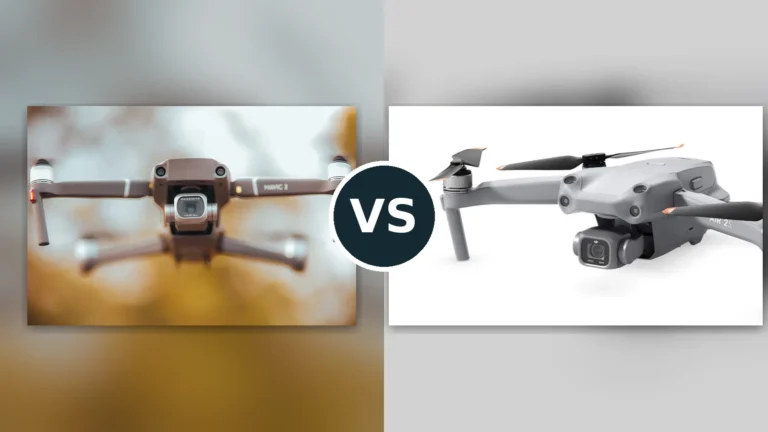

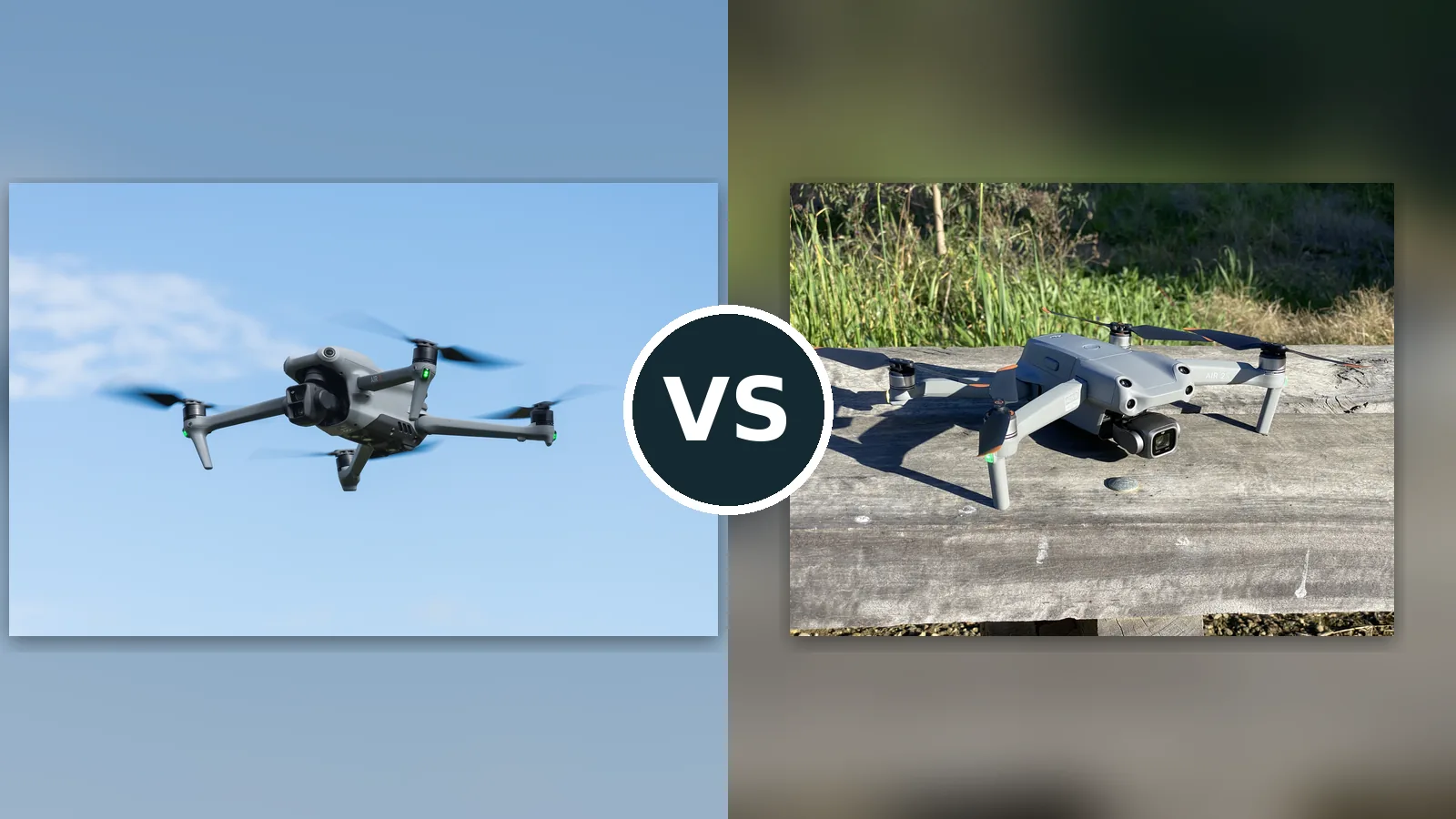
The dji air 3 vs air 2s debate is the classic DJI dilemma in its purest form: do you take the newer drone with two cameras and marathon flight time, or the older drone with the bigger image sensor and the friendlier price? The Air 3, launched in July 2023, pairs a 24mm wide camera with a 70mm 3x medium tele camera, flies for up to 46 minutes, and sees in every direction. The Air 2S, launched in April 2021, was the first DJI drone under $1,500 to carry a 1-inch sensor, shooting 5.4K video and 20MP RAW stills that still look excellent today. We compared the cameras, flight performance, intelligent features, and complete kit cost so you can decide whether the upgrade is worth it, or whether the older flagship is the smarter buy.
Affiliate disclosure: As an Amazon Associate I earn from qualifying purchases. This page contains affiliate links. If you buy through them, we may earn a commission.
Air 3 for most buyers. Air 2S for the bargain.
DJI Air 3 wins this comparison for most buyers: it shoots with two cameras instead of one, flies roughly 50 percent longer, transmits further on the newer O4 link, and senses obstacles in every direction with APAS 5.0. DJI Air 2S wins if the 1-inch sensor and the lower price matter more to you: its 5.4K/30 footage and 20MP RAW stills remain genuinely competitive, and it now sells for hundreds less than the Air 3. Cameras: Air 3. Flight time: Air 3. Pure image-per-dollar: Air 2S, and it is not close.
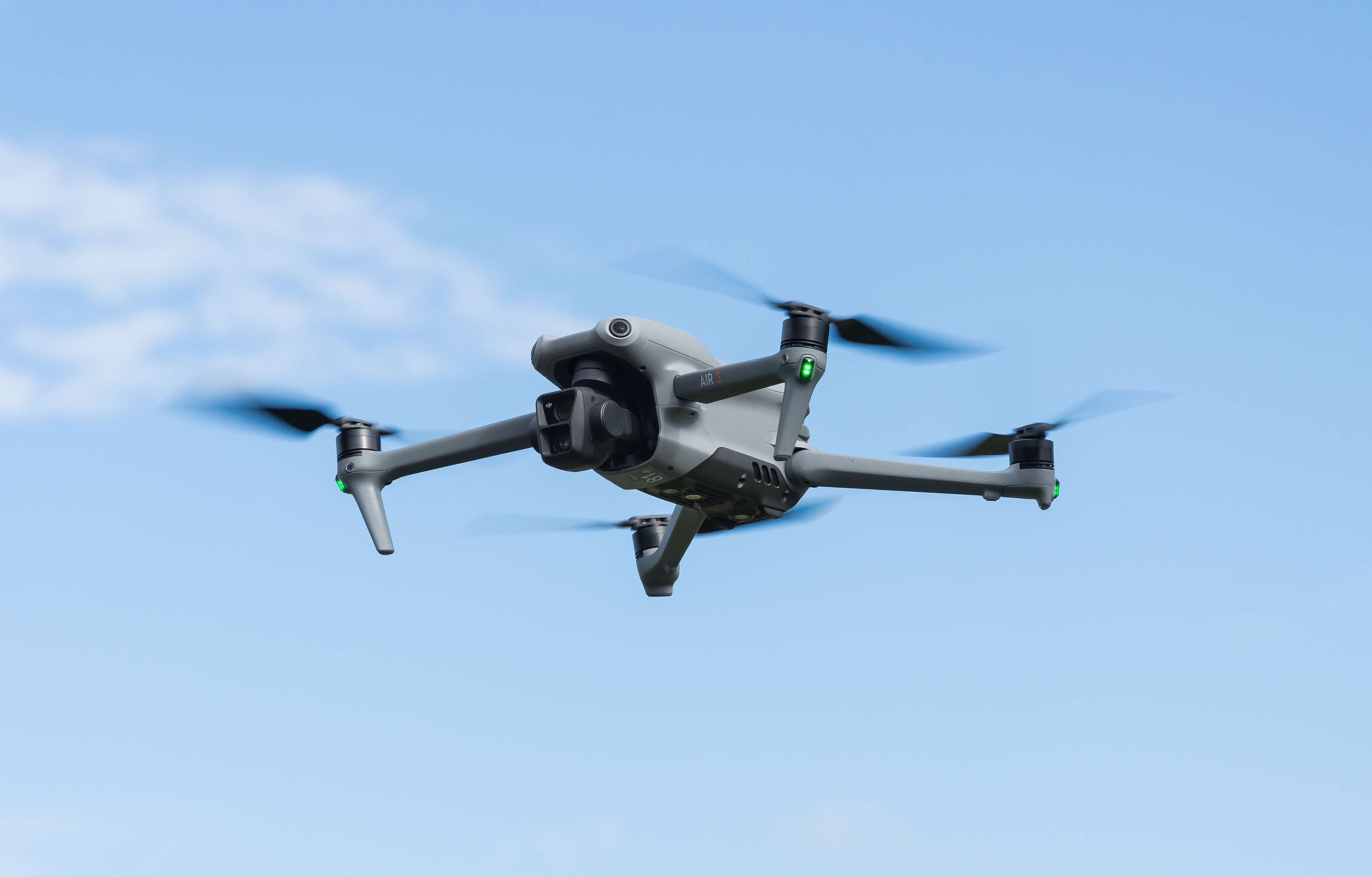
DJI Air 3
For creators who want dual cameras, 46-minute flights, and omnidirectional sensing
- Wide plus 3x medium tele cameras give you two distinct looks without moving the drone
- 46-minute rated flight time and 20 km O4 transmission are best in the Air line
- At 720 g and around $1,099 to launch, it is heavier and pricier than the Air 2S
Check current price and available bundles on Amazon
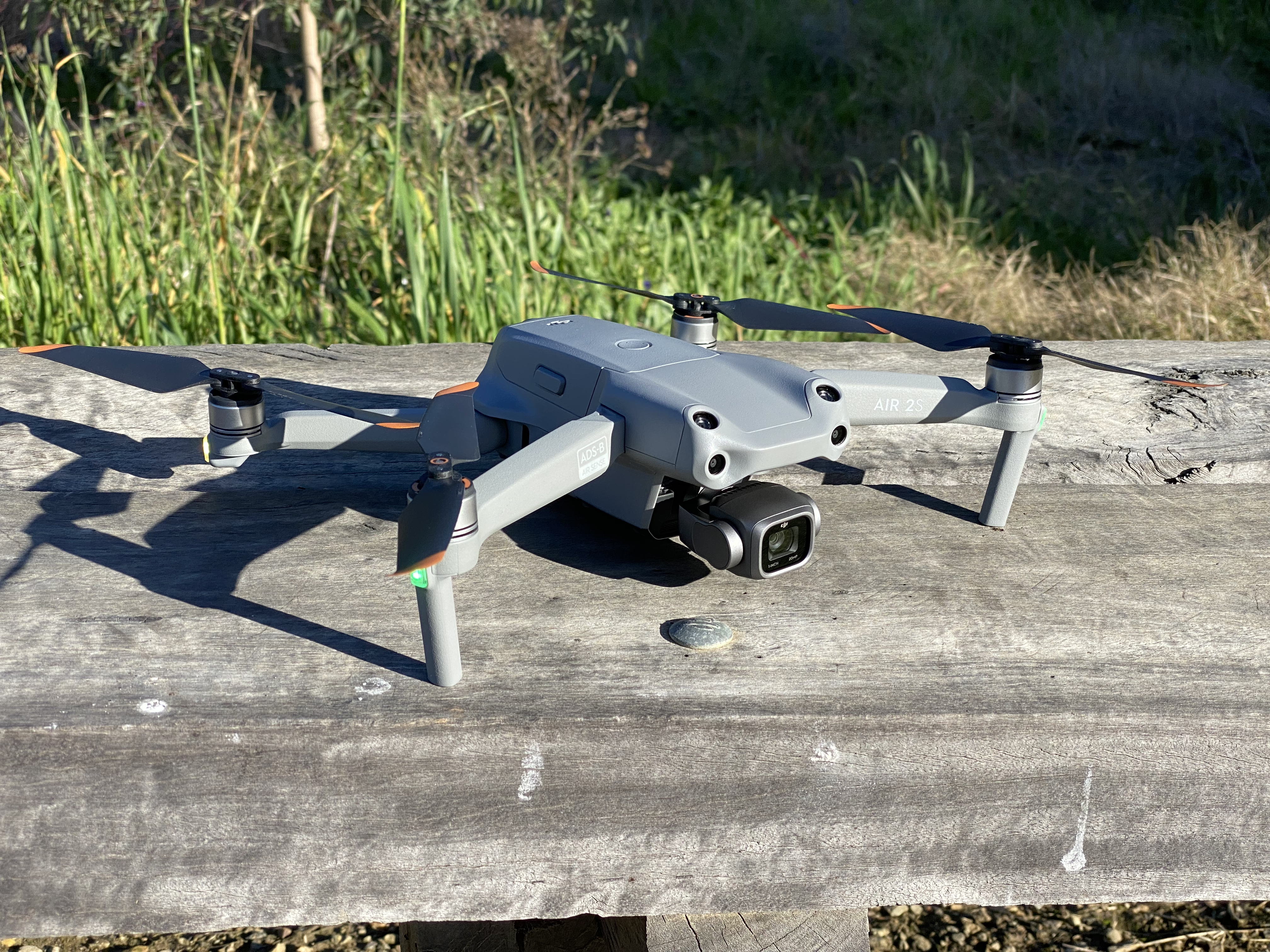
DJI Air 2S
For shooters who want a 1-inch sensor and proven 5.4K video at a lower price
- The 1-inch sensor still delivers the best low-light and dynamic range per dollar in this class
- 5.4K/30 video with 10-bit D-Log M and 20MP RAW stills hold up well against newer drones
- Older O3 transmission, 31-minute rated flights, and four-direction sensing show its 2021 roots
Check current price and available bundles on Amazon
DJI Air 3 (orange button) · DJI Air 2S (blue button)
Which drone fits your flying?
Start with your main use case. The best choice should solve your needs, without charging you for features you will rarely use.
Most people searching for a dji air 3 vs air 2s comparison already know the punchline: the Air 3 is the newer, more capable drone in almost every measurable way. So the real question is not which drone is better, but whether the Air 3 is better in the ways you will actually notice, and whether the Air 2S is cheaper in a way that matters to your budget. The Air 3 launched at $1,099 in July 2023 with a feature list that reads like a flagship spec sheet: dual cameras, 46 minutes of flight time, omnidirectional obstacle sensing, and the O4 transmission system with a 20 km range. It is the drone for the pilot who wants to fly farther, stay up longer, and come home with two different focal lengths of every subject.
The Air 2S is the older sibling that refuses to feel old. It launched in April 2021 at $999 as the first sub-$1,500 DJI drone with a 1-inch sensor, and that sensor is still the star of the show. A 1-inch chip gathers more light than the 1/1.3-inch sensors in the Air 3, and in low light, at dusk, and in high-contrast scenes, the physics still favors the bigger glass. Its 5.4K/30 video with 10-bit D-Log M grades beautifully, its 20MP RAW stills print well, and its intelligent features, MasterShots and FocusTrack, were genuinely new when it arrived. If your footage mostly ends up on YouTube or Instagram at 4K, the Air 2S produces results that surprise people who assume newer always means better looking.
There is also a weight and price story that cuts both ways. The Air 3 weighs 720 g, a full 125 g more than the 595 g Air 2S, and both sit well above the 250 g registration threshold, so neither drone gets you regulatory simplicity. The price story is where the Air 2S fights back hardest: five years after launch, it routinely sells for several hundred dollars less than the Air 3, sometimes close to half the price on the used and renewed market. That gap buys a lot of batteries, ND filters, and memory cards. If your budget is fixed and your scenes are mostly daylight landscapes and real estate, the Air 2S leaves money on the table for the rest of the kit. If you can stretch to the Air 3, you get the drone that DJI clearly considers the future of this lineup.
Choose DJI Air 3 if…
- Camera flexibility is your main concern: a 24mm wide and a 70mm 3x tele give you two shots of every scene.
- You want the longest flight time in the Air series: 46 minutes rated, plus a charging hub that consolidates leftover battery charge.
- You fly in complex environments where omnidirectional sensing and APAS 5.0 earn their keep.
- You can accept the 720 g weight, the larger bag, and the higher buy-in price.
Choose DJI Air 2S if…
- Image quality per dollar is your main concern: the 1-inch sensor still punches above its price.
- You mostly shoot daylight 4K and 20MP stills, where the Air 3’s advantages shrink.
- You value a lighter 595 g airframe and a smaller, cheaper complete kit.
- You can accept 31-minute rated flights, O3 transmission, and sensing in four directions instead of all of them.
DJI Air 3 vs Air 2S: The Specs That Actually Matter
Compare the exact battery, controller and bundle versions you intend to buy.
| Feature | DJI Air 3 | DJI Air 2S |
|---|---|---|
| Launched | July 2023 | April 2021 |
| Best suited to | Travel and event creators who want dual focal lengths, long flights, and maximum sensing | Photographers and videographers who want a 1-inch sensor and proven 5.4K at a lower price |
| Takeoff weight | 720 g | Approx. 595 g |
| Dimensions (folded) | 207 x 100.5 x 91.1 mm | 180 x 97 x 77 mm |
| Sensor and lenses | Dual 1/1.3-inch CMOS: 24mm f/1.7 wide plus 70mm f/2.8 3x medium tele | 1-inch CMOS, 20MP, 22mm equivalent, f/2.8, 88-degree FOV |
| Photo resolution | 48MP from both cameras, JPEG and DNG RAW | 20MP, JPEG and DNG RAW |
| Video modes | 4K/60fps HDR on both cameras, 4K/100fps slow motion, 2.7K vertical shooting | 5.4K/30fps, 4K/60fps, 2.7K/60fps, 1080p/120fps |
| Color and codecs | 10-bit D-Log M and HLG, H.264/H.265, up to 150 Mbps | 10-bit D-Log M and HLG, H.264/H.265, up to 150 Mbps |
| Vertical capture | Native 2.7K vertical shooting (9:16) on both cameras | No native vertical mode; crop the 16:9 frame in post |
| Obstacle sensing | Omnidirectional with APAS 5.0 (all directions) | Four directions with APAS 4.0 (forward, backward, upward, downward; no side sensing) |
| Subject tracking | ActiveTrack 5.0, MasterShots, QuickShots, Waypoint Flight | FocusTrack (ActiveTrack 4.0, Spotlight 2.0, POI 3.0), MasterShots, QuickShots |
| Rated flight time | Up to 46 minutes (42 minutes hovering) | Up to 31 minutes (30 minutes hovering) |
| Real-world flight time | Not tested by us; independent testers report sessions in the low 30-minute range in mixed flying | Not tested by us; independent testers report the low to mid 20s of minutes in mixed flying |
| Max speed | 21 m/s (19 m/s in EU regions) | 19 m/s Sport; 15 m/s Normal; 5 m/s Cine |
| Video transmission | DJI O4, up to 20 km FCC, 1080p/60fps live view | DJI O3 (OcuSync 3.0), up to 12 km FCC, 1080p live view |
| Wind resistance | 12 m/s (Level 5) | Up to 10.7 m/s (Level 5) |
| GNSS | GPS + Galileo + BeiDou | GPS + GLONASS |
| Internal storage | 8 GB, plus microSD up to 512 GB | 8 GB, plus microSD up to 256 GB |
| Controller and bundle | RC-N2 (launched at $1,099); Fly More RC-N2 ($1,349); Fly More RC 2 ($1,549) | RC-N1 (launched at $999); Fly More ($1,299); compatible with DJI RC and Smart Controller |
| Main trade-off | Heavier, pricier, and the 1/1.3-inch sensors cannot match a 1-inch chip in low light | Older platform: shorter flights, O3 link, no side sensing, no native vertical video |
Manufacturer ratings are lab figures; real-world flight time is lower. Prices shown are launch prices; check the live Amazon listing for the current price. Last verified: October 20, 2026.
DJI Air 3 (orange button) · DJI Air 2S (blue button)
DJI Air 3 vs Air 2S: Five Differences That Matter
For each category, here is the difference, its practical impact and which buyer benefits.
1. Camera and image quality
Edge: Air 3This is the heart of the dji air 3 vs air 2s question, and it is closer than the marketing suggests. The Air 3 gives you two 1/1.3-inch stacked CMOS cameras: a 24mm f/1.7 wide and a 70mm f/2.8 3x medium tele, both shooting 48MP stills and 4K/60fps HDR video with 10-bit D-Log M and HLG. The tele camera is the real story. Being able to punch in 3x without digital zoom changes how you shoot: establishing wide, then a compressed detail shot of the same subject, without moving the drone. Both cameras also shoot 2.7K vertical video natively, which the Air 2S cannot do at all.
The Air 2S answers with the bigger sensor. Its 1-inch chip with 20MP resolution and 2.4-micron pixels gathers more light per pixel than either of the Air 3’s sensors, and in low light the difference is visible: cleaner shadows, less noise at dusk, smoother gradients in skies. Its headline video mode is 5.4K/30fps, which oversamples beautifully down to 4K, with 4K/60fps and 1080p/120fps slow motion at the same 150 Mbps ceiling as the Air 3. Where the Air 2S loses ground is flexibility: one focal length, no native vertical, digital zoom only. In bright daylight, most viewers would struggle to tell the two drones apart on a phone screen. The Air 3 pulls ahead when the shoot demands range: tele compression, vertical social content, and 48MP crops for reframing in post.
2. Flight time and range
Edge: Air 3The Air 3 has the longest rated flight time DJI has ever put in the Air line: 46 minutes, a 48 percent jump over the Air 2S, from a 4241 mAh battery. In real flying, independent testers land in the low 30-minute range once you mix hovering, sport moves, and wind, but that is still a full extra battery’s worth of airtime over the older drone. The charging hub adds a trick the Air 2S never had: power accumulation, which consolidates remaining charge from half-spent batteries into the fullest one. On a long day, that genuinely feels like a free battery. The O4 system reaches up to 20 km with a 1080p/60fps live feed, and reviewers call the link more stable and more resistant to interference than O3.
The Air 2S is rated at 31 minutes with 30 minutes hovering from its 3500 mAh pack, and real-world mixed flying lands in the low to mid 20s. That was excellent in 2021 and remains usable, but it shapes how you shoot: two batteries is a half-day, three is a full one. Its O3 transmission reaches up to 12 km with a 1080p live feed, more range than most pilots ever legally use. Both drones fly farther than line-of-sight rules allow in most countries, so the O4 advantage shows up less as extra kilometers and more as signal confidence: fewer breakup moments behind trees and buildings.
3. Design and portability
Edge: Air 2SThe Air 2S is the smaller, lighter machine: 595 g and 180 by 97 by 77 mm folded, against the Air 3’s 720 g and 207 by 100.5 by 91.1 mm. That 125 g difference sounds modest until you pack for a hike, where the Air 2S kit slips into a bag corner the Air 3 cannot. Neither drone is sub-250g, so both need registration for recreational flying in the US and face standard rules in Europe; the Air 2S buys you no regulatory shortcut, just a lighter carry.
The Air 3 is bigger because it carries more: two cameras, a larger battery, and six vision sensors for omnidirectional coverage. One practical note for travelers: the Air 3’s battery sits well under the 100 Wh limit most airlines set for carry-on batteries, so flying with it is no harder than with the Air 2S. Setup time is a wash: unfold, power on, and both are airborne in under a minute. The Air 3 does feel more planted in wind, which is pure physics: 720 g and 12 m/s wind resistance against 595 g and 10.7 m/s. On gusty ridgelines, that extra mass is confidence you can feel on the sticks.
4. Intelligent features and safety
Edge: Air 3The Air 3 is the safer, smarter flyer. Omnidirectional obstacle sensing watches forward, backward, sideways, upward, and downward, and APAS 5.0 routes around obstacles more smoothly than the older system. For a pilot threading a forest edge or orbiting a building, side sensing is the difference between a confident shot and a held breath. ActiveTrack 5.0 tracks subjects from more angles, and the Air 3 introduced Waypoint Flight to the Air series: plan a route and camera actions in advance, save it, and repeat the exact move days later. It also carries AirSense ADS-B to warn of nearby crewed aircraft, a safety feature the Air 2S shares.
The Air 2S is no slouch: it introduced MasterShots, the one-tap sequence that films ten maneuvers and edits them into a short video, and its FocusTrack suite (ActiveTrack 4.0, Spotlight 2.0, Point of Interest 3.0) still follows subjects well. Its limitation is coverage, not intelligence: four-direction sensing with APAS 4.0 means nothing watches the sides, so lateral moves near obstacles demand your full attention. It also withholds FocusTrack and APAS at the top video modes, 5.4K and 4K/60 and above, which is exactly when you might want tracking most. The Air 3 keeps its full sensing and tracking stack available across its main video modes.
5. Price and value of the complete kit
Edge: Air 2SThis is where the Air 2S lands its hardest punch. The Air 3 launched at $1,099 with the RC-N2, $1,349 for the Fly More Combo with RC-N2, and $1,549 for the Fly More Combo with the RC 2 and its built-in screen. That is fair money for what you get, and the Fly More combos remain the smart buy since the extra batteries, hub, and bag cost far more separately. But the Air 2S, five years into its life, routinely sells for several hundred dollars less, and renewed and used examples go lower still. For the price of one Air 3 Fly More Combo, you can often land an Air 2S Fly More Combo plus ND filters, extra props, and a landing pad, with change left over.
Value is not just the sticker price, though; it is what the money buys over time. The Air 3 is the newer platform with the longer support runway: newer firmware, newer accessories, and a feature set that will feel current for years. The Air 2S is a mature platform, which cuts both ways: rock-solid stability and a huge used market, but an older app experience and a shorter relevance window. Depreciation has already done its worst to the Air 2S, which is good news if you buy now and resell later. Our read: if your total budget is under $1,000, the Air 2S is the obvious play. If you can reach $1,349 for the Air 3 Fly More Combo, the extra capability per dollar is strong, and you will not be shopping for an upgrade in a year.
DJI Air 3 vs Air 2S: What You Gain and Give Up
DJI Air 3
Reasons to choose it
- Two cameras, one drone: 24mm wide plus 70mm 3x tele give you establishing shots and compressed details without relocating
- 46-minute rated flight time, the longest in the Air line, plus a hub that consolidates leftover charge between batteries
- Omnidirectional obstacle sensing with APAS 5.0 watches every direction, a real safety upgrade
- O4 transmission reaches 20 km with a 1080p/60fps live feed that holds up better in interference
- Native 2.7K vertical shooting on both cameras, 48MP stills, ActiveTrack 5.0, and Waypoint Flight
Reasons to reconsider
- The 1/1.3-inch sensors cannot match the Air 2S 1-inch chip for low-light noise and dynamic range
- At 720 g it is the heavier carry, and the $1,099 launch price puts it a tier above the Air 2S
- No 5.4K mode: its headline resolution is 4K, while the Air 2S oversamples from 5.4K
DJI Air 2S
Reasons to choose it
- The 1-inch sensor still delivers the best image quality per dollar in this class, especially at dusk
- 5.4K/30 video with 10-bit D-Log M and 20MP RAW stills hold up on 4K screens
- Lighter 595 g airframe and a smaller folded footprint for travel and hiking
- Street prices several hundred below the Air 3, with a deep used and renewed market
- Mature, stable platform with MasterShots, FocusTrack, and AirSense ADS-B
Reasons to reconsider
- 31-minute rated flights mean more battery swaps and more careful shot planning
- Four-direction sensing with no side coverage, and tracking disabled at the top video modes
- O3 transmission is a generation behind, with less interference resistance than O4
- No native vertical video; social content means cropping the 16:9 frame in post
Check the bundle, not just the drone
The drone on the box is only half the purchase. Run through this checklist before you tap buy.
- Controller: The Air 3 comes with the RC-N2 (bring your phone) or the RC 2 with its built-in 5.5-inch screen; the RC 2 is worth it if you fly in bright sun or hate cable fiddling. The Air 2S ships with the RC-N1 and also works with the DJI RC and the original Smart Controller, so check which controller your listing includes.
- Batteries: One battery is never enough. For the Air 3, the Fly More Combo’s three batteries plus the power-accumulation hub cover a full day. For the Air 2S, plan on three batteries for a relaxed outing, since real-world flights land in the low to mid 20s of minutes.
- Accessories: A fast microSD card is essential for both: up to 512 GB on the Air 3, up to 256 GB on the Air 2S. ND filters matter more on the Air 2S with its fixed f/2.8 aperture; the Air 3’s f/1.7 wide camera is more forgiving. A landing pad is cheap insurance for dusty fields either way.
- Listing: On Amazon, confirm the exact model name, controller, and battery count in the listing title before ordering. Air 3 bundles with RC-N2 versus RC 2 look similar at a glance, and Air 2S listings range from aircraft-only to full Fly More combos. Check the seller, the return terms, and whether the unit is new, renewed, or used.
- Local requirements: Both drones weigh well over 250 g, so both need FAA registration for recreational flying in the US and face standard category rules in Europe. Check your aviation authority’s current requirements, and remember that FPV-style flying and flights over people carry extra rules everywhere.
- Price timing: The Air 2S has been discounted heavily and often since 2022, and the Air 3 sees regular sale pricing too. The launch prices in this article are reference points; if the price looks high today, check the listing again in a week.
The right choice comes down to flexibility versus value.
If you want the most capable drone in the Air line and you can stretch the budget, buy the DJI Air 3. It wins on cameras, flight time, sensing, transmission, and intelligent features, and it does so by margins you will feel on every flight: longer days, safer orbits, and two focal lengths of every subject. It is the drone we would recommend to most people reading this comparison. If your budget is firm or your scenes are mostly daylight, buy the DJI Air 2S and spend the savings on batteries and filters. Its 1-inch sensor still produces beautiful 5.4K footage and 20MP stills, and at its street price it remains one of the best image-per-dollar deals in drones. Just go in with open eyes: shorter flights, older transmission, and no side sensing are the price of the discount, and for many shooters that is a trade worth making.
Still deciding?
Is the DJI Air 3 worth the upgrade over the Air 2S?
For most buyers, yes, if the budget allows. The Air 3 adds a second camera, roughly 50 percent more flight time, omnidirectional sensing, and the newer O4 transmission. But if you shoot mostly daylight 4K and your Air 2S still flies well, the image quality gap is smaller than the price gap, and the upgrade can wait.
Which drone has the better camera: Air 3 or Air 2S?
It depends on what better means. The Air 3 is the more flexible camera system: two focal lengths, 48MP stills, native vertical video, and 4K/100fps slow motion. The Air 2S has the bigger sensor, which gives it an edge in low light and dynamic range per pixel. Daylight landscape shooters will be happy with either; tele and vertical shooters need the Air 3.
Is the Air 2S still worth buying in 2026?
Yes, at the right price. Its 1-inch sensor, 5.4K video, and 20MP RAW stills remain competitive, and street prices are far below the Air 3. Buy it new or renewed from a reputable seller, confirm the bundle contents, and budget for extra batteries. It is a mature platform, so expect fewer future firmware additions than the Air 3 will get.
Which drone is better for beginners?
The Air 3. Omnidirectional obstacle sensing with APAS 5.0 forgives the mistakes new pilots make, and the longer flight time means less pressure to nail every shot on the first battery. The Air 2S is perfectly flyable for a careful beginner, but its lack of side sensing demands more attention near obstacles.
Which bundle should I buy for each drone?
For the Air 3, the Fly More Combo with the RC-N2 is the value sweet spot; step up to the RC 2 version if you want the built-in screen. For the Air 2S, the Fly More Combo with its three batteries, charging hub, and ND filters is the sensible buy, since the single-battery kit will have you shopping for extras within a week.
How were these drones compared?
This is a research-based comparison: we compiled specifications from DJI’s official spec pages, launch announcements, and documentation, then cross-checked them against independent reviews from outlets like Loiter Point, Tech Advisor, Gadgets360, and B&H’s spec listings. We did not fly either drone for this article, so rated figures are DJI’s lab numbers and real-world figures are attributed to the reviewers who measured them. See the methodology section below for the full source list.
How this comparison was prepared
This is a research-based comparison. We did not fly either drone for this article, and we do not imply otherwise. Every specification in the table above comes from DJI’s official documentation, primarily the DJI Air 3 product page on the DJI Store and the DJI Air 2S official specifications, with launch pricing cross-checked against DJI’s launch announcements and retailer spec listings from B&H, Adorama, and Best Buy. Real-world flight times are attributed to independent reviewers, not to us: the consensus puts mixed flying in the low 30-minute range for the Air 3 and the low to mid 20s for the Air 2S, both under DJI’s lab ratings. Amazon ASINs were verified by matching each ASIN against the exact product title and model number through manuals.plus Amazon product manual pages before any affiliate link was written.
Sources and verification
- DJI Air 3 official product and specifications page (DJI Store, accessed October 20, 2026): weight, dimensions, dual-camera specs, flight time, transmission, and sensing figures
- DJI Air 2S official specifications (dji.com support, accessed October 20, 2026): weight, dimensions, 1-inch camera specs, flight time, and sensing figures
- DJI Air 3 launch coverage (DJI newsroom, July 2023): launch pricing, bundle contents, and feature descriptions
- DJI Air 2S launch coverage (Gadgets360, April 2021): launch pricing, 5.4K video, and 1-inch sensor details
- Loiter Point DJI Air 3 review: real-world flight behavior and dual-camera assessment
- Tech Advisor DJI Air 2S review: measured specs and color profile verification
- B and H Photo Air 3 and Air 2S spec listings: cross-check of video modes, GNSS, and controller compatibility
- BuyDig Air 2S open-box spec sheet: full official specification table including transmission frequencies
- ASIN verification: Air 3 with RC-N2 (B0C7GT17L3, model CP.MA.00000691.04) and Air 2S (B08Z3DYBMC, model CP.MA.00000354.01) confirmed via manuals.plus Amazon manual pages carrying the matching model numbers and product titles
Last verified: October 20, 2026. Bundle availability, pricing, and specifications may vary by region and version. Prices in this article are launch reference prices; check the live Amazon listing for the current price.