
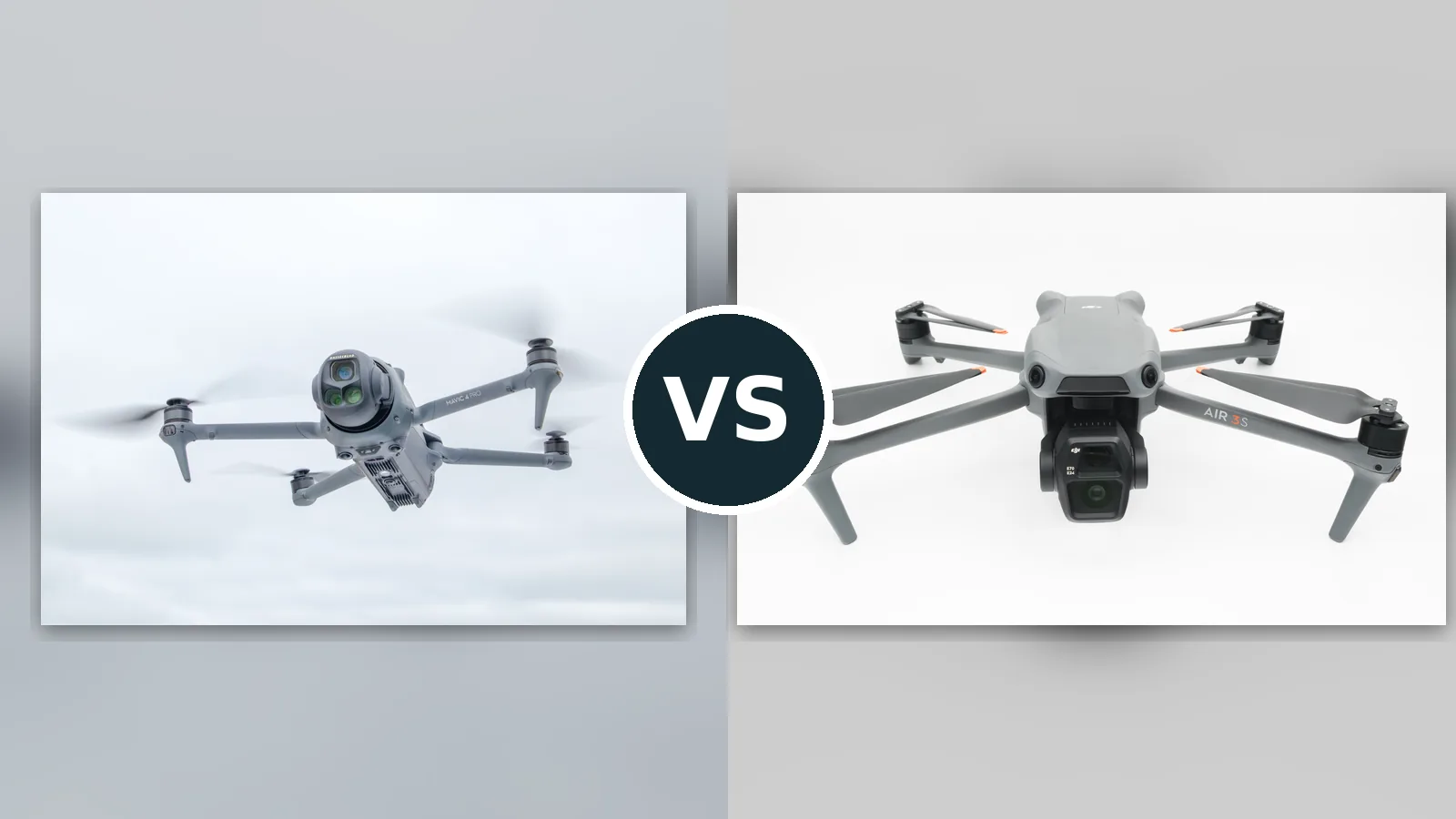
The mavic 4 vs air 3s question comes down to how much camera you can actually use. The Mavic 4 Pro is DJI’s flagship: a 100MP 4/3-inch Hasselblad main camera, two tele cameras, a 360-degree Infinity Gimbal, and 51 minutes of rated flight time. The Air 3S is the mid-range sweet spot: a 1-inch 50MP main camera, a 48MP tele, LiDAR night sensing, and 45 minutes of flight time for roughly half the money. We compared cameras, flight performance, features, and kit cost so you can decide if the flagship is worth double the price.
As an Amazon Associate, we earn from qualifying purchases. Affiliate disclosure: As an Amazon Associate we earn from qualifying purchases. This page contains affiliate links. If you buy through them, we may earn a commission.
Air 3S for most. Mavic 4 Pro for the obsessed.
DJI Air 3S wins for most buyers: its 1-inch main camera is excellent, it flies 45 minutes, carries LiDAR night sensing, and costs roughly half the flagship. DJI Mavic 4 Pro wins for professionals and pixel-peepers: 100MP 4/3-inch stills, a third tele camera, 6K/60 video, a 360-degree gimbal, and 51-minute flights. Camera: Mavic 4 Pro. Value: Air 3S. Flight time: Mavic 4 Pro, but only just. Portability: Air 3S.
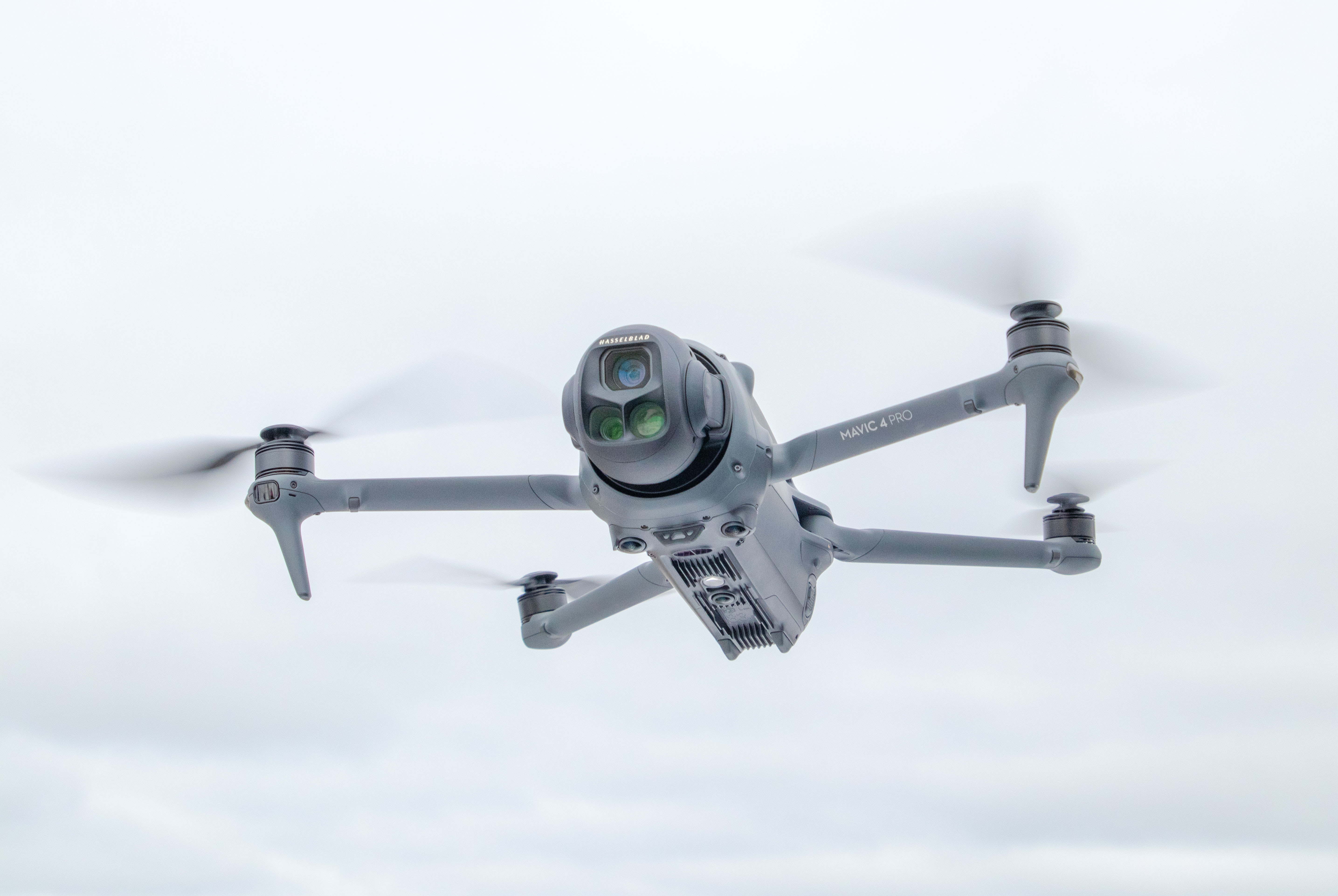
DJI Mavic 4 Pro
For professionals and serious creators who want DJI’s best aerial camera
- 100MP 4/3-inch Hasselblad main camera, 6K/60fps, f/2.0 to f/11
- Triple cameras on a 360-degree Infinity Gimbal with 70-degree upward tilt
- Roughly double the Air 3S price; no official US store sales at launch
Check current price and available bundles on Amazon
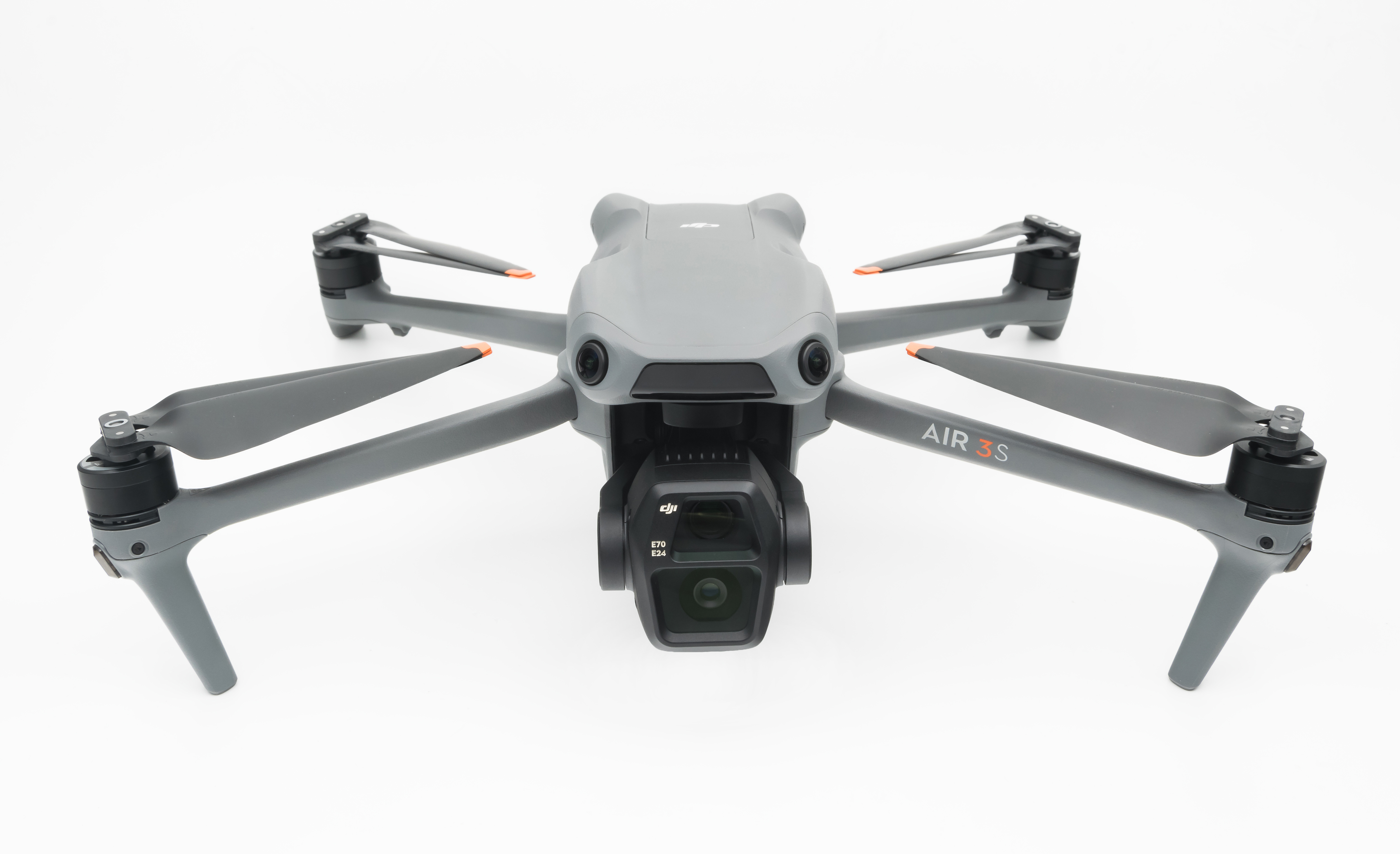
DJI Air 3S
For travel creators who want flagship-adjacent image quality for half the money
- 1-inch 50MP main camera, 4K/60fps HDR, 14 stops dynamic range
- Forward-facing LiDAR plus omnidirectional sensing for confident day and night flying
- No 6K video, no third tele camera, no upward-tilting gimbal
Check current price and available bundles on Amazon
DJI Mavic 4 Pro (left) · DJI Air 3S (right)
DJI Mavic 4 Pro: The 100MP Triple-Camera Flagship
DJI’s top consumer drone, launched May 13, 2025. Note: DJI never released a non-Pro “Mavic 4”, so every “Mavic 4” you see for sale is the Mavic 4 Pro.
The overview
The Mavic 4 Pro is DJI’s statement drone, built to show what a folding consumer aircraft can do when budget is secondary. It replaces the Mavic 3 Pro with a new 100MP 4/3-inch Hasselblad main camera (up from 20MP), a ball-shaped Infinity Gimbal with full 360-degree rotation, LiDAR-assisted sensing that works in near darkness, and a 51-minute rated flight time, the longest on any DJI folding drone. At 1063 grams it is a serious aircraft, closer to a small cinema drone than to a travel quad.
One buying wrinkle: DJI did not officially sell the Mavic 4 Pro in the US at launch, citing tariff and customs complications, so American buyers get it through third-party sellers as import stock. Global launch pricing was about $2,250 for the base kit with the DJI RC 2, $3,200 for the Fly More Combo, and $4,400 for the 512GB Creator Combo with the RC Pro 2, with Amazon listings hovering near $2,199. Buying through unofficial channels matters for warranty expectations, so confirm the seller before ordering.
The camera system
This is why the Mavic 4 Pro exists. Three cameras, three focal lengths, one gimbal: a 100MP 4/3-inch Hasselblad wide camera at 28mm with variable f/2.0 to f/11 aperture, a 48MP 1/1.3-inch medium tele at 70mm f/2.8, and a 50MP 1/1.5-inch tele at 168mm f/2.8. The main camera shoots 6K/60fps HDR, all three shoot 4K/60fps HDR, and the teles add 4K slow motion (120fps and 100fps). Every camera records 10-bit D-Log, D-Log M, and HLG with up to 16 stops of dynamic range on the main camera, and stills go up to 100MP with DNG RAW on all three plus multi-frame RAW stacking for night shots.
The variable aperture is a bigger deal than it sounds: stopping down to f/11 gives proper shutter-speed control in bright light without stacking ND filters, while f/2.0 pulls in light at dusk. The Infinity Gimbal rotates 360 degrees for roll moves, tilts from straight down to 70 degrees upward (most drone gimbals cannot look up at all), and shoots native vertical 4K on the main camera. For real estate shooters and vertical-first creators, those are genuinely new shots.
Flight performance
DJI rates the Mavic 4 Pro at 51 minutes of flight time and 45 minutes hovering from a 6654 mAh battery, with a 41 km maximum flight distance. Those are wind-tunnel lab figures and real flights land lower, but the headroom is real: roughly five extra minutes over the Mavic 3 Pro. Top speed is 25 m/s in Sport mode, wind resistance is 12 m/s, and the O4+ system pushes 10-bit HDR live view out to 30 km under FCC rules, holding a cleaner feed where older links break up.
The weight is the price of all this capability. At 1063 g the Mavic 4 Pro needs registration just about everywhere and falls into the EU’s C2 class. Folded it measures roughly 258 by 125 by 107 mm: fine in a backpack, but a dedicated kit of drone, controller, large batteries, and charging hub. The 64GB of internal storage (about 42GB usable) is a nice safety net, and the 512GB Creator Combo adds the ALL-I 4:2:2 codec for demanding workflows.
Intelligent features and sensing
The sensing system is the most advanced DJI has shipped on a consumer drone: six fisheye vision sensors for omnidirectional coverage, a forward-facing LiDAR, and a downward infrared sensor. The headline is 0.1-lux Nightscape sensing, so obstacle detection keeps working in near darkness where vision-only systems go blind, paired with an upgraded return-to-home that routes around obstacles at night. Creatively you get ActiveTrack 360 (tracking vehicles to 200 meters), waypoint missions, cruise control, and hyperlapse. The RC Pro 2 controller (Creator Combo) adds a rotating 7-inch Mini-LED display, HDMI output, and DJI Mic support.
DJI Mavic 4 Pro
Reasons to choose it
- 100MP 4/3-inch Hasselblad main camera, 6K/60fps video, f/2.0 to f/11, 16 stops dynamic range
- Triple cameras (28mm, 70mm, 168mm) shooting 4K/60fps HDR with 10-bit D-Log
- 360-degree Infinity Gimbal with 70-degree upward tilt and native vertical video
- 51-minute rated flight time, the longest of any DJI folding drone
- LiDAR-assisted omnidirectional sensing that works down to 0.1 lux for confident night flying
Reasons to reconsider
- About double the Air 3S price; no official US store sales at launch
- 1063 g folded size: a dedicated kit, not a travel drone (EU C2 class)
- The ALL-I 4:2:2 codec requires the 512GB Creator Combo at a steep premium
- Overkill for casual shooters and social-only publishing
DJI Air 3S: The 1-Inch Mid-Range Sweet Spot
Launched October 15, 2024, the Air 3S brought the 1-inch sensor down to the mid-range and added LiDAR night sensing.
The overview
The Air 3S is DJI’s mid-range masterstroke: it takes the Air 3’s formula, swaps the small main sensor for a 1-inch 50MP unit, and adds forward-facing LiDAR for night-capable obstacle sensing. Launched October 15, 2024, at $1,099 with the RC-N3 controller, it sits in the lineup’s sweet spot: serious camera hardware without the flagship price or bulk. At 724 grams it is meaningfully lighter than the Mavic 4 Pro, folds to about 214 by 101 by 89 mm, and carries an EU C1 rating.
The Air 3S is for the buyer who wants 80 percent of the flagship’s image quality for 50 percent of the money. DJI sells it officially in the US with standard warranty and no gray-market caveats. Fly More combos with the RC-N3 or the RC 2 (built-in screen) add batteries, a charging hub, an ND filter set, and a shoulder bag.
The camera system
Two cameras on a 3-axis gimbal: a 1-inch 50MP wide camera at 24mm f/1.8 and a 48MP 1/1.3-inch medium tele at 70mm f/2.8. Both shoot 4K/60fps HDR with 10-bit D-Log M and HLG, both reach 4K/120fps slow motion, and DJI rates the system at 14 stops of dynamic range with a 130 Mbps max bitrate. Stills come in 12MP or full 50MP/48MP with DNG RAW, and Free Panorama mode stitches any frame you draw on screen, which is genuinely useful for landscapes.
The f/1.8 aperture is the quiet hero of this spec sheet: with the 1-inch sensor it gives the Air 3S real low-light ability, the kind that made the Air 2S beloved. It is not a 4/3-inch sensor and it does not shoot 6K, so pixel-peepers will see the difference at 100 percent. But for 4K delivery, which is what almost everyone publishes, the Air 3S holds up remarkably well. Vertical shooting is cropped 2.7K on both cameras rather than native, so there is a small quality cost versus the Mavic 4 Pro.
Flight performance
DJI rates the Air 3S at 45 minutes of flight time and 41 minutes hovering from a 4276 mAh battery, with a 32 km maximum flight distance. Top speed is 21 m/s, wind resistance is 12 m/s (matching the Mavic 4 Pro), and the O4 system carries 1080p/60 live view out to 20 km under FCC rules. The 42GB of internal storage means you can fly without a microSD card in a pinch, and Off-State QuickTransfer pulls files to your phone with the drone powered off.
In the air, the Air 3S is a lighter, more agile alternative to the flagship. The 724 g weight still requires registration in most jurisdictions, but the folded package fits a daypack and setup takes under a minute. Charging takes about 80 minutes with the 65W portable charger or 60 minutes with the 100W adapter and hub, and the hub’s power accumulation shifts leftover charge into the fullest battery for extra flight time on long days.
Intelligent features and sensing
The Air 3S was the first DJI consumer drone with forward-facing LiDAR, and it changes night flying: obstacle sensing and return-to-home keep working after dark, where vision-only drones go blind. The omnidirectional vision system covers daylight directions, and the upgraded RTH can memorize its flight path and retrace it without GPS. Creatively you get ActiveTrack 360, Waypoint Flight, Cruise Control, Spotlight, Point of Interest, and hyperlapse, plus DJI Cellular Dongle 2 support for 4G backup transmission in complex environments.
DJI Air 3S
Reasons to choose it
- 1-inch 50MP main camera, f/1.8 lens, 4K/60fps HDR, 14 stops dynamic range
- Forward-facing LiDAR plus omnidirectional sensing for confident day and night flying
- 45-minute rated flight time and 42GB internal storage
- Roughly half the Mavic 4 Pro price with official US availability
- 724 g folding kit with Free Panorama and 2.7K vertical shooting
Reasons to reconsider
- No 6K video, no 100MP stills, no third tele camera
- Vertical video is cropped 2.7K, not native, and the gimbal cannot tilt upward
- 20 km transmission range against 30 km on the Mavic 4 Pro
- Over 700 g, so registration is required in most places
Mavic 4 vs Air 3S: The Specs That Actually Matter
Compare the exact battery, controller and bundle versions you intend to buy.
| Feature | DJI Mavic 4 Pro | DJI Air 3S |
|---|---|---|
| Best suited to | Professional aerial imaging, commercial work, filmmakers | Travel and enthusiast creators wanting premium quality for half the price |
| Takeoff weight | Approx. 1063 g | 724 g |
| Dimensions (folded) | 257.6 x 124.8 x 106.6 mm | 214.19 x 100.63 x 89.17 mm |
| Sensor and lenses | 4/3 CMOS 100MP (28mm f/2.0-11); 1/1.3″ 48MP (70mm f/2.8); 1/1.5″ 50MP (168mm f/2.8) | 1″ CMOS 50MP (24mm f/1.8); 1/1.3″ 48MP (70mm f/2.8) |
| Video modes | 6K/60fps HDR main; 4K/60fps HDR all cameras; 4K/120 main and medium tele; 4K/100 tele | 4K/60fps HDR both cameras; 4K/120fps; FHD/240fps (wide camera) |
| Color and codecs | 10-bit D-Log/D-Log M/HLG; H.265 to 180 Mbps; 10-bit 4:2:2 ALL-I on 512GB Creator Combo | 10-bit D-Log M, HLG; H.264/H.265 up to 130 Mbps |
| Photo resolution | 100MP / 48MP / 50MP; JPEG + DNG RAW; multi-frame stacking | 50MP / 48MP; JPEG + DNG RAW; Free Panorama mode |
| Vertical capture | Native 4K vertical (main); 2.7K vertical (teles) | Cropped 2.7K vertical, both cameras |
| Gimbal | 3-axis Infinity Gimbal: 360-degree rotation, tilts -90 to +70 degrees | 3-axis mechanical gimbal, tilt -90 deg to +60 deg |
| Obstacle sensing | Omnidirectional vision + forward LiDAR; 0.1-lux Nightscape | Omnidirectional vision + forward LiDAR for day and night sensing |
| Subject tracking | ActiveTrack 360 (vehicles to 200 m), Waypoint, Cruise Control | ActiveTrack 360, Spotlight, POI, Waypoint Flight, Cruise Control |
| Rated flight time | 51 min (45 min hover) | 45 min (41 min hover) |
| Real-world flight time | Not tested by us; lab figures, lower in real wind | Not tested by us; lab figures, lower in real wind |
| Max speed | 25 m/s Sport (27 m/s tailwind) | 21 m/s (19 m/s in EU) |
| Video transmission | O4+, 30 km FCC, 10-bit HDR, 1080p/60 live view | O4, 20 km FCC, 1080p/60 live view |
| Max range (flight distance) | 41 km | 32 km |
| Wind resistance | 12 m/s | 12 m/s |
| GNSS | GPS + Galileo + BeiDou | GPS + Galileo + BeiDou |
| Internal storage | 64GB (42GB usable); 512GB Creator Combo | 42GB plus microSD to 512GB |
| Controller and bundle | DJI RC 2 (base, ~$2,250); DJI RC Pro 2 (Creator Combo, ~$4,400) | DJI RC-N3 (base, $1,099); DJI RC 2 on higher combos |
| Main trade-off | Double the price, heavier kit, no official US sales at launch | No 6K, no third tele camera, no upward-tilting gimbal |
Ratings are lab figures; real-world flight time is lower. Prices are launch references; check the live Amazon listing. Last verified: October 20, 2026.
DJI Mavic 4 Pro (left) · DJI Air 3S (right)
Mavic 4 vs Air 3S: Five Differences That Matter
For each category, here is the difference, its practical impact and which buyer benefits.
1. Camera and image quality: 100MP 4/3-inch vs 50MP 1-inch
Edge: Mavic 4 ProThe Mavic 4 Pro was built to win this category, and it does. Its 100MP 4/3-inch Hasselblad main camera out-resolves the Air 3S’s 50MP 1-inch sensor, gathers more light per pixel, and adds a variable f/2.0 to f/11 aperture the Air 3S cannot match. Add 6K/60fps video against 4K/60fps and up to 16 stops of dynamic range against 14, and the gap shows in fine landscape detail, heavy crops, and large prints.
But the Air 3S punches far above its price. Its 1-inch sensor and f/1.8 lens deliver genuinely excellent 4K footage, which covers YouTube, client work, and phone screens. The difference shows at the margins: 100 percent crops, large prints, and aggressive grading. The Mavic 4 Pro also brings three focal lengths (28mm, 70mm, 168mm) against the Air 3S’s two, so distant subjects and compression shots are a different sport on the flagship.
2. Flight time and range: 51 minutes vs 45 minutes
Edge: Mavic 4 ProThe Mavic 4 Pro leads by six minutes of rated flight time (51 vs 45) and ten kilometers of transmission range (30 km O4+ vs 20 km O4). In practice both fly long enough that battery anxiety disappears: either covers multiple locations on one pack, and both support fast charging hubs with power accumulation. The Mavic 4 Pro also stretches hovering time to 45 minutes against 41.
The difference matters at the edges: corridor mapping, large property surveys, and slow single-take flights benefit from the Mavic 4 Pro’s extra headroom, 41 km maximum flight distance, and cleaner O4+ feed at range. For typical recreational flying, though, six minutes is one more composition, not a different experience.
3. Design and portability: 1063 g flagship vs 724 g traveler
Edge: Air 3SThe Air 3S is the drone you actually take everywhere: 724 g, roughly 214 by 101 by 89 mm folded, into a daypack in under a minute. The Mavic 4 Pro at 1063 g is a different proposition: portable by cinema-drone standards, but a dedicated kit with large batteries and a bigger controller. If you hike, travel light, or fly spontaneously, the size gap matters every time you pack.
Neither drone is sub-250g, so both need recreational registration in the US and fall under standard EU categories (C2 for the Mavic 4 Pro, C1 for the Air 3S). The Air 3S buys you a lighter bag, not lighter regulation. One point for the flagship: 64GB internal storage (512GB Creator option) against the Air 3S’s 42GB.
4. Intelligent features: LiDAR night sensing on both, Infinity Gimbal on one
Edge: Mavic 4 ProBoth share the headline safety tech: forward-facing LiDAR plus omnidirectional vision for obstacle sensing that works after dark. The Mavic 4 Pro pushes further with 0.1-lux Nightscape sensing and more sensitive fisheye sensors all around. Both get ActiveTrack 360, waypoint missions, cruise control, and RTH that retraces flight paths without GPS. For collision-avoidance confidence, the flagship leads but the Air 3S is far closer than the price gap suggests.
The creative features are where the Mavic 4 Pro pulls away. The 360-degree Infinity Gimbal enables roll moves and 70-degree upward tilts that no standard gimbal can attempt, opening shots the Air 3S cannot produce. Its ActiveTrack 360 tracks vehicles to 200 meters for commercial follow work. The Air 3S counters with the features most creators use daily: Free Panorama, 2.7K vertical shooting, and Cellular Dongle 2 support for 4G backup transmission.
5. Price and value of the complete kit
Edge: Air 3SThis is the Air 3S’s strongest category. The math: Air 3S base kit at $1,099 against the Mavic 4 Pro base at about $2,250 (US gray-market listings hover near $2,199). Fly More combos run roughly $1,449 against $3,200, and the 512GB Creator Combo lists around $4,400. You pay about double for the flagship at every tier.
Value is not just the sticker price. The Air 3S buys cleanly through official US channels with standard warranty, while the Mavic 4 Pro’s US availability runs through third-party import sellers. The flagship justifies its premium only if you use what it adds: 100MP stills, 6K video, the third tele camera, the upward-tilting gimbal, and extra flight time. Unused capability is the most expensive kind.
Which drone fits your flying?
Start with your main use case. The best choice should solve your needs, without charging you for features you will rarely use.
Most people reading a mavic 4 vs air 3s comparison are asking one question: do I need the flagship? If your footage ends up on YouTube, Instagram, real-estate listings, or travel vlogs, the Air 3S is your drone. Its 1-inch camera is superb, its flight time generous, its night sensing confidence-inspiring, and the thousand dollars you save buys the accessories and trips that actually improve your work.
If you sell aerial imagery, print large, deliver 6K masters, or build shots around telephoto compression and upward angles, the Mavic 4 Pro earns its keep. Everyone in between should default to the Air 3S and spend the difference on flying more, because flight hours improve footage faster than sensor size.
Choose DJI Mavic 4 Pro if…
- Maximum image quality: 100MP stills, 6K video, three focal lengths.
- You shoot commercially: real estate, inspections, productions, stock.
- You want moves only it can do: 360-degree rolls, 70-degree upward tilts.
- You can accept the price, the 1063 g kit, and gray-market US availability.
Choose DJI Air 3S if…
- Value and versatility: flagship-adjacent 4K for roughly half the money.
- You travel, hike, or fly spontaneously and want the 724 g folding kit.
- You want LiDAR night sensing and 45-minute flights without flagship pricing.
- You can accept 4K instead of 6K, two cameras instead of three, and a standard gimbal.
Check the bundle, not just the drone
The drone on the box is only half the purchase. Run through this checklist before you tap buy.
- Controller: The Mavic 4 Pro base kit ships with the DJI RC 2 (built-in screen); the Creator Combo upgrades to the RC Pro 2 with a 7-inch Mini-LED display. The Air 3S base ships with the RC-N3 (bring your own phone); higher combos include the RC 2. Pick the controller you will enjoy in bright sunlight.
- Batteries: One battery is never enough. The Mavic 4 Pro hub charges one battery in about 51 minutes or three in 90; the Air 3S hub consolidates leftover charge via power accumulation. Budget for two to three batteries either way.
- US availability: The Air 3S sells through official US channels with standard warranty. The Mavic 4 Pro reaches US buyers through third-party import sellers; confirm the seller, return terms, and warranty before ordering.
- Accessories: A fast microSD card (U3/V30) and ND filters most improve footage. The Air 3S Fly More Combo includes an ND set; the Mavic 4 Pro’s variable aperture reduces ND dependence.
- Listing: On Amazon, confirm the exact model name, controller, and battery count in the listing title; similarly named bundles are easy to confuse.
- Local requirements: Both drones exceed 250 g, so recreational registration applies in the US and standard categories apply in the EU (C2 for the Mavic 4 Pro, C1 for the Air 3S). Check your aviation authority’s current rules before your first flight.
The right choice comes down to flagship ambition versus smart money.
The Air 3S is the drone most people should buy: a 1-inch 50MP camera, 4K/60fps HDR, LiDAR night sensing, and 45-minute flights for roughly half the Mavic 4 Pro’s price. The Mavic 4 Pro is for working professionals and serious creators who will use the 100MP stills, 6K video, third tele camera, and gimbal moves nothing else can make. Buy the capability you will actually use; when in doubt, buy the Air 3S and spend the difference on batteries and time in the air.
Still deciding?
Is the Mavic 4 Pro worth double the price of the Air 3S?
Only if you use what the extra money buys: 100MP stills, 6K video, a third tele camera, a 360-degree gimbal with upward tilt, six more minutes of flight time, and 10 km more range. If those map to paying work, the premium pays for itself. If you publish in 4K and shoot for fun, the Air 3S keeps about $1,100 in your pocket.
Which drone is better for beginners?
The Air 3S. It is lighter, cheaper to replace, simpler to buy officially, and its LiDAR-assisted sensing forgives beginner mistakes. The Mavic 4 Pro flies just as easily, but it is a lot of expensive aircraft to learn on, and US buyers go through third-party sellers.
Which is better for travel and vertical video?
The Air 3S wins on travel: 724 g against 1063 g and a kit that fits a daypack. For vertical video the Mavic 4 Pro wins on quality with native 4K vertical, while the Air 3S offers cropped 2.7K. If vertical is your primary output, native vertical is a genuine point for the flagship.
Can I buy the Mavic 4 Pro in the US?
Not from DJI directly. DJI did not officially sell the Mavic 4 Pro in the US at launch, citing tariff and customs complications, so buyers go through third-party sellers as import stock near $2,199. Confirm return terms and warranty before ordering. The Air 3S sells through official US channels with standard warranty.
Which bundle should I buy for each drone?
For the Air 3S, the Fly More Combo with the RC-N3 is the sweet spot: three batteries, hub, ND filters, and bag for about $1,449; step up to the RC 2 version for the built-in screen. For the Mavic 4 Pro, the base kit with the RC 2 covers most shooters; the Fly More Combo (about $3,200) suits frequent flyers; the 512GB Creator Combo (about $4,400) is for professionals who need ALL-I 4:2:2.
How were these drones compared?
Research-based: specs compiled from DJI’s official pages, launch announcements, and documentation, cross-checked against DroneXL, Y.M.Cinema, Digital Camera World, and retailer listings. We did not fly either drone; rated figures are DJI’s lab numbers.
How this comparison was prepared
This is a research-based comparison. We did not fly either drone for this article. Every specification in the table comes from DJI’s official documentation, primarily the DJI Mavic 4 Pro and DJI Air 3S spec pages, with pricing, launch dates, and bundles cross-checked against DJI’s newsroom announcements and launch coverage. Mavic 4 Pro US availability notes reflect widely reported tariff-related import restrictions and third-party marketplace listings. ASINs were verified against Amazon-indexed listing records, ASIN-keyed manual pages, and price trackers, without opening any tagged affiliate URL.
Sources and verification
- DJI Mavic 4 Pro official specifications (dji.com, accessed October 20, 2026)
- DJI Air 3S official specifications (dji.com, accessed October 20, 2026)
- DJI Mavic 4 Pro launch announcement (DJI newsroom, May 13, 2025)
- DJI Air 3S launch coverage (October 2024)
- DroneXL Mavic 4 Pro Amazon coverage: US third-party availability and pricing
- Y.M.Cinema Mavic 4 Pro Amazon coverage: US availability and pricing context
- B and H Photo Air 3S listings: bundle configurations and US pricing
- Trusted Reviews DJI Air 3S review: specifications cross-check
- ASIN verification: Mavic 4 Pro listing (B0DS2HDF1M, DJI Mavic 4 Pro with DJI RC 2) and Air 3S listing (B0F5ZCBQSP, DJI Air 3S Fly More Combo with DJI RC 2) confirmed against Amazon-indexed title, model, and ASIN-keyed manual records
Last verified: October 20, 2026. Bundle availability, pricing, and specifications may vary by region and version. Prices in this article are launch reference prices; check the live Amazon listing for the current price.