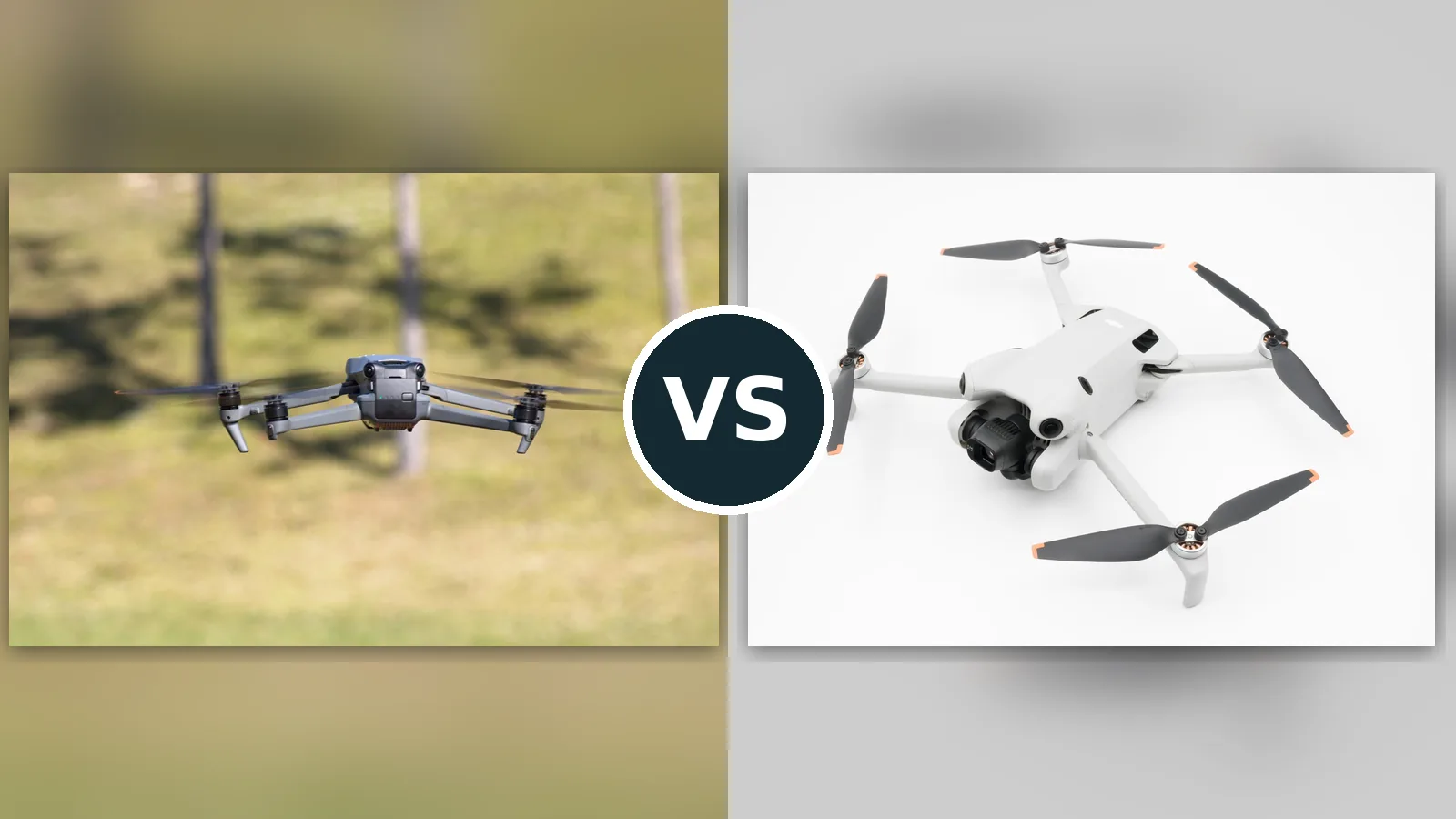
The mavic 3 classic vs mini 4 pro question is one of the strangest matchups in the drone world. On one side sits a discontinued 2022 flagship: an 895 gram prosumer drone built around a 4/3-inch Hasselblad camera. On the other: the Mini 4 Pro, a 2023 drone that folds into a jacket pocket, needs no FAA registration for recreational flight, and shoots 48 megapixel stills with true vertical video. One honest fact up front: DJI stopped producing the Mavic 3 series, so the Classic exists only on the used and renewed market, with 2022 to 2023 batteries and no transferable warranty.
So who wins? For most buyers in 2026, the Mini 4 Pro is the smarter buy: current, supported, and simpler to travel with. But the Mavic 3 Classic still wins the category that made it famous, pure image quality, and a clean secondhand unit remains one of the best image-per-dollar deals in drones. We compared camera, flight performance, portability, features, and buying risk so you can decide.
As an Amazon Associate, we earn from qualifying purchases.
Affiliate disclosure: As an Amazon Associate I earn from qualifying purchases. This page contains affiliate links. If you buy through them, we may earn a commission.
Mini 4 Pro for most. Classic for image purists buying used.
DJI Mini 4 Pro wins for most buyers in 2026: sold new with a warranty, under 249 g, newer sensing and tracking, and a camera that covers travel and social content. DJI Mavic 3 Classic wins one category decisively, image quality: its 4/3-inch Hasselblad sensor, adjustable aperture, and 5.1K recording still outclass the Mini 4 Pro in low light and dynamic range. Camera: Classic. Portability: Mini 4 Pro. New purchase: Mini 4 Pro. Careful used purchase: Classic, with the battery caveats below.
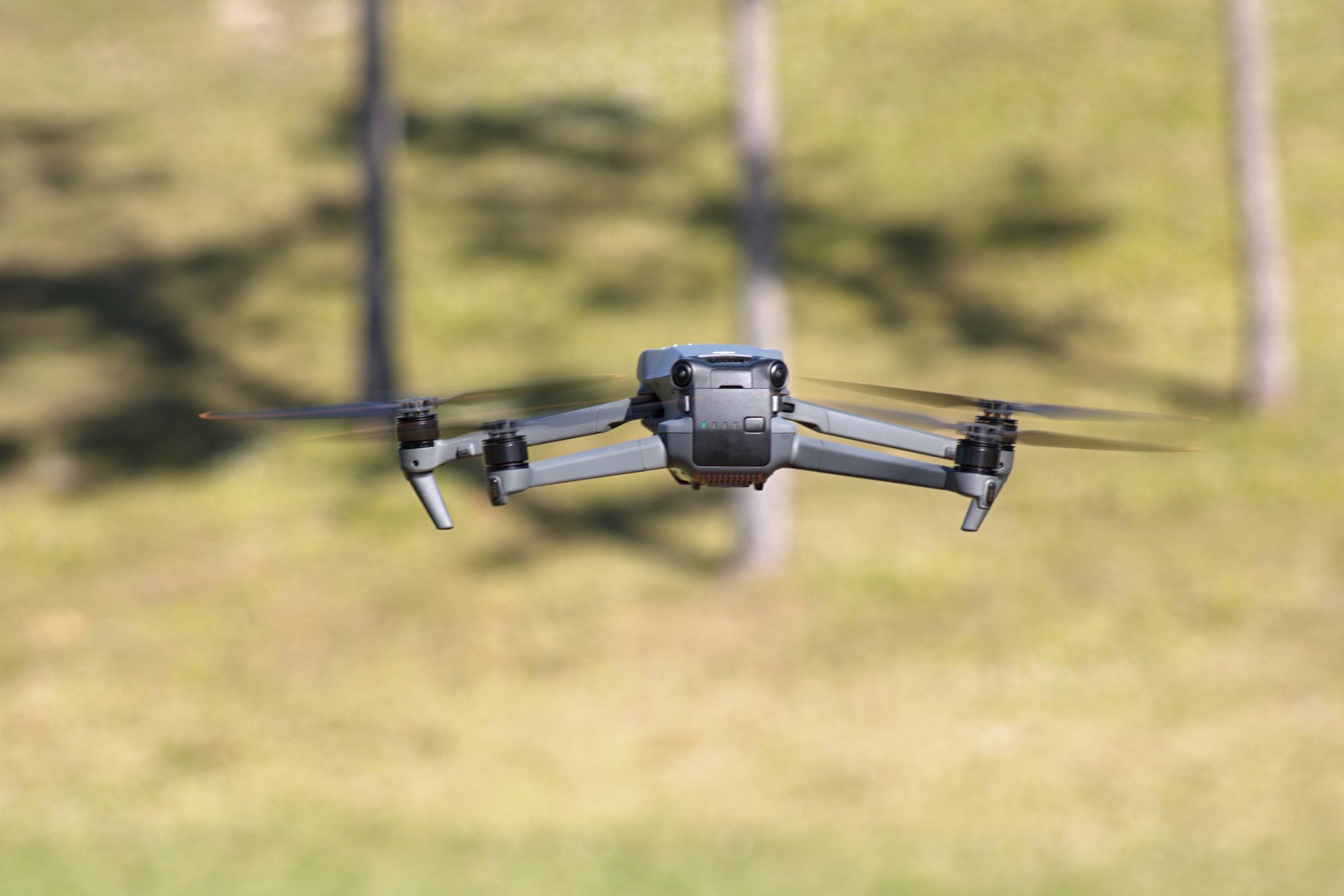
DJI Mavic 3 Classic
For photographers chasing flagship 4/3-inch quality on the used market
- 4/3-inch Hasselblad sensor, adjustable aperture, 12.8-stop dynamic range
- 46-minute rated flight time and 12 m/s wind resistance
- Discontinued: sold used or renewed only, with aging batteries and no transferable warranty
Used and renewed listings only; read the battery guidance below first
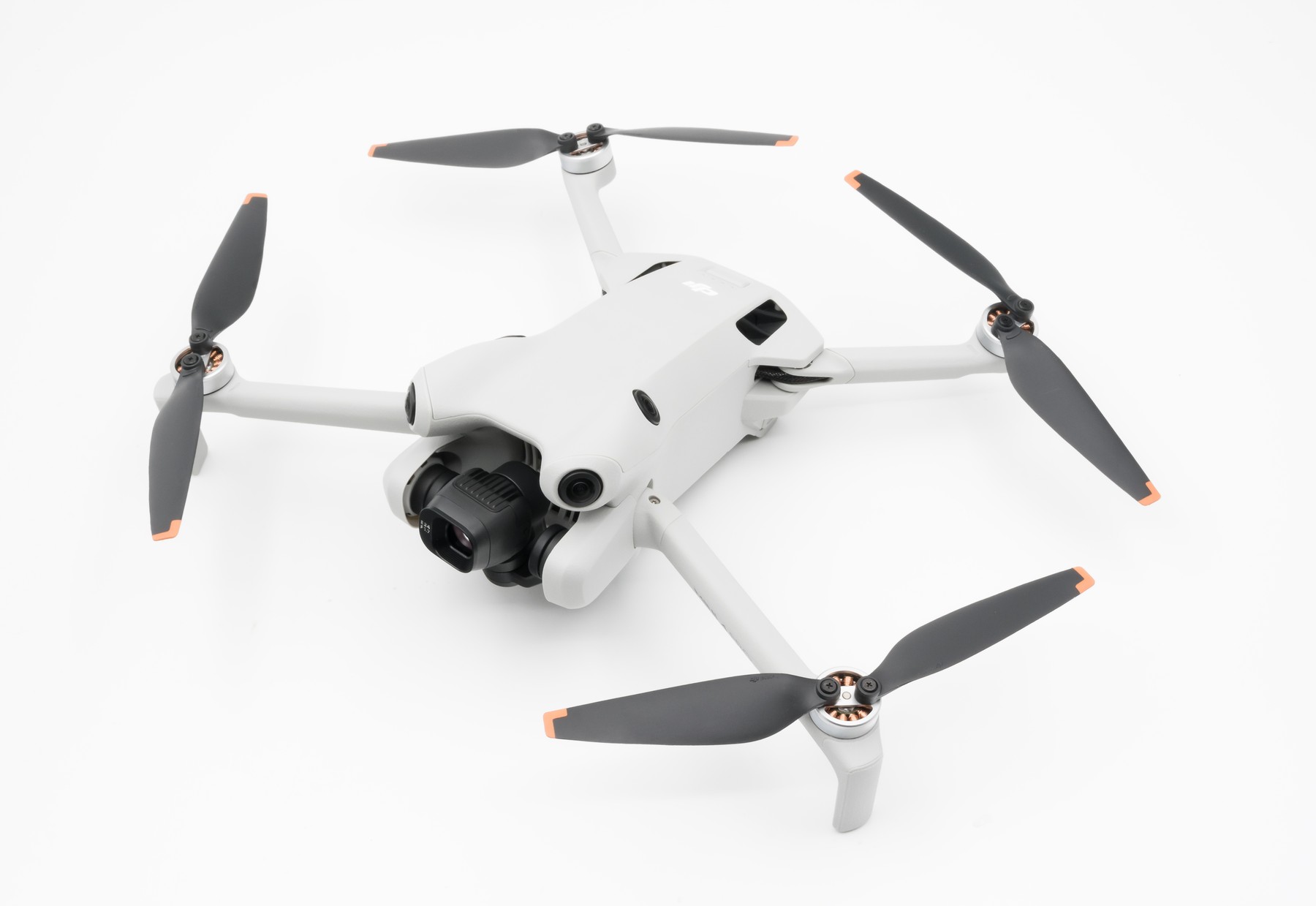
DJI Mini 4 Pro
For creators who want the best travel drone you can buy new
- 48MP RAW stills and a 3-axis gimbal with true vertical video
- Omnidirectional obstacle sensing and ActiveTrack 360 make complex shots simple
- Smaller sensor means less low-light and grading headroom than the Classic
Check current price and available bundles on Amazon
DJI Mavic 3 Classic (orange) vs DJI Mini 4 Pro (blue)
Which drone fits your flying?
Start with your main use case. The best choice should solve your needs, without charging you for features you will rarely use.
Most people searching mavic 3 classic vs mini 4 pro are really asking whether a used flagship beats a new mini king. The Classic is a photographer’s drone: its 4/3-inch sensor, adjustable aperture, and 5.1K pipeline were built for people who grade footage and print stills. The Mini 4 Pro is a traveler’s drone: it trades sensor size for freedom from registration paperwork, heavy kit bags, and aging batteries.
Choose DJI Mavic 3 Classic if…
- Maximum image quality, especially in low light and heavy grades, is your main concern.
- You shoot landscapes, golden hour scenes, and stills to print or sell.
- You value an adjustable aperture (f/2.8 to f/11) and true 5.1K resolution.
- You are comfortable buying used and registering the drone, with no warranty safety net.
Choose DJI Mini 4 Pro if…
- Portability and simplicity matter most, from travel to regulation to setup.
- You need a drone you can buy new today, with a warranty and fresh batteries.
- You value ActiveTrack 360 and vertical video for social platforms.
- You can accept a smaller 1/1.3-inch sensor with less low-light and grading headroom.
DJI Mavic 3 Classic: The 4/3-Inch Hasselblad Value Play
Launched November 2, 2022 as the single-camera version of DJI’s flagship. Production has ended; the used market is now the only market.
When DJI announced the Mavic 3 Classic, the pitch was simple: take the flagship Mavic 3, remove the 162mm telephoto camera, and sell it for meaningfully less. Everything else stayed: the 4/3-inch Hasselblad camera, 46-minute flight time, omnidirectional sensing, and O3+ transmission. It launched at $1,469 drone-only, $1,599 with the RC-N1, and $1,749 with the DJI RC, undercutting the full Mavic 3 by hundreds while keeping the camera that mattered.
That value story is why the Classic still gets searched in 2026: as a camera platform it has barely aged, and nothing DJI sells under a thousand dollars has matched its sensor since. But the DJI Store shows it out of stock, major retailers list it discontinued, and Amazon’s listings are renewed or third-party. You are buying someone’s former flagship; shop like it.
The camera: what the 4/3-inch Hasselblad sensor actually buys you
The headline is the sensor: a 4/3-inch CMOS with 20 megapixels, Hasselblad’s Natural Colour Solution, and an adjustable f/2.8 to f/11 aperture on a 3-axis gimbal. Stills come as JPEG or DNG RAW at 5280 by 3956; video tops out at 5.1K/50fps, with DCI 4K and UHD 4K reaching 120fps.
In practice that sensor area, roughly four times the Mini 4 Pro’s, means cleaner shadows, more recoverable highlights, and about 1.5 to 2 stops of extra dynamic range. Reviewers measured usable footage at ISO 1600 where smaller sensors degrade at ISO 800: the difference between shooting into blue hour and packing up at sunset.
The adjustable aperture is the sleeper feature: stopping down to f/11 controls shutter speed in bright light without ND filters, and gives landscape shooters control that fixed-aperture minis lack. The trade-off is 20 megapixels against 48, and no telephoto, only 3x digital zoom. In good light the gap narrows; in difficult light the bigger sensor wins easily.
Flight performance: built like a flagship, because it is one
The 895 gram Classic feels planted in wind that pushes minis around. DJI rates 12 m/s wind resistance and 46 minutes of flight time (40 hovering); independent testing lands real-world mixed flying around 36 to 39 minutes. Top speed is 21 m/s in Sport mode, and O3+ holds a 1080p/60fps live feed out to 15 km FCC.
Obstacle sensing is omnidirectional with APAS 5.0, and Advanced RTH plots an optimized return path. The 5000 mAh battery charges in about 96 minutes on the 65W charger. All of this hardware has aged well; the battery chemistry sitting in warehouses since 2022 has not, which brings us to the part that matters most.
Mavic 3 Classic pros and cons
- Pro: 4/3-inch Hasselblad sensor with adjustable f/2.8 to f/11 aperture, the best image quality per dollar on the used market.
- Pro: 5.1K/50fps and 4K/120fps video with 10-bit D-Log, HLG, and 200 Mbps for serious grading.
- Pro: 46-minute rated flight time and 12 m/s wind resistance, true flagship endurance and stability.
- Pro: Omnidirectional sensing with APAS 5.0 and Advanced RTH.
- Con: Discontinued: no new units, no transferable warranty, no DJI Care Refresh for second owners.
- Con: All batteries are 2022 to 2023 manufacture; aging packs are the single biggest ownership risk.
- Con: 895 g means mandatory registration in the US and stricter rules in many countries; no telephoto lens, only 3x digital zoom.
DJI Mini 4 Pro: The Sub-249g Drone That Does Almost Everything
Launched September 2023 and still sold new today. The most capable mini camera drone DJI has ever made.
The Mini 4 Pro arrived in September 2023 to fix the Mini 3 Pro’s compromises: omnidirectional sensing, a newer transmission system, better tracking, and true vertical video, all under 249 grams. It launched at $759 with the RC-N2, $959 with the DJI RC 2, and $1,099 for the Fly More combo. Unlike its rival here, it is a current product with a warranty, fresh batteries, and active firmware support.
That status is the Mini 4 Pro’s quiet superpower here: fresh batteries, DJI’s standard warranty with Care Refresh available, and ongoing firmware updates. For a buyer who wants to fly without becoming a used-equipment inspector, that peace of mind is worth real money.
The camera: punching far above its weight class
The Mini 4 Pro’s camera pairs a 1/1.3-inch CMOS sensor with a bright f/1.7 lens (24mm equivalent, 82.1-degree FOV) for 48 megapixel stills. Video runs to 4K/60fps HDR, 4K/100fps slow motion, and Full HD/200fps, in 10-bit D-Log M and HLG at up to 150 Mbps, with JPEG or DNG RAW stills. The 3-axis gimbal rotates 90 degrees for true vertical 4K/60fps with no cropping.
In good light this camera is superb: reviewers call it the best in the sub-250 gram class. The 48 megapixel mode gives real cropping flexibility, and the f/1.7 aperture gathers noticeably more light than older minis’ f/2.8 lenses. Physics is the concession: a quarter of the Classic’s sensor area means noise arrives sooner in low light and heavy grades.
Flight performance and the sub-249g advantage
DJI rates 34 minutes with the standard battery and 45 with the Plus, with independent testers reporting roughly 26 to 28 minutes of real mixed flying on the standard pack. Top speed is 16 m/s in Sport mode, wind resistance 10.7 m/s, and O4 pushes a 1080p/60fps live feed out to 20 km FCC. Omnidirectional sensing with APAS 5.0 and 3D ToF sensors protects the drone in every direction.
The weight is the headline: under 249 grams it skips FAA recreational registration in the US and faces lighter rules across Europe and the UK. It folds to 148 by 94 by 64 mm, slips into a jacket pocket, and sets up in under a minute. One caveat: the Plus battery pushes it past 249 grams, erasing the regulatory advantage, so travelers should stick with standard packs. Remote ID is built in for US compliance.
Mini 4 Pro pros and cons
- Pro: Still sold new with a warranty, fresh batteries, and DJI Care Refresh eligibility.
- Pro: Under 249 g with the standard battery: no FAA recreational registration, easy travel rules.
- Pro: 48MP RAW stills, 4K/100fps slow motion, and true vertical video from a 3-axis gimbal.
- Pro: Omnidirectional sensing with APAS 5.0 plus ActiveTrack 360, Waypoint Flight, and Cruise Control.
- Pro: O4 transmission with 20 km FCC range, the best link on any mini drone.
- Con: 1/1.3-inch sensor cannot match the Classic’s 4/3-inch sensor in low light or heavy grades.
- Con: Top frame rates crop into the sensor, trading field of view for slow motion.
- Con: The Plus battery pushes it over 249 g; 2 GB internal storage makes a microSD card mandatory.
Mavic 3 Classic vs Mini 4 Pro: The Specs That Actually Matter
Manufacturer ratings are lab figures; real-world flight time is lower on both drones. Prices shown are launch reference prices.
| Feature | DJI Mavic 3 Classic | DJI Mini 4 Pro |
|---|---|---|
| Status in 2026 | Discontinued; used and renewed market only, no factory warranty for second owners | Current product; sold new with warranty and DJI Care Refresh available |
| Best suited to | Photographers and videographers chasing maximum image quality, low-light work, graded footage | Travelers, creators, and beginners who want the best mini drone you can buy new |
| Takeoff weight | 895 g (registration required in the US) | Under 249 g standard (no FAA recreational registration); over 249 g with Plus battery |
| Folded dimensions | 221 x 96.3 x 90.3 mm | 148 x 94 x 64 mm |
| Sensor and lens | 4/3-inch CMOS, 20MP, 24mm equiv, f/2.8-11 adjustable, 84-degree FOV | 1/1.3-inch CMOS, 48MP, 24mm equiv, f/1.7 fixed, 82.1-degree FOV |
| Photo formats | JPEG and DNG RAW, 5280 x 3956 | JPEG and DNG RAW, 48MP |
| Video modes | 5.1K/50fps, DCI 4K and 4K/120fps, FHD/200fps | 4K/60fps HDR, 4K/100fps slow motion, FHD/200fps |
| Color and codecs | 10-bit D-Log/HLG plus Hasselblad HNCS, H.264/H.265, 200 Mbps, 12.8 stops | 10-bit D-Log M and HLG, H.264/H.265, up to 150 Mbps |
| Digital zoom | 3x (no telephoto camera) | Up to 4x in 1080p (digital crop) |
| Gimbal and vertical | 3-axis mechanical gimbal; no native vertical mode | 3-axis mechanical gimbal that rotates 90 degrees for true vertical 4K/60fps |
| Obstacle sensing | Omnidirectional with APAS 5.0 | Omnidirectional with APAS 5.0 and 3D ToF sensors |
| Subject tracking | ActiveTrack 5.0, MasterShots, QuickShots, Hyperlapse, Panorama | ActiveTrack 360, Waypoint Flight, Cruise Control, MasterShots, QuickShots, Hyperlapse |
| Rated flight time | 46 min (40 hovering) | 34 min standard; 45 min Plus (30/39 hovering) |
| Real-world flight time | Not tested by us; independent reviews report roughly 36 to 39 minutes of mixed flying | Not tested by us; independent tests report roughly 26 to 28 minutes on the standard battery |
| Max speed | 21 m/s in Sport mode | 16 m/s in Sport mode |
| Wind resistance | 12 m/s | 10.7 m/s |
| Video transmission | O3+, 15 km FCC, 1080p/60fps live view | O4, 20 km FCC, 1080p/60fps live view |
| GNSS | GPS + Galileo + BeiDou | GPS + Galileo + BeiDou |
| Internal storage | 8 GB | 2 GB (microSD effectively required) |
| Battery | 5000 mAh LiPo 4S (77 Wh), about 96 min to charge; all packs 2022-2023 manufacture | Standard and Plus options, fresh manufacture on new units |
| Launch price | $1,469 drone-only; $1,599 RC-N1; $1,749 DJI RC (Nov 2022) | $759 RC-N2; $959 DJI RC 2; $1,099 Fly More RC 2 (Sep 2023) |
| Main trade-off | Discontinued, aging batteries, no warranty path; unbeatable used image quality | Smaller sensor with less low-light headroom; the safe, simple, supported buy |
DJI Store listings for the Mavic 3 Classic show out of stock across bundles as of October 2026; major retailers mark it discontinued. Last verified: October 20, 2026.
DJI Mavic 3 Classic (orange) vs DJI Mini 4 Pro (blue)
Mavic 3 Classic vs Mini 4 Pro: Five Differences That Matter
For each category, here is the difference, its practical impact and which buyer benefits.
1. Camera and image quality: 4/3-inch sensor vs 1/1.3-inch
Edge: Mavic 3 ClassicThe Classic’s 4/3-inch sensor is roughly four times the Mini 4 Pro’s, and the gap shows where photography gets hard: cleaner shadows, more recoverable highlights, and about 1.5 to 2 stops of extra dynamic range at dusk. The f/2.8 to f/11 aperture gives real exposure control, and 5.1K with 10-bit D-Log at 200 Mbps gives grading latitude the Mini 4 Pro cannot match.
The Mini 4 Pro answers with 48 megapixel stills, a brighter f/1.7 lens, and true vertical video with no cropping. In bright daylight many viewers could not tell them apart, but in difficult light physics wins: reviewers measured the Classic usable at ISO 1600 where smaller sensors degrade at ISO 800.
2. Flight time and range: endurance vs link
Edge: TieOn endurance the Classic wins on paper and in practice: 46 minutes rated against 34, with real-world mixed flying around 36 to 39 minutes versus roughly 26 to 28. Its 12 m/s wind resistance also beats the Mini 4 Pro’s 10.7, and 895 grams holds position in gusts that make a mini work harder.
On the link the Mini 4 Pro wins: newer O4 transmission reaches 20 km FCC against the Classic’s O3+ at 15 km, with a more robust signal around interference. In practice both far exceed legal line-of-sight flying, so the newer system is simply more future-proof. A tie: the Classic keeps you airborne longer, the Mini 4 Pro keeps you connected farther.
3. Design and portability: pocket vs backpack
Edge: Mini 4 ProThe Mini 4 Pro folds to 148 by 94 by 64 mm and weighs under 249 grams. It fits in a jacket pocket, sets up in under a minute, and skips FAA recreational registration in the US while simplifying rules across Europe and the UK.
The Classic folds to 221 by 96.3 by 90.3 mm and weighs 895 grams, more than three and a half times as much. It travels as a dedicated kit in a real bag, and 895 grams means mandatory registration and stricter rules in most countries.
4. Intelligent features: a generation apart
Edge: Mini 4 ProBoth fly with omnidirectional sensing and APAS 5.0. The difference is creative automation: ActiveTrack 360 tracks subjects while you reposition the angle mid-shot, Waypoint Flight automates repeatable routes, and Cruise Control holds speed hands-free, letting a solo creator pull off two-person shots.
The Classic counters with ActiveTrack 5.0, MasterShots, QuickShots, Hyperlapse, and Panorama: complete, but the previous generation’s toolkit. One genuine Classic advantage is 8 GB of internal storage against the Mini 4 Pro’s 2 GB, so a forgotten memory card does not ground you. On the features that change what you can shoot alone, the newer drone leads.
5. Price and value in 2026: new certainty vs used opportunity
Edge: Mini 4 ProValue depends on which market you shop. The Mini 4 Pro is straightforward: new, with a warranty, fresh batteries, and DJI Care Refresh available. For most people that certainty beats any spec-sheet advantage.
The Classic is the opposite: high reward, real risk. A clean used unit can cost less than a new Mini 4 Pro while delivering a far superior camera. But weigh aging batteries (every pack is 2022 to 2023 manufacture), no transferable warranty, no Care Refresh, and shrinking parts supply. Price the drone, the batteries, and the risk together, not just the airframe.
Mavic 3 Classic vs Mini 4 Pro: What You Gain and Give Up
DJI Mavic 3 Classic
Reasons to choose it
- 4/3-inch Hasselblad sensor with adjustable aperture: the best stills and video quality per dollar on the used market
- 5.1K/50fps and 4K/120fps with 10-bit D-Log, HLG, and 200 Mbps
- 46-minute rated flight time and 12 m/s wind resistance for long, stable outdoor sessions
- Omnidirectional sensing with APAS 5.0 and Advanced RTH
- 8 GB internal storage as a backup when the memory card stays home
Reasons to reconsider
- Discontinued: no new units, no transferable warranty, and no DJI Care Refresh for second owners
- Every battery is three to four years old; pack health is the single biggest ownership risk
- 895 g requires registration and faces stricter rules; no telephoto lens, only 3x digital zoom
- No native vertical video mode; the 20MP stills lag the Mini 4 Pro’s 48MP for cropping
DJI Mini 4 Pro
Reasons to choose it
- Sold new with a warranty, fresh batteries, and DJI Care Refresh eligibility
- Under 249 g with the standard battery: pocketable, travel-friendly, simpler regulation
- 48MP RAW stills, 4K/100fps slow motion, and true vertical video from a 3-axis gimbal
- ActiveTrack 360, Waypoint Flight, and Cruise Control: the newest automation DJI makes
- O4 transmission with 20 km FCC range
Reasons to reconsider
- 1/1.3-inch sensor falls behind the Classic in low light and heavy color grades
- Top frame rates crop the sensor, trading field of view for slow motion
- The Plus battery pushes it past 249 g, erasing the regulatory advantage
- 2 GB internal storage means a microSD card is effectively mandatory
Check the bundle, not just the drone
The drone on the box is only half the purchase. Run through this checklist before you tap buy.
- Controller: The Classic shipped with the RC-N1 (bring your phone) or the DJI RC with a built-in screen; confirm which the listing includes. The Mini 4 Pro comes with the RC-N2 or the DJI RC 2. A used listing with the wrong controller can cost hundreds to fix.
- Batteries (Classic only): Ask for the cycle count and manufacture date of every battery, confirm all four cells hold matching voltage in DJI Fly, and reject swollen packs. If the seller cannot show battery health data, walk away, and factor a replacement battery into the true price.
- Batteries (Mini 4 Pro): New units ship with fresh packs, so this is simple. Two standard batteries cover most outings; remember the Plus battery pushes the drone past 249 g with regulatory consequences.
- Listing condition: On Amazon, confirm the exact model, controller, and battery count in the listing title, and check the seller’s return terms. For the Classic, prefer renewed listings with a return window over private sales with none.
- Warranty reality: The Mini 4 Pro includes DJI’s standard warranty with DJI Care Refresh available at purchase. The Classic has no transferable warranty and no Care Refresh path for second owners; your return policy is your only safety net.
- Local requirements: The Mini 4 Pro’s sub-249g weight simplifies recreational flying in the US and much of Europe, though airspace rules still apply. The 895 g Classic requires registration in the US and stricter categories elsewhere. Check your aviation authority’s current rules first.
The right choice comes down to certainty versus sensor.
If you want the best drone you can buy new today, with a warranty, fresh batteries, easy travel, and a camera that handles almost everything, buy the Mini 4 Pro. It is the rational choice for eight out of ten readers, and it asks nothing beyond learning to fly. If you want the best image quality per dollar and will shop like a detective, a clean used Mavic 3 Classic with healthy batteries is remarkable: flagship 4/3-inch imaging, 46-minute endurance, and real wind resistance for less than a new mini flagship. Just check every battery, buy only with a return policy, and accept that you are the warranty department now.
Still deciding?
Is the Mavic 3 Classic still worth buying in 2026?
For the right buyer, yes: its 4/3-inch Hasselblad camera still outclasses every mini drone, and used prices sit well below the $1,469 launch price. Buy only if you can verify battery health and accept no warranty. If that sounds like too much work, get the Mini 4 Pro.
Is it safe to buy a used Mavic 3 Classic?
Yes, with homework. Ask for each battery’s cycle count and manufacture date, confirm all four cells hold matching voltage in DJI Fly, and reject swollen packs. Buy only from sellers with a real return policy, and test-fly inside the return window.
Which drone has the better camera?
The Mavic 3 Classic, clearly. Its 4/3-inch sensor is roughly four times the area of the Mini 4 Pro’s, with an adjustable f/2.8 to f/11 aperture, 5.1K video, and about 1.5 to 2 stops more usable dynamic range. The Mini 4 Pro counters with 48 megapixel stills and true vertical video, and daylight results are close, but low light belongs to the Classic.
Which is better for travel?
The Mini 4 Pro, without contest. It folds to pocket size, weighs under 249 grams with the standard battery, and skips recreational FAA registration in the US. The 895 gram Classic needs a real bag, mandatory registration, and stricter operating categories in many countries.
Do I need to register either drone with the FAA?
In the US, recreational drones under 250 grams, like the Mini 4 Pro with its standard battery, skip FAA registration; the 895 gram Classic must be registered. Rules differ by country and change, so check your aviation authority before flying.
How were these drones compared?
Research-based: DJI’s official spec pages and manuals, DJI store listings, retailer discontinuation records, and independent reviews from LoiterPoint, DroneXL, Digital Camera World, and Adorama. We did not fly either drone. See the methodology section for the full list.
How this comparison was prepared
This is a research-based comparison. We did not fly either drone, and we do not imply otherwise. Specifications come from DJI’s official documentation: the Mavic 3 Classic spec page and user manual, and the Mini 4 Pro spec page, with pricing cross-checked against DJI’s store listings. Discontinuation status was verified against the DJI Store page and retailer listings marking the Classic discontinued. Real-world flight times are attributed to independent reviewers. ASINs were verified by matching each against the exact product title through Amazon-indexed data; direct Amazon page opens were blocked by bot protection, and no tagged URL was ever opened or clicked.
Sources and verification
- DJI Mavic 3 Classic official specifications (dji.com, accessed October 20, 2026): aircraft, camera, gimbal, sensing, and battery figures
- DJI Mavic 3 Classic user manual: detailed camera, battery, and flight specifications
- DJI Mavic 3 Classic DJI Store product page (store.dji.com, accessed October 2026): bundle options shown out of stock
- DJI Mini 4 Pro official specifications (dji.com support, accessed October 20, 2026): weight, camera, flight time, and sensing figures
- DJI Mini 4 Pro launch announcement (DJI newsroom, September 2023): launch pricing, bundle contents, and feature descriptions
- LoiterPoint DJI Mavic 3 Classic review: rated versus real-world battery, wind, and camera observations
- Adorama DJI Mavic 3 Classic listings: specifications, launch bundles, and discontinued status
- B&H Photo Video DJI Mavic 3 Classic product pages: specifications and bundle SKUs
- Digital Camera World and DroneXL coverage: pricing history and review context for both drones
- ASIN verification: Mavic 3 Classic (B0BGPP46FT, DJI RC edition) and Mini 4 Pro (B0CFF1SJ3P, DJI RC 2 edition) confirmed against Amazon-indexed titles and independent product records
Last verified: October 20, 2026. Bundle availability, pricing, and specifications may vary by region and version. Prices in this article are launch reference prices; check the live Amazon listing for the current price.