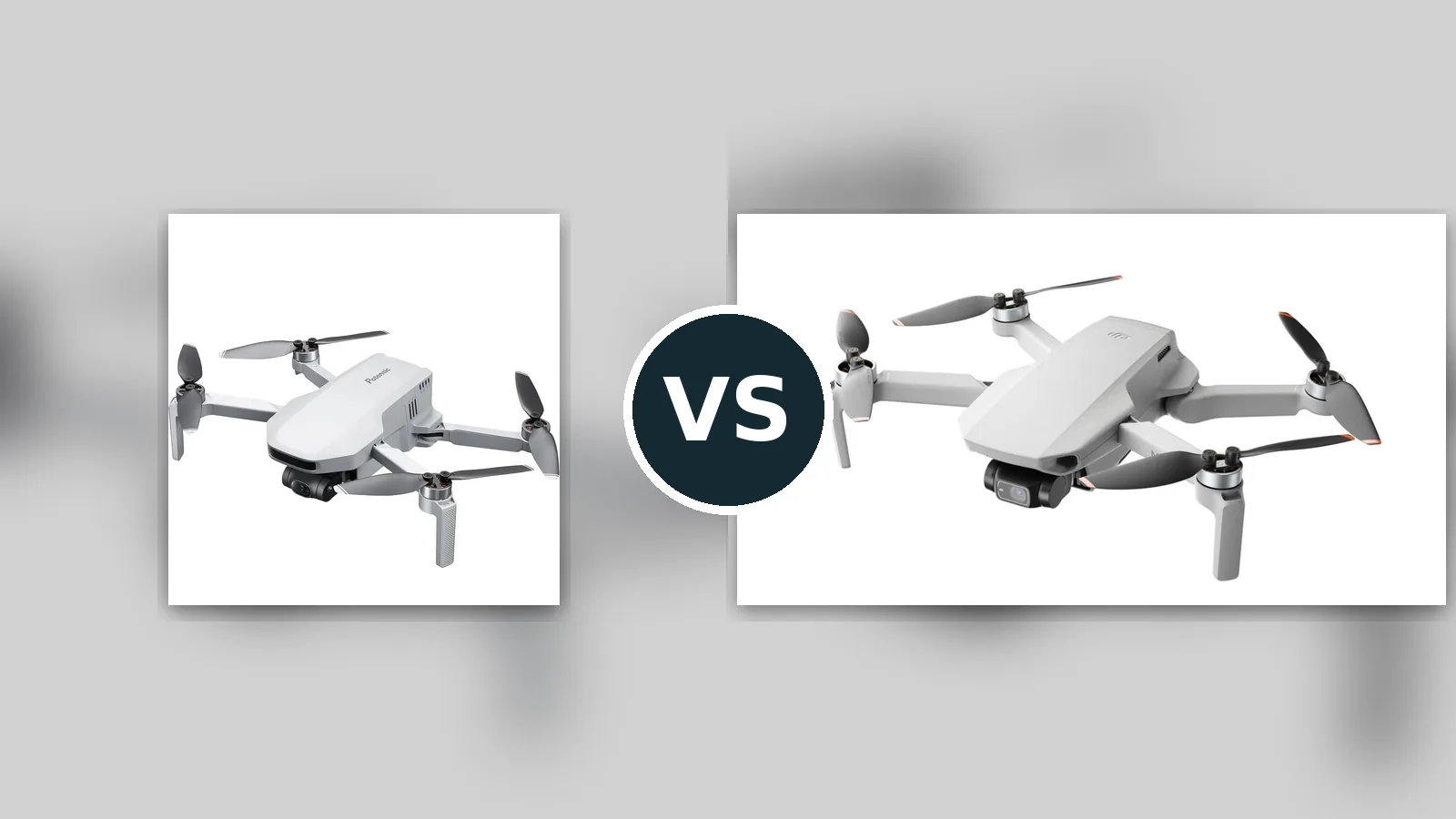
The potensic atom vs dji mini 2 question is really a question about time. The Mini 2 defined the sub-250g category back in 2020. The Atom is the 2023 challenger that copied DJI’s homework and added the one feature everyone wished the Mini 2 had: real subject tracking. On paper they look like twins: under 249 grams, 4K at 30 fps on a 3-axis gimbal, around half an hour per battery. The differences hide in the details: transmission range, sensor size, app polish, and what you can actually buy new.
Affiliate disclosure: As an Amazon Associate we earn from qualifying purchases. This page contains affiliate links. If you buy through them, we may earn a commission.
Atom for most buyers in 2026. Mini 2 for the purists.
Potensic Atom wins for most buyers: newer, cheaper, longer-rated flights, a smaller fold, and visual subject tracking, the one trick the Mini 2 never learned. DJI Mini 2 still wins on link reliability and image quality, with a bigger sensor and double the bitrate, but you will buy it renewed or used. Camera: Mini 2. Flight time: Atom, barely. Range: Mini 2, clearly. Tracking and value: Atom, and it is not close.
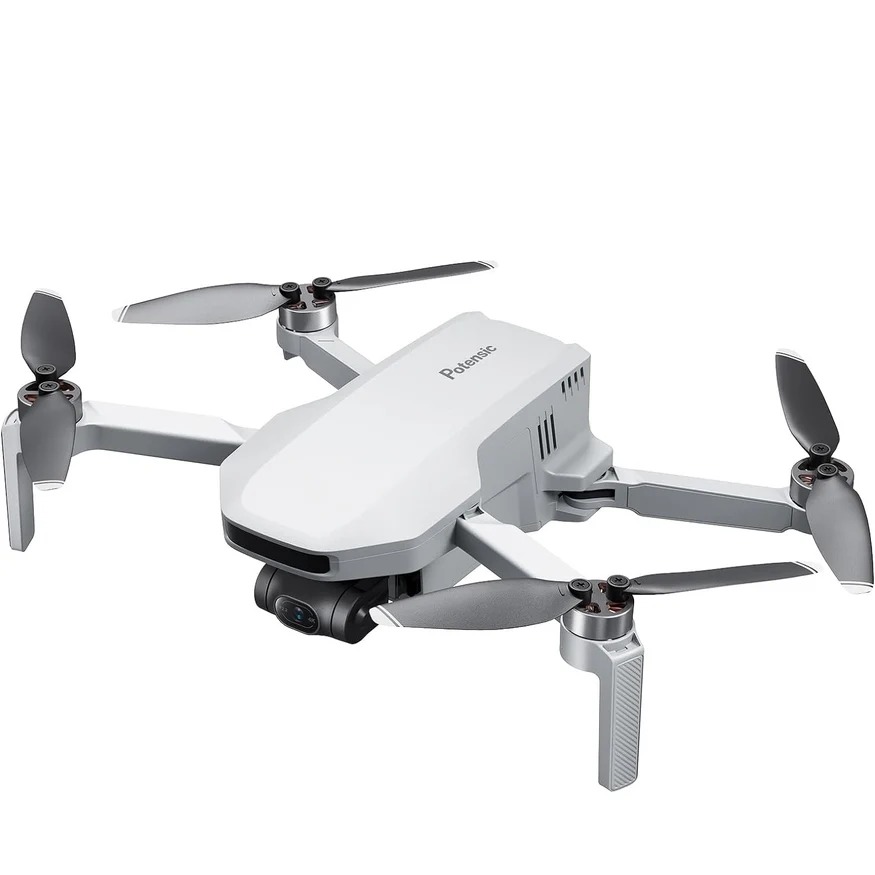
Potensic Atom
For buyers who want a new, warrantied 4K drone with subject tracking at a budget price
- Visual subject tracking (Follow and Orbit) the Mini 2 does not have
- New-unit pricing near $300 with full warranty
- Smaller 1/3-inch sensor and 6 km PixSync range trail DJI on quality and link
Check current price and available bundles on Amazon
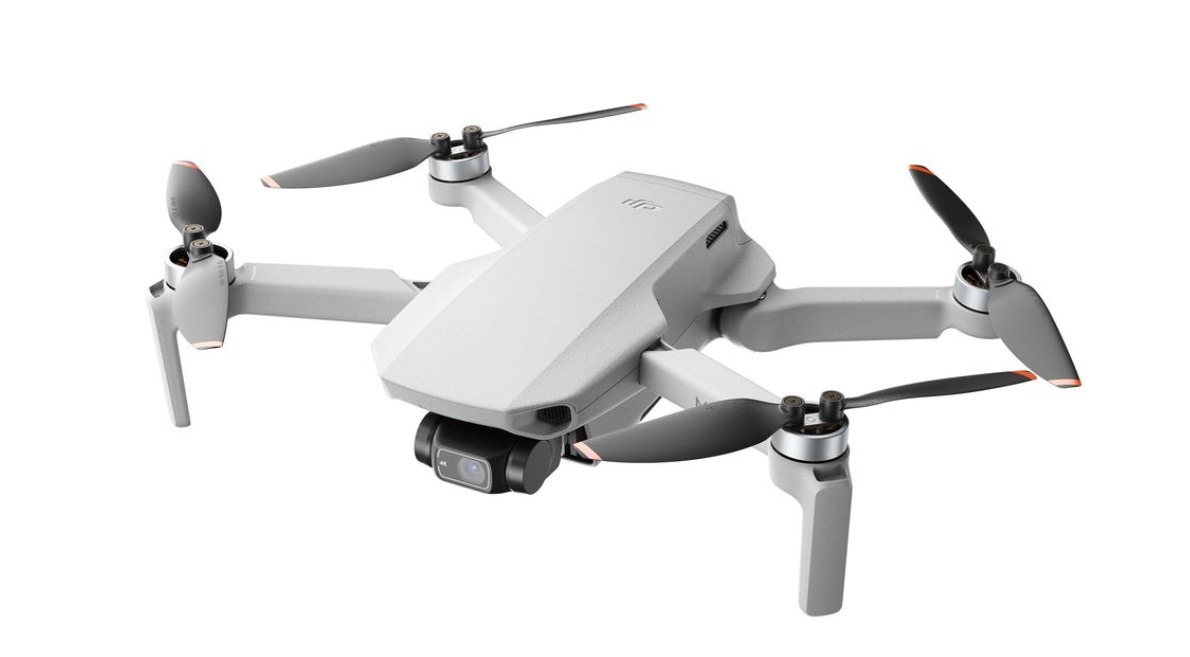
DJI Mini 2
For pilots who want DJI’s proven OcuSync link and bigger-sensor 4K, bought renewed
- OcuSync 2.0 with 10 km range, the most reliable sub-250g link
- 1/2.3-inch sensor, 100 Mbps bitrate, DNG RAW stills
- Discontinued: renewed or third-party listings only, budget for battery age
Check current price and available bundles on Amazon
Which drone fits your flying?
Start with your main use case. The best choice should solve your needs, without charging you for features you will rarely use.
Most people want the same thing: a tiny drone that shoots real 4K, fits in a jacket pocket, and skips FAA registration for recreational flying. Both drones check those boxes. The honest split is new versus proven. The Atom is the modern budget pick: launched in 2023, matching the Mini 2 on headline specs, then adding visual subject tracking and a $299 launch price that undercut the Mini 2 by $150. It is still sold new with a warranty, which matters.
The Mini 2 is the proven classic: debugged platform, polished DJI Fly app, parts everywhere, and an OcuSync 2.0 link that remains the gold standard. Its bigger sensor and 100 Mbps video record visibly better 4K. The catch is the calendar: DJI discontinued it years ago, so you are shopping renewed and used listings where battery age is the hidden tax. Shoot solo content and the Atom’s tracking wins. Shoot landscapes you will grade and the Mini 2’s sensor wins. Pick the strength you will use weekly.
Potensic Atom
View on Amazon ↗DJI Mini 2
View on Amazon ↗Used-market heads up: DJI discontinued the Mini 2, so the Amazon listing above is a third-party or renewed offer. Any Mini 2 battery is now several years old, so expect less than the rated 31 minutes unless the seller confirms fresh packs. Check the seller’s return terms before you buy.
Choose Potensic Atom if…
- Subject tracking matters: Follow and Orbit keep you framed without a second operator.
- You want a new drone with a warranty at a budget price, not a used-market gamble.
- You shoot casual 4K in good light, where the 3-axis gimbal does the heavy lifting.
- You can accept a smaller 1/3-inch sensor, 50 Mbps video, and 6 km range.
Choose DJI Mini 2 if…
- Image quality and link reliability top your list: bigger sensor, 100 Mbps, RAW, OcuSync 2.0.
- You value DJI’s polished Fly app, huge parts ecosystem, and years of community knowledge.
- You shoot footage you will edit and grade, where sensor and bitrate show.
- You can accept buying renewed or used, with the battery-age homework involved.
Potensic Atom: The Budget Upstart That Learned the Tricks
A 2023 drone built to answer one question: what if the Mini 2 had subject tracking and cost $150 less?
Overview: a Mini 2 shaped hole, filled
The Atom, launched in mid-2023, was the moment that bet paid off. The formula: take the sub-249g folding formula DJI proved, match it where it counts, then add the features DJI reserved for pricier models. At 249 grams it slides under the FAA recreational registration threshold, and it folds to 88 by 143 by 58 mm, genuinely pocketable in a way the Mini 2 does not quite manage.
Launch pricing told the story: $299.99 standard, $399.99 for the Fly More Combo with three batteries, a parallel hub, and a case. That was $150 less than the Mini 2’s launch price, and the gap has held. Reviewers called it the first real threat to DJI’s entry-level dominance, and it remains the default pick for buyers who want a new 4K drone without the DJI tax.
Camera: Sony sensor, 3-axis gimbal, honest 4K
The Atom’s camera centers on a 1/3-inch Sony CMOS sensor shooting 12MP stills and 4K at 24, 25, or 30 fps, with 2.7K and 1080p up to 60 fps below that. The headline upgrade is the true 3-axis mechanical gimbal, tilting -90 to +20 degrees. In good daylight the results are genuinely good: sharp, well-exposed 4K with natural color. A stabilized 4K camera at this price simply did not exist before it.
The compromises are predictable. The smaller sensor shows its price in low light: noise arrives earlier at dusk and dynamic range is narrower in harsh contrast. Video tops out at 50 Mbps in H.264, half the Mini 2’s bitrate, so there is less headroom for grading and softer fine detail in foliage or water. Stills are 12MP JPEG, with some retailers listing DNG RAW. The 3x digital zoom helps framing at distance at the usual sharpness cost.
Flight performance: 32 minutes and SurgeFly manners
Potensic rates the Atom at 32 minutes per 2230 mAh battery in calm conditions, and reviewers report 25 to 28 useful minutes of mixed flying. The Fly More Combo’s three batteries and 60W parallel hub make a proper shooting day. SurgeFly offers Video, Normal, and Sport modes, with Sport hitting 16 m/s in a claimed 2.8 seconds. Wind resistance is Level 5, about 38 km/h, matching the Mini 2.
PixSync 3.0 claims 6 km of range with a 720p live feed. Reviewers report a solid link at typical visual-line-of-sight distances, but it lacks OcuSync’s confidence in congested environments. For open parks, beaches, and countryside, it is perfectly adequate. Positioning runs on GPS, GLONASS, Galileo, and BeiDou, with downward vision and infrared sensing for stable hovering, and return-to-home triggers on low battery, signal loss, or a button press.
Intelligent features: the tracking Mini 2 owners wanted
This is where the Atom earns its place. Visual subject tracking, with Follow and Orbit modes, locks onto a moving subject and keeps it framed. The Mini 2 has nothing like it, and its absence was the most common Mini 2 complaint. The Atom’s tracking can lose a subject in heavy backlight or dense trees, but for jogging, cycling, or walking shots it is genuinely useful, not a gimmick.
QuickShots cover Pull-away, Rocket, Circle, Spiral, and Boomerang with one tap, plus an interval timer for time-lapses. The PotensicPro app handles camera settings, firmware updates, and voice prompts during flight. It works but lacks DJI Fly’s polish, and early connectivity quirks are mostly fixed via updates. The controller needs your phone, runs up to 4 hours on its 3000 mAh pack, and stores its sticks underneath.
Atom strengths
- Subject tracking the Mini 2 never got, genuinely useful for solo shooters
- New-unit pricing near $300 with full warranty
- 32-minute rated flight time; fast 3-battery parallel charging
- Smaller fold than the Mini 2 for true pocket portability
Atom weaknesses
- 1/3-inch sensor and 50 Mbps video trail the Mini 2 on image quality
- 6 km PixSync link is solid but not OcuSync-confident at range
- PotensicPro app works but lacks DJI Fly polish
DJI Mini 2: The Classic That Wrote the Rulebook
Launched November 2020, discontinued years ago, still the benchmark every budget drone is judged against.
Overview: the drone that made sub-250g serious
DJI launched the Mini 2 on November 4, 2020, fixing the original Mavic Mini’s flaws: real 4K, RAW photos, and OcuSync replacing Wi-Fi. At 239 grams it folds to 138 by 81 by 58 mm, launched at $449 ($599 Fly More). It is now officially discontinued, replaced by the Mini 2 SE and Mini 4K. That matters enormously in 2026: every Mini 2 you find is old stock, renewed, or used, and its batteries are aging whether flown or not.
A well-kept Mini 2 with healthy batteries still outshoots most new budget drones, and the used market is flooded with them. The trick is the word healthy: lithium packs lose capacity on shelves, and a 2021 pack might deliver 20 minutes instead of 31. Buy from sellers with clear returns, ask about cycle counts, and treat listings without battery details as projects, not bargains.
Camera: the bigger sensor still shows
The Mini 2’s 1/2.3-inch sensor is the biggest technical advantage here. It shoots 12MP stills in JPEG and DNG RAW, 4K at 24/25/30 fps, 2.7K and 1080p up to 60 fps, through a 24mm-equivalent f/2.8 lens with an 83-degree field of view. The 3-axis gimbal tilts -110 to +35 degrees. Video records at up to 100 Mbps, double the Atom’s bitrate: cleaner fine detail and more forgiving footage when you grade.
The Mini 2 wins on image quality: better dynamic range, cleaner dusk shadows, more natural color, and RAW stills with real editing latitude. Digital zoom runs 2x in 4K, 3x in 2.7K, 4x in 1080p. No 4K/60, no vertical video, no 10-bit color by 2026 standards, but for daylight 4K it remains the strongest image in the budget class.
Flight performance: OcuSync is the headline
DJI rates the Mini 2 at 31 minutes on its 2250 mAh pack; healthy batteries deliver 25 to 28 minutes of mixed flying, essentially identical to the Atom. Sport hits 16 m/s, wind resistance is Level 5. The difference is the link: OcuSync 2.0 reaches 10 km in FCC regions with superb anti-interference. Where PixSync gets nervous, OcuSync stays locked, which is worth real money near suburbs or trees.
Positioning uses GPS, GLONASS, and Galileo with downward vision for stable hovering, and return-to-home covers smart, low-battery, and failsafe triggers. The RC-N1 needs your phone and carries a 5200 mAh battery. The DJI Fly app remains the best-executed drone app at any price: clear telemetry, QuickTransfer at 20 MB/s, and Fly Spots for planning.
Intelligent features: QuickShots yes, tracking no
The Mini 2’s intelligent modes are the classic DJI set: QuickShots (Dronie, Helix, Rocket, Circle, Boomerang) plus Sphere, 180-degree, and Wide panoramas, all smooth and predictable. What it lacks is any subject tracking: no ActiveTrack, no follow-me. That was deliberate product segmentation in 2020, and it is the Mini 2’s most dated trait. Film yourself moving and this is a hard limit.
No obstacle sensing beyond downward vision, so it demands the same care as the Atom. What it offers is maturity: years of firmware refinement, an enormous parts ecosystem, and every problem already solved and documented online. For a used buyer that support network is genuine value, if the airframe and batteries check out.
Mini 2 strengths
- Bigger 1/2.3-inch sensor, 100 Mbps video, DNG RAW: best image in the class
- OcuSync 2.0 with 10 km range, the most trusted sub-250g link
- Mature platform, polished DJI Fly app, huge parts and knowledge base
- 10 grams lighter than the Atom at 239 g
Mini 2 weaknesses
- Discontinued: renewed or used only, with aging batteries
- No subject tracking of any kind, the Atom’s signature trick
- No 4K/60, no vertical video, dated by 2026 standards
Potensic Atom vs DJI Mini 2: The Specs That Actually Matter
Every figure below comes from the manufacturers’ official spec pages. Compare the exact battery, controller and bundle versions you intend to buy.
| Feature | Potensic Atom | DJI Mini 2 |
|---|---|---|
| Best suited to | Solo creators and beginners who want tracking, a new unit, and maximum value | Travel and landscape shooters who prioritize image quality and link reliability |
| Takeoff weight | 249 g (with battery, propellers, microSD) | 239 g international version (with battery and propellers) |
| Dimensions | Folded: 88 x 143 x 58 mm; unfolded with propellers: 300 x 242 x 58 mm | Folded: 138 x 81 x 58 mm; unfolded with propellers: 245 x 289 x 56 mm |
| Camera sensor | 1/3-inch Sony CMOS, 12MP, f/2.2 | 1/2.3-inch CMOS, 12MP, f/2.8, 24mm equivalent, 83-degree FOV |
| Video modes | 4K at 24/25/30fps, 2.7K at 24/25/30fps, 1080p up to 60fps; H.264, up to 50 Mbps | 4K at 24/25/30fps, 2.7K up to 60fps, 1080p up to 60fps; H.264, up to 100 Mbps |
| Photo resolution | 12MP JPEG (DNG RAW listed by some retailers) | 12MP JPEG + DNG RAW |
| Gimbal | 3-axis mechanical, tilt -90 to +20 degrees | 3-axis mechanical, tilt -110 to +35 degrees |
| Rated flight time | 32 minutes (2230 mAh battery, calm conditions) | 31 minutes (2250 mAh battery, windless conditions) |
| Real-world flight time | Not tested by us; reviewers report roughly 25 to 28 minutes of mixed flying | Not tested by us; healthy packs deliver roughly 25 to 28 minutes; aged packs deliver less |
| Transmission system | PixSync 3.0, up to 6 km max range, 720p live view | OcuSync 2.0, up to 10 km FCC (6 km CE), 720p/30fps live view |
| Max speed | 16 m/s Sport (0 to 16 m/s in 2.8 s claimed) | 16 m/s Sport |
| Wind resistance | Level 5, up to 38 km/h | Level 5, 8.5 to 10.5 m/s |
| Obstacle sensing | Downward vision + infrared for hovering only | Downward vision positioning only |
| GNSS | GPS + GLONASS + Galileo + BeiDou | GPS + GLONASS + Galileo |
| Controller and app | Phone-required remote, 3000 mAh (up to 4 h); PotensicPro app | RC-N1 phone-required remote, 5200 mAh; DJI Fly app |
| Launch price | $299.99 standard / $399.99 Fly More Combo (2023) | $449 standard / $599 Fly More Combo (2020, discontinued) |
| Main trade-off | Smaller sensor and weaker link than the Mini 2; less polished app | Only available renewed or used; no subject tracking; aging batteries |
Manufacturer ratings are lab figures; real-world flight time is lower. Mini 2 prices are launch reference prices. Last verified: October 20, 2026.
Potensic Atom
View on Amazon ↗DJI Mini 2
View on Amazon ↗Potensic Atom vs DJI Mini 2: Five Differences That Decide It
For each category, here is the difference, its practical impact and which buyer benefits.
1. Camera and image quality
Edge: DJI Mini 2Both shoot 4K at 30 fps on a 3-axis gimbal, and on a phone screen in bright daylight you might not tell them apart. Look closer and the Mini 2 pulls ahead: its 1/2.3-inch sensor gathers more light than the Atom’s 1/3-inch chip, giving cleaner dusk footage and wider dynamic range. The 100 Mbps bitrate doubles the Atom’s 50 Mbps, preserving fine detail, and DNG RAW stills give real editing latitude.
The Atom’s daylight 4K is sharp and well-exposed, but it is a JPEG-first pipeline tuned for pleasing results, not grading. Publish straight to social in good light and the gap is small. Edit, grade, or shoot at golden hour and the Mini 2’s advantage is obvious.
2. Flight time and range
Edge: DJI Mini 2On paper this is the closest category: 32 minutes rated for the Atom, 31 for the Mini 2, both delivering 25 to 28 minutes of real mixed flying on healthy batteries. The Atom’s one-minute edge evaporates in practice, and the Mini 2’s real-world question is battery confidence: a new Atom pack performs as rated, while a Mini 2 pack of unknown age might not.
Range is where the Mini 2 wins outright. OcuSync 2.0 at 10 km versus PixSync 3.0 at 6 km understates the gap: the real difference is link quality. OcuSync holds steady through interference that makes lesser systems stutter. The Atom’s link is fine for typical line-of-sight flying, but pilots who push distance or fly near suburbs will feel it.
3. Design and portability
Edge: Potensic AtomBoth dodge recreational FAA registration under 250 grams and both fold for travel. The Atom folds to 88 by 143 by 58 mm, a genuinely pocketable brick; the Mini 2 folds to 138 by 81 by 58 mm, slimmer but longer. The Atom’s compact fold is the more convenient shape in a jacket pocket. The Mini 2 counters at 239 grams, 10 grams lighter, though no one feels 10 grams in flight.
Build quality favors the Mini 2: DJI’s fit and finish feel a class above after five years of production refinement. The Atom feels solid for its price but unmistakably budget next to it. Neither has meaningful obstacle sensing, so both demand attentive flying. For pure travel convenience, the Atom’s smaller folded footprint wins.
4. Intelligent features
Edge: Potensic AtomThis is the Atom’s signature win and the reason this comparison exists. Visual subject tracking with Follow and Orbit lets the Atom lock onto you and film while you move. Runners, cyclists, and solo creators get shots that are impossible with the Mini 2, which has no tracking at all. The Atom’s tracking is not flawless, but it is real, usable, and the most fun feature either drone offers.
The Mini 2 answers with the best-executed QuickShots in the business plus excellent panoramas and superior app tools. But QuickShots are table stakes both drones have; tracking is the differentiator only one has. If your footage involves a moving subject and no camera operator, this is not close.
5. Price and value of the complete kit
Edge: Potensic AtomNew against new, this was never a contest: $299.99 versus $449, and $399.99 versus $599 for the Fly More Combos. In 2026 it gets weird because the Mini 2 is discontinued: renewed Mini 2 Fly More listings hover around $549, more than the drone cost new and more than a brand-new Atom Fly More Combo. You pay a premium for a used DJI badge.
Is the premium ever justified? If you specifically need the better sensor and OcuSync link and find a renewed unit with verified healthy batteries from a solid seller, maybe. But the default math favors the Atom: a new drone, a warranty, three fresh batteries and a hub for less than a renewed Mini 2 kit of uncertain provenance. Value is price divided by risk, and the Atom’s risk is near zero.
Potensic Atom vs DJI Mini 2: What You Gain and Give Up
Potensic Atom
Reasons to choose it
- Subject tracking with Follow and Orbit, a feature the Mini 2 lacks entirely
- New-unit pricing near $300 with warranty, zero used-market risk
- 32-minute rated flight time; fast 3-battery parallel charging
- Most pocketable fold of the two at 88 by 143 by 58 mm
- QuickShots, interval time-lapse, and 3x zoom cover the creative basics
Reasons to reconsider
- 1/3-inch sensor and 50 Mbps video trail the Mini 2, especially in low light
- 6 km PixSync link is good but not OcuSync-confident at distance
- PotensicPro app works but is less polished than DJI Fly
- Smaller ecosystem: fewer accessories, less community knowledge
DJI Mini 2
Reasons to choose it
- Best image in the budget class: 1/2.3-inch sensor, 100 Mbps, RAW stills
- OcuSync 2.0 with 10 km range, the most trusted sub-250g link
- Mature platform, polished DJI Fly app, huge parts availability
- 10 grams lighter at 239 g with premium DJI build quality
Reasons to reconsider
- Discontinued: renewed or used only, with battery-age risk on every unit
- No subject tracking, a hard limit for filming yourself in motion
- Renewed prices near $549 exceed its launch price and the Atom’s price
- No 4K/60, no vertical video, dated by 2026 standards
Check the bundle, not just the drone
The drone on the box is only half the purchase. Run through this checklist before you tap buy.
- Batteries, and battery age: A new Atom ships with fresh batteries. Any Mini 2 battery is years old, and lithium packs lose capacity on shelves. Ask renewed sellers about cycle counts, favor listings with clear returns, and test hover time on arrival. Under 22 minutes of hover means spent batteries.
- Controller: Both need your phone mounted; neither offers a built-in screen. The Atom’s controller runs up to 4 hours; the Mini 2’s RC-N1 carries 5200 mAh. Confirm the included phone cables match your device.
- Accessories: The Atom Fly More Combo’s hub charges three batteries in about 1.3 hours and is the best-value buy. For the Mini 2, a charging hub and spare props matter more since replacements come from the used market. Both need a U3/V30 microSD card.
- Listing: Confirm the exact model name before ordering. The Mini 2 listing is third-party or renewed, so read the seller rating, condition notes, and return terms carefully. For the Atom, confirm standard kit versus Fly More Combo, since contents differ.
- Local requirements: Both stay under 250 g, keeping recreational US flying free of FAA registration, but airspace rules still apply. Check your aviation authority’s current requirements before flying.
- Price timing: The Atom is regularly discounted around sales events. For the Mini 2, compare the renewed price against a new DJI Mini 4K, which sometimes costs less and comes with fresh batteries and a warranty.
The right choice comes down to new versus proven.
If you want the smart buy, get the Potensic Atom. It is new, warrantied, costs roughly half of a renewed Mini 2 kit, and its subject tracking does something the Mini 2 cannot do. For solo creators and beginners its daylight 4K satisfies most casual shooting. If you want the best image quality and the most reliable link in the class and will do the used-market homework, a vetted renewed Mini 2 remains superb. Just verify the batteries, buy from a seller with real returns, and accept the premium for proven hardware with no warranty. Eight out of ten buyers should take the Atom and never look back.
Still deciding?
Is the Potensic Atom actually better than the DJI Mini 2?
For most buyers in 2026, yes. The Atom is newer, cheaper, sold new with a warranty, and has subject tracking the Mini 2 never got. The Mini 2 fights back with a better camera and link, but renewed-or-used-only status erodes its value. Sold new at launch prices, the Mini 2’s image quality would make it a tougher call.
Should I buy a used DJI Mini 2 in 2026?
Only with homework. The airframe ages well but the batteries do not: any Mini 2 pack is years old and may deliver far less than 31 minutes. Buy from highly rated sellers with real returns, ask about cycle counts, and test hover time on arrival. If the price nears a new Mini 4K or Atom Fly More Combo, buy new instead.
Which has the better camera, the Atom or the Mini 2?
The Mini 2: larger 1/2.3-inch sensor, 100 Mbps bitrate doubling the Atom’s 50 Mbps, and DNG RAW stills. The gap is modest in bright daylight and obvious at dusk or when grading. The Atom’s camera is genuinely good for casual 4K, just not class-leading.
Do I need to register the Potensic Atom or DJI Mini 2?
For recreational US flying, no: both stay under 250 grams, exempting them from FAA registration. Commercial Part 107 flying has its own requirements. Rules differ by country and change, so check your aviation authority before your first flight.
Which drone is better for a complete beginner?
The Potensic Atom: a new drone with a warranty, beginner-friendly price, in-app tutorials and voice prompts, and tracking that flatters early footage. The Mini 2 flies easily too, but buying your first drone used adds risk beginners should avoid.
How were these drones compared?
We compiled specifications from the manufacturers’ official pages and cross-checked them against independent reviews. We did not fly either drone, so rated figures are the manufacturers’ lab numbers and real-world figures are attributed to the reviewers who measured them. ASINs were verified against exact product titles, model numbers, and UPC data before any affiliate link was written.
How this comparison was prepared
This is a research-based comparison. We did not fly either drone for this article. Every specification in the table comes from the manufacturers’ official documentation: the Potensic Atom product page (potensic.com) and DJI’s official Mini 2 specifications. Launch pricing was cross-checked against launch coverage from AppleInsider, Tech Advisor, and Pocket-lint. Independent reviewers measured roughly 25 to 28 minutes per battery for both drones on healthy packs. The Mini 2’s discontinued status and current third-party prices were confirmed via Amazon’s indexed listing data and pricehistory.app. ASINs were verified against exact product titles, model numbers, and UPC data before any affiliate link was written.
Sources and verification
- Potensic Atom official product page (potensic.com, accessed October 20, 2026): weight, dimensions, Sony sensor, video modes, gimbal, flight time, PixSync range, and pricing
- DJI Mini 2 official specifications (dji.com, accessed October 20, 2026): weight, dimensions, camera, flight time, OcuSync range, and sensing figures
- DJI Mini 2 launch coverage (AppleInsider, Pocket-lint, Tech Advisor, November 2020): launch pricing, bundle contents, and feature descriptions
- Digital Camera World Potensic Atom review: camera performance and handling assessment
- MakeUseOf Potensic Atom review: flight time, transmission, and wind resistance observations
- DroneRater Potensic Atom review (2026): current-market value assessment versus DJI alternatives
- B&H Photo Potensic Atom listings: detailed spec sheet cross-check including DNG and battery figures
- Half Chrome DJI Mini 2 full specs: transmission, zoom, and QuickShots verification
- ASIN verification: Potensic Atom Fly More Combo (B0CF8NXJ57, UPC 850045729615, model ATOM) and DJI Mini 2 Fly More Combo (B08JGX61H7, model CP.MA.00000306.01) confirmed against Amazon-indexed title, model number, and UPC data via third-party price trackers
Last verified: October 20, 2026. Bundle availability, pricing, and specifications may vary by region and version. Prices in this article are launch reference prices except where noted; check the live Amazon listing for the current price.