The mavic 3 classic vs mini 5 pro debate is really a question about what era of drone you want to buy into. The Mavic 3 Classic is a retired flagship: a 2022 heavyweight with a 4/3 Hasselblad camera, 46 minutes of rated flight time, and image quality that still embarrasses newer drones. You can no longer buy it from DJI, so every listing is retail leftover or used stock. The Mini 5 Pro is the opposite story: a brand-new 2025 sub-250g drone with the first 1-inch sensor in the Mini line, forward-facing LiDAR, and true vertical shooting. It is current, it is tiny, and in the United States it only exists through third-party sellers. We compared the camera, flight performance, portability, and real-world buying conditions so you can decide whether the legend or the newcomer deserves your money.
As an Amazon Associate, we earn from qualifying purchases. Affiliate disclosure: As an Amazon Associate I earn from qualifying purchases. This page contains affiliate links. If you buy through them, we may earn a commission.
Mini 5 Pro for most buyers. Classic for the used-market hunter.
DJI Mini 5 Pro is the pick for most buyers in 2026: it is new, it weighs 249.9 g, its 1-inch sensor shoots 50MP stills and 4K/120fps, and forward LiDAR gives it obstacle sensing that works in the dark. DJI Mavic 3 Classic is the pick if you want the biggest sensor for the least money and you are comfortable buying used: its 4/3 Hasselblad camera, adjustable aperture, and 46-minute flight time still beat the Mini 5 Pro on imaging specs, but you are buying a discontinued drone with aging batteries and no warranty. Camera sensor size: Mavic 3 Classic. Video resolution ceiling: Mavic 3 Classic (5.1K/50). Flight time: Mavic 3 Classic (46 vs 36 minutes). Portability and regulation: Mini 5 Pro, easily. Night obstacle sensing: Mini 5 Pro. Buying new with confidence: Mini 5 Pro. Best value per sensor inch on the used market: Mavic 3 Classic.
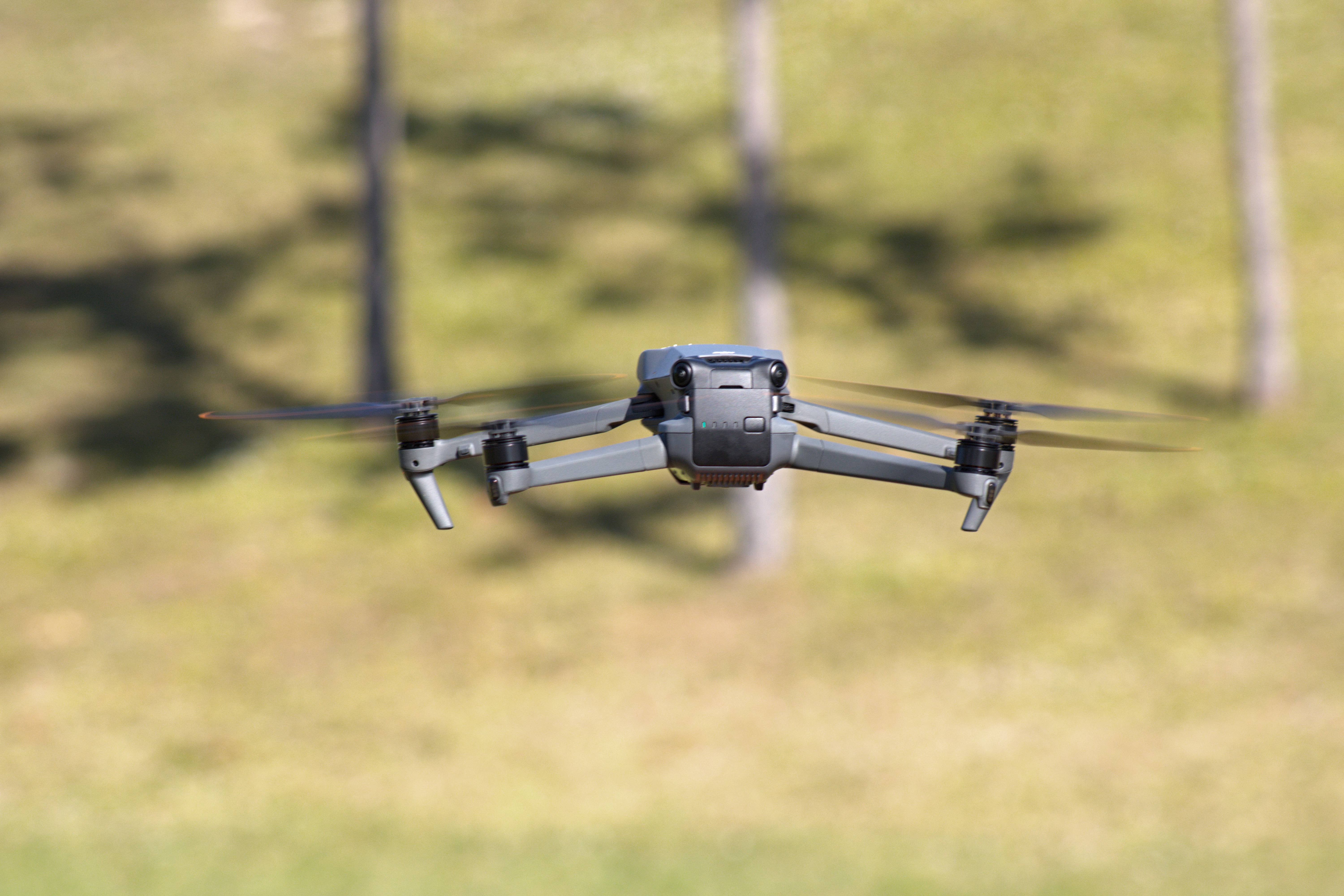
DJI Mavic 3 Classic
For pilots who want flagship 4/3 image quality and do not mind buying used
- 4/3 CMOS Hasselblad camera with adjustable f/2.8 to f/11 aperture and 12.8 stops of dynamic range
- 5.1K/50fps and 4K/120fps video with 10-bit D-Log, plus 46 minutes of rated flight time
- Discontinued: only retail leftover or used stock remains, and batteries are aging
Used-market listing: verify the seller, controller, battery, and return terms
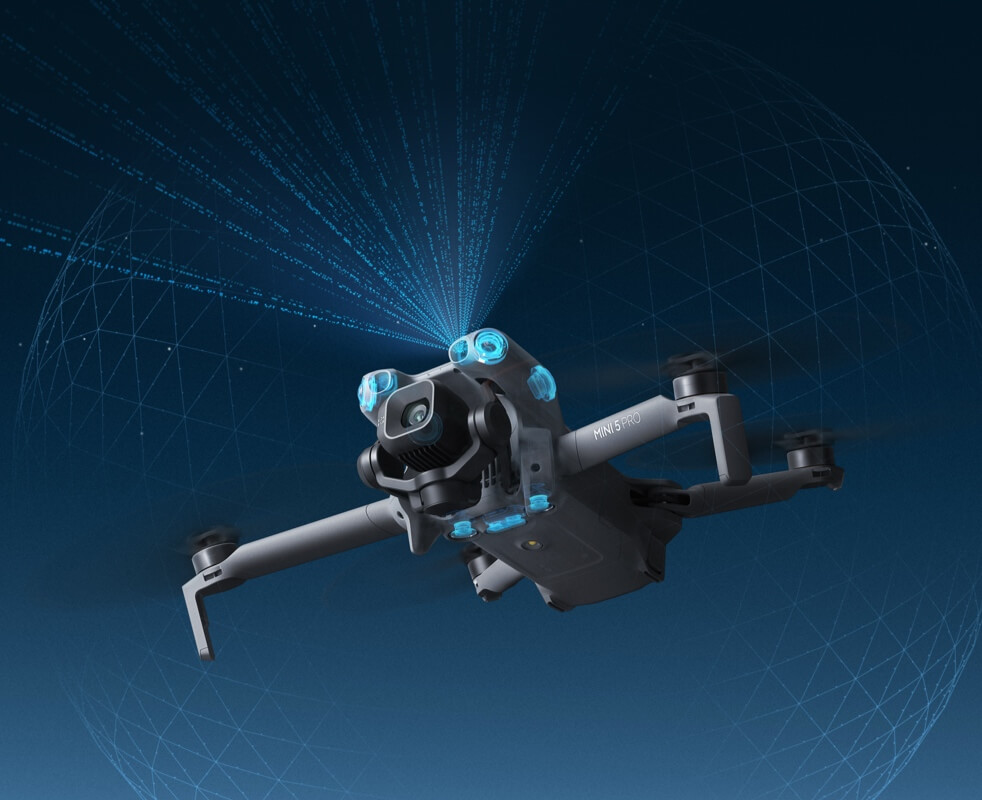
DJI Mini 5 Pro
For creators who want a 1-inch sensor in a sub-250g travel drone
- First 1-inch sensor in a Mini: 50MP stills, 4K/120fps slow motion, true vertical shooting
- Forward-facing LiDAR plus omnidirectional sensing that works in near darkness
- Not sold by DJI in the US: Amazon stock comes from third-party sellers only
Third-party sellers only in the US: check the “Sold by” line before checkout
Which drone fits your flying?
Two drones, two philosophies. Use this grid to see where you land before reading the details.
Choose the DJI Mavic 3 Classic if…
- You want the best possible image quality under $1,500 and are comfortable buying used or leftover stock
- You shoot landscapes, real estate, or client work where a 4/3 sensor and 5.1K video justify the weight
- You grade footage in post and want 10-bit D-Log, 12-bit RAW, and a real adjustable aperture
- You fly long, planned sessions and want 46-minute endurance with fewer swaps
- You already own a compatible DJI controller and can buy a drone-only body cheap
Choose the DJI Mini 5 Pro if…
- You want a current drone you can buy new with fresh batteries and years of firmware support ahead
- Travel and portability matter: a 249.9 g pocketable drone you will actually carry every day
- You shoot vertical video for phones and want true 90-degree gimbal rotation, not a crop
- You fly at dusk or in low light and want LiDAR obstacle sensing
- You prefer simple rules: near-250g weight keeps registration easy in most countries
Mavic 3 Classic vs Mini 5 Pro: The 4/3 Hasselblad Deep Dive
What the Classic was, what it still does best, and what buying one in 2026 involves.
Overview: the one-camera Mavic 3
DJI launched the Mavic 3 Classic in November 2022 as the value play in the Mavic 3 family: the standard Mavic 3 minus its secondary telephoto camera, keeping the part everyone wanted, the 20MP 4/3 Hasselblad main camera, on the same 895 g airframe with the same 46-minute battery and O3+ transmission. Launch pricing was $1,599 with the RC-N1, $1,749 with the DJI RC, or $1,179 as a drone-only body.
Then the lineup moved on: the Mavic 3 Pro in 2023, the Air 3S, and the Mavic 4 Pro in 2025. Production of the Mavic 3 series wound down in early 2025, and DJI’s own store now lists the Classic as discontinued. That is the single most important fact about this drone in 2026: you cannot buy a new one from DJI. Every Amazon listing and forum sale is leftover new-old stock or a used aircraft. The hardware has not gotten worse, the 4/3 sensor still outclasses everything in the Mini line, but the buying experience is a used-market exercise, and this section ends with exactly what to check before you pay.
Camera system: the 4/3 Hasselblad L2D-20c
The camera is the entire reason the Classic still matters. The 4/3 CMOS sensor captures 20MP stills (5280 by 3956) in JPEG or 12-bit DNG RAW, with 12.8 stops of native dynamic range and Hasselblad’s Natural Colour Solution. The 24mm-equivalent lens offers an 84-degree field of view and a real adjustable aperture from f/2.8 to f/11, something no Mini drone offers: stop down for sharper landscapes, open up for low light.
Video records 5.1K at up to 50fps, DCI 4K and 4K at up to 120fps, and Full HD at up to 200fps, in H.264 or H.265 at up to 200 Mbps, with 10-bit D-Log, D-Log M, HLG, and a dedicated Night Shots mode. Against the Mini 5 Pro’s 1-inch sensor, the larger 4/3 chip means cleaner shadows and more grading latitude. Two honest limits: no telephoto camera, and no native vertical shooting, so vertical video means cropping in post.
Flight performance: the long-legged cruiser
The Classic remains one of the longest-flying consumer drones ever made: 46 minutes rated, 40 minutes hovering, up to 30 km max flight distance. Real-world numbers run lower, but the gap over the Mini 5 Pro is real: fewer battery swaps per location and longer hyperlapses. O3+ holds a 1080p/60fps live feed to 15 km under FCC rules, wind resistance is 12 m/s, and Sport mode hits 21 m/s. Omnidirectional binocular vision with APAS 5.0 handles obstacle avoidance. The 5000 mAh battery (77 Wh) charges in about 96 minutes, internal storage is 8 GB, and the drone carries built-in FAA Remote ID. At 895 g, registration is mandatory almost everywhere.
Intelligent features: the full Mavic 3 toolkit
The Classic inherited the complete suite: ActiveTrack 5.0, MasterShots, QuickShots, Hyperlapse, Panorama, Waypoint flights, Cruise Control, Advanced RTH, and high-speed QuickTransfer over Wi-Fi 6. It works with the RC-N1, DJI RC, and RC Pro, so used buyers can pair a drone-only body with a controller they already own.
Buying a Mavic 3 Classic in 2026: the used-market disclosure
Because the Mavic 3 Classic is discontinued, you are buying leftover or used stock, and the batteries are the weak point. LiPo packs degrade with age and cycles even on a shelf, so ask the seller for the charge-cycle count from the DJI Fly app and inspect listing photos for swelling. Verify the exact bundle in the listing title: drone, controller model (RC-N1 or DJI RC), battery count, and charger. Expect no manufacturer warranty and no DJI Care Refresh through marketplace sellers; the return window is your warranty. DJI’s spec page lists guaranteed software updates only through the end of 2026. The camera hardware is timeless, but the price has to reflect the risk and the seller has to earn your trust.
Mavic 3 Classic vs Mini 5 Pro: The 1-Inch Mini Deep Dive
DJI’s newest Mini packs a flagship-grade sensor into a sub-250g body. Here is what that means, and how to buy one in the US.
Overview: the first 1-inch Mini
DJI launched the Mini 5 Pro on September 17, 2025: the first Mini with a 1-inch sensor, a camera class previously reserved for the Air 2S, Air 3S, and Mavic lines. Paired with forward-facing LiDAR and the newest O4+ transmission in a 249.9 g folding body, reviewers quickly dubbed it a “mini Mavic.” The launch came with fine print that still shapes buying. DJI never released the Mini 5 Pro officially in the United States, citing local conditions and the evolving industry environment. Europe, Canada, and Asia got normal launches. That changed in March 2026, when the drone reached Amazon US through third-party sellers at about $759, matching launch pricing elsewhere. Stock has been reseller-driven ever since: available, but with gray-market-style caveats.
Camera system: 1-inch sensor, 50MP, true vertical
The 1-inch CMOS sensor captures 50MP stills (8192 by 6144) in JPEG or DNG RAW through a 24mm-equivalent f/1.8 lens with an 84-degree field of view. Against the Mini 4 Pro’s 1/1.3-inch sensor, the light-gathering jump is dramatic: cleaner high-ISO footage and low-light performance that makes dusk flying worthwhile. It is still a smaller sensor than the Classic’s 4/3 chip, with a fixed f/1.8 aperture and no aperture control. Video runs 4K at up to 60fps in HDR and up to 120fps for slow motion, plus Full HD at up to 240fps, in H.264 or H.265 at up to 130 Mbps, with 10-bit D-Log M, 10-bit HLG, and Normal profiles. The 3-axis gimbal rotates up to 225 degrees, enabling true vertical shooting: the camera physically turns 90 degrees for full-resolution vertical video instead of cropping. Internal storage is 42 GB, so a forgotten microSD card no longer ruins a shoot.
Flight performance: efficient, modern, honest about limits
DJI rates the Mini 5 Pro at 36 minutes with the standard 2788 mAh battery and up to 52 minutes with the Plus battery (4680 mAh), though the Plus battery pushes the drone over 250 g and is not sold in Europe. Real-world figures run lower: one reviewer reported 20 to 25 minutes depending on weather. O4+ holds a 1080p/60fps live feed to 20 km under FCC rules, wind resistance is 12 m/s, and Sport mode reaches 18 m/s. The headline feature is the sensing: omnidirectional binocular vision plus forward-facing LiDAR that detects obstacles in near darkness, down to about 1 lux, with a 0.5 to 25-meter range. DJI calls it Nightscape obstacle sensing, the first time a Mini has been genuinely trustworthy after sunset. GNSS uses dual-band L1 plus L5 across GPS, Galileo, and BeiDou for a faster lock.
Intelligent features: the newest DJI software stack
The Mini 5 Pro runs DJI’s current feature set: upgraded ActiveTrack 360° with better high-speed tracking, Waypoint flights, Cruise Control, MasterShots, QuickShots, Free Panorama, and Off-State QuickTransfer. It ships with the DJI RC-N3 in the base package, with RC 2 screen-controller bundles and Fly More combos at higher prices. A single battery charges in about 46 minutes.
Buying a Mini 5 Pro in the US: the availability caveat
DJI does not sell the Mini 5 Pro directly in the United States, and there is no official DJI US store listing. American buyers get theirs through third-party sellers on Amazon, a supply line that started in March 2026 and remains reseller-driven: stock appears and disappears with shipments, prices move between roughly $679 and $759, and the listing you see today may be gone next week. DJI Care Refresh is not available to US buyers, and warranty support depends entirely on the seller. Read the “Sold by” line before checkout, confirm the exact bundle, and make sure the return policy is one you can live with. One more wrinkle: DJI rates the drone at 249.9 g with a ±4 g manufacturing tolerance, and at least one industry source has reported production units weighing 252 to 253 g. US rules allow no tolerance at 250 g, so if your unit weighs in over the line, FAA registration applies even to recreational flying. Weigh your aircraft and register if needed.
Mavic 3 Classic vs Mini 5 Pro: The Specs That Actually Matter
Manufacturer ratings are lab figures; real-world flight time is lower. Prices shown are launch reference prices; check the live Amazon listing for the current price.
| Feature | DJI Mavic 3 Classic | DJI Mini 5 Pro |
|---|---|---|
| Takeoff weight | 895 g | 249.9 g (DJI states ±4 g manufacturing tolerance) |
| Dimensions (folded) | 221 x 96.3 x 90.3 mm | 157 x 95 x 68 mm |
| Sensor and lens | 4/3 CMOS Hasselblad, 20MP, 24mm, f/2.8 to f/11 adjustable | 1-inch CMOS, 50MP, 24mm, f/1.8 fixed |
| Photo resolution | 20MP (5280 x 3956), JPEG and 12-bit DNG RAW | 50MP (8192 x 6144), JPEG and DNG RAW |
| Video modes | 5.1K to 50fps; 4K to 120fps; FHD to 200fps | 4K to 60fps HDR; 4K to 120fps; FHD to 240fps |
| Color and codecs | 10-bit D-Log/D-Log M/HLG; up to 200 Mbps | 10-bit D-Log M/HLG; up to 130 Mbps |
| Vertical capture | Crop in post; no native vertical mode | Native true vertical: full-resolution vertical video |
| Gimbal | 3-axis mechanical (tilt, roll, pan) | 3-axis mechanical with up to 225-degree roll rotation |
| Obstacle sensing | Omnidirectional vision with APAS 5.0; no LiDAR | Omnidirectional vision plus forward LiDAR (works to ~1 lux) |
| Subject tracking | ActiveTrack 5.0, MasterShots, Waypoints | ActiveTrack 360°, Waypoints, MasterShots |
| Rated flight time | 46 minutes (40 minutes hovering); 30 km max flight distance | 36 minutes standard; 52 with Plus battery; 21 km max distance |
| Real-world flight time | Not tested; community reports roughly 35 to 40 minutes calm | Not tested; reviewers report roughly 20 to 25 minutes |
| Max speed | 21 m/s in Sport mode | 18 m/s in Sport mode (19 m/s with Plus battery) |
| Video transmission | DJI O3+, up to 15 km FCC, 1080p/60fps live view | DJI O4+, up to 20 km FCC, 1080p/60fps live view |
| Wind resistance | 12 m/s (Level 5) | 12 m/s (Level 5) |
| Internal storage | 8 GB, plus microSD slot | 42 GB, plus microSD slot |
| Controller and bundle | Launched at $1,599 with RC-N1; $1,179 drone-only; works with RC Pro | Ships with RC-N3; about $759 base; Fly More combos available |
| Availability in 2026 | Discontinued; leftover or used stock only, no warranty | Current model; third-party Amazon sellers only in the US |
Manufacturer ratings are lab figures; real-world flight time is lower. Prices shown are launch reference prices; check the live Amazon listing for the current price. Last verified: October 20, 2026.
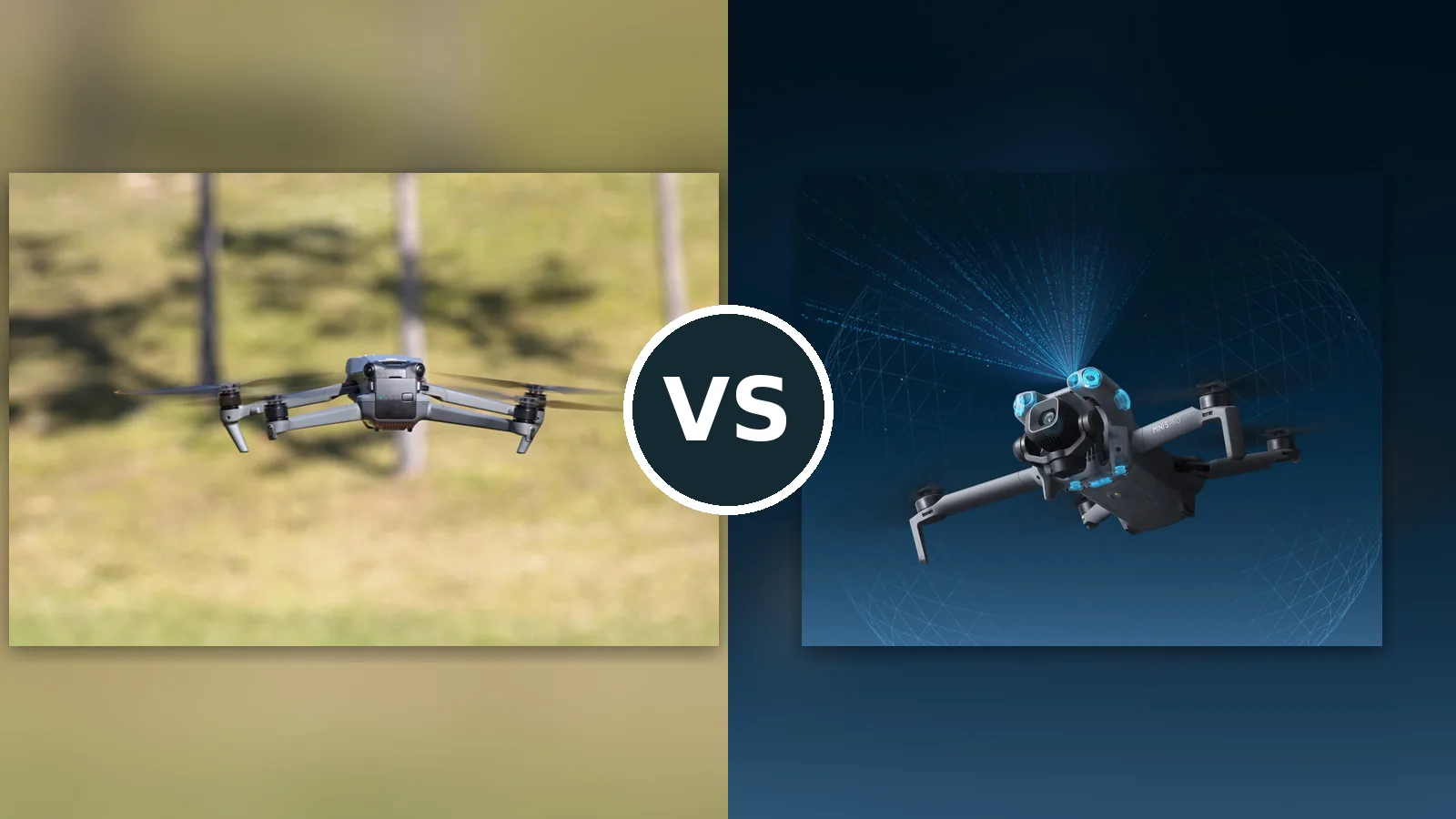
DJI Mavic 3 Classic (left, orange) and DJI Mini 5 Pro (right, blue):
Mavic 3 Classic vs Mini 5 Pro: Five Differences That Matter
For each category, here is the difference and which buyer benefits.
1. Camera quality: 4/3 Hasselblad vs 1-inch
Edge: Mavic 3 ClassicThe Classic’s 4/3 sensor is roughly twice the area of the Mini 5 Pro’s 1-inch chip, and physics still counts: more light per pixel means cleaner shadows, better dynamic range, and more forgiving files in post. Add the adjustable f/2.8 to f/11 aperture, 12-bit RAW, and 12.8 stops of dynamic range, and the Classic is simply the better camera for anyone who grades footage or prints stills. Its 5.1K/50fps ceiling also out-resolves the Mini’s 4K/120fps at a higher 200 Mbps bitrate. The Mini 5 Pro counters with 50MP stills for cropping, a faster f/1.8 lens, and true vertical shooting. For daylight social content most viewers would struggle to tell the difference, but in difficult light the bigger sensor wins, and it is not subtle.
2. Flight time and range: 46 minutes vs 36
Edge: Mavic 3 ClassicDJI rates the Classic at 46 minutes and the Mini 5 Pro at 36, and both shrink in the real world. Community testing puts the Classic around 35 to 40 minutes in calm conditions and the Mini 5 Pro around 20 to 25 minutes in mixed weather. That is a meaningful gap: the Classic can cover two or three locations on one battery, while the Mini 5 Pro owner plans on two to three batteries for the same outing. The Mini 5 Pro’s O4+ transmission reaches 20 km under FCC rules versus the Classic’s 15 km, a measure of link robustness rather than usable distance. The Plus battery pushes the Mini to a rated 52 minutes, but it also pushes the drone over 250 g and is not sold in Europe.
3. Design and portability: 895 g vs 249.9 g
Edge: Mini 5 ProThis is the most lopsided category, and it is not close. The Mini 5 Pro folds to pocket size and weighs 249.9 g, staying near the 250 g threshold that simplifies recreational flying rules in the US, Europe, and the UK. The 895 g Mavic 3 Classic is a dedicated camera-bag item with mandatory registration and stricter operating categories everywhere. A drone in your daily carry gets used on ordinary Tuesdays; a drone that needs its own case gets used on planned shoot days. The Classic’s heft buys better wind handling and a more stable hover, but most buyers will trade a little stability for a drone that is always there.
4. Intelligent features and obstacle sensing
Edge: Mini 5 ProBoth drones have omnidirectional sensing, but the Mini 5 Pro’s system is a generation newer. Its forward-facing LiDAR works in near darkness, down to about 1 lux, where vision-only systems go blind, making it meaningfully safer for dusk flights and shoots that run past sunset. Its upgraded ActiveTrack 360° also handles high-speed tracking better than the Classic’s ActiveTrack 5.0. The Classic counters with a complete, battle-tested toolkit: APAS 5.0, MasterShots, Waypoints, and Advanced RTH. But its firmware story has an end date, with DJI guaranteeing updates only through the end of 2026, while the Mini 5 Pro is at the start of its support life.
5. Price and value: new vs used math
Edge: TieThis cannot be scored without naming which market you are shopping. The Classic cannot be bought new from DJI, while the Mini 5 Pro sells for about $759 through Amazon resellers. A used Classic typically changes hands for roughly the price of a new Mini 5 Pro base kit, which means choosing between a bigger sensor with no warranty and a smaller sensor with fresh batteries. Run the total cost honestly: a used Classic may need a replacement battery sooner, while a Mini 5 Pro needs extra batteries to match the Classic’s endurance, and US buyers get no DJI Care Refresh on either side of this deal.
Mavic 3 Classic vs Mini 5 Pro: What You Gain and Give Up
DJI Mavic 3 Classic
Reasons to choose it
- 4/3 Hasselblad sensor with adjustable f/2.8 to f/11 aperture and 12-bit RAW: the best image quality here
- 5.1K/50fps and 4K/120fps at up to 200 Mbps with 10-bit D-Log: serious grading headroom
- 46-minute rated flight time and 30 km max distance: the longest legs here by a wide margin
- Mature platform with the full Mavic 3 suite: ActiveTrack 5.0, MasterShots, Waypoints, APAS 5.0
- Used prices can undercut every new drone with a comparable sensor
Reasons to reconsider
- Discontinued: leftover or used stock only, with aging batteries and no manufacturer warranty
- 895 g means mandatory registration and stricter rules in most countries
- No telephoto, no native vertical shooting: the feature set is frozen in 2022
- Software updates guaranteed only through the end of 2026
- 8 GB of internal storage is small, so a microSD card is mandatory
DJI Mini 5 Pro
Reasons to choose it
- First 1-inch sensor in a Mini: 50MP RAW stills and 4K/120fps at 249.9 g
- Forward LiDAR plus omnidirectional vision: obstacle sensing that works in near darkness
- True vertical shooting: full-resolution vertical video with no cropping
- Current product with fresh batteries, current firmware, and O4+ transmission
- 42 GB of internal storage, 10-bit D-Log M and HLG, and a pocketable folded size
Reasons to reconsider
- Not sold by DJI in the US: third-party sellers only, no DJI Care Refresh stateside
- 1-inch sensor is smaller than the Classic’s 4/3 chip; fixed f/1.8 aperture
- Real-world flight time lands around 20 to 25 minutes, well under the 36-minute rating
- Weight tolerance means some units may cross 250 g and need FAA registration
- The Plus battery pushes past 250 g and is not sold in Europe
Check the listing, not just the drone
Neither drone is a normal retail purchase in 2026. Run through this checklist before you tap buy.
- Mavic 3 Classic batteries: Ask for the charge-cycle count from the DJI Fly app and inspect photos for swelling. A 2022-era battery with hundreds of cycles is a replacement waiting to happen.
- Mavic 3 Classic bundle: Confirm the controller model (RC-N1 or DJI RC), battery count, and charger. Make sure the listing is for the Classic, not the Mavic 3 or 3 Pro.
- Mini 5 Pro seller: Read the “Sold by” line. Third-party sellers are the only US supply; check ratings and return terms before checkout.
- Mini 5 Pro bundle: The base package includes the drone, DJI RC-N3, one battery, and spare propellers. Screen-controller or three-battery listings must name the RC 2 or Fly More combo.
- Mini 5 Pro weight: DJI rates it at 249.9 g with a ±4 g tolerance. Weigh your aircraft; if it reads 250 g or more, register it with the FAA before recreational flying.
The right choice comes down to new vs used.
If you want the best image quality your money can buy and you are comfortable shopping the used market with your eyes open, the Mavic 3 Classic remains a remarkable camera: a 4/3 Hasselblad sensor, real aperture control, 5.1K video, and 46-minute flights for roughly the price of a new Mini 5 Pro. Check the battery cycles, verify the bundle, and buy from a seller with a real return policy. If you want a current drone you can buy new, carry everywhere, and fly with confidence after dark, the Mini 5 Pro is the easy recommendation: a 1-inch sensor, LiDAR sensing, true vertical video, and sub-250g convenience in one pocketable package, with US supply through third-party sellers and no DJI Care Refresh, so read the “Sold by” line carefully.
Still deciding?
Is the Mavic 3 Classic still worth buying in 2026?
Yes, if you buy carefully and the price is right. The 4/3 Hasselblad camera, 5.1K video, and 46-minute flight time have not aged, and used prices can be hundreds less than any new drone with a comparable sensor. The risks are the used-market ones: aging batteries, no manufacturer warranty, and software updates guaranteed only through the end of 2026.
Is the Mini 5 Pro officially available in the US?
Not from DJI directly. Since March 2026 it has been available on Amazon US through third-party sellers, with prices moving between roughly $679 and $759 for the base package. DJI Care Refresh is not available to US buyers, so read the “Sold by” line before checkout.
Which has the better camera: the 4/3 sensor or the 1-inch sensor?
The Classic’s 4/3 sensor wins on pure image quality: it is larger, offers an adjustable f/2.8 to f/11 aperture, and records 5.1K at higher bitrates. The Mini 5 Pro’s 1-inch sensor counters with 50MP stills, a faster f/1.8 lens, and true vertical shooting. For grading and low light, pick the Classic. For social content and daylight travel shooting, the Mini 5 Pro is more than enough.
Which drone is better for travel?
The Mini 5 Pro, without contest. It folds to pocket size, weighs 249.9 g, and stays near the 250 g threshold that simplifies registration in most countries. The 895 g Classic needs its own case, mandatory registration everywhere, and stricter operating rules.
What should I check when buying a used Mavic 3 Classic?
Four things. First, the battery: ask for the charge-cycle count and look for swelling. Second, the bundle: confirm the controller model and battery count. Third, the seller: established feedback and a clear return policy matter more than a small discount. Fourth, the price: compare against the roughly $759 cost of a new Mini 5 Pro base kit.
How were these drones compared?
This is a research-based comparison. We compiled specifications from DJI’s official spec pages and launch materials, then cross-checked them against independent reviews and reporting from outlets like DroneXL, Notebookcheck, Adorama, and B&H Photo. We did not fly either drone for this article, so rated figures are DJI’s lab numbers and real-world figures are attributed to the reviewers who measured them. Amazon ASINs were verified by matching each ASIN against the exact product title in Amazon-indexed listing data before any affiliate link was written.
How this comparison was prepared
This is a research-based comparison. We did not fly either drone for this article. Every specification in the table comes from DJI’s official documentation, primarily the DJI Mavic 3 Classic specifications page and the DJI Mini 5 Pro product and specifications pages, with launch pricing and bundle contents cross-checked against DJI’s announcements and retailers including Adorama and B&H Photo. The Classic’s discontinued status was confirmed through DJI’s own store listing data. Mini 5 Pro US availability details, including the March 2026 Amazon arrival through third-party sellers and the absence of DJI Care Refresh stateside, were cross-checked across DroneXL’s deal coverage and MavicPilots community reporting. Real-world flight-time figures are attributed to the reviewers who measured them. Amazon ASINs were verified by matching each ASIN against the exact product title in Amazon-indexed listing data and third-party price trackers before any affiliate link was written.
Sources and verification
- DJI Mavic 3 Classic official specifications (dji.com, accessed October 2026): aircraft, camera, gimbal, sensing, transmission, and battery figures
- DJI Mini 5 Pro product page and specifications (dji.com, accessed October 2026): weight, dimensions, camera, flight time, and sensing figures
- DJI Mini 5 Pro launch announcement (September 17, 2025): launch date, 1-inch sensor, LiDAR, and feature descriptions
- Adorama and B&H Photo Mavic 3 Classic listings: detailed specifications, launch pricing, and discontinuation status
- Notebookcheck Mini 5 Pro launch coverage: pre-launch specifications and official press images
- Price-history trackers (pricehistory.app): ASIN-to-product-title confirmation for both drones
- ASIN verification: Mavic 3 Classic (B0BGPP46FT, standard RC-N1 controller edition) confirmed via 9to5Toys listing data; Mini 5 Pro (B0F6XJ7W9M, standalone RC-N3 package) confirmed via pricehistory.app product record with matching model number
Last verified: October 20, 2026. Bundle availability, pricing, and specifications may vary by region and version. Prices in this article are launch reference prices; check the live Amazon listing for the current price.