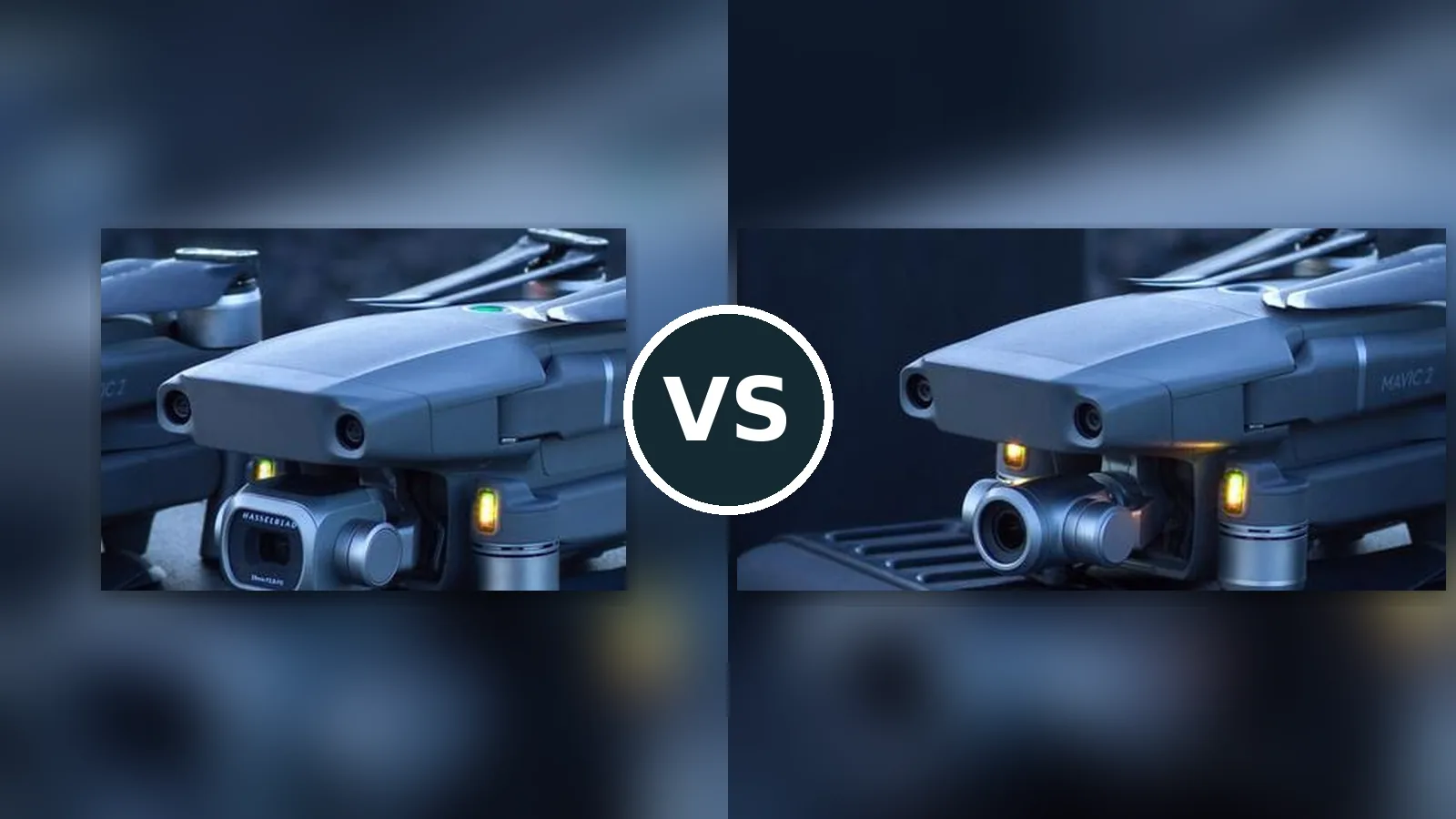
The mavic 2 pro vs mavic 2 zoom debate is one of the great sibling rivalries in drone history. DJI launched both on the same day in August 2018 on the exact same airframe, with the same flight time, the same obstacle sensing and a two-hundred-dollar price gap. The only real difference is the camera: the Mavic 2 Pro carries a Hasselblad co-engineered 1-inch sensor, while the Mavic 2 Zoom trades sensor size for a genuine 2x optical zoom. We compared the cameras, flight performance, intelligent features and used-market reality of both, because in 2026 you will buy these drones secondhand or renewed, not new off the shelf.
Affiliate disclosure: As an Amazon Associate I earn from qualifying purchases. This page contains affiliate links. If you buy through them, we may earn a commission. Both drones in this comparison are discontinued, so Amazon listings are renewed or third-party stock. Read our used-market and aging-battery guidance before you buy.
Pro for image quality. Zoom for flexibility.
DJI Mavic 2 Pro wins on pure image quality: its 1-inch Hasselblad sensor, adjustable f/2.8 to f/11 aperture and 10-bit Dlog-M give it better dynamic range, cleaner low light and far more grading room than the Zoom. DJI Mavic 2 Zoom wins on flexibility and value: the 24 to 48mm optical zoom, 48MP Super Resolution and one-of-a-kind Dolly Zoom are shots the Pro cannot take, and it usually sells for less. Camera: Pro. Zoom tricks: Zoom. Flight: tie. Value: Zoom.
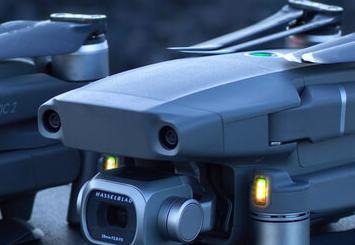
DJI Mavic 2 Pro
For photographers who want the best image quality in a folding drone of its era
- Hasselblad L1D-20c camera: 1-inch sensor, adjustable aperture, 10-bit Dlog-M and 10-bit HDR video
- Same proven airframe: 31-minute flights, OcuSync 2.0, omnidirectional sensing
- Discontinued: buy renewed or used, and check battery health carefully before you fly
Check current price and available bundles on Amazon
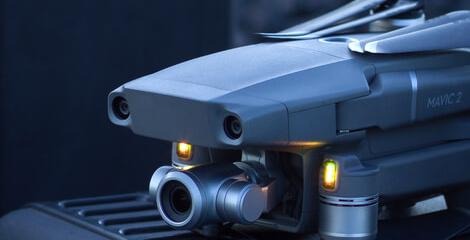
DJI Mavic 2 Zoom
For creators who want optical zoom, Dolly Zoom and Super Resolution stills
- 24 to 48mm 2x optical zoom plus 48MP Super Resolution mode and exclusive Dolly Zoom
- Identical flight platform: same battery, transmission and sensing
- Usually the cheaper pick on the used market, making it the value play
Check current price and available bundles on Amazon
Which drone fits your flying?
Start with your main use case. The best choice should solve your needs, without charging you for features you will rarely use.
You are not really choosing between two drones here. You are choosing between two cameras that share a body: one airframe, one battery, one transmission system, one sensing suite. The flight experience is identical; everything that happens after you press the shutter is where they diverge.
The Mavic 2 Pro is the photographer’s pick. Its Hasselblad L1D-20c wraps a 1-inch, 20-megapixel sensor in an f/2.8 to f/11 adjustable aperture, delivering cleaner sunsets, better highlight retention and files that survive serious grading. If you print or sell your work, the Pro keeps giving.
The Mavic 2 Zoom is the storyteller’s pick. The 24 to 48mm optical zoom frames tight shots from a legal, respectful distance and punches in mid-take without flying closer, while the Dolly Zoom QuickShot and 48MP Super Resolution mode are tricks the Pro cannot replicate.
One caveat: both drones are discontinued, so you will shop the used and renewed market, where battery age matters more than anything else. A 2018 battery with hundreds of cycles is a very different purchase than a lightly used one. The buying guide below covers exactly what to check.
Choose DJI Mavic 2 Pro if…
- Image quality is your main concern, from stills to graded video to low-light shooting.
- You want an adjustable aperture (f/2.8 to f/11) for real exposure control in bright light.
- You shoot 10-bit Dlog-M and want maximum latitude in post.
- You can accept losing the optical zoom, Dolly Zoom and Super Resolution tricks.
Choose DJI Mavic 2 Zoom if…
- Framing flexibility is your main concern, especially shooting subjects from a distance.
- You want the Dolly Zoom effect, Super Resolution 48MP stills, or 4x lossless zoom in Full HD.
- You prefer spending less: the Zoom is typically cheaper used.
- You can accept a smaller 1/2.3-inch sensor with less dynamic range and no Dlog-M.
Mavic 2 Pro: The Hasselblad Camera That Defined an Era
The first drone with an integrated Hasselblad camera, and still the image-quality king of the Mavic 2 family.
The L1D-20c camera, explained
The L1D-20c pairs a 1-inch, 20-megapixel CMOS sensor with a 28mm equivalent lens and, crucially, an adjustable aperture from f/2.8 to f/11. That aperture range is the Pro’s quiet superpower: most drone cameras of the era were stuck at a fixed f/2.8, which meant ND filters or blown highlights in bright daylight. The Pro stops down like a real camera instead.
The sensor is about four times the area of the original Mavic Pro’s, which shows up as cleaner shadows, better signal-to-noise ratio and genuinely usable footage at dusk. Hasselblad’s Natural Colour Solution (HNCS) handles the color science, and the 20-megapixel JPEG or DNG RAW files survive hard edits without falling apart.
Video that still holds up
On video, the Pro records 4K up to 30fps, 2.7K up to 60 and Full HD up to 120 for slow motion, all at up to 100 Mbps in H.265. The headline feature is 10-bit Dlog-M, which captures around a billion colors and gives far more grading room than 8-bit profiles, plus 10-bit HDR video with HLG support for correct tones on a 4K HDR TV. DJI’s Enhanced HDR photo mode blends bracketed exposures into ghost-free stills, with a claimed 14 stops of dynamic range. The honest gap: no 4K/60 on either Mavic 2 model.
Flight performance and the shared platform
The Pro flies exactly like the Zoom: same 907-gram airframe, same 3850 mAh four-cell battery, same 31 minutes of rated flight time at a steady cruise (29 hovering). Top speed is 72 km/h in Sport mode, and OcuSync 2.0 streams a 1080p live feed at up to 10 km FCC with auto-switching between 2.4 and 5.8 GHz.
The Mavic 2 was DJI’s first drone with obstacle sensing on all sides, ten sensors feeding a central processor, and APAS steers around obstacles without stopping. A bottom auxiliary light aids low-light landings, wind resistance is rated Level 5 (38 km/h), and the low-noise propellers keep it noticeably quieter than the original Mavic Pro.
Intelligent features
The Pro ships with the full DJI software suite: ActiveTrack 2.0 with 3D mapping and trajectory prediction, four Hyperlapse modes processed in camera, QuickShots (Dronie, Rocket, Circle, Helix, Boomerang, Asteroid), Point of Interest 2.0, Waypoint 2.0, TapFly and four panorama modes. One footnote: the Pro and Zoom camera modules are physically interchangeable, so verify which camera is actually attached to any used airframe you buy.
Mavic 2 Pro: strengths and weaknesses
Strengths: the 1-inch Hasselblad sensor remains the best image quality ever put on this airframe; the adjustable f/2.8 to f/11 aperture gives real exposure control; 10-bit Dlog-M and 10-bit HDR video grade beautifully; 20MP RAW stills print well; shares the proven 31-minute flight platform with full omnidirectional sensing.
Weaknesses: no optical zoom of any kind; 4K tops out at 30fps; at 907 g it needs registration in most countries and is no travel featherweight; discontinued, so batteries and parts come from the used market; some used units have heavy shutter or battery cycle counts that sellers do not disclose.
Mavic 2 Zoom: The Optical Zoom That Changed the Shot
DJI’s first folding consumer drone with a zoom lens, and still the only Mavic 2 that can reach out and touch a distant subject.
The zoom camera, explained
The Zoom’s camera pairs a 1/2.3-inch, 12-megapixel CMOS sensor with a 24 to 48mm equivalent lens at f/2.8 to f/3.8. That is a genuine 2x optical zoom with an internal mechanism, plus 2x digital zoom to simulate a 96mm telephoto with lossless Full HD video. You can fill the frame from a respectful distance, which matters wherever distance equals safety or legality.
Hybrid autofocus (phase plus contrast detection) is up to 40 percent faster than the original Mavic Pro’s, stills come as 12MP JPEG or DNG RAW, and ISO runs 100 to 3200. The smaller sensor is the honest trade: less dynamic range and more noise as light drops, though in bright daylight the gap narrows a lot.
Super Resolution and Dolly Zoom
Two features set the Zoom apart. Super Resolution captures and stitches nine telephoto frames into a 48-megapixel still at the wide 24mm composition, genuinely useful for landscapes you plan to crop or print. Dolly Zoom flies the drone backward while zooming in, holding the subject’s size constant as the background warps behind them: the classic cinema vertigo effect, automated, and impossible on the Pro.
Video and the shared platform
Video mirrors the Pro: 4K up to 30fps, 2.7K up to 60, Full HD up to 120, all at up to 100 Mbps in H.265, plus 4x lossless zoom in Full HD for a simulated 96mm reach. The Zoom skips Dlog-M (DJI tuned it for the Hasselblad camera) but offers flat profiles for grading. Everything else is identical to the Pro: 31-minute flights, 72 km/h, OcuSync 2.0, omnidirectional sensing and the same intelligent modes.
Mavic 2 Zoom: strengths and weaknesses
Strengths: the only Mavic 2 with optical zoom, and the framing freedom that comes with it; Super Resolution 48MP stills punch far above the 12MP sensor; exclusive Dolly Zoom effect; 4x lossless zoom in Full HD; typically the cheaper of the two on the used market; identical flight platform and safety systems to the Pro.
Weaknesses: the 1/2.3-inch sensor cannot match the Pro’s dynamic range or low-light cleanliness; no Dlog-M and no adjustable aperture beyond the zoom’s f/2.8 to f/3.8 range; no 4K/60; same discontinued reality as the Pro, with the same aging-battery homework for buyers.
Mavic 2 Pro vs Mavic 2 Zoom: The Specs That Actually Matter
Compare the exact battery, controller and bundle you intend to buy. Both are discontinued, so treat launch prices as history and check the live listing for today’s asking price.
| Feature | DJI Mavic 2 Pro | DJI Mavic 2 Zoom |
|---|---|---|
| Best suited to | Photographers prioritizing image quality, dynamic range and grading latitude | Creators wanting zoom framing, Dolly Zoom and Super Resolution |
| Takeoff weight | 907 g | 905 g |
| Dimensions | Folded 214 x 91 x 84 mm; unfolded 322 x 242 x 84 mm | Folded 214 x 91 x 84 mm; unfolded 322 x 242 x 84 mm |
| Camera sensor | 1-inch CMOS, Hasselblad L1D-20c, 20 megapixels | 1/2.3-inch CMOS, 12 megapixels |
| Lens | 28mm equivalent, FOV about 77 degrees, aperture f/2.8 to f/11 | 24 to 48mm equivalent 2x optical zoom (internal), aperture f/2.8 to f/3.8 |
| Photo resolution | 20MP (5472 x 3648), JPEG and DNG RAW | 12MP, JPEG and DNG RAW; 48MP via Super Resolution mode |
| Video modes | 4K up to 30fps, 2.7K up to 60fps, FHD up to 120fps | 4K up to 30fps, 2.7K up to 60fps, FHD up to 120fps; 4x lossless zoom in FHD |
| Color and codecs | 10-bit Dlog-M, 10-bit HDR (HLG), H.264/H.265, up to 100 Mbps | Flat color profiles (no Dlog-M), H.264/H.265, up to 100 Mbps |
| Internal storage | 8 GB, plus microSD card slot | 8 GB, plus microSD card slot |
| Rated flight time | 31 minutes (windless, steady cruise); 29 minutes hovering | 31 minutes (windless, steady cruise); 29 minutes hovering |
| Max speed | 72 km/h (44.7 mph) in Sport mode | 72 km/h (44.7 mph) in Sport mode |
| Wind resistance | Level 5 (up to 38 km/h) | Level 5 (up to 38 km/h) |
| Transmission system | OcuSync 2.0, 1080p feed, up to 10 km FCC / 6 km CE | OcuSync 2.0, 1080p feed, up to 10 km FCC / 6 km CE |
| Obstacle sensing | Omnidirectional (all sides), APAS, bottom auxiliary light | Omnidirectional (all sides), APAS, bottom auxiliary light |
| GNSS | GPS + GLONASS | GPS + GLONASS |
| Intelligent flight modes | ActiveTrack 2.0, Hyperlapse, QuickShots, POI 2.0, Waypoint 2.0, TapFly, panoramas | ActiveTrack 2.0, Hyperlapse, QuickShots including Dolly Zoom, POI 2.0, Waypoint 2.0, TapFly, panoramas |
| Launch price | $1,449 (August 2018); discontinued | $1,249 (August 2018); discontinued |
| Main trade-off | No zoom at all; you frame with the drone’s position | Smaller sensor; less dynamic range and low-light ability |
Manufacturer ratings are lab figures; real-world flight time is lower. Both are discontinued, so verify the camera module, battery condition and seller terms on the listing. Last verified: October 20, 2026.
DJI Mavic 2 Pro · DJI Mavic 2 Zoom
Mavic 2 Pro vs Mavic 2 Zoom: Five Differences That Matter
For each category, here is the difference, its practical impact and which buyer benefits.
1. Camera quality and image flexibility
Edge: Mavic 2 ProThe sensor gap is the biggest difference here, and it is not close. The Pro’s 1-inch sensor gathers roughly four times the light per pixel area of the Zoom’s 1/2.3-inch chip: cleaner shadows, more recoverable highlights and 20MP RAW files that survive aggressive edits. The f/2.8 to f/11 aperture adds real exposure control without ND filters.
The Zoom answers with Super Resolution: nine stitched frames into a 48MP still that outresolves a single 12MP shot, great for landscapes you plan to crop. But it needs a static scene and does nothing for video. In bright daylight the two look close; at golden hour or indoors, the Pro pulls away.
2. Zoom and creative framing
Edge: Mavic 2 ZoomThis is the Zoom’s home turf. A slow 24mm to 48mm push adds movement without moving the drone, tight framing from farther away keeps you clear of people and obstacles, and 4x lossless Full HD zoom extends reach to a simulated 96mm for inspection work or shy subjects.
Then there is Dolly Zoom: one tap flies the drone backward while zooming in, holding the subject’s size constant as the background warps into the vertigo effect. The Pro cannot fake that perspective warp. For creative shooters, this category alone can decide the purchase.
3. Flight time, speed and range
Edge: TieNothing separates them: same 3850 mAh battery, same motors, same airframe. Both are rated 31 minutes cruising (29 hovering), with real-world pilots reporting 24 to 27 minutes on a healthy pack, 72 km/h top speed and the same OcuSync 2.0 feed.
The footnote is battery age, not model. A 2018 pack with 300 cycles will not deliver 31 minutes in either drone, while a fresh pack transforms both. On the used market, cycle count and swelling checks matter far more than Pro versus Zoom.
4. Design, portability and intelligent features
Edge: TieOne platform, two cameras. Both fold to 214 x 91 x 84 mm, share bags, Fly More Kit accessories and the same controller, with effectively identical intelligent modes: ActiveTrack 2.0, four Hyperlapse modes, the full QuickShots menu, POI 2.0, Waypoint 2.0, TapFly and panoramas.
The one structural difference is the swappable gimbal: camera modules detach, so a used Zoom could theoretically become a Pro and vice versa, though finding modules in 2026 is a treasure hunt. Confirm which camera is mounted before you pay.
5. Used-market price and value
Edge: Mavic 2 ZoomThe Pro cost $200 more new, and that gap has roughly survived into the used market: Zoom listings typically undercut equivalent Pro listings. But value is not just sticker price. These are 2018 drones, so every listing bundles wear items: batteries with finite cycle lives, gimbal dampers, propellers and a possibly hard-lived camera module.
A cheap Pro with three tired batteries can cost more than a pricier Zoom with fresh packs once you replace what is worn out. Replacement batteries are findable but no longer cheap, and a swollen pack is a safety hazard, not a bargain. We would take the cheaper drone with two healthy batteries over the expensive one with four dead ones, every time.
Mavic 2 Pro vs Mavic 2 Zoom: What You Gain and Give Up
DJI Mavic 2 Pro
Reasons to choose it
- Hasselblad L1D-20c with 1-inch 20MP sensor: the best image quality on this airframe
- Adjustable f/2.8 to f/11 aperture for real exposure control
- 10-bit Dlog-M and 10-bit HDR video at up to 100 Mbps for serious grading
- 20MP DNG RAW stills for heavy editing and large prints
- Same proven platform as the Zoom: 31-minute flights, OcuSync 2.0, omnidirectional sensing
Reasons to reconsider
- No optical zoom whatsoever; every tight frame means flying closer
- 4K video tops out at 30fps, like the Zoom
- At 907 g it needs registration in most countries
- Discontinued: batteries, parts and camera modules come from the used market
- Usually pricier secondhand, so the value case is weaker
DJI Mavic 2 Zoom
Reasons to choose it
- Genuine 2x optical zoom (24 to 48mm) plus 4x lossless Full HD zoom
- Exclusive Dolly Zoom QuickShot: the cinematic vertigo effect, fully automated
- Super Resolution mode stitches nine frames into detailed 48MP stills
- Fast hybrid autofocus (phase plus contrast detection)
- Typically cheaper than the Pro used, with identical flight performance
Reasons to reconsider
- 1/2.3-inch sensor cannot match the Pro’s dynamic range or low-light cleanliness
- No Dlog-M and no wide adjustable aperture, so grading latitude is limited
- Super Resolution needs static scenes; it does nothing for video
- Discontinued like the Pro, with the same battery-age homework
- 12MP stills show limits in large prints next to the Pro’s 20MP files
Check the bundle, not just the drone
With discontinued models, the drone on the box is only half the purchase. Read this before you tap buy.
- Discontinued reality: DJI no longer makes or stocks either drone. Amazon listings are renewed units or third-party sellers, so expect 2018 hardware with widely varying condition.
- Batteries first: Lithium packs age even on the shelf, and a 2018 battery with hundreds of cycles will not deliver 31 minutes. Ask for the cycle count (visible in DJI GO 4), check for swelling on arrival, never fly a swollen pack, and budget for at least one replacement.
- Verify the camera module: The Pro and Zoom gimbal cameras are interchangeable, so confirm the listing shows the camera you expect. Look for Hasselblad branding on the Pro’s camera and check the model number in the title.
- Controller: Most bundles include the standard controller (phone required); some have the Smart Controller with a built-in 5.5-inch screen. Confirm which is in the box and that the RC cables are present.
- Accessories: A Fly More Kit (extra batteries, hub, car charger, props, bag) dramatically improves used value. Check propeller and gimbal damper condition; the 8 GB internal storage fills fast, so a microSD card matters.
- Listing: Confirm the exact model, camera, controller and battery count in the title, and check seller ratings and return terms. Vagueness about battery health is a warning sign.
- Local requirements: At 905 to 907 g, both need recreational registration in the US and fall under standard UK and EU rules, including Remote ID where applicable. Check your aviation authority before flying.
The right choice comes down to sensor or zoom.
For the best image quality this platform ever offered, buy the Mavic 2 Pro: its 1-inch Hasselblad sensor, adjustable aperture and 10-bit Dlog-M produce files the Zoom cannot touch, especially in difficult light. For the most creative flexibility per dollar, buy the Mavic 2 Zoom: the optical zoom, Dolly Zoom and Super Resolution open shots the Pro cannot take, usually for less money. Either way, buy on battery health first and camera second: with 2018 hardware, the listing with fresher packs is the better drone.
Still deciding?
Can I still buy the Mavic 2 Pro or Mavic 2 Zoom new?
No. DJI discontinued both years ago. Amazon carries renewed units and third-party sellers, so shop like a used buyer: verify the camera module, ask about battery cycle counts, check return terms and budget for a replacement battery.
Which has the better camera for photography?
The Mavic 2 Pro, clearly. Its 1-inch, 20MP Hasselblad sensor captures more dynamic range and cleaner low-light images, and the f/2.8 to f/11 aperture plus DNG RAW give stills shooters far more control. The Zoom’s Super Resolution is a useful workaround, not an equal.
Is the Zoom’s optical zoom worth the smaller sensor?
It depends on what you shoot. For distant subjects you cannot or should not fly close to, the 24 to 48mm optical zoom plus 4x lossless Full HD reach is transformative, and no sensor advantage compensates for a shot you cannot frame. For landscapes and low light, the sensor matters more.
Are the batteries still safe to use after all these years?
They can be, but verify first. Check the cycle count in the DJI GO 4 app, look for swelling or deformation, and retire any pack that puffs, overheats or drops voltage sharply. Never charge damaged packs unattended, and budget for at least one fresh pack.
Can I swap the cameras between the two drones?
Yes. The gimbal cameras are interchangeable modules, so a Zoom airframe can take a Pro camera and vice versa. In practice the modules are hard to find in 2026 and the swap is delicate, so the real takeaway is to verify which camera is mounted before you buy.
How were these drones compared?
This is a research-based comparison: specs come from DJI’s official pages and launch announcement, cross-checked against retailer spec sheets and launch coverage from PetaPixel, MacRumors, Digital Trends and Tech Advisor. We did not fly either drone. See the methodology section for the full source list.
How this comparison was prepared
This is a research-based comparison. We did not fly either drone for this article. Every specification comes from DJI’s official documentation: the Mavic 2 support spec pages, the support FAQ and the August 2018 newsroom launch announcement. Retailer spec sheets from B and H Photo Video corroborated the hardware figures, and launch coverage from PetaPixel, MacRumors, Digital Trends, Tech Advisor and HotHardware cross-checked the camera claims. ASINs were verified against Amazon-indexed title and model-number data before any affiliate link was written. Both drones are discontinued; availability reflects listings as of October 2026.
Sources and verification
- DJI Mavic 2 official support specifications (dji.com, accessed October 20, 2026): Mavic 2 Pro camera, aircraft, transmission and battery figures
- DJI Mavic 2 official support FAQ (dji.com, accessed October 20, 2026): sensor sizes, focal lengths, transmission distances, flight and hover times
- DJI Mavic 2 Pro and Mavic 2 Zoom launch announcement (DJI newsroom, August 2018): launch pricing, bundle contents and feature descriptions
- B and H Photo Video Mavic 2 Pro and Mavic 2 Zoom product pages: weight, dimensions, battery, wind resistance and transmission cross-checks
- PetaPixel, MacRumors, Digital Trends, Tech Advisor and HotHardware launch coverage (August 2018): camera and feature verification
- ASIN verification: Mavic 2 Pro listing (B07GSVXHCC, standard package) and Mavic 2 Zoom listing (B07GD9XY6J, standard package) confirmed against Amazon-indexed title and model-number data
- Product images: DJI official launch press photograph (dji.com newsroom), cropped to each model; a Wikimedia Commons candidate was rejected after inspection showed it depicted the original 2016 Mavic Pro, not the Mavic 2
Last verified: October 20, 2026. Bundle availability, pricing and specifications may vary by region and version. Prices in this article are launch reference prices; check the live Amazon listing for the current renewed price.