

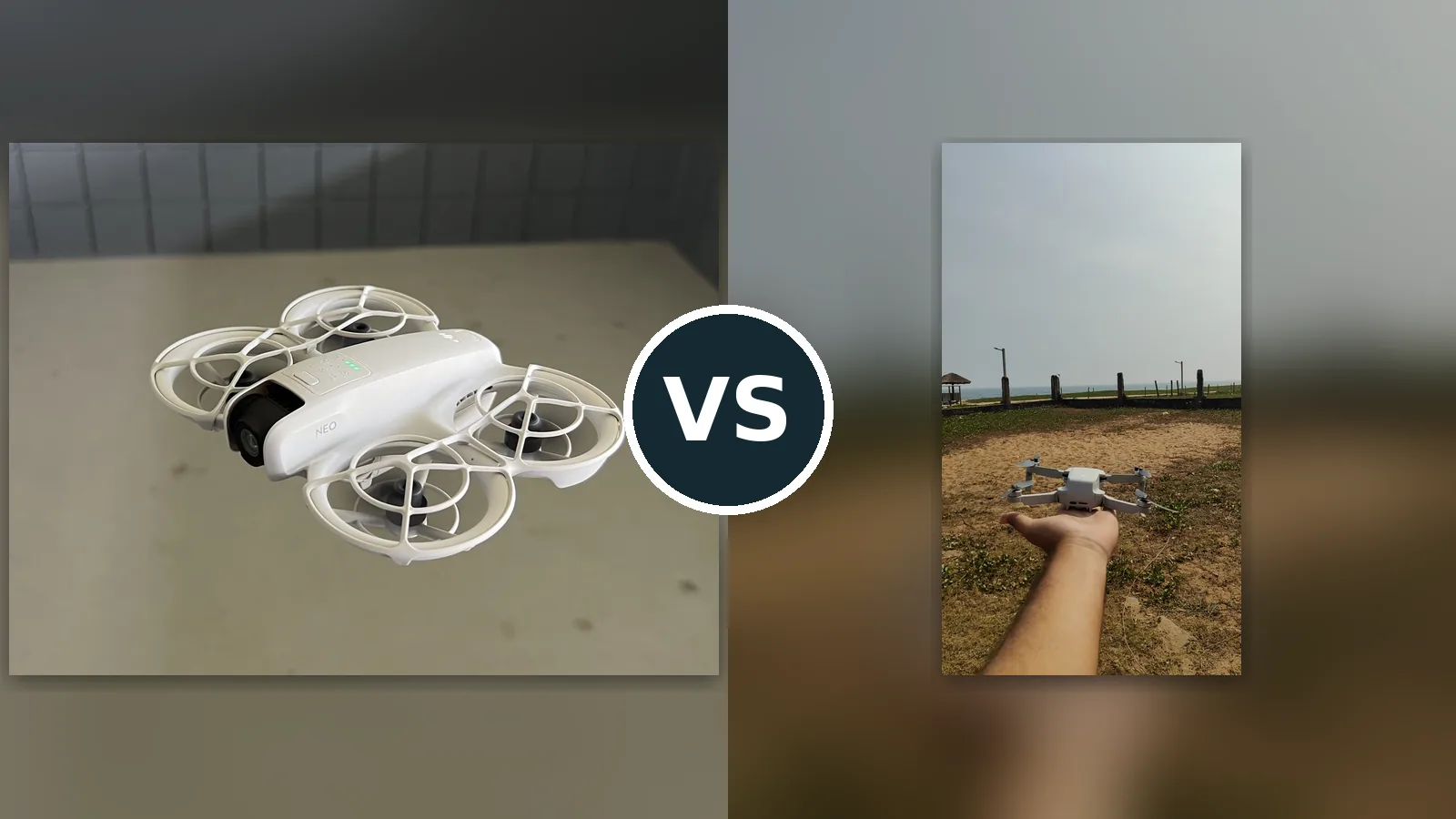
The dji neo vs dji mini 2 se question is really two questions in one: do you want the simplest way to get a camera in the air, or the cheapest way to fly a proper camera drone? The DJI Neo is a 135-gram palm-sized selfie drone that takes off from your hand with no controller in sight. It shoots 4K video, follows you with AI tracking, and costs $199. The DJI Mini 2 SE is a folding sub-249g camera drone with a 3-axis gimbal, 31 minutes of flight time, a real remote controller, and 2.7K video for $369. Both are beginner-friendly, both skip registration in most countries, and both come from DJI, but they were built for different people. We compared camera, flight time, portability, intelligent features and kit value so you can pick the one that matches how you will actually use it.
Affiliate disclosure: As an Amazon Associate I earn from qualifying purchases. This page contains affiliate links. If you buy through them, we may earn a commission.
Mini 2 SE for real flying. Neo for effortless fun.
DJI Mini 2 SE wins for most buyers who want a genuine camera drone: it flies nearly twice as long, carries a 3-axis gimbal, handles stronger wind, shoots RAW stills, and comes with a real controller that reaches 10 km. DJI Neo wins if you want the simplest aerial camera ever made: it launches from your palm, follows you by itself, shoots 4K, and costs $199 with no controller to learn. Camera resolution: Neo. Flight time: Mini 2 SE. Portability and tracking: Neo. Wind handling and kit value: Mini 2 SE.
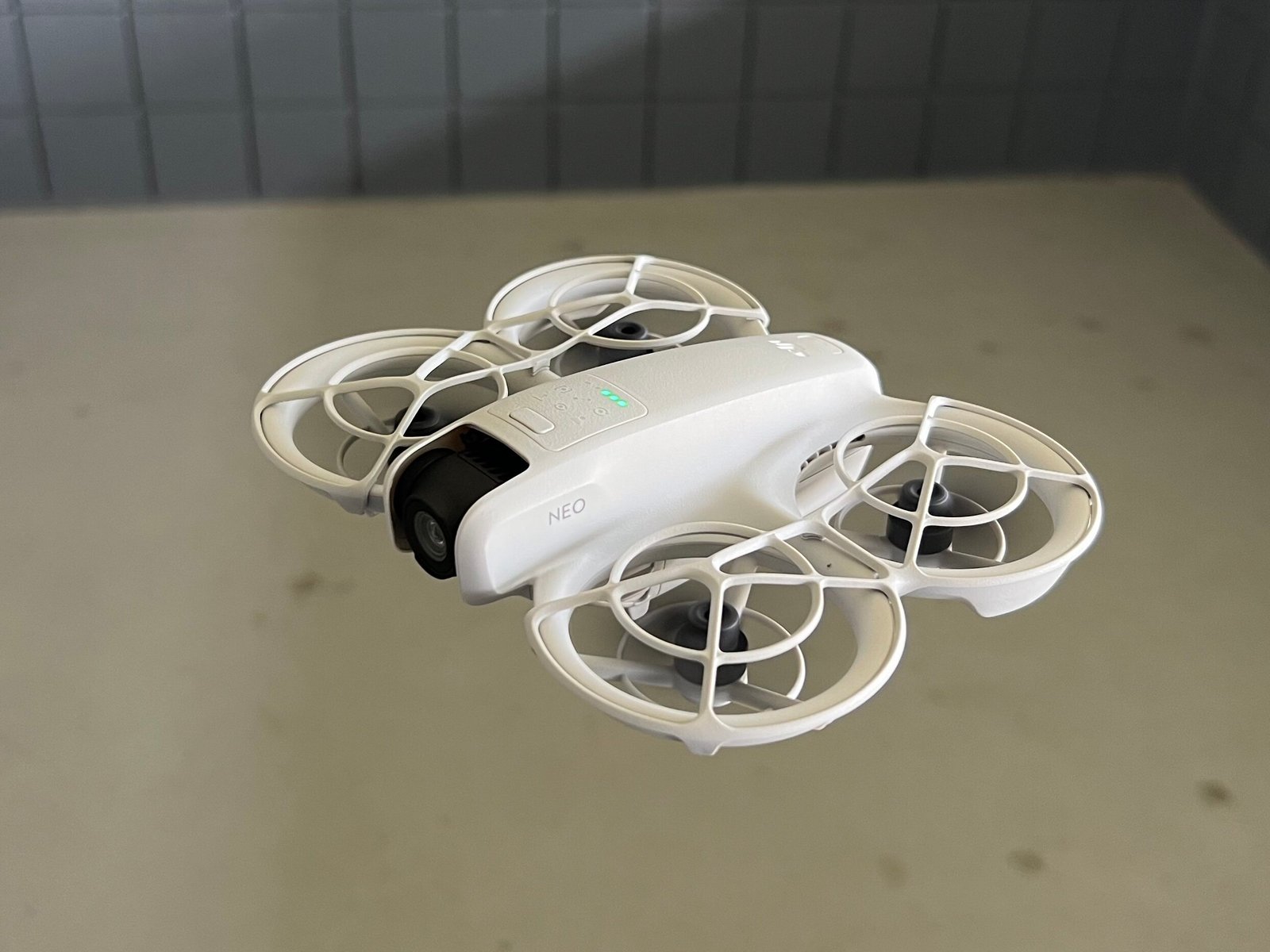
DJI Neo
For creators who want a palm-sized selfie drone with 4K video and zero learning curve
- Takes off from your palm with no controller: the simplest DJI drone ever made
- AI subject tracking plus six QuickShots modes film you automatically
- Single-axis gimbal, 22 GB fixed storage, and short flights are the trade-offs
Check current price and available bundles on Amazon
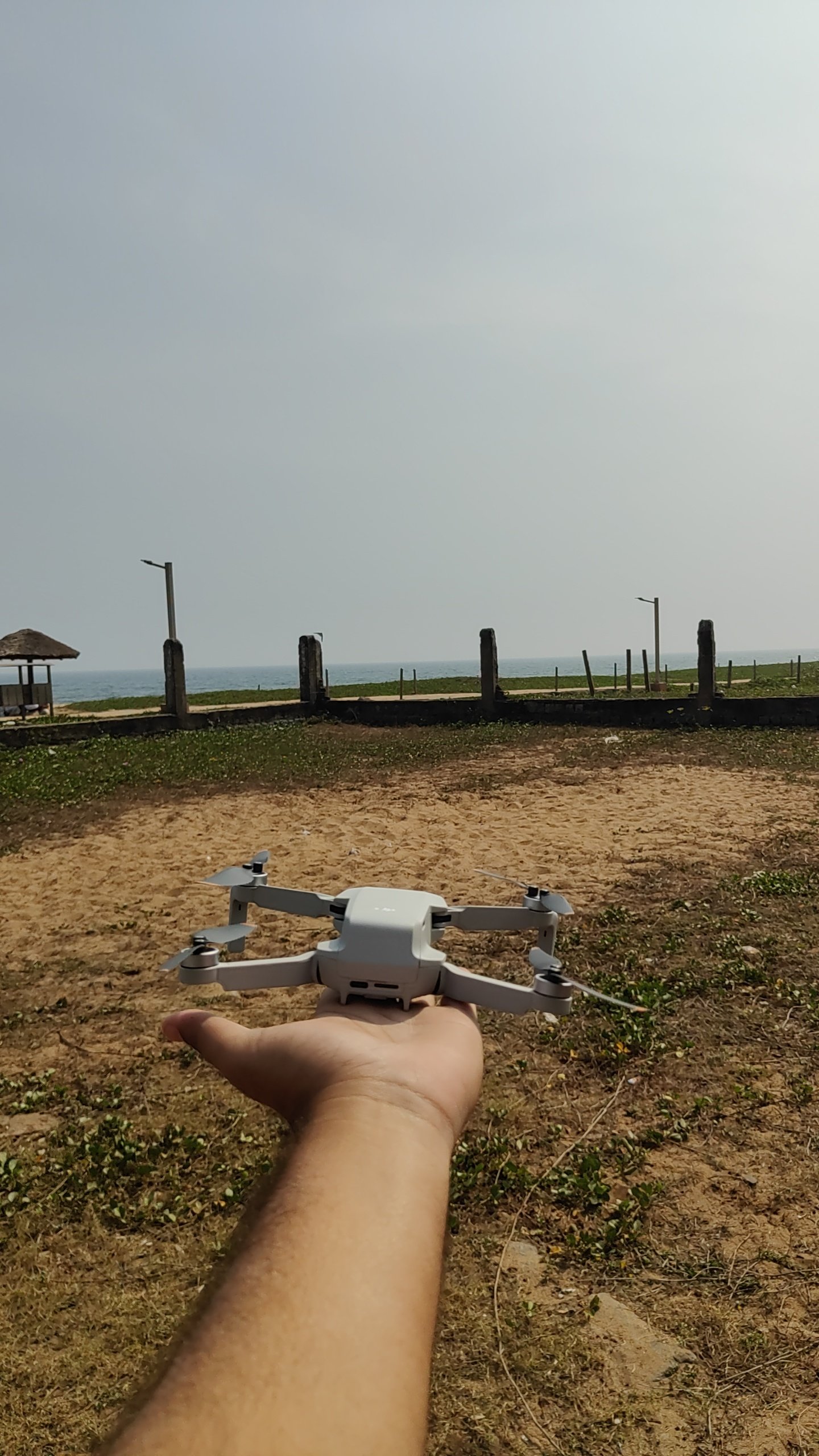
DJI Mini 2 SE
For beginners who want a proper folding camera drone with long flight times
- 3-axis gimbal, RAW stills, and 31-minute flights: a real aerial camera platform
- RC-N1 controller with 10 km O2 transmission for confident long-range flying
- Costs $170 more than the Neo and needs a controller and phone every flight
Check current price and available bundles on Amazon
Which drone fits your flying?
Start with your main use case. The best choice should solve your needs, without charging you for features you will rarely use.
Most people reading a dji neo vs dji mini 2 se comparison are shopping for their first drone. But they solve the beginner problem in opposite ways. The Mini 2 SE is DJI’s answer to the question “what is the cheapest real camera drone you can buy?” It folds, it flies for half an hour, it carries a proper 3-axis gimbal, and it comes with a real remote controller that can send it 10 km away. It works like every DJI camera drone that came before it, just with a smaller price tag and a capped 2.7K camera.
The Neo is DJI’s answer to a different question: “what if flying a drone required no skill at all?” There is no controller in the base box, because you do not need one. You set the Neo on your palm, press one button, pick a mode, and it launches itself, films you, and lands back on your hand. It tracks you while you cycle, skate, or hike, shooting 12MP stills and stabilized 4K video. For someone who has never touched a drone, the Neo removes every barrier at once: no sticks to learn, no phone mount to fiddle with.
Here is the honest tension between them. The Neo is cheaper, simpler, and more fun in the first hour. The Mini 2 SE is the better drone in almost every measurable way: longer flights, steadier footage in wind, a real gimbal, RAW photos, and a controller that lets you actually fly somewhere. The catch is that the SE asks more of you: a controller and phone on every flight, a microSD card, and a little practice. If that sounds like a hobby, the SE is the smarter money. If it sounds like homework, the Neo was made for you.
Then there is what you plan to film. Selfies, follow-me clips, vlogs, group shots, quick social videos: that is Neo territory, with less fuss than any drone before it. Landscapes, travel footage, anything where the drone flies away and frames a scene: that is Mini 2 SE territory, because a 10 km link, 31-minute battery, and 3-axis gimbal are what those shots need. Neither drone is a toy. The trick is matching the drone to the footage you actually want.
Choose DJI Neo if…
- Effortless selfies and follow-me video is your main concern, not piloting.
- You mostly shoot yourself: vlogs, sports, hikes, group trips, social clips.
- You prefer palm takeoff, voice control, and AI tracking over learning stick controls.
- You can accept 4K video on a single-axis gimbal, 22 GB of fixed storage, and about 18 minutes of rated flight time.
Choose DJI Mini 2 SE if…
- A real, flyable camera drone is your main concern, with proper range and endurance.
- You need a folding travel drone with a 3-axis gimbal, 31-minute flights, and 10 km transmission.
- You value RAW stills, steadier footage in wind, and the freedom to fly far from yourself.
- You can accept a $369 starting price, a 2.7K video ceiling, and carrying a controller and phone on every flight.
DJI Neo (left, orange) · DJI Mini 2 SE (right, orange)
DJI Neo vs DJI Mini 2 SE: The Specs That Actually Matter
Compare the exact battery, controller and bundle versions you intend to buy.
| Feature | DJI Neo | DJI Mini 2 SE |
|---|---|---|
| Best suited to | Selfies, vlogs, follow-me clips, and group shots with zero piloting skill required | Travel photography and videography, landscapes, and learning to fly a real camera drone |
| Takeoff weight | 135 g | Under 249 g (246 g with battery and propellers) |
| Dimensions | 130 x 157 x 48.5 mm, fixed frame with full-coverage propeller guards | Folded 138 x 81 x 58 mm; unfolded 245 x 289 x 56 mm |
| Sensor and lens | 1/2-inch CMOS, 12MP, approx. 13 mm equivalent, f/2.8, 117.6-degree FOV | 1/2.3-inch CMOS, 12MP (4000 x 3000), 24 mm equivalent, f/2.8, 83-degree FOV |
| Video modes | 4K up to 30fps (16:9 and 4:3), 1080p up to 60fps | 2.7K (2720 x 1530) up to 30fps, 1080p up to 60fps |
| Color and codecs | Up to 75 Mbps, H.264/H.265, MP4; JPEG stills only, no RAW | Up to 100 Mbps, H.264/H.265, MP4; JPEG and DNG RAW stills |
| Stabilization | Single-axis mechanical tilt gimbal plus RockSteady and HorizonBalancing EIS | 3-axis mechanical gimbal (tilt, roll, pan) |
| Digital zoom | Not specified | 4x in 1080p, 3x in 2.7K, 2x in photo mode |
| Obstacle sensing | Downward infrared and monocular vision positioning only | Downward vision positioning only |
| Subject tracking | AI subject tracking, six QuickShots modes, palm and voice control | QuickShots (Dronie, Rocket, Circle, Helix, Boomerang) and Panorama (Sphere, 180, Wide); no ActiveTrack |
| Rated flight time | Approx. 18 minutes (approx. 17 with propeller guards) | Up to 31 minutes |
| Real-world flight time | Not tested by us; reviewers report roughly 14 to 16 minutes of mixed flying | Not tested by us; reviewers report roughly 25 minutes of typical mixed flying |
| Max speed | 8 m/s Sport, 6 m/s Normal, 16 m/s Manual mode | 16 m/s Sport, 10 m/s Normal, 6 m/s Cine |
| Video transmission | DJI O4, up to 10 km FCC with a compatible RC; about 50 m over phone Wi-Fi | DJI O2, up to 10 km FCC |
| Wind resistance | 8 m/s (Level 4) | 10.7 m/s (Level 5) |
| Storage | 22 GB internal, no microSD slot (about 40 minutes of 4K/30 per DJI) | microSD card required; no internal storage |
| GNSS | GPS, GLONASS, Galileo, BeiDou | GPS, GLONASS, Galileo |
| Controller and bundle | Base kit has no controller ($199 launch); Fly More $289; Fly More with RC-N3 $349; also works with Goggles and RC Motion 3 for FPV | RC-N1 controller included, phone required ($369 launch); Fly More Combo $519 |
| Main trade-off | Tiny battery, single-axis gimbal, fixed storage, and limited wind handling | 2.7K video ceiling and a $170 higher starting price |
Manufacturer ratings are lab figures; real-world flight time is lower. Prices shown are launch prices; check the live Amazon listing for the current price. Last verified: October 20, 2026.
DJI Neo (left) · DJI Mini 2 SE (right)
DJI Neo vs DJI Mini 2 SE: Five Differences That Matter
For each category, here is the difference, its practical impact and which buyer benefits.
1. DJI Neo vs DJI Mini 2 SE: camera and image quality
Edge: TieThis is the most interesting category in the whole comparison, because each drone wins a different half of it. The Neo shoots 4K video at up to 30fps from a slightly larger 1/2-inch sensor, while the Mini 2 SE tops out at 2.7K from its 1/2.3-inch sensor. On a 4K screen, that resolution gap is visible. The Neo also has the wider, more dramatic lens: a 117.6-degree ultra-wide view that makes selfies and action shots feel expansive, versus the SE’s conventional 83-degree, 24mm-equivalent field of view.
But resolution is not the whole story. The Mini 2 SE carries a true 3-axis mechanical gimbal, which keeps footage smooth in a way software stabilization cannot fully match, especially in wind or during fast moves. It also shoots 12MP DNG RAW stills, which gives photographers real editing latitude, while the Neo is JPEG-only. The SE’s brighter processing pipeline and 100 Mbps bitrate ceiling round out a camera that behaves like a proper aerial camera. So the split is clean: the Neo wins on video resolution and selfie drama, the Mini 2 SE wins on stabilization quality and photographic flexibility. Pick the half that matches what you shoot.
2. DJI Neo vs DJI Mini 2 SE: flight time and range
Edge: Mini 2 SEThis one is not close. DJI rates the Mini 2 SE at up to 31 minutes per battery, and independent reviewers consistently land around 25 minutes of real mixed flying. That covers multiple locations on a single pack with relaxed framing. The Neo is rated at 18 minutes, dropping to about 17 with its always-on propeller guards, and reviewers report roughly 14 to 16 minutes in practice. On a 10.5 Wh battery versus the SE’s 17.32 Wh pack, physics was never going to favor the little one.
Range tells a similar story with one big asterisk. With a proper controller, both drones use DJI’s long-range link to reach up to 10 km FCC: O4 on the Neo, O2 on the SE. But the Neo’s base kit has no controller, and over a phone’s Wi-Fi its practical range is about 50 meters. That is fine for selfies, but the Neo only becomes a long-range drone after you buy a controller separately. The Mini 2 SE includes the RC-N1 in the box, so its full 10 km capability is available on day one.
3. Design and portability: pocket selfie drone vs folding flyer
Edge: DJI NeoThe Neo is the most portable DJI drone ever made, and it is not a contest on weight: 135 g against the Mini 2 SE’s 246 g. The Neo is a fixed, palm-sized frame with full-coverage propeller guards built in, so there is nothing to unfold, no gimbal cover to remove, and no separate guards to clip on. You can carry it in a jacket pocket and be filming thirty seconds later. The SE folds down to a neat 138 x 81 x 58 mm brick, which slips into a bag beautifully, but it still needs unfolding, a gimbal check, a controller, and your phone before it flies.
Both sit under the 250 g line that keeps recreational flying simple in the US and much of Europe. The difference is what “portable” means in practice. The Neo is portable the way a phone is portable: grab and go, no kit, no setup. The SE is portable the way a good camera is portable: compact, but still a kit with a controller, batteries, and a bag. Travelers who count every gram and hate fiddling will feel the Neo’s advantage every single flight. Pilots who want a real aircraft will happily trade a minute of setup for what the SE can do.
4. Intelligent features: AI tracking vs classic QuickShots
Edge: DJI NeoThe Neo is the smarter drone, and that is by design. Its AI subject tracking follows you while you walk, run, cycle, or skate, keeping you framed without any input. Its six QuickShots modes run from a single button press on the drone itself, no phone needed. It takes off from and lands on your palm. It answers to voice commands through the DJI Fly app. And if you outgrow the selfie modes, it pairs with DJI Goggles and the RC Motion 3 for full FPV flying. No other drone at this price does all of that.
The Mini 2 SE is no slouch, but its intelligence is the classic DJI set: QuickShots and panoramas. What it notably lacks is any form of subject tracking; there is no ActiveTrack on the SE, so follow-me shots mean flying manually. For a beginner learning stick skills that is fine, and the automated modes still produce great clips. But side by side, the Neo does more of the flying for you, which is exactly what its target buyer wants.
5. DJI Neo vs DJI Mini 2 SE: price and complete kit value
Edge: Mini 2 SEOn sticker price alone, the Neo wins walking away. It launched at $199 for the drone with one battery, and the three-battery Fly More combo at $289 is the sweet spot for anyone who flies regularly. The Mini 2 SE launched at $369 with the RC-N1 controller, and its Fly More Combo at $519. That is a $170 gap at the base level, which is real money in the beginner bracket. If budget decides, the Neo is the cheapest way DJI has sold a stabilized 4K camera.
But value is price divided by what you get, and that math favors the SE. For $369 you get a complete long-range camera drone: folding airframe, 3-axis gimbal, RAW stills, 31-minute flights, Level 5 wind handling, and a proper controller with a 10 km link. The Neo at $199 gets you the drone and not much else: one battery, about 15 minutes of real flight, 50-meter phone range, and 22 GB of storage you cannot expand. Add the RC-N3 controller to unlock the Neo’s real range and the gap shrinks fast. The SE is simply more drone per dollar for anyone who wants to fly rather than just film themselves.
DJI Neo vs DJI Mini 2 SE: What You Gain and Give Up
DJI Neo
Reasons to choose it
- The simplest drone DJI has ever made: palm takeoff and landing, no controller needed, filming in seconds
- 4K/30fps stabilized video from a 1/2-inch sensor, the highest video resolution in the sub-$200 class
- AI subject tracking, six QuickShots modes, and voice control do the flying for you
- Full-coverage propeller guards and 135 g make it safe and approachable indoors and around people
- Pairs with Goggles and RC Motion 3 for budget FPV flying later
Reasons to reconsider
- About 18 minutes rated flight time, closer to 14 to 16 in practice, on a tiny 10.5 Wh battery
- Single-axis gimbal plus EIS cannot match a true 3-axis gimbal in wind
- 22 GB of internal storage with no card slot fills up fast; offload often
- Level 4 wind resistance (8 m/s) means gusty days will push it around
- JPEG-only stills with no RAW limit what photographers can do in post
DJI Mini 2 SE
Reasons to choose it
- A genuine 3-axis gimbal and 12MP DNG RAW stills on a proper folding camera drone
- Up to 31 minutes of rated flight time, roughly double the Neo in real use
- RC-N1 controller with 10 km O2 transmission included in the box
- Level 5 wind resistance (10.7 m/s) holds steady where the Neo struggles
- Under 249 g keeps recreational flying free of registration in most countries
Reasons to reconsider
- Video tops out at 2.7K, a visible step down from the Neo’s 4K on big screens
- $369 starting price is $170 more than the Neo, and the Fly More Combo is $519
- No subject tracking; follow-me shots require manual flying skill
- Needs the controller and your phone on every flight, plus a microSD card
- No forward or side obstacle sensing
Check the bundle, not just the drone
The drone on the box is only half the purchase. Run through this checklist before you tap buy.
- Controller: The Neo base kit includes no controller at all: you fly from your palm, your voice, or your phone over Wi-Fi with about 50 meters of range. If you want the Neo’s full 10 km O4 range, you need a compatible controller like the RC-N3, sold separately or in the Fly More Combo with RC-N3. The Mini 2 SE always includes the RC-N1, but it needs your phone mounted as the screen, so check your phone fits and the DJI Fly app is installed first.
- Batteries: One battery is never enough on either drone. The Neo’s 14 to 16 real-world minutes per pack make the three-battery Fly More combo almost mandatory, and its two-way hub keeps charging simple. The Mini 2 SE’s 31-minute rating stretches further, but two or three batteries still transform a day out; the Fly More Combo’s hub and shoulder bag are worth it if you fly weekly.
- Accessories: The Neo needs nothing to start, but heavy users should offload its 22 GB of internal storage to a phone regularly since there is no card slot. The Mini 2 SE needs a microSD card (U3/V30 recommended) because it has no internal storage at all. ND filters help both cameras in bright sun, and a landing pad is cheap insurance for dusty or sandy launch spots.
- Listing: On Amazon, confirm the exact bundle in the listing title before ordering. Neo listings vary: drone-only, three-battery Fly More, Fly More with RC-N3, and Motion Fly More with goggles are different products at different prices. Mini 2 SE listings similarly split between the standard kit and the Fly More Combo. Check the seller, the return terms, and that the controller and battery count match what you expect.
- Local requirements: Both drones weigh under 250 g, which keeps recreational flying simple in the US and much of Europe, but airspace rules still apply everywhere. Take the free TRUST test in the US before your first flight, keep the drone in sight, and stay under 400 feet. Rules change, so check your national aviation authority’s current requirements for your location.
- Price timing: Both drones see regular discounts, and the Neo has dropped as low as $139 during Prime events. If the price looks high today, check the listing again in a week. The launch prices in this article are reference points, not what you should necessarily pay.
The right choice comes down to selfies versus flying.
If you want the easiest aerial camera ever made, buy the DJI Neo. It launches from your palm, films you by itself in 4K, and costs $199 outright with nothing to learn. It is the drone for people who want the footage without the hobby. If you want to actually fly, buy the DJI Mini 2 SE. It is a real camera drone in every sense: half an hour in the air, a 10 km link, a 3-axis gimbal, RAW stills, and wind handling that keeps it working on days the Neo stays home. It costs $170 more and asks you to learn the sticks, a trade worth making for anyone who suspects they might love flying. Most first-time buyers who want a drone, not a selfie stick with propellers, will be happier with the Mini 2 SE in a year. Everyone who just wants great clips of themselves with zero effort will be happier with the Neo on day one.
Still deciding?
Is the DJI Neo actually a good drone, or just a toy?
It is a real drone with real limits. The Neo shoots genuinely good stabilized 4K video in calm conditions, tracks subjects reliably, and its footage cuts fine into social and YouTube edits. Its limits are the 14 to 16 minutes of real flight time, phone-only range of about 50 meters, and wind performance that falls apart in gusts. Used as intended, short selfie and follow-me flights close to you, it is excellent. Used as a general camera drone, it will frustrate you.
Which drone is better for a complete beginner?
It depends on what kind of beginner you are. If you have never flown anything and just want cool footage of yourself, the Neo is the easier first drone: no sticks, no setup, palm launch, done. If you want to learn to fly and see where the hobby takes you, the Mini 2 SE is the better teacher: it flies like a proper drone, its longer battery forgives slow learning, and the skills transfer to every bigger DJI drone. The Neo teaches you nothing about piloting; the SE teaches you everything.
Can the Neo really fly without a controller?
Yes, and that is its whole point. The base $199 kit has no controller because the Neo launches from your palm with a button press, runs its shooting modes autonomously, and lands back on your hand. You can also steer it from your phone over Wi-Fi or with voice commands. The trade-off is range: about 50 meters on phone control. Pair it with an RC-N3 or similar controller and it becomes a normal long-range drone with up to 10 km of O4 transmission, plus access to manual FPV mode.
Is 2.7K on the Mini 2 SE enough, or do I need the Neo’s 4K?
For most beginners, 2.7K is plenty. It looks sharp on phones, laptops, and social feeds, which is where beginner footage lives. The Neo’s 4K matters if you publish to 4K timelines, crop into footage in editing, or watch on a big 4K TV, where the extra pixels are visible. But the Neo’s 4K comes on a single-axis gimbal with EIS, while the SE’s 2.7K comes on a 3-axis mechanical gimbal. Steadier 2.7K often looks better than shakier 4K.
Which bundle should I buy for each drone?
For the Neo, the three-battery Fly More combo is the smart buy: one battery’s 15-ish real minutes is not enough for a real outing, and the hub simplifies charging. Add the RC-N3 version if you want full range and manual control. For the Mini 2 SE, the standard $369 kit is complete and honest: drone, RC-N1 controller, one battery. Step up to the Fly More Combo if you fly often, since the extra batteries, hub, and bag pay for themselves quickly.
How were these drones compared?
This is a research-based comparison: we compiled specifications from DJI’s official spec pages, launch announcements, and documentation, then cross-checked them against independent reviews from outlets like Loiter Point, DroneXL, B&H Photo, and PetaPixel. We did not fly either drone for this article, so rated figures are DJI’s lab numbers and real-world figures are attributed to the reviewers who measured them. See the methodology section below for the full source list.
How this comparison was prepared
This is a research-based comparison. We did not fly either drone for this article, and we do not imply otherwise. Every specification in the table above comes from DJI’s official documentation, primarily the DJI Neo specifications page and the DJI Mini 2 SE specifications page, with launch pricing and bundle contents cross-checked against DJI’s official newsroom announcements and the DJI Store. Real-world flight times are attributed to independent reviewers: roughly 14 to 16 minutes per battery for the Neo, roughly 25 minutes for the Mini 2 SE. Amazon ASINs were verified by matching each ASIN against the exact product title across Amazon’s own indexed listing data and third-party product records before any affiliate link was written.
Sources and verification
- DJI Neo official specifications (dji.com, accessed October 20, 2026): aircraft, camera, gimbal, sensing, transmission, GNSS, and battery figures
- DJI Mini 2 SE official specifications (dji.com support, accessed October 20, 2026): weight, dimensions, camera, flight time, transmission, and sensing figures
- DJI Neo launch announcement (DJI newsroom, September 2024): $199 launch pricing, palm control, AI subject tracking, and bundle contents
- DJI Mini 2 SE launch coverage (DJI newsroom via PetaPixel and TechCrunch, February 2023): $369 launch pricing, 2.7K video, and feature set
- Loiter Point DJI Neo review: measured real-world battery life and stabilization observations
- DroneXL Neo pricing coverage: Amazon bundle pricing history and deal context
- B&H Photo product listings: cross-checked camera, gimbal, battery, and GNSS specifications for both drones
- DJI support beginner’s guide (Mini 2 SE and Mini 4K): official comparison of flight time, wind resistance, transmission, and intelligent features
- ASIN verification: Neo listing (B0DDS1368S, Three-Battery Combo, controller-free) and Mini 2 SE listing (B0BQ2SKG18, Fly More Combo) confirmed against Amazon-indexed titles, model numbers, and UPC data
Last verified: October 20, 2026. Bundle availability, pricing, and specifications may vary by region and version. Prices in this article are launch reference prices; check the live Amazon listing for the current price.


