


The DJI Flip and the SkyRover X1 are chasing the same buyer with the same promise: a drone under 249 grams that launches in seconds, follows you on its own, and shoots footage good enough to post without a film degree. The Flip is DJI’s answer, a palm-launching folder with full propeller guards, a 1/1.3-inch camera, subject tracking, and the option to fly with no controller at all. The SkyRover X1 is the challenger from a much younger brand, and on paper it does not behave like an underdog: a slightly larger 1/1.32-inch sensor, true vertical 4K from a rotating gimbal, omnidirectional obstacle sensing, a faster top speed, and a claimed 15 km transmission range. One of these drones is the safe pair of hands. The other is the spec-sheet rebel. This comparison digs into the cameras, the tracking brains, the safety systems, and the ownership realities, so you can decide whether your money belongs with the ecosystem or the upstart.
Affiliate disclosure: As an Amazon Associate I earn from qualifying purchases. This page contains affiliate links. If you buy through them, we may earn a commission.
Flip for effortless trust. X1 for the boldest hardware.
DJI Flip is the pick if you want the drone to simply work: palm takeoff, voice control, polished FocusTrack subject following, 4K/60 HDR with 10-bit D-Log M, and the deepest accessory and support ecosystem in the business behind it. SkyRover X1 is the pick if hardware ceiling matters more than brand comfort: a 1/1.32-inch sensor, true 4K vertical video, omnidirectional sensing the Flip does not offer, a higher top speed, and a touchscreen controller option. Camera: close, with the X1 ahead on vertical and the Flip ahead on proven color and tracking polish. Safety: X1, clearly. Ownership peace of mind: Flip, and it is not close.
A note on who should skip both: if your work involves flying near people professionally, working in controlled airspace often, or delivering footage to clients who will inspect it on large screens, this weight class tops out quickly for reasons of sensing, bitrate, and redundancy that have nothing to do with these two models’ rivalry. Everyone else, from first-time vloggers to seasoned travel shooters wanting a second angle, is choosing between two genuinely finished products. The Flip finished its homework on usability. The X1 finished its homework on hardware. The syllabus you are graded on at home decides which transcript impresses you.

DJI Flip
For creators who want palm launch, voice control, and DJI polish in a guarded folder
- Launches from your palm and flies with no controller, by voice, app, RC-N3, or RC 2
- 4K/60 HDR, 4K/100 slow motion, and 10-bit D-Log M from a 1/1.3-inch sensor
- Forward infrared braking only: no side or rear sensing, and sensing pauses during tracking
Check current availability and bundle options on Amazon
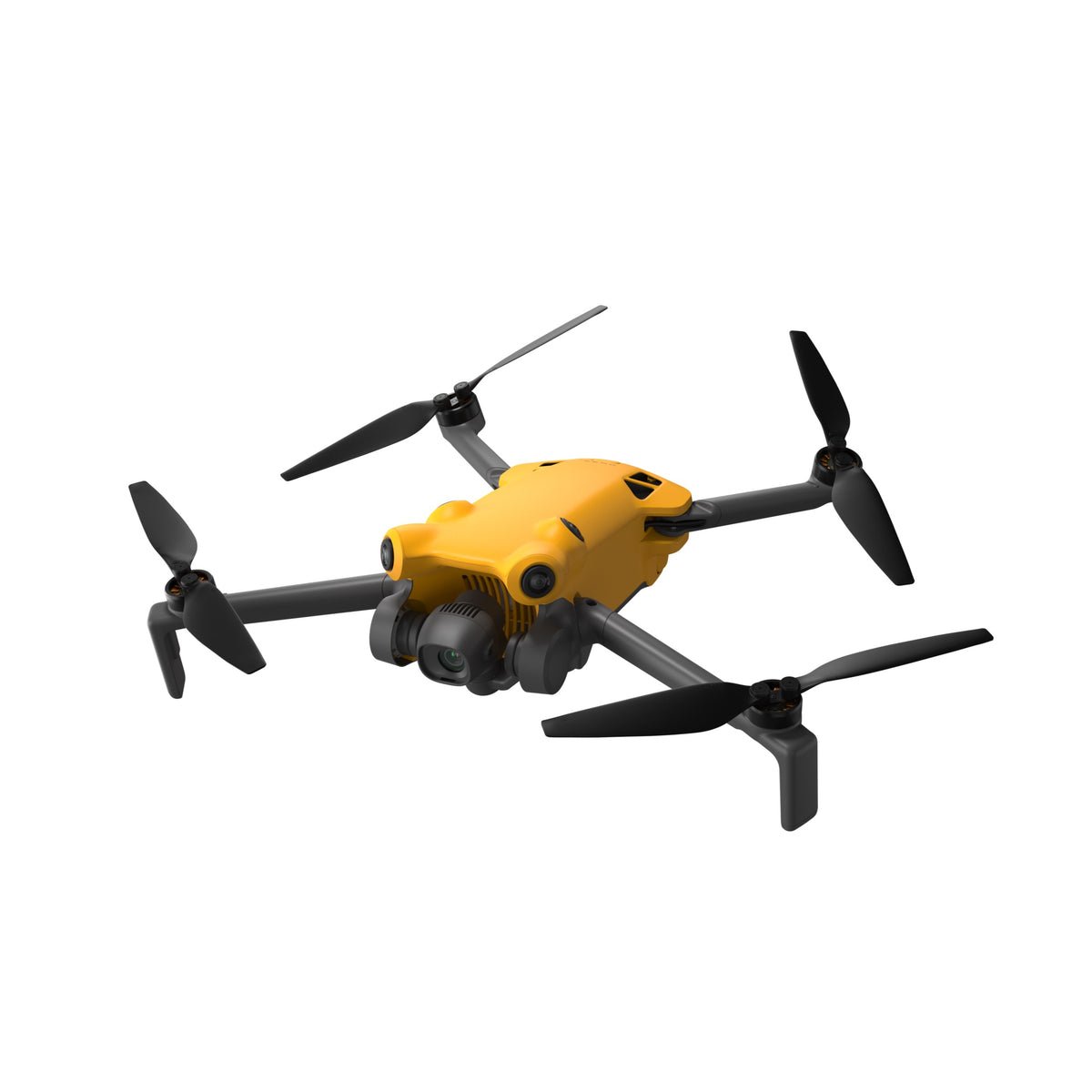
SkyRover X1
For creators who want true vertical 4K, full sensing, and flagship-style specs under 249 g
- True 4K vertical video from a rotating gimbal, plus 4K/60 HDR and 4K/100 slow motion
- Omnidirectional vision sensing with infrared enhancement, rare in this weight class
- Young brand: software maturity, parts supply, and long-term support are still being proven
Check current availability and bundle options on Amazon
Same weight class, opposite philosophies of trust
Both drones fit in a jacket pocket and both promise to follow you. The difference is what each company thinks you are buying: DJI sells certainty, SkyRover sells specification.
The Flip is built around a single moment: the takeoff. Set it on your palm, name a mode, and it climbs away, frames you, and follows, no controller unfolded, no sticks learned. Its propeller guards fold out as part of the airframe, so hand launches and the occasional bump into a doorframe are survivable events rather than repairs. FocusTrack keeps you centered while you walk, ride, or talk to camera, and when the battery runs low it comes back to your hand. For vloggers, parents, solo travelers, and anyone whose alternative was asking a stranger to hold the camera, the Flip removes every excuse not to fly.
The X1 starts from the spec sheet and works outward. Its 1/1.32-inch sensor is fractionally larger than the Flip’s, its gimbal rotates a full 90 degrees for true vertical 4K rather than a crop, and it wraps the airframe in omnidirectional vision sensing with infrared help, the kind of safety suite usually reserved for drones costing far more. It flies faster at 15 m/s, claims a longer 15 km transmission range with a 1080p/60 feed, and offers an optional controller with a built-in 5.5-inch touchscreen for pilots who prefer a dedicated screen. Dual Track subject following and a set of choreographed SmartGo shots cover the automated repertoire.
What the X1 cannot yet offer is a track record. SkyRover is a young brand, and drone ownership is a long relationship: firmware updates, crash parts, battery supply in three years, app maintenance when phone operating systems change. DJI’s ecosystem is the industry’s deepest, with accessories, ND filters, spare everything, and a repair pipeline that actually exists. None of that appears in a spec table, and all of it appears in year two of ownership. So the choice is honest: the Flip is the lower-risk camera that flies itself beautifully today. The X1 is the higher-ceiling machine for buyers comfortable backing a newcomer. The sections below quantify both sides.
Consider also who else will fly it. The Flip’s guarded props, palm landing, and voice prompts make it the rare camera drone you can hand to a parent, a partner, or a teenager and watch them succeed within one battery. The X1 rewards a slightly more technical owner: someone who will explore its controller options, keep its firmware current as the young platform matures, and enjoy owning the spec-sheet winner at the meetup. Neither profile is better. They are simply different households, and buying for the household you actually live in prevents the most common return reason in this category, a great drone matched to the wrong pilot.
Flip vs X1: The Spec Sheet, Line by Line
The rows are remarkably close, which is what makes this fun. Sensor size, flight time, and weight nearly tie. The daylight between them shows up in vertical video, sensing coverage, top speed, and everything that surrounds the drone after you buy it.
| Feature | DJI Flip | SkyRover X1 |
|---|---|---|
| Best suited to | Creators who want palm launch, voice control, and zero-fuss follow footage | Creators who want slow motion, vertical 4K, and big-sensor value |
| Takeoff weight | Under 249 g | Under 249 g |
| Dimensions | Folded 136 x 62 x 165 mm; unfolded 233 x 280 x 79 mm | Foldable design; manufacturer does not publish a full folded measurement set |
| Sensor and lenses | 1/1.3-inch CMOS, 48MP, 24mm equivalent, f/1.7 | 1/1.32-inch CMOS, 48MP, 26mm equivalent, f/1.7, 80-degree FOV |
| Video modes | 4K/60 HDR; 4K/100 slow motion; 1080p recording | 4K/60 HDR, 4K/100 slow motion, 1080p up to 200 fps |
| Color and codecs | 10-bit D-Log M; H.264/H.265 up to 150 Mbps; JPEG and DNG RAW | SR-LOG flat profile and 10-bit HLG; JPEG and DNG RAW stills |
| Vertical capture | 2.7K cropped vertical video | True 4K vertical; gimbal rotates 90 degrees |
| Gimbal | 3-axis mechanical | 3-axis mechanical with rotation for vertical capture |
| Obstacle sensing | Forward 3D infrared auto-braking, plus downward vision; no sensing during tracking | 360-degree omnidirectional vision with infrared enhancement |
| Subject tracking | FocusTrack; palm Follow, Dronie, Circle, Rocket, Spotlight; voice control | Dual Track and Spotlight; SmartGo QuickShots (Lift, Vista, Loop, Twist, Asteroid) |
| Rated flight time | 31 minutes | 32 minutes; 29 minutes hovering |
| Real-world flight time | Not tested by us; expect low to mid twenties in mixed conditions | Not tested by us; expect mid to high twenties in mixed conditions |
| Max speed | 12 m/s in Sport mode | 15 m/s (about 34 mph) |
| Video transmission | DJI O4, up to 13 km FCC, 1080p/60 live view | Tri-band, up to 15 km claimed, 1080p/60fps live view |
| Wind resistance | 10.7 m/s (Level 5) | Level 5 (about 10 m/s, 22 mph) |
| Internal storage | 2 GB built in, plus microSD up to 512 GB | microSD required; no internal storage listed |
| Controller and bundle | Phone, voice control, RC-N3, or RC 2; no controller required | Standard RC; optional 5.5-inch 1080p touchscreen RC with 700-nit display |
| Main trade-off | Limited sensing and a cropped vertical mode in exchange for polish and ecosystem | Excellent hardware from a brand still proving its software and support |
Keep manufacturer ratings separate from measured results. Sources are listed by name in the methodology section below.
Two figures deserve a caveat before you weigh them. Transmission range claims, 13 km for the Flip and 15 km for the X1, are best-case ratings under ideal conditions, and legal visual-line-of-sight flying uses a small fraction of either. What matters is feed stability at your real distances, where both systems advertise a 1080p/60 live view and DJI’s O4 has the longer public track record. Conversely, the flight-time figures, 31 and 32 minutes, are close enough to treat as a draw: wind, temperature, and how much tracking you ask for will move either drone’s real endurance more than the single rated minute between them.
Five Differences That Matter More Than the Brochure
On paper the X1 wins a lot of rows. In your hand, over a year of weekends, the story gets more interesting. These five differences are the ones owners will actually feel.
1. Vertical video: true 4K against a 2.7K crop
Edge: X1For the audience both drones court, vertical is not a side feature; it is the main feed. The SkyRover X1 rotates its gimbal 90 degrees and records true vertical 4K using the full sensor width turned sideways, so your 9:16 clips carry the same detail as your landscape work. The DJI Flip crops a 2.7K vertical frame out of its horizontal sensor. The Flip’s vertical footage is perfectly postable, and its colors are polished, but the X1’s vertical files are sharper, crop-tolerant, and age better as phone screens and platforms keep raising the bar.
This single feature explains much of the X1’s buzz with TikTok and Reels creators, and it is a genuine engineering choice rather than a software toggle: rotating gimbals add weight and complexity that DJI chose to spend elsewhere. If vertical is an occasional extra for you, the Flip’s crop is fine. If vertical is the deliverable, the X1 was designed around your workflow.
2. Obstacle sensing: full bubble against a front brake
Edge: X1The X1 surrounds itself with omnidirectional vision sensing backed by infrared, so it watches forward, backward, sideways, and down while it flies and tracks. The Flip watches forward with a 3D infrared sensor that brakes for obstacles ahead, plus downward vision for positioning, and its sensing steps aside during subject tracking, which is exactly when a follow drone flies sideways and backward near trees, fences, and lamp posts. For a drone marketed on autonomous following, that gap is the Flip’s most surprising specification.
In practice, both drones still need a pilot with judgment: sensing systems miss thin branches, wires, and glass on every brand. But the X1’s wider safety net will save more flights in cluttered parks and wooded trails, the very places follow drones earn their keep. The Flip asks you to choose open spaces for tracking work. The X1 is measurably more relaxed about the venue.
3. The launch moment and control ladder: DJI’s polish shows
Edge: FlipThe Flip’s party trick is also its daily reality: unfold the guarded arms, hold it in your palm, say the mode, and it is flying and framing you in seconds, with voice control, the app, the RC-N3, or the RC 2 as you graduate to sticks. Its subject tracking is the product of DJI’s long FocusTrack lineage, and it behaves predictably: smooth corrections, sensible reframing, and a return to your outstretched palm at the end. For non-pilots, this polish is the product.
The X1 counters with strong automation of its own: Dual Track following, Spotlight, and five choreographed SmartGo shots with names like Vista and Asteroid. Its optional touchscreen controller is genuinely appealing, with a bright 700-nit 5.5-inch screen that frees your phone. What the X1 cannot yet match is the Flip’s breadth of control options out of the box, from true controller-free flight to DJI’s mature app. SkyRover’s app and firmware are newer and still evolving, which owners experience as occasional rough edges rather than deal-breakers.
4. Image character: proven color against a bigger-on-paper sensor
Edge: Flip, narrowlySensor sizes here are nearly a tie, 1/1.32-inch in the X1 against 1/1.3-inch in the Flip, and both shoot 48MP stills with DNG raw, 4K/60 HDR, and 4K/100 slow motion. The Flip records 10-bit D-Log M, DJI’s well-documented flat profile, with mature color science behind it: skin tones and greens come out of the Flip looking finished with minimal effort, and editors know exactly what the file will do. The X1 answers with its SR-LOG flat profile and 10-bit HLG, capable files that reward grading, though the ecosystem of LUTs, tutorials, and shared settings around them is far smaller.
Frame-rate depth slightly favors the X1 at the margins, with 1080p up to 200 fps against the Flip’s more modest high-speed options below 4K/100. Stabilization is a 3-axis mechanical gimbal on both. Call the hardware even and the out-of-camera experience DJI’s, which is why this round goes to the Flip by a nose rather than to the X1’s spec sheet.
5. Ownership: the drone behind the drone
Edge: FlipA drone purchase is really a subscription to a company’s future behavior. DJI offers the Flip a global service network, plentiful batteries and propellers, ND filter sets, cases, firmware that keeps arriving, and resale values that hold because the next buyer trusts the badge too. When a Flip breaks, there is a pipeline. SkyRover, for all its hardware ambition, is still building that infrastructure: support responsiveness, parts availability in two years, and app maintenance across phone generations are promises rather than history.
None of this should be read as a knock on the X1’s engineering, which is the most credible challenge the sub-249 class has produced. It is a statement about risk allocation. Early adopters fund progress and usually know it. Everyone else should price the unknown honestly: the X1 asks you to accept it, and in return hands you vertical 4K and a full sensing bubble that DJI reserves for pricier machines.
The pattern across the five rounds is unusually clean for a comparison this close on paper. The X1 wins the hardware arguments: vertical video, sensing coverage, and the fractional sensor and speed edges. The Flip wins the experience arguments: the launch moment, tracking polish, color that needs no work, and the entire support structure standing behind the product. Which list matters more depends on whether your bottleneck is capability or confidence. Creators limited by their footage should buy capability. Everyone else, which is most people shopping under 249 grams, should buy confidence and spend the savings on batteries.
Flip vs X1: What You Gain, What You Give Up
DJI Flip
Reasons to choose it
- Palm launch and voice control: fly with no controller and no learning curve
- Polished FocusTrack following with predictable, smooth framing
- 10-bit D-Log M and mature DJI color that looks finished with little editing
- Deep accessory, parts, and service ecosystem, plus strong resale
Reasons to reconsider
- No omnidirectional sensing, and forward braking pauses during tracking
- Vertical video is a 2.7K crop, not full-sensor 4K
- 2 GB internal storage is emergency space only
SkyRover X1
Reasons to choose it
- True vertical 4K from a rotating gimbal, built for social-first creators
- Omnidirectional sensing with infrared enhancement, rare under 249 g
- 1/1.32-inch sensor, 4K/100, 15 m/s speed, and claimed 15 km link
- Optional bright touchscreen controller for phone-free flying
Reasons to reconsider
- Young brand: app maturity, parts, and long-term support unproven
- No internal storage: a microSD card is mandatory kit
- Smaller community, fewer accessories, thinner resale market
Stack the two lists side by side and a buyer’s profile assembles itself. Four or more Flip strengths describe you, and the decision is made: you want appliance reliability with creative headroom. Three or more X1 strengths describe you, and you are the early adopter this product category runs on. Mixed lists are the honest majority, and for them the tiebreakers are boring and decisive: which bundle is in stock with two batteries, which brand’s support answers in your language and timezone, and which drone you would rather explain to a friend you are lending it to.
Cards, controllers, and brand homework: check these first
Both drones reward a careful look at the exact bundle. Run through this list against the listing in front of you before paying.
- Storage: The X1 records only to microSD, so a fast card is part of the purchase price. The Flip’s 2 GB internal memory is a backup, not a workflow.
- Controller path: The Flip flies controller-free, but range and precision improve with the RC-N3 or RC 2. On the X1, decide whether the standard RC or the touchscreen RC fits how you fly, and confirm which one the bundle includes.
- Batteries: Rated times are 31 and 32 minutes, and real flights run shorter. A second battery matters more than any case or filter on day one for both drones.
- Listing basics: Verify exact model, seller, warranty terms, and return window, especially for the X1, where authorized-channel support is part of what you are buying.
- Support homework: Before choosing the X1, read its manufacturer’s support pages and recent firmware notes. Before choosing the Flip, confirm which firmware features your region supports.
- Local requirements: Both drones sit under 249 g, which simplifies registration for recreational flying in many regions, but rules vary. Check your aviation authority’s current requirements.
One last ownership note: firmware is a feature on young platforms. The X1’s capabilities have been evolving through updates, which cuts both ways, improving the drone you bought while occasionally changing behavior you liked. The Flip’s software is comparatively settled. If you enjoy riding a product’s development curve, the X1 offers that hobby for free. If you want the drone to be a finished appliance from the first flight, that preference alone can settle this comparison.
Confidence or ceiling: both answers are respectable
Choose the DJI Flip if the drone is a means to an end: footage of your rides, your trips, and your family, captured without thinking about the machine. Its palm launch, tracking polish, and ecosystem make it the easiest yes in this weight class. Choose the SkyRover X1 if the machine is part of the hobby: true vertical 4K, a full sensing bubble, and flagship-style hardware under 249 grams reward creators who shoot vertical-first and fly in cluttered places, provided you accept a young brand’s growing pains. Neither drone embarrasses its buyer. They simply place their bets on different futures, and yours should decide.
Whichever way you land, land completely: get the second battery, learn the drone’s tracking behavior in an open field before trusting it near obstacles, and update the firmware before the first big shoot rather than after it. Both of these drones reward owners who set them up once, properly, and then simply fly.
Still deciding?
Which drone is better for TikTok and Reels?
The SkyRover X1, on hardware: its rotating gimbal records true vertical 4K, while the Flip crops 2.7K from its horizontal sensor. The Flip fights back with easier capture, since palm launch and voice control get you recording faster, and its colors need less editing. If your workflow is vertical-first and quality-led, take the X1. If speed and simplicity lead, take the Flip.
Which drone is safer for beginners?
The X1 watches more directions with omnidirectional sensing, while the Flip brakes only for obstacles ahead and pauses sensing while tracking. The Flip is friendlier to learn, with folding propeller guards and controller-free flight. A beginner flying in open spaces is well served by either; a beginner flying near trees gets more protection from the X1.
Which has the better camera?
On paper the X1’s 1/1.32-inch sensor is fractionally larger than the Flip’s 1/1.3-inch, and both shoot 48MP stills and 4K/100. In practice the Flip’s 10-bit D-Log M pipeline and DJI color science produce the most finished-looking footage with the least editing. Graders will find capable flat profiles on both.
Which bundle should I buy?
Whichever drone you choose, prioritize a second battery over accessories, because both drones deliver roughly half an hour per pack in real conditions. X1 buyers should add a fast microSD card to the budget, since it has no internal storage. Flip buyers who plan to fly beyond arm’s length should include the RC-N3 or RC 2.
Can both drones really fly without a controller?
The Flip can: it launches from your palm, follows preset modes, and responds to voice control and the mobile app, with physical controllers as an upgrade. The X1 is designed around its remote controllers, including an optional touchscreen model, and its automated shots run through that setup. If controller-free capture is central to how you will actually use the drone, that difference alone may decide the purchase.
How were these drones compared?
This is a research-based comparison built from each manufacturer’s published specifications and documentation, checked figure against figure. We did not fly either drone for this article. The full method is described below.
How this comparison was prepared
This comparison is research-based. We did not fly either drone for this article, and nothing here should be read as hands-on testing. Every specification in the table was taken from DJI’s published documentation for the DJI Flip and SkyRover’s published documentation for the X1, including official specification listings and product manuals, and each figure was checked against the matching figure for the other drone so that rated values are compared like for like. Flight times quoted are manufacturer rated maximums under ideal conditions; real flights are shorter. Camera and transmission figures for the X1 are manufacturer claims as published. Sources are listed by name only below, in line with this site’s editorial policy.
Sources
- DJI Flip official specifications
- SkyRover X1 official specifications
- DJI Flip user manual
- SkyRover X1 user manual and quick start guide
- DJI O4 transmission documentation
Last verified: October 20, 2026. Specifications, bundles, and availability may vary by region and version.


