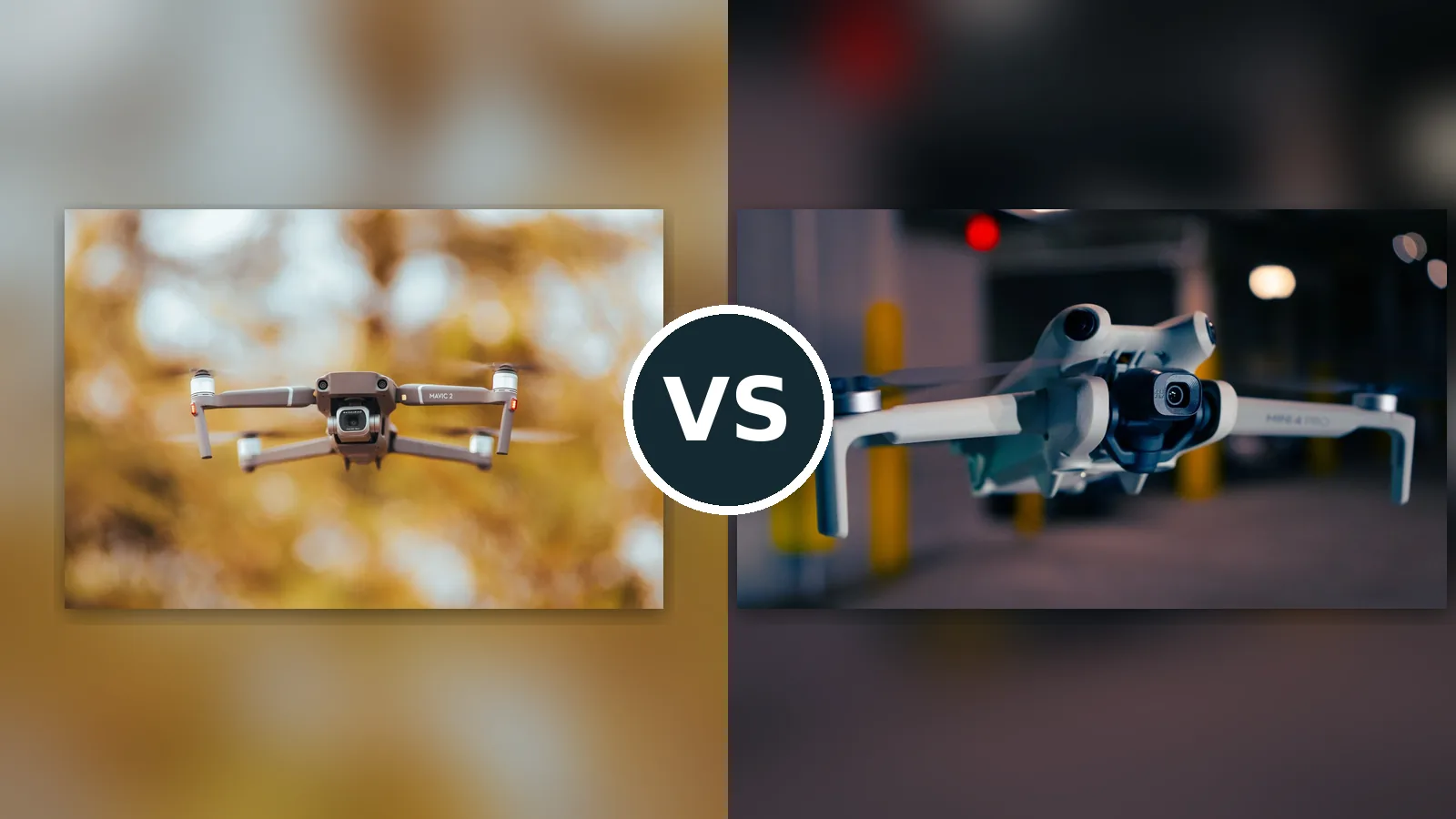
The mavic 2 pro vs mini 4 pro debate is really a debate about time. On one side sits DJI’s 2018 flagship, the first drone ever to carry an integrated Hasselblad camera, with a 1-inch sensor and an adjustable aperture that photographers still talk about like a favorite lens. On the other side sits DJI’s 2023 sub-249g marvel, a folding travel drone that shoots 48MP stills, 4K/100fps slow motion, and true vertical video while weighing less than a hamster. One of them you buy new with a warranty. The other you buy used or renewed, because DJI discontinued it years ago. We compared the camera, flight performance, portability, intelligent features, and real cost of ownership so you can decide whether the old legend or the modern mini deserves your money.
Affiliate disclosure: As an Amazon Associate I earn from qualifying purchases. This page contains affiliate links. If you buy through them, we may earn a commission.
Mini 4 Pro for most. Mavic 2 Pro for stills hunters.
DJI Mini 4 Pro wins this comparison for most buyers in 2026: it is new, under warranty, folds to pocket size, stays under 249 g, and shoots 4K/60fps HDR plus 4K/100fps slow motion with omnidirectional obstacle sensing. DJI Mavic 2 Pro wins for one specific buyer: the stills photographer who wants a 1-inch sensor and a real adjustable aperture (f/2.8 to f/11) for used-market money. Stills camera: Mavic 2 Pro. Video: Mini 4 Pro. Portability: Mini 4 Pro. Buying new with zero gamble: Mini 4 Pro, and it is not close.
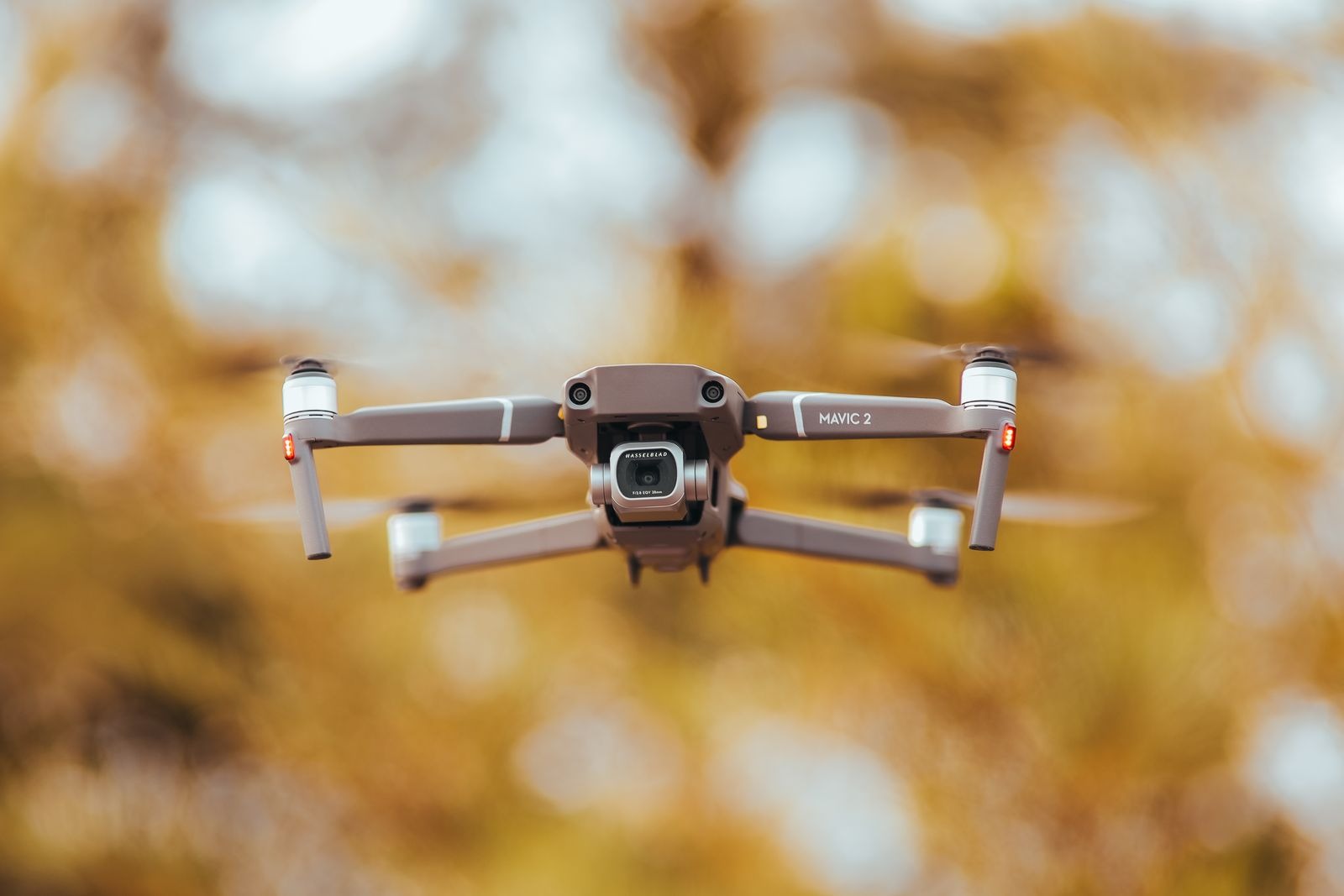
DJI Mavic 2 Pro
For photographers who want a 1-inch Hasselblad sensor and adjustable aperture for used-market money
- 1-inch Hasselblad sensor with real adjustable aperture, a combination no sub-250g drone has ever matched
- Heavier 907 g airframe handles wind with authority and feels planted in gusts
- Discontinued: buy used or renewed only, check battery health, and expect no warranty
Check current price and available bundles on Amazon
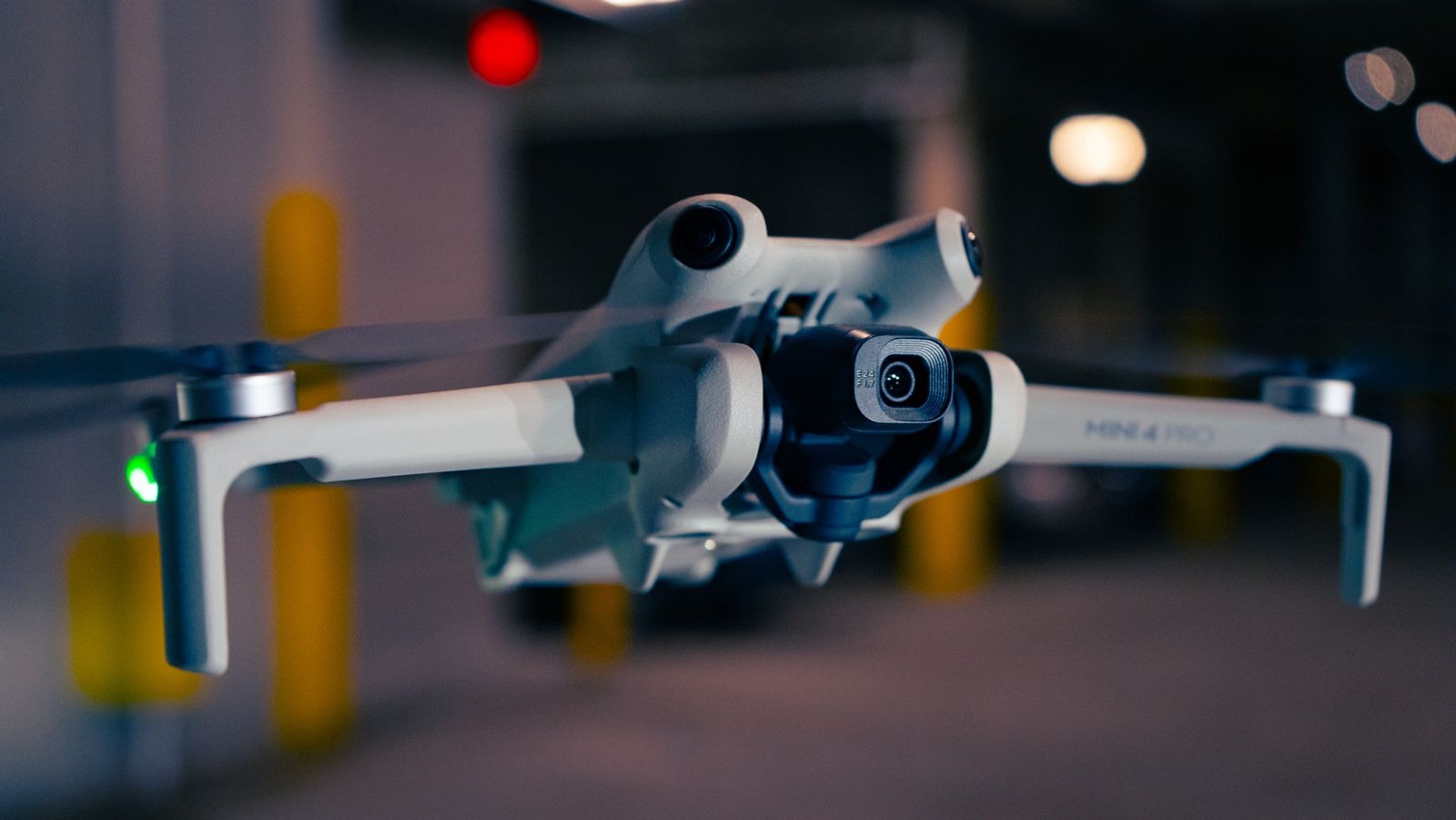
DJI Mini 4 Pro
For creators who want the best travel camera drone under 249 grams, bought new
- 48MP stills with RAW plus 4K/60fps HDR, 4K/100fps slow motion, and true vertical video
- Omnidirectional obstacle sensing with APAS 5.0 and ActiveTrack 360
- Buy it new with a full warranty; top video modes crop the sensor
Check current price and available bundles on Amazon
Orange: DJI Mavic 2 Pro · Blue: DJI Mini 4 Pro
Which drone fits your flying?
Start with your main use case, and be honest about whether you want new-with-warranty or are happy hunting the used market.
DJI Mavic 2 Pro: the 1-inch flagship, eight years on
When DJI launched the Mavic 2 Pro in August 2018, it changed what people expected from a folding drone. This was the first drone with an integrated Hasselblad camera, the L1D-20c, built around a 1-inch 20MP CMOS sensor with Hasselblad’s Natural Colour Solution. More importantly, it had something almost no DJI drone since has offered in this class: a real adjustable aperture, f/2.8 to f/11. That single feature is why the Mavic 2 Pro still has a devoted following. Stopping down lets you shoot proper long exposures from the air and hold the 180-degree shutter rule in bright light without stacking ND filters for every shot.
The camera records 4K video at up to 30fps, 2.7K at up to 60fps, and 1080p at up to 120fps, with 10-bit Dlog-M and 10-bit HDR (HLG) color at up to 100 Mbps, plus 20MP JPEG and DNG RAW stills. Here is the honest catch that defines this comparison: there is no 4K/60. In 2018, 4K/30 was flagship territory. In 2026, the Mini 4 Pro doubles that for slow motion. If your work needs 60fps, the Mavic 2 Pro is disqualified, and no sensor size fixes that.
In the air it is a 907 g aircraft with a 31-minute rated flight time and 72 kph top speed in Sport mode, omnidirectional obstacle sensing with APAS, and OcuSync 2.0 transmission reaching 8 km in FCC regions. The heavier airframe feels planted in wind that pushes lighter drones around. Intelligent modes include ActiveTrack 2.0, four Hyperlapse modes, QuickShots, and Waypoint 2.0, flown through the older DJI GO 4 app.
The ownership story needs clear eyes. DJI ended mass production years ago and no longer sells it new, so you buy used or renewed. Check battery cycle counts and swelling before money changes hands, because a tired Intelligent Flight Battery is an expensive problem and old batteries are the number one reason used drone deals go bad. There is no manufacturer warranty, and the 907 g weight means registration plus Remote ID planning in the US. None of this kills the deal. A used Mavic 2 Pro typically costs about the same as a new Mini 4 Pro, and you are trading warranty and modernity for a bigger sensor and a real aperture.
DJI Mini 4 Pro: the modern sub-249g standard
The Mini 4 Pro, launched in September 2023, is the drone the Mavic 2 Pro’s fans wish DJI would build today: everything the modern pilot expects, in a body that stays under 249 g with the standard battery. It folds to 148 by 94 by 64 mm, slips into a jacket pocket, and that sub-250g weight keeps recreational flying free of registration in most countries. Setup takes under a minute.
The camera is a 1/1.3-inch 48MP CMOS sensor behind a 24mm-equivalent f/1.7 lens, on a true 3-axis gimbal that rotates 90 degrees for native vertical video. It shoots 4K/60fps HDR, 4K/100fps slow motion, and FHD at up to 200fps, with 10-bit D-Log M and HLG color at up to 150 Mbps, plus JPEG and DNG RAW stills. The honest catch: the top frame rates crop into the sensor, and the f/1.7 aperture is fixed, so there is no stopping down for long exposures without ND filters. The smaller sensor also gives up low-light ground to the 1-inch chip, though newer processing has narrowed that gap.
Flight performance is thoroughly modern: 34 minutes rated (45 with the Plus battery, which breaks 249 g), with independent testers reporting roughly 26 to 28 minutes of real mixed flying. O4 transmission reaches 20 km in FCC regions. Obstacle sensing is omnidirectional with APAS 5.0, and the intelligent modes are the current generation: ActiveTrack 360, Waypoint Flight, Cruise Control, and Advanced RTH, all flown through the current DJI Fly app.
The ownership story is the mirror image of the Mavic 2 Pro’s. You buy it new, with a full warranty and the option of DJI Care Refresh, fresh batteries with zero cycles, and actively maintained firmware. It launched at $759 with the RC-N2 controller and $959 with the RC 2, and it sees regular discounts. No battery-age gamble, no discontinued-app anxiety. For most buyers, that peace of mind is worth more than a bigger sensor.
Choose DJI Mavic 2 Pro if…
- Still photography with a big sensor is your main concern, especially if you want an adjustable aperture for long exposures and shutter control.
- You mostly shoot landscapes, real estate exteriors, and golden-hour stills where the 1-inch sensor’s dynamic range earns its keep.
- You prefer a heavier, wind-planted airframe and are comfortable registering a 907 g drone.
- You can accept buying used or renewed, checking battery health yourself, and flying without a manufacturer warranty.
Choose DJI Mini 4 Pro if…
- Video versatility and modern features matter most: 4K/60fps HDR, 4K/100fps slow motion, and true vertical video.
- You need a travel drone that folds to pocket size, stays under 249 g, and flies with current-generation obstacle sensing.
- You value buying new: warranty, fresh batteries, DJI Care Refresh, and an actively updated app.
- You can accept a smaller sensor, a fixed aperture, and cropped slow-motion modes.
Mavic 2 Pro vs Mini 4 Pro: The Specs That Actually Matter
Compare the exact battery, controller and bundle versions you intend to buy. Mavic 2 Pro figures are DJI’s official specifications; it is discontinued, so treat prices as used-market reference.
| Feature | DJI Mavic 2 Pro | DJI Mini 4 Pro |
|---|---|---|
| Best suited to | Aerial stills photography, landscapes, real estate, pilots who want a 1-inch sensor for used-market money | Travel photography and videography, social content, creators who want modern video modes in a tiny package |
| Takeoff weight | 907 g | Under 249 g (standard Intelligent Flight Battery); over 249 g with Plus battery |
| Dimensions | Folded: 214 by 91 by 84 mm; unfolded: 322 by 242 by 84 mm | Folded: 148 by 94 by 64 mm; unfolded: 298 by 373 by 101 mm |
| Sensor and lenses | 1-inch CMOS, 20MP Hasselblad L1D-20c, 28mm equivalent, 77-degree FOV, f/2.8 to f/11 adjustable aperture | 1/1.3-inch CMOS, 48MP, 24mm equivalent, f/1.7 fixed aperture, 82.1-degree FOV |
| Photo resolution | 20MP (5472 by 3648), JPEG and DNG RAW | 48MP (8064 by 6048), JPEG and DNG RAW |
| Video modes | 4K up to 30fps, 2.7K up to 60fps, FHD up to 120fps | 4K/60fps HDR, 4K up to 100fps slow motion, FHD up to 200fps |
| Color and codecs | 10-bit Dlog-M, 10-bit HDR (HLG), H.264/H.265, up to 100 Mbps | 10-bit D-Log M and HLG, H.264/H.265, up to 150 Mbps |
| Vertical capture | No native vertical mode; crop the 16:9 frame in post | Native true vertical: gimbal rotates 90 degrees for 4K/60fps vertical video |
| Gimbal | 3-axis mechanical | 3-axis mechanical (tilt, roll, pan), plus 90-degree rotation for vertical |
| Obstacle sensing | Omnidirectional: forward, backward, lateral, upward, downward; APAS | Omnidirectional: forward, backward, lateral, upward, downward; APAS 5.0 |
| Subject tracking | ActiveTrack 2.0, Hyperlapse (4 modes), QuickShots, Waypoint 2.0, POI 2.0 | ActiveTrack 360, Waypoint Flight, Cruise Control, Advanced RTH |
| Rated flight time | 31 minutes max (29 minutes hovering) | 34 minutes standard (30 hovering); 45 minutes with Plus battery |
| Real-world flight time | Not tested by us; owner reports cluster around 25 to 27 minutes of mixed flying | Not tested by us; independent tests report roughly 26 to 28 minutes in calm conditions |
| Max speed | 72 kph in Sport mode | 16 m/s in Sport mode; 12 m/s Normal and Cine |
| Video transmission | OcuSync 2.0, up to 8 km FCC, 1080p live view | DJI O4, up to 20 km FCC, 1080p/60fps live view |
| Wind resistance | 29 to 38 kph (Level 5) | 10.7 m/s (Level 5) |
| GNSS | GPS and GLONASS | GPS, Galileo, and BeiDou |
| Internal storage | 8 GB built in, plus microSD up to 128 GB | 2 GB built in, plus microSD up to 512 GB |
| Controller and bundle | Standard RC (phone required); launched at $1,449 in 2018; discontinued, buy used or renewed | DJI RC-N2 (launched at $759) or DJI RC 2 with built-in screen (launched at $959); buy new |
| Main trade-off | Discontinued: no warranty, aging batteries, no 4K/60, needs registration and Remote ID planning | Smaller sensor, fixed aperture, top video modes crop the sensor |
Manufacturer ratings are lab figures; real-world flight time is lower. The Mavic 2 Pro is discontinued, so its Amazon listing reflects used and renewed third-party offers; check seller, condition, and battery health. Last verified: October 20, 2026.
Orange: DJI Mavic 2 Pro · Blue: DJI Mini 4 Pro
Mavic 2 Pro vs Mini 4 Pro: Five Differences That Matter
For each category, here is the difference, its practical impact and which buyer benefits.
1. Camera quality and creative flexibility
Edge: TieThis is the heart of the comparison, and it genuinely splits. For still photography, the Mavic 2 Pro’s 1-inch sensor gathers more light, and its adjustable f/2.8 to f/11 aperture is a creative tool the Mini 4 Pro cannot replicate: sunstars, depth control, and proper long exposures from the air without stacking ND filters. Hasselblad’s Natural Colour Solution gives the 20MP DNG RAW files a color character photographers still praise, and they hold up to serious editing and large prints.
For video, the advantage flips hard. The Mini 4 Pro shoots 4K/60fps HDR and 4K/100fps slow motion with 10-bit D-Log M or HLG at up to 150 Mbps, and its gimbal rotates for true vertical video. The Mavic 2 Pro tops out at 4K/30fps. If you shoot video at all, frame rates decide whether your footage looks current, and a 4K/30 ceiling in 2026 is a hard limit the day you want slow motion.
2. Portability and travel
Edge: Mini 4 ProThis one is not close. The Mini 4 Pro folds to 148 by 94 by 64 mm and weighs under 249 g with the standard battery, the most important number in consumer drones: it keeps recreational flying free of registration in the US and simplifies rules across Europe and the UK. The drone plus controller and two batteries fits in a jacket pocket. You will actually bring it everywhere, which is the whole point of a travel drone.
The Mavic 2 Pro folds to 214 by 91 by 84 mm and is compact for a 907 g aircraft. But 907 g is 907 g. It needs a real bag, it needs registration everywhere, and it sits in a heavier regulatory class in the EU. It is portable for a flagship, not portable in any absolute sense. If the question is which drone you will have with you when the light gets good, the Mini 4 Pro wins every time.
3. Flight confidence, sensing, and tracking
Edge: Mini 4 ProBoth drones have obstacle sensing in every direction, which was headline news when the Mavic 2 Pro did it in 2018. But sensing systems have generations, and these two are two apart. The Mini 4 Pro runs APAS 5.0, which routes around obstacles more smoothly than the Mavic 2 Pro’s original APAS, and its ActiveTrack 360 follows subjects from any angle, paired with Waypoint Flight and Cruise Control. For a beginner or solo creator, that stack is a genuine safety net and shot-planning tool.
The Mavic 2 Pro is no slouch: ActiveTrack 2.0, four Hyperlapse modes, QuickShots, and Waypoint 2.0 still work exactly as designed. But the tracking is less tenacious, the routing less refined, and the whole system runs on the DJI GO 4 app, which is in maintenance mode. Neither drone is crash-proof. The difference is that the Mini 4 Pro’s newer stack forgives more mistakes while asking less of you.
4. Battery life and time in the air
Edge: Mini 4 ProOn paper this looks close: 31 minutes rated for the Mavic 2 Pro against 34 for the Mini 4 Pro. In practice, ownership reality splits them. The Mini 4 Pro’s batteries are new, with zero cycles, and the Plus battery is rated at 45 minutes for pilots willing to cross 249 g. Independent testers report roughly 26 to 28 minutes of real mixed flying on the standard pack.
The Mavic 2 Pro’s batteries are all old now. Every used pack has years of calendar aging, and lithium degrades whether it flew or sat in a drawer. Owner reports cluster around 25 to 27 minutes on healthy packs, but a tired pack sags far below that, and replacements are expensive and harder to find new. When you buy used, check cycle counts and swelling, and budget mentally for at least one fresh battery.
5. Value of the complete kit
Edge: TieHere is where the comparison gets genuinely interesting, because the two drones play different value games. The Mini 4 Pro plays the new-product game: $759 with the RC-N2 or $959 with the RC 2 at launch, full warranty, fresh batteries, DJI Care Refresh available, regular discounts. You know exactly what you are getting, and the total cost of ownership is predictable. For most buyers, that is the better value proposition, full stop.
The Mavic 2 Pro plays the used-market game. A used or renewed example typically costs about the same as a new Mini 4 Pro, sometimes less, and for that money you get a 1-inch sensor, an adjustable aperture, and a 907 g airframe that was a $1,449 flagship. That is a remarkable amount of camera per dollar if stills are your priority. But the sticker price is not the real price: factor in a probable battery replacement, zero warranty, and older app and transmission tech. The value is real, but it comes with homework.
Mavic 2 Pro vs Mini 4 Pro: What You Gain and Give Up
DJI Mavic 2 Pro
Reasons to choose it
- 1-inch Hasselblad sensor with a real f/2.8 to f/11 adjustable aperture, a combination no sub-250g drone has ever offered
- 20MP DNG RAW stills with excellent dynamic range and color that hold up to serious editing and large prints
- 10-bit Dlog-M and 10-bit HDR video with H.265 at up to 100 Mbps, still respectable for 4K/30 work
- 907 g airframe feels planted in wind and carries omnidirectional obstacle sensing with APAS
- Used-market pricing puts a former $1,449 flagship at roughly the cost of a new Mini 4 Pro
Reasons to reconsider
- Discontinued: buy used or renewed only, with no manufacturer warranty and aging batteries to vet
- Video tops out at 4K/30fps, with no 4K/60 and no native vertical video mode
- OcuSync 2.0 and the DJI GO 4 app are older generations that will not see meaningful updates
- At 907 g it needs registration everywhere, and US pilots should plan for Remote ID compliance
- Replacement batteries are expensive and getting harder to find new
DJI Mini 4 Pro
Reasons to choose it
- Modern video stack: 4K/60fps HDR, 4K/100fps slow motion, FHD/200fps, and true vertical video
- 48MP RAW stills on a 3-axis gimbal with current-generation processing
- Omnidirectional sensing with APAS 5.0 plus ActiveTrack 360, Waypoint Flight, and Cruise Control
- Under 249 g: pocketable, and registration-free for recreational use in most countries
- Buy new with full warranty, fresh batteries, DJI Care Refresh, and the current DJI Fly app
Reasons to reconsider
- 1/1.3-inch sensor and fixed f/1.7 aperture cannot match the Mavic 2 Pro for stills depth and long exposures
- Top frame rates crop into the sensor, trading field of view and quality for slow motion
- The Plus battery pushes it past 249 g, erasing the regulatory advantage
- Small 2 GB internal storage means a microSD card is effectively mandatory
- Light airframes get pushed around more in real gusts than a 907 g drone
Check the bundle, not just the drone
The drone on the listing is only half the purchase, especially when one of them is used. Run through this checklist before you tap buy.
- Condition (Mavic 2 Pro): This is the big one. Ask the seller for battery cycle counts and photos of the batteries out of the drone, looking for swelling. Check the gimbal moves freely and the camera focuses cleanly at f/2.8 and f/11. A renewed listing with a stated inspection process beats a mystery used listing at the same price.
- Batteries: For the Mavic 2 Pro, assume you may need at least one fresh Intelligent Flight Battery and price that into the deal. For the Mini 4 Pro, two standard batteries cover most outings; remember the Plus battery pushes the drone past 249 g with regulatory consequences, and it is not sold in Europe.
- Controller: The Mavic 2 Pro’s standard controller needs your phone and the DJI GO 4 app; confirm your phone is still supported. The Mini 4 Pro comes with the RC-N2 (bring your own phone) or the RC 2 with a built-in 5.5-inch screen, which is worth it if you fly in bright sunlight or hate cables.
- Accessories: A fast microSD card (U3/V30) is essential for the Mini 4 Pro’s 2 GB of internal storage and recommended for the Mavic 2 Pro. ND filters help both drones in bright light, though the Mavic 2 Pro needs them less thanks to its aperture. A landing pad is cheap insurance for dusty fields.
- Listing: On Amazon, confirm the exact model name in the listing title before ordering. For the Mavic 2 Pro, verify whether the offer is new old-stock, renewed, or used, who the seller is, and what the return window covers. Similarly named bundles are easy to confuse.
- Local requirements: Check your aviation authority’s current rules before you fly. The Mini 4 Pro’s sub-249g weight simplifies recreational flying in the US and much of Europe, but airspace restrictions still apply. The 907 g Mavic 2 Pro needs registration in most countries, and US pilots should confirm current Remote ID requirements for a pre-rule aircraft.
The right choice comes down to new versus legendary.
If you want a drone you can buy new today, with a warranty, fresh batteries, modern video, and none of the used-market homework, buy the Mini 4 Pro. It wins on video, portability, sensing, flight time ownership, and peace of mind, and it is the recommendation for eight out of ten people reading this comparison. If you are a stills photographer who knows exactly why an adjustable aperture and a 1-inch sensor matter, and you are willing to vet a used listing and its batteries, the Mavic 2 Pro remains one of the great camera drones ever made, and the used market prices it like a midrange mini. Just go in with open eyes: no warranty, no 4K/60, and homework before money.
Still deciding?
Is the Mavic 2 Pro still worth buying in 2026?
For the right buyer, yes. If still photography is your priority and you are comfortable buying used, the 1-inch sensor and adjustable aperture remain genuinely excellent, and used prices are reasonable. But go in informed: check battery health, accept the lack of warranty, and know that 4K/30 is its video ceiling.
Which drone takes better photos?
The Mavic 2 Pro, for most photographic purposes. Its 1-inch sensor gathers more light than the Mini 4 Pro’s 1/1.3-inch sensor, and the f/2.8 to f/11 adjustable aperture enables long exposures and depth control the Mini 4 Pro cannot match. The Mini 4 Pro counters with 48MP resolution and newer processing, which helps in good light, but the bigger sensor wins on dynamic range and low light.
Which drone is better for video?
The Mini 4 Pro, clearly. It shoots 4K/60fps HDR, 4K/100fps slow motion, and FHD at up to 200fps, with 10-bit D-Log M and HLG at up to 150 Mbps, plus native vertical video. The Mavic 2 Pro is capped at 4K/30fps. If your work involves video at all, this category alone can decide the purchase.
Is buying a used Mavic 2 Pro risky?
The drone itself is famously durable, but the batteries are the risk. Every pack is years old now, and degraded batteries mean short flights. Ask the seller for cycle counts, inspect for swelling, and budget for a replacement. Buy renewed from a seller with a stated inspection process when you can, and confirm the return window before paying.
Do I need to register the Mavic 2 Pro or the Mini 4 Pro?
It depends on where you fly. In the United States, recreational drones under 250 g, like the Mini 4 Pro with its standard battery, do not require FAA registration, while the 907 g Mavic 2 Pro does. Rules differ by country and change over time, and the Mavic 2 Pro predates Remote ID rules, so US pilots should check current requirements before flying.
How were these drones compared?
This is a research-based comparison: we compiled specifications from DJI’s official spec pages and documentation for both drones, launch coverage from 2018 and 2023, and cross-checked them against independent reviews and owner communities. We did not fly either drone for this article, so rated figures are DJI’s lab numbers and real-world figures are attributed to the reviewers and owners who measured them. See the methodology section below for the full source list.
How this comparison was prepared
This is a research-based comparison. We did not fly either drone for this article, and we do not imply otherwise. Mavic 2 Pro specifications come from DJI’s official documentation and product manual, with the August 2018 launch details cross-checked against reputable launch reporting. Mini 4 Pro specifications come from DJI’s official specifications and user manual. The Mavic 2 Pro’s discontinued status is confirmed by major retailers listing it as discontinued. Where this article mentions real-world flight times, those figures are attributed to independent reviewers and owner communities who measured them. Amazon ASINs were verified by matching each ASIN against the exact product title and model number across Amazon-indexed listing data and third-party product records. No tagged affiliate URL was ever opened or clicked during research.
Sources and verification
- DJI Mavic 2 Pro official specifications (dji.com, accessed October 20, 2026): aircraft, camera, gimbal, sensing, transmission, and battery figures
- DJI Mavic 2 Pro user manual: box contents, intelligent flight modes, and maintenance guidance
- DJI Mini 4 Pro official specifications and user manual (dji.com, accessed October 20, 2026): weight, dimensions, camera, flight time, sensing, and GNSS figures
- DJI Mavic 2 launch coverage (August 2018): launch pricing, Hasselblad partnership, and feature descriptions
- B and H Photo Mavic 2 Pro product pages: specification cross-check and discontinued availability status
- SkyDronesUSA Mavic 2 Pro camera specifications: sensor, lens, aperture, and video mode cross-check
- Manuals Plus Mavic 2 Pro product records: ASIN to model number mapping (CP.MA.00000019.01, UPC 190021320598)
- UAV Coach Mavic 2 discontinuation reporting: end of mass production timeline
- Mavic Pilots owner community: used-market pricing and battery ownership experience
- ASIN verification: Mavic 2 Pro listing (B07GSVXHCC, base edition, model CP.MA.00000019.01) and Mini 4 Pro listing (B0CFF1SJ3P, DJI RC 2 edition) confirmed against Amazon-indexed title, model number, and UPC data
Last verified: October 20, 2026. Bundle availability, pricing, and specifications may vary by region and version. Prices in this article are reference prices; check the live Amazon listing for the current price. The Mavic 2 Pro is discontinued: its Amazon listing reflects used and renewed third-party offers, so verify seller, condition, and battery health before buying.