

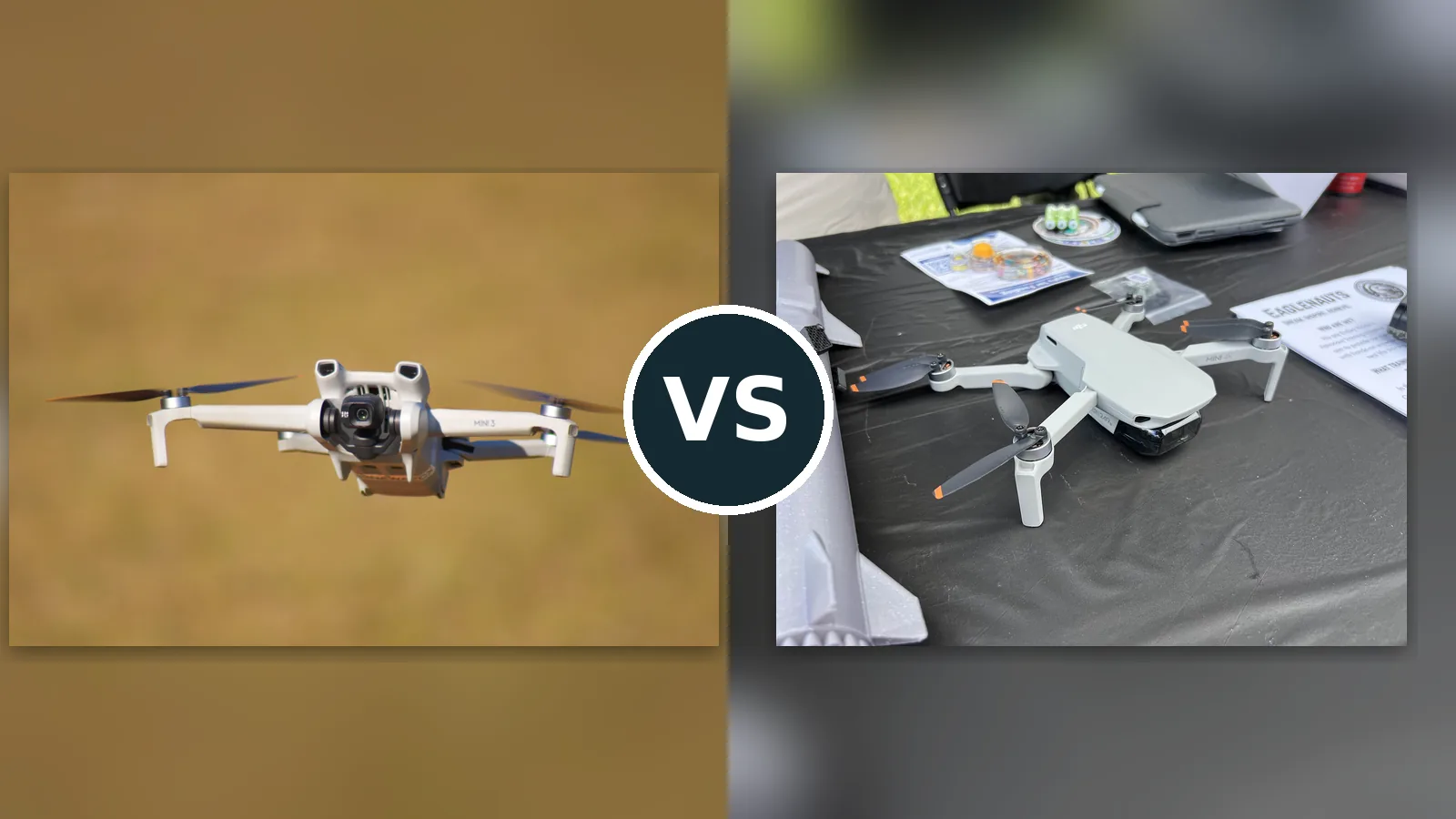
The dji mini 3 vs mini 4k matchup looks like a coin flip on the shelf: both are DJI mini drones under 249 grams, both shoot 4K video, and both fold down small enough to disappear into a jacket pocket. Under the shell, though, they are built for different people. The Mini 3 carries a much larger 1/1.3-inch sensor, HDR video, a rotating gimbal for true vertical shooting, and the longest flight time DJI has ever put in this class. The Mini 4K is the entry ticket: a simpler 1/2.3-inch camera, no HDR, shorter flights, and a focus on making your first 4K drone as painless as possible. We compared sensor size, video modes, flight time, sensing, transmission, and kit value so you can see exactly where the Mini 3 pulls ahead, and where the Mini 4K is honestly all you need. One thing to clear up early: despite the similar names, the Mini 4K is not a cut-down Mini 3. It is the refresh of the older Mini 2 line, while the Mini 3 is a newer design from the ground up, and that generational gap explains almost every difference in this comparison.
As an Amazon Associate, we earn from qualifying purchases.
Mini 3 for the camera. Mini 4K for the first step.
DJI Mini 3 wins this comparison on image quality and endurance: a sensor roughly twice the area, HDR video, true vertical capture, and up to 38 minutes per battery make it the stronger creative tool. DJI Mini 4K wins on simplicity and value: it covers the basics honestly, with proper 4K video, a 3-axis gimbal, and DJI’s flight software, for buyers who are not ready to pay for the bigger sensor. Camera: Mini 3. Flight time: Mini 3. Vertical video: Mini 3. Simplicity: Mini 4K. Value at entry level: Mini 4K.
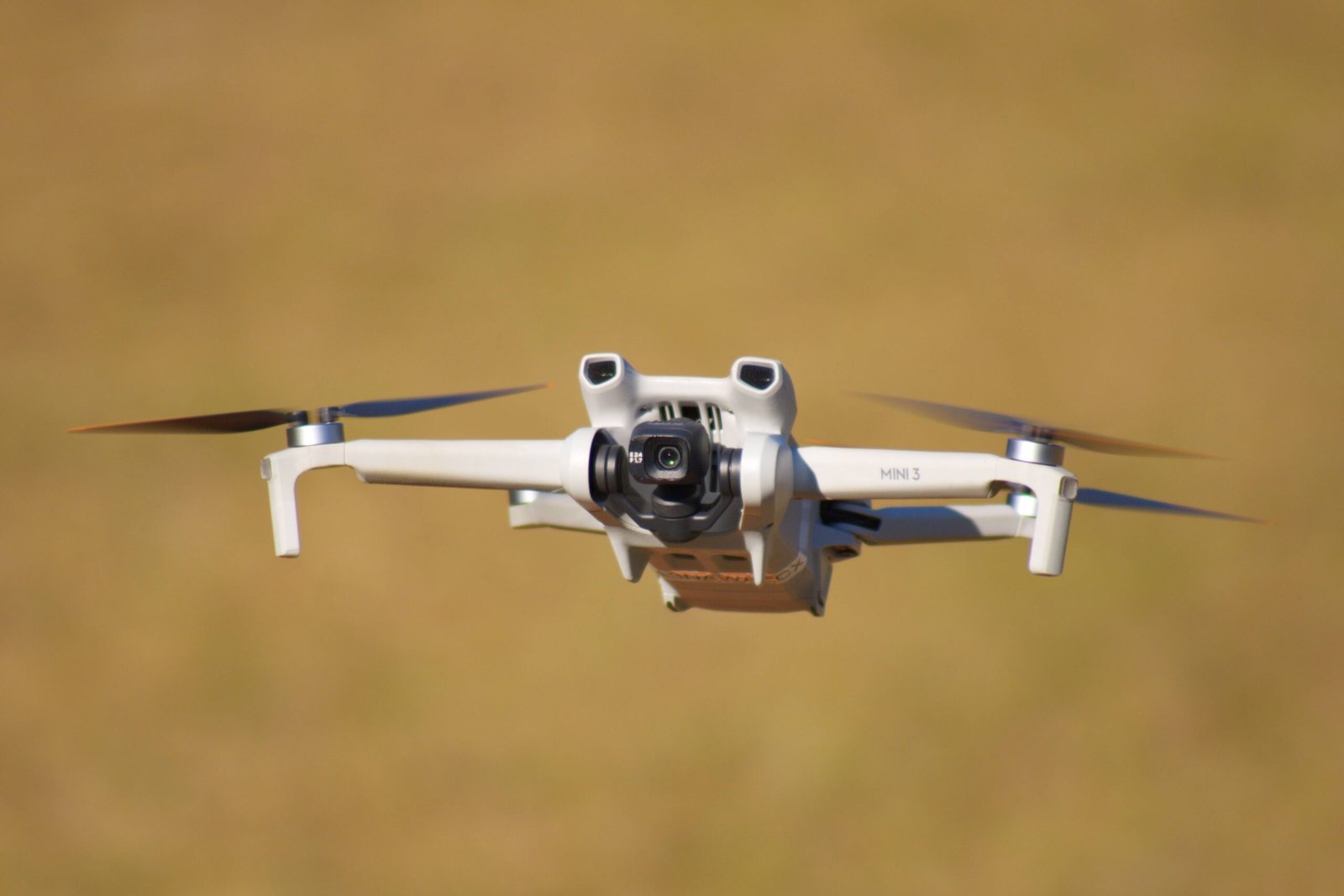
DJI Mini 3
For creators who want big-sensor footage and true vertical video under 249 g
- 1/1.3-inch sensor with HDR video and far cleaner low-light footage
- Gimbal rotates 90 degrees for true vertical 4K, no cropping
- 38 minutes rated, and 51 minutes with the Plus battery
Check the listing and available bundles on Amazon
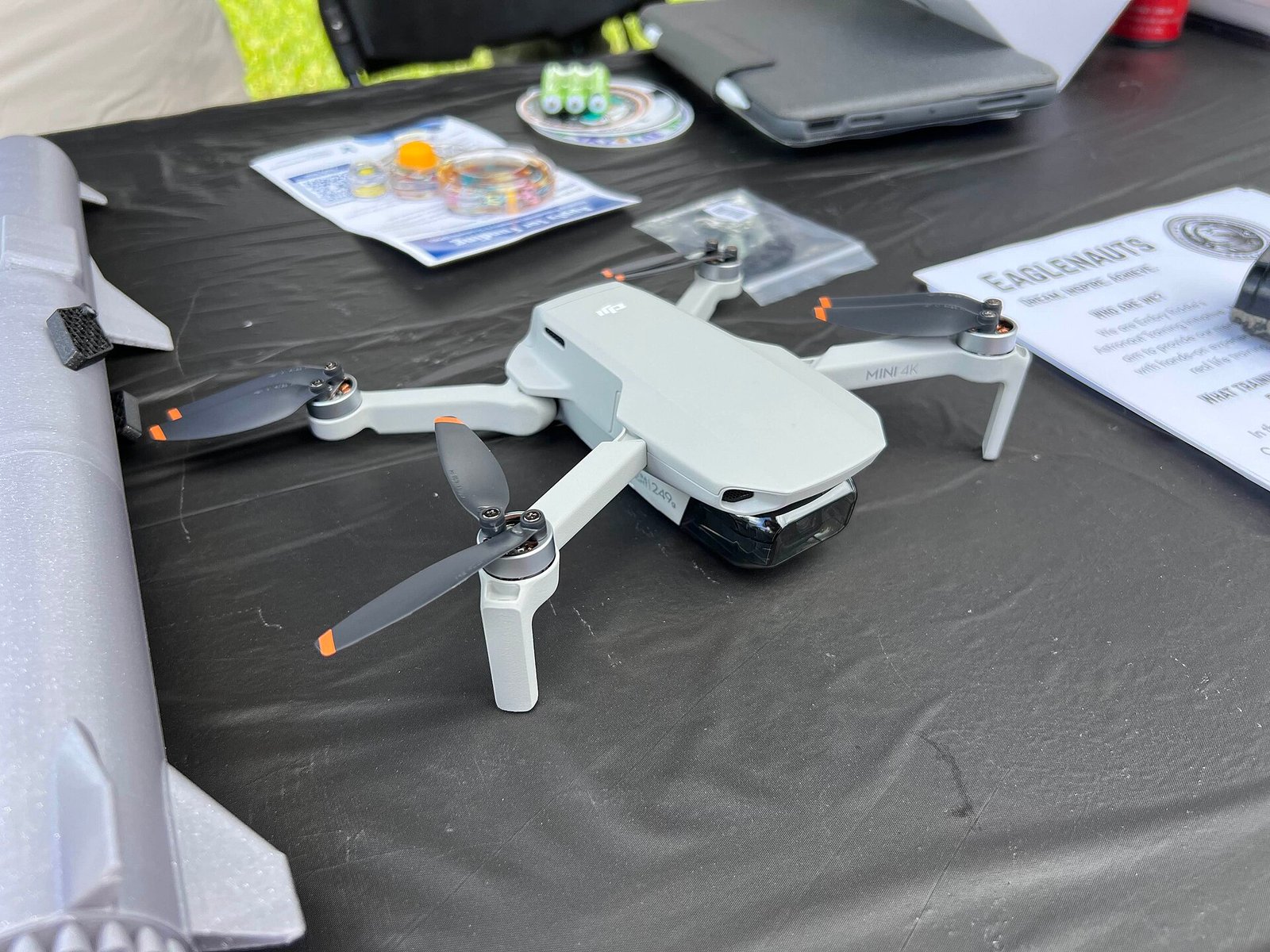
DJI Mini 4K
For beginners who want honest 4K video and the simplest way into DJI
- Proper 4K/30fps video on a 3-axis gimbal at the lowest DJI entry point
- Same 10 km DJI O2 transmission and Level 5 wind resistance
- QuickShots, panoramas, and one-tap takeoff keep it beginner friendly
Check the listing and available bundles on Amazon
Which drone fits your flying?
These two drones share a weight class and a brand, but they are aimed at different points in a pilot’s journey. Start with what you will actually shoot.
Choose the DJI Mini 3 if…
- Image quality is your main concern, especially at dawn, dusk, or indoors.
- You post vertical video and want full-resolution vertical 4K, not a crop.
- You hike or travel and want the longest possible flight time per battery.
- You can accept paying more for the bigger sensor and HDR.
Choose the DJI Mini 4K if…
- A gentle first step matters more than maximum image quality.
- You mostly shoot in good daylight for family, holidays, and social clips.
- You want DJI reliability, GPS return to home, and QuickShots on a budget.
- You can accept a smaller sensor, no HDR, and shorter flights.
A useful tiebreaker: think about where your footage ends up. If it lives on phones and social feeds shot in daylight, the Mini 4K’s output will satisfy almost everyone who watches it. If you edit on a big screen, shoot at the edges of the day, or sell your content, the Mini 3’s sensor earns its keep on every single flight.
DJI Mini 3: The Big-Sensor Mini
Launched in December 2022, the Mini 3 took the Mini 2 formula and replaced its weakest part: the camera.
Overview and camera
The Mini 3 folds to 148 by 90 by 62 mm and weighs 248 g with the standard Intelligent Flight Battery, so recreational pilots in the US skip FAA registration, and it sits in the most permissive category in the EU and UK as well. The headline is the camera: a 1/1.3-inch CMOS sensor behind an f/1.7 lens, with 48MP effective pixels. That sensor is roughly twice the area of the one in the Mini 4K, and it shows in practice. Shadows hold together instead of turning to mush, sunset footage keeps its color, and the faster f/1.7 aperture gathers far more light at dusk.
Video runs to 4K at 30fps with HDR, plus 2.7K and Full HD at up to 60fps for gentle slow motion. Stills are 12MP by default with a 48MP high-resolution mode, and JPEG plus DNG RAW are both supported, which gives photo editors real material to work with. Color is Normal profile only, recorded in H.264 at up to 100 Mbps. There is no flat log profile, so serious color grading is off the table, but the straight-out-of-camera footage is punchy and clean.
What the footage looks like
Numbers aside, the Mini 3’s footage has a look the Mini 4K cannot copy. The larger sensor keeps fine detail in grass, water, and rooftops instead of smearing it, and the 48MP mode produces stills that survive cropping for prints and thumbnails. HDR video is the quiet hero: expose for a bright sky and the ground stays readable, expose for the ground and the sky keeps its color. For a drone this small to offer that kind of latitude was unheard of before the Mini 3 generation, and it is the main reason this model stayed on best-of lists long after launch.
Flight performance and features
Flight time is where the Mini 3 quietly humiliates most minis: DJI rates it at 38 minutes with the standard battery, and 51 minutes with the larger Intelligent Flight Battery Plus, which does push takeoff weight past 249 g. Transmission is DJI O2, good for up to 10 km under FCC rules with a 720p/30fps live feed. Top speed is 16 m/s in Sport mode, and wind resistance is Level 5 at 10.7 m/s, matching drones well above its size.
The trade-offs are about awareness. The Mini 3 has downward vision sensing only, so there is no obstacle avoidance in any direction you actually travel, and there is no subject tracking. You get QuickShots (Dronie, Helix, Rocket, Circle, Boomerang), panoramas, and automatic return to home, but you fly every shot yourself. The signature party trick is the gimbal: it physically rotates 90 degrees, so vertical video is shot with the full sensor at 4K instead of a cropped sliver. For social creators, that single feature can settle the whole comparison.
DJI Mini 4K: The Honest Entry Ticket
Launched in April 2024, the Mini 4K refreshed DJI’s proven entry-level airframe around one promise: real 4K video without the flagship bill.
Overview and camera
The Mini 4K weighs 246 g and folds to a tiny 138 by 81 by 58 mm, actually a touch smaller than the Mini 3 because it evolves the earlier Mini 2 shell. The camera is a 1/2.3-inch CMOS sensor with 12MP stills and an f/2.8 lens. It records 4K at up to 30fps, 2.7K at up to 60fps, and Full HD at up to 60fps, in H.264 at up to 100 Mbps, with digital zoom of 2x at 4K and up to 4x at 1080p. Photos are JPEG or DNG, and the 3-axis mechanical gimbal keeps everything level and smooth.
In bright daylight, the Mini 4K looks genuinely good. Colors are pleasing, sharpness is solid in the center of the frame, and casual viewers will not spot the difference from far more expensive drones on a phone screen. The limits appear when the light drops or the scene gets contrasty: there is no HDR video mode, so bright skies blow out more easily, and the small sensor with its f/2.8 lens gathers noticeably less light after sunset. It is a fair-weather camera, and within that brief it does its job well.
Where the Mini 4K quietly scores
Because the Mini 4K evolves the Mini 2 platform, it inherits a mature accessory ecosystem and a battery design with years of field history behind it. Owners stepping up from a Mini 2 will find the flying experience familiar, and the DJI Fly app keeps the learning curve shallow with guided tutorials and a beginner mode that limits speed and distance while you build confidence. The 4x digital zoom at 1080p is no substitute for a real telephoto lens, but for wildlife and rooftop inspections it lets you frame a shot from a polite distance without moving the drone closer.
Flight performance and features
DJI rates the Mini 4K at 31 minutes of flight time, which independent reviewers usually translate to the mid-20s in real conditions. Transmission is DJI O2 with up to 10 km of FCC range and a 720p/30fps live view, the same link the Mini 3 uses, and wind resistance is Level 5 at 10.7 m/s. Top speed matches the Mini 3 at 16 m/s in Sport mode. Positioning comes from GPS, GLONASS, and Galileo, backed by a downward vision sensor and infrared ToF for steady hovers.
Like the Mini 3, the Mini 4K has no obstacle avoidance and no subject tracking. What it does have is the full beginner safety net: one-tap takeoff and landing, Smart Return to Home with low-battery and failsafe triggers, QuickShots for one-tap cinematic moves, panoramas, and DJI’s Fly app tutorials. Two omissions sting for creators: the gimbal does not rotate, so vertical video means cropping in post, and there is no internal storage, so a microSD card is mandatory. As a first drone that teaches real stick skills on a stable platform, though, it is hard to fault.
DJI Mini 3 vs Mini 4K: The Specs That Actually Matter
Same weight class, same brand, very different camera hardware. Compare the exact battery and controller versions you intend to buy. Read the camera rows first: sensor size and HDR support are where these drones truly part ways, while the transmission, top speed, and wind resistance rows are closer than the marketing suggests. The flight time row deserves a second look as well, because the Mini 3’s advantage grows once the optional Plus battery enters the picture.
| Feature | DJI Mini 3 | DJI Mini 4K |
|---|---|---|
| Best suited to | Creators who want big-sensor quality, HDR, and vertical video under 249 g | Beginners who want honest 4K video and a gentle first drone |
| Takeoff weight | 248 g (standard battery); over 249 g with Plus battery | 246 g (with battery, propellers, and microSD card) |
| Dimensions (folded) | 148 x 90 x 62 mm | 138 x 81 x 58 mm |
| Camera sensor | 1/1.3-inch CMOS, 48MP effective, 24mm equivalent, f/1.7 | 1/2.3-inch CMOS, 12MP, 24mm equivalent, f/2.8 |
| Video modes | 4K up to 30fps with HDR, 2.7K up to 60fps, FHD up to 60fps | 4K up to 30fps, 2.7K up to 60fps, FHD up to 60fps; no HDR |
| Color and codecs | Normal profile; H.264 up to 100 Mbps | Normal profile; H.264 up to 100 Mbps |
| Photo resolution | 12MP default, 48MP mode; JPEG and DNG RAW | 12MP; JPEG and DNG RAW |
| Vertical capture | Native true vertical: gimbal rotates 90 degrees for full-sensor vertical 4K | Not supported; crop horizontal footage in post |
| Gimbal | 3-axis mechanical (tilt, roll, pan), rotates for vertical | 3-axis mechanical (tilt, roll, pan) |
| Obstacle sensing | Downward vision only; no obstacle avoidance | Downward vision and ToF only; no obstacle avoidance |
| Subject tracking | None; QuickShots only | None; QuickShots only |
| Rated flight time | 38 minutes standard; 51 minutes with Plus battery | 31 minutes |
| Real-world flight time | Not tested by us; reviewers report low 30s of minutes | Not tested by us; reviewers report mid-20s of minutes |
| Max speed | 16 m/s (Sport mode) | 16 m/s (Sport mode) |
| Video transmission | DJI O2, up to 10 km FCC, 720p/30fps live view | DJI O2, up to 10 km FCC, 720p/30fps live view |
| Wind resistance | 10.7 m/s (Level 5) | 10.7 m/s (Level 5) |
| GNSS | GPS plus GLONASS plus Galileo | GPS plus GLONASS plus Galileo |
| Internal storage | None; microSD required (up to 256 GB) | None; microSD required (up to 256 GB) |
| Controller options | DJI RC-N1 or DJI RC with built-in screen | DJI RC-N1C (phone as screen) |
| Main trade-off | Costs more; still no obstacle sensing or tracking | Small sensor, no HDR, no vertical mode, shorter flights |
All figures are manufacturer specifications unless a row says otherwise; real-world flight times come from independent reviewers, not from us. See the methodology section for sources.
DJI Mini 3 vs Mini 4K: Five Differences That Matter
The spec sheet says both drones shoot 4K under 249 g. The differences below decide what your footage actually looks like.
1. Camera quality and low light
Edge: Mini 3This is the whole ballgame. The Mini 3’s 1/1.3-inch sensor has roughly double the surface area of the Mini 4K’s 1/2.3-inch chip, and its f/1.7 lens passes far more light than the f/2.8 on the Mini 4K. In practice: cleaner shadows, less noise at dusk, and skies that hold detail instead of smearing. The Mini 3 also adds HDR video, which tames high-contrast scenes like sunsets over water. The Mini 4K is perfectly pleasant at noon; by golden hour, the gap is obvious to anyone watching. Stills tell the same story: the Mini 3 resolves 48MP with RAW depth to recover shadows, while the Mini 4K’s honest 12MP files have far less room to rescue a missed exposure.
2. Vertical video and social formats
Edge: Mini 3The Mini 3’s gimbal physically rotates 90 degrees, so vertical clips use the entire sensor at full 4K width. The Mini 4K cannot do this at all: its gimbal stays horizontal, so vertical content means cropping a narrow strip out of a 4K frame and losing most of your resolution. For TikTok, Reels, and Shorts creators, this is not a minor spec, it is the workflow.
3. Flight time and travel
Edge: Mini 3Thirty-eight rated minutes against 31 does not sound dramatic, but it compounds: the Mini 3 lands with more reserve, handles a headwind home with less stress, and its optional Plus battery stretches to 51 rated minutes for pilots who accept flying above 249 g where the rules allow. The Mini 4K fights back on size, folding a little smaller and weighing 2 g less, which is to say both travel beautifully, and the Mini 3 simply stays up longer once you arrive. Charging tells a similar story: both sip power over USB-C, so a power bank in your pack tops either up between locations, but the Mini 3 needs those top-ups less often.
4. Flight confidence and safety
Edge: TieNeither drone has obstacle avoidance, and neither can track a subject; both give you downward vision positioning, GPS return to home with failsafe triggers, and Level 5 wind resistance. The Mini 4K’s slightly softer spec sheet is actually a touch more forgiving for a brand-new pilot to lose, and both run the same DJI Fly app with beginner tutorials. Honest verdict: your thumbs are the safety system on either aircraft, so fly them like it.
5. Value of the complete kit
Edge: Mini 4KThe Mini 4K exists to be the cheapest credible way into DJI, and judged that way it succeeds: real 4K, a real gimbal, real DJI transmission, and a gentler bill even after you add the microSD card it requires and a spare battery. The Mini 3 costs more in every configuration, but the premium buys the sensor, HDR, vertical gimbal, and flight time, which are upgrades you cannot bolt on later. Money spent on the Mini 3 is spent on the camera; money saved with the Mini 4K is saved honestly, as long as daylight is when you fly. There is also a resale angle worth knowing: bigger-sensor DJI minis historically hold their value better, because the secondhand market pays for image quality long after launch-day novelty fades.
DJI Mini 3 vs Mini 4K: What You Gain and Give Up
DJI Mini 3
Reasons to choose it
- Far larger sensor and f/1.7 lens for low-light and HDR footage
- True vertical video at full 4K from the rotating gimbal
- 38-minute standard battery, 51 minutes with the Plus battery
Reasons to reconsider
- No obstacle avoidance and no subject tracking at any price
- Plus battery pushes weight past the 249 g registration line
DJI Mini 4K
Reasons to choose it
- The lowest-cost route to genuine DJI 4K video
- Folds slightly smaller; simple, forgiving beginner platform
- Same O2 transmission range and Level 5 wind resistance
Reasons to reconsider
- Small 1/2.3-inch sensor struggles in low light; no HDR
- No vertical mode, so social video means heavy cropping
Check the bundle, not just the drone
- Controller: Confirm the exact controller in the box. Mini 3 bundles pair the RC-N1 or the screen-equipped DJI RC; the Mini 4K ships with the RC-N1C and uses your phone as the display.
- Batteries: Neither drone carries a spare in the standard box. A second battery matters more on the Mini 4K, whose 31-minute rating runs shorter in real air.
- Storage: Both drones have zero internal storage. Budget for a fast microSD card from day one, up to 256 GB.
- Weight rules: The Mini 3 Plus battery takes the drone over 249 g, which can trigger registration where you fly. The standard batteries on both drones stay under.
- Local requirements: Check your aviation authority’s current registration, training, and airspace rules for your location before the first flight.
The right choice comes down to light.
If your flying happens in good light and your budget is firm, the Mini 4K is a genuinely good first drone that will not embarrass you. The moment your ambitions involve sunsets, vertical feeds, or long mountain flights, the Mini 3’s sensor, HDR, rotating gimbal, and endurance make it the obvious step up, and most Mini 4K owners eventually take that step.
Still deciding?
Is the DJI Mini 3 worth the extra money over the Mini 4K?
For camera work, yes. The bigger sensor, f/1.7 lens, HDR video, and rotating gimbal are hardware advantages you feel in every clip, and the longer flight time helps on every outing. If you only fly on bright weekends for fun, the Mini 4K covers that brief for less, and the honest saving is real.
Which drone is better for beginners?
Both are friendly, with GPS positioning, automatic return to home, and app tutorials. The first hours matter most: DJI’s beginner mode caps speed and distance while you learn the sticks, and both drones are light enough that a cautious landing on grass is a lesson, not a disaster. The Mini 4K is the gentler financial risk while you learn, and its simpler feature set means fewer modes to misunderstand. Neither drone has obstacle avoidance, so give yourself open space either way.
Which is better for travel and vertical video?
The Mini 3, clearly. It captures true vertical video at full 4K because its gimbal rotates, while the Mini 4K forces a crop. Both fold small and stay under 249 g on standard batteries, so both travel light; the Mini 3 just shoots more per trip with its 38-minute battery.
Do either of these drones need registration?
On their standard batteries, both stay under 249 g, which exempts recreational flyers from FAA registration in the US and keeps them in the lightest category in the EU and UK. Fitting the Mini 3’s Plus battery pushes it over the line, and rules vary by country, so check your local authority.
Which bundle should I buy?
Start with the standard kit and one spare battery if you fly more than casually. Mini 3 buyers who post vertically should prioritize the drone itself over accessories, since the gimbal does the magic. Mini 4K buyers should put the spare battery first, because 31 rated minutes shrinks fast in a breeze.
Can the Mini 4K use Mini 3 batteries or accessories?
No. Despite the family resemblance, the Mini 4K follows the Mini 2 platform, while the Mini 3 uses its own battery design with standard and Plus sizes. Chargers, batteries, and propellers are not interchangeable between the two, so budget for the accessories made for the exact model you choose.
How were these drones compared?
This is a research-based comparison built from DJI’s official specifications and documentation for both models, cross-checked against independent reviewer reporting for real-world flight times. See the methodology section below for the full source list.
How this comparison was prepared
This is a research-based comparison. We did not fly either drone for this article, and we do not imply otherwise. Every specification in the table above comes from DJI’s official documentation for the Mini 3 and the Mini 4K, cross-checked against DJI’s official store listings for bundle contents. Where this article mentions real-world flight times, those figures are attributed to independent reviewers who measured them, not to us. Amazon ASINs were verified by matching each ASIN against the exact product title across Amazon-indexed listing data and third-party import records before any affiliate link was written.
Sources and verification
- DJI Mini 3 official specifications (dji.com): weight, dimensions, camera, video modes, flight time, transmission, and sensing figures
- DJI Mini 4K official specifications (dji.com): weight, dimensions, camera, video modes, flight time, transmission, and sensing figures
- DJI Mini 3 user manual and product documentation (dji.com): battery options, gimbal rotation, and controller compatibility
- DJI Mini 4K user manual (manuals.plus mirror of DJI documentation): model MT2SDCE specifications and RC-N1C controller details
- Independent reviewer flight-time reporting for both models: real-world endurance figures attributed in the text
- ASIN verification: DJI Mini 3 listing (B0BL3T49JF, DJI RC-N1 edition) and DJI Mini 4K listing (B0D6FXMCYY) confirmed against Amazon-indexed title data and third-party Amazon import records
Last verified: October 20, 2026. Bundle availability and specifications may vary by region and version.


