

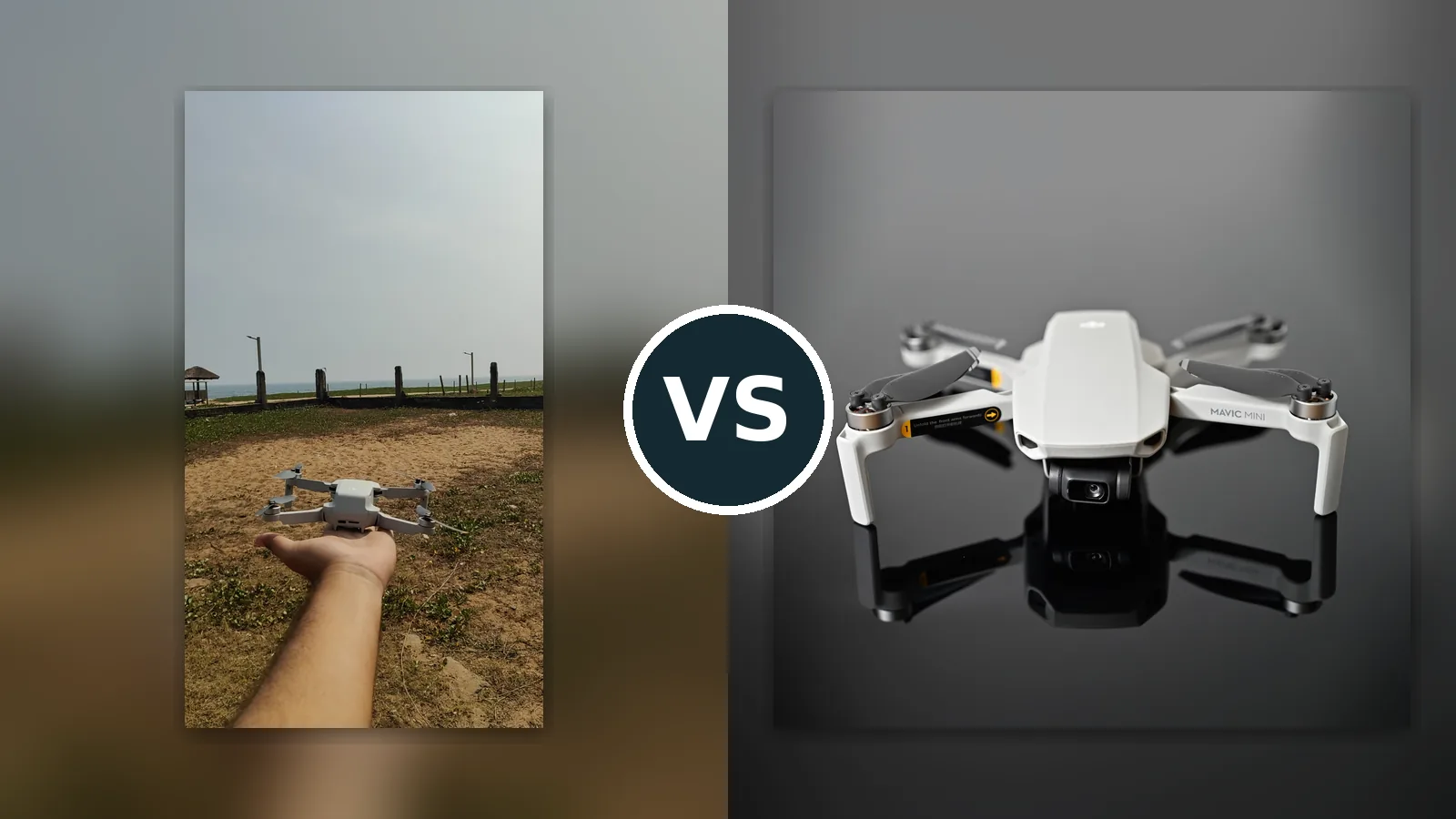
The dji mini 2 se vs mavic mini comparison is a four year time warp in a single weight class. Both drones carry a 1/2.3-inch 12MP sensor behind the same 24mm f/2.8 lens, both hang that camera on a proper 3-axis mechanical gimbal, and both sneak under the 250 gram registration line that makes the mini category so appealing. On a spec sheet they look like twins. In the air they are not. The Mini 2 SE, launched in 2023 as the budget member of the Mini 2 family, fixes the two flaws that defined the original Mavic Mini from 2019: its fragile Wi-Fi video link and its nervous behaviour in a breeze. It does that while costing less than the Mavic Mini did at launch. So is there any reason left to buy the 2019 original, most likely used, in 2026? There is, but it is a narrower reason than you might expect. We compared the cameras, the transmission systems, the wind handling, the batteries and the used market reality so you can see exactly where the four years went.
Affiliate disclosure: As an Amazon Associate I earn from qualifying purchases. This page contains affiliate links. If you buy through them, we may earn a commission.
Mini 2 SE, almost every time.
DJI Mini 2 SE is the better drone for nearly everyone: OcuSync 2.0 transmission with up to 10 km of rated range instead of a 4 km Wi-Fi link, Level 5 wind resistance instead of a nervous 8 m/s class airframe, RAW stills, and a 31 minute rated flight time, all in a 246 g package. DJI Mavic Mini only wins as a bargain: if you find a clean used kit at a steep discount and you fly in calm, open places, the identical sensor and gimbal still produce lovely footage. Camera: tie. Link and wind: Mini 2 SE by a mile. Value at full price: Mini 2 SE. Value used: it depends entirely on the listing.
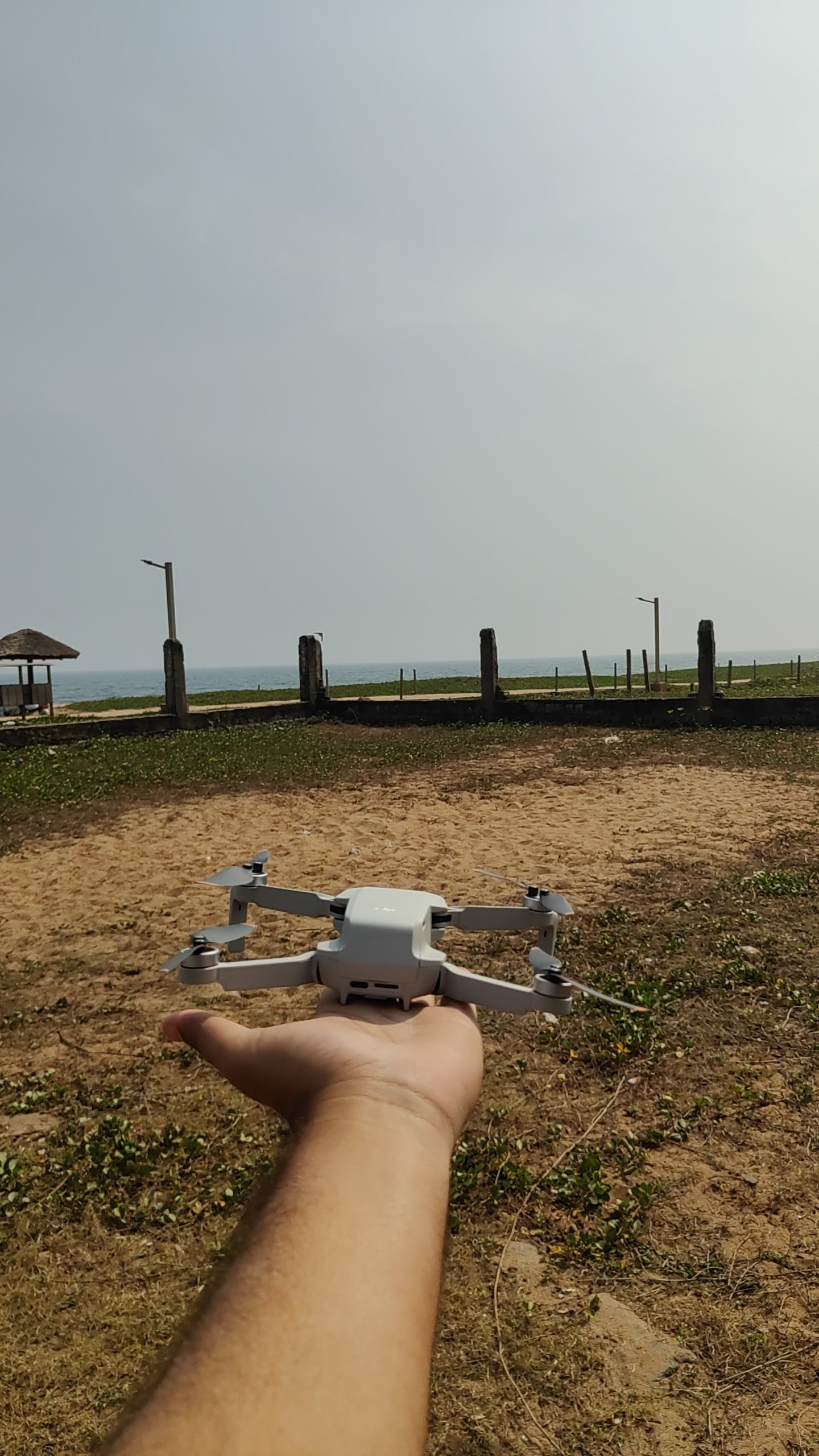
DJI Mini 2 SE
For new pilots who want a sub-250g DJI with a proper digital link and calm manners in wind
- OcuSync 2.0 link rated to 10 km FCC with a stable 720p live view, a different world from Wi-Fi
- Level 5 wind resistance at 10.7 m/s and a 16 m/s Sport mode top speed
- JPEG plus DNG RAW stills, QuickShots and Panorama, and Mini 2 battery compatibility
Check current price and available bundles on Amazon
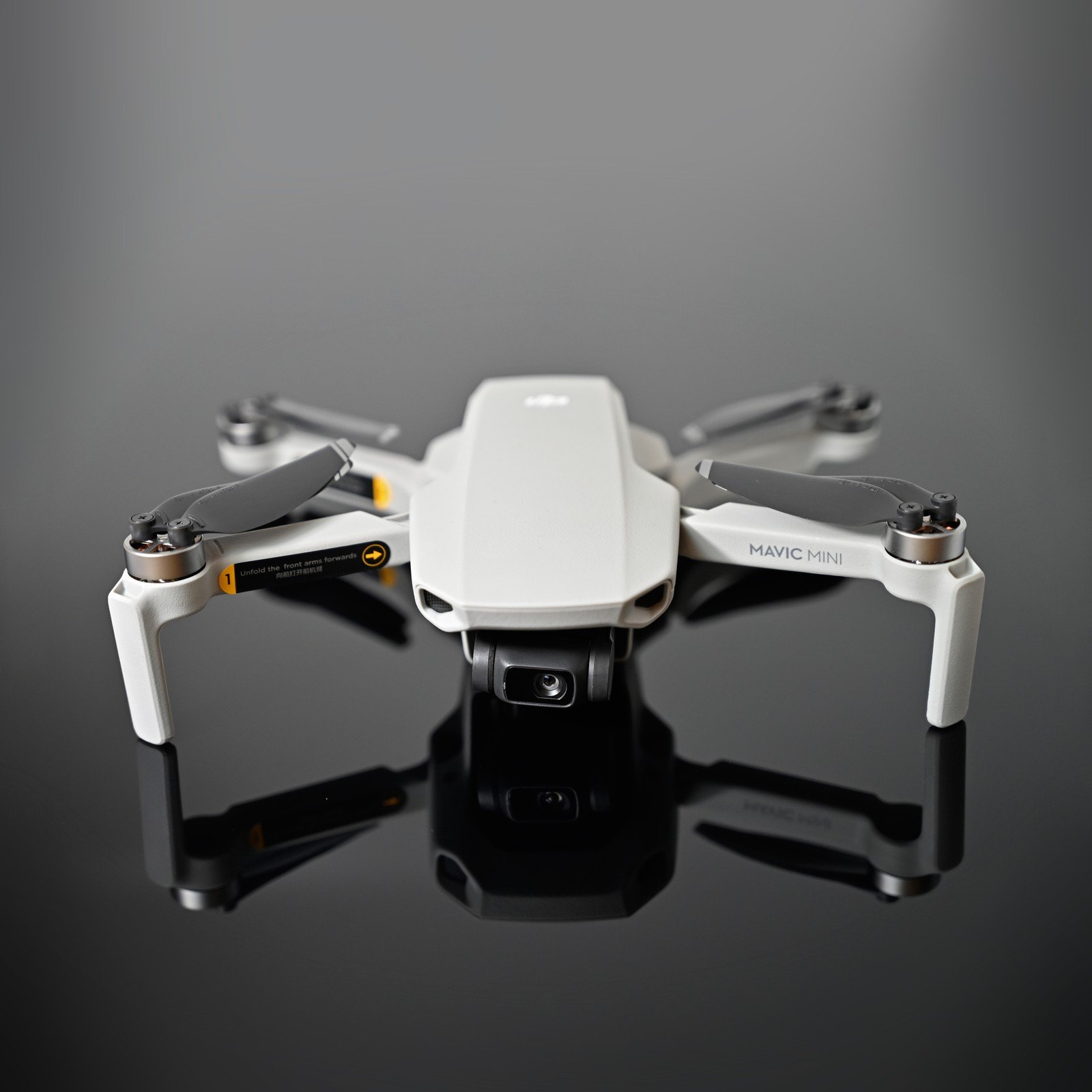
DJI Mavic Mini
For patient bargain hunters who fly calm locations and can live with a Wi-Fi link from 2019
- Same sensor, same lens and same 3-axis gimbal as the SE, so good footage is identical footage
- Often very cheap on the used market, with Fly More kits everywhere
- Enhanced Wi-Fi link rated to 4 km and easily disturbed in town, plus JPEG only stills
Check current price and available bundles on Amazon
Same weight class, four years apart
Start with where and how you fly. These two drones share a sensor and a silhouette, but the gap between a Wi-Fi drone and an OcuSync drone decides real flights every single weekend.
The Mavic Mini arrived in late 2019 and genuinely changed the market. Before it, a sub-250g drone with a 3-axis gimbal and 2.7K video was an idea, not a product. It sold in huge numbers, taught a generation of pilots to fly, and its footage still holds up in daylight: the 1/2.3-inch sensor, 24mm lens and 40 Mbps H.264 recording are the same core ingredients the Mini 2 SE uses today. If all you compare is the camera block, you could reasonably conclude that nothing improved in four years. That conclusion falls apart the moment you take off near houses, power lines or a breezy coastline.
The Mavic Mini talks to its controller over Enhanced Wi-Fi, and Wi-Fi is where its story sours. DJI rated the link at 4 km under FCC rules in ideal conditions, but the feed shares crowded spectrum with every router, doorbell and access point around you. In suburbs and cities the picture can stutter, freeze or drop at distances that feel embarrassingly short, and a frozen feed on a drone with no obstacle sensors is not a theoretical problem. Add modest wind handling: the original airframe is rated around the 8 m/s class, and owners learned quickly that a Mini in a gust gets pushed around, tilts hard to hold position, and burns battery doing it. None of this makes it a bad drone. It makes it a fair weather, open field drone.
The Mini 2 SE is DJI taking the same recipe and fixing the seasoning. It keeps the sensor, lens, gimbal and 2.7K video ceiling, then swaps the link for OcuSync 2.0, the same DJI O2 transmission family used by the Mini 2, rated to 10 km FCC with a clean 720p live view. Wind resistance climbs to a proper Level 5 rating at 10.7 m/s, Sport mode rises from 13 m/s to 16 m/s, GNSS adds Galileo alongside GPS and GLONASS, and stills gain DNG RAW alongside JPEG. Flight time edges up a single minute to 31 rated. It is not a revolution. It is the original idea with its two biggest weaknesses engineered out, sold as the cheapest drone in the Mini line. For a first drone, that combination of a trustworthy link and sub-250g freedom is exactly the point.
So who should still consider the Mavic Mini? Honestly, the deal hunter. The original is discontinued, which means the market is used kits, refurbished units and forgotten Fly More combos in cupboards. A clean one with healthy batteries can cost a fraction of a new SE, and for calm evening flights over open ground it shoots the same picture. Just go in clear eyed: you are buying the discount, not the drone, and the discount has to pay for the Wi-Fi link, the JPEG only stills, the weaker wind manners and batteries that may be six years old. If the saving is small, skip it. The SE exists precisely so you do not have to compromise on the link.
Choose DJI Mini 2 SE if…
- A reliable link matters: you fly near homes, in suburbs, or anywhere Wi-Fi congestion is real.
- You fly in typical breezy conditions and want Level 5 wind resistance at 10.7 m/s.
- You edit stills and want DNG RAW files, not just JPEGs.
- You want a new drone with a warranty, fresh batteries and Mini 2 accessory compatibility.
Choose DJI Mavic Mini if…
- Price is the whole story and you found a clean used kit at a deep discount.
- You mostly fly open, calm locations where a Wi-Fi feed behaves itself.
- JPEG stills and 2.7K video are all your projects need.
- You can accept aging batteries, no RAW, and a link that gives up early in town.
Mini 2 SE vs Mavic Mini: the specs that actually matter
Read the transmission and wind rows first. That is where four years of development went, because the camera rows are nearly a photocopy.
| Feature | DJI Mini 2 SE | DJI Mavic Mini |
|---|---|---|
| Best suited to | New pilots who want a sub-250g drone with a dependable digital link and steady wind manners | Bargain hunters flying calm, open locations on a tight budget |
| Takeoff weight | 246 g | 249 g |
| Dimensions | Folding Mini airframe; unfolds to a compact quadcopter footprint shared with the Mini 2 family | Folding Mini airframe; the original compact footprint the whole Mini line inherited |
| Sensor & lenses | 1/2.3-inch CMOS, 12MP, 24mm equivalent f/2.8 lens | 1/2.3-inch CMOS, 12MP, 24mm equivalent f/2.8 lens |
| Video modes | 2.7K at 24, 25 and 30 fps; 1080p up to 60 fps | 2.7K at 30 fps; 1080p up to 60 fps |
| Color & codecs | H.264 up to 40 Mbps; JPEG plus DNG RAW stills | H.264 up to 40 Mbps; JPEG stills only, no RAW |
| Vertical capture | Not native; fixed landscape orientation, crop in post for vertical output | Not native; fixed landscape orientation, crop in post for vertical output |
| Obstacle sensing | None; downward vision positioning only, no obstacle avoidance | None; downward vision positioning plus infrared hover sensors, no obstacle avoidance |
| Subject tracking | No ActiveTrack; automated QuickShots and Panorama modes only | No ActiveTrack; four QuickShots: Dronie, Rocket, Circle and Helix |
| Rated flight time | 31 minutes maximum, manufacturer rating | 30 minutes maximum, manufacturer rating |
| Measured flight time | Not tested by us; manufacturer rating is 31 minutes in lab conditions | Not tested by us; manufacturer rating is 30 minutes in lab conditions |
| Rated wind resistance | 10.7 m/s, Level 5 | 8 m/s class; noticeably less steady than the SE in gusts |
| Max speed | 16 m/s in Sport mode | 13 m/s in Sport mode |
| Transmission | OcuSync 2.0 (DJI O2), up to 10 km FCC, 720p live view | Enhanced Wi-Fi, up to 4 km FCC, 720p live feed |
| Storage | microSD card slot, card sold separately | microSD up to 256GB, card sold separately |
| Controller & bundle | DJI RC-N1 controller, phone required, DJI Fly app; standard and Fly More style bundles | Dedicated controller with phone mount, DJI Fly app; standard and Fly More combos, now mostly used |
| Main trade-off | No built-in Remote ID module, which matters for some US pilots; no obstacle sensing at all | Wi-Fi transmission limits range and reliability; discontinued, with aging batteries on the used market |
Manufacturer flight times and ranges are laboratory figures recorded in ideal conditions. Real flights are shorter, and Wi-Fi range in particular falls fast in built up areas.
Five differences that decide real flights
One of these differences is a tie so complete it is almost funny. The other four are the reason the Mini 2 SE exists.
1. The link: OcuSync confidence vs Wi-Fi roulette
Edge: Mini 2 SE, decisivelyThis is the comparison, full stop. The Mini 2 SE uses OcuSync 2.0, the DJI digital transmission system, rated to 10 km under FCC rules with a 720p live view that stays smooth and legible. You will rarely fly anywhere near that distance, and you should not try: the number matters because a system with that much headroom delivers a rock solid feed at the few hundred metres where minis actually work. Interference that would choke a Wi-Fi link barely registers. The picture stays up, the controls stay crisp, and the drone feels connected in the way a tool should feel connected.
The Mavic Mini uses Enhanced Wi-Fi, rated to 4 km FCC on paper and far less in the places people actually live. Wi-Fi shares spectrum with home networks and every other nearby emitter, so in a suburb the feed can break up at distances where the SE is not even warming up. Owners adapted with range extenders, careful antenna angles and open flying sites, which tells you everything about the underlying experience. A hesitant link also caps your confidence: with no obstacle sensors on either drone, your eyes through that feed are the collision avoidance system. When the feed stutters, you fly timidly, and timid flying makes dull footage.
2. Wind handling: Level 5 composure vs fair weather manners
Edge: Mini 2 SESmall drones live or die by the weather, and here the four year gap shows again. The Mini 2 SE is rated to 10.7 m/s, a proper Level 5 wind resistance figure, with stronger motors and a 16 m/s Sport mode top speed to punch home against a headwind. In practice that means it holds a hover without drama on days when the trees are moving, the gimbal stays level, and the battery is spent flying rather than fighting. Pilots stepping up from the original consistently describe the SE as the calmer drone, and the numbers explain why.
The Mavic Mini sits in the 8 m/s class and behaves like it. It leans hard to hold position in gusts, the airframe visibly works, high wind warnings arrive early, and return trips into a headwind at 13 m/s maximum can get genuinely tense if you pushed the battery on the way out. None of this is dangerous if you respect it, but it shrinks your flying days. Coastal pilots and anyone in an open, breezy region will feel the difference weekly. Calm climate flyers who pick their evenings carefully may honestly never notice, which is the one scenario where the original keeps its dignity intact.
3. Camera output: identical hardware, one editing upgrade
Edge: Tie on video, Mini 2 SE on stillsLet us save you some suspense: the video is the same. Both drones record through a 1/2.3-inch 12MP sensor and a 24mm f/2.8 lens onto a 3-axis mechanical gimbal, encoding H.264 at up to 40 Mbps. The SE tops out at 2.7K with 24, 25 and 30 fps options and drops to 1080p for 60 fps slow motion; the original records 2.7K at 30 fps and the same 1080p60. Daylight footage from the two is effectively interchangeable, with the same pleasant DJI colour, the same small sensor limits in low light, and the same need for ND filters if you want cinematic shutter speeds. Nobody is upgrading from one to the other for the video, and this article will not pretend otherwise.
Stills are where the SE quietly pulls ahead. The Mavic Mini shoots JPEG only. The Mini 2 SE adds DNG RAW, and for anyone who edits, that is a real upgrade: skies that band in a JPEG can be graded smoothly from a DNG, shadows recover, and white balance stops being a commitment you made in the field. Both drones offer automated help for the pretty stuff, QuickShots on both and Panorama on the SE, and both lack any form of ActiveTrack, so neither follows a subject on its own. If your flying is video first and your stills go straight to social media as JPEGs, call it a tie. If you process photos like a photographer, the SE is the only one of the pair speaking your language.
4. Flight time, positioning and the small print
Edge: Mini 2 SE, narrowlyThe headline numbers are close to a shrug: 31 rated minutes for the SE against 30 for the original, both laboratory figures that translate to the mid twenties in real air with a sensible landing reserve. What matters more is the ecosystem around those minutes. The Mini 2 SE uses Mini 2 batteries and accessories, so spare packs, chargers and propellers belong to a newer, better stocked family. The Mavic Mini flies on its own battery packs, and every used example you meet has years of charge cycles behind it. A cheap original with tired batteries is not cheap once you price replacements, assuming you can find good ones.
Positioning tells a similar story of small, real gains. The SE locks onto GPS, GLONASS and Galileo; the original uses GPS and GLONASS. Both rely on downward vision positioning to hold a hover indoors or at low altitude, and the original adds infrared sensing for its hover. Neither drone has obstacle avoidance in any direction, so low flying near trees is pilot skill on both. One genuine piece of small print favours neither cleanly: the Mini 2 SE has no built-in Remote ID module, which matters for some US pilots depending on how and where they fly, so check your own situation against current FAA rules before assuming either sub-250g drone is paperwork free in every scenario.
5. Ownership in 2026: new and supported vs used and aging
Edge: Mini 2 SEThe Mavic Mini is discontinued. Every listing is a negotiation with history: charge cycles, crash repairs, a controller that has lived in a drawer, firmware that may be several versions behind. Good examples absolutely exist, because the drone sold in enormous numbers and many owners babied theirs. But the burden of proof sits with you, the buyer, and the homework is real. Battery health first, then gimbal smoothness, then a test hover, then whether the aircraft is still bound to the seller DJI account. Skip any step and the bargain can curdle.
The Mini 2 SE is the low drama alternative: a current budget model that arrives new, with fresh batteries, a warranty, and the RC-N1 controller that pairs with your phone in the DJI Fly app both drones share. It also inherits the Mini 2 accessory shelf, so the case, filters and spare packs you buy today remain useful and findable. The honest summary is that the Mavic Mini is a project purchase and the SE is a product purchase. Projects are fun when the discount is huge and your expectations are set. Products are what most first time drone buyers actually want, even when they think they want a project.
What you gain. What you give up.
DJI Mini 2 SE
Reasons to choose it
- OcuSync 2.0 transmission rated to 10 km FCC, with a stable feed where Wi-Fi drones struggle
- Level 5 wind resistance at 10.7 m/s and a faster 16 m/s Sport mode
- DNG RAW stills alongside JPEG, plus QuickShots and Panorama
- Uses Mini 2 batteries and accessories; sold new with a warranty
- 246 g takeoff weight keeps it in the sub-250g class
Reasons to reconsider
- No obstacle sensing of any kind; downward vision positioning only
- No built-in Remote ID module, which matters for some US pilots
- Video still tops out at 2.7K on a small 1/2.3-inch sensor
- RC-N1 controller needs your phone as the screen
DJI Mavic Mini
Reasons to choose it
- Identical sensor, lens and 3-axis gimbal, so daylight footage matches the SE
- Frequently very cheap used, with Fly More kits easy to find
- Four QuickShots (Dronie, Rocket, Circle, Helix) for instant shareable clips
- 249 g takeoff weight, squarely in the sub-250g class
- Simple, proven DJI Fly app experience shared with the SE
Reasons to reconsider
- Enhanced Wi-Fi link rated to 4 km and unreliable in built up areas
- JPEG stills only; no RAW for photo editing
- Weaker wind handling in the 8 m/s class and a 13 m/s top speed
- Discontinued; battery age and condition vary on every used listing
Check the link first, then the batteries
Both drones are simple to buy and easy to buy badly. Run this checklist and you will dodge the classic mistakes.
- Decide by location: If most of your flying happens near homes, streets or any built up area, the Mavic Mini Wi-Fi link will frustrate you quickly. That single fact settles the comparison for most people. Open countryside flyers have more freedom to chase the used bargain.
- Battery health on used Minis: Ask the seller for charge cycle counts and check for swollen or puffy packs. The Mavic Mini launched in 2019, so even a careful owner batteries are old. Price any needed replacements into the deal before you call it cheap.
- Account binding: Confirm a used Mavic Mini has been unbound from the seller DJI account. A bound aircraft cannot be activated properly under your account, and sorting it out afterwards needs the original owner cooperation.
- Bundle maths: Fly More style kits with extra batteries and a charging hub transform either drone, because a single pack gives you roughly one good location per outing. For the SE, remember it uses Mini 2 batteries, which widens your shopping options.
- Storage: Neither drone records without a microSD card. The Mavic Mini accepts cards up to 256GB. Buy a fast, reputable card either way; 2.7K at 40 Mbps is gentle, but cheap cards corrupt at the worst moments.
- Rules where you fly: Both drones sit under 250 g, which simplifies registration in many places, but rules vary by country and by how you fly. The Mini 2 SE has no built-in Remote ID module, relevant for some US pilots, so check your aviation authority current requirements before your first flight.
The right choice comes down to the link.
Buy the DJI Mini 2 SE unless you have a specific, price shaped reason not to. It keeps everything that made the Mavic Mini a landmark, the sub-250g weight, the 3-axis gimbal, the honest 2.7K camera, and replaces the two things that made it age: the Wi-Fi link and the timid wind manners. Add RAW stills, a minute of flight time and fresh batteries under warranty, and the SE is simply the finished version of the idea. The Mavic Mini remains a charming used bargain for calm locations and patient pilots, and at the right discount it still earns its place. Just never pay near-SE money for one. At that point you are funding nostalgia, not capability.
Still deciding?
Is the DJI Mini 2 SE better than the Mavic Mini?
Yes, for most pilots, and the reasons are specific rather than vague. The Mini 2 SE replaces the Mavic Mini Enhanced Wi-Fi link with OcuSync 2.0 rated to 10 km FCC, raises wind resistance to 10.7 m/s at Level 5, lifts Sport mode from 13 m/s to 16 m/s, adds DNG RAW stills and adds a minute of rated flight time. The camera hardware itself, sensor, lens and gimbal, is the same on both, so the SE is best understood as the same camera on a much better behaved aircraft.
Do the Mini 2 SE and Mavic Mini shoot the same video quality?
Practically, yes. Both use a 1/2.3-inch 12MP sensor with a 24mm f/2.8 lens and record H.264 at up to 40 Mbps. The SE offers 2.7K at 24, 25 and 30 fps; the original records 2.7K at 30 fps. Both shoot 1080p at up to 60 fps. Daylight footage is interchangeable. The visible difference in ownership shows up in stills, where the SE adds DNG RAW and the original is JPEG only, and in how confidently each drone holds its link and position while you shoot.
How far can each drone really fly?
DJI ratings are 10 km FCC for the Mini 2 SE on OcuSync 2.0 and 4 km FCC for the Mavic Mini on Enhanced Wi-Fi, both in ideal, interference free conditions. Real world range is always lower, and the gap widens in towns because Wi-Fi shares spectrum with home networks. In practice, the SE keeps a clean, usable feed at distances where the original picture may already be breaking up. Fly within visual line of sight as rules require, and treat headline range as a measure of link quality, not a target.
Can the Mavic Mini use Mini 2 SE batteries, or the other way round?
The Mini 2 SE uses Mini 2 family batteries and accessories, which is the newer and better stocked ecosystem. The original Mavic Mini uses its own battery design from 2019. Do not assume cross compatibility between the 2019 aircraft and the Mini 2 generation in either direction: check the exact battery model against DJI compatibility documentation before buying spares, especially on used listings where sellers sometimes bundle the wrong pack.
Do either of these drones need registration?
Both weigh under 250 g at takeoff, 246 g for the SE and 249 g for the Mavic Mini, which exempts them from registration for recreational flying in some jurisdictions, including the US under current FAA recreational rules. Requirements change and differ by country, and commercial use follows different rules. Note also that the Mini 2 SE has no built-in Remote ID module, which matters for some US pilots. Always check your aviation authority current rules for your location and type of flying.
How were these drones compared?
This is a research based comparison built from DJI official specifications and user manuals for both models, cross checked against DJI support documentation for transmission, battery compatibility and flight modes. We did not fly either drone for this article. Rated flight times, ranges and speeds are DJI laboratory figures, and where real world behaviour is discussed it reflects the documented limits of Wi-Fi versus OcuSync transmission rather than our own flight testing. See the methodology section below for the full source list.
How this comparison was prepared
This is a research based comparison. We did not fly either drone for this article, and nothing here should be read as hands on testing. Specifications were taken from DJI official specification pages and user manuals for the DJI Mini 2 SE and the DJI Mavic Mini, including takeoff weights, sensor and lens data, video modes, transmission ratings, wind resistance and flight times. Details that commonly get garbled in second hand listings, such as the Mavic Mini JPEG only stills, its four named QuickShots and its 256GB microSD ceiling, and the Mini 2 SE OcuSync 2.0 system, Mini 2 battery compatibility and missing built in Remote ID module, were checked against DJI documentation rather than retailer copy. Amazon listings were matched by exact product name and model before any affiliate link was written, and no tagged affiliate URL was opened or clicked during verification.
Sources & verification
- DJI Mini 2 SE official specifications (dji.com)
- DJI Mavic Mini official specifications (dji.com)
- DJI Mini 2 SE user manual and DJI support documentation (dji.com)
- DJI Mavic Mini user manual and DJI support documentation (dji.com)
- DJI Fly app documentation covering QuickShots, Panorama and transmission behaviour
Last verified: October 20, 2026. Bundle availability and specifications may vary by region and version.


