

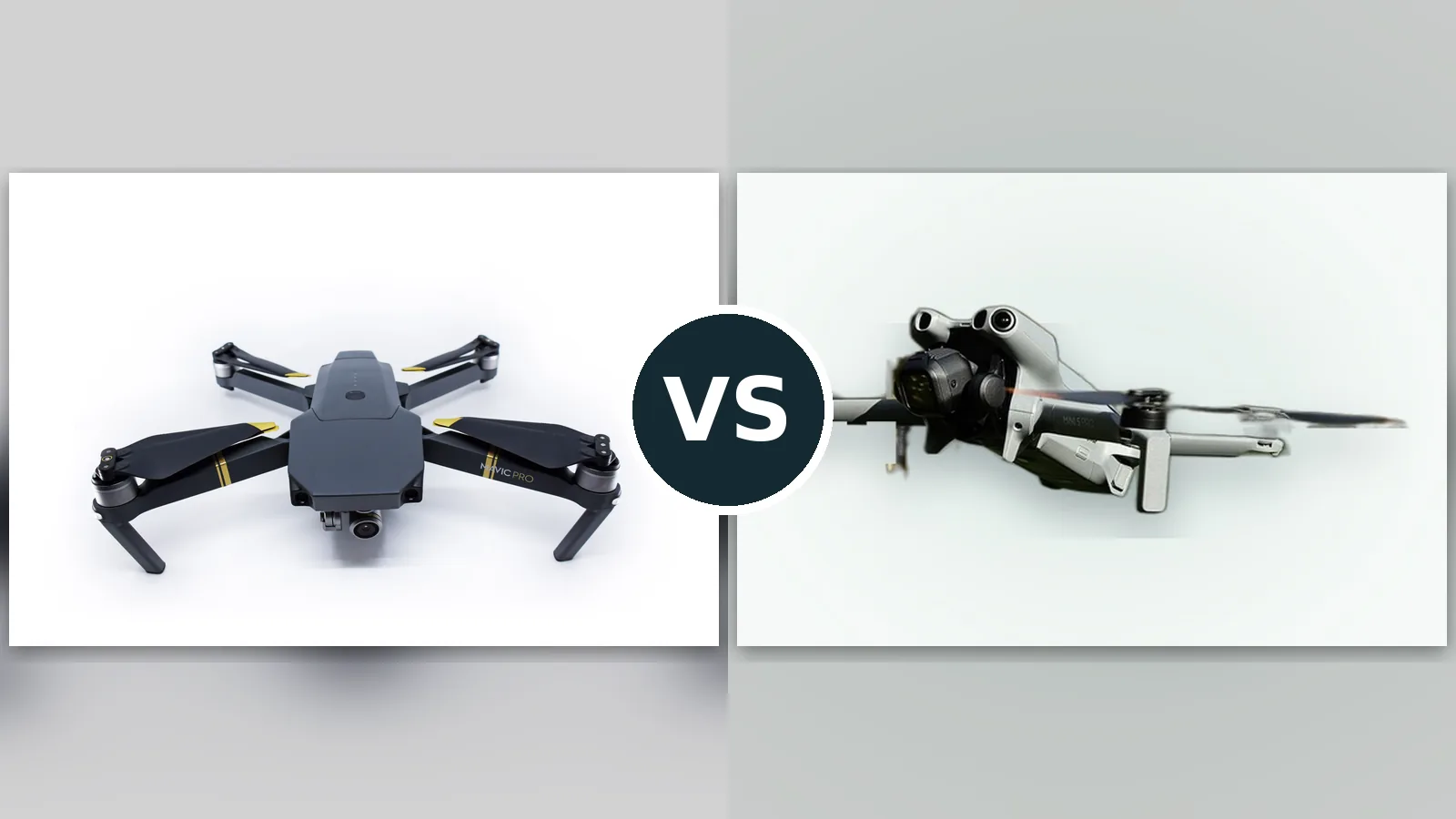
Few matchups show how far drones have come quite like dji mavic pro vs mini 5 pro. In late 2016, the original DJI Mavic Pro rewrote the industry: a genuinely capable camera drone that folded down to the size of a water bottle, shot 4K video, tracked subjects, and flew for a rated 27 minutes. It invented the folding camera drone category and made aerial photography a consumer hobby. Nine years later, the DJI Mini 5 Pro weighs about a third as much, carries a 1-inch 50MP sensor, shoots 4K/120 with 10-bit color, senses obstacles in every direction plus LiDAR, tracks subjects a full 360 degrees, and flies for a rated 36 minutes, all while staying in the sub-250-gram class in its standard configuration. So why compare them at all? Because the Mavic Pro still has a loyal used market, still flies beautifully, and still asks a fair question: how much of the new machine do you actually need? This comparison walks through nine years of progress, spec by spec and flight by flight, and gives the old icon its honest due.
Affiliate disclosure: As an Amazon Associate I earn from qualifying purchases. This page contains affiliate links. If you buy through them, we may earn a commission.
Mini 5 Pro for almost everyone. Mavic Pro for nostalgia on a budget.
DJI Mini 5 Pro wins this comparison on nearly every row: a 1-inch 50MP sensor against a 1/2.3-inch 12MP one, 4K/120 and 10-bit D-Log M against 4K/30 and 8-bit era profiles, omnidirectional sensing plus LiDAR against forward sensing only, 36 rated minutes against 27, and 20 km O4 transmission against 7 km OcuSync, all at 249.9 grams against 734 grams. DJI Mavic Pro survives as a charming, capable used buy with real forward sensing, a loyal community, and a proven airframe, but its discontinued status and aging batteries are now its defining features. If you are buying a drone to fly in 2026, buy the Mini 5 Pro. If you are buying a piece of history that still shoots, the Mavic Pro remains a lovely one.
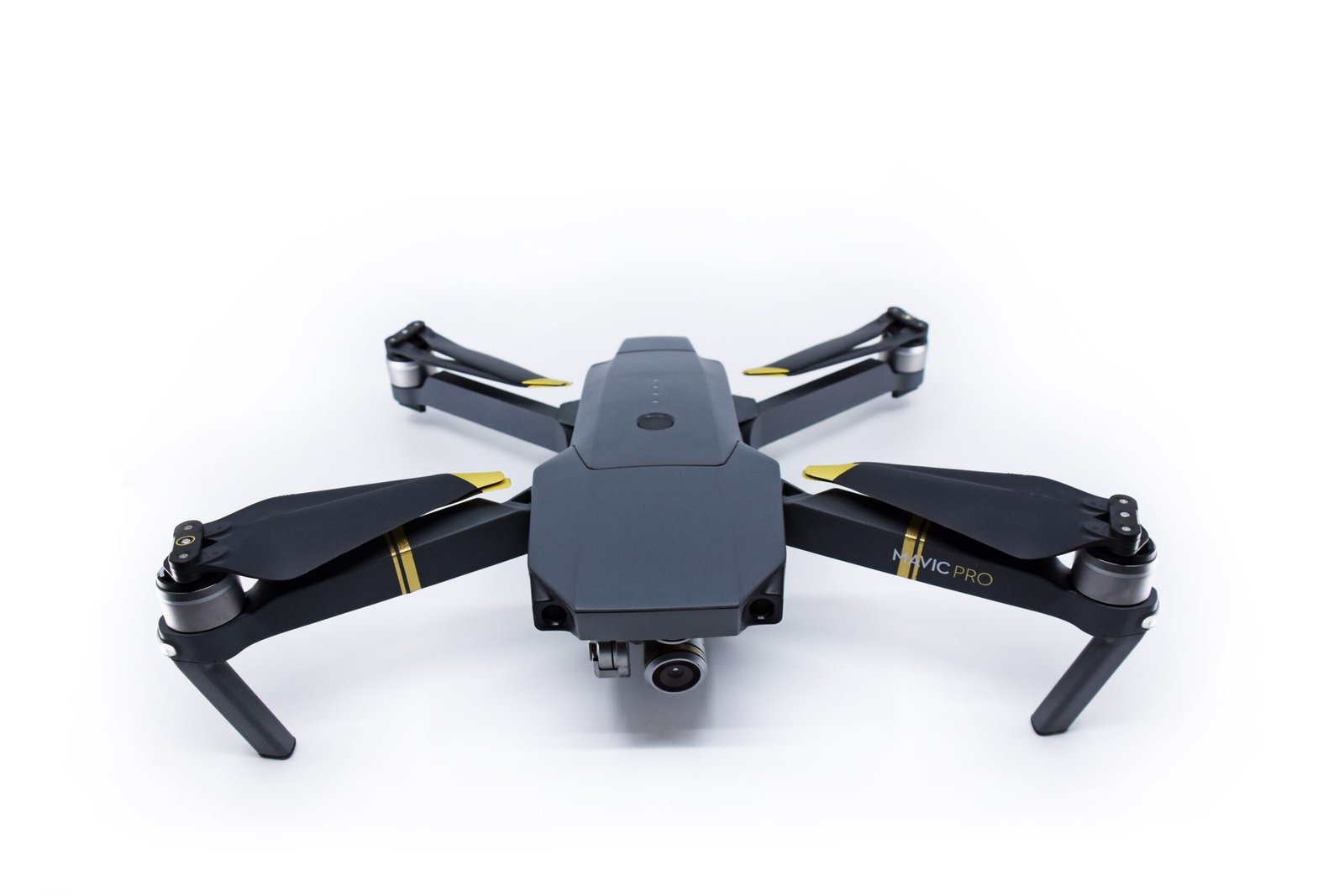
DJI Mavic Pro
For collectors and bargain hunters who want the 2016 folding pioneer that started it all
- The original folding camera drone: a category-defining design that still flies smoothly and shoots honest 4K/30
- Real forward vision sensing, ActiveTrack, TapFly, and Gesture Mode that were revolutionary in 2016
- Discontinued with aging batteries: pack health is now the single biggest used-buying risk
Check current availability and bundle options on Amazon
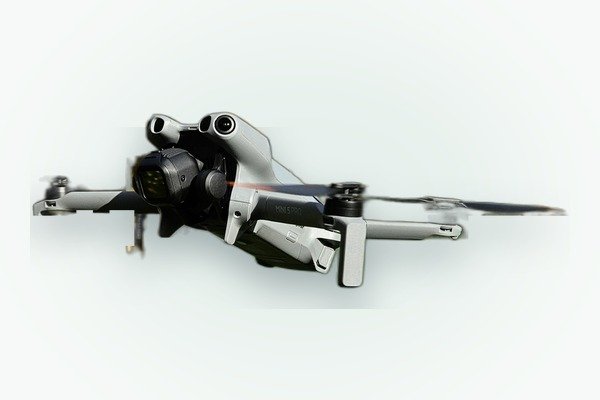
DJI Mini 5 Pro
For creators who want a 1-inch sensor, true vertical video, and full sensing under 250 grams
- 1-inch 50MP sensor with 4K/120, 4K/60 HDR, 10-bit D-Log M and HLG, and up to 14 stops of dynamic range
- Omnidirectional vision sensing plus forward LiDAR, nightscape sensing, and ActiveTrack 360
- Plus battery stretches flight to a rated 52 minutes but pushes takeoff weight past the standard figure
Check current availability and bundle options on Amazon
A history lesson you can actually buy
This is not a fair fight, and it is not meant to be. The useful question is narrower: what does the Mini 5 Pro’s nine-year advantage actually buy you, and is there any buyer left for whom the Mavic Pro is the smarter purchase?
Start with what the Mavic Pro still is. It is a well built, genuinely enjoyable drone. The folding arms, the satisfying heft at 734 grams, the 65 km/h Sport pace, and a 3-axis gimbal that produces smooth 4K/30 footage: none of that stopped working when newer models arrived. Owners who learned on a Mavic Pro remember it fondly for good reason, and a clean, low-cycle example still shoots perfectly presentable travel and hobby footage in good light. If your goal is a cheap ticket into aerial photography, or a shelf-worthy piece of drone history that also flies, the used market is full of them and the community knowledge base is enormous.
Then look at what nine years actually delivered. The Mini 5 Pro’s 1-inch sensor is roughly four times the area class of the Mavic Pro’s 1/2.3-inch chip, with 50MP stills at 8192×6144 against 12.35MP, and video that runs to 4K/120, 4K/60 HDR, and even FHD/240 for extreme slow motion. Its color pipeline is 10-bit D-Log M and HLG at up to 130 Mbps against the Mavic Pro’s H.264 at up to 60 Mbps. It senses in every direction and adds forward LiDAR, where the Mavic Pro watches forward and down only. It tracks subjects through a full 360 degrees, shoots true vertical video natively, transmits over O4 for up to 20 km under FCC rules against 7 km for the original OcuSync, and it does all of this at 249.9 grams, roughly a third of the Mavic Pro’s weight, which in many regions means a lighter regulatory burden too.
The Mavic Pro’s remaining case is emotional and financial, and there is no shame in either. It costs a fraction of the Mini 5 Pro on the used market, its forward sensing was real hardware rather than a brochure claim, and its simpler feature set makes it an undemanding second drone or trainer. But be clear eyed about the flip side: it is discontinued, its intelligent batteries are aging as a fleet, its DJI GO 4 app belongs to another era, and every year the gap between what it shoots and what phones and modern drones shoot grows wider. Buy it as a classic, maintain it as a classic, and it will reward you. Buy it expecting a 2026 camera, and it will not.
Choose DJI Mavic Pro if…
- Heritage and value drive the purchase: you want the drone that invented folding camera drones, at a used-market fraction of a new flagship mini.
- Your flying is fair-weather hobby work in good light, where 4K/30 and 12.35MP stills still look perfectly respectable.
- You value real forward vision sensing and proven modes like ActiveTrack, TapFly, and Gesture Mode.
- You can accept discontinued status, an aging battery fleet, and the DJI GO 4 app as part of the ownership deal.
Choose DJI Mini 5 Pro if…
- Image quality is the priority: a 1-inch 50MP sensor, 4K/120, 10-bit color, and up to 14 stops of dynamic range.
- You shoot for social platforms and want native true vertical video without cropping or rotating tricks.
- You want modern safety: omnidirectional sensing, forward LiDAR, nightscape sensing, and ActiveTrack 360.
- You can accept that the 52-minute Plus battery changes the weight story, and that flagship mini capability commands a flagship mini budget.
Mavic Pro vs Mini 5 Pro: 2016 Specs Meet 2026 Specs
Lay the two spec sheets side by side and the story of a decade in consumer drones tells itself. Nearly every row flips to the newer machine, sometimes by a little and sometimes by a generation. The rows that do not flip, forward sensing and sheer top speed among them, are the interesting ones.
| Feature | DJI Mavic Pro | DJI Mini 5 Pro |
|---|---|---|
| Best suited to | Collectors, hobbyists, and bargain hunters who want the original folding camera drone, bought used | Creators who want flagship camera quality, full sensing, and true vertical video in a sub-250-gram class drone |
| Takeoff weight | 734 g | 249.9 g with the standard battery |
| Sensor & lenses | 1/2.3-inch CMOS, 12.35MP; 28mm equivalent, f/2.2 | 1-inch CMOS, 50MP; 24mm equivalent, f/1.8 |
| Video modes | C4K 4096×2160/24p, 4K/30, 2.7K/30, 1080p/96 | 4K/120, 4K/60 HDR, FHD/240 |
| Color & codecs | H.264 up to 60 Mbps; D-Log and D-Cinelike profiles; JPEG and DNG stills | 10-bit D-Log M and HLG; up to 130 Mbps; up to 14 stops of dynamic range; JPEG and DNG stills at 8192×6144 |
| Vertical capture | Gimbal can roll 90 degrees for portrait stills; no vertical video | Native true vertical shooting |
| Obstacle sensing | Forward vision sensing plus downward positioning | Omnidirectional vision sensing plus forward LiDAR; nightscape sensing down to 1 lux |
| Subject tracking | ActiveTrack, plus TapFly and Gesture Mode | ActiveTrack 360 |
| Rated flight time | 27 minutes rated | 36 minutes rated; 52 minutes with the Plus battery |
| Measured flight time | Not tested by us | Not tested by us |
| Rated wind resistance | No wind rating included in the verified specification set for this comparison | 12 m/s |
| Max speed | 65 km/h in Sport mode | 18 m/s |
| Transmission | OcuSync, up to 7 km (FCC), 1080p live view | DJI O4, up to 20 km (FCC) |
| Storage | microSD card recording (no internal storage figure in the verified specification set) | 42GB internal storage plus microSD |
| Controller & bundle | GL200A controller with the DJI GO 4 app; GPS and GLONASS positioning | RC-N3 or RC 2 controllers; GPS (L1+L5), Galileo, and BeiDou positioning |
| Main trade-off | A beloved, proven classic that is discontinued, with aging batteries and a 2016-era camera ceiling | Modern flagship capability in mini form, at a modern flagship cost, with the Plus battery changing the weight class |
Manufacturer flight times are best-case lab figures; real flights are shorter, and on a discontinued drone like the Mavic Pro, battery age matters as much as the rating. Measured flight time is listed as not tested because this is a research-based comparison; see the methodology section.
Five Differences That Show Nine Years of Progress
Five differences tell the nine-year story: the sensor, the safety net, the folding legacy, the endurance numbers, and what ownership actually feels like now.
1. The sensor gap: nine years in a single row
Edge: Mini 5 ProSensor size is the closest thing photography has to destiny, and here the destiny is lopsided. The Mavic Pro’s 1/2.3-inch CMOS chip was respectable in 2016 and tiny by modern standards. It captures 12.35MP stills as JPEG or DNG through a 28mm equivalent f/2.2 lens, and in bright daylight it produces cheerful, shareable images that still hold up on a phone screen. Push it toward dusk, shoot into the sun, or crop into a frame, and the small sensor’s limits arrive quickly: noise, smeared detail, and highlights that clip without much room to recover them in the edit.
The Mini 5 Pro carries a 1-inch CMOS sensor, a class roughly four times the area, with 50MP stills at 8192×6144 in JPEG and DNG through a faster 24mm f/1.8 lens. Video runs to 4K/120, 4K/60 HDR, and FHD/240, recorded with 10-bit D-Log M and HLG profiles at up to 130 Mbps and up to 14 stops of dynamic range. In practical terms, that means sunset flights keep their color, shadows open up in post instead of falling apart, and slow motion is a real creative tool rather than a spec sheet curiosity. The Mavic Pro counters with period charm: its D-Log and D-Cinelike profiles were early tastes of flat color, and its gimbal can roll 90 degrees for portrait orientation stills, a trick photographers loved. Charm noted. The Mini 5 Pro shoots native true vertical video, which is the format the modern audience actually watches.
2. Sensing and tracking: forward eyes vs a full safety net
Edge: Mini 5 ProGive the Mavic Pro its flowers here: in 2016, forward vision sensing with downward positioning was remarkable on a consumer drone, and it remains real, working hardware. Paired with ActiveTrack, TapFly, and Gesture Mode, the original Mavic Pro introduced mainstream pilots to the idea that a drone could watch the world and react to it. Owners flying one today still benefit: the drone sees what is in front of it, holds position precisely near the ground, and follows a subject with the mode that started the tracking era.
The Mini 5 Pro shows what that idea became. Omnidirectional vision sensing watches in every direction, a forward LiDAR adds true distance measurement, and nightscape sensing works down to 1 lux, so the safety net functions at dusk when the older drone’s cameras are effectively guessing. ActiveTrack 360 follows subjects through a full circle of movement rather than a narrow cone, which transforms solo filming: ride, run, or paddle and the framing holds through turns that would shake a 2016 tracker loose. Neither system makes a drone crash-proof, and both demand a pilot who understands the limits. But the difference in coverage is the difference between a seatbelt and a full modern safety cell. The Mavic Pro pioneered the category. The Mini 5 Pro inherited it, multiplied it, and added senses the pioneer never had.
3. Size, weight, and the category the Mavic Pro invented
Edge: Mini 5 ProThe Mavic Pro’s party trick was folding: arms that tucked against the body until the drone was small enough for a jacket pocket or a water bottle slot in a backpack. At 734 grams it was not light, but it was astonishingly portable for its capability, and every folding drone since, including the Mini line, lives in the category it created. In the hand it still feels dense, serious, and well made, and its weight gives it a planted, confident feel in a breeze that ultralight drones have to work harder to match.
The Mini 5 Pro takes the same folding idea to its logical modern end: 249.9 grams with the standard battery, a figure chosen carefully because in many regions it keeps the drone in the lightest regulatory class, with simpler registration and more flexible flying. That is not a rounding error, it is a design brief, and it changes how the drone gets used. A sub-250-gram drone rides in every bag, comes on every hike, and launches on impulse. One honest caveat belongs here: the Plus battery that stretches rated flight time to 52 minutes pushes takeoff weight beyond that standard figure, so buyers who care about the weight class should plan around the standard battery and treat the Plus as a deliberate trade. Even so, the Mini 5 Pro carries a bigger sensor, better sensing, and longer range than the Mavic Pro in a third of the weight. The student did not just surpass the teacher. It miniaturized him.
4. Flight time, range, and the link between you and the drone
Edge: Mini 5 ProThe Mavic Pro was rated at 27 minutes, a strong figure in 2016, and its OcuSync link reached up to 7 km under FCC rules with a 1080p live view that felt like science fiction at the time. Both numbers aged gracefully, and a healthy Mavic Pro battery still delivers a satisfying flight. The operative word is healthy. The Mavic Pro is discontinued, its battery fleet is years old, and lithium packs lose capacity with age whether they are flown or shelved. A used Mavic Pro’s real endurance today is a question about that specific battery’s history, not about the number printed in 2016.
The Mini 5 Pro is rated at 36 minutes on its standard battery and 52 minutes with the Plus battery, transmitted over DJI O4 with up to 20 km of FCC range, roughly triple the original OcuSync figure. Positioning has modernized too: GPS with L1 and L5 bands plus Galileo and BeiDou, against the Mavic Pro’s GPS and GLONASS, which means faster locks and steadier holds in awkward spots. Add 42GB of internal storage plus a microSD slot and the newer drone simply spends more of its life flying and less of it managing. None of this embarrasses the Mavic Pro. It embarrasses the idea that a decade of engineering would stand still. Range and endurance are where the calendar shows most, because batteries, radios, and chipsets compounded year after year.
5. Living with each drone in 2026: apps, parts, and community
Edge: Split decisionOwnership is where this comparison gets human. The Mavic Pro runs on the DJI GO 4 app, a capable period piece that modern phone owners may find increasingly awkward as operating systems move on. Spare parts and batteries circulate on the used market rather than in fresh retail boxes, so keeping a Mavic Pro flying is partly a hobby in itself: hunting good packs, checking cells, and leaning on a huge, generous owner community that has documented every quirk the drone ever had. For the right person, that stewardship is half the fun, the same pleasure classic car owners describe, and the Mavic Pro rewards it with honest, characterful flying.
The Mini 5 Pro lives in the current ecosystem: current app, current controllers in the RC-N3 and RC 2, fresh batteries, and a manufacturer still building the product line. Its ownership story is deliberately boring, which for a working creator is the highest compliment available. The trade is money and, frankly, romance. The Mini 5 Pro costs flagship mini money; the Mavic Pro costs project money. One is an appliance you rely on. The other is a classic you keep alive. Our advice is simply to buy with your eyes open about which relationship you are signing up for, because both drones keep their side of the bargain remarkably well.
Mavic Pro vs Mini 5 Pro: Icon Value, Modern Compromises
DJI Mavic Pro
Reasons to choose it
- The original folding camera drone: a landmark design that created the category every modern drone lives in
- Real forward vision sensing, ActiveTrack, TapFly, and Gesture Mode that still work as intended
- Smooth 4K/30 video and 12.35MP JPEG and DNG stills that remain presentable in good light
- Used-market value and a vast owner community with deep knowledge and circulating parts
Reasons to reconsider
- Discontinued, with an aging battery fleet: pack health is the biggest risk in any used purchase
- 1/2.3-inch sensor, 4K/30 ceiling, and 60 Mbps H.264 recording show their age in low light and grading
- Forward and downward sensing only, no vertical video, and the older DJI GO 4 app experience
DJI Mini 5 Pro
Reasons to choose it
- 1-inch 50MP sensor with 4K/120, 4K/60 HDR, 10-bit D-Log M and HLG, and up to 14 stops of dynamic range
- Omnidirectional sensing plus forward LiDAR, nightscape sensing to 1 lux, and ActiveTrack 360
- 249.9 grams, 36 rated minutes (52 with the Plus battery), O4 range up to 20 km, and true vertical shooting
Reasons to reconsider
- Costs flagship mini money, a different universe from a used Mavic Pro
- The Plus battery that unlocks 52 minutes also lifts takeoff weight past the standard figure
- So capable and current that it offers none of the classic-ownership charm some buyers actively want
Buying a classic vs configuring a flagship: two checklists
One of these purchases is a used-market inspection. The other is a configuration choice. Run the right checklist for the drone in front of you.
- Battery health, Mavic Pro: This is the whole ballgame on a discontinued drone. Ask for charge cycle counts and a recent flight report, check for swelling or puffiness, and budget for replacement packs. A Mavic Pro with tired batteries is a display model.
- Battery choice, Mini 5 Pro: The standard battery holds the 249.9-gram takeoff weight and a 36-minute rating. The Plus battery stretches the rating to 52 minutes but changes the weight figure. Choose based on your local rules and your typical session length.
- Controller and app: The Mavic Pro pairs with its GL200A controller and the DJI GO 4 app; confirm your phone still runs the app happily before buying. The Mini 5 Pro uses the RC-N3 or the screen-equipped RC 2.
- Condition checks, Mavic Pro: Run the gimbal through its full range including the 90-degree portrait roll, inspect the folding arms and latches, and review sample footage at full resolution for sensor or lens issues.
- Storage: The Mini 5 Pro records to 42GB of internal storage plus microSD. The Mavic Pro records to microSD, so include a fast, drone-rated card in your used-buying budget.
- Local requirements: At 734 grams the Mavic Pro sits in a heavier regulatory class in most regions, while the Mini 5 Pro at 249.9 grams with its standard battery targets the lightest class. Check your aviation authority’s current registration and training rules for the exact configuration you will fly.
Nine years of progress, one honest exception.
Buy the DJI Mini 5 Pro if you are choosing a drone to fly and film with now. Its 1-inch 50MP sensor, 4K/120 and 10-bit recording, omnidirectional sensing with LiDAR, ActiveTrack 360, true vertical video, and 36-minute rated endurance at 249.9 grams beat the Mavic Pro on essentially every measurable row, usually by a generation. It is not a close call, and pretending otherwise would be nostalgia dressed as advice. Buy the DJI Mavic Pro if you are choosing a classic. It remains a characterful, capable machine with real forward sensing and honest 4K/30, available used for project money, supported by one of the best owner communities in the hobby. Keep its batteries healthy and it will still make you smile on a calm evening. Just buy it as the icon it is, not as a shortcut to modern image quality.
Still deciding?
Is the DJI Mavic Pro still worth buying in 2026?
As a classic and a budget hobby drone, yes, with eyes open. It still flies well, its forward sensing and ActiveTrack still work, and 4K/30 footage looks fine in good light. As a primary camera in 2026, no: it is discontinued, its batteries are aging, and modern drones like the Mini 5 Pro outshoot it by a wide margin. Battery condition should decide any specific used purchase.
How much better is the Mini 5 Pro camera than the Mavic Pro camera?
Substantially. The Mini 5 Pro uses a 1-inch 50MP sensor against a 1/2.3-inch 12.35MP sensor, records 4K/120 and 4K/60 HDR against 4K/30, and captures 10-bit D-Log M and HLG at up to 130 Mbps with up to 14 stops of dynamic range, against H.264 at up to 60 Mbps. In daylight both look pleasant on a phone. In low light, backlit scenes, slow motion, and grading, the gap is a full generation.
Does the Mavic Pro have obstacle avoidance?
It has forward vision sensing plus downward positioning, which was advanced in 2016 and still functions. It does not sense behind, beside, or above the drone. The Mini 5 Pro adds omnidirectional vision sensing and a forward LiDAR, plus nightscape sensing down to 1 lux, so its safety coverage is far more complete.
Why does the Mini 5 Pro weight matter so much?
At 249.9 grams with its standard battery, the Mini 5 Pro sits in the lightest regulatory class in many regions, which can simplify registration and where you may fly. The Mavic Pro weighs 734 grams and falls into heavier classes with stricter requirements. Note that the Mini 5 Pro’s Plus battery raises its takeoff weight past the standard figure, so check the rules for the configuration you actually fly.
Can the Mavic Pro shoot vertical video for social media?
Not natively. Its gimbal can roll 90 degrees for portrait orientation stills, which was a neat trick in 2016, but vertical video is not part of its offering. The Mini 5 Pro shoots native true vertical video, which is one of the clearest examples of how the audience, not just the hardware, changed over nine years.
How were these drones compared?
This is a research-based comparison compiled from DJI’s published specifications for the original Mavic Pro and the Mini 5 Pro, including launch documentation for the 2016 model. We did not fly either drone for this article, so flight times are rated figures and measured flight time is listed as not tested. See the methodology section for the full source list.
How this comparison was prepared
This comparison is research-based. We did not fly either drone for this article, and nothing here should be read as hands-on testing. Specifications for the DJI Mavic Pro were taken from DJI’s published documentation for the original 2016 model, including its official specification listing and launch materials, and specifications for the DJI Mini 5 Pro were taken from DJI’s published specification listing and product documentation for that model. Each figure was cross-checked between the two drones’ documentation so that rated values are compared like for like, and where a figure such as a wind rating was not present in the verified specification set for the older drone, the table says so instead of estimating. Because the Mavic Pro is discontinued, this article treats battery condition as a first-order buying factor rather than a footnote. Sources are listed by name only below, in line with this site’s editorial policy.
Sources
- DJI Mavic Pro official specifications
- DJI Mavic Pro launch documentation
- DJI Mini 5 Pro official specifications
- DJI Mini 5 Pro product documentation
- DJI Mavic Pro user manual
- DJI Mini 5 Pro user manual
Last verified: October 20, 2026. Specifications, bundles, and availability may vary by region and version.


