

The dji mavic 3 pro vs dji mavic 3 question is really a question about one camera. Both drones share the same 4/3-inch Hasselblad main camera, the same folding airframe design, the same omnidirectional obstacle sensing and the same O3+ transmission system rated to 15 km. The original DJI Mavic 3, launched in November 2021, added a fixed-aperture 162mm telephoto for 28x hybrid zoom. The DJI Mavic 3 Pro, launched in April 2023, rebuilt that idea properly with three cameras: the same wide, a new 70mm medium telephoto with a larger sensor, and an improved 166mm telephoto. Add a three-minute rated endurance difference and a meaningful price gap, and the decision writes itself once you know how often you shoot beyond 24mm. We compared the camera systems, flight hardware, intelligent modes and kit costs in full.
Affiliate disclosure: As an Amazon Associate I earn from qualifying purchases. This page contains affiliate links. If you buy through them, we may earn a commission.
Pro for serious shooters. Mavic 3 for smart savers.
DJI Mavic 3 Pro is the better camera drone: three genuine focal lengths, a medium telephoto you will use constantly, 4K/60fps on the telephoto cameras and the fuller pro feature set. DJI Mavic 3 matches it on the main camera, endurance and safety systems for considerably less money, especially on today’s used market, and its own telephoto still covers scouting and distant framing. Camera: Pro. Endurance and value: Mavic 3.
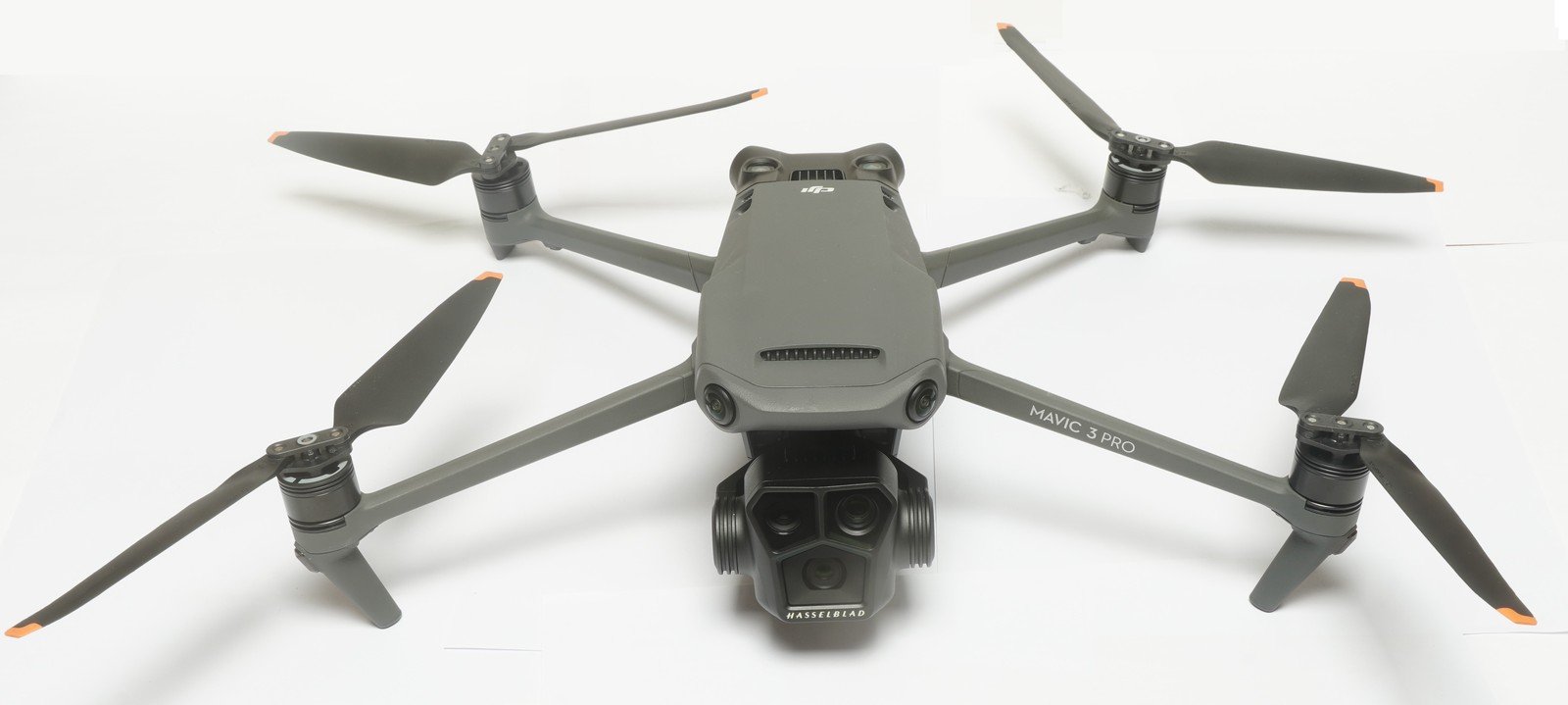
DJI Mavic 3 Pro
For professional creators who want 24mm, 70mm and 166mm focal lengths in a single aircraft
- 70mm medium tele with a 48MP sensor is the lens pros actually live on
- Waypoint Flight, Cruise Control and Night Shots included
- Heavier, shorter rated endurance and the top price of the line
Check current price and available bundles on Amazon
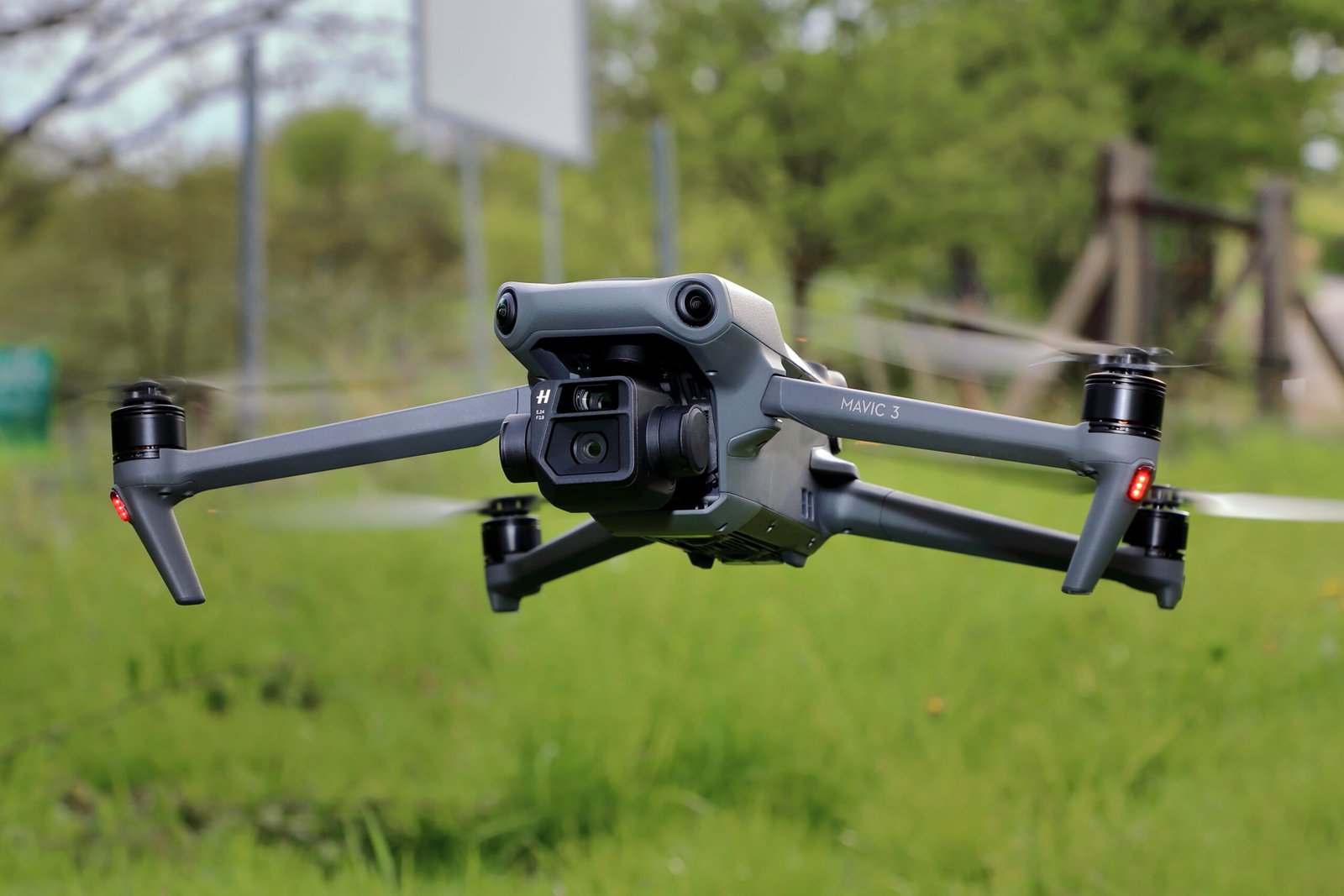
DJI Mavic 3
For photographers and filmmakers who want the flagship main camera and 28x zoom reach on a used-market budget
- Same Hasselblad main camera as the Pro, plus a 162mm telephoto
- Longest rated endurance in the family at 46 minutes
- Tele camera has a fixed f/4.4 aperture and softer output; discontinued, so mostly used stock
Check current price and available bundles on Amazon
Same bones, different camera philosophy
Under the gimbal, these are the same generation of DJI flagship: same batteries, same sensing philosophy, same link. The choice is entirely about how many lenses you want on the nose.
The Mavic 3 was DJI’s statement piece in 2021: the first consumer drone with a 4/3-inch Hasselblad camera and a real telephoto partner. Its tele camera, a 1/2-inch 12MP unit behind a 162mm equivalent lens, was a scouting tool more than a cinema tool, with a fixed f/4.4 aperture and Explore mode framing up to 28x hybrid zoom. The Mavic 3 Pro answered the obvious critique in 2023 by inserting the lens everyone actually wanted, a 70mm medium telephoto on a 1/1.3-inch 48MP sensor, and upgrading the long tele to 166mm with a wider f/3.4 aperture. If your flying is landscapes, real estate, travel and stills with occasional distant framing, the Mavic 3 already covers it and costs far less today. If you build shots around compression, parallax and layered depth, the Pro’s middle lens alone justifies its existence.
DJI Mavic 3 Pro in detail
The Pro’s triple camera is the most complete imaging system DJI has put on a folding drone of this generation. The wide camera is the familiar 4/3-inch 20MP Hasselblad with adjustable aperture and 5.1K video. The 70mm medium telephoto is the revelation: a 1/1.3-inch 48MP sensor shooting 4K/60fps in 10-bit D-Log M, sharp enough to headline a production rather than support it. It isolates subjects, stacks mountain ridges and produces the slow parallax drifts that clients pay for. The 166mm telephoto reaches further than the original Mavic 3’s camera with a faster aperture, though it remains the softest of the three and the first to suffer in low light. Software keeps pace: Waypoint Flight for repeatable moves, Cruise Control for fluid manual passes, Night Shots for cleaner after-dark video, and ActiveTrack 5.0 for subject work. The aircraft pays for all of it with 958 g of takeoff weight and 43 rated minutes, three less than its sibling, and the Cine variant adds Apple ProRes and a 1 TB SSD for professional pipelines at a further premium.
DJI Mavic 3 in detail
The original Mavic 3 remains a deeply capable camera drone whose main camera has not aged a day. The 4/3-inch Hasselblad sensor with its adjustable f/2.8 to f/11 aperture, 10-bit D-Log color, 5.1K/50fps video and 12.8 stops of dynamic range matches the Pro file for file at 24mm, which is where most aerial work still happens. Its telephoto camera is the honest compromise: the 28x hybrid zoom in Explore mode is brilliant for scouting compositions, checking a roofline or framing wildlife from a respectful distance, but the fixed f/4.4 aperture and small sensor mean the files are softer and noisier than the Pro’s telephoto output, best used in good light. Flight character is identical in feel, with the family’s best rated endurance, 46 minutes, omnidirectional sensing with APAS 5.0, AirSense traffic alerts and the same O3+ link. The practical caveat is commercial rather than technical: DJI discontinued the model, so most listings today are used, refurbished or remaining stock, and battery health becomes the deciding factor between a bargain and a false economy.
What ownership looks like on both
Because the platform is shared, so is the ownership experience. Batteries, propellers, chargers and ND filter sets are common to the Mavic 3 family and stay easy to source, and the batteries report cycle counts in the DJI Fly app, which is the first thing to check on a used example of either drone. Firmware for the Mavic 3 has effectively finished its feature journey, which cuts both ways: no new tricks are coming, but the software is stable and thoroughly documented. The Pro, as the later model, sits closer to the current lineup and its accessories overlap with more recent kits. Both drones need registration in most regions at their weights, both use the same flight app family, and both reward the same pre-purchase checks listed at the end of this comparison.
Choose DJI Mavic 3 Pro if…
- The 70mm look is central to your video or stills style.
- You need 4K/60fps telephoto recording and pro modes like Waypoint Flight.
- You shoot commercially and bill for camera flexibility.
- You can accept 958 g and 43 rated minutes as the cost of three lenses.
Choose DJI Mavic 3 if…
- The main camera does nearly all of your real work.
- You want the family’s longest rated endurance at 46 minutes.
- You are shopping the used market for flagship quality at a discount.
- You can accept a scouting-grade telephoto rather than a cinema-grade one.
The specs that actually matter
Identical wide cameras and flight systems, separated by the telephoto hardware and three minutes of rated endurance. Confirm the exact bundle and controller before comparing any two listings.
| Feature | DJI Mavic 3 Pro | DJI Mavic 3 |
|---|---|---|
| Best suited to | Professional video and stills work that uses multiple focal lengths in one flight | Flagship wide-camera work with occasional telephoto scouting, at a lower cost |
| Takeoff weight | 958 g | 895 g |
| Dimensions | Folded 231.1 x 98 x 95.4 mm | Folded 221 x 96.3 x 90.3 mm; unfolded 347.5 x 283 x 107.7 mm |
| Camera sensor | 4/3-inch CMOS 20MP wide; 1/1.3-inch CMOS 48MP medium tele; 1/2-inch CMOS 12MP tele | 4/3-inch CMOS Hasselblad 20MP wide; 1/2-inch CMOS 12MP tele |
| Main lens | 24mm equivalent, f/2.8 to f/11 adjustable aperture, 84-degree FOV | 24mm equivalent, f/2.8 to f/11 adjustable aperture, 84-degree FOV |
| Tele lenses | 70mm equivalent f/2.8; 166mm equivalent f/3.4 | 162mm equivalent, f/4.4 fixed aperture |
| Photo resolution | 20MP wide, 48MP medium tele, 12MP tele; JPEG and DNG RAW | 20MP main, 12MP tele; JPEG and 12-bit DNG RAW |
| Video modes | 5.1K up to 50fps and 4K up to 120fps on wide; 4K up to 60fps on both tele cameras; FHD up to 200fps | 5.1K up to 50fps, DCI 4K up to 120fps, FHD up to 200fps |
| Color and codecs | 10-bit D-Log, D-Log M and HLG, H.264/H.265 up to 200 Mbps; Apple ProRes on the Cine version | 10-bit D-Log and HLG, H.264/H.265 up to 200 Mbps, 12.8 stops dynamic range |
| Digital zoom | Up to 28x hybrid zoom in Explore mode across the tele cameras | Up to 28x hybrid zoom in Explore mode |
| Vertical capture | No native vertical mode; crop in post | No native vertical mode; crop in post |
| Obstacle sensing | Omnidirectional vision sensing with APAS 5.0; AirSense ADS-B receiver | Omnidirectional vision sensing with APAS 5.0; AirSense ADS-B receiver |
| Subject tracking | ActiveTrack 5.0, Waypoint Flight, Cruise Control, MasterShots, QuickShots, Hyperlapse, Night Shots, Advanced RTH | ActiveTrack 5.0, MasterShots, QuickShots, Hyperlapse, Panorama, Advanced RTH |
| Rated flight time | 43 minutes max flight; 37 minutes hovering | 46 minutes max flight; 40 minutes hovering |
| Real-world flight time | Not tested by us; reviewers report roughly 32 to 35 minutes of real shooting per battery | Not tested by us; reviewers report roughly 32 to 35 minutes of mixed flying in calm conditions |
| Video transmission | DJI O3+, up to 15 km (FCC), 1080p/60fps live view | DJI O3+, up to 15 km (FCC), 1080p/60fps live view |
| Max speed | 21 m/s (Sport mode); 19 m/s max in EU regions | 21 m/s (Sport mode); 19 m/s max in EU regions |
| Wind resistance | 12 m/s (Level 6 rating) | 12 m/s (Level 5) |
| GNSS | GPS + Galileo + BeiDou | GPS + Galileo + BeiDou |
| Internal storage | 8 GB plus microSD up to 512 GB (1 TB SSD on the Cine version) | 8 GB plus microSD |
| Controller options | DJI RC, DJI RC Pro | DJI RC-N1, DJI RC, DJI RC Pro |
| Main trade-off | Top price and weight for cameras a wide-only shooter will rarely engage | Telephoto is a scouting tool, not a cinema tool; only used or remaining stock today |
Flight times are DJI laboratory maximums with the standard battery. Real flights with wind, climbs and camera moves land noticeably shorter, as the independent figures suggest.
The storage row matters more in daily use than it looks on paper. At 200 Mbps, both drones chew through roughly 1.5 GB per minute at top quality, so the 8 GB internal memory is an emergency buffer, not a workflow. Budget for fast, high capacity microSD cards with either aircraft, and if your pipeline wants Apple ProRes, understand that it lives only on the Mavic 3 Pro Cine variant, not on the standard Pro compared here.
The controller rows also deserve a second read. The Mavic 3 Pro ships with screen equipped controllers in its standard bundles, while Mavic 3 listings span the full range from the phone dependent RC-N1 to the bright RC Pro. Two listings at the same price can therefore be very different purchases, and the controller is the single most common source of regret in secondhand Mavic 3 deals.
Five differences worth paying attention to
Strip the camera heads away and these drones are the same aircraft wearing different hats. Everything that follows flows from that single design decision.
1. Camera quality and creative flexibility
Edge: DJI Mavic 3 ProAt 24mm the contest is a dead heat: same sensor, same lens, same color pipeline, same 5.1K ceiling. The separation starts the moment the subject is more than a few meters away. The Mavic 3’s telephoto was a pioneering feature, and in Explore mode it remains superb for composing from the ground, checking details and pulling distant subjects closer in bright light. But its fixed f/4.4 aperture and small sensor cap its quality, and experienced owners describe its footage as usable rather than beautiful. The Pro changes the category: the 70mm medium telephoto, with a sensor over twice the area and a full 10-bit D-Log M pipeline at 4K/60fps, produces footage that intercuts with the wide camera convincingly. Compression, subject isolation and parallax, the visual grammar of professional aerial work, all live at that focal length. The 166mm tele is improved too, with a wider aperture than the Mavic 3’s long lens.
For stills the gap narrows again, since most aerial photography is wide. But the medium tele’s 48MP files open print-worthy telephoto photography that the Mavic 3’s 12MP tele camera cannot answer, and wildlife and architecture shooters feel that difference on every outing.
2. Portability and travel
Edge: DJI Mavic 3The Mavic 3 is 63 g lighter and folds a fraction smaller, because one of its two camera modules weighs less than the Pro’s three-lens stack. Both remain shoulder-bag drones rather than pocket drones, and both trigger registration requirements almost everywhere, so the practical gap is modest. Where it shows is endurance per gram and per battery: the lighter Mavic 3 flies three rated minutes longer on the same battery, which across a three-battery day compounds into roughly nine extra minutes of potential airtime. Travelers counting every gram and minute will notice. Everyone else will notice the bag feels the same.
Kit commonality softens the Pro’s weight penalty in one way: if you already own Mavic 3 batteries, filters and chargers, they all carry across, so upgrading pilots are not rebuying the ecosystem, only the aircraft.
3. Flight confidence and tracking
Edge: TieSafety and base flight intelligence are shared wholesale: omnidirectional vision sensing, APAS 5.0 obstacle rerouting, AirSense ADS-B traffic awareness, Advanced RTH path planning and ActiveTrack 5.0 tracking all behave identically, because the airframes run the same generation of flight systems. The Pro’s exclusive modes, Waypoint Flight, Cruise Control and Night Shots, are creative tools rather than safety systems. Waypoint Flight deserves its reputation among professionals, since repeatable multi-point routes are how you reshoot a construction site monthly or match a move across seasons. But no mode on either drone changes the fundamental limits both brands publish: vision sensing misses thin branches, wires and glass, and gusts tax even a 958 g airframe.
The beginner question therefore answers itself. Both drones protect a new pilot equally well, and both demand the same open-field learning period. The Pro simply gives an experienced pilot more choreography to grow into.
4. Battery life and time in the air
Edge: DJI Mavic 3The Mavic 3’s 46-minute rating against the Pro’s 43 is the direct price of the heavier three-camera gimbal, since the battery itself is the same 5000 mAh unit across the family. Hovering shows the same three-minute gap, 40 against 37. In the field, independent reviewers land both drones in the low-to-mid thirties of real minutes once reserves are respected, so the paper gap compresses but never fully closes. Telephoto-heavy Pro shooters should also budget for the hovering and slow repositioning that tele work involves, which drains real minutes faster than wide scenic passes.
The shared battery is the practical blessing here. A photographer can own one pool of Mavic 3 series batteries and fly either airframe, and the three-battery charging hub works for both. Endurance planning is identical in method, slightly kinder in the Mavic 3’s numbers.
5. Value of the complete kit
Edge: DJI Mavic 3The Mavic 3 Pro launched at the top of the Mavic 3 price ladder, and its Fly More and Cine bundles climb higher still. The original Mavic 3 launched expensive too, but discontinuation rewrote its value story: used and refurbished examples trade at prices that make its flagship main camera look like a bargain, provided the battery health checks out. Building like-for-like kits, comparable controller, three batteries, hub, filters and case, the Mavic 3 route usually saves a sum large enough to fund a quality stills camera lens or a second drone for riskier work. The Pro’s defense is that its extra capability is exactly what working professionals bill for, and a tool that earns is never really expensive.
One asymmetry deserves attention: risk. The Mavic 3’s value concentrates in the used market, where condition varies and returns can be murkier. The Pro is more commonly found new with full warranty. Factor your risk tolerance into the headline savings before declaring a winner on price.
What you gain. What you give up.
DJI Mavic 3 Pro
Reasons to choose it
- Three real focal lengths, including the superb 70mm medium telephoto
- 4K/60fps on both telephoto cameras with 10-bit color
- Waypoint Flight, Cruise Control and Night Shots for pro workflows
Reasons to reconsider
- Heaviest and priciest Mavic 3, at 958 g
- 43 rated minutes, the shortest endurance in the family
DJI Mavic 3
Reasons to choose it
- Identical Hasselblad main camera and flight systems for far less money today
- Best rated endurance of the family, 46 minutes
- 28x hybrid zoom covers scouting and distant framing
Reasons to reconsider
- Telephoto output is visibly softer, with a fixed f/4.4 aperture
- Discontinued: mostly used stock, so battery health checks are essential
Your last fifty flights are the best buying guide here. Count how many shots lived at 24mm, how many were crops, and how many subjects stayed out of reach entirely. That tally, honestly kept, picks between these two drones more reliably than any review, including this one, ever could.
Check the bundle, not just the drone
- Controller: Listings variously include the RC-N1, DJI RC or DJI RC Pro. Confirm which one is in the box before valuing any deal.
- Batteries: Family batteries fit both drones. On used Mavic 3 listings, ask for cycle counts and cell health screenshots from the Fly app.
- Accessories: Confirm the charging hub, ND filters, spare propellers and case. Cine bundles are a different product tier; do not pay Cine money for a standard Pro.
- Listing: Verify the exact model, Mavic 3, Mavic 3 Classic, Mavic 3 Pro and Mavic 3 Pro Cine are four different products with four different values.
- Local requirements: Both drones exceed 900 g class thresholds in many regions and require registration and, for commercial work, certification. Check your aviation authority’s rules.
The right choice comes down to the middle lens.
Pick the DJI Mavic 3 Pro if the 70mm focal length speaks to how you see: it is the finest camera system in the Mavic 3 family and the one professionals reach for when a single flight has to deliver wide, medium and tight coverage. Pick the DJI Mavic 3 if your work is wide-first and your budget is honest: the same flagship main camera, the same safety net and the family’s best endurance, at a used-market price that leaves money for the rest of your kit.
Still deciding?
Is the DJI Mavic 3 Pro worth the upgrade over the Mavic 3?
For working creators, yes, and the reason is a single lens: the 70mm medium telephoto with its larger sensor and full-quality 4K/60fps pipeline. Owners who mainly scouting-zoom with the Mavic 3’s tele camera in good light will find the Pro better but not transformative. Owners who deliver telephoto footage to clients will feel the upgrade on the first shoot.
Which drone is better for beginners?
Neither is a beginner drone by price or weight, but both are equally forgiving to fly thanks to omnidirectional sensing, APAS 5.0 and Advanced RTH. A new pilot set on this class should choose the Mavic 3 for its lower purchase and repair costs, learn in open spaces, and treat the sensing as an assistant rather than a guarantee. Budget for lessons or a training course if this is your first aircraft; the skills cost less than the first repair.
Which is better for travel and vertical video?
The Mavic 3 travels marginally lighter and flies longer per battery, which suits long days. Neither drone shoots native vertical video, so social creators crop from the high-resolution wide sensor on both, with the Pro’s 48MP medium telephoto files offering extra cropping headroom for reframed vertical stills.
Can the Mavic 3 and Mavic 3 Pro share batteries and filters?
Yes. The entire Mavic 3 family uses the same Intelligent Flight Battery, the same charging hub and interchangeable ND filter sets, and the controllers cross-support the platform. That shared ecosystem is a genuine argument for staying within the family whichever airframe you choose first.
Which bundle should I buy?
Pro buyers shooting professionally should take the Fly More style combo for its three batteries and hub, since telephoto work burns hovering time. Mavic 3 buyers should hunt a clean used standard kit with low battery cycles over a cheap Fly More with tired packs; battery health beats accessory count on a discontinued platform.
How were these drones compared?
This is a research-based comparison built from DJI’s official specification pages for both models, cross-checked against independent reviews and spec databases. We did not fly these two units side by side. Flight times and ranges are manufacturer laboratory ratings, and real-world endurance figures are attributed to independent reviewers.
How this comparison was prepared
This comparison was prepared from the manufacturers’ published specifications and documentation for both aircraft, cross-checked against independent editorial reviews and spec databases. Where two reputable sources disagreed on a figure, we followed the manufacturer’s official specification page. Flight times, ranges and speeds quoted as ratings are the manufacturers’ laboratory figures; where real-world results are mentioned, they are attributed to independent reviewers rather than presented as our own testing.
Sources and verification
- DJI Mavic 3 Pro official specifications (dji.com)
- DJI Mavic 3 official specifications (dji.com)
- DJI Mavic 3 series user manuals and support documentation (dji.com)
- Independent reviews and spec databases, including DPReview and DroneDJ coverage of both models
Last verified: October 20, 2026. Bundle availability, app features, firmware behavior and specifications may vary by region, firmware version and production batch over time, so confirm the current listing details before ordering.


