
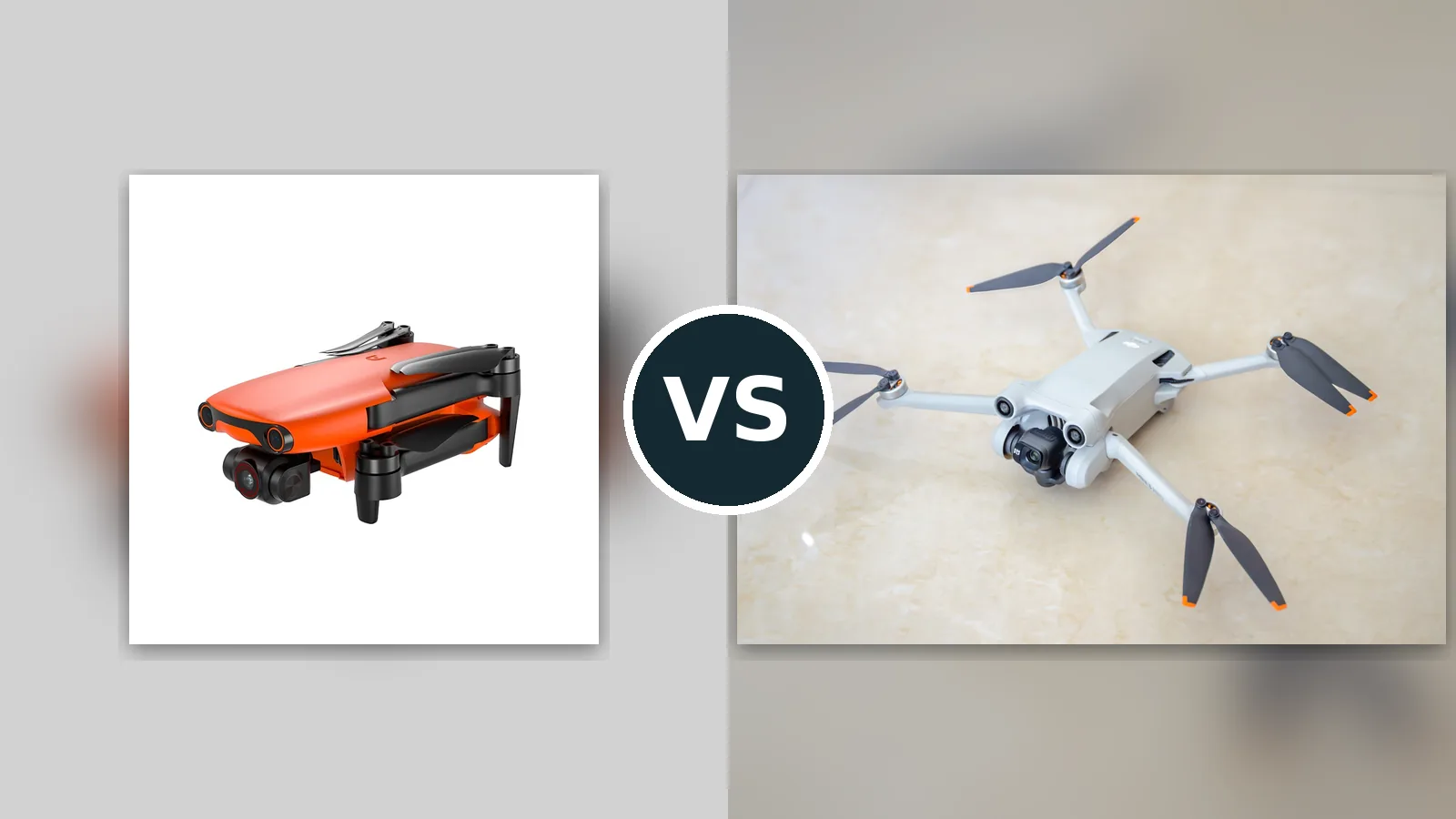
The autel evo nano+ vs dji mini 3 pro comparison is the heavyweight title fight of the sub-249 g class, because these are the two drones that refused to treat the weight limit as a capability limit. Autel’s EVO Nano+ counters DJI with a 1/1.28-inch RYYB sensor that drinks in low light, 50MP stills, tri-directional obstacle sensing, subject tracking, and a transmission system with no geofencing fences around your flying. DJI’s Mini 3 Pro answers with the more complete video camera: 4K/60fps, 10-bit D-Cinelike color, a rotating gimbal for true vertical capture, MasterShots automation, and a 34-minute battery. Both weigh 249 g or less. Both sense obstacles in three directions. Almost everything else is a genuine fork in the road, so we compared low-light imaging, video depth, tracking, transmission, and ownership to crown a winner for each kind of pilot.
As an Amazon Associate, we earn from qualifying purchases.
Mini 3 Pro for video. Nano+ for stills and freedom.
DJI Mini 3 Pro wins for video creators and all-round polish: 4K/60fps, 10-bit color, true vertical shooting, longer flights, and the deeper DJI ecosystem. Autel EVO Nano+ wins for photographers and independent spirits: its RYYB sensor and f/1.9 lens produce the class’s best low-light stills, it tracks subjects dynamically, and it flies without geofencing restrictions. Stills and low light: Nano+. Video: Mini 3 Pro. Flight time: Mini 3 Pro. Freedom from fences: Nano+.
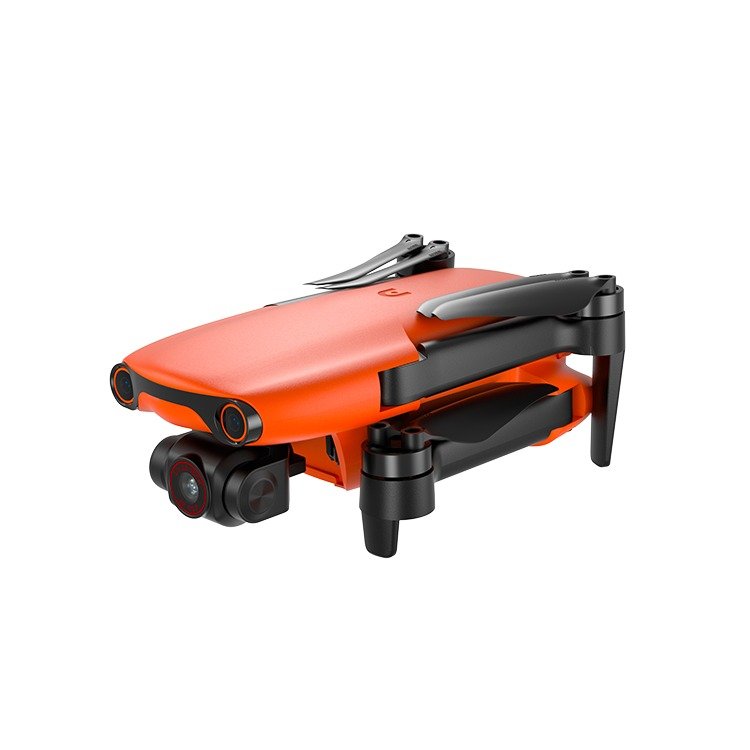
Autel EVO Nano+
For photographers who want RYYB low-light power and no geofencing
- RYYB sensor array gathers far more light for dusk and night stills
- Three-direction obstacle sensing with automatic braking
- No geofencing: your judgment, not a database, sets the limits
Check the listing and available bundles on Amazon
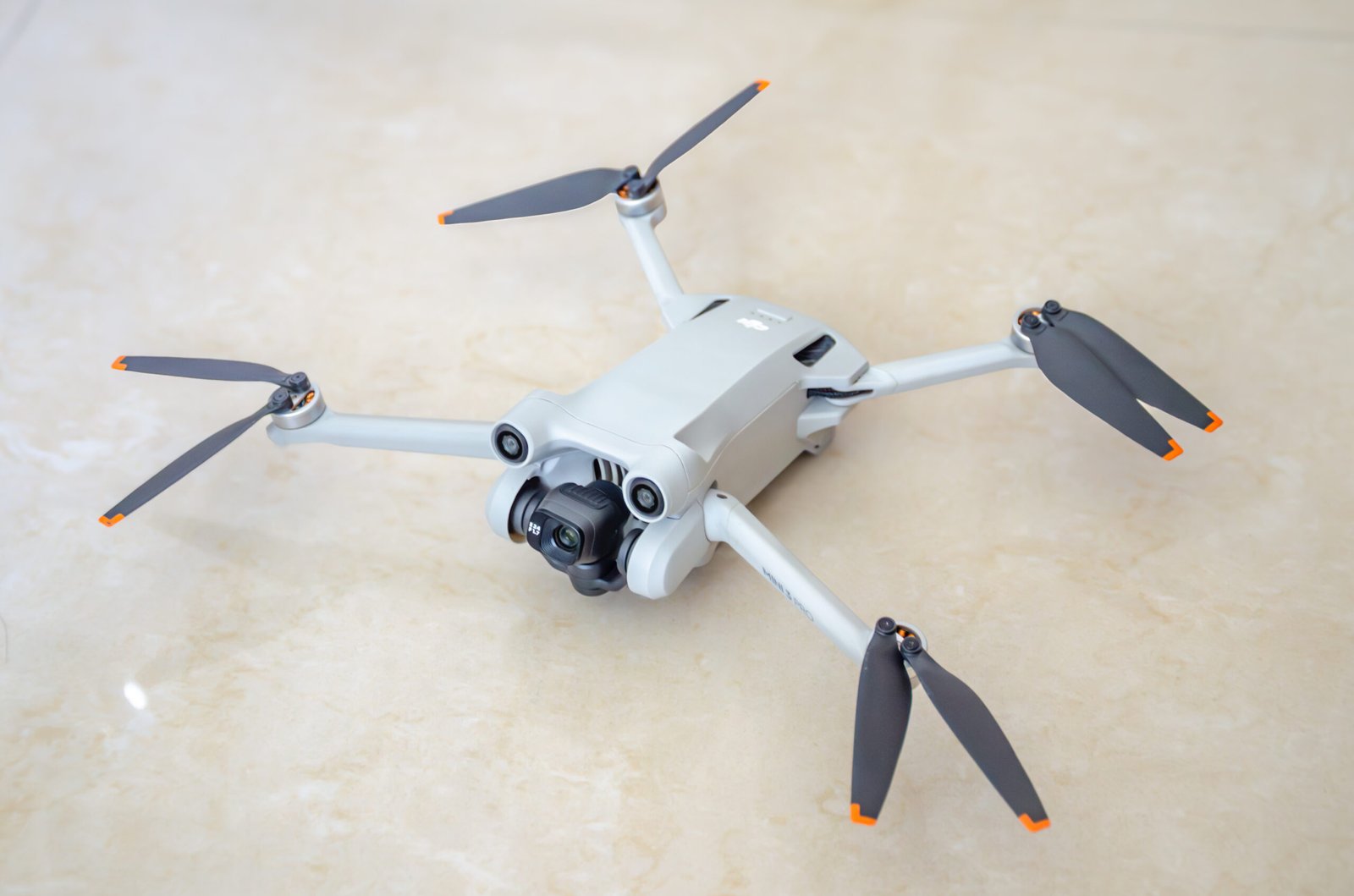
DJI Mini 3 Pro
For creators who want 4K/60, 10-bit color, and true vertical video
- 4K/60fps and D-Cinelike 10-bit color for serious video work
- FocusTrack tracking, MasterShots, and APAS 4.0 sensing
- Rotating gimbal shoots true vertical video at full quality
Check the listing and available bundles on Amazon
Which drone fits your flying?
These two are close enough on paper that the decision is about your medium and your temperament, not your budget spreadsheet.
Choose the Autel EVO Nano+ if…
- Photography leads and your favorite light is the blue hour after sunset.
- You resent geofencing databases deciding where you may fly.
- You want tracking and sensing without joining the DJI ecosystem.
- You can accept 4K/30 video and a smaller support community.
Choose the DJI Mini 3 Pro if…
- Video leads, including slow motion and vertical formats.
- You grade footage and want 10-bit color to work with.
- You value the deepest accessory market, tutorials, and resale demand.
- You can accept geofencing and slightly softer low-light stills.
A useful test: scroll your camera roll. If your best work is stills taken at dawn and dusk, the Nano+ was designed for you. If it is video clips, especially vertical ones, the Mini 3 Pro’s camera pipeline and rotating gimbal will serve you better every single week. Temperament matters too: the Nano+ treats you as the authority in the cockpit; DJI supervises more, with geofencing and a more managed app experience.
Consider also where you fly. Travelers crossing many jurisdictions meet DJI’s geofencing database constantly, sometimes helpfully, sometimes as an unlock errand before a legal flight. The Nano+ skips that negotiation entirely, which is either liberating or a responsibility you must replace with your own airspace homework. There is no free lunch here; there is a choice about who does the checking.
Autel EVO Nano+: The Low-Light Specialist
Launched in January 2022, the EVO Nano+ was Autel’s statement that a 249 g drone could be a photographer’s tool, not just a travel toy.
Overview and camera
The Nano+ weighs exactly 249 g and folds to 142 by 94 by 55 mm. Its camera is the story: a 1/1.28-inch CMOS sensor, fractionally larger than the Mini 3 Pro’s, using an RYYB color filter array that substitutes yellow for green pixels to capture substantially more light, behind a fast f/1.9 lens. Stills reach 50MP (8192 by 6144) in JPEG or DNG, with a PDAF plus CDAF dual autofocus system that is unusually serious for this class. Video tops out at 4K/30fps with HDR, plus 1080p at 60fps, with digital zoom from 1x to 16x. An HDR mode stacks exposures for contrasty scenes, and panorama modes cover wide, vertical, and spherical formats.
Autofocus deserves a mention too: the phase-detect plus contrast-detect hybrid focuses quickly and rarely hunts, which matters for a stills-led drone working in dim light where contrast is scarce.
The RYYB advantage is real and visible. At dusk the Nano+ holds cleaner shadows and richer color than conventional sensors of this size, and its night stills are the benchmark for the class. Video is where the bill comes due: 4K stops at 30fps, there is no flat log profile to grade, and the pipeline is simply less ambitious than DJI’s. As a stills camera that also shoots good video, the Nano+ is superb; as a video camera that also shoots stills, it is outgunned by its rival here.
Sensing, tracking, and transmission
Autel matched DJI’s safety layout: binocular vision sensors face forward, backward, and down, and the Nano+ brakes and hovers when something enters its path, the first system of its kind at this size. Dynamic Track 2.1 follows subjects for action shots, and intelligent modes include panoramas and hyperlapse-style sequences. The SkyLink transmission system reaches up to 10 km, sending a 2.7K/30fps feed at close range that steps down to 1080p as distance grows, across three frequency bands that hop to dodge interference.
Living with the Nano+
Ownership has a distinctive flavor. The drone comes in colors beyond the usual gray, the app is functional rather than lush, and the community is smaller but unusually technical: Nano+ owners tend to be pilots who researched their way past the default choice, and the forums reflect that. Firmware updates arrive steadily, and Autel has a reputation for listening to this community precisely because it cannot take it for granted. The practical gaps are mundane: fewer ND filter options on shelves, fewer rental houses stocking spares, and a learning curve for pilots arriving from DJI’s menus.
Flight time is the Nano+’s soft spot: 28 minutes rated, about 26 hovering, which reviewers translate to the low-to-mid 20s in working conditions. Top speed is 13 m/s in Sport mode, wind resistance is Level 5, and positioning is GPS-based. There is no internal storage, so a microSD card (up to 256 GB) is mandatory, and file transfers to a phone run at up to 20 MB/s over Wi-Fi when the drone is nearby. The ecosystem is thinner than DJI’s, but Autel’s direct support and the absence of geofencing win it fiercely loyal owners.
DJI Mini 3 Pro: The Complete Package
Launched in May 2022, the Mini 3 Pro defined the modern sub-249 g flagship: no single superpower, but no weaknesses either.
Overview and camera
The Mini 3 Pro folds to 145 by 90 by 62 mm and stays under 249 g on its standard battery. Its 1/1.3-inch sensor and 24mm f/1.7 lens shoot 48MP or 12MP stills in JPEG and DNG RAW, and the video pipeline is the class benchmark: 4K at up to 60fps, HDR at up to 30fps, Full HD at up to 120fps, D-Cinelike in 10-bit, H.264 and H.265 at up to 150 Mbps, and an ISO range to 6400. The 3-axis gimbal rotates 90 degrees for true vertical video at full resolution, which social creators treat as a headline feature, not a footnote.
The vertical workflow deserves its own sentence, because it is where the Pro quietly laps the field. Rotating the gimbal keeps the full sensor width working in portrait orientation, so vertical clips match horizontal ones in quality and can be reframed in the edit without the mushy crop that vertical modes on fixed-gimbal drones produce. For creators whose audience lives on phones, that is not a detail; it is the deliverable.
Against the Nano+, the stills story is closer than the specs suggest: DJI’s conventional sensor is a fraction smaller and its low-light files are a touch noisier, but 48MP with RAW depth is more than most photographers will ever exhaust. Video is not close at all. Frame rates, bit depth, codec choice, and the vertical gimbal give the Mini 3 Pro a pipeline the Nano+ cannot answer, and editors feel the difference immediately.
Sensing, tracking, and transmission
The Pro’s tri-directional vision system feeds APAS 4.0, which brakes or reroutes around obstacles, while FocusTrack (ActiveTrack 4.0, Spotlight 2.0, Point of Interest 3.0) handles subject work and MasterShots automates entire sequences. The O3 transmission link reaches up to 12 km under FCC rules with a 1080p/30fps feed. Flight time leads this comparison at 34 minutes standard and 47 with the Plus battery, top speed is 16 m/s, wind resistance is Level 5, and the drone carries 1.2 GB of internal storage as an emergency reserve above its microSD slot.
Ownership is the Pro’s quiet superpower: DJI’s app polish, tutorial depth, accessory market, spare-parts pipeline, and resale demand are all a generation ahead of Autel’s. The counterweights are philosophical and practical: geofencing can demand unlock steps before legal flights, and you are buying into the most managed ecosystem in the industry. For most pilots that management feels like service; for some, it feels like supervision. Knowing which pilot you are makes this comparison easy.
Autel EVO Nano+ vs DJI Mini 3 Pro: The Specs That Actually Matter
Sensor design, video depth, and transmission separate these flagships. Neither is the budget option; both are attempts to put a real camera under 249 g.
| Feature | Autel EVO Nano+ | DJI Mini 3 Pro |
|---|---|---|
| Best suited to | Low-light photographers who want tracking, sensing, and no geofencing | Video creators who want 4K/60, 10-bit color, and the fullest ecosystem |
| Takeoff weight | 249 g | Under 249 g (standard battery); over with Plus battery |
| Dimensions (folded) | 142 x 94 x 55 mm | 145 x 90 x 62 mm |
| Camera sensor | 1/1.28-inch CMOS RYYB, 50MP, f/1.9, PDAF plus CDAF autofocus | 1/1.3-inch CMOS, 48MP effective, 24mm equivalent, f/1.7 |
| Video modes | 4K up to 30fps HDR, 1080p up to 60fps; digital zoom 1x to 16x | 4K up to 60fps, 4K HDR up to 30fps, FHD up to 120fps |
| Color and codecs | Standard profile with HDR mode; no flat log profile | Normal and D-Cinelike 10-bit; H.264/H.265 up to 150 Mbps |
| Photo resolution | 50MP (8192 x 6144); JPEG and DNG | 48MP and 12MP; JPEG and DNG RAW |
| Vertical capture | Cropped vertical panorama modes; no rotating gimbal | Native true vertical: gimbal rotates 90 degrees |
| Gimbal | 3-axis mechanical (tilt, roll, pan) | 3-axis mechanical (tilt, roll, pan), rotates for vertical |
| Obstacle sensing | Tri-directional binocular vision: forward, backward, downward; auto-brake | Tri-directional: forward, backward, downward; APAS 4.0 |
| Subject tracking | Dynamic Track 2.1 | FocusTrack: ActiveTrack 4.0, Spotlight 2.0, POI 3.0; MasterShots |
| Rated flight time | 28 minutes (26 minutes hovering) | 34 minutes standard; 47 minutes with Plus battery |
| Real-world flight time | Not tested by us; reviewers report low-to-mid 20s of minutes | Not tested by us; reviewers report high 20s of minutes |
| Max speed | 13 m/s (Sport mode) | 16 m/s (Sport mode) |
| Video transmission | Autel SkyLink, up to 10 km; 2.7K feed near, 1080p at distance | DJI O3, up to 12 km FCC, 1080p/30fps live view |
| Wind resistance | Level 5 | 10.7 m/s (Level 5) |
| GNSS | GPS | GPS plus Galileo plus BeiDou |
| Internal storage | None; microSD up to 256 GB required | 1.2 GB built in, plus microSD |
| Geofencing | None built in; pilot judgment governs | DJI geofencing system with unlock zones |
| Main trade-off | Video capped at 4K/30 and a thinner ecosystem around a stellar stills camera | Low-light stills trail the RYYB sensor, and geofencing adds friction |
All figures are manufacturer specifications unless a row says otherwise; real-world flight times come from independent reviewers, not from us. See the methodology section for sources.
Autel EVO Nano+ vs DJI Mini 3 Pro: Five Differences That Matter
Five differences decide this matchup, and the first one is about physics, not features.
1. Low-light imaging and the RYYB advantage
Edge: EVO Nano+The Nano+’s RYYB array lets yellow-filtered pixels pass far more light than the green pixels in a conventional Bayer sensor, and the f/1.9 lens keeps the shutters fast. The result is the best dusk and night stills in the sub-249 g class: cleaner files, richer color, and detail that survives printing. The Mini 3 Pro is a fine low-light performer with a slightly smaller sensor and faster f/1.7 lens, but its files simply gather less light per pixel. Photographers who live for golden hour and beyond should weight this difference heavily.
2. Video depth
Edge: Mini 3 ProThe counterpunch is enormous, and it lands in the edit suite as much as in the field. Ten-bit files survive aggressive color work that tears 8-bit footage apart, 60fps halves the speed of a waterfall shot without judder, and 120fps at 1080p turns sports clips into slow-motion studies. The Nano+ editor, by contrast, works with what the drone baked in, which is fine for sharing and limiting for crafting. The Mini 3 Pro shoots 4K/60 for smooth slow motion, 1080p/120, 10-bit D-Cinelike for grading, and true vertical video through a rotating gimbal. The Nano+ stops at 4K/30 with a standard profile and no vertical hardware. For any pilot whose output is primarily moving images, this is the comparison. Everything else is a tiebreaker.
3. Geofencing and pilot authority
Edge: EVO Nano+Autel famously ships no geofencing: the Nano+ will not refuse a takeoff because a database thinks a stadium event ended yesterday. DJI’s system adds safety rails and, occasionally, unlock errands in places you are fully entitled to fly. Responsible pilots replace geofencing with their own airspace checks (charts, authorization apps, local rules), and for them the Nano+’s trust is a feature. Pilots who prefer guardrails will call the same design a gap. It is both, depending on the pilot.
4. Endurance and link quality
Edge: Mini 3 ProSix extra rated minutes (34 against 28) compound across a multi-battery day into an extra location or two, and the O3 link adds 2 km of range with a clean 1080p feed throughout. The Nano+’s SkyLink is genuinely good, with a higher-resolution feed near the pilot, but its endurance keeps sessions shorter and its feed resolution drops with distance. Working pilots measure days in sorties; the Pro simply fits more of them.
5. Ecosystem depth and support
Edge: Mini 3 ProDJI’s advantage compounds over ownership: more ND filters, cases, and spare parts; deeper tutorials; an app refined by millions of flights; stronger resale values. Autel’s smaller ecosystem is improving and its direct support earns praise, but a Nano+ owner will occasionally wait on accessories a DJI owner buys same-day. For a first serious drone, that infrastructure is worth real money; for an experienced pilot with a stocked kit bag, less so.
There is a second-order effect worth naming: resale and repairability decide what a drone costs you over three years, not the sticker. A Mini 3 Pro with a cracked arm is a quick, documented repair; a Nano+ may travel further and wait longer. Autel loyalists accept that trade for the sensor and the freedom, but new buyers should price it in honestly.
Autel EVO Nano+ vs DJI Mini 3 Pro: What You Gain and Give Up
Autel EVO Nano+
Reasons to choose it
- RYYB sensor delivers class-leading low-light stills
- Tri-directional sensing and Dynamic Track included
- No geofencing: the pilot is the authority
Reasons to reconsider
- Video capped at 4K/30 with no log profile
- 28-minute battery and a thinner accessory ecosystem
DJI Mini 3 Pro
Reasons to choose it
- 4K/60, 10-bit color, and true vertical video
- 34-minute flights and the 12 km O3 link
- The deepest apps, accessories, and resale market
Reasons to reconsider
- Low-light stills trail the Nano+ sensor
- Geofencing can add unlock steps before legal flights
Check the bundle, not just the drone
- Batteries first: The Nano+’s 28-minute rating makes a multi-battery kit close to mandatory for serious sessions; the Pro’s Fly More style bundles solve the same problem with a charging hub.
- Controllers: The Mini 3 Pro offers the DJI RC with a built-in screen; the Nano+ uses a phone-mount controller with its SkyLink feed. Decide how much you value a screen that is always ready.
- Storage: The Nano+ has no internal memory at all, not even a token reserve. Budget a fast microSD card (up to 256 GB) for either drone; treat the Pro’s 1.2 GB as a spare tire, not a tank.
- Filters: Both drones reward ND filters for video. Check third-party availability for the Nano+ before ordering, as its accessory shelf is smaller.
- Local requirements: Whichever you choose, learn your local rules; the Nano+’s missing geofencing means the homework is entirely yours.
Pick by medium, then by temperament.
Photographers who chase low light and pilots who refuse digital fences will love the EVO Nano+ and accept its 4K/30 ceiling as the fair price of the best small-sensor stills in the class, delivered in a drone that treats them as the final authority. Everyone else, and especially video creators, should take the Mini 3 Pro: deeper video, longer flights, stronger link, and an ecosystem that smooths every week of ownership. Both are flagship-grade. The question is which flagship flies the way you create.
Still deciding?
Which drone takes better photos, the Nano+ or the Mini 3 Pro?
The Nano+, especially in low light. Its 1/1.28-inch RYYB sensor captures more light per pixel than the Mini 3 Pro’s conventional 1/1.3-inch sensor, producing cleaner dusk and night stills at 50MP, and its dual autofocus system locks on confidently in dim conditions. Its 1/1.28-inch RYYB sensor captures more light per pixel than the Mini 3 Pro’s conventional 1/1.3-inch sensor, producing cleaner dusk and night stills at 50MP. In bright daylight both are excellent, and the Mini 3 Pro’s 48MP RAW files give photographers plenty to work with.
Which drone is better for video?
The Mini 3 Pro, and it is not close. It offers 4K/60fps against the Nano+’s 4K/30, a 10-bit D-Cinelike profile against a standard profile, 1080p/120 slow motion, and a rotating gimbal for true vertical video. The Nano+ shoots pleasant 4K/30 HDR footage, but video-first creators should choose the Pro.
Do both drones avoid obstacles and track subjects?
Yes. Both carry forward, backward, and downward vision sensing with automatic braking or rerouting, and both track subjects: Autel’s Dynamic Track 2.1 against DJI’s FocusTrack suite with ActiveTrack 4.0, Spotlight, and Point of Interest. DJI’s implementation is the more refined of the two, with smoother subject handoffs and more tracking modes, while the Nano+ covers the core follow scenarios most pilots use weekly.
What does no geofencing on the Nano+ actually mean?
The drone will not block or warn based on a manufacturer map of restricted zones, and it will not ask you to log in and justify a flight in your own backyard. You can take off anywhere the motors allow, which removes unlock delays for lawful flights near airports with authorization. It also means nothing stops an uninformed pilot from flying somewhere they should not, so Nano+ owners must check airspace themselves every time.
Which drone flies longer and farther?
The Mini 3 Pro: 34 rated minutes against 28, and a 12 km O3 link against the SkyLink system’s 10 km. The Nano+’s feed is higher resolution at close range (2.7K), but it steps down with distance; the Pro’s 1080p feed is consistent. With Plus batteries the Pro reaches 47 minutes while crossing the 249 g line.
Which is better for beginners?
The Mini 3 Pro, mainly on ecosystem: tutorials, community answers, spare parts, and app polish shorten the learning curve, and its sensing is as forgiving as the Nano+’s. Confident self-starters who already understand airspace rules may prefer starting on the Nano+ and never meeting a geofence.
How were these drones compared?
This is a research-based comparison built from Autel Robotics and DJI official specifications and documentation for both models, cross-checked against independent reviewer reporting for real-world flight times and sensor behavior. See the methodology section below for the full source list.
How this comparison was prepared
This is a research-based comparison. We did not fly either drone for this article, and we do not imply otherwise. Every specification in the table above comes from the manufacturers’ official documentation: Autel Robotics for the EVO Nano+ and DJI for the Mini 3 Pro. Claims about the RYYB sensor’s light gathering follow Autel’s published sensor documentation. Where this article mentions real-world flight times, those figures are attributed to independent reviewers who measured them, not to us. Amazon ASINs were verified by matching each ASIN against the exact product title across Amazon-indexed listing data and third-party import records before any affiliate link was written.
Sources and verification
- Autel Robotics EVO Nano+ official specifications (autelrobotics.com): weight, dimensions, RYYB sensor, video modes, sensing, SkyLink range, and flight time figures
- Autel Robotics EVO Nano series product documentation: RYYB sensor design, Dynamic Track 2.1, and obstacle avoidance behavior
- DJI Mini 3 Pro official specifications (dji.com): weight, dimensions, camera, video modes, sensing, transmission, and flight time figures
- DJI Mini 3 Pro user manual and product documentation (dji.com): FocusTrack modes, APAS 4.0 behavior, and Plus battery notes
- Independent reviewer flight-time and low-light reporting for both models: real-world figures attributed in the text
- ASIN verification: EVO Nano+ series listing (B0D6FXMCYY) and DJI Mini 3 Pro listing (B09WDBDGBZ) confirmed against Amazon-indexed title data and third-party Amazon import records
Last verified: October 20, 2026. Bundle availability and specifications may vary by region and version.


