

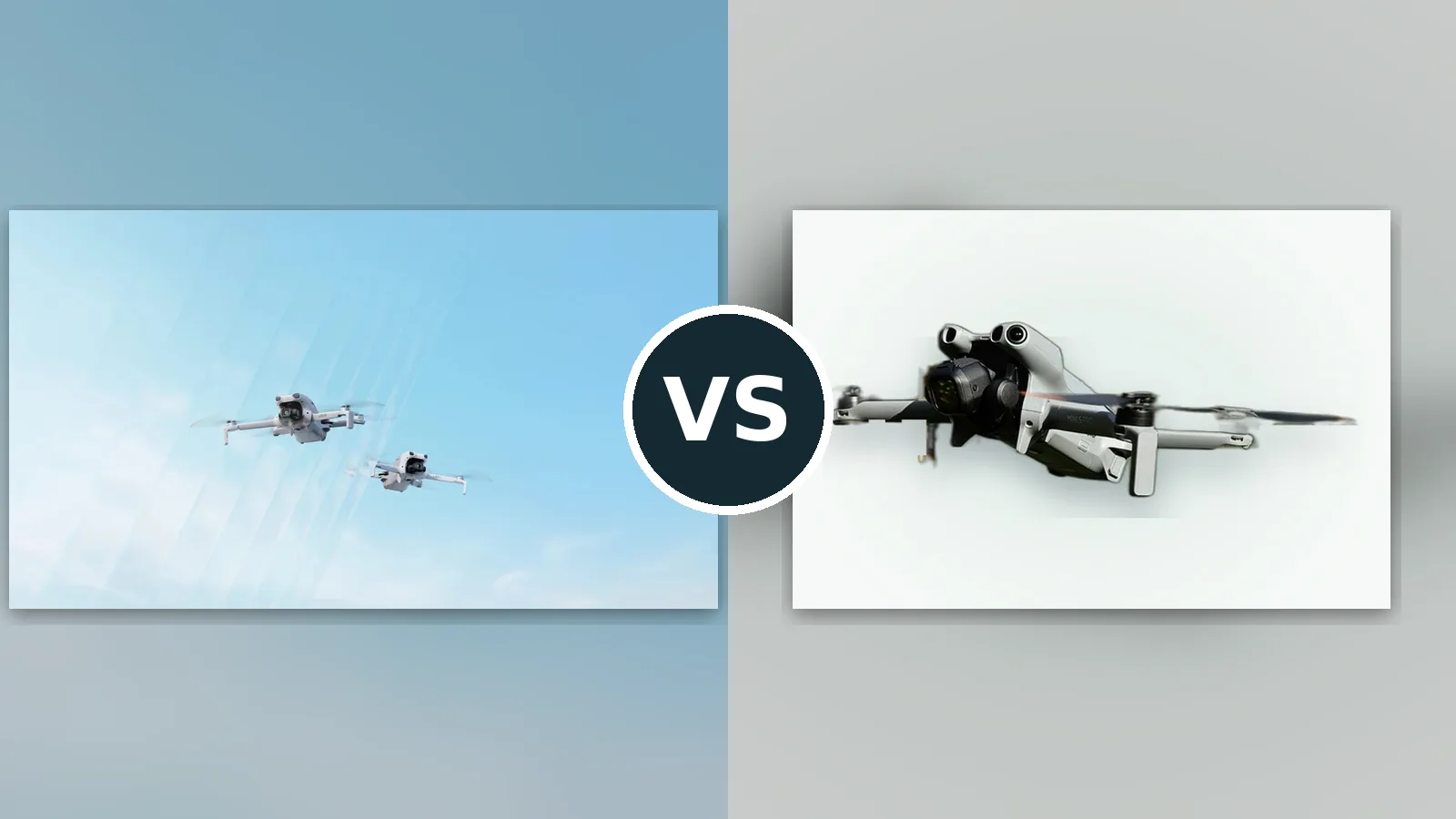
The dji lito x1 drone vs mini 5 pro matchup is the closest fight in the current DJI Mini world. Both drones live at the 249 gram line. Both shoot 4K HDR video with 10-bit D-Log M color. Both track subjects with ActiveTrack 360, see in every direction, add a forward-facing LiDAR for low-light confidence, carry 42GB of internal storage, and rate their standard batteries at 36 minutes. On a feature checklist, they look like twins. They are not. The Mini 5 Pro brings a full 1-inch 50MP sensor, the largest DJI has ever fitted to a Mini, plus 4K/120 recording, true vertical shooting from the full sensor, a 20 km O4 link, and stronger wind resistance. The Lito X1 answers with a capable 1/1.3-inch 48MP camera with autofocus, 4K/100 slow motion, Waypoint Flight, and the same modern sensing and storage package in a fresh, lighter-touch design. So is the established Mini king worth its crown, or does the challenger cover ninety percent of the job? This comparison separates the real gaps from the spec-sheet noise.
Affiliate disclosure: As an Amazon Associate I earn from qualifying purchases. This page contains affiliate links. If you buy through them, we may earn a commission.
The king keeps the camera crown
DJI Mini 5 Pro wins on image quality and polish: a 1-inch 50MP sensor, up to 14 stops of dynamic range, 4K/120, native true vertical shooting, and the strongest wind and transmission numbers in the class. DJI Lito X1 wins on fresh value and simplicity: a sharp autofocus 1/1.3-inch camera, 4K/100 slow motion, omnidirectional sensing with LiDAR, Waypoint Flight, and identical 36-minute standard endurance. If the footage is the product, buy the Mini 5 Pro. If the footage is a hobby that travels, the Lito X1 makes a persuasive case.
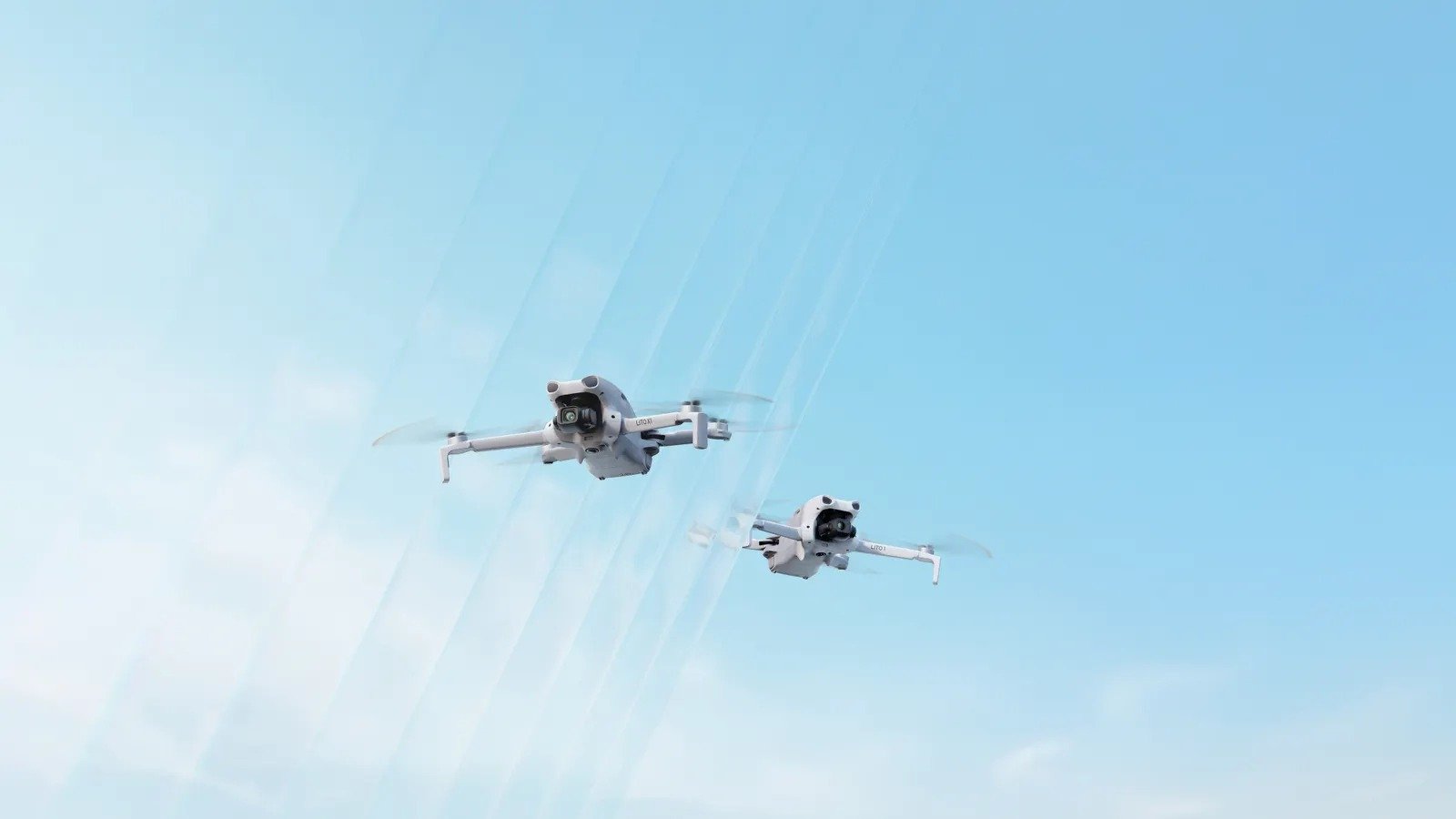
DJI Lito X1
For creators who want modern Mini features, autofocus stills, and Waypoint Flight in a 249 gram package
- 1/1.3-inch 48MP camera with autofocus, 4K/60 HDR, 4K/100 slow motion, and 10-bit D-Log M
- Omnidirectional vision sensing plus forward LiDAR, ActiveTrack 360, and Waypoint Flight
- Smaller sensor than the Mini 5 Pro, 2.7K vertical video, and a shorter 15 km transmission rating
Check current availability and available bundles on Amazon
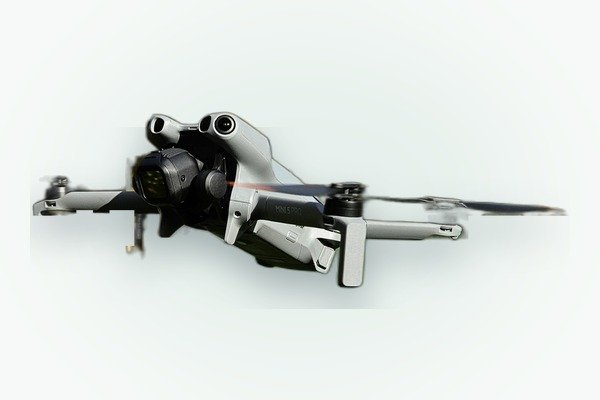
DJI Mini 5 Pro
For creators who want the best camera ever fitted to a sub-250 gram DJI drone
- 1-inch 50MP sensor with 4K/120, 4K/60 HDR, up to 14 stops dynamic range, and 10-bit D-Log M and HLG
- Native true vertical shooting, nightscape sensing down to 1 lux, and O4 transmission rated to 20 km FCC
- Sits at the very top of the Mini class, and its Plus battery pushes weight over the 249 gram line
Check current availability and available bundles on Amazon
Same weight class, different ambitions
When two drones match on weight, flight time, storage, sensing, and controllers, the decision comes down to the sensor and the small print. Here is how to read both.
The Mini 5 Pro exists for a specific frustration: creators who love the Mini formula but keep hitting its camera ceiling. Golden hour footage that clips, night streets that dissolve into noise, vertical crops that soften. DJI answered by fitting a 1-inch sensor into a 249.9 gram airframe, and that single decision lifts everything downstream. Stills arrive at 50MP with genuine crop room. Video runs to 4K/120 for smooth slow motion, with 10-bit D-Log M and HLG color and up to 14 stops of dynamic range for scenes that mix hard sun and deep shade. If you sell footage, print stills, or grade seriously, this is the first Mini that stops asking you to apologize for its size.
The Lito X1 exists for a different frustration: creators who want the new generation of Mini features without paying flagship Mini money or needing flagship Mini output. Its 1/1.3-inch sensor is the proven size from the previous Pro generation, and DJI gave it autofocus, a real advantage for crisp stills up to 8064 by 6048 and for subjects at varying distances. Video covers the modern checklist: 4K/60 HDR for everyday work, 4K/100 for slow motion, 1080p at 200 fps for very fast action, and 10-bit D-Log M in H.265 up to 130 Mbps for proper grading. Around that camera sits the full new safety and smarts package, omnidirectional sensing, forward LiDAR, ActiveTrack 360, and Waypoint Flight for repeatable routes.
Regional availability shapes this choice for some readers. The Lito X1 is sold in the EU, the UK, and other regions, while the Mini 5 Pro is the widely stocked flagship of the line. Where both sit on the same shelf, the question is purely about the sensor and the extras. Where only one is realistically on sale to you, the question answers itself, and the sections below still help you judge whether the available drone covers your needs, which both of them mostly do.
Choose DJI Lito X1 if…
- Value with modern features is your brief: LiDAR sensing, ActiveTrack 360, Waypoints, and 42GB internal storage included.
- You shoot stills often and want autofocus to keep subjects at mixed distances pin sharp.
- Your output is social, travel, and family work in decent light, where the 1/1.3-inch sensor performs strongly.
- You can accept 2.7K vertical video, a 15 km transmission rating, and 10.7 m/s wind resistance.
Choose DJI Mini 5 Pro if…
- Image quality is your brief: a 1-inch sensor, 14 stops of dynamic range, and cleaner low-light footage.
- You publish vertical video and want true vertical shooting at full sensor quality.
- You fly in stronger wind and want 12 m/s resistance plus the 20 km FCC O4 link headroom.
- You can accept flagship Mini positioning and the weight jump that comes with the Plus battery.
Nearly twins, until you reach the sensor row
Scan the shared rows quickly. The differences that matter cluster in the camera, the vertical mode, the wind rating, and the transmission range.
| Feature | DJI Lito X1 | DJI Mini 5 Pro |
|---|---|---|
| Best suited to | Everyday creators who want the new sensing, tracking, and storage package with a proven mid-size sensor | Quality-first creators who want the largest sensor, best dynamic range, and fullest feature set under 250 g |
| Takeoff weight | Approx. 249 g with the standard battery; the Plus battery takes it over 249 g | 249.9 g with the standard battery; the Plus battery takes it over that figure |
| Sensor & lenses | 1/1.3-inch CMOS 48MP, 24mm f/1.7 lens with autofocus, 3-axis gimbal | 1-inch CMOS 50MP, 24mm f/1.8 lens, 3-axis gimbal |
| Video modes | 4K/60 HDR, 4K/100 slow motion, 1080p/200, 2.7K vertical video | 4K/120, 4K/60 HDR, Full HD up to 240 fps slow motion |
| Color & codecs | 10-bit D-Log M, H.265 up to 130 Mbps; stills up to 8064 x 6048 in JPEG plus DNG | 10-bit D-Log M and HLG, H.265 up to 130 Mbps, up to 14 stops dynamic range; stills 8192 x 6144 in JPEG plus DNG |
| Vertical capture | 2.7K vertical video mode | Native true vertical shooting: the gimbal rotates for full-sensor 9:16 capture |
| Obstacle sensing | Omnidirectional vision sensing plus forward-facing LiDAR | Omnidirectional vision sensing plus forward LiDAR, with nightscape sensing down to 1 lux |
| Subject tracking | ActiveTrack 360; Waypoint Flight supported | ActiveTrack 360 |
| Rated flight time | 36 minutes standard battery (2788 mAh); 52 minutes with the Plus battery, manufacturer ratings | 36 minutes standard battery; 52 minutes with the Plus battery, manufacturer ratings |
| Measured flight time | Not tested by us; manufacturer rating is a calm-condition lab figure | Not tested by us; manufacturer rating is a calm-condition lab figure |
| Rated wind resistance | 10.7 m/s | 12 m/s |
| Controller & bundle | DJI RC-N3 or DJI RC 2 controller options depending on bundle | DJI RC-N3 or DJI RC 2 controller options depending on bundle |
| Max speed | 18 m/s in Sport mode | 18 m/s; 19 m/s with the Plus battery configuration |
| Transmission | DJI O4 video transmission, rated up to 15 km | DJI O4 video transmission, rated up to 20 km FCC |
| Storage | 42GB internal storage plus microSD card | 42GB internal storage plus microSD card |
| Main trade-off | A smaller sensor and lower vertical resolution in exchange for a fresher, simpler value position | Flagship Mini capability that sits at the top of the class, with Plus battery weight to watch |
Manufacturer flight times and transmission ranges are best-case lab figures, and the FCC range figure applies where FCC rules govern. Real flights are shorter, and legal flying keeps the drone in sight in most regions.
Five differences hiding inside a near tie
Matching flight times and matching storage invite a shrug. Resist it. The camera gap alone justifies this whole comparison, and four smaller gaps ride along with it.
1. One inch of sensor changes the footage ceiling
Edge: Mini 5 ProSensor size is destiny in small drones, and the Mini 5 Pro changed its destiny. A 1-inch 50MP sensor collects far more light than the 1/1.3-inch format, and the results show up everywhere quality is tested: cleaner shadows at dusk, smoother highlight roll-off at noon, stills at 8192 by 6144 that survive real cropping, and video that holds together when you lift exposure in the grade. DJI quotes up to 14 stops of dynamic range, and both its 10-bit D-Log M and HLG profiles give editors serious material to work with. Add 4K/120 slow motion and this camera does not feel like a Mini camera at all. It feels like a flagship camera that happens to live in a 249.9 gram body.
The Lito X1 sensor is no weakling. The 1/1.3-inch 48MP unit is the same class that powered a well-regarded Pro generation, its f/1.7 lens is a touch brighter than the Mini f/1.8, and autofocus is a genuine stills advantage that keeps subjects crisp across distances. Its video tops out at 4K/60 HDR with 4K/100 slow motion, which covers the great majority of real projects, and its 10-bit D-Log M output grades well. The honest summary: in good light, the Lito keeps the Mini honest and many viewers will not separate them. In hard light, low light, or heavy post work, the Mini pulls away and keeps pulling. Creators are paying for exactly those edge conditions.
2. Vertical video: full sensor against 2.7K
Edge: Mini 5 ProVertical output decides how these drones feel to the largest audience segment, and here the gap is mechanical. The Mini 5 Pro gimbal rotates, so vertical shooting uses the full sensor area for native 9:16 photos and video. Nothing is cropped away, quality stays at the camera best, and the workflow is simply: rotate, shoot, publish. For creators whose living is made in vertical feeds, that is the single most-used feature difference in this entire comparison.
The Lito X1 offers vertical video at 2.7K. That is a practical, publishable resolution for social platforms, and many creators will post it happily for years. But it is a step down from full-sensor 4K-class vertical capture, and the difference shows on larger phone screens, in crops, and when a vertical clip gets reused in a horizontal edit. Weigh this against your actual publishing mix. A horizontal-first filmmaker can ignore this section entirely. A vertical-first creator should treat it as close to decisive, because it applies to every single clip, not just the difficult ones.
3. Sensing and tracking: a shared safety net, one brighter torch
Edge: Mini 5 Pro, narrowlyThis section could have been a tie, and for daylight flying it nearly is. Both drones pair omnidirectional vision sensing with a forward-facing LiDAR, a combination that brings flagship-grade obstacle awareness to the 249 gram class. Both run ActiveTrack 360, circling and following subjects with the sensing net underneath them. Both feed the same class of controllers, the RC-N3 and the screen-equipped RC 2. A pilot stepping from one to the other will feel at home in minutes.
The Mini 5 Pro edges ahead after dark. Its sensing system is rated for nightscape operation down to 1 lux, extending confident obstacle awareness into the blue-hour and night flying that its big sensor is built to capture. That pairing matters: camera and sensing that fade at the same hour is a design detail cheap drones get wrong. The Lito X1 counters with a card of its own, full Waypoint Flight support for planned, repeatable routes, which survey-style shooters, property regulars, and timelapse planners genuinely use. Call sensing a narrow Mini win, and flight automation a quiet Lito win, and you have this section about right.
4. Wind, speed, and the link that holds it together
Edge: Mini 5 ProSmall drones live or die by the weather window, and the Mini 5 Pro widens it. Its 12 m/s rated wind resistance is flagship territory and clearly ahead of the Lito X1 at 10.7 m/s, a gap you feel as steadier lines and fewer aborted takes on exposed coasts, ridges, and rooftops. Its O4 transmission is rated to 20 km under FCC rules against the Lito 15 km on the same O4 generation. Legal flying keeps both drones in sight, so read those numbers as confidence margins: the Mini feed holds firm further into the interference and terrain that degrade real-world links.
The Lito X1 is not fragile. Its 10.7 m/s rating matches respected Minis of the previous generation, its 18 m/s Sport speed matches the Mini standard figure exactly, and its O4 link belongs to the current generation with all the stability that implies. Most recreational flying days never test either limit. The differences matter to pilots who schedule shoots on the breezy edges: coastal property work, mountain content, and any job where cancelling for wind costs money. For fair-weather flying, file this section under reassurance rather than decision.
5. Endurance, storage, and the Plus battery trap both share
Edge: TieHere the twins really are twins. Both rate the standard battery at 36 minutes and the Plus battery at 52 minutes, figures that shrink in real wind but shape planning identically. Both carry 42GB of internal storage beside the microSD slot, enough to keep shooting through a forgotten card, a shared modern convenience that older Minis never offered. Both use H.265 at up to 130 Mbps, both top out at 18 m/s in standard form, and both pair with the RC-N3 or RC 2. Day to day, owners of either drone plan the same sorties and carry the same charging habits.
They also share the same trap. The Plus battery that unlocks the 52-minute figure pushes both drones over the 249 gram line, and with it goes the lightest-category simplicity that defines this class in many regions. That does not make the Plus pack a bad buy. For a long rural shoot where the category change costs nothing, it is the smart pack. It makes Plus a situational tool rather than a default, on both drones equally. Keep standard batteries as your everyday set, label the Plus clearly in your bag, and check the rulebook of wherever you are standing before it leaves the ground.
The ledger for the closest fight in the class
DJI Lito X1
Reasons to choose it
- Autofocus 1/1.3-inch 48MP camera with stills up to 8064 x 6048 in JPEG plus DNG
- 4K/60 HDR, 4K/100 slow motion, 1080p/200, and 10-bit D-Log M in H.265 up to 130 Mbps
- Omnidirectional sensing plus forward LiDAR and ActiveTrack 360 for flagship-style confidence
- Waypoint Flight support for repeatable, planned routes
- 42GB internal storage plus microSD and the same 36-minute standard endurance as the flagship
Reasons to reconsider
- Smaller sensor gives up low-light cleanliness and dynamic range to the 1-inch Mini camera
- Vertical video limited to 2.7K rather than full-sensor vertical capture
- 10.7 m/s wind resistance and a 15 km transmission rating trail the flagship figures
- Plus battery ends the sub-249 g status just as it does on the Mini
- Regional availability is narrower, sold in the EU, UK, and other regions rather than everywhere
DJI Mini 5 Pro
Reasons to choose it
- 1-inch 50MP sensor with up to 14 stops of dynamic range, the best camera in the sub-250 g class
- 4K/120 and 4K/60 HDR video with 10-bit D-Log M and HLG color
- Native true vertical shooting at full sensor quality for vertical-first publishing
- Nightscape sensing down to 1 lux, 12 m/s wind resistance, and O4 rated to 20 km FCC
- 42GB internal storage plus microSD, multi-constellation GNSS, and RC-N3 or RC 2 pairing
Reasons to reconsider
- It is the flagship of the Mini line, positioned and priced accordingly within the class
- Plus battery configuration crosses the 249 gram line and changes its category
- Waypoint-style route planning is a Lito talking point to verify against your own workflow needs
- The big sensor rewards editors who grade; casual shooters may never use its full headroom
- At 249.9 g there is no weight margin: any fitted accessory deserves a scale check
Standard batteries, the right controller, no regrets
- Regional availability: Confirm the model is sold and supported in your region before ordering. The Lito X1 is sold in the EU, the UK, and other regions, while Mini 5 Pro distribution is broader. Check warranty and service coverage for your country either way.
- Batteries: Build your kit around standard batteries to protect the sub-249 g category on both drones. Add a Plus battery only with a clear use case, and remember it changes the takeoff weight class.
- Controller: Both drones pair with the RC-N3 or the DJI RC 2. The RC 2 built-in screen lifts the whole daily experience, faster launches, no phone juggling, and a brighter view in sun.
- Storage: Both carry 42GB internally plus microSD. Still fit a fast card rated for 4K high-bitrate recording, and treat the internal memory as your safety net, not your archive.
- Weight discipline: The Mini 5 Pro starts at 249.9 g, so filters, guards, and strobes can push it over. Weigh the flying configuration if the category matters where you fly, and apply the same care to the Lito X1.
- Listing: Check the exact model name, battery type included, controller in the box, seller, warranty, and return terms. Bundle names sound similar across these two lines and the contents differ.
Buy the sensor if you sell the footage
The Mini 5 Pro is the most complete sub-250 gram drone DJI has built, and this comparison shows why: the 1-inch sensor, true vertical capture, nightscape sensing, wind margin, and link range stack into a lead the Lito X1 cannot close on capability alone. Buy it if your footage earns money, feeds a serious channel, or simply has to look its best at dusk. Buy the Lito X1 if your flying is for the love of it and the feed: it delivers the modern safety net, tracking, waypoints, storage, and endurance, with a camera that handles everyday light beautifully, in the regions where it is sold. Neither drone is a mistake. One is a flagship. The other is the smart shadow it casts.
Challenger or king: quick answers
How much better is the Mini 5 Pro camera than the Lito X1?
It is a full class step. The 1-inch 50MP sensor captures cleaner low-light footage, up to 14 stops of dynamic range, and stills with more crop room than the Lito X1 1/1.3-inch 48MP camera. In bright, even light the Lito performs strongly and the gap narrows to fine detail and grading headroom. The difference is real but conditional: hard light and heavy editing reveal it, casual daylight viewing mostly hides it.
Which drone is better for vertical video?
The Mini 5 Pro. Its gimbal rotates for native true vertical shooting, using the full sensor for 9:16 photos and video at full quality. The Lito X1 records vertical video at 2.7K, which publishes perfectly well to social platforms but gives up resolution and reuse options. Vertical-first creators should weigh this heavily. Horizontal-first creators can set it aside.
Do both drones really fly for the same time?
On paper, yes. Both rate the standard battery at 36 minutes and the Plus battery at 52 minutes, under calm lab conditions. Real flights land shorter for both, and wind, climbing, and tracking eat into the figures in the same way. Plan sorties identically for either drone, and remember the Plus battery pushes both over the 249 gram line.
Where is the Lito X1 sold?
The Lito X1 is sold in the EU, the UK, and other regions, rather than in every market the wider DJI range covers. Availability, bundles, and support vary by country, so confirm local distribution before planning a purchase around it. The Mini 5 Pro is the broadly distributed flagship of the Mini line.
Which drone is better at night?
The Mini 5 Pro, on both sides of the lens. Its 1-inch sensor gathers more light for cleaner night footage, and its sensing system works down to 1 lux, so the obstacle awareness keeps pace with the camera after dark. The Lito X1 also pairs omnidirectional sensing with forward LiDAR and handles dusk capably, but the flagship pairing of sensor and sensing is built for the dark.
How were these drones compared?
This is a research-based comparison drawn from DJI product materials and official specifications for the Lito X1 and the Mini 5 Pro, checked figure by figure for the spec table. We did not fly either drone for this article. Flight times and transmission ranges are manufacturer lab ratings, and the methodology section below names the sources used.
How this comparison was prepared
This comparison is based on published research rather than hands-on flight testing. We compiled the camera, sensing, tracking, flight performance, transmission, storage, and controller details for the DJI Lito X1 and the DJI Mini 5 Pro from DJI materials, and checked every figure in the spec table against that documentation before writing. Claims about workflows, including vertical shooting, Plus battery weight effects, and waypoint use, follow directly from the documented features of each model. Manufacturer ratings for flight time, transmission range, and wind resistance are presented as ratings throughout, never as our own measurements.
Sources & verification
- DJI Lito X1 official product materials and specifications, DJI
- DJI Mini 5 Pro official specifications and product pages, DJI
- DJI Lito X1 user documentation and support materials, DJI
- DJI Mini 5 Pro user manual and support documentation, DJI
- DJI Fly app and DJI O4 transmission feature documentation, DJI
Last verified: October 20, 2026. Bundle contents, controller pairings, and specifications may vary by region and version.


