

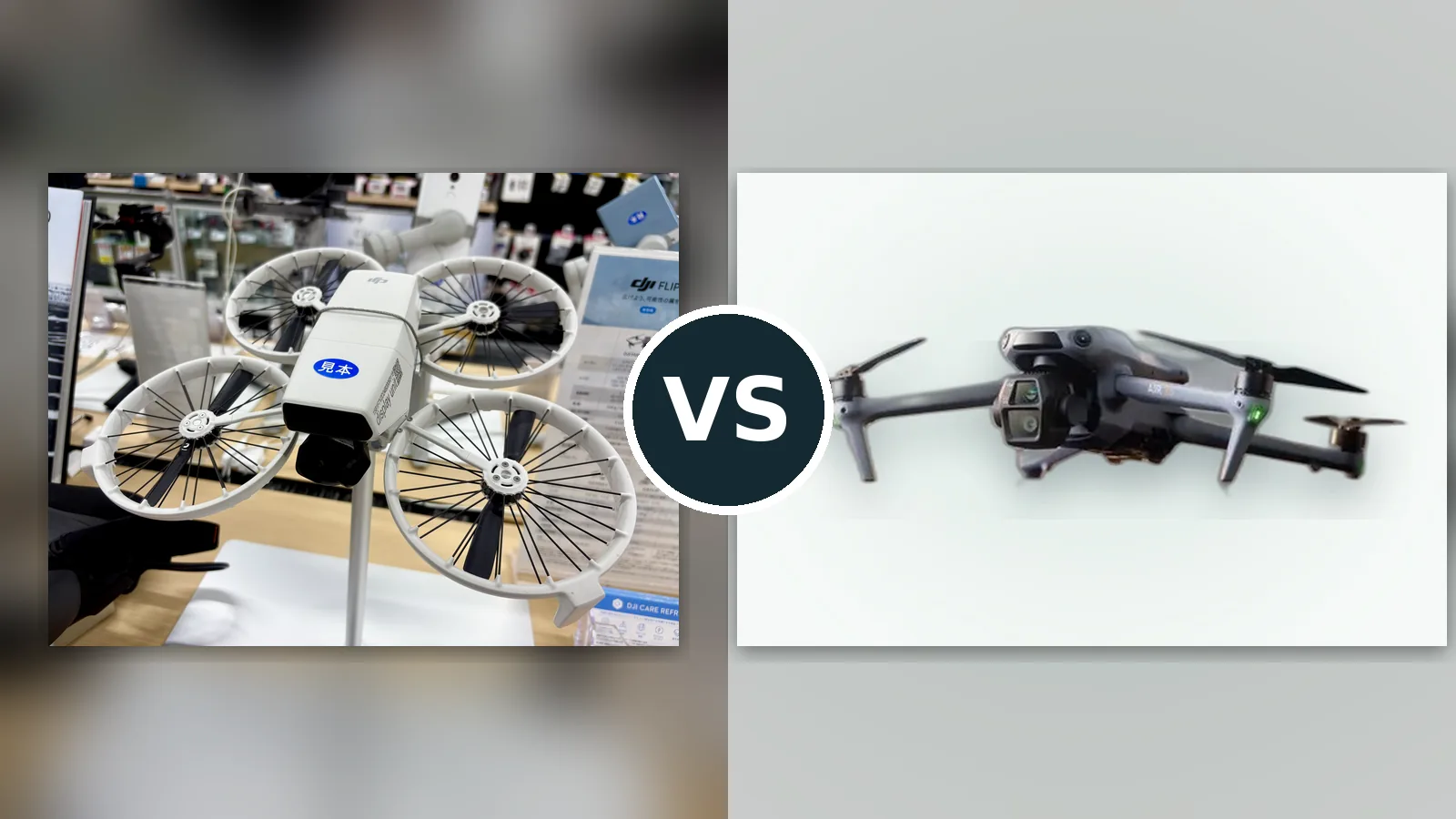
The dji flip vs dji air 3s comparison is really a question about how serious your flying gets. The Flip is DJI’s friendliest camera drone ever: it unfolds, launches from your palm, and films you on its own, all under 249 grams. The Air 3S is a dual-camera professional tool with a 1-inch main sensor, a 70mm telephoto, omnidirectional sensing with LiDAR, and 45-minute flights. Both shoot excellent video, both run DJI’s O4 transmission, and both deserve a place in a creator’s bag. They just serve creators at very different points in the journey, and this comparison shows exactly where the lines fall.
As an Amazon Associate, we earn from qualifying purchases.
Flip for solo creators. Air 3S for serious work.
DJI Flip wins for solo creators, travelers, and beginners: palm launch, voice control, full propeller guards, 4K/60 HDR, and no registration headaches under 249 grams. DJI Air 3S wins for image quality, range, and professional flexibility: two cameras including a true 70mm telephoto, a 1-inch sensor, nightscape obstacle sensing, and 45-minute endurance. Camera system: Air 3S. Ease of use: Flip. Flight time: Air 3S. Everyday carry: Flip.
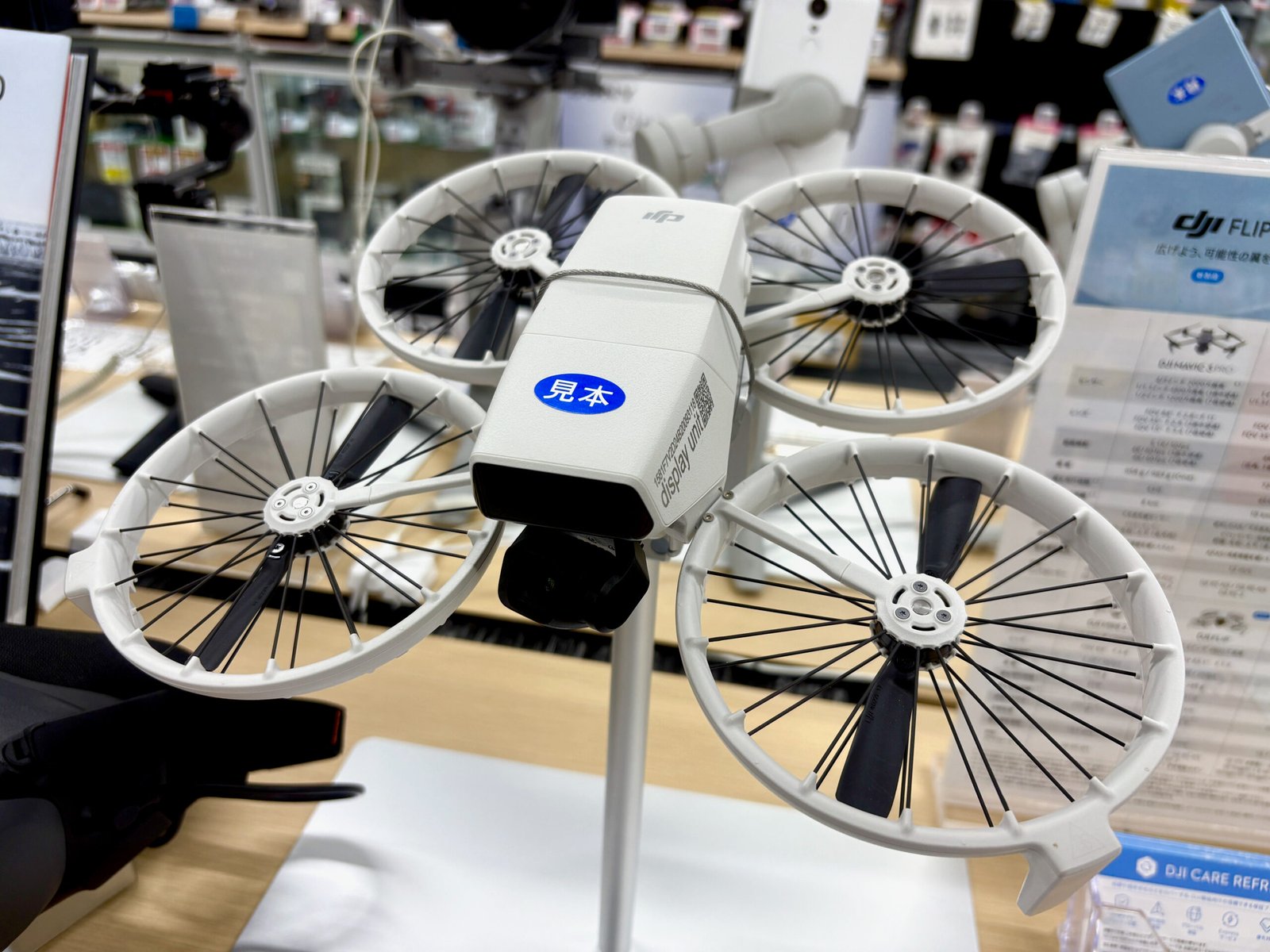
DJI Flip
For creators who fly alone and want the camera to do the piloting
- Palm takeoff, voice control, and full propeller guards make it the safest DJI drone to learn on
- Same 1/1.3-inch 48MP sensor family as the Mini line, with 4K/100 slow motion and 10-bit D-Log M
- Forward-only infrared braking and no sensing during tracking are its real limits
Check availability and bundle options on Amazon
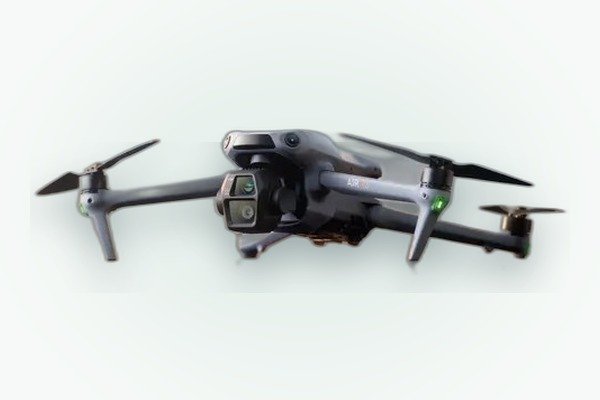
DJI Air 3S
For creators who need two focal lengths, night confidence, and long missions
- 1-inch main camera plus a 70mm medium telephoto cover shots the Flip cannot reach
- Omnidirectional sensing with forward LiDAR works after dark, down to 1 lux
- 724 grams means registration, a bigger bag, and a more deliberate flying routine
Check availability and bundle options on Amazon
One follows you. The other waits for your instructions.
Both drones produce footage you would happily publish. The difference is who is doing the work while it happens, and how much of your attention the flying itself demands.
Choose the Flip if you are the subject. It launches from your palm without a controller, follows you on a trail, circles you at a viewpoint, and lands back in your hand, using FocusTrack and its one-tap flight modes. Voice control starts recordings hands-free, and the full propeller guards mean a mistake costs embarrassment, not hardware. It is a camera crew of zero, and for vloggers, runners, cyclists, and families, that is the entire point.
Choose the Air 3S if you are the director. Its dual cameras let you scout wide and punch into a 70mm telephoto without moving the aircraft, its 1-inch sensor holds up at dusk, and its sensing suite, including forward LiDAR for night flying, lets you work in places the Flip should not go. You fly it with a proper controller, plan shots, and accept registration and a 724-gram carry as the price of capability.
The wrong purchase here is subtle: the Flip owner who outgrows fixed 24mm framing and forward-only sensing within a season, or the Air 3S owner whose drone lives in a cupboard because every flight feels like a production. The breakdowns below will tell you which risk is yours.
Buy the DJI Flip if you:
- Film yourself: palm launch, Follow modes, and voice control replace the camera operator
- Want under-249-gram freedom from registration for recreational flying
- Value guards, simplicity, and a drone that fits a daypack pocket
- Mainly shoot daylight social and travel content at 24mm
Buy the DJI Air 3S if you:
- Need the shot, not just a shot: 24mm and 70mm cameras cover two framings per flight
- Fly at dawn, dusk, or night and want LiDAR-backed sensing
- Take on real estate, travel features, or client work
- Want 45-minute flights and 20 km O4 range for bigger locations
DJI Flip: the camera drone that launches from your hand
The Flip takes the Mini line’s camera, wraps it in guards, and removes the controller from the equation. It is less a drone you pilot than a camera you release.
A familiar sensor in a friendlier body
The Flip’s camera uses a 1/1.3-inch CMOS sensor with 48MP stills, a 24mm equivalent lens at f/1.7, and video up to 4K/60 HDR, with 4K/100 slow motion for action. Color runs to 10-bit D-Log M, and stills come in JPEG and DNG RAW, so the Flip grades and edits like a serious DJI camera, not a toy. On a 3-axis mechanical gimbal, footage is properly smooth, and the cropped 2.7K vertical mode covers social formats without rotating the aircraft.
In good light, Flip footage sits comfortably beside Mini-series output, because the imaging hardware is effectively shared. The f/1.7 aperture gathers a useful amount of light for a small sensor, and the 150 Mbps top bitrate keeps detail in busy scenes like foliage and water.
Flight designed around one person
The Flip folds in an unusual origami motion and settles at under 249 grams, measured at 245 grams in third-party testing. Open it up, press the mode button, and it takes off from your palm into Follow, Dronie, Circle, Rocket, Spotlight, or Helix shots. Voice control handles start and stop when your hands are busy. Rated flight time is 31 minutes from the 3110 mAh battery, and DJI O4 transmission reaches 13 km FCC with a 1080p/60 live feed when you do fly with the RC-N3 or RC 2 controller.
Safety hardware is where the Flip’s brief shows. The propeller guards are structural, not accessories, and a forward 3D infrared sensor provides auto-braking in Normal, Cine, and return-to-home flight. Two limits matter: there is no sensing to the sides, back, or top, and obstacle braking switches off during tracking shots, so the Flip follows you on faith in open spaces. Wind resistance is Level 5 at 10.7 m/s, respectable for its size, though the guards give gusts more to push on.
Where the Flip stops
Internal storage is only 2 GB, so a microSD card is effectively mandatory. The fixed 24mm lens means every shot is wide; there is no telephoto compression and no optical way to isolate a subject. And while 31 minutes is a fine rating, the Flip’s small batteries and guard drag mean real flights land shorter, especially in wind. None of this dents its purpose. It is the most approachable route into DJI image quality ever sold.
DJI Air 3S: two cameras, one serious aircraft
The Air 3S is the point where DJI’s Air line stops being a compromise. It carries a flagship-style dual camera, the best sensing DJI has put in a folding drone, and endurance to match.
The dual camera is the headline
The main camera pairs a 1-inch CMOS sensor with a 24mm f/1.8 lens for 50MP stills and video up to 4K/120, with 4K/60 HDR and up to 14 stops of dynamic range in 10-bit D-Log M or HLG. Beside it sits a medium telephoto: a 1/1.3-inch 48MP sensor behind a 70mm f/2.8 lens. That second camera is not a gimmick. It compresses landscapes, isolates subjects from safe distances, and shoots people and wildlife without the drone entering their space.
Both cameras record vertical video up to 2.7K, stills save as JPEG and DNG RAW, and the 42 GB of internal storage means a forgotten memory card does not end a shoot. In low light, the 1-inch main sensor is in a different league from the Flip’s smaller chip, holding color and detail as the light falls.
Built for deliberate, longer, later flights
At 724 grams, folded to roughly 214 by 101 by 89 millimeters, the Air 3S is a real aircraft that needs registration in most regions. Its rated flight time is 45 minutes from a 4276 mAh battery, top speed is 21 m/s, wind resistance reaches 12 m/s, and O4 transmission runs to 20 km FCC. ActiveTrack 360, MasterShots, QuickShots, Waypoint Flight, and Hyperlapse cover the automated repertoire, with a pilot firmly in charge.
The sensing suite is the Air 3S’s signature: omnidirectional binocular vision plus a forward LiDAR and a downward infrared ToF sensor, giving it nightscape obstacle sensing in light down to 1 lux. It can find its way home in the dark and brake for obstacles the pilot cannot see. That capability, more than any other, separates it from everything in the Mini and Flip class.
The costs of capability
You give up the palm-launch party tricks and the sub-250-gram regulatory lightness. The Air 3S wants a controller in your hands, a landing spot, and a pilot who checks airspace. It is also simply more aircraft to carry, insure, and worry about. For the work it enables, most owners call that fair.
Specifications: pocket companion against dual-camera pro
Figures below are the manufacturers’ published ratings for the standard configurations. Read the camera and sensing rows carefully; they define what each drone is for.
| Specification | DJI Flip | DJI Air 3S |
|---|---|---|
| Takeoff weight | Under 249 g | 724 g |
| Dimensions | Folded 136 × 62 × 165 mm; unfolded 233 × 280 × 79 mm | Folded 214 × 101 × 89 mm |
| Camera sensor | 1/1.3-inch CMOS, 48MP | Wide: 1-inch CMOS, 50MP; Tele: 1/1.3-inch CMOS, 48MP |
| Lens | 24mm equivalent, f/1.7 | 24mm f/1.8 wide; 70mm f/2.8 medium telephoto |
| Max video | 4K/60 HDR; 4K/100 slow motion | 4K/120; 4K/60 HDR; FHD up to 240fps |
| Color and codecs | 10-bit D-Log M; H.264/H.265 up to 150 Mbps | 10-bit D-Log M and HLG; up to 130 Mbps; up to 14 stops dynamic range |
| Photo formats | JPEG and DNG RAW | JPEG and DNG RAW, up to 50MP |
| Vertical video | 2.7K cropped vertical | 2.7K vertical on both cameras |
| Gimbal | 3-axis mechanical | 3-axis mechanical |
| Obstacle sensing | Forward 3D infrared auto-braking; none during tracking | Omnidirectional vision plus forward LiDAR and downward infrared ToF; nightscape sensing to 1 lux |
| Tracking and modes | FocusTrack; palm Follow, Dronie, Circle, Rocket, Spotlight; voice control | ActiveTrack 360, MasterShots, QuickShots, Waypoint Flight, Hyperlapse |
| Rated flight time | 31 minutes | 45 minutes |
| Transmission | DJI O4, up to 13 km FCC, 1080p/60 live view | DJI O4, up to 20 km FCC |
| Max speed | 12 m/s in Sport mode | 21 m/s |
| Wind resistance | 10.7 m/s (Level 5) | 12 m/s |
| GNSS | GPS, Galileo, BeiDou | GPS, Galileo, BeiDou |
| Internal storage | 2 GB plus microSD up to 512 GB | 42 GB plus microSD |
| Battery | 3110 mAh Intelligent Flight Battery | 4276 mAh Intelligent Flight Battery |
| Controllers | Phone, voice, RC-N3, or RC 2; no controller required | RC-N3 or RC 2 |
Ratings are DJI’s published figures under ideal conditions. Real flight times land a few minutes lower, and the Flip’s sensing behavior changes by mode: its forward braking is active in Normal, Cine, and return-to-home flight, not while tracking.
Five differences that actually separate them
On paper these two share a sensor size, a transmission system, and a brand. In the hand and in the field, they diverge fast. These are the five gaps that matter.
1. One camera against two
Air 3SThe Flip gives you a single, very good 24mm view. The Air 3S gives you that wide view from a bigger 1-inch sensor, then adds a 70mm telephoto that changes what a drone shot can look like: compressed mountain layers, candid subjects photographed from a respectful distance, parallax moves that feel cinematic instead of wide-angle flat.
For solo social content, one wide camera is genuinely enough, because the subject is close and the story is you. For travel features, real estate, and any paid work, the second focal length doubles the usable shots from every battery. This is the Air 3S’s deepest advantage, and no technique closes it from the Flip side.
2. Who does the flying
DJI FlipThe Flip’s signature move is having no pilot workload at all: palm takeoff, automatic follow framing, voice commands, and a landing back into your hand. A first-time owner can be publishing follow footage within an hour of unboxing, and the guards make the learning phase forgiving.
The Air 3S assumes a pilot. Its automation is excellent, ActiveTrack 360 and Waypoint Flight included, but it is automation in service of a director: you choose the shot, the aircraft executes it. That is more powerful and less casual. If your content is your life, the Flip’s model fits. If your content is your craft, the Air 3S model fits.
There is a natural crossover point worth naming. Flip owners who start directing their own manual shots, experimenting with the RC-N3 and longer orbits, are signaling that the pilot model has begun to appeal, and that is when the Air 3S stops looking like overkill. Until that day arrives, the Flip’s automation is not a limitation at all; it is precisely the feature that keeps those creators filming instead of studying manuals.
3. Sensing, day and night
Air 3SThe Air 3S watches in every direction with vision sensors, adds LiDAR for the front and infrared ToF below, and keeps its obstacle sensing working in near darkness. It brakes and routes around hazards and can return home through the night. For flying near buildings, trees, and terrain at golden hour and beyond, that awareness is a genuine safety system.
The Flip has one forward infrared sensor that brakes in some modes and none while tracking, so its safety strategy is different: stay slow, stay close, stay guarded. That works for follow shots in open spaces. It is not a plan for complex environments, and Flip owners should treat tree lines and cables as hard boundaries.
4. Endurance and reach
Air 3SForty-five rated minutes against thirty-one is not a rounding difference. The Air 3S can reach a location, work it from several angles and both cameras, and come home with reserve, while its 20 km O4 link and 12 m/s wind resistance widen the places and days it can work. The Flip’s 13 km link is ample for its close-range job, but its lighter body and guard drag end sessions sooner in real weather.
Most Flip flights, though, are five-minute stories: a follow, a reveal, a circle. Judged by sorties per battery rather than minutes, the gap shrinks. Judged by mission capability, it does not.
Plan a shooting day around each and the contrast sharpens. A Flip battery covers an outing of short stories told back to back, and recharging between stops is painless because the flights are brief anyway. An Air 3S battery covers a location: arrive, scout with the wide camera, work the telephoto while the light builds, and still hold reserve for the return. Creators feel the difference less as minutes than as pressure, and the Air 3S simply applies less of it.
5. Carrying it and complying with it
DJI FlipThe Flip folds into a daypack, weighs less than a paperback, and sits under 250 grams, which simplifies recreational flying rules in the US and many other regions. It is the drone that is simply there when a moment happens, and being there is half of content creation.
The Air 3S asks for a dedicated case, registration, and a pilot who plans where and when to fly. None of that is unreasonable for what it delivers, and professionals treat it as overhead. But it is overhead, and casual owners feel it every time the drone stays home.
Pros and cons, plainly
DJI Flip
What it does best
- Palm launch, voice control, and automatic follow shots with no controller
- Full propeller guards make it the safest-feeling DJI to learn on
- Under 249 grams, with 4K/60 HDR and 10-bit D-Log M
- 4K/100 slow motion for action moments
- O4 transmission and RC-N3 or RC 2 support when you want real sticks
Where it gives ground
- Single fixed 24mm camera, no telephoto option
- Forward-only braking, and no sensing at all while tracking
- 2 GB internal storage makes a microSD card essential
- 31-minute rating shrinks in wind and cold
- Smaller sensor gives up low-light ground to the Air 3S
DJI Air 3S
What it does best
- Dual cameras: 1-inch 50MP wide plus 70mm medium telephoto
- 4K/120, 10-bit color, and up to 14 stops of dynamic range
- Omnidirectional sensing with LiDAR nightscape capability
- 45-minute flights, 20 km O4 range, 12 m/s wind resistance
- 42 GB internal storage and fast off-state transfers
Where it gives ground
- 724 grams: registration and a deliberate carry setup required
- No palm launch, no voice control, no prop guards
- A pilot’s drone: planning and attention are part of every flight
- Bigger batteries cost more to multiply
- Overkill for quick social clips of yourself
Bundle checklist: get the kit right the first time
Both drones reward a little planning at checkout. Work through these points and the kit you open will be the kit you actually needed.
- Memory cards are not optional on the Flip: with 2 GB built in, budget for a fast microSD card from day one; the Air 3S’s 42 GB buys you breathing room, not immunity.
- Batteries set your session length: two batteries keep a Flip creator flowing; Air 3S owners shooting locations should think in pairs as well, even at 45 minutes each.
- Choose the controller deliberately: Flip flyers who mostly self-film can start with a phone and add an RC-N3 later; Air 3S buyers should pick between the RC-N3 and the screen-equipped RC 2 based on how they shoot.
- Guards versus cases: the Flip’s protection is built in, so spend on a compact case instead; the Air 3S wants a proper hard or semi-hard case for its larger frame.
- Know your local rules: the Flip sits under 250 grams; the Air 3S at 724 grams requires registration in the US and falls into stricter classes elsewhere. Confirm before the first flight, not after.
- ND filters for motion: both drones benefit from ND filters for natural motion blur in bright light; the Air 3S’s dual cameras mean checking filter fit for each lens.
Effortless or exceptional: pick your priority.
If your videos star you and your life, the DJI Flip is the most friction-free camera DJI has ever made: guarded, palm-launched, and smart enough to film you beautifully while you forget it is there. If your videos are the product, the DJI Air 3S is a genuine professional instrument: two cameras, a 1-inch main sensor, night-capable sensing, and the endurance to work a location properly. Most beginners and solo creators should start with the Flip and grow. Most working creators should buy the Air 3S and skip a step. Both choices are defensible; the only mistake is buying the serious drone you will not carry, or the simple one you will outgrow by spring.
Geography quietly votes too. City creators filming in parks, plazas, and travel stops prize the Flip’s size and low-key presence, while landscape and property shooters covering open ground get far more from the Air 3S’s reach. Let your typical location, not the spec sheet, break any remaining tie.
Questions buyers ask about this pairing
Is the DJI Flip good enough for professional work?
For social content, vlogs, and creator-led travel videos, yes: 4K/60 HDR with 10-bit D-Log M from a 1/1.3-inch sensor is genuinely publishable quality. For client work that needs a telephoto look, top-tier low-light performance, or sensing in complex locations, the Air 3S is the professional tool. The honest divider is who is paying and for what: audiences reward the Flip’s immediacy, while clients buying production value expect the Air 3S’s range of shots.
Does the Air 3S need registration?
Yes. At 724 grams it is well above the 250-gram threshold, so registration is required in the US and it falls into more regulated categories in most other regions. The Flip stays under 249 grams, which keeps recreational rules simpler in many places. Check your local authority’s current rules either way.
Can the Flip really fly without a controller?
Yes. It takes off from your palm, runs its automatic flight modes including Follow, and responds to voice commands, all without a controller or even a phone in hand. Pairing it with an RC-N3 or RC 2 adds full manual control and the O4 system’s long range when you want them.
What does the Air 3S’s 70mm camera actually get used for?
Compressed landscape layers, portraits and people filmed from a natural distance, wildlife without disturbing it, and parallax moves where foreground and background slide against each other. It is the feature owners cite most after a month of flying, because it produces shots no wide-only drone can imitate.
Which drone is safer for a beginner?
The Flip. Its propeller guards contain the most common beginner mistakes, it flies slowly and close by design, and it can operate itself for its signature shots. The Air 3S has far better obstacle sensing, but it is a faster, heavier aircraft that rewards trained hands. Beginners also benefit from the Flip’s close-range habits, because every early mistake happens slowly and within sight, which is exactly how confidence is built.
How long do they really fly?
Ratings are 31 minutes for the Flip and 45 minutes for the Air 3S under ideal conditions. Real flights land several minutes sooner, more in wind or cold. Plan working sessions around roughly three quarters of the rated figure and carry a spare battery for either drone.
How this comparison was prepared
This is a research-based comparison; we did not fly either drone for this article. Flip specifications come from DJI’s official Flip specifications page and launch materials, with weight corroborated by independent third-party measurement. Air 3S specifications come from DJI’s official Air 3S specifications page and launch announcement. Sensing behavior by mode, including the Flip’s tracking limitation and the Air 3S’s nightscape rating, is taken from the manufacturers’ published documentation. Amazon listings for both drones were verified against the exact product titles before the links in this article were written.
Sources and verification
- DJI Flip official specifications (dji.com): weight, camera, flight time, sensing, and transmission figures
- DJI Flip launch announcement (DJI Newsroom, January 2025)
- DJI Air 3S official specifications (dji.com): dual camera, sensing, flight time, and transmission figures
- DJI Air 3S launch announcement (DJI Newsroom, October 2024)
- TechGearLab DJI Flip measurement: 245 g takeoff weight corroboration
- Amazon listing verification: DJI Flip and DJI Air 3S product titles matched to the linked listings
Last verified: October 20, 2026. Specifications, bundle contents, and availability may vary by region and over time.


