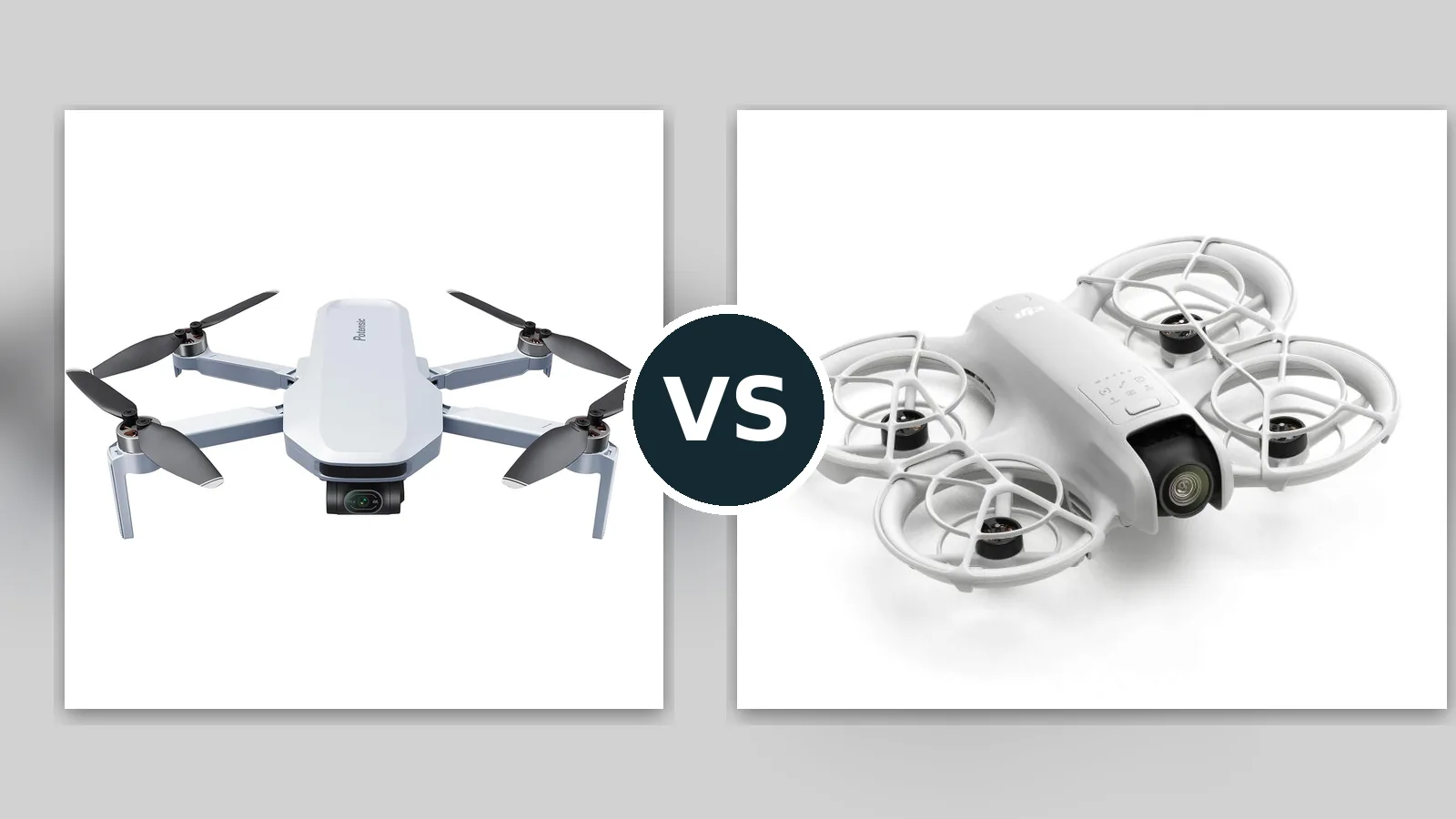
The potensic atom vs dji neo matchup is really a question about who you are as a pilot. The Atom is a proper little camera drone: a 3-axis gimbal, a Sony sensor, 32 minutes of rated flight time and a real controller that lets you compose shots like a photographer. The Neo is something else entirely: a 135 gram selfie drone that lifts off from your palm, films you on its own, and lands back in your hand, no controller required. We dug into the specs, the features and the trade-offs of both so you can pick the one that fits how you actually fly.
As an Amazon Associate, we earn from qualifying purchases.
Atom for the pilot. Neo for the selfie.
Potensic Atom wins this comparison for anyone who wants to fly and film like a drone pilot: its 3-axis gimbal, 32-minute rated flight time, 6 km transmission and manual camera controls make it the more capable aircraft. DJI Neo wins for everyone else: it launches from your palm, tracks you automatically and asks nothing of you, which makes it the best sub-$200 way to get aerial footage of yourself. Camera: Atom. Flight time: Atom. Ease of use: Neo. Portability: Neo. Price: Neo.
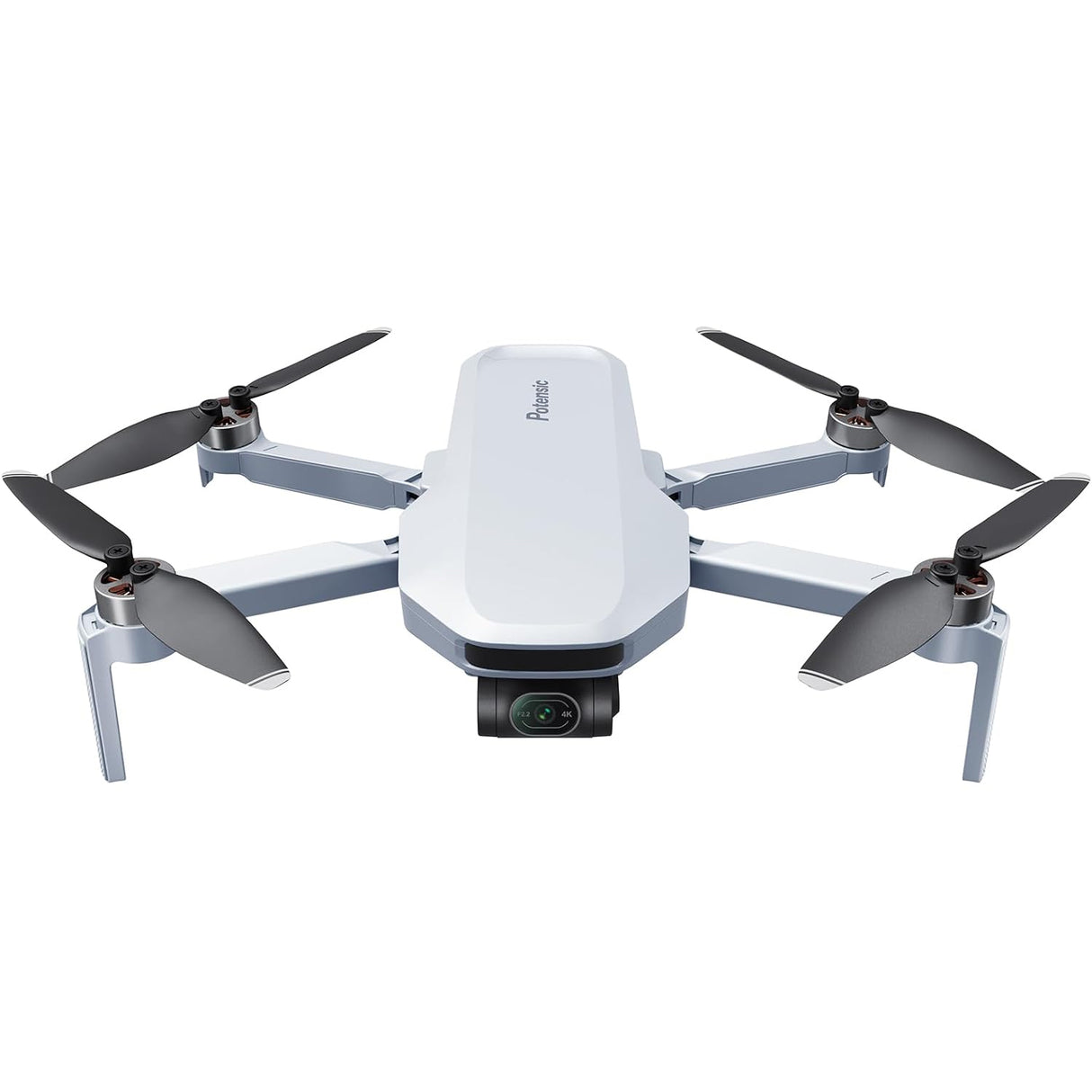
Potensic Atom
For pilots who want a real gimbal camera, long flights and hands-on flying under 249 g
- True 3-axis brushless gimbal with a Sony sensor, plus manual ISO, shutter and white balance
- 32 minutes of rated flight and 6 km PixSync 3.0 transmission for real range
- Needs the controller and phone connected; bulkier than the Neo and less automated
Check current price and available bundles on Amazon
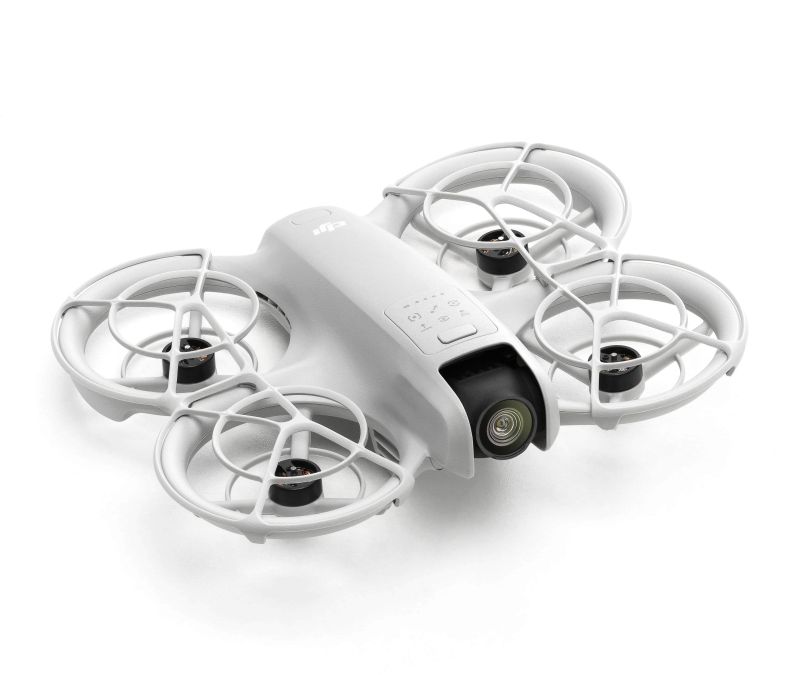
DJI Neo
For anyone who wants aerial selfies and tracking shots with zero setup or skill
- Palm takeoff and landing with no controller: press a button and it films you by itself
- AI subject tracking, QuickShots and voice control make it genuinely effortless
- Single-axis gimbal and 18-minute flights limit its ambitions as a camera platform
Check current price and available bundles on Amazon
Potensic Atom vs DJI Neo: Which One Fits Your Flying?
Start with your main use case. The best choice should solve your needs, without charging you for features you will rarely use.
Most people landing on a potensic atom vs dji neo search are really choosing between two different definitions of what a drone is for. The Atom is the drone for someone who wants to become a drone pilot. It arrives as a folding aircraft with a proper remote controller, a phone mount, and a camera that behaves like a camera: manual ISO, manual shutter speed, adjustable white balance, RAW photo support, and a 3-axis brushless gimbal that keeps the horizon level while you bank the drone around a subject. You unfold it, mount your phone, run through the preflight checks, and fly it the way drone pilots have flown for years. It is rated at 32 minutes per battery and 6 km of transmission range, and it stays under 249 grams.
That is the key thing to understand about the Atom: it was designed to compete with DJI’s Mini series on the Mini’s own turf, and in 2022 it genuinely did. A Sony 1/3-inch sensor shooting 4K at 30 fps, a 78-degree field of view with an f/2.2 lens, digital zoom up to 3x in 1080p, QuickShots modes like Pull-Away, Rocket, Circle, Spiral and Boomerang, visual subject tracking, waypoint flight, interval timer shooting for time-lapses, and Level 5 wind resistance rated to 38 km/h. These are the features of a camera drone, not a toy, and they are why the Atom built a loyal following among budget-conscious pilots who wanted Mini-like footage without the Mini price. Potensic sells the standard kit from its own store at $259.99 with the Fly More triple-battery kit at $339.99, which undercuts DJI’s equivalent combos by a wide margin. But as a flying camera you actually pilot, the Atom punches well above its price.
The Neo comes from the opposite direction. DJI looked at the barrier between “I want an aerial video of myself” and the 5-minute drone setup ritual, and decided to delete the ritual. The Neo weighs 135 grams, which is roughly half the Atom’s weight, and it is built around full-coverage propeller guards, so it bounces off things instead of breaking on them. The headline feature is palm takeoff and landing: you hold it on your outstretched hand, press the mode button, and it lifts off, films you, and comes back to your hand. No controller, no phone pairing, no app required for the basic experience. It carries a 12MP 1/2-inch sensor shooting 4K at 30 fps with a single-axis mechanical gimbal backed by RockSteady electronic stabilization and HorizonBalancing, so the footage is smoother than its size suggests. AI subject tracking keeps you centered while you walk, run or cycle, and six QuickShots modes handle the creative moves. Voice control means you can literally tell it to take off, and it records audio through your phone’s microphone with the prop noise canceled out, which is a genuinely clever touch for vloggers.
The honest framing is this: the Neo is not trying to be a camera drone in the Atom’s sense, and judging it as one misses the point. Its 18-minute rated flight time shrinks to more like 14 to 16 minutes in real use, its single-axis gimbal cannot reframe shots the way a 3-axis gimbal can, and it has no obstacle avoidance sensors at all, just downward positioning. But for the person who wants a flying selfie camera for the beach, the hike, the group photo or the dog walk, those specs are secondary to the 45 seconds from “I want this shot” to “shot captured.” At $199 for the controller-free base kit, it is the cheapest way DJI has ever given you aerial footage of yourself.
Choose Potensic Atom if…
- Hands-on flying and real camera control is your main concern, not just the footage at the end.
- You mostly shoot landscapes, travel video, and composed cinematic shots where a 3-axis gimbal and 32-minute flights matter.
- You prefer a proper remote controller, manual camera settings, and the range to explore properly.
- You can accept a bigger kit, a phone-connected workflow, and a smaller sensor than DJI’s latest.
Choose DJI Neo if…
- Zero-friction aerial selfies is your main concern, with no interest in learning to fly.
- You need palm takeoff, AI tracking, and QuickShots that film you while you do other things.
- You value the lightest, simplest package: 135 g, prop guards, and voice control.
- You can accept 18-minute flights, a single-axis gimbal, and footage aimed at phones rather than grading suites.
Potensic Atom vs DJI Neo: The Specs That Actually Matter
Compare the exact battery, controller and bundle versions you intend to buy.
| Feature | Potensic Atom | DJI Neo |
|---|---|---|
| Best suited to | Hands-on aerial photography and videography, travel, landscapes, beginners learning to fly | Aerial selfies, vlogging, tracking shots of yourself, casual family video |
| Takeoff weight | Under 249 g (with battery and propellers) | 135 g (with battery) |
| Dimensions | Folded: 14.3 x 8.8 x 5.8 cm; unfolded: 30 x 24.2 x 5.8 cm | 130 x 157 x 48 mm (does not fold) |
| Camera sensor | 1/3-inch Sony CMOS, 12MP, 78-degree FOV, f/2.2 | 1/2-inch CMOS, 12MP, 117.6-degree FOV, f/2.8, 14mm equivalent |
| Video modes | 4K (4608×2592) @24/25/30fps; 2.7K @24/25/30fps; FHD up to 60fps | 4K @30fps; 1080p @60fps; up to 75 Mbps |
| Photo resolution | 12MP (4608×2592), JPG plus RAW (DNG) | 12MP (4000×3000 4:3, 4000×2256 16:9), JPG |
| Gimbal | 3-axis brushless mechanical; tilt range +20 to -90 degrees | Single-axis mechanical; RockSteady and HorizonBalancing EIS |
| Digital zoom | 4K: 1-2x; 2.7K and 1080p: 1-3x | Not listed; cropped framing via QuickShots |
| Rated flight time | 32 minutes (measured at 5 m/s constant speed, no wind) | 18 minutes (about 17 minutes with propeller guards fitted) |
| Real-world flight time | Not tested by us; reviewers report roughly 25 to 28 minutes of mixed flying | Not tested by us; reviewers report roughly 14 to 16 minutes with tracking active |
| Transmission | PixSync 3.0, up to 6 km | DJI O4, up to 10 km FCC / 6 km CE (with a controller); roughly 50 m on phone app alone |
| Obstacle sensing | None; downward vision system (0.3-5 m) plus TOF for hovering | None; downward infrared and monocular vision positioning only |
| Subject tracking | Visual tracking; QuickShots (Pull-Away, Rocket, Circle, Spiral, Boomerang); Waypoint Flight | AI subject tracking; 6 QuickShots; voice control; palm takeoff and landing |
| Max speed | 16 m/s in Sport mode | 16 m/s in Sport mode |
| Wind resistance | Level 5: 38 km/h (10.7 m/s) | Level 4: 8 m/s |
| GNSS | GPS plus GLONASS, Galileo and BeiDou | GPS plus GLONASS and Galileo |
| Controller options | Dedicated remote controller plus PotensicPro app (phone required); USB OTG cable | None required; DJI Fly app, RC-N3, RC Motion 3, or FPV Remote Controller 3 |
| Storage | No internal storage; microSD card U1/C10 or above, up to 256 GB | 22 GB internal; no microSD slot |
| Launch pricing | $299.99 standard kit; $349.99 Fly More Combo (Potensic store now lists $259.99 / $339.99) | $199 base (controller-free); $289 Fly More Combo; $369 Motion Fly More Combo |
| Main trade-off | Bigger kit and a phone-connected workflow; smaller sensor; app is functional, not polished | Single-axis gimbal and 18-minute flights limit it as a serious camera; no obstacle avoidance |
Manufacturer ratings are lab figures; real-world flight time is lower. Prices shown are launch prices; check the live Amazon listing for the current price. Last verified: October 20, 2026.
Potensic Atom vs DJI Neo: Five Differences That Matter
For each category, here is the difference, its practical impact and which buyer benefits.
1. Camera quality: 3-axis gimbal vs single-axis stabilization
Edge: AtomThis is the most lopsided category in the potensic atom vs dji neo comparison, and it decides the whole match for serious shooters. The Atom carries a true 3-axis brushless gimbal that physically stabilizes the camera on three axes, with a tilt range from +20 to -90 degrees. That mechanical stabilization keeps the horizon locked while you bank, orbit and push through wind, with manual ISO, shutter speed, white balance, resolution and frame rates plus RAW (DNG) stills. The 1/3-inch Sony sensor is smaller than DJI’s Mini sensors, so low light is not its strength, but in good light the 4K/30 footage with a proper gimbal looks genuinely cinematic.
The Neo takes a different approach. Its single-axis mechanical gimbal handles tilt, while RockSteady electronic stabilization and HorizonBalancing do the rest in software. For the Neo’s job, following you at walking pace and holding you in frame, it works well: reviewers call the footage smooth and more than good enough for phones. But EIS crops into the frame, there is no RAW option, and there are no manual exposure controls to grow into. One point in the Neo’s favor: its 117.6-degree field of view is much wider than the Atom’s 78 degrees, which suits selfie framing.
2. Flight time and range: 32 minutes vs 18
Edge: AtomPotensic rates the Atom at 32 minutes, measured at a constant 5 m/s in windless conditions, and reviewers report roughly 25 to 28 minutes of real mixed flying. With the Fly More Combo’s three batteries and a hub that charges all three in about 1.5 hours, you have a full shooting day covered. The PixSync 3.0 link stretches to 6 km, which is more than enough for legal line-of-sight flying.
The Neo is rated at 18 minutes, about 17 with the prop guards fitted, and real-world tracking flights land closer to 14 to 16 minutes. Short, yes, but the Neo’s missions are short too: a Dronie, a Circle, a tracking run. It is not designed for half-hour sessions. On range, the picture is nuanced. With a controller attached, the O4 link reaches 10 km FCC, which beats the Atom on paper. But the base Neo ships controller-free, and on the phone app alone the range is roughly 50 meters. The Atom’s 6 km comes with the controller in the box. So for real-world flying out of the box, the Atom has the range advantage; the Neo only catches up if you buy into the controller ecosystem.
3. Ease of use: a pilot’s drone vs a button-press drone
Edge: NeoThe Neo is the easiest drone to fly that either company has ever made, and it is not close. There is no controller to pair, no phone mount to fiddle with, no app you must open. You place it on your palm, press the mode button, and it launches, films, and returns to your hand. Voice control takes it further: tell it to take off and start a tracking shot. The six QuickShots modes, Dronie, Circle, Rocket, Spotlight, Helix and Boomerang, are selected on the drone itself, and AI subject tracking keeps you centered while you walk, run or cycle. A total beginner can get their first aerial selfie within a minute of opening the box, and the full-coverage guards make bumps harmless. This is why the Neo sells: it removed every excuse between wanting an aerial video and having one.
The Atom is easy by camera-drone standards, and hard by Neo standards. You unfold the arms, mount your phone in the controller, connect via the OTG cable, open the PotensicPro app, wait for GPS lock, and fly with real sticks. SurgeFly flight control with Video, Normal and Sport modes is beginner-friendly, with voice prompts, tutorials, GPS and auto return-to-home keeping things safe. The payoff is control: you decide the framing, the speed, the altitude and the exposure.
4. Portability: 135 grams vs a folding kit
Edge: NeoAt 135 grams, the Neo is roughly half the Atom’s weight, and the difference in practice is even bigger than the numbers suggest. The Neo does not fold because it does not need to: it is a palm-sized pod with integrated prop guards, and the controller-free base kit is just the drone, a battery and a cable. It fits in a jacket pocket or a small bag compartment, and you can carry it on any hike without noticing it. It sits in the same friendly sub-250 g class as the Atom, but feels like a different species: less drone, more flying camera accessory.
The Atom folds down to 14.3 x 8.8 x 5.8 cm, which is genuinely pocketable for a 3-axis gimbal drone, and under 249 grams keeps it free of FAA registration for recreational use in the US. But the kit is the thing: controller, phone, batteries, charging hub, spare props. The Fly More Combo even ships with a 64GB SD card and a carrying bag, which tells you what kind of outings Potensic expects. It travels well for a camera drone, and plenty of owners toss it in a daypack, but next to the Neo it is a production. One point for the Atom: its folding design protects the gimbal and props in transit, while the Neo’s fixed guards add bulk you cannot slim down.
5. Price and value: $199 vs $259.99
Edge: NeoThe Neo starts at $199 for the controller-free base kit, which is the cheapest ticket into aerial video from a major brand. The Fly More Combo with three batteries and the charging hub runs $289, and the Motion Fly More Combo with Goggles 3 and the RC Motion 3 is $369 for anyone curious about FPV. Regular discounts push the base kit to $139 or even $159 during sales events, at which point it is barely more than a nice phone gimbal. You are buying the autonomous experience: no controller, no learning curve, footage of yourself from day one.
The Atom starts at $259.99 on Potensic’s own store, down from its $299.99 launch price, with the Fly More triple-battery kit at $339.99. Major retailers list it at $269.99 standard and $349.99 for the Fly More Combo. That $60 gap is the honest cost of the 3-axis gimbal, the 32-minute battery, the 6 km link and the manual camera. If you will use those things, the Atom is the better value per capability.
Potensic Atom vs DJI Neo: What You Gain and Give Up
Potensic Atom
Reasons to choose it
- True 3-axis brushless gimbal with a Sony sensor, manual exposure controls and RAW stills for real photographic control
- 32 minutes of rated flight time and a 6 km PixSync 3.0 link for proper range and long shooting days
- QuickShots, visual tracking, waypoint flight and interval timer shooting cover both automation and creativity
- Under 249 g with Level 5 wind resistance, so it stays regulation-friendly and holds steady in gusts
- Strong value: the Fly More Combo costs less than most DJI combos
Reasons to reconsider
- Requires the controller, a mounted phone and the app: a bigger kit and a real setup ritual every time
- 1/3-inch sensor shows its limits in low light, and the app experience lags behind DJI Fly
- No obstacle avoidance sensors, only downward vision and TOF for hovering assistance
- Bulkier to carry than the Neo, and it asks you to learn to fly rather than pressing a button
- Fixed 78-degree field of view is narrower than the Neo’s wide selfie framing
DJI Neo
Reasons to choose it
- Palm takeoff and landing with no controller: the simplest drone experience either brand has made
- AI subject tracking, six QuickShots and voice control film you while you do other things
- 135 g with full-coverage propeller guards, so bumps are harmless and it goes anywhere
- 22 GB of internal storage means no memory card to buy or forget
- $199 entry price, with regular discounts, makes it the cheapest path to aerial video
Reasons to reconsider
- Single-axis gimbal plus EIS cannot match a 3-axis gimbal for framing or stabilization quality
- 18 minutes rated flight time shrinks fast with tracking active; plan on spare batteries
- No obstacle avoidance sensors at all, so the environment will not save you
- No manual exposure controls and no RAW stills for photographers who want to grow
- Full 10 km range needs a controller; on the phone app alone it reaches about 50 meters
Check the bundle, not just the drone
The drone on the box is only half the purchase. Run through this checklist before you tap buy.
- Controller: The Atom always needs its dedicated remote plus your phone and the PotensicPro app, so confirm your phone fits the mount and runs a compatible OS version. The Neo needs nothing, but decide upfront whether you want the RC-N3 for real range and manual flight, since the base kit is controller-free.
- Batteries: One battery is never enough. For the Atom, the Fly More Combo’s three batteries and 1.5-hour parallel charging hub are the sensible buy. For the Neo, two or three batteries turn 18-minute flights into a real outing; the two-way charging hub charges three at once and is worth it if you fly weekly.
- Accessories: The Atom records to microSD only, so buy a fast U1/C10 card up to 256 GB; the Fly More Combo includes a 64 GB card as a limited-time bonus. The Neo’s 22 GB of internal storage needs no card, but a USB-C cable for fast transfers to your computer is handy.
- Listing: On Amazon, confirm the exact model in the title before ordering. For the Atom, make sure the listing says ATOM and not ATOM SE or ATOM 2, which are different drones with different cameras and prices. For the Neo, check whether the listing is the controller-free base kit or a Fly More bundle.
- Local requirements: Both sit under 250 g, which keeps recreational flying simple in the US and much of Europe, but airspace rules still apply. Check your aviation authority’s current registration, training and airspace requirements before your first flight.
- Price timing: Both drones are regularly discounted. The Neo has dropped to $139 during sales events, and the Atom’s official store price has fallen from $299.99 to $259.99. If the price looks high today, check the listing again in a week; launch prices are reference points, not what you should necessarily pay.
The right choice comes down to piloting versus pressing a button.
If you want to fly a real camera drone, learn the sticks, compose your own shots and bring home footage with a proper gimbal behind it, buy the Potensic Atom. It wins on camera control, flight time and range, and remains one of the best values in the sub-250 g class. If you want aerial videos of yourself with none of the learning curve, buy the DJI Neo. Palm takeoff, AI tracking and a $199 price make it the most effortless drone ever made, and for selfies, vlogs and family videos it is all the drone most people need. Neither is the wrong answer. They are just answers to different questions.
Still deciding?
Is the Potensic Atom better than the DJI Neo for beginners?
It depends on what kind of beginner you are. If you have never flown anything and want aerial footage with zero learning, the Neo is the better beginner drone: it launches from your palm and films you by itself. If you want to learn to fly properly, the Atom is the better teacher: a real controller, GPS stability, auto return-to-home and a camera that rewards improving skills.
Which drone is better for travel and social media video?
The Neo, for most travelers. At 135 g it disappears into any bag, needs no controller, and its AI tracking plus QuickShots produce ready-to-post vertical-friendly clips of you in about a minute. The Atom is the better travel camera for composed landscape footage, but it travels as a kit rather than a pocket accessory.
Can the DJI Neo fly without a controller or phone?
Yes, and that is its whole point. The base Neo launches from your palm, runs its shooting modes from buttons on the drone, tracks you automatically and lands back in your hand, all without a controller or phone. You only need the DJI Fly app or an RC-N3 controller if you want manual flight, longer range or access to the full settings.
Does the Potensic Atom shoot better video than the DJI Neo?
For composed, stabilized footage, yes. The Atom’s 3-axis mechanical gimbal, manual exposure controls and 32-minute flights give you the tools to shoot genuinely cinematic video, while the Neo’s single-axis gimbal and software stabilization are tuned for smooth selfie clips. In bright light both look good on a phone; the Atom pulls ahead when you need framing control, longer takes or footage worth editing.
Which bundle should I buy for each drone?
For the Atom, the Fly More Combo with three batteries, the parallel charging hub and the carrying bag is the sensible buy if you fly more than occasionally; otherwise the standard kit plus a fast microSD card is enough to start. For the Neo, the base $199 kit is complete on its own, and the Fly More Combo with three batteries and the two-way hub is worth it the moment 18-minute flights start feeling short.
How were these drones compared?
This is a research-based comparison: we compiled specifications from Potensic’s official product pages and DJI’s official Neo documentation, then cross-checked them against independent reviews and retailer listings. We did not fly either drone for this article, so rated figures are the manufacturers’ lab numbers and real-world figures are attributed to the reviewers who measured them. See the methodology section below for the full source list.
How this comparison was prepared
This is a research-based comparison. We did not fly either drone for this article, and we do not imply otherwise. Every specification in the table above comes from the manufacturers’ official documentation: the Potensic ATOM product page on Potensic’s official store for the Atom’s camera, gimbal, transmission, flight time, weight and pricing, and DJI’s official Neo specifications and launch materials for the Neo’s weight, sensor, gimbal, flight time, transmission and pricing. Where this article mentions real-world flight times, those figures are attributed to independent reviewers who measured them, not to us. Amazon ASINs were verified by matching each ASIN against the exact product title across Amazon’s own indexed listing data and corroborating third-party sources before any affiliate link was written; Amazon’s bot protection blocked direct page opens during research, so live stock status could not be confirmed firsthand.
Sources and verification
- Potensic ATOM official product page (store.potensic.com, accessed October 20, 2026): camera, gimbal, PixSync 3.0, flight time, weight, pricing and bundle contents
- DJI Neo official specifications and launch announcement (dji.com, September 2024): weight, sensor, gimbal, flight time, O4 transmission and pricing
- My Dear Drone DJI Neo review: specs at a glance, palm launch workflow and real-world flight observations
- Dronios DJI Neo review: camera analysis, flight performance and range observations
- Tech4All Potensic Atom review: hands-on impressions, build quality and feature rundown
- B and H Photo Potensic ATOM listings (standard kit and Fly More Combo): pricing, UPC data and feature summaries
- Abt Electronics Potensic ATOM listings: current standard and Fly More pricing
- Target Potensic ATOM standard kit listing: pricing, availability and PixSync 3.0 confirmation
- Best Buy DJI Neo listing: base kit pricing and bundle contents
- DroneXL DJI Neo deal coverage: Amazon pricing history and bundle discounts
- ASIN verification: Potensic ATOM Fly More Combo (B0CF8NXJ57, model ATOM, UPC 850045729615) and DJI Neo controller-free base kit (B07FTPX71F) confirmed against Amazon-indexed titles, model numbers and UPC data
Last verified: October 20, 2026. Bundle availability, pricing, and specifications may vary by region and version. Prices in this article are launch reference prices; check the live Amazon listing for the current price.