Two sub-249-gram drones, two very different price tags. In this potensic atom se vs dji mini 2 showdown we compare the camera, flight time, range, and real kit value so you can see exactly what the extra money buys, and when the budget pick is the smarter buy.
Back in 2020, the DJI Mini 2 set the standard for tiny drones: real 4K video, a proper 3-axis gimbal, and a 10 km video link, all light enough to skip registration in most countries. Two years later, Potensic answered with the Atom SE, copying the formula (sub-250 g, 4K, GPS, 31 minutes of flight) and cutting the launch price by a third. On paper they look like twins. In the air, the differences matter.
We researched both drones the same way: official specifications, the original user manuals, launch coverage, and long-term independent reviews. No borrowed opinions, no invented numbers. If you are choosing between the proven DJI classic and the budget challenger, this is the full breakdown.
Affiliate disclosure: As an Amazon Associate I earn from qualifying purchases. This page contains affiliate links. If you buy through them, we may earn a commission.
The Mini 2 is the better camera. The Atom SE is the better deal.
DJI Mini 2 takes the overall win in this potensic atom se vs dji mini 2 matchup on flying-camera merit: a true 3-axis gimbal, a larger 1/2.3-inch sensor, 100 Mbps 4K, and OcuSync 2.0 with 10 km range. Potensic Atom SE wins on value: $299.99 at launch with two batteries in the box, the same rated flight time, and far less strain on your wallet. If footage quality is the job, buy the DJI. If the budget is the boss, buy the Potensic.
- Camera and stabilization: DJI Mini 2. A real 3-axis gimbal beats tilt plus EIS every time.
- Flight time: Tie. Both rate 31 minutes per battery, but the Atom SE ships two batteries.
- Range and signal: DJI Mini 2. OcuSync 2.0 reaches 10 km; PixSync 2.0 tops out at 4 km.
- Smart flight modes: DJI Mini 2. QuickShots and panoramas beat Follow Me, Waypoint, and Circle Flight.
- Price and value: Potensic Atom SE. Two batteries, 4K, and sub-250 g for roughly two thirds of the Mini 2’s launch price.
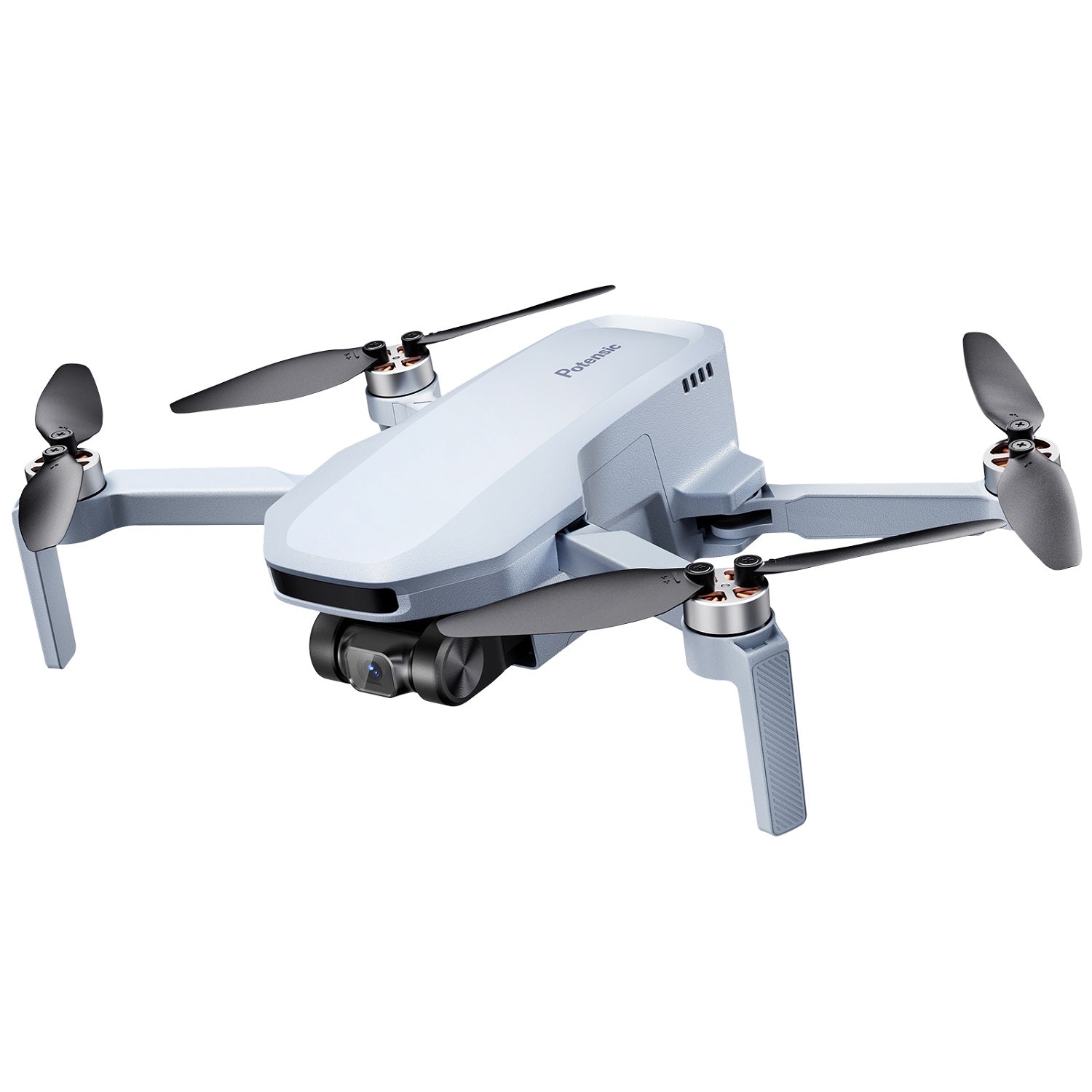 POTENSIC ATOM SE
Potensic Atom SE
For first-time pilots who want 4K and GPS without the DJI price
- Two batteries in the box: 62 minutes of total flight
- 4K EIS camera with Sony sensor for under $300 at launch
- Tilt-only stabilization, no obstacle sensing, shorter 4 km range
Check current price and available bundles on Amazon
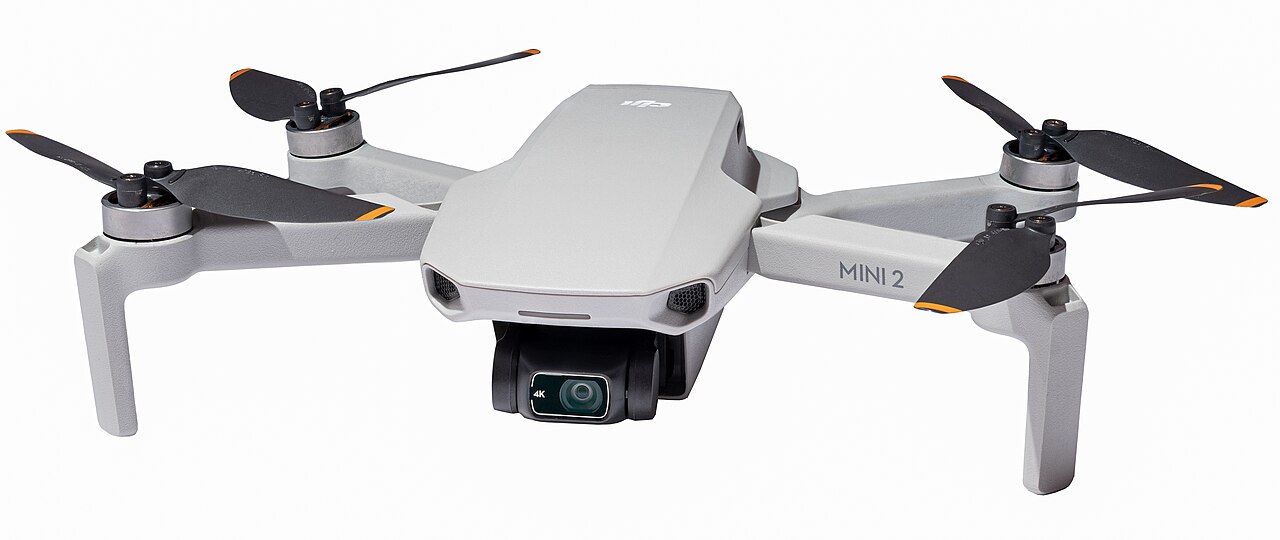 DJI MINI 2
DJI Mini 2
For buyers who want the steadier 3-axis camera and OcuSync range
- 3-axis mechanical gimbal for genuinely smooth footage
- OcuSync 2.0 with 10 km range and 100 Mbps 4K
- Discontinued: Amazon listing is the Renewed edition
Check current price and available bundles on Amazon
Potensic Atom SE: the budget challenger, examined
Potensic launched the Atom SE in December 2022 with one clear target: the DJI Mini 2. Same weight class, same 4K badge, same 31-minute flight claim, at a $299.99 launch price that undercut the Mini 2’s $449 by $150. The pitch: everything a beginner needs, nothing they will not use, for a lot less money.
Overview: a Mini 2 formula at a Potensic price
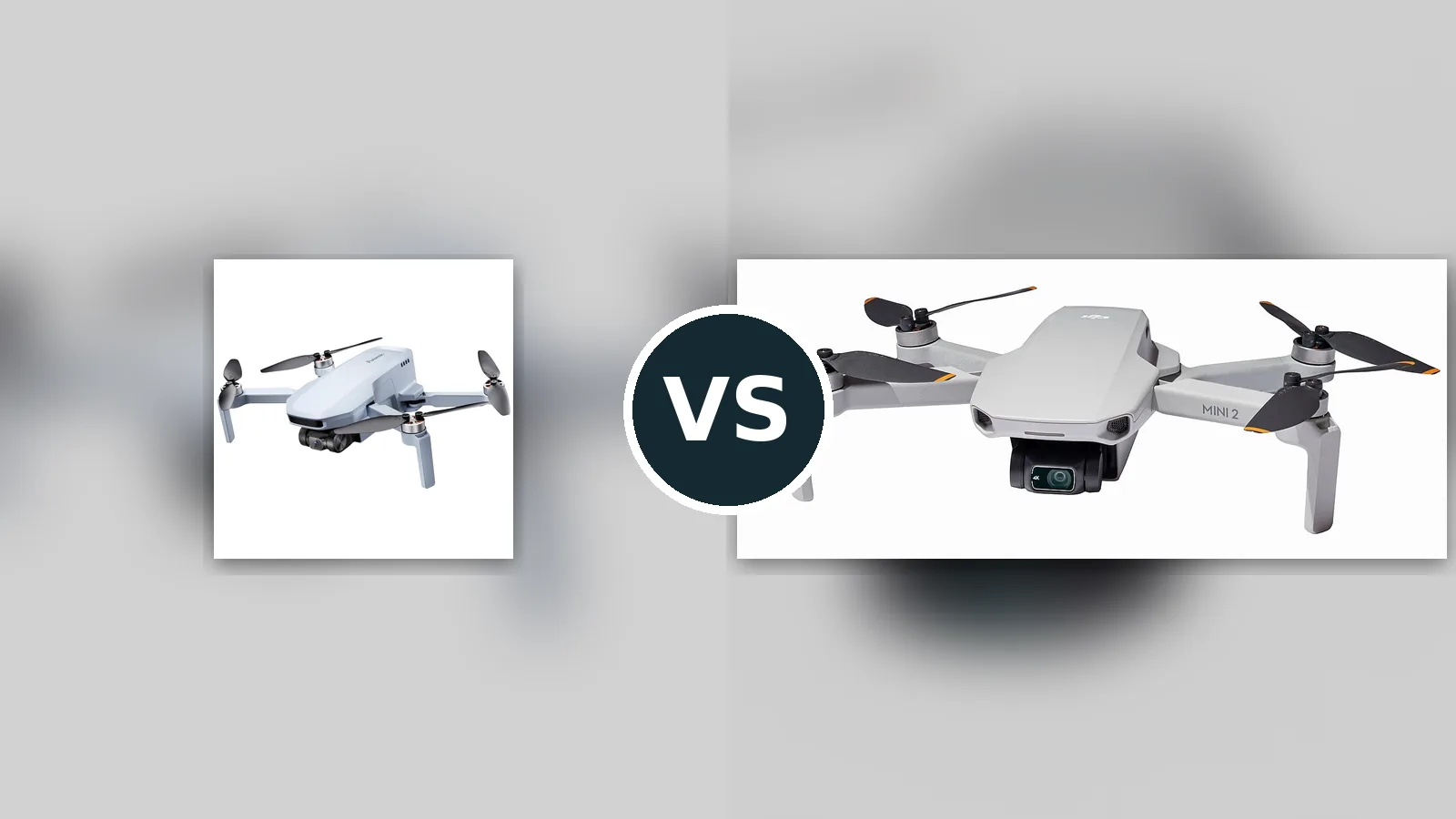
The Atom SE is a folding quadcopter weighing under 249 grams with battery and propellers fitted, keeping it registration-free for recreational flying in the US and many other countries. Folded it measures 88 x 143 x 58 mm, small enough for a jacket pocket; unfolded with propellers it spans roughly 300 x 242 mm. The light gray airframe uses brushless motors, and the box holds a carry bag, the drone, a phone-based controller, two 2500 mAh batteries, three phone adapter cables, a data cable, spare propellers, and a screwdriver. A generous box, and the first hint of Potensic’s strategy: compete on kit value, not just the drone.
Under the hood, Potensic’s SurgeFly flight control offers three modes: Video caps speed for smooth cinematic moves, Normal is the everyday setting, and Sport unlocks the full 16 m/s top speed. A Beginner mode limits speed and range while new pilots learn the sticks. The controller has no screen; your phone slots in and runs the PotensicPro app for the live view, settings, and firmware updates. Its 3000 mAh battery outlasts several drone batteries per charge.
Camera system: 4K EIS on a 1/3-inch Sony sensor
The camera is where the Atom SE compromises most, and also where it surprises. The 1/3-inch Sony CMOS sensor shoots 12-megapixel stills and 4K video at 30 fps, with 2.7K/30 and 1080p/60 also available. Photos save as JPEG or DNG raw, a genuine plus for editors. The f/2.2 lens has a wide 118-degree field of view, noticeably wider than the Mini 2’s 83 degrees, and the camera tilts from +20 degrees to -90 degrees straight down.
Here is the catch: the Atom SE has no multi-axis mechanical gimbal. Stabilization comes from Potensic’s ShakeVanish electronic stabilization on a tilt-only mount. In calm air and bright daylight, results are perfectly usable for social video and travel clips. Reviewers report the same limits though: the small sensor gets noisy as light drops, and gusty conditions show micro-jitter a true gimbal would iron out. The 720p live feed is fine for framing, not for judging sharpness. Treat this as a very good $300 camera, not a $449 one, and you will not be disappointed.
One more practical note: video records in MP4 (H.264) to a microSD card up to 256 GB, and the card is not included in the box. Budget one when you order.
Flight performance: 31 minutes, twice
Each 2500 mAh battery is rated for up to 31 minutes, and the standard kit includes two, so you get a claimed 62 minutes of total airtime. That is the Atom SE’s quiet superpower: a Mini 2 buyer gets one battery in the standard box and pays extra for more. Real-world reviewers land closer to 25 to 28 minutes per battery in mixed flying, which is normal for ratings measured in ideal conditions.
Top speed is 16 m/s in Sport mode, identical to the Mini 2, reached in a claimed 2.8 seconds. Level 5 wind resistance and brushless motors hold a steady hover in breezes that would push a toy drone across the park. Positioning uses GPS, GLONASS, Galileo, and BeiDou, plus a downward vision system and time-of-flight sensor that lock the hover when satellite signals are weak, indoors or under tree cover. Return to home triggers on signal loss, low battery, or a dedicated button, and works reliably in independent tests.
The weak link is the video link. PixSync 2.0 reaches 4 km in ideal FCC conditions with a 720p feed, but real-world range in Wi-Fi-heavy suburbs is far shorter, often a few hundred meters before the feed degrades. Fine for line-of-sight recreational flying, but not in the same league as DJI’s OcuSync.
Intelligent features: the essentials, done simply
The Atom SE keeps its automated modes to three: Follow Me (tracks you via the phone’s GPS), Waypoint Flight (flies a route you plot on the map), and Circle Flight (orbits a point of interest). All three work as advertised, though they are basic next to DJI’s suite. There is no camera-based subject tracking, no QuickShots presets, and no panorama modes. What you get is honest and functional: GPS automation a beginner can learn in one flight.
Safety features are lean: no obstacle sensing in any direction, so you are the collision avoidance system. Downward sensors handle low hovering and the app warns about low battery and signal loss, but trees and buildings demand your full attention.
Potensic Atom SE
Reasons to choose it
- Outstanding kit value: two batteries, carry bag, and accessories for $299.99 at launch
- True sub-250 g design with GPS, return to home, and 31-minute rated flight time
- 4K/30 video and 12 MP DNG raw photos from a Sony sensor
- Beginner mode and simple controls make it a gentle first drone
- Cheap to crash and cheap to replace, which matters while you are learning
Reasons to reconsider
- No multi-axis gimbal: EIS only, so footage can jitter in wind and low light suffers
- PixSync 2.0 range is 4 km on paper, far less in real neighborhoods
- No obstacle sensing and no subject tracking
- Phone-required controller and PotensicPro app are less polished than DJI Fly
DJI Mini 2: the classic that defined the category
Released on November 4, 2020, the Mini 2 took the original Mavic Mini’s formula and fixed its weaknesses: real 4K video, raw photos, stronger motors, and OcuSync instead of basic Wi-Fi. It became the default recommendation for beginners and travelers for years. DJI has since discontinued it in favor of the Mini 2 SE and then the Mini 4K, which is why the live Amazon listing today is the Renewed edition, but the drone itself remains a benchmark.
Overview: small drone, serious engineering
The Mini 2 weighs under 249 grams internationally (241 g on the FCC quick-start guide; a 199 g version exists for Japan) and folds down to 138 x 81 x 58 mm, genuinely palm-sized. Unfolded it measures 159 x 203 x 56 mm, or 245 x 289 x 56 mm with propellers turning. Like the Atom SE, it stays under the 250 g line that triggers registration for recreational pilots in the US and much of Europe, which is a big part of why both drones exist in this exact form.
DJI’s fit and finish is a step above: arms fold with a precise click, the battery seats with zero play, and the aircraft feels denser than its price suggests. The phone-based controller works with the DJI Fly app, the most polished drone app in the business, with guided first-flight lessons that genuinely help beginners get airborne safely. That software edge is easy to underestimate until you have used both apps back to back.
Camera system: a real gimbal and a bigger sensor
This is where the Mini 2 earns its reputation. Its 1/2.3-inch CMOS sensor is physically larger than the Atom SE’s 1/3-inch unit, capturing 12-megapixel stills in JPEG or DNG raw. Video runs at 4K/24/25/30p with a 100 Mbps bitrate, plus 2.7K/60 and 1080p/60, all in MP4 (H.264). The f/2.8 lens has an 83-degree field of view (about 24 mm full-frame equivalent), narrower and more natural than the Atom SE’s ultra-wide 118 degrees.
The headline feature is the 3-axis mechanical gimbal stabilizing tilt, roll, and pan: the single biggest image-quality difference between the two drones. Where the Atom SE’s electronic stabilization shows micro-jitter in wind, the Mini 2’s footage stays level and smooth because the camera is physically isolated from the airframe. The gimbal tilts from -90 degrees to +20 degrees with angular vibration rated at plus or minus 0.01 degrees. In plain terms, the video looks shot from a much bigger drone.
Low light is better too, with an ISO range of 100 to 3200 for photo and video. It is still a small sensor, so do not expect miracles after sunset, but evening footage holds together noticeably better than the Atom SE’s. Digital zoom reaches 4x at 1080p, 3x at 2.7K, and 2x at 4K, handy for framing distant subjects. There is no vertical video mode and no flat color profile; what you shoot is what you get, in DJI’s pleasant standard color.
Flight performance: 31 minutes and a 10 km link
The 2250 mAh two-cell battery is rated for 31 minutes, matching the Atom SE per battery; real-world tests land around 26 to 28 minutes in calm conditions. The standard box includes one battery; the Fly More Combo added two more, a charging hub, and a carry case. Top speed is 16 m/s in Sport mode (10 m/s Normal, 6 m/s Cine), with Level 5 wind resistance (8.5 to 10.5 m/s). The upgraded motors over the original Mavic Mini hold position in gusts that would have pushed its predecessor around.
OcuSync 2.0 is in a different league from the Atom SE’s PixSync: 10 km rated range under FCC rules with automatic 2.4/5.8 GHz switching, and a 720p/30 fps feed that stays clean and low-latency where the Atom SE’s would give up. You will still fly line-of-sight like a responsible pilot, but the link feels rock solid, with far fewer breakup scares. GPS, GLONASS, and Galileo plus the downward vision system deliver precise hovering, and Smart Return to Home, auto takeoff and landing all work as advertised.
Intelligent features: QuickShots and panoramas
The Mini 2 has no subject tracking, which surprises some buyers, but its automated shot library still beats the Atom SE’s. QuickShots (Dronie, Circle, Helix, Rocket, Boomerang) are one-tap cinematic moves perfect for social video, and panorama modes cover sphere, 180-degree, and wide-angle stitches. QuickTransfer pulls photos and video to your phone at high speed without powering on the controller, a small feature you will use constantly.
Like the Atom SE, there is no obstacle sensing; only the downward vision system watches the ground. The Mini 2 is famously forgiving to fly though: the hover is nailed down, controls are linear and predictable, and DJI Fly tutorials walk beginners through first flights. Replacement parts and repair knowledge are everywhere thanks to the huge installed base, a real ownership edge over a niche brand.
DJI Mini 2
Reasons to choose it
- 3-axis mechanical gimbal delivers genuinely smooth, level footage
- Larger 1/2.3-inch sensor with 100 Mbps 4K and DNG raw photos
- OcuSync 2.0: 10 km rated range with a rock-solid 720p feed
- QuickShots and panoramas make cinematic shots one-tap easy
- DJI Fly app, tutorials, and a massive parts and repair ecosystem
Reasons to reconsider
- Discontinued: new units are scarce, and the Amazon listing is Renewed
- Standard kit includes only one battery; extras cost extra
- No obstacle avoidance and no subject tracking
- Costs significantly more than the Atom SE for similar flight time
Potensic Atom SE vs DJI Mini 2: the specs that actually matter
Every figure below comes from the manufacturers’ official specifications or the original user manuals. Manufacturer flight times are rated maximums; expect 10 to 20 percent less in real flying.
| Feature | Potensic Atom SE | DJI Mini 2 |
|---|---|---|
| Best suited to | Beginners and budget travelers who want 4K GPS flying for the lowest price | Buyers who prioritize smooth footage and a proven, polished system |
| Takeoff weight | Under 249 g with battery and propellers | Under 249 g international version (241 g per FCC guide; 199 g JP version) |
| Dimensions (folded) | 88 x 143 x 58 mm | 138 x 81 x 58 mm |
| Dimensions (unfolded) | 300 x 242 x 58 mm with propellers | 159 x 203 x 56 mm (245 x 289 x 56 mm with propellers) |
| Camera sensor | 1/3-inch Sony CMOS, 12 MP effective | 1/2.3-inch CMOS, 12 MP effective |
| Photo resolution | 12 MP, JPEG and DNG raw | 12 MP, JPEG and DNG raw |
| Video specs | 4K/30 fps, 2.7K/30 fps, 1080p/60 fps; MP4 (H.264) | 4K/24/25/30 fps at 100 Mbps, 2.7K/60 fps, 1080p/60 fps; MP4 (H.264) |
| Lens | f/2.2, 118-degree FOV, tilt +20 to -90 degrees | f/2.8, 83-degree FOV (24 mm equiv), tilt -90 to +20 degrees |
| Stabilization | ShakeVanish electronic stabilization, tilt-only camera mount | 3-axis mechanical gimbal (tilt, roll, pan) |
| Rated flight time | 31 minutes per battery; 2 batteries included (62 minutes total) | 31 minutes per battery; 1 battery in standard kit |
| Battery | 2500 mAh lithium-ion per battery | 2250 mAh LiPo 2S |
| Max transmission range | 4 km (PixSync 2.0, FCC) | 10 km (OcuSync 2.0, FCC) |
| Live video feed | 720p HD | 720p/30 fps HD |
| Max speed | 16 m/s (Sport mode) | 16 m/s (Sport mode); 10 m/s Normal; 6 m/s Cine |
| Wind resistance | Level 5 | Level 5 (8.5 to 10.5 m/s) |
| Obstacle sensing | None; downward vision and ToF sensor for hover | None; downward vision system for hover |
| GNSS | GPS + GLONASS + Galileo + BeiDou | GPS + GLONASS + Galileo |
| Intelligent modes | Follow Me, Waypoint Flight, Circle Flight | QuickShots (Dronie, Circle, Helix, Rocket, Boomerang), panoramas, QuickTransfer |
| Controller and app | Phone-based controller, PotensicPro app (iOS 11+, Android 7.0+) | Phone-based controller, DJI Fly app with flight tutorials |
| Launch price (reference) | $299.99 with 2 batteries | $449 standard kit; $599 Fly More Combo |
Keep manufacturer ratings separate from measured results. Flight times above are rated maximums in ideal conditions. Prices are launch reference prices; check the live Amazon listings for current pricing.
Potensic Atom SE (orange) vs DJI Mini 2 (blue): check live pricing and bundle availability
Five battles that decide potensic atom se vs dji mini 2
Specs tell you what each drone claims. These five comparisons tell you what you will actually notice when you fly them.
1. Potensic Atom SE vs DJI Mini 2: camera and image quality
Edge: DJI Mini 2This is the least close contest here, and it comes down to sensor size and stabilization. The Mini 2’s 1/2.3-inch sensor gathers noticeably more light than the Atom SE’s 1/3-inch unit, and its 100 Mbps 4K preserves more detail. The real separator is the 3-axis gimbal: in a light breeze the Mini 2 stays level and smooth because the camera floats on motors, while the Atom SE’s electronic stabilization crops and warps the frame, leaving micro-jitter and a softer image.
The Atom SE is no slouch in good light though. Its 12 MP stills and 4K/30 video look clean on a phone screen in bright daylight, the 118-degree field of view captures dramatic wide landscapes, and DNG raw support rescues exposures in editing. For casual social clips, most viewers will never know the difference. The gap opens at golden hour, on windy ridgelines, and in slow cinematic moves, where the Mini 2 looks a class above.
2. Potensic Atom SE vs DJI Mini 2: flight time and range
Edge: Tie on time, DJI on rangeOn rated flight time this is a dead heat: 31 minutes per battery for both. The practical difference is the box contents. The Atom SE ships with two batteries for a claimed 62 minutes of flying, while the Mini 2’s standard kit includes one and DJI charges extra for more. Measured in minutes per dollar, Potensic wins walking away.
Range is the opposite story. The Mini 2’s OcuSync 2.0 is rated at 10 km with automatic band switching and delivers a confident, breakup-free feed at any distance a responsible pilot will fly. The Atom SE’s PixSync 2.0 is rated at 4 km, and real-world tests with Wi-Fi interference see the feed degrade far sooner. Both fly farther than you can legally see them, but the Mini 2’s link is simply more trustworthy. Top speed is identical at 16 m/s, and both handle Level 5 wind.
3. Potensic Atom SE vs DJI Mini 2: design and portability
Edge: TieBoth live under the 249-gram line, fold into genuinely pocketable shapes, and skip registration for recreational use in most countries. The Atom SE folds slightly smaller and its kit includes a carry bag, so out-of-the-box portability favors Potensic.
Build quality favors DJI: the Mini 2’s arms, battery fit, and tolerances feel a grade more precise, and years of ownership have proven the design durable. The Atom SE is well made for its price, but long-term reviews note more flex in the arms and a cheaper-feeling controller. Neither is fragile, but the Mini 2 feels like it will survive more seasons.
4. Intelligent features and the app experience
Edge: DJI Mini 2The Atom SE offers Follow Me, Waypoint Flight, and Circle Flight, all GPS-based and functional. Follow Me is the one the Mini 2 cannot match, since DJI’s drone has no subject tracking. If you want the drone to follow you down a trail while you ride or run, the Atom SE is the only one of the two that does it.
Everywhere else, DJI’s software lead shows. QuickShots turn complex moves into one-tap presets, panoramas stitch automatically, and QuickTransfer pulls full-resolution files to your phone fast. The DJI Fly app is the deeper advantage: tutorials, a refined interface, and years of polish. The PotensicPro app does its job but feels a generation behind, with a clunkier interface and less guidance for new pilots.
5. Potensic Atom SE vs DJI Mini 2: price and value
Edge: Potensic Atom SEThis is Potensic’s home turf. The Atom SE launched at $299.99 with two batteries, a carry bag, and full accessories. The Mini 2 launched at $449 with one battery, and the Fly More Combo matching the Atom SE’s kit cost $599. Street prices have narrowed the gap since, but the equation never changed: Potensic gives you more flying hardware per dollar.
The honest counterpoint is cost per keeper clip: the Mini 2’s gimbal means more of your footage is usable, especially in wind or low light. A cheap drone whose footage you delete is not good value. But for a beginner still learning to frame shots who will crash at least once, the Atom SE’s lower replacement cost is genuine insurance. Losing a $214 drone stings far less than losing a $449 one.
Which drone fits your flying?
Forget the spec sheet for a moment. The right choice in the potensic atom se vs dji mini 2 debate depends on what you will actually do with the drone.
Choose the Potensic Atom SE if…
- Budget is your main concern and you want the most flying time per dollar.
- You are learning and accept that your first drone may meet a tree.
- You want Follow Me tracking for biking, running, or driving shots.
- You mostly shoot casual daylight video for social media.
- You can accept softer low-light footage and a shorter video link.
Choose the DJI Mini 2 if…
- Footage quality is your main concern, especially in wind or low light.
- You want the smoothest possible video from a sub-250 g drone.
- You value a rock-solid video link and the polished DJI Fly app.
- You want QuickShots and panoramas for easy cinematic results.
- You can accept buying Renewed, since new units are discontinued.
Potensic Atom SE vs DJI Mini 2: still deciding?
Is the Potensic Atom SE a good alternative to the DJI Mini 2?
Yes, with eyes open. The Atom SE matches the Mini 2 on weight, flight time, top speed, and 4K resolution, and ships with two batteries for much less. You give up the 3-axis gimbal, the larger sensor, and the long-range OcuSync link. For casual daylight flying it is a genuine alternative; for serious footage it is a compromise.
Which has the better camera, the Atom SE or the Mini 2?
The DJI Mini 2, clearly. Its 1/2.3-inch sensor is larger than the Atom SE’s 1/3-inch Sony sensor, its 4K records at 100 Mbps, and its 3-axis gimbal keeps footage smooth where the Atom SE’s electronic stabilization struggles. The Atom SE’s wider 118-degree lens is fun for landscapes, but the Mini 2 wins on image quality.
Can you still buy the DJI Mini 2 new in 2026?
DJI discontinued the Mini 2 in favor of the Mini 2 SE and then the Mini 4K, so new retail units are scarce. The live Amazon listing in this article is the Renewed edition, manufacturer-inspected and the most reliable way to buy one today. Check the seller, warranty, and return terms before ordering.
Which drone is better for beginners?
Both are beginner friendly, for different reasons. The Atom SE has a Beginner mode, simpler controls, and a much lower crash cost, making it the less stressful first drone. The Mini 2 counters with DJI Fly’s guided tutorials, a steadier hover, and more predictable handling. If this is your first drone and budget matters, start with the Atom SE.
Do either of these drones need FAA registration?
For purely recreational flying in the US, no. Both weigh under 250 grams, which keeps them below the FAA registration threshold for recreational pilots. Rules differ by country and change over time, and commercial use always has extra requirements, so check your aviation authority’s current rules before you fly.
Which is better for travel?
The Atom SE edges it: it folds slightly smaller, and the standard kit includes a carry bag plus two batteries, so you land with a complete travel setup. The Mini 2 is equally pocketable with a stronger video link for unfamiliar locations. Either one disappears into a daypack.
The right choice comes down to footage versus budget.
After comparing every spec and every review, the potensic atom se vs dji mini 2 decision is refreshingly simple. The DJI Mini 2 is the better drone: better camera, better stabilization, better link, better app. The Potensic Atom SE is the better deal: two batteries, honest 4K, and GPS flying for roughly two thirds of the money. Neither choice is wrong; they just serve different pilots. Buy the Mini 2 if you will judge every clip. Buy the Atom SE if you are still learning what a good clip looks like.
How this comparison was prepared
This is a research-based comparison. We did not fly these drones for this article. Instead we cross-checked the manufacturers’ official specifications and user manuals against launch coverage and long-term independent reviews, and we verified both Amazon listings directly. Where sources disagreed on a detail, we went with the manufacturer’s own documentation.
Sources and verification
- Potensic ATOM SE official product page (store.potensic.com)
- Potensic ATOM SE GPS drone user manual (manuals.plus)
- DJI Mini 2 official specifications (dji.com support)
- DJI Mini 2 quick-start guide specifications (FCC filing)
- DJI Mini 2 launch coverage, November 2020 (DroneXL)
- DJI Mini 2 full specifications (DroneBlog)
- Potensic Atom SE review (Space.com)
- Potensic ATOM SE review, 2026 (Dronios)
- Potensic ATOM SE Fly More Combo specifications (B and H Photo)
- ASIN verification: the Atom SE listing (B0BFWS4N4T) and the Mini 2 Renewed listing (B08PSTM1K6) were confirmed against their live Amazon.com product titles on October 20, 2026
Last verified: October 20, 2026. Bundle availability, pricing, and specifications may vary by region and version. Prices in this article are launch reference prices; check the live Amazon listings for current pricing.