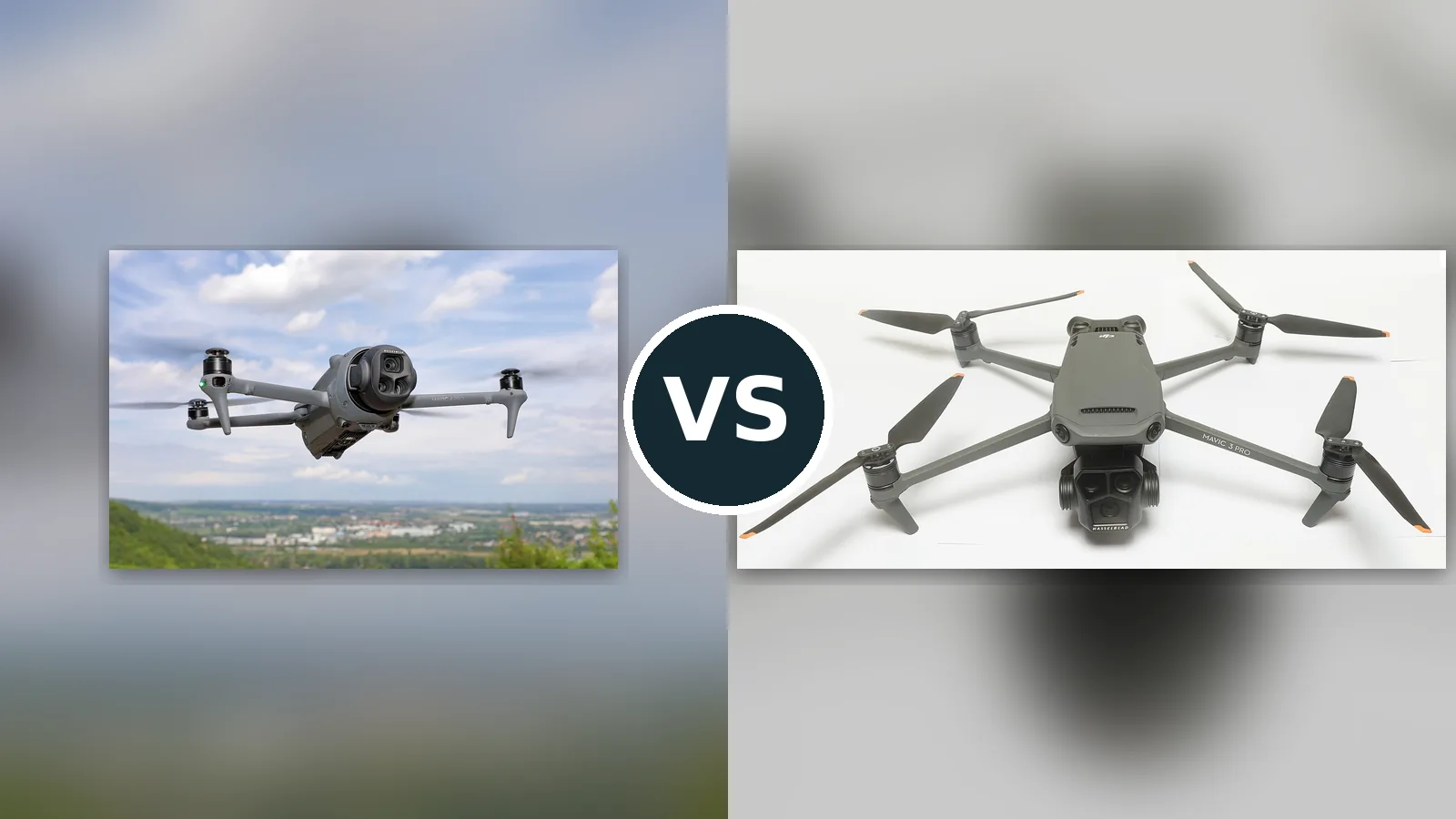
The mavic 4 pro vs 3 pro debate is really about timing. The DJI Mavic 3 Pro landed in April 2023 as the world’s first triple-camera consumer drone. The DJI Mavic 4 Pro arrived in May 2025 with a 100MP Hasselblad sensor, a wild 360-degree rotating Infinity Gimbal, 51 minutes of rated flight time, and forward LiDAR, beating its predecessor on nearly every line of the spec sheet. But spec sheets do not tell the whole story. The Mavic 4 Pro was never officially released in the United States, so American buyers face gray-market imports with no DJI warranty, while the Mavic 3 Pro is widely available, officially supported, and now discounted well below its launch price. We compared the cameras, flight performance, portability, intelligent features, and real-world buying picture so you can decide whether the new flagship is worth the premium or the older king is the smarter buy.
Affiliate disclosure: As an Amazon Associate I earn from qualifying purchases. This page contains affiliate links. If you buy through them, we may earn a commission.
Mavic 4 Pro wins on paper. Mavic 3 Pro wins on practicality.
DJI Mavic 4 Pro is the better drone in almost every measurable way: a 100MP main sensor against 20MP, 51 minutes of flight time against 43, 30 km O4+ transmission against 15 km O3+, a 360-degree Infinity Gimbal, and forward-facing LiDAR. DJI Mavic 3 Pro is the easier drone to actually buy and own: it launched at $2,199, sells officially in the US with a full warranty, and is regularly discounted, while the Mavic 4 Pro was never released in the US and changes hands as a gray-market import. Camera: Mavic 4 Pro. Flight time and range: Mavic 4 Pro. Portability: Mavic 3 Pro, which is lighter and smaller. US availability and warranty: Mavic 3 Pro, and it is not close. Value for most buyers: Mavic 3 Pro.
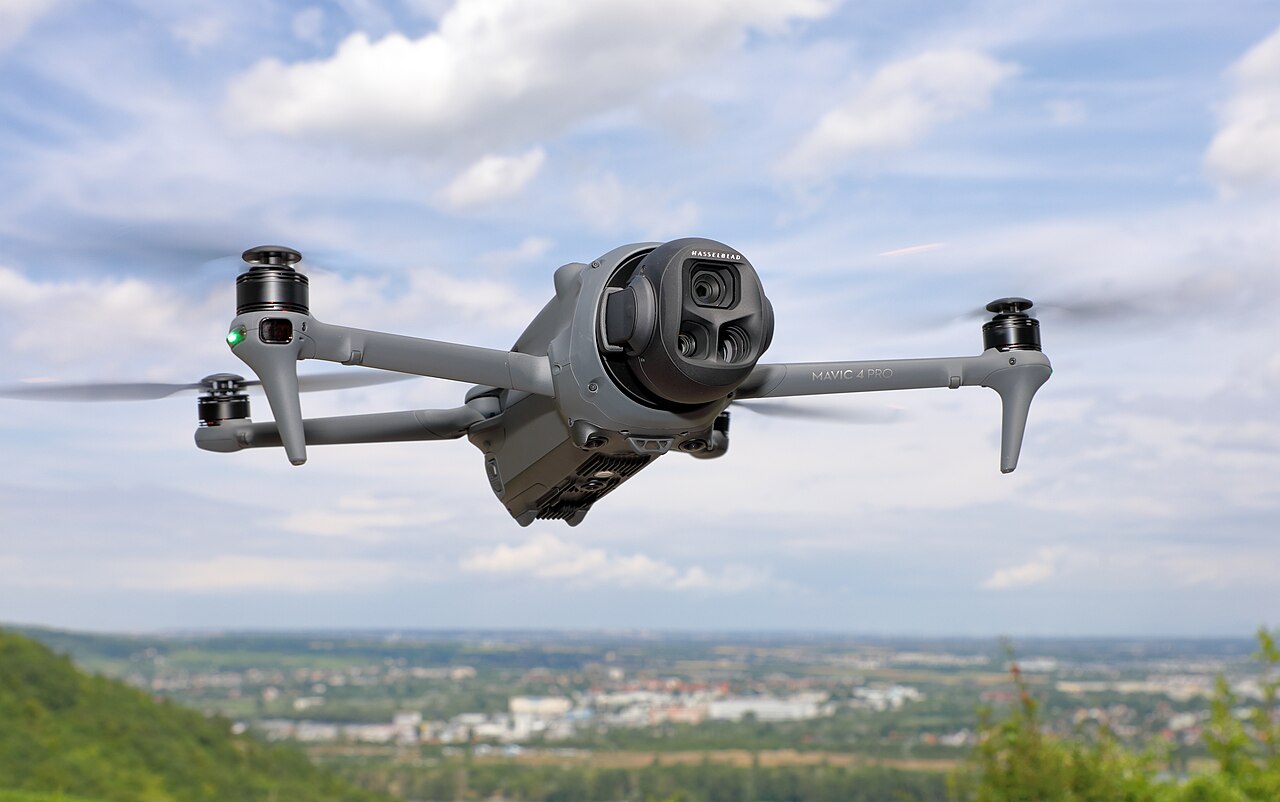
DJI Mavic 4 Pro
For creators who want the most capable triple-camera drone DJI has ever built
- 100MP Hasselblad main camera plus 48MP and 50MP tele cameras on a 360-degree rotating Infinity Gimbal
- 51-minute rated flight time, 30 km O4+ transmission, and forward LiDAR obstacle sensing
- No official US release, so Amazon listings are gray-market imports without DJI US warranty
Check current price and available bundles on Amazon
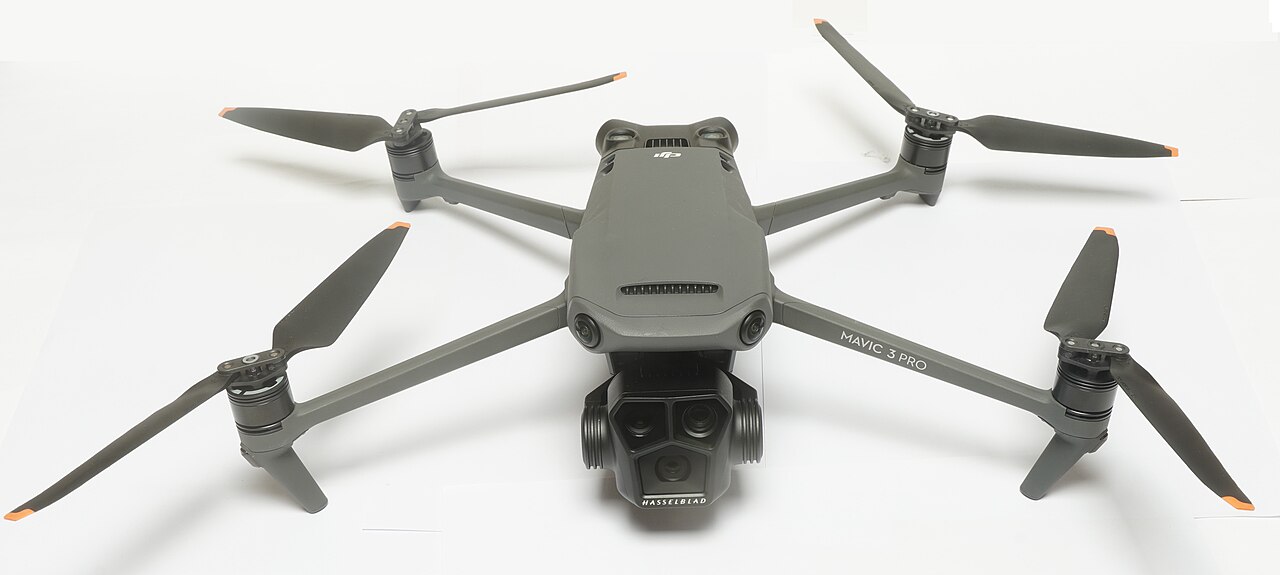
DJI Mavic 3 Pro
For photographers who want flagship triple-camera quality at a saner price
- The original triple-camera flagship: 20MP Hasselblad plus 70mm and 166mm tele cameras
- Officially sold in the US with full warranty and regular discounts below launch price
- Older O3+ transmission and a 43-minute battery trail the new model on paper
Check current price and available bundles on Amazon
Which flagship fits your flying?
Start with your main use case. The best choice should solve your needs, without charging you for features you will rarely use.
Two years is a long time in drones, and the mavic 4 pro vs 3 pro gap shows it. The Mavic 3 Pro was the drone that proved three cameras belong on a folding airframe: a 20MP Hasselblad wide, a 48MP 3x medium tele, and a 12MP 7x tele, all shooting 5.1K video with 10-bit color. It became the workhorse of real estate shooters, wedding videographers, and landscape photographers who needed reach without carrying a second drone. If your footage lives and dies by stills you can print large and video you can grade hard, the 3 Pro earned its reputation the honest way, in the field.
The Mavic 4 Pro is DJI answering its own homework. The main camera jumps to 100MP with 6K/60fps HDR, both tele cameras get meaningfully bigger sensors, and then there is the Infinity Gimbal: a ball-shaped 360-degree rotating mount that points the cameras straight up, sideways, or into true vertical without moving the drone. Add a 95Wh battery good for 51 rated minutes, O4+ transmission reaching 30 km, and a forward-facing LiDAR sensor for obstacle detection in near darkness, and you have the most technically advanced folding drone DJI has shipped. If you shoot for clients and bill by the shot, these are not vanity upgrades.
Then comes the wrinkle that decides this comparison for a lot of American buyers. DJI never officially released the Mavic 4 Pro in the United States, a casualty of the tariff and trade fight that has shadowed the company, so the only way to buy one stateside is a gray-market import through resellers, with no DJI US warranty and prices that float with the exchange rate and the tariff mood of the month. The Mavic 3 Pro, by contrast, launched at $2,199, sells through normal US retail with a real warranty, and now trades at meaningful discounts. Outside the US, where the Mavic 4 Pro launched properly from about €2,109, the math is cleaner and the new flagship is easier to recommend. Know which side of that line you stand on before you fall in love with a spec sheet.
Choose DJI Mavic 4 Pro if…
- Maximum image quality is your main concern: 100MP stills, 6K/60fps HDR, and bigger tele sensors.
- You want the Infinity Gimbal’s 360-degree rotation and true vertical shooting for social and client work.
- You need long missions: 51 rated minutes and 30 km O4+ transmission keep you flying and connected.
- You can accept gray-market buying in the US, a 1,063 g airframe, and a higher price.
Choose DJI Mavic 3 Pro if…
- Proven value is your main concern: flagship triple-camera imaging at a discounted price.
- You want official US availability with a full DJI warranty and normal retail support.
- You prefer the lighter, slightly smaller airframe at 958 g for travel and long hikes.
- You can accept an older sensor set, 43 rated minutes, and O3+ transmission instead of O4+.
Mavic 4 Pro vs 3 Pro: the specs that actually matter
Compare the exact battery, controller and bundle versions you intend to buy.
| Feature | DJI Mavic 4 Pro | DJI Mavic 3 Pro |
|---|---|---|
| Best suited to | Professional aerial photo and video, inspections, mapping, high-end client work | Serious enthusiast and pro photo and video, real estate, travel, events |
| Takeoff weight | 1,063 g | 958 g (963 g Cine) |
| Folded dimensions | 257.6 x 124.8 x 106.6 mm | 231.1 x 98 x 95.4 mm |
| Sensor and lenses | 4/3 CMOS Hasselblad, 100MP, 28mm equiv, f/2.0 to f/11; 1/1.3-inch 48MP 70mm f/2.8 medium tele; 1/1.5-inch 50MP 168mm f/2.8 tele | 4/3 CMOS Hasselblad, 20MP, 24mm equiv, f/2.8 to f/11; 1/1.3-inch 48MP 70mm f/2.8 medium tele; 1/2-inch 12MP 166mm f/3.4 tele |
| Video modes | 6K/60fps HDR (main), 4K/60fps HDR (all three cameras), 4K/120fps slow motion | 5.1K/50fps, DCI 4K/120fps, FHD/200fps (wide camera) |
| Color and codecs | 10-bit D-Log, D-Log M and HLG, H.264/H.265, Hasselblad Natural Colour Solution | 10-bit D-Log, D-Log M and HLG, H.264/H.265; Cine adds Apple ProRes 422 HQ |
| Photo resolution | 100MP (main), 48MP (medium tele), 50MP (tele); JPEG and DNG RAW | 20MP (main), 48MP (medium tele), 12MP (tele); JPEG and DNG RAW |
| Gimbal | Infinity Gimbal: 360-degree rotation, 70-degree upward shooting, true vertical | 3-axis mechanical gimbal, tilt minus 90 to 35 degrees |
| Rated flight time | 51 minutes (45 minutes hovering) | 43 minutes (37 minutes hovering) |
| Real-world flight time | Not tested by us; reviewers report around 43 minutes in 15 to 20 mph wind | Not tested by us; reviewers report roughly 28 to 35 minutes in typical use |
| Max speed | 25 m/s (90 km/h) in Sport mode | 21 m/s (76 km/h) in Sport mode |
| Video transmission | DJI O4+, up to 30 km FCC / 15 km CE, 10-bit HDR live feed | DJI O3+, up to 15 km FCC, 1080p/60fps live feed |
| Max flight distance | 41 km | 28 km |
| Obstacle sensing | Omnidirectional plus forward-facing LiDAR; 0.1-lux nightscape sensing | Omnidirectional with APAS 5.0 |
| Subject tracking | ActiveTrack 360, Waypoint Flight, Cruise Control, Hyperlapse | ActiveTrack 5.0, Waypoint Flight, Cruise Control, Hyperlapse |
| Wind resistance | 12 m/s (Level 6) | 12 m/s |
| Storage | 64 GB internal (512 GB Creator Combo), plus microSD expansion | 8 GB internal (1 TB SSD on Cine), plus microSD up to 512 GB |
| Battery | 5,870 mAh LiPo 4S, 95 Wh; three batteries charge in 90 minutes with 240W charger | 5,000 mAh, 77 Wh; charging hub and 100W USB-C adapter |
| Controller and bundle | DJI RC 2 with 5.5-inch screen included; DJI RC Pro 2 with 7-inch rotatable Mini-LED optional | DJI RC with 5.5-inch screen included; DJI RC Pro optional |
| Launch price | From about €2,109 (DJI RC 2) in launch markets; no official US release, gray-market from about $2,199 | $2,199 (DJI RC); Fly More Combo $2,999; Cine Premium Combo $4,799 |
| Main trade-off | Heavier, pricier, and gray-market only in the US with no DJI warranty there | Older sensors and transmission; 20MP main camera shows its age against 100MP |
Manufacturer ratings are lab figures; real-world flight time is lower. Prices shown are launch reference prices; check the live Amazon listing for the current price. Last verified: October 20, 2026.
Mavic 4 Pro vs 3 Pro: five differences that matter
For each category, here is the difference, its practical impact and which buyer benefits.
1. Camera quality and creative flexibility
Edge: Mavic 4 ProThe headline number is hard to ignore: 100MP against 20MP on the main Hasselblad camera. In practice that means the Mavic 4 Pro resolves dramatically more detail, crops further without falling apart, and prints larger, while the Mavic 3 Pro’s 20MP files, excellent in 2023, now sit at the low end for a flagship stills camera. The video story is closer but still favors the new drone: 6K/60fps HDR on the main camera against 5.1K/50fps, with both offering 10-bit D-Log M and HLG for grading. The bigger leap is in the tele cameras. The Mavic 3 Pro’s 12MP 1/2-inch 166mm tele was always the weak link of its triple system, soft in low light and limited to 4K/60. The Mavic 4 Pro replaces it with a 50MP 1/1.5-inch 168mm camera shooting 4K/60fps HDR, and upgrades the medium tele from 48MP on a 1/1.3-inch sensor to the same resolution on a faster, better-tuned module.
Then there is the gimbal, the single most creative difference between these drones. The Mavic 3 Pro’s conventional 3-axis gimbal tilts from straight down to 35 degrees up. The Mavic 4 Pro’s Infinity Gimbal rotates a full 360 degrees and tilts to 70 degrees upward, which unlocks shots that previously required flying the drone sideways or accepting a crop: true vertical video for phones, straight-up reveals of architecture, and lateral tracking shots where the camera pans while the drone flies straight. Reviewers who have flown both call it the biggest handling upgrade since the triple camera itself. The Mavic 3 Pro still takes genuinely great photos and video, but on pure imaging capability this is a two-generation jump.
2. Flight time, range, and staying connected
Edge: Mavic 4 ProEndurance is the Mavic 4 Pro’s second-biggest advantage. DJI rates it at 51 minutes from a 95Wh battery, eight minutes more than the Mavic 3 Pro’s 43-minute rating on a 77Wh pack. Real-world testing narrows the gap but keeps the order: reviewers report around 43 minutes of actual flying in 15 to 20 mph wind for the new drone, against roughly 28 to 35 minutes of typical use for the older one. Eight to ten extra minutes per battery is the difference between finishing a real estate shoot on two batteries instead of three, or completing a mapping grid without a mid-mission battery swap.
Transmission follows the same pattern. The Mavic 4 Pro’s O4+ system reaches 30 km in FCC regions with a 10-bit HDR live feed, doubling the Mavic 3 Pro’s 15 km O3+ link and cleaning up the preview image you actually frame with. In practice, legal line-of-sight rules mean you will never fly either drone to its range limit, but the stronger link means fewer signal warnings at distance. Charging got faster too: the Mavic 4 Pro’s 240W charger tops up three batteries in about 90 minutes, while the Mavic 3 Pro’s 100W hub takes noticeably longer. None of this makes the Mavic 3 Pro short-legged, it still outflies most of the market, but the 4 Pro is simply in another class for long missions.
3. Design, portability, and the bag test
Edge: Mavic 3 ProHere the older drone punches back. The Mavic 3 Pro weighs 958 g and folds to 231 by 98 by 95 mm; the Mavic 4 Pro weighs 1,063 g and folds to 258 by 125 by 107 mm. A hundred grams and a noticeably larger folded footprint do not sound like much until you are hiking to a ridge with the drone, three batteries, a controller, and filters on your back. The Mavic 3 Pro’s slimmer kit is the easier travel companion.
The design language changed too, and not everyone loves it. The Mavic 3 Pro looks like a classic Mavic: sleek nose, camera slung underneath. The Mavic 4 Pro wears its Infinity Gimbal like a ball turret on the nose, which gives it a chunkier, more aggressive face. It is a functional shape, the rotating gimbal needs the room, but the 3 Pro is the prettier and more discreet of the two. One more practical note: both drones sit well above 250 g, so neither gets the sub-250g regulatory break; both need registration in the US and the standard operator setup in Europe. The weight difference matters for your shoulders, not for the paperwork.
4. Intelligent features, sensing, and tracking
Edge: Mavic 4 ProBoth drones carry omnidirectional obstacle sensing, and the Mavic 3 Pro’s APAS 5.0 system is genuinely good at routing around trees and buildings. The Mavic 4 Pro adds a forward-facing LiDAR sensor and 0.1-lux nightscape sensing, which means it detects obstacles in light levels where the 3 Pro’s vision sensors start guessing. For dusk and dawn shooters, that is a real safety upgrade, not a marketing line.
Tracking improved as well. The Mavic 3 Pro’s ActiveTrack 5.0 follows subjects reliably but loses them in clutter and cannot re-acquire from every angle. The Mavic 4 Pro’s ActiveTrack 360 keeps the lock through 360 degrees of relative motion, which matters when you are orbiting a moving subject or the subject changes direction. Both drones offer Waypoint Flight, Cruise Control, Hyperlapse, MasterShots, QuickShots, and panoramic modes, so the feature lists look similar on paper; the difference is that the 4 Pro executes them with better sensing underneath. Neither drone is crash-proof, and both demand a pilot who respects the limits.
5. Price, availability, and the real cost of ownership
Edge: Mavic 3 ProThis is where the comparison flips. The Mavic 3 Pro launched at $2,199 with the DJI RC, and two years of retail life mean it now sells at real discounts through official channels, with a full DJI warranty and normal customer support. The Mavic 4 Pro launched from about €2,109 in Europe, but DJI never released it in the United States, so American buyers are stuck with gray-market resellers: prices that drift between roughly $2,199 and $2,699 depending on the week, no DJI US warranty, and support that depends entirely on the seller’s goodwill.
Outside the US the equation is simpler: the Mavic 4 Pro costs more than a discounted Mavic 3 Pro, but the premium buys the newest everything with a proper warranty. Either way, budget beyond the drone itself. Both want the Fly More treatment in practice, meaning extra batteries, a charging hub, and ND filters, and both benefit from a fast microSD card. The Mavic 3 Pro’s older ecosystem also means a deeper used market and cheaper accessories, which trims the total cost of ownership further for bargain hunters.
Mavic 4 Pro vs 3 Pro: what you gain and give up
DJI Mavic 4 Pro
Reasons to choose it
- 100MP Hasselblad main camera with 6K/60fps HDR, plus upgraded 48MP and 50MP tele cameras, all with 10-bit color
- 360-degree Infinity Gimbal with 70-degree upward tilt and true vertical shooting for social formats
- 51-minute rated flight time and 30 km O4+ transmission for the longest missions in the folding class
- Forward LiDAR and 0.1-lux nightscape sensing for obstacle detection in near darkness
- ActiveTrack 360, 64 GB internal storage, and faster 240W triple-battery charging
Reasons to reconsider
- No official US release: American buyers face gray-market imports with no DJI warranty and floating prices
- Heavier and bulkier than the 3 Pro at 1,063 g, with a chunkier nose that not everyone loves
- Costs meaningfully more than a discounted Mavic 3 Pro, especially once you add batteries and filters
- New platform quirks are still being ironed out through firmware updates
DJI Mavic 3 Pro
Reasons to choose it
- Proven triple-camera system: 20MP Hasselblad wide, 48MP 70mm, and 12MP 166mm tele with 5.1K/50fps video
- Officially sold and supported in the US with a full warranty, and now discounted below launch price
- Lighter and more compact at 958 g, the better travel and hiking companion
- 43-minute rated flight time and omnidirectional APAS 5.0 sensing still beat most of the market
- Deep accessory and used market keeps total ownership costs down
Reasons to reconsider
- 20MP main sensor and 12MP tele lag two generations behind the 4 Pro’s imaging
- Older O3+ transmission and shorter battery life on long missions
- No 360-degree gimbal: no true vertical shooting and limited upward tilt
- Weaker low-light obstacle sensing than the 4 Pro’s LiDAR-assisted system
Check the bundle, not just the drone
The drone on the box is only half the purchase. Run through this checklist before you tap buy.
- US buyers, read this first: The Mavic 4 Pro has no official US release, so Amazon.com listings are gray-market imports. Confirm the seller, the return window, and who handles warranty repairs before ordering. The Mavic 3 Pro sells through normal US retail with DJI warranty support.
- Controller: The Mavic 4 Pro ships with the DJI RC 2 and its built-in 5.5-inch screen; the 7-inch rotatable DJI RC Pro 2 is a pricey but excellent upgrade for client work. The Mavic 3 Pro ships with the DJI RC, with the DJI RC Pro as the step-up option. Do not buy a drone-only listing unless you already own a compatible controller.
- Batteries: One battery is a teaser, not a kit. Two batteries cover a relaxed outing; three cover a real shoot day. The Mavic 4 Pro’s 240W charger refills three packs in about 90 minutes, which changes the math on how many you need.
- Storage: The Mavic 4 Pro’s 64 GB of internal storage covers a casual flight, but 6K footage eats space fast, so a fast microSD card (U3/V30) is still essential. The Mavic 3 Pro has only 8 GB built in, making the card mandatory. The Cine editions solve this with 1 TB SSDs at a steep premium.
- Listing: On Amazon, confirm the exact model name, controller, and battery count in the listing title before ordering, since similarly named combos are easy to confuse.
- Local requirements: Both drones weigh well over 250 g, so register with the FAA in the US and follow your national rules elsewhere. Check airspace restrictions before every flight, and never assume a gray-market drone changes any of the legal requirements.
Mavic 4 pro vs 3 pro: the right choice comes down to where you buy.
The DJI Mavic 4 Pro is the better drone, and it is not a close contest on the spec sheet: 100MP against 20MP, 51 minutes against 43, a 360-degree gimbal against a conventional one, LiDAR against vision-only sensing. If you shoot for paying clients and every extra stop of quality lands in your portfolio, buy the newest flagship and do not look back. The DJI Mavic 3 Pro is the better purchase for most people, especially in the United States: officially supported, warrantied, discounted, lighter, and still capable of genuinely professional results. It is the drone you buy with your head. The Mavic 4 Pro is the drone you buy with your heart, and then only after you have made peace with the gray-market reality. Eight buyers out of ten should take the 3 Pro and spend the savings on batteries, filters, and flight time.
Still deciding?
Is the Mavic 4 Pro worth the upgrade over the Mavic 3 Pro?
If you own a Mavic 3 Pro and your clients pay for resolution, yes: 100MP stills, 6K/60fps HDR, bigger tele sensors, 51-minute flights, and the Infinity Gimbal are all meaningful upgrades. If your 3 Pro still earns its keep and you mostly deliver 4K video and web-sized stills, the upgrade is a luxury, not a necessity.
Can I buy the Mavic 4 Pro in the United States?
Not officially. DJI never released the Mavic 4 Pro in the US, so the only route is gray-market import through resellers, including third-party Amazon.com sellers. Expect prices that move with tariffs and exchange rates, and assume no DJI US warranty coverage. If official support matters to you, the Mavic 3 Pro is the safe American buy.
Which drone is better for professional video work?
The Mavic 4 Pro: 6K/60fps HDR on the main camera, 4K/60fps HDR on all three cameras, 10-bit color throughout, and the Infinity Gimbal for moves the 3 Pro cannot make. The Mavic 3 Pro counters with 5.1K/50fps and a Cine edition with Apple ProRes and a 1 TB SSD, which still suits ProRes workflows. For most video deliverables both are overqualified.
Which has better low-light performance?
The Mavic 4 Pro, by a clear margin. Its main camera uses a newer 100MP 4/3 sensor with better processing, its tele cameras have larger sensors than the 3 Pro’s 12MP 1/2-inch tele, and its 0.1-lux nightscape sensing plus forward LiDAR keep obstacle detection working in light where the Mavic 3 Pro’s vision sensors struggle. The 3 Pro is no slouch at dusk, but the 4 Pro was designed for it.
Which bundle should I buy?
For the Mavic 4 Pro, the standard combo with the DJI RC 2 is the sensible start; add two more batteries and the 240W charging setup before anything else, and consider the Creator Combo only if you need the 512 GB storage and RC Pro 2. For the Mavic 3 Pro, the Fly More Combo with the DJI RC is the classic value pick: three batteries, charging hub, and ND filters in one box. Skip the Cine edition unless you specifically need ProRes.
How were these drones compared?
This is a research-based comparison: we compiled specifications from DJI’s official spec pages and launch materials, then cross-checked them against independent reviews and retail listings from outlets like NotebookCheck, TechGearLab, The Drone Girl, B&H Photo, and DJI Rumors. We did not fly either drone for this article, so rated figures are DJI’s lab numbers and real-world figures are attributed to the reviewers who measured them. See the methodology section below for the full source list.
How this comparison was prepared
This is a research-based comparison. We did not fly either drone for this article, and we do not imply otherwise. Every specification in the table above comes from DJI’s official documentation, primarily the DJI Mavic 4 Pro specifications page and the DJI Mavic 3 Pro specifications page, with launch pricing, bundle contents, and release dates cross-checked against DJI’s official newsroom announcements and launch coverage. Where this article mentions real-world flight times, those figures are attributed to independent reviewers who measured them: roughly 43 minutes for the Mavic 4 Pro in 15 to 20 mph wind, and roughly 28 to 35 minutes of typical use for the Mavic 3 Pro. US availability claims for the Mavic 4 Pro rest on DJI Rumors’ ongoing US-availability tracker and Y.M.Cinema’s market reporting, both of which describe gray-market-only status with no official DJI US release. Amazon ASINs were verified by matching each ASIN against the exact product title and model data across Amazon-indexed listing data and third-party price trackers before any affiliate link was written; direct Amazon.com page opens were blocked by Amazon’s bot protection during research, so no tagged affiliate URL was ever opened or clicked.
Sources and verification
- DJI Mavic 4 Pro official specifications (dji.com, accessed October 20, 2026): aircraft, camera, gimbal, sensing, transmission, and battery figures
- DJI Mavic 3 Pro official specifications (dji.com support, accessed October 20, 2026): weight, dimensions, camera, flight time, and sensing figures
- DJI Mavic 4 Pro launch announcement (DJI newsroom, May 2025): launch date, Infinity Gimbal, pricing, and feature descriptions
- DJI Mavic 3 Pro launch announcement (DJI newsroom, April 2023): launch date, triple-camera details, and bundle pricing
- NotebookCheck Mavic 4 Pro launch report: dimensions, weights, camera details, storage, and European pricing
- TechGearLab DJI Mavic 3 Pro review: tested performance context and measured takeoff weight
- The Drone Girl Mavic 3 Pro review: real-world flight time observations and long-term ownership perspective
- B and H Photo Mavic 4 Pro and Mavic 3 Pro product listings: detailed spec tables and US pricing context
- DJI Rumors US-availability tracker: Mavic 4 Pro gray-market-only status in the United States
- Y.M.Cinema Mavic 4 Pro market report: Amazon.com gray-market pricing around $2,199
- ASIN verification: Mavic 4 Pro listing (B0DS2HDF1M, with DJI RC 2) and Mavic 3 Pro Fly More Combo listing (B0CLFY2N76, with DJI RC) confirmed against Amazon-indexed title, model, and store data via pricehistory.app and Ubuy records
Last verified: October 20, 2026. Bundle availability, pricing, and specifications may vary by region and version. Prices in this article are launch reference prices; check the live Amazon listing for the current price.