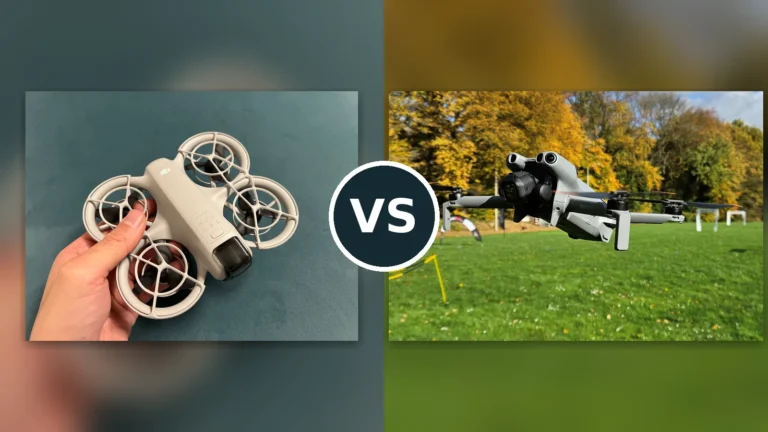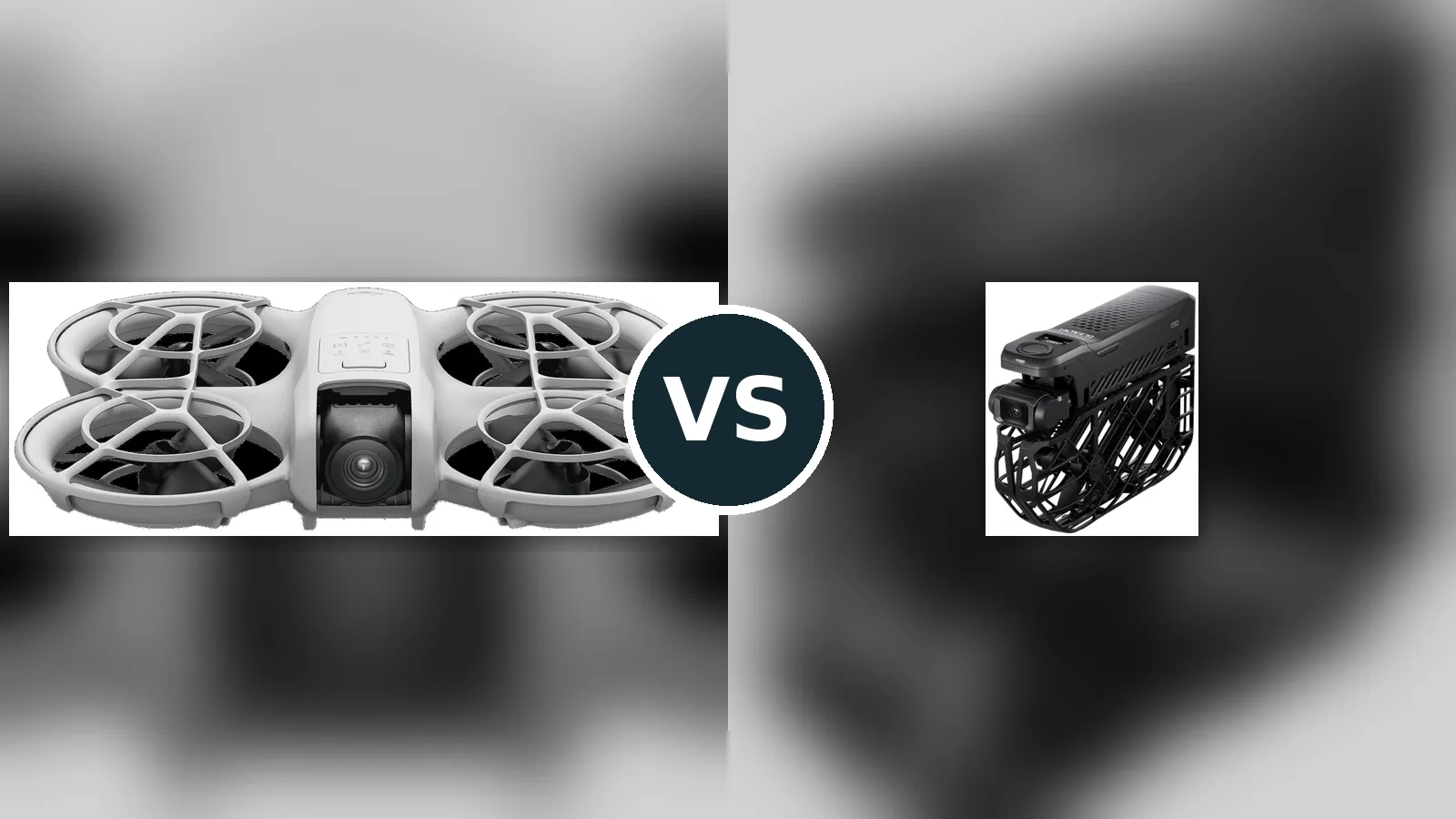
The dji neo vs hoverair x1 pro matchup is the most interesting fight in the selfie drone world right now, because both drones promise the same dream: great-looking footage of yourself with nobody behind the camera. The DJI Neo does it for $199 with a featherweight 135-gram body, palm takeoff, and the full weight of the DJI ecosystem behind it. The HOVERAir X1 PRO answers at $499 with 4K/60fps HDR video, a two-axis gimbal, 42 km/h follow speeds, and tracking modes built for skiers and cyclists. We compared the camera, flight performance, intelligent features, and complete kit value so you can pick the flying camera that matches how you actually create.
Affiliate disclosure: As an Amazon Associate I earn from qualifying purchases. This page contains affiliate links. If you buy through them, we may earn a commission.
X1 PRO for action. Neo for value.
HOVERAir X1 PRO wins on pure capability: 4K/60fps HDR, a two-axis gimbal, 42 km/h subject tracking, Level 5 wind resistance, and rear collision sensing make it the better flying camera. DJI Neo wins on value and simplicity: it costs less than half as much, weighs just 135 g, launches from your palm with zero setup, and plugs into the biggest drone ecosystem on earth. Camera: X1 PRO. Tracking speed: X1 PRO. Flight time: Neo, barely. Portability: tie. Price and value: Neo, by a mile.
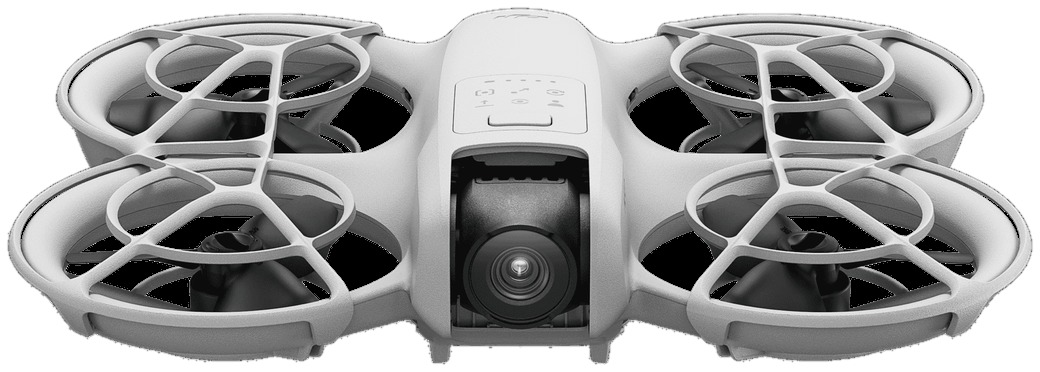
DJI Neo
For creators who want the cheapest, simplest way to get aerial selfies
- Palm takeoff with zero setup: press a button and it films you, then lands back in your hand
- Full DJI ecosystem: phone app, voice control, RC-N3, even FPV goggles all work with it
- Compromises: 4K/30 only, no obstacle sensing, and 22 GB of storage with no card slot
Check current price and available bundles on Amazon
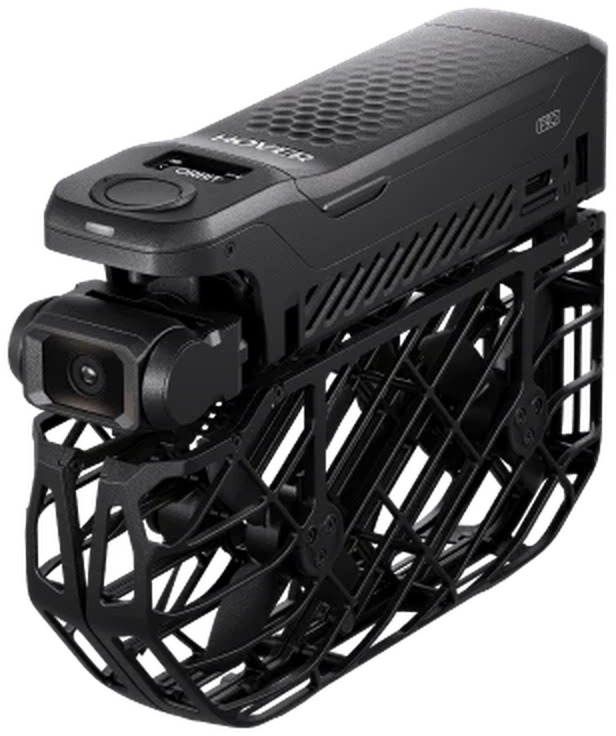
HOVERAir X1 PRO
For action sports creators who want the best autonomous follow-me footage
- 42 km/h follow speed with Ski and Cycling modes tuned for real sports movement
- Two-axis gimbal plus EIS and native 2.7K/60 vertical video for social platforms
- Compromises: $499 price, no GPS, and real-world battery life around 11 to 13 minutes
Check current price and available bundles on Amazon
DJI Neo or HOVERAir X1 PRO? Check the live price for each before you decide:
Which drone fits your flying?
Start with your main use case. The best choice should solve your needs, without charging you for features you will rarely use.
The dji neo vs hoverair x1 pro choice starts with an honest question: how much do you want to think about the drone while you are using it? The Neo is the closest thing to a point-and-shoot flying camera. You pull it out of a jacket pocket, set it on your palm, press the mode button, and it takes off, films you, and lands back in your hand. There is no controller to charge, no phone mount to fiddle with, and no settings menu standing between you and the shot. For family weekends, travel vlogs, and casual social clips, that frictionlessness is the whole product, and it is why the Neo keeps winning over people who never thought of themselves as drone pilots.
The X1 PRO asks a little more of you and gives a lot more back. It is the drone you buy when the activity is the point: skiing a line, riding a trail, running a route. Its tracking brain was trained on real cycling and skiing movement, it can chase you at 42 km/h with bursts to 60, and the two-axis gimbal keeps the horizon level while you bounce around underneath it. It folds flat, shrugs off Level 5 winds, and shoots 4K/60 HDR that grades noticeably better than the Neo’s 4K/30. You pay $499 for that competence and you carry a slightly bigger, heavier drone to get it, but when the shot matters, the difference is obvious on screen.
There is also an ecosystem question hiding in this comparison. The Neo is a DJI drone, which means it talks to the DJI Fly app, works with the RC-N3 and even FPV goggles, and benefits from DJI’s enormous support network and accessory universe. The X1 PRO comes from Zero Zero Robotics with its own app and its own optional Beacon controller, a smaller but tightly focused ecosystem built entirely around autonomous flight. Neither approach is wrong. One is a camera company that made flying effortless, and the other is a robotics company that made tracking brilliant. Your choice says more about how you create than about which spec sheet looks better.
Choose DJI Neo if…
- Price and simplicity matter most to you.
- You mostly shoot casual vlogs, travel clips, family moments, and social posts.
- You want the lightest possible kit: 135 g with no controller required.
- You can accept 4K/30 video, no obstacle sensing, and 22 GB of fixed storage.
Choose HOVERAir X1 PRO if…
- Tracking performance is your top priority.
- You film action sports: skiing, cycling, running, skating.
- You want 4K/60 HDR, a two-axis gimbal, and native 2.7K vertical video.
- You can accept the $499 price, no GPS, and shorter real-world battery life.
DJI Neo vs HOVERAir X1 PRO: The Specs That Actually Matter
Compare the exact battery, controller and bundle versions you intend to buy.
| Feature | DJI Neo | HOVERAir X1 PRO |
|---|---|---|
| Best suited to | Casual vlogs, travel, family moments, and social content | Action sports, cycling, skiing, and solo creator tracking shots |
| Takeoff weight | Approx. 135 g | 191.5 g (193.1 g with ND filter fitted) |
| Dimensions | 130 x 157 x 48.5 mm; does not fold | Folded: 105 x 149 x 34 mm; unfolded: 173 x 149 x 39 mm |
| Sensor and lens | 1/2-inch CMOS, 12MP, f/2.8, 117.6-degree field of view | 1/2-inch CMOS, 12MP, f/2.8, 104-degree field of view |
| Video modes | 4K/30fps, 1080p/60fps, 75 Mbps MP4 | 4K up to 60fps, 1080p up to 120fps, HDR (8-bit) |
| Photo resolution | 12MP JPEG (4:3 or 16:9) | 12MP JPEG |
| Stabilization | Single-axis mechanical tilt gimbal plus RockSteady and HorizonBalancing EIS | SmoothCapture 2.0: two-axis mechanical gimbal (tilt, roll) plus EIS and horizon leveling |
| Vertical capture | 1080p vertical video (9:16) | Native 2.7K/60fps vertical video |
| Obstacle sensing | None; DJI states the Neo does not support obstacle avoidance | Rear ToF proximity sensors (rear active collision detection) |
| Positioning | GNSS (GPS, GLONASS, Galileo, BeiDou) plus downward vision and infrared | Visual-inertial odometry; no GNSS |
| Rated flight time | Approx. 18 minutes (17 with propeller guards fitted) | 16 minutes |
| Real-world flight time | Not tested by us; reviewers report roughly 14 to 16 minutes of mixed flying | Not tested by us; reviewers report roughly 11 to 13 minutes of mixed flying |
| Max horizontal speed | 16 m/s (Manual mode); 8 m/s (Sport mode) | 11.7 m/s (42 km/h) |
| Max follow and tracking speed | Not specified; tracking modes are low-speed cinematic moves | 42 km/h auto-follow; 60 km/h instantaneous burst |
| Wind resistance | 8 m/s (Level 4) | 10.7 m/s (Level 5) |
| Transmission range | DJI O4, up to 10 km with compatible RC; 50 m via phone Wi-Fi | Phone app up to 500 m; optional Beacon up to 1000 m |
| Controller options | None needed; DJI Fly app, RC-N3, Goggles 3 with RC Motion 3, FPV Remote Controller 3 | None needed; HOVER app, optional Beacon controller |
| Internal storage | 22 GB, no microSD slot | 32 GB plus microSD slot up to 1 TB |
| Battery and charging | 1435 mAh (10.5 Wh); hub charges three in about 60 minutes | 1920 mAh smart battery; about 45 minutes with charging hub |
| Launch price | $199 drone only; $289 Fly More Combo | $499 Standard bundle |
Manufacturer ratings are lab figures; real-world flight time is lower. Prices shown are launch prices; check the live Amazon listing for the current price. Last verified: October 20, 2026.
Seen enough specs? Check the live price for each drone:
DJI Neo vs HOVERAir X1 PRO: Five Differences That Matter
For each category, here is the difference, its practical impact and which buyer benefits.
1. Camera quality and creative flexibility
Edge: X1 PROBoth drones use a 1/2-inch 12MP sensor, but the X1 PRO does far more with it. It records 4K at up to 60fps with HDR, shoots 1080p at 120fps for genuine slow motion, and its two-axis mechanical gimbal (tilt plus roll) works with electronic stabilization and horizon leveling to keep footage smooth while you move fast over rough ground. The 2.7K/60fps vertical mode is native rather than a crop, which matters for anyone publishing to TikTok, Reels, or Shorts. Reviewers consistently describe its footage as the best in the self-flying camera class, with the extra frame rate and HDR giving colorists real headroom.
The Neo tops out at 4K/30fps with a single-axis tilt gimbal backed by RockSteady and HorizonBalancing. In calm conditions its footage is genuinely good: stable, sharp enough, with pleasant DJI color science. But 30fps is a hard ceiling, there is no slow motion worth using, and the ultra-wide 117.6-degree lens shows its limits in low light and fine detail. For social clips viewed on phones, most viewers will never notice the gap. For anyone who grades footage or crops in, the X1 PRO’s 60fps and HDR pull clearly ahead.
2. Portability and travel
Edge: TieThe Neo weighs 135 g and needs nothing else. No controller, no phone mount, no bag of accessories. It is the smallest complete flying camera system you can buy: drone, battery, and your palm. Toss it in a jacket pocket and forget it until the moment arrives. The fixed full-coverage propeller guards add some bulk compared with folding drones, but at 130 by 157 mm it is still smaller than a paperback book, and there is nothing to unfold, nothing to lose.
The X1 PRO folds in half like closing a book, collapsing to a flat 105 by 149 by 34 mm slab that slides into a back pocket. At 191.5 g it is heavier than the Neo, but it is the more packable shape, and the enclosed cage design means there are no separate guards to forget at home. Both drones sit under 250 g, so both dodge FAA registration for recreational pilots in the US and both carry the EU C0 class mark. The honest difference is philosophy: the Neo is grab-and-go minimalism, the X1 PRO is pack-flat intentionalism.
3. Tracking and intelligent flight
Edge: X1 PROThis is the X1 PRO’s home turf. It was designed from the ground up as an autonomous tracking camera, with 15-plus flight modes including Follow, Side Follow, Dolly Track, Orbit, Bird’s Eye, and sport-specific Ski and Cycling modes trained on real movement data. It follows at up to 42 km/h and can burst to 60 km/h to stay with you, with rear ToF sensors watching its back while it tracks. OmniTerrain capability lets it hold position over snow, water, and cliffs, the exact places where visual positioning normally struggles and most drones get nervous.
The Neo’s autonomy is simpler and, for casual use, arguably smarter. Palm takeoff, AI subject tracking, and six QuickShots (Follow, Expanse, Circle, Rocket, Spotlight, plus a Custom slot) cover the classic selfie moves with zero learning curve. Voice control and phone-based virtual sticks extend it a little further. But the tracking is built for walking-speed subjects and cinematic moves, not for chasing a cyclist down a trail, and with no obstacle sensing at all, every autonomous flight needs an open area and your full attention.
4. Battery life and time in the air
Edge: NeoDJI rates the Neo at 18 minutes, or 17 with the propeller guards fitted, and reviewers land around 14 to 16 minutes of real mixed flying. That is enough for a solid handful of QuickShots or a relaxed follow session, and the two-way charging hub refills three batteries in about an hour while doubling as a power bank for your phone. The batteries are small, light, and cheap enough that carrying three feels like nothing.
The X1 PRO is rated at 16 minutes, but its hungrier motors and heavier airframe pull real-world flight times down to roughly 11 to 13 minutes in reviewer testing. The 1920 mAh smart battery charges in about 45 minutes with the hub, and spare batteries are a practical necessity rather than a luxury: plan on two or three for a real day of shooting. The microSD slot at least means storage never ends your day early, which is more than the Neo’s fixed 22 GB can promise.
5. Value of the complete kit
Edge: NeoThe Neo launched at $199 for the drone alone, and street prices have dipped as low as $139. The $289 Fly More Combo adds three batteries, a charging hub, and the RC-N3 controller, which unlocks the full 10 km O4 range and manual flight for pilots who want it. Either way, this is the cheapest route to a genuinely good flying camera from a major brand, and the DJI ecosystem means accessories, tutorials, and support are everywhere you look.
The X1 PRO starts at $499 for the Standard bundle with one battery and a USB-C cable, and the price climbs fast from there: $889 for the Cycling Combo and $949 for the Fly Joy Combo, plus the optional Beacon for extended range. You get a meaningfully better camera and tracker for the money, but you are paying two and a half times the Neo’s price. For a solo creator whose income depends on follow-me footage, that math works. For everyone else, it is a lot to spend on a second camera.
DJI Neo vs HOVERAir X1 PRO: What You Gain and Give Up
DJI Neo
Reasons to choose it
- True zero-setup flying: palm takeoff, QuickShots, and landing back in your hand with no controller or phone required
- A 135 g featherweight with full-coverage propeller guards included, comfortably sub-250 g for easy regulations
- The deepest ecosystem in drones: DJI Fly app, voice control, RC-N3, Goggles 3, and FPV Remote Controller 3 all work with it
- GNSS positioning plus up to 10 km of O4 range with a controller, far beyond any selfie drone norm
- Unbeatable price: launched at $199 and routinely discounted lower
Reasons to reconsider
- 4K/30fps ceiling with a single-axis gimbal: no real slow motion, no HDR, limited grading latitude
- Zero obstacle sensing, so every flight needs an open area and your full attention
- Fixed 22 GB storage with no microSD slot: offload regularly or run dry mid-trip
- Level 4 wind resistance (8 m/s) limits it on breezy days at the beach or on ridges
- Tracking is walking-pace; it cannot chase fast action
HOVERAir X1 PRO
Reasons to choose it
- Best-in-class autonomous tracking: 42 km/h follow, 60 km/h burst, plus Ski and Cycling modes
- 4K/60fps HDR with a two-axis gimbal, EIS, horizon leveling, and native 2.7K/60 vertical video
- Folds flat to a pocketable slab inside a protective cage; no loose guards to lose
- Level 5 wind resistance and OmniTerrain for snow, water, and cliffs
- 32 GB internal storage plus microSD up to 1 TB, with rear ToF collision sensing
Reasons to reconsider
- $499 starting price, two and a half times the Neo, with pricey combos above it
- No GNSS: visual-only positioning can drift in featureless or windy environments
- Real-world flight time of roughly 11 to 13 minutes makes spare batteries close to mandatory
- Smaller ecosystem: HOVER app and optional Beacon only, no FPV or manual-controller culture
- Heavier at 191.5 g with a bigger footprint in the air
Check the bundle, not just the drone
The drone on the box is only half the purchase. Run through this checklist before you tap buy.
- Controller: The Neo needs nothing to fly, but adding the RC-N3 (included in the $289 Fly More Combo) unlocks the full 10 km range and manual flight, while the Goggles 3 and Motion 3 turn it into a tiny FPV drone. The X1 PRO also flies controller-free; the optional Beacon extends phone-app range to 1000 m and adds a live data display, worth it if you ride far from your launch point.
- Batteries: One battery is a teaser. For the Neo, the three-battery Fly More Combo is the sensible buy, and its hub doubles as a phone power bank. For the X1 PRO, budget at least one spare: 11 to 13 real-world minutes per pack disappears fast on a ski day.
- Storage: The Neo’s 22 GB holds about 40 minutes of 4K/30, then you are offloading over Wi-Fi at up to 25 MB/s. The X1 PRO gives you 32 GB plus a microSD slot up to 1 TB; buy a fast U3 card once and stop thinking about it.
- Listing: On Amazon, confirm the exact bundle in the title before ordering. The Neo’s base listing is the controller-free drone; similarly named combos add batteries or controllers. For the X1 PRO, make sure you are getting the PRO and not the PROMAX (8K) or the original X1 (2.7K); the names are confusingly close.
- Local requirements: Both drones are sub-250 g with C0 class marks, which keeps recreational rules light in the US and EU, but neither is exempt from airspace rules. Check your aviation authority’s current registration, Remote ID, and airspace requirements before your first flight, since rules change.
- Price timing: The Neo launched at $199 and has sold as low as $139; the X1 PRO launched at $499 and its combos move around too. If the price looks high today, wait for a sale event: both drones get discounted regularly, and launch prices are reference points, not what you should necessarily pay.
The right choice comes down to action versus budget.
If your weekends involve skis, bikes, boards, or trails, buy the HOVERAir X1 PRO. Its tracking is genuinely the best in this class: faster, smarter, and steadier, with 4K/60 HDR footage and a two-axis gimbal that make the results look like you hired a drone crew. It is expensive and its short battery life will annoy you, but nothing else at this size follows action like it does. If you want aerial selfies without the commitment, buy the DJI Neo. It costs less than half as much, weighs 135 g, launches from your palm, and leans on the best drone ecosystem on earth. Its camera is good enough for social and its simplicity is unmatched. Most people reading this dji neo vs hoverair x1 pro comparison should buy the Neo and spend the $300 they saved on literally anything else.
Still deciding?
Is the HOVERAir X1 PRO worth the extra $300 over the DJI Neo?
If you film action sports, yes. The 4K/60 HDR camera, two-axis gimbal, 42 km/h tracking, and Level 5 wind resistance are meaningfully better tools for skiing, cycling, and running. If you shoot casual vlogs and travel clips, no: the Neo’s 4K/30 and palm-launch simplicity cover that for $199, and the $300 stays in your pocket.
Which drone is better for beginners?
The Neo. It is cheaper, lighter, and simpler, and DJI’s app and support network hold your hand through the learning curve. The X1 PRO is also easy to launch, but its price and shorter battery life punish experimentation, and its best features only matter once you have action worth tracking.
Which is better for skiing, cycling, and running?
The X1 PRO, comfortably. Its Ski and Cycling modes, 42 km/h follow speed, and 60 km/h burst were built for exactly this kind of movement, while the Neo’s tracking tops out at walking-pace cinematic moves. If your sport is the subject, this is the X1 PRO’s reason to exist.
Can either drone fly without a phone or controller?
Yes, both. The Neo launches from your palm with a button press, runs its QuickShots autonomously, and even takes voice commands. The X1 PRO launches the same way and runs its flight modes from onboard buttons. A phone app adds a live view and deeper settings for both, but neither drone requires one to get airborne.
Which bundle should I buy?
For the Neo, the $289 Fly More Combo with three batteries, the charging hub, and the RC-N3 is the smart buy if you ever want range or manual flight; otherwise the $199 base drone is a complete flying camera on its own. For the X1 PRO, the $499 Standard bundle is enough to start; add the Beacon only if you need the 1000 m range, and buy spare batteries before any other accessory.
How were these drones compared?
This is a research-based comparison: we compiled specifications from DJI’s and HOVERAir’s official spec pages, launch announcements, and documentation, then cross-checked them against independent reviews from iFixit, Loiter Point, DroneXL, Drone Nerds, and others. We did not fly either drone for this article, so rated figures are the manufacturers’ lab numbers and real-world figures are attributed to the reviewers who measured them. See the methodology section below for the full source list.
How this comparison was prepared
This is a research-based comparison. We did not fly either drone for this article, and we do not imply otherwise. Every specification in the table above comes from the manufacturers’ official documentation: DJI’s Neo support and spec pages for the Neo’s weight, camera, flight, and transmission figures, and HOVERAir’s official X1 PRO and PROMAX spec pages for the PRO’s camera, tracking, and design figures, with bundle contents and launch pricing cross-checked against the DJI Store, HOVERAir’s store, and major retailers. Where this article mentions real-world flight times, those figures are attributed to independent reviewers who measured them: roughly 14 to 16 minutes per battery for the Neo in mixed flying, and roughly 11 to 13 minutes for the X1 PRO. Amazon ASINs were verified by matching each ASIN against the exact product title across Amazon-indexed listing data and third-party price trackers before any affiliate link was written; no tagged affiliate URL was ever opened or clicked during research.
Sources and verification
- DJI Neo official specifications and FAQ (dji.com support, accessed October 20, 2026): weight, dimensions, camera, flight, transmission, and battery figures
- DJI Store Neo product page (store.dji.com, accessed October 20, 2026): launch pricing, bundle contents, and box contents
- HOVERAir X1 PRO and PROMAX official specifications (hoverair.com and global.hoverair.com, accessed October 20, 2026): sensor, video, stabilization, tracking, and design figures
- HOVERAir lens system page (hoverair.com): sensor size, aperture, and field of view details
- HOVERAir battery care and warranty guide (support.hoverair.com): battery capacity, charging, and cycle figures
- B and H Photo Video HOVERAir X1 PRO specifications: weight, dimensions, storage, and GNSS status
- Drone Nerds HOVERAir X1 PRO and PROMAX overview: feature and pricing context
- Maison du Drone X1 PRO and PROMAX full review: real-world flight time observations
- iFixit DJI Neo device page: teardown-verified battery, sensor, and connectivity specs
- Loiter Point DJI Neo review: real-world battery and handling notes
- DroneXL DJI Neo coverage: launch pricing, controller compatibility, and deal history
- MyDearDrone DJI Neo review and follow-me drone roundup: comparative tracking context
- ASIN verification: DJI Neo base listing (B07FTPX71F, controller-free) and HOVERAir X1 PRO Basic Combo (B0DGTFP57S) confirmed against Amazon-indexed titles, model numbers, and price-tracker records
Last verified: October 20, 2026. Bundle availability, pricing, and specifications may vary by region and version. Prices in this article are launch reference prices; check the live Amazon listing for the current price.