
Understanding the parer meaning requires looking at both the culinary world and the nuances of language. Often, people encounter this term when browsing kitchen supplies or trying to identify a specific tool in a drawer. At its core, the word identifies a specific type of implement designed for precision tasks.
Whether you are curious about the linguistic roots of the word or simply trying to master your kitchen equipment, recognizing how this term functions across different contexts will help clarify your vocabulary. By exploring the definition and practical application of this tool, you will gain a clearer perspective on why it remains a staple in professional and home kitchens alike.
Defining the Parer in Culinary Contexts
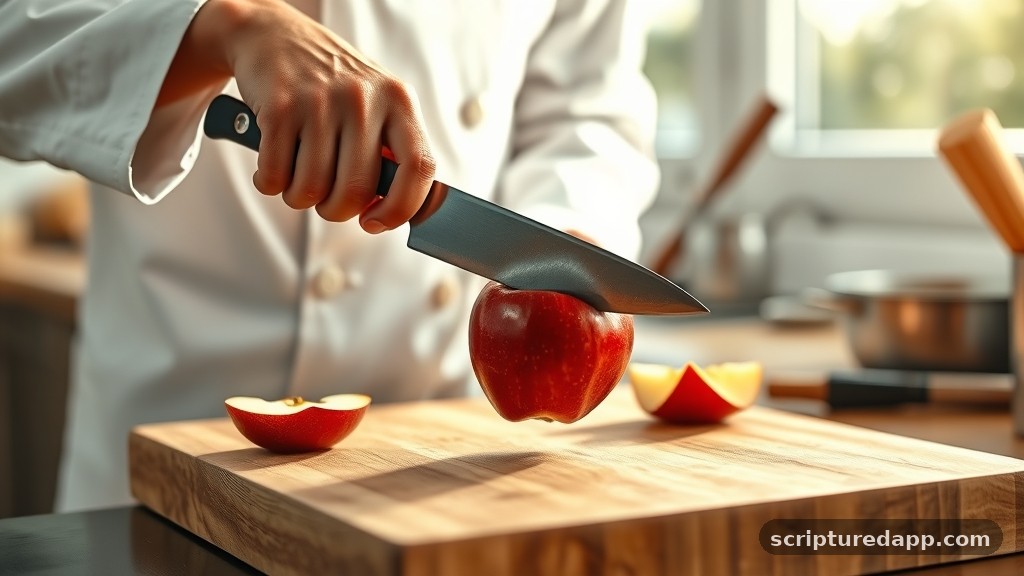
The primary association with the term is a small sharp instrument, specifically a paring knife. If you look up the word in a standard dictionary, you will find that it functions as a noun describing an object used to pare, or trim, the outer layer of something. In the kitchen, this refers to a knife used for delicate work where a larger chef’s knife would be too cumbersome.
When you are paring fruits or processing vegetables, you need a tool that offers total control. A paring knife typically features a blade length of three to four inches, which allows for intricate movements.
You might use it to remove the eyes from potatoes, hull strawberries, or create decorative garnishes. Because the blade is short and maneuverable, it allows the user to slice with high accuracy, making it an essential piece of gear for anyone who enjoys cooking from scratch.
The Linguistic Roots and Variations
Beyond the kitchen, the word has interesting etymological ties. It comes from the Old French “parer,” which means to prepare, deck, or trim.
This historical context explains why the word is used in such a diverse range of scenarios. While we mostly use it today to describe a tool, it retains the essence of refinement and preparation.
It is helpful to distinguish between the tool itself and the act of paring. When you “pare” something down, you are reducing it by cutting away the outer edges. This is why a vegetable parer or a potato peeler is often lumped into the same category as a paring knife.
They all serve the same functional purpose: removing the skin or surface layer of an item. Understanding these subtle definitions helps you communicate more effectively when discussing kitchen tools or even when encountering the term in literature.
Comparing Paring Tools
Not all tools meant for trimming are created equal. While many people use the term interchangeably, there are distinct differences between a dedicated knife and a swivel-style peeler. Each has its own strengths depending on the task at hand.
| Tool Type | Primary Function | Best For |
|---|---|---|
| Paring Knife | Manual slicing and peeling | Precision cuts and decorative work |
| Swivel Peeler | Rapid surface removal | Peeling long vegetables like carrots |
| Bird’s Beak Knife | Curved precision | Tourné cuts and peeling round fruit |
As shown in the table, the type knife you choose dictates the outcome of your prep work. A sharp knife is essential for safety, as a dull blade is more likely to slip and cause injury. Investing in high-quality parers ensures that your work is efficient and consistent.
Beyond the Kitchen: Other Meanings
While the culinary definition is the most common, the term sometimes appears in other contexts. For instance, in older English, it could refer to anyone or anything that trims.
You might occasionally see references to a manicurist who trims fingernails or shapes cuticles, essentially “paring” away excess tissue. While this is less common today, it highlights the broad utility of the word.
In some regions, the term might be confused with other phonetically similar words. However, the core meaning remains tied to the concept of trimming or reducing. If you are ever unsure about the context, look for clues about the object being reduced.
If the context involves food, it is almost certainly referring to a blade or a peeler. If it involves aesthetics or grooming, it likely refers to the act of cutting or shaping.
The Importance of Sharpness
A key aspect of the parer meaning is the necessity of a fine edge. Whether you are using a professional-grade blade or a simple peeler, the sharpness determines the quality of your output. When you are carefully removing the peel from an apple, you want the tool to glide through the skin without bruising the flesh underneath.
If you find that your tools are tearing the skin rather than slicing through it, they are likely dull. Maintaining your blades is a ritual that every home cook should master.
Regular honing with a steel or occasional sharpening with a stone will keep your equipment in top condition. This isn’t just about efficiency; it’s about the safety of your hands and the integrity of your ingredients.
Addressing Topical Gaps
Many resources define the tool but fail to explain why it is distinct from other knives. One common confusion is the difference between a paring knife and a utility knife. A utility knife is usually slightly larger and can handle more diverse tasks, whereas a paring knife is strictly for precision.
Why is the paring knife the most essential small tool?
The paring knife is considered the most essential small tool because it bridges the gap between raw ingredient and ready-to-cook state. Unlike a chef’s knife, which is designed for broad, sweeping cuts on a cutting board, the paring knife is designed to be held in the hand. This allows the cook to rotate the item being prepared, such as an orange or an onion, against the blade. This ergonomic advantage makes it indispensable for tasks that require high levels of manual dexterity and control.
Synonyms and Related Vocabulary
When you are building your vocabulary, it is useful to know the various synonyms that can replace this word. Depending on the sentence, you might use “peeler,” “slicer,” or “trimmer.” Each of these words carries a slightly different connotation, but they all orbit the same central concept of removal.
- Peeler: Specifically used for removing skin from produce.
- Trimmer: A more general term for any tool that cleans up edges.
- Blade: Refers to the metal part of the tool rather than the handle.
- Cutter: A broad term that can apply to almost any sharp implement.
Using the right word helps clarify your intent. If you tell someone to get you a “cutter,” they might bring you a pair of scissors. If you ask for a “parer” or a “paring knife,” they know exactly what you need for your kitchen tasks.
Cultural and Linguistic Nuances
The term “parer” and its associated verbs appear across various languages, often sharing a common Latin root. In French, “parer” can mean to prepare or to ward off, which is a fascinating linguistic evolution. When you are paring a vegetable, you are essentially preparing it for the pot.
This cross-cultural overlap demonstrates how deeply the concept of “trimming” is embedded in human activity. Whether you are in a professional kitchen in Paris or a home kitchen in the United States, the act of using a small blade to refine an ingredient is universal. You can find more information on the history of culinary tools at the Smithsonian Institution, which provides a wealth of historical context on how these implements evolved over centuries.
How to Choose the Right Tool
When you go to get a new tool, consider the handle material and the tang. A full-tang blade, where the metal extends through the handle, is generally more durable and balanced. For most people, a plastic or composite handle is perfectly fine, but some prefer wood for the aesthetic and grip.
Think about the specific tasks you perform most often. If you find yourself doing a lot of peeling, a dedicated peeler is better than a knife.
If you prefer to do everything with one tool, a high-quality paring knife is the best investment. You do not need a massive set of blades; having one or two high-quality pieces is usually enough for most home cooking needs.
The Evolution of Kitchen Implements
Kitchen tools have changed drastically over the last hundred years. In the past, people might have used a simple fixed-blade knife for everything. Today, we have specialized tools for every conceivable task, from strawberry hullers to citrus zesters.
Despite this proliferation of gadgets, the humble parer remains a constant. Its simplicity is its greatest strength. It does not require electricity, it is easy to clean, and it lasts for years if you take care of it.
This longevity is why the term remains relevant in modern cooking discussions. It represents a connection to traditional methods of food preparation that prioritize skill and manual control over automated convenience.
Common Questions About Parer Meaning
What does a parer do in the kitchen?
A parer, typically in the form of a paring knife, is used for intricate tasks like peeling, trimming, and slicing small fruits and vegetables. It allows for high precision that larger knives cannot provide, making it ideal for tasks that require holding the item in your hand.
Is there a difference between a parer and a peeler?
Yes, while both are used for removing the outer layer of produce, a parer is a sharp knife that can perform many cutting tasks, whereas a peeler is a specialized tool with a blade set at a fixed distance, designed specifically for rapid skin removal.
What does the word parer mean in a non-culinary context?
While less common, it can refer to any tool or person that trims or reduces something. In historical or niche contexts, it might describe someone who grooms or shapes items, essentially “paring” away excess material to achieve a refined or finished look.
How do you properly maintain a parer?
To keep your tool effective, wash it by hand rather than in a dishwasher to prevent the edge from dulling. Regularly hone the blade with a sharpening steel to keep it aligned, and use a whetstone or sharpening service once or twice a year to restore the edge.
Final Thoughts on Culinary Vocabulary
Mastering the parer meaning is more than just a lesson in definitions; it is about understanding the tools that facilitate our daily lives. Whether you are preparing a simple meal or working on a complex dish, the language we use helps us appreciate the precision involved in cooking. By recognizing the role of these small but mighty instruments, you can improve your efficiency and confidence in the kitchen.
Take a moment to inspect your own drawer and see how many of these tools you have on hand. If you find yourself struggling with prep work, it might be time to upgrade your collection or simply give your existing knives a good sharpening.
There is a quiet satisfaction in using the right tool for the job. We invite you to explore your kitchen with new eyes and share your favorite prep techniques with others who appreciate the art of fine cooking.