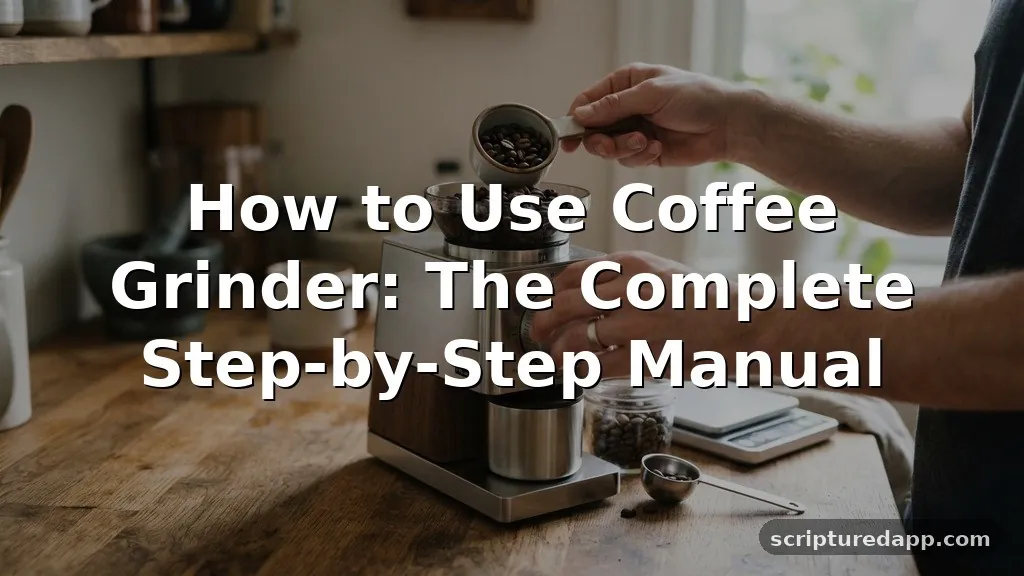

Mastering how to use coffee grinder equipment properly transforms a mundane morning routine into a craft that unlocks vibrant aromas and complex flavor notes hidden inside roasted beans. Taking control of particle size and extraction variables allows home enthusiasts to elevate their daily cup far beyond what pre-ground coffee ever delivers.
Understanding the mechanics behind bean reduction, Burr calibration, and extraction dynamics ensures every batch yields maximum flavor extraction and minimal bitterness.
Selecting and Preparing Your Equipment
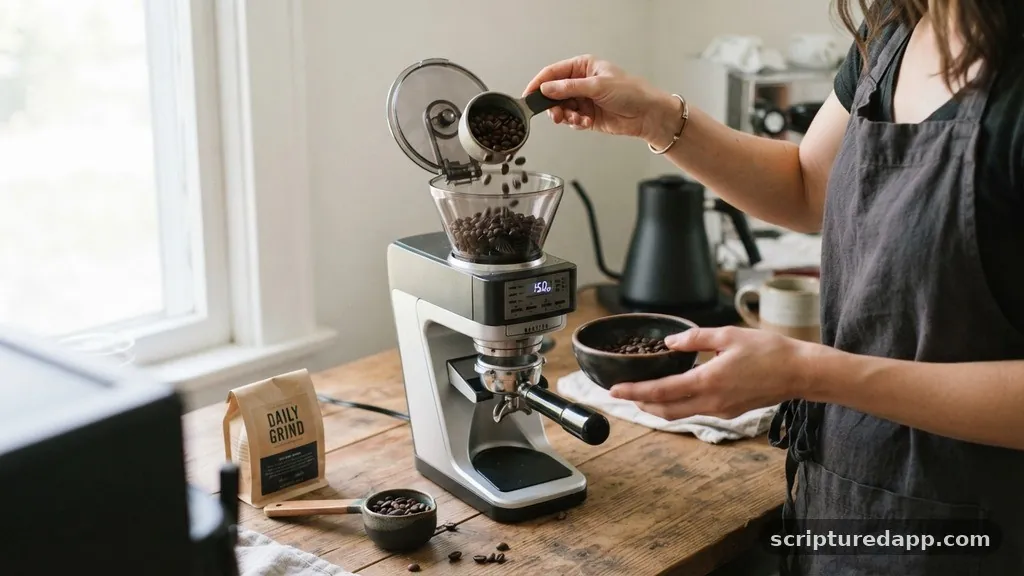
Preparing the right equipment before starting the milling process ensures a smooth workflow and prevents inconsistent extraction. Whether operating a manual hand crank or a motorized appliance, setting up the workstation correctly is essential for optimal results.
Before adding any whole beans, inspect the hopper and the internal burrs to ensure no residual oils or old fragments remain from previous sessions. Stale residue negatively alters the flavor profile of fresh roasts, introducing rancid bitterness into an otherwise bright extraction.
- Clean out stale grounds using a specialized soft-bristled brush.
- Weigh out the exact mass of whole beans needed for the target brewing method.
- Ensure the catch cup or portafilter sits securely beneath the output chute.
- Check that the power cord or hand crank mechanism moves freely without obstruction.
When working with fresh batches, keeping the hopper lid closed during operation prevents volatile aromatic compounds from escaping prematurely into the kitchen air. Preserving these delicate fragrances directly enhances the aromatic complexity experienced during consumption.
Understanding Grind Size and Extraction Dynamics
The physical size of each pulverized particle dictates the rate at which water extracts soluble compounds from the roasted seed. Matching particle dimensions to the chosen extraction method prevents common flavor defects like sour under-extraction or bitter over-extraction.
| Brew Method | Particle Texture | Target Extraction Time |
|---|---|---|
| Cold Brew | Coarse (Sea Salt) | 12 to 24 Hours |
| French Press | Medium-Coarse (Sand) | 4 Minutes |
| Pour Over | Medium (Table Salt) | 3 Minutes |
| Espresso | Fine (Powdered Sugar) | 25 to 30 Seconds |
Fine particles possess a massive surface area relative to their volume, allowing pressurized water to pull out heavy oils and rich flavors rapidly. Coarser settings require prolonged contact time with water, making them ideal for immersion brewing styles where water surrounds the larger fragments gradually.
Operating Manual Versus Electric Models
Operating a manual hand crank requires physical effort and provides tactile feedback, whereas motorized units automate the rotation speed for quick convenience. Both categories offer distinct advantages depending on personal lifestyle, daily volume requirements, and budget constraints.
Manual devices excel in portability and quiet operation, making them popular among travelers and apartment dwellers who value minimal noise in the morning. These units rely on ceramic or stainless steel burrs turned by hand, which generates virtually zero frictional heat that could degrade delicate aromatic notes.
Electric alternatives prioritize speed and consistency, handling heavy daily workloads with push-button simplicity. High-end residential motors feature stepped or stepless adjustment collars, allowing micro-adjustments that help dial in demanding extraction parameters with pinpoint accuracy.
Weighing and Measuring Your Coffee Beans
Measuring ingredients by weight rather than volume guarantees repeatable results across multiple brewing sessions, compensating for natural variations in bean density and roast level. A digital kitchen scale is an indispensable tool for maintaining precision in any coffee routine.
The standard ratio for filter methods hovers around one gram of roasted material for every sixteen grams of water, though personal preference allows minor adjustments. Weighing the whole beans beforehand ensures zero waste and eliminates guesswork when loading the hopper.
Darker roasts tend to be less dense because the extended roasting process expands the cellular structure, while light roasts remain dense and compact. Relying on a volumetric scoop often leads to inconsistent extraction strengths, whereas a scale accounts for these structural differences instantly.
Executing the Grinding Process
Running the mechanism requires steady pacing and attention to detail to ensure uniform particle generation throughout the entire batch. Whether activating a motorized switch or turning a hand crank, maintaining smooth motion prevents uneven friction and heat buildup.
Pour the weighed beans steadily into the hopper while avoiding overfilling beyond the maximum capacity line to prevent motor stalling or binding. Allow the motor or hand crank to run until every single bean passes completely through the burrs, eliminating uncrushed fragments.
Tap the housing gently or run the anti-static feature if available to release any clinging dust particles stuck to the internal walls. Transfer the fresh output immediately into the brewing vessel to capture the peak aromatic profile before oxidation sets in.
Cleaning and Maintenance Best Practices
Maintaining cleanliness inside the mechanical housing prevents rancid oil buildup that ruins the taste of fresh beans over extended periods of time. Regular upkeep also preserves the sharpness of the cutting surfaces, ensuring consistent particle geometry for years of reliable service.
Users should perform a thorough deep clean every few weeks by disassembling the outer burr carrier and removing trapped chaff with a stiff brush. Avoid submerging motorized bases in water, wiping exterior surfaces with a damp cloth instead to protect sensitive electronic components.
Specialized cleaning pellets made from food-safe grains can also absorb trapped oils and stubborn residue without requiring complete mechanical disassembly. Running these cleaning tablets through the system periodically keeps the cutting edges performing at their absolute best.
Frequently Asked Questions
How do I choose the right particle size for my brew method?
Match the texture to your brewing equipment by observing contact time. Fast extraction methods like espresso need fine, powdery textures, while slow immersion styles like cold brew require coarse, chunky fragments to prevent bitter over-extraction.
Can I put flavored or oily beans in my burr mechanism?
Oily dark roasts and flavored coatings leave sticky residue that gums up internal burrs and attracts stale buildup. Clean the equipment more frequently if using these bean types, or dedicate a separate secondary unit specifically for flavored varieties.
Why does my coffee taste sour or bitter after processing?
Sourness indicates under-extraction caused by particles that are too coarse, while bitterness signals over-extraction from particles that are too fine. Adjust the adjustment collar incrementally finer or coarser to balance the extraction flavor profile.
How often should I clean my equipment?
Perform a quick brush-out of the chute and hopper weekly to remove loose chaff and residual dust. Conduct a deeper disassembly and cleaning every month to eliminate accumulated oils that cause rancid off-flavors.
Conclusion
Mastering how to use coffee grinder equipment unlocks the full potential hidden inside specialty roasts, elevating every morning routine. Applying proper techniques for sizing, weighing, and maintenance guarantees a consistently delicious experience in every cup you brew.
this coffee grinder guide this coffee grinder guide BestCoffeeGrindersHub.com Best Coffee Grinders Hub Best Coffee Grinders Hub best burr coffee grinder Best Coffee Grinders Hub guide Best Coffee Grinders Hub reviews BestCoffeeGrindersHub.com check out this buying guide bestcoffeegrindershub.com best burr coffee grinder Best Coffee Grinders Hub reviews Best Coffee Grinders Hub buying guide best coffee grinder guide coffee grinder buying tips how to choose the right coffee grinder BestCoffeeGrindersHub.com best manual coffee grinder 2026 best budget coffee grinder guide best budget coffee grinder guide Best Coffee Grinders Hub Best Coffee Grinders Hub buying guide coffee grinder reviews and ratings choosing the right grinder Best Coffee Grinders Hub Best Coffee Grinders Hub buying guide coffee grinder buying tips coffee grinder buying tips bestcoffeegrindershub.com