

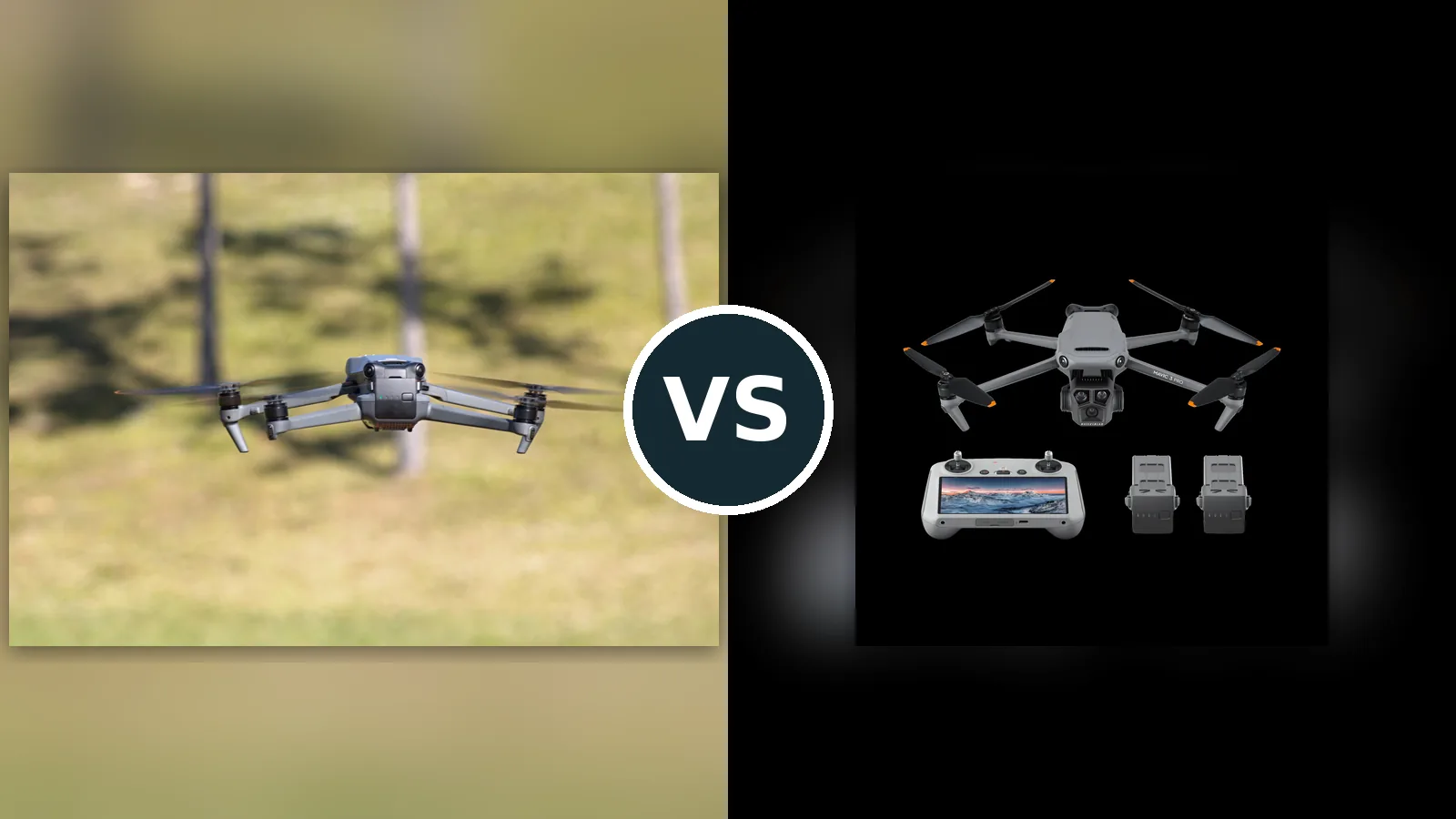
The dji mavic 3 classic vs dji mavic 3 pro question is the cleanest one camera or three cameras debate in the DJI lineup. The DJI Mavic 3 Classic keeps it simple: a single 4/3-inch 20MP Hasselblad camera at 24mm, with 5.1K at 50 fps, 4K at 120 fps, and 10-bit D-Log, in an 895 gram body rated at 46 minutes. The DJI Mavic 3 Pro builds on the same foundation and adds choice: the same Hasselblad wide camera, a 70mm medium tele camera with a 1/1.3-inch 48MP sensor, and a 166mm tele camera with a 1/2-inch 12MP sensor, 7x optical reach and 28x hybrid zoom, in a 958 gram body rated at 43 minutes. Everything else is close: O3+ transmission to 15 km, omnidirectional sensing, APAS 5.0, and the same flagship handling. So the decision is not about quality on the main camera. It is about how often you will reach for a longer lens, and whether that reach is worth the extra weight, complexity, and kit cost for the way you shoot.
Affiliate disclosure: As an Amazon Associate I earn from qualifying purchases. This page contains affiliate links. If you buy through them, we may earn a commission.
Classic for purists. Pro for reach.
DJI Mavic 3 Classic is the pick if you shoot mainly at 24mm and want the flagship Hasselblad image with the least weight and the simplest kit: same wide camera, longer rated flight time at 46 minutes. DJI Mavic 3 Pro is the pick if you regularly want a 70mm look or a 166mm tele view without landing to change aircraft: three focal lengths, more framing from a single position, at 958 grams and 43 minutes rated. Main camera quality is a tie. Framing flexibility is a clear Pro win.
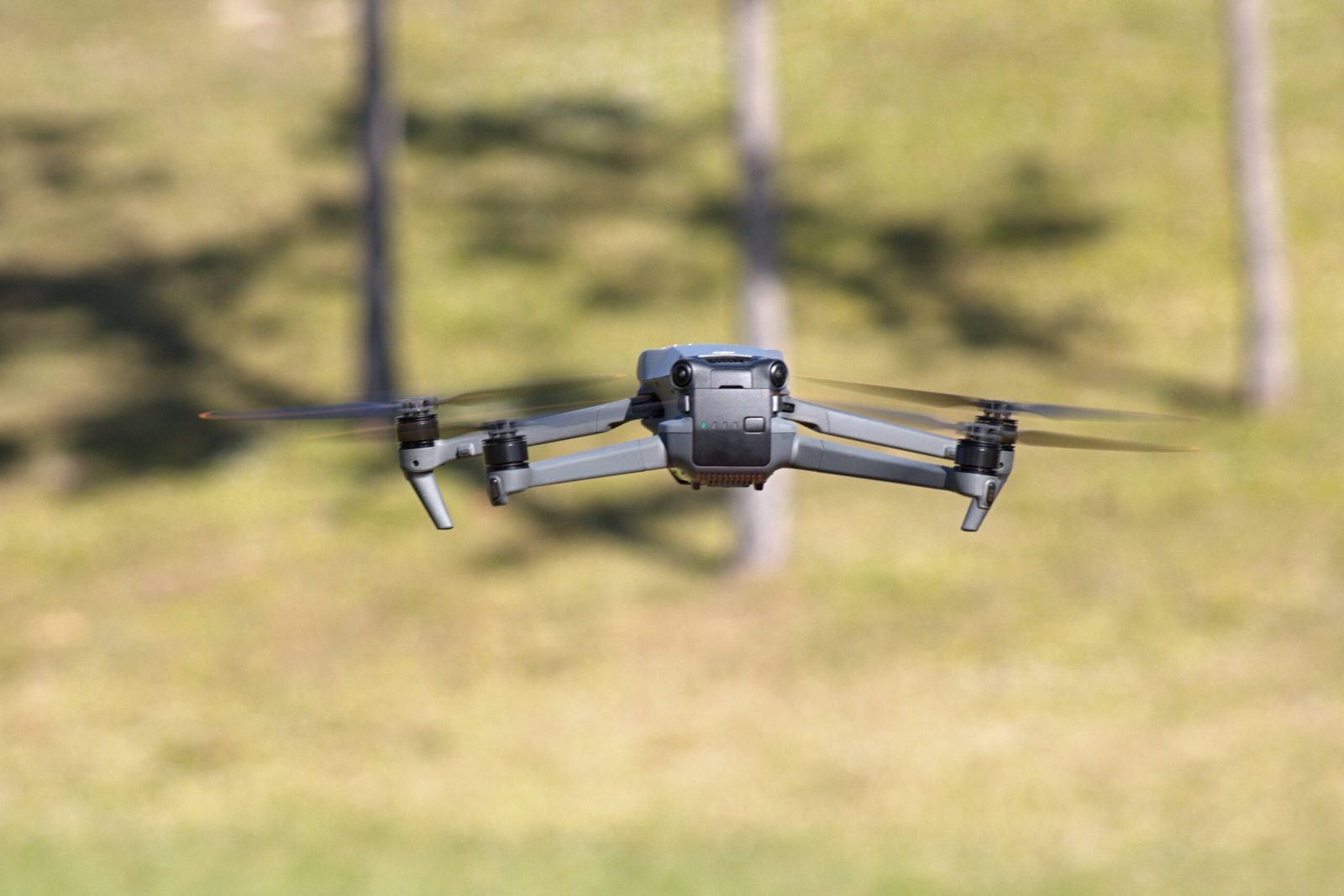
DJI Mavic 3 Classic
For pilots who live at 24mm and want the Hasselblad flagship without extra lenses
- Single 4/3-inch 20MP Hasselblad camera at 24mm with 5.1K at 50 fps and 4K at 120 fps
- 10-bit D-Log, 46 minutes rated, O3+ to 15 km, omnidirectional sensing with APAS 5.0
- Lightest and simplest in this pair at 895 grams, with RC-N1, DJI RC or DJI RC Pro options
Check current availability and bundle details on Amazon
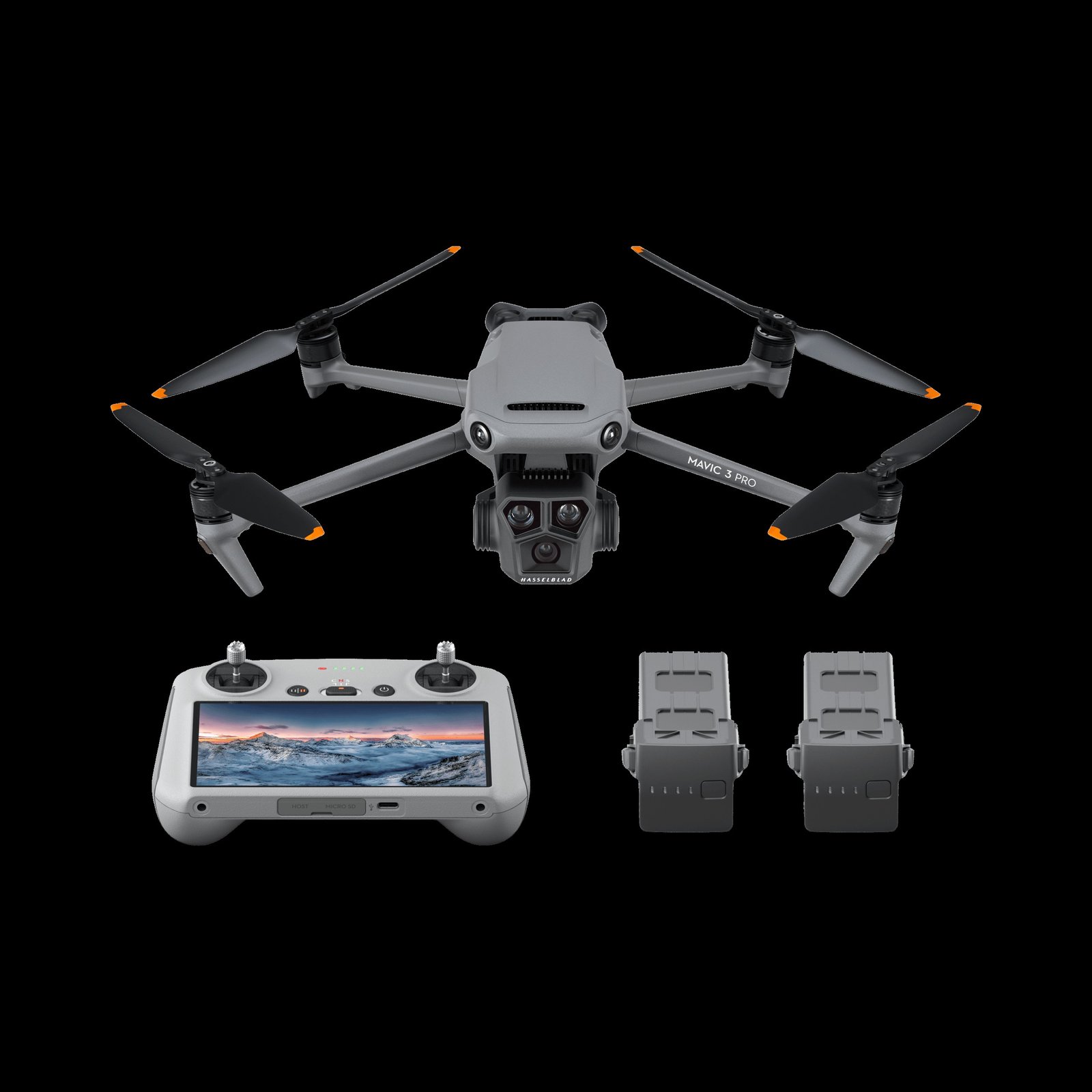
DJI Mavic 3 Pro
For creators who want wide, medium tele and long tele framing from one flight
- Triple system: 24mm Hasselblad wide, 70mm medium tele at 48MP, and 166mm tele with 7x optical zoom
- Wide camera matches the Classic for 5.1K and 4K slow motion, medium tele adds a strong 70mm look at 4K at 60 fps
- 43 minutes rated, O3+ to 15 km, omnidirectional sensing with APAS 5.0 and ActiveTrack support
Check current availability and bundle details on Amazon
Which drone fits your flying?
Start with your main use case. The best choice should solve your needs, without charging you for features you will rarely use.
Think about the last twenty flights you made or the twenty you plan to make. How many times did you wish the lens was longer while the drone was already in the air. If the honest answer is rarely, the Classic is speaking to you. Its single 24mm Hasselblad camera is the same wide tool the Pro leads with. Landscapes, property, travel, and most commercial video live at that focal length, and the Classic delivers it with less weight to carry, a longer rated flight time, and no decisions to make about which camera to use. Simplicity is not a compromise here. It is a workflow.
If the honest answer is often, the Pro changes what a single flight can produce. The 70mm medium tele camera gives you a tighter, more compressed view that flatters subjects, isolates detail, and looks different from the wide shots every other drone brings home. The 166mm tele camera lets you frame wildlife, distant architecture, and inspection details from a position that does not disturb the subject or put the aircraft close to a hazard. Wedding filmmakers use the medium tele for ceremony coverage from the back. Travel creators use it for layered mountain shots. Property and inspection pilots use the long tele to check a roof detail without flying into the tight space above it.
Weight and time are the counterweight. The Pro is 958 grams against 895 grams for the Classic, and its rated flight time is 43 minutes against 46 minutes. Neither gap is huge, and neither should scare a flagship buyer, but both point the same way. You pay a small daily tax in carry and endurance for cameras you may not open on a given flight. The Classic owner pays no such tax and also gives up nothing on the main camera. That is why this comparison rewards honesty more than ambition. Buy the lenses you will use weekly, not the lenses you imagine using once.
Choose DJI Mavic 3 Classic if…
- The 24mm wide view is your main language, for landscapes, property, travel and general commercial work.
- You want the longest rated flight time in the pair and the lightest flagship body at 895 grams.
- You prefer a simple one camera workflow with no switching, no extra modes, and a kit that stays focused.
- You can accept framing tighter by moving the drone or cropping, rather than carrying two extra cameras.
Choose DJI Mavic 3 Pro if…
- Multiple focal lengths are a real part of your shooting, especially the 70mm medium tele look.
- You shoot subjects you cannot approach closely, such as wildlife, events, or structures that need a safe standoff.
- You value 7x optical reach and 28x hybrid zoom for scouting and detail work from one position.
- You can accept 958 grams and 43 minutes rated in exchange for three cameras in a single aircraft.
The specs that actually matter
Compare the exact battery, controller and bundle versions you intend to buy.
| Feature | DJI Mavic 3 Classic | DJI Mavic 3 Pro |
|---|---|---|
| Best suited to | Wide angle flagship shooting with a simple, lighter kit | Creators and professionals who need wide, medium tele and long tele framing in one flight |
| Takeoff weight | 895 g | 958 g |
| Sensor & lenses | Single 4/3-inch CMOS 20MP Hasselblad camera, 24mm equivalent | Triple system: 4/3-inch 20MP Hasselblad 24mm, 1/1.3-inch 48MP 70mm medium tele, 1/2-inch 12MP 166mm tele |
| Video modes | 5.1K at 50 fps, 4K at 120 fps | Wide camera 5.1K at 50 fps and 4K at 120 fps, medium tele 4K at 60 fps, tele camera modes for long reach framing |
| Color & codecs | 10-bit D-Log, H.264 and H.265 workflows | 10-bit color workflows on the camera system, check the exact mode per camera in DJI documentation, ProRes is a Cine version feature and is not claimed for the standard Pro here |
| Vertical capture | No native true vertical mode listed for this model, vertical delivery is framed or cropped | No native true vertical mode listed for this model, vertical delivery is framed or cropped across cameras |
| Obstacle sensing | Omnidirectional obstacle sensing with APAS 5.0 | Omnidirectional obstacle sensing with APAS 5.0 |
| Subject tracking | ActiveTrack 5.0 | ActiveTrack and intelligent tracking support in DJI Fly, with camera choice affecting the view while tracking |
| Rated flight time | 46 minutes rated | 43 minutes rated |
| Measured flight time | Not tested by us, no measured range was supplied for this comparison, so treat the rated figure as a calm conditions maximum | Not tested by us, no measured range was supplied for this comparison, and heavier weight plus camera switching will shape real sessions differently |
| Rated wind resistance | 12 m/s | 12 m/s |
| Controller & bundle | DJI RC-N1, DJI RC, or DJI RC Pro | Controller options vary by bundle, check the exact listing for the included controller and accessories |
| Main trade-off | Only one focal length, so tighter framing means moving closer or cropping the file | Heavier, more complex, and a shorter rated flight time for cameras that some pilots will rarely use |
| Max speed | 21 m/s | 21 m/s |
| Transmission | DJI O3+ transmission, up to 15 km | DJI O3+ transmission, up to 15 km |
| Storage | microSD and internal options depending on bundle, check the exact listing | microSD and internal options depending on bundle and version, check the exact listing and do not assume Cine features |
Manufacturer ratings are lab figures. Real flight time is lower in wind, cold and mixed flying. Last verified: October 20, 2026.
Five differences worth paying attention to
The main camera is shared, so every difference that matters lives in the two extra lenses, the weight they add, and the way they change a shoot.
1. The wide camera: a genuine tie you should trust
Edge: TieStart with the fact that makes the Classic so strong. Its only camera is the Pro lead camera: a 4/3-inch 20MP Hasselblad unit at 24mm, with 5.1K at 50 fps, 4K at 120 fps, and 10-bit D-Log. When both drones shoot wide, they are working with the same class of sensor, the same focal length, and the same flagship video modes. A landscape, a property orbit, or a travel establishing shot does not get better simply because the aircraft carrying the camera also carries two more cameras behind the gimbal.
That tie cuts both ways. A Pro owner should not expect the wide footage to justify the upgrade on its own. The upgrade lives entirely in the other focal lengths. A Classic owner should not feel that the main image is a budget version. It is the flagship image, full stop. This is unusual in product lineups, where the cheaper model usually gives up sensor quality first. Here the cheaper and simpler model gives up variety, not the core quality that most shots depend on.
In practical editing terms the tie also simplifies mixed work. If a team owns both aircraft, wide footage from either cuts together with far less friction than footage from different sensor generations. Color work in D-Log, detail at 5.1K, and slow motion at 4K behave as a family. The decision therefore stays where it belongs: in front of the lens choice, not behind a worry that one wide camera is secretly weaker. It is not, on the facts supplied for this comparison.
2. The 70mm medium tele: the Pro most useful extra
Edge: Mavic 3 ProAsk Pro owners which extra camera earns its place and most will name the medium tele first. The Pro 70mm camera uses a 1/1.3-inch 48MP sensor and records 4K at 60 fps. That focal length changes the feel of a scene. Backgrounds compress, subjects separate from busy surroundings, and a person or building can fill the frame without the drone flying close enough to distract them or break a site rule. It is the lens for a tighter property detail, a ceremony moment filmed from a respectful distance, a vehicle moving through a landscape, or a mountain ridge stacked in layers at sunset.
The Classic has no equivalent. To frame tighter it must fly closer, which changes perspective, sound, safety margins, and sometimes legality, or it must crop the wide file in the edit, which spends resolution. Cropping a strong 20MP wide file can work for a modest punch in, and for many social deliveries it is enough. It is not the same as a native 70mm view with its own sensor and compression. The visual difference is obvious when you place the two framings side by side, especially with subjects at different distances in the same scene.
How often will you use it. That is the buying question in full. A filmmaker who delivers varied sequences will use the medium tele on most flights, because it turns one location into two distinct shots without a second launch. A pilot whose work is a single wide establishing view per site may open it once a month. Be specific with yourself. Count the shots in your recent work that were cropped tighter than the wide frame, or the moments you moved the drone forward and wished you had not needed to. Those moments are the medium tele market, and they are either common in your work or they are not.
3. The 166mm tele: reach, scouting and safe distance
Edge: Mavic 3 ProThe third camera is the specialist. At 166mm equivalent, with a 1/2-inch 12MP sensor, 7x optical zoom and up to 28x hybrid zoom, it exists to bring distant detail close. That detail might be a nest you must not disturb, a sign or connection on a structure you must not approach, a boat or vehicle at distance, or a feature on a roof that decides whether a closer inspection is needed at all. Used as a scouting tool it can save a second flight, a ladder, or an awkward conversation about access.
Set expectations correctly. The tele sensor is the smallest in the Pro system, and long tele footage at high hybrid zoom is a tool for seeing and framing rather than a match for the Hasselblad wide camera in fine detail or low light. DJI positions the reach honestly if you read the modes carefully: optical reach is the quality zone, hybrid zoom extends the view for identification and framing. A buyer who expects three equal cameras will be disappointed. A buyer who expects one flagship wide, one strong medium tele, and one useful long tele for reach will understand the system as designed.
The Classic simply cannot play this role. It has no long tele, so distant detail means moving the whole aircraft. Sometimes that is fine and even preferable, because a closer wide shot can be sharper and more contextual. Sometimes it is impossible, unsafe, or unwelcome. Wildlife work is the clearest example. The ethical and practical rule is to keep distance, and a tele camera respects that rule while still bringing home a usable frame. If your subjects set the distance, the Pro tele is not a luxury. It is how the work gets done.
4. Weight, flight time and handling: the small tax on choice
Edge: Mavic 3 ClassicThe Pro carries its extra cameras in the most honest currency a drone has: grams and minutes. At 958 grams it is 63 grams heavier than the 895 gram Classic. Its rated flight time is 43 minutes against 46 minutes for the Classic. In isolation neither number changes a purchase. Together they describe the daily feel of the two kits. The Classic is a touch lighter in the bag, a touch longer in the air, and a touch simpler at the launch point. The Pro asks a little more of your shoulder and your battery planning in exchange for its framing range.
Both drones share the flagship handling that makes the small tax easy to forget in the air. Omnidirectional sensing with APAS 5.0 watches the surroundings, O3+ transmission reaches up to 15 km under the stated conditions, maximum speed is 21 m/s for both, and rated wind resistance is 12 m/s for both. Neither drone feels like a lightweight toy in a breeze, and neither should be treated as immune to weather because the specification looks strong. The Pro extra weight can even feel planted in wind, while the Classic lighter body is easier to carry to the windy place in the first place. Handling does not separate them. Logistics does, slightly.
Think about a full day rather than a single flight. Three batteries, a controller, filters, and a case add up. The lighter kit is the one you take on the extra walk, the longer hike, or the second location when the light improves. The heavier kit is the one you take when the brief demands range and you would rather carry grams than miss a framing. Neither answer is universal. Your calendar knows which day happens more often, and that frequency should weigh more than a spec table tie in speed or sensing.
5. Versions, value and the ProRes trap
Edge: Classic, for clarityThe most expensive mistake in this comparison is a version mistake. Apple ProRes is a feature of the Cine version in the Mavic 3 family story, and this article does not claim ProRes for the standard Mavic 3 Pro on the facts supplied. If a listing uses Cine language, check exactly which version is for sale, which storage it carries, which controller is included, and whether the modes you need are on that version. A buyer who pays a Cine expectation for a standard Pro delivery will feel misled even if the drone itself is excellent, and a seller description that blurs the line is a reason to walk away.
Value otherwise depends on use, as it has throughout this guide. The Classic concentrates its value in one superb camera, the longest rated time in the pair, and the lightest body. Every part of that value is used on every flight. The Pro spreads its value across three cameras. If all three are used regularly, the value is broad and the kit replaces the need to choose a focal length before takeoff. If only the wide camera is used, much of the value sits idle while the weight and shorter rated time are still paid on every flight. Idle features are the most expensive features on any drone.
Accessories and bundles sharpen the point. Check whether the kit includes the controller you want, how many batteries are included, and what storage and filters come with it. A well chosen Classic bundle with spare batteries can outshoot a bare Pro kit on a long day, because time in the air and readiness matter as much as lens count. A well chosen Pro bundle can end the one camera debate for a busy creator in a single purchase. Compare complete kits for your actual week of work, not aircraft headlines in isolation, and the right value choice usually becomes obvious.
What you gain. What you give up.
DJI Mavic 3 Classic
Reasons to choose it
- Same flagship Hasselblad wide camera as the Pro, with 5.1K and 4K slow motion
- Longest rated flight time in this pair at 46 minutes
- Lightest body at 895 grams, with a simple one camera workflow
- Omnidirectional sensing, APAS 5.0, ActiveTrack 5.0 and O3+ to 15 km
Reasons to reconsider
- Only the 24mm focal length, so tighter work means moving closer or cropping
- No 70mm medium tele look and no 166mm reach for distant subjects
- No native vertical mode listed, so social framing needs planning in the edit
- Flagship weight class still applies, with the registration and training rules that follow
DJI Mavic 3 Pro
Reasons to choose it
- Three focal lengths in one flight: 24mm wide, 70mm medium tele and 166mm tele
- Medium tele sensor is a strong 1/1.3-inch 48MP unit with 4K at 60 fps
- 7x optical and 28x hybrid zoom support scouting and safe standoff work
- Same O3+ range, sensing and flagship handling as the Classic
Reasons to reconsider
- Heavier at 958 grams and shorter rated flight time at 43 minutes
- Long tele sensor is smaller, so reach work trails the wide camera in quality
- Standard Pro should not be assumed to include Cine only features such as ProRes
- More cameras mean more mode decisions and more bundle details to verify
Check the bundle, not just the drone
Version and bundle details matter more here than in most comparisons. Confirm the exact Pro version, the included controller, and the battery count before you compare any two listings.
- Version check: For the Pro, confirm whether the listing is the standard Mavic 3 Pro or a Cine version. Do not pay for or expect Apple ProRes unless the exact Cine version is named and included in the listing.
- Controller: For the Classic, confirm whether the kit uses the RC-N1, DJI RC, or DJI RC Pro. For the Pro, confirm the included controller by name, because bundles vary and a screened controller changes daily use.
- Camera test: On a used Pro, ask for sample images or clips from all three cameras, not just the wide. A medium tele or tele fault is easy to miss if you only check the main camera.
- Batteries: Check the number of batteries, their condition, and how the 46 minute Classic rating or 43 minute Pro rating fits your typical session with a safe reserve. Extra batteries often matter more than a small headline difference.
- Storage and filters: Confirm card and internal storage for the exact bundle, and whether ND filters for the cameras you will use are included. Pro owners who shoot video across focal lengths need to plan filters per camera.
- Local requirements: At 895 grams and 958 grams, both drones sit in flagship registration and training territory in most systems. Check your aviation authority rules for commercial and recreational use before you fly.
The right choice comes down to how many lenses you live on.
Buy the DJI Mavic 3 Classic if you live at 24mm. You get the same Hasselblad wide image, the longer rated flight, and the lighter kit, with nothing wasted on cameras that would sit idle. Buy the DJI Mavic 3 Pro if you live across focal lengths. The 70mm medium tele will change your sequences, the 166mm tele will change your access, and a single flight will bring home views the Classic cannot frame from the same spot. Neither choice is a step down in wide camera quality. It is a choice between focus and range.
Still deciding?
Is the Mavic 3 Classic wide camera the same as the Pro wide camera?
On the facts in this comparison, yes in the ways that matter most. Both lead with a 4/3-inch 20MP Hasselblad camera at 24mm, with 5.1K at 50 fps and 4K at 120 fps. The Pro advantage is not a better wide camera. It is the addition of a 70mm medium tele camera and a 166mm tele camera alongside that wide camera. If your work is wide, the Classic does not ask you to settle for a lesser main image.
Is the Mavic 3 Pro worth it for the 70mm camera alone?
For many creators, yes. The 70mm medium tele uses a 1/1.3-inch 48MP sensor, records 4K at 60 fps, and produces a compressed, separated look that the wide camera cannot replicate by cropping without spending resolution. If you regularly want that tighter framing for people, property detail, vehicles, or layered landscapes, the medium tele alone can justify the Pro. If you rarely frame tighter than wide, it cannot, and the Classic is the smarter buy.
Does the standard Mavic 3 Pro record Apple ProRes?
Do not assume it does. In the Mavic 3 family, Apple ProRes is associated with the Cine version, and this comparison does not claim ProRes for the standard Mavic 3 Pro. If ProRes is essential to your workflow, verify the exact Cine version, its storage, and its included accessories in the listing before you buy, and get that version confirmed in writing from the seller.
Which drone is better for wildlife?
The Pro, because distance is part of ethical wildlife work. Its 166mm tele camera with 7x optical zoom lets you frame an animal from a standoff that is less likely to disturb it, and the 70mm camera offers a closer view with stronger quality when the subject allows. The Classic must fly closer for the same framing, which can change animal behaviour and may break site guidance. Always follow local wildlife and park rules regardless of lens length.
How much flight time do I really lose with the Pro?
On rated figures, three minutes: 43 minutes for the Pro against 46 minutes for the Classic. Real flights vary with wind, temperature, speed, and how much hovering or camera switching a session involves, and neither rating should be treated as a guaranteed working time. Plan with a reserve on both drones. For most sessions the gap is manageable, but on a long day with limited batteries the Classic margin is welcome.
How were these drones compared?
This is a research based comparison. We compiled specifications from DJI official documentation for the Mavic 3 Classic and the Mavic 3 Pro, including the triple camera details, weight, flight time, transmission, and sensing information, and we were careful to separate standard Pro features from Cine version features. We did not fly either drone for this article, so rated figures are manufacturer numbers and the measured flight time row says so. See the methodology section for sources.
How this comparison was prepared
This is a research based comparison. We did not fly either drone for this article and we do not claim hands on results. All specifications come from DJI official documentation for the Mavic 3 Classic and the Mavic 3 Pro, with particular care taken over the triple camera system on the Pro and over version boundaries. Where a feature belongs to a Cine version rather than the standard model discussed here, the article says so instead of transferring the feature across versions.
Rated flight times, transmission distances, and wind resistance figures are DJI maximums under stated conditions. Real sessions vary with weather, payload choices such as filters, battery age, and flying style. The measured flight time row records that we did not test either aircraft and that no measured range was supplied for this pairing. Buyers comparing used kits should add battery health, gimbal condition, and samples from every camera on the Pro to their checks.
Sources and verification
- DJI Mavic 3 Classic official specifications (dji.com)
- DJI Mavic 3 Pro official specifications (dji.com)
- DJI Mavic 3 Pro triple camera system documentation
- DJI Mavic 3 Classic and Mavic 3 Pro user manuals
- DJI O3+ transmission and APAS 5.0 documentation
Last verified: October 20, 2026. Bundle availability and specifications may vary by region and version.


