

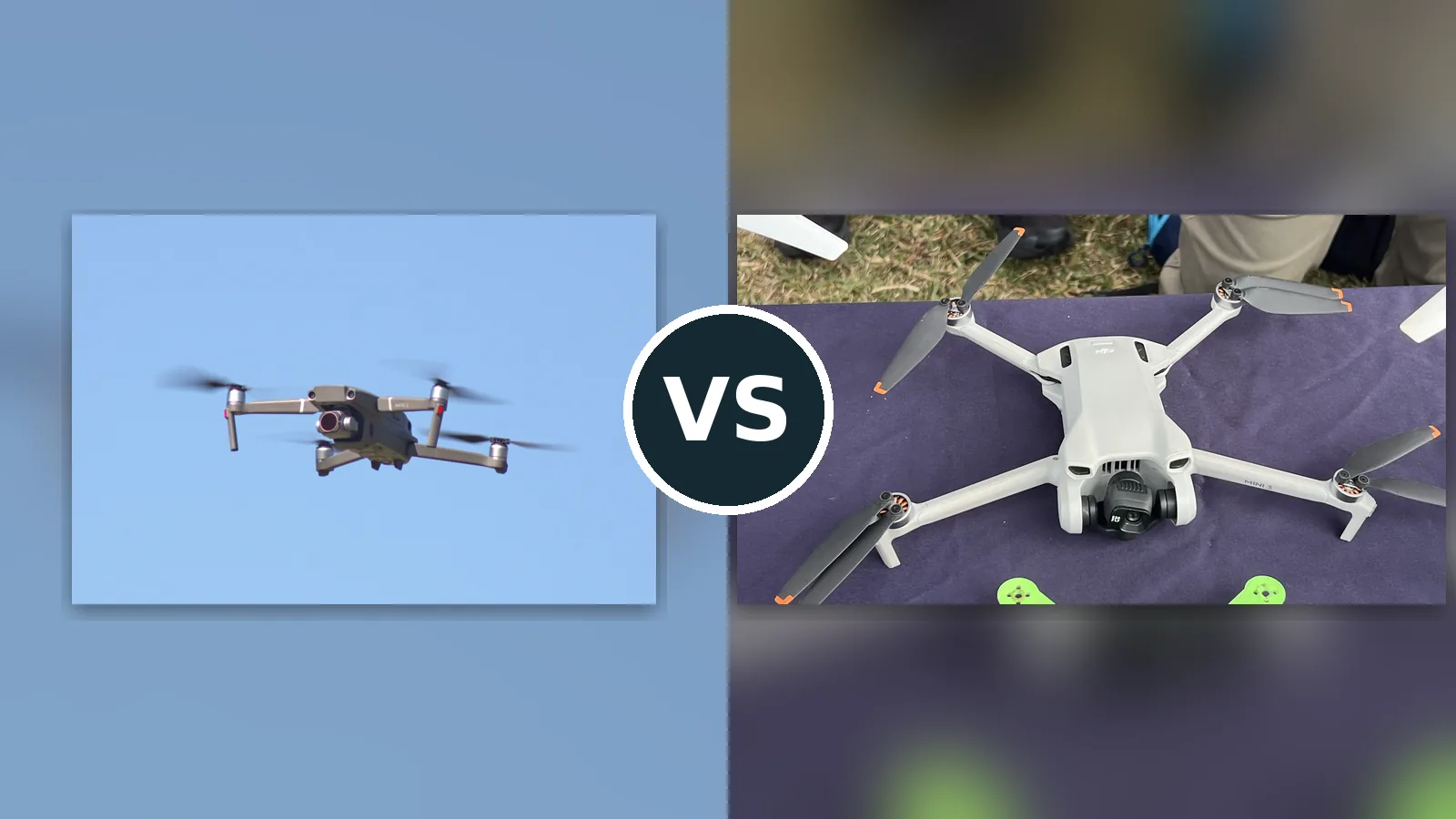
The dji mavic 2 vs mini 3 question sounds like a mismatch, and in weight terms it is: 907 grams of Hasselblad flagship against 248 grams of featherweight mini. But the DJI Mavic 2 Pro and the DJI Mini 3 keep colliding in real shopping carts, because they now hunt in overlapping used and budget territory, and because each holds something the other genuinely lacks. The DJI Mavic 2 Pro brings a 1-inch 20MP Hasselblad camera with an adjustable aperture from f/2.8 to f/11, 10-bit Dlog-M color, omnidirectional obstacle sensing, and ActiveTrack 2.0. The DJI Mini 3 brings a 1/1.3-inch sensor with 48MP stills, true vertical shooting, a longer 38-minute rated flight time, and a takeoff weight that keeps it in the lightest class in many regions, but no obstacle sensing and no subject tracking at all. One is a retired professional tool. The other is a modern travel companion with two very deliberate holes in its spec sheet. This comparison weighs the camera craft against the convenience, and tells you which compromise fits your flying.
Affiliate disclosure: As an Amazon Associate I earn from qualifying purchases. This page contains affiliate links. If you buy through them, we may earn a commission.
Mavic 2 Pro for craft. Mini 3 for carefree travel.
DJI Mavic 2 Pro is the pick if camera control is your craft: a 1-inch Hasselblad sensor, an adjustable f/2.8 to f/11 aperture that no DJI mini offers, 10-bit Dlog-M and 10-bit HDR video, omnidirectional obstacle sensing, APAS avoidance, and ActiveTrack 2.0. DJI Mini 3 is the pick if weight and simplicity rule your trips: 248 grams, 38 rated minutes, true vertical shooting, 48MP stills, and a 10 km O2 link, in a drone you can toss in a jacket pocket. Camera ceiling and safety systems: Mavic 2 Pro. Portability, endurance rating, and vertical video: Mini 3. The deciding factor is whether you will miss sensing and tracking more than you will enjoy leaving 659 grams at home.
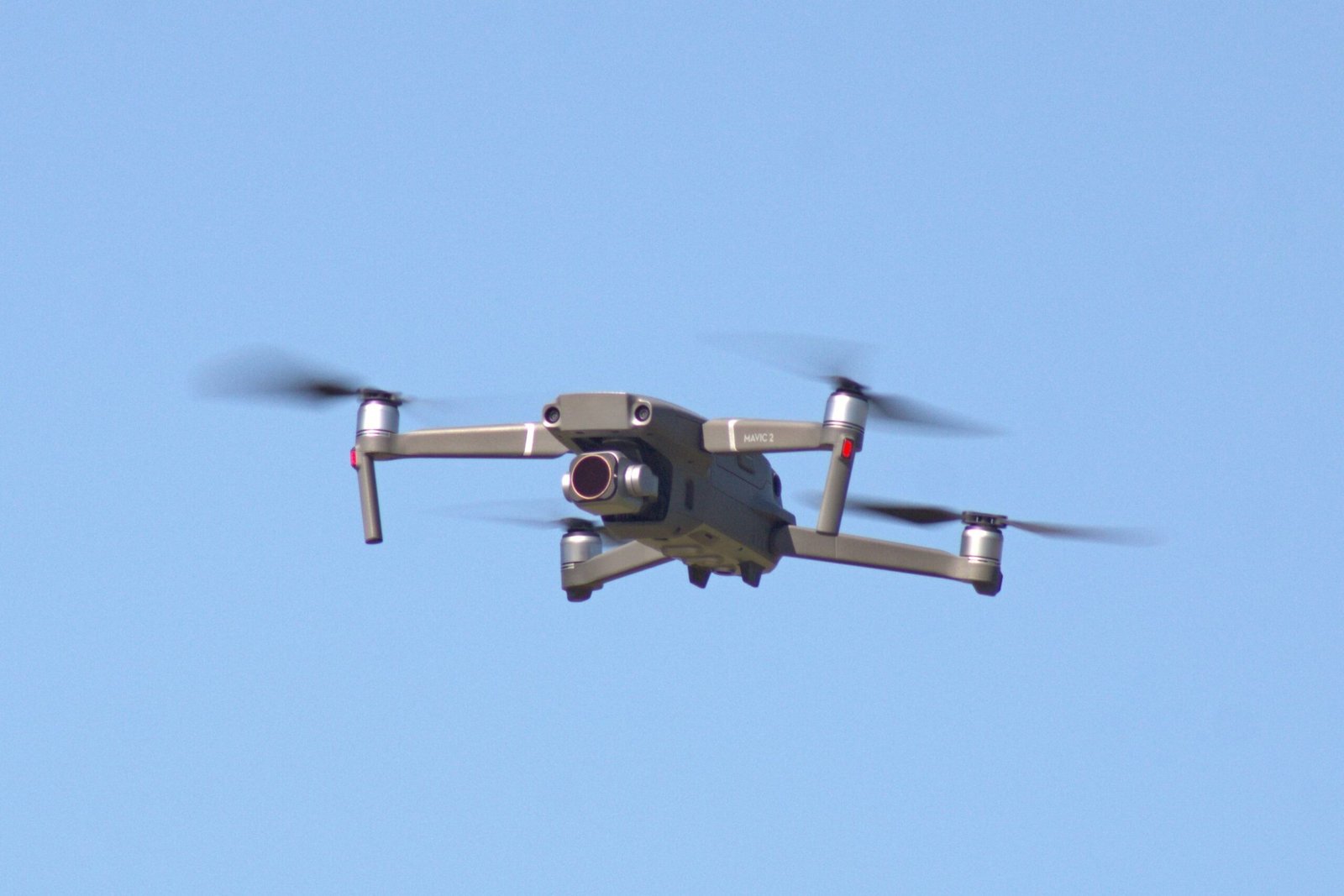
DJI Mavic 2 Pro
For photographers who want a 1-inch Hasselblad sensor and an adjustable aperture, bought on the used market
- 1-inch Hasselblad L1D-20c camera with an adjustable aperture from f/2.8 to f/11 for real exposure control
- Omnidirectional obstacle sensing, APAS avoidance, and ActiveTrack 2.0 for confident, tracked flying
- Discontinued and 907 grams: a flagship tool from another era, with used-market homework attached
Check current availability and bundle options on Amazon
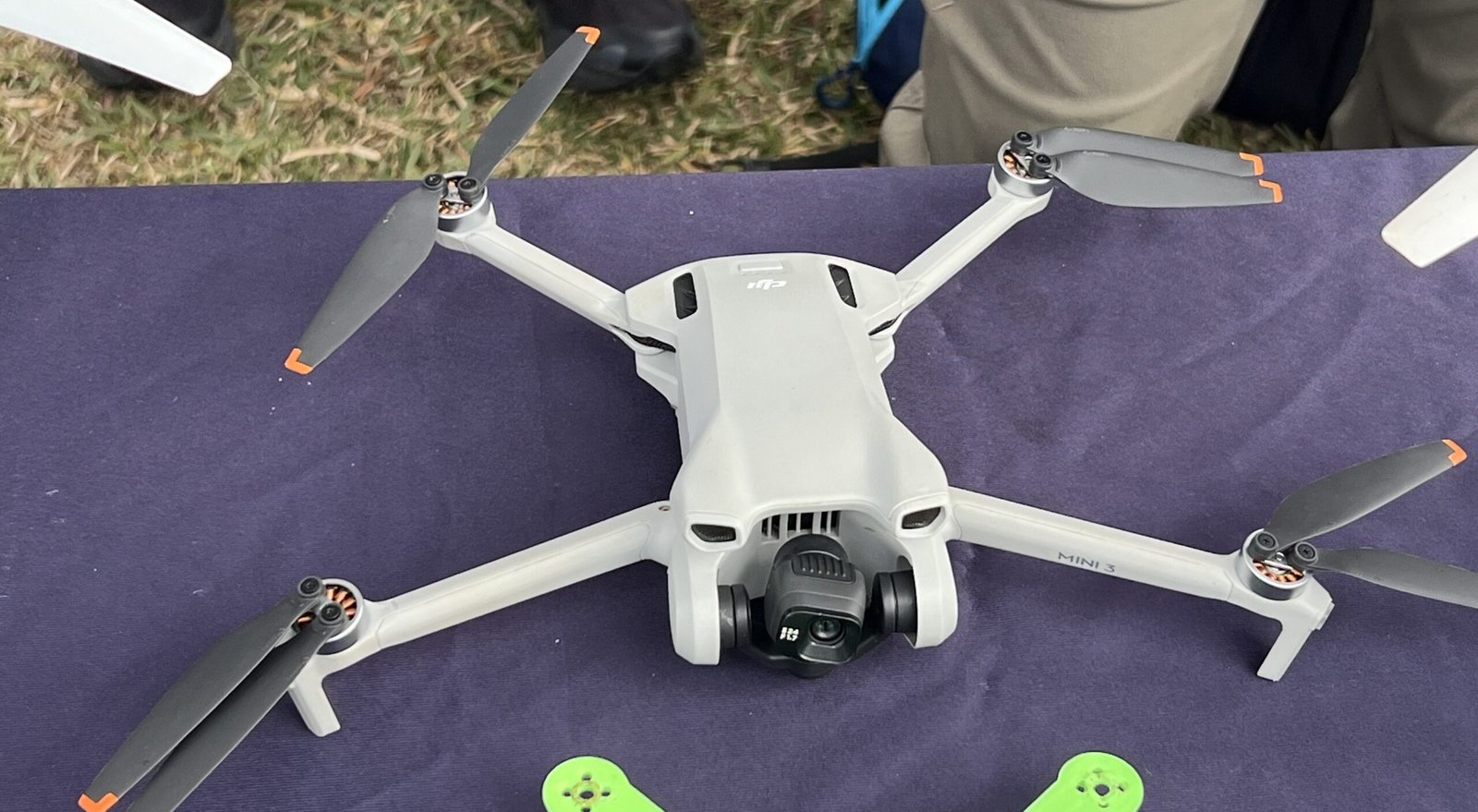
DJI Mini 3
For travelers who want 4K HDR, true vertical video, and 38 rated minutes at 248 grams
- 248 grams with 4K HDR video, 48MP stills, dual native ISO, and true vertical shooting for social feeds
- 38 minutes rated, stretching to 51 minutes with the Plus battery, over a 10 km O2 transmission link
- No obstacle sensing beyond downward positioning, and no ActiveTrack: you frame and fly everything yourself
Check current availability and bundle options on Amazon
A retired flagship walks into a featherweight fight
These drones were never rivals at launch. They are rivals now, in the cart, because budget shoppers keep cross-shopping a used professional tool against a new lightweight all-rounder. Here is how to think about it.
The DJI Mavic 2 Pro was built for working photographers and serious enthusiasts, and it shows in the one feature this comparison keeps circling: control. Its Hasselblad L1D-20c camera pairs a 1-inch 20MP sensor with an adjustable aperture from f/2.8 to f/11, which means you manage exposure and depth of field the way a camera operator expects, rather than leaning entirely on ND filters and fixed settings. It records 4K/30 with 10-bit Dlog-M and 10-bit HDR video at up to 100 Mbps, senses obstacles in every direction, threads through scenes with APAS, and follows subjects with ActiveTrack 2.0. At 907 grams it is a deliberate, bag-filling machine, and being discontinued, it is now a used purchase that rewards careful inspection.
The DJI Mini 3 was built for a different religion: minimum weight, minimum fuss, maximum time in the air. At 248 grams it undercuts the lightest regulatory class in many regions, yet it still shoots 4K HDR video, captures 48MP stills through a fast f/1.7 lens with dual native ISO, rotates into true vertical shooting for social platforms, and stays up for a rated 38 minutes, or 51 minutes with the Plus battery that takes it to 290 grams. DJI O2 transmission reaches 10 km under FCC rules, further than the Mavic 2 Pro’s OcuSync 2.0 ever promised. What DJI left out is just as defining: there is no obstacle sensing beyond downward positioning, and there is no ActiveTrack, so the Mini 3 will not dodge a branch or follow your bike on its own.
So the choice is really about which absences you can live with. The Mavic 2 Pro lacks youth: no warranty era, aging batteries, an older app generation, and a weight that triggers registration almost everywhere. The Mini 3 lacks awareness: no sensing safety net and no tracking brain, in exchange for being the drone you actually carry. Photographers who plan shots, fly deliberately, and grade their footage tend to forgive the Mavic 2 Pro everything. Travelers, hikers, and social creators who shoot opportunistically tend to forgive the Mini 3 everything. Both instincts are right. Only one of them is yours.
Choose DJI Mavic 2 Pro if…
- Camera control is your craft: you want a 1-inch sensor and an adjustable f/2.8 to f/11 aperture for deliberate exposure work.
- You grade footage and want 10-bit Dlog-M and 10-bit HDR video at up to 100 Mbps.
- You fly near obstacles and subjects and want omnidirectional sensing, APAS, and ActiveTrack 2.0 watching your back.
- You can accept 907 grams, registration in most regions, and discontinued used-market ownership.
Choose DJI Mini 3 if…
- Weight is your first filter: 248 grams, pocketable, and in the lightest class in many regions with the standard battery.
- You publish vertical content and want true vertical shooting plus 48MP stills and 4K HDR video.
- You want endurance: 38 minutes rated, or 51 minutes with the Plus battery, over a 10 km O2 link.
- You can accept flying with no obstacle sensing and no ActiveTrack, framing and following everything by hand.
Mavic 2 Pro vs Mini 3: Flagship Specs, Featherweight Specs
The pattern in this table is unusual: the older drone wins the craft rows, and the newer drone wins the convenience rows, with almost no overlap. Whichever column of victories matches your flying is your answer.
| Feature | DJI Mavic 2 Pro | DJI Mini 3 |
|---|---|---|
| Best suited to | Photographers and filmmakers who want 1-inch image quality and full manual camera control, bought used | Travelers and social creators who want the lightest capable 4K drone with vertical video |
| Takeoff weight | 907 g | 248 g; 290 g with the Plus battery |
| Sensor & lenses | 1-inch CMOS, 20MP Hasselblad L1D-20c; 28mm equivalent, adjustable aperture f/2.8 to f/11 | 1/1.3-inch CMOS, 48MP stills; 24mm equivalent, f/1.7, dual native ISO |
| Video modes | 4K/30, including 10-bit HDR video | 4K/24/25/30p HDR, 2.7K up to 60p, 1080p up to 60p |
| Color & codecs | 10-bit Dlog-M and 10-bit HDR video; H.264 and H.265 up to 100 Mbps; JPEG and DNG stills | H.264 up to 100 Mbps; JPEG and DNG stills |
| Vertical capture | No native vertical shooting mode | True Vertical Shooting |
| Obstacle sensing | Omnidirectional sensing on all sides; lateral sensing active in ActiveTrack, POI, QuickShot, and Tripod modes; APAS avoidance | None; downward positioning only |
| Subject tracking | ActiveTrack 2.0, plus Hyperlapse and QuickShots | No ActiveTrack; QuickShots and Panorama |
| Rated flight time | 31 minutes rated; 29 minutes hovering | 38 minutes rated; 51 minutes with the Plus battery |
| Measured flight time | Not tested by us | Not tested by us |
| Rated wind resistance | Rated in the 38 km/h class | 10.7 m/s, Level 5 |
| Max speed | 72 km/h | 16 m/s |
| Transmission | OcuSync 2.0, up to 8 km, 1080p live view | DJI O2, up to 10 km (FCC) |
| Controller & bundle | GNSS positioning by GPS and GLONASS; 3850 mAh, 59.29 Wh flight battery | RC-N1 or DJI RC controllers; GNSS positioning by GPS, Galileo, and BeiDou |
| Main trade-off | Flagship camera craft and full sensing, in a discontinued 907-gram airframe bought on the used market | Featherweight freedom and long rated endurance, with no obstacle sensing and no subject tracking |
Manufacturer flight times are best-case lab figures; real flights are shorter, and on a discontinued drone like the Mavic 2 Pro, the age of the specific battery matters as much as the rating. Measured flight time is listed as not tested because this is a research-based comparison; see the methodology section.
Five Differences Between a Legend and a Featherweight
Five differences carry this matchup: camera craft, the sensing gap, the weight divide, an endurance upset, and the vertical video era. Read them in order.
1. Camera craft: adjustable aperture vs megapixel count
Edge: Mavic 2 ProPhotographers should start here, because this section contains the Mavic 2 Pro’s entire argument. Its 1-inch CMOS sensor is meaningfully larger than the Mini 3’s 1/1.3-inch chip, and a larger sensor gathers more light per pixel, which pays out as cleaner shadows, gentler highlight rolloff, and more confident low light work from its 20MP. The Hasselblad L1D-20c camera, tuned with Hasselblad color science, shoots JPEG and DNG stills and records 4K/30 video with 10-bit Dlog-M and 10-bit HDR video in H.264 or H.265 at up to 100 Mbps. Then there is the feature no DJI mini has ever offered: an adjustable aperture from f/2.8 to f/11. Working pilots use it constantly, opening up for cleaner low light shots, stopping down for depth and sunstars, and balancing shutter speed in bright conditions with less dependence on swapping ND filters.
The Mini 3’s camera story is different but not weak. Its 48MP stills give aggressive cropping room for photos, its 24mm f/1.7 lens is fast, and dual native ISO helps it keep noise in check as light fades. Video runs to 4K HDR at up to 30p, with 2.7K and 1080p available up to 60p, recorded in H.264 at up to 100 Mbps with JPEG and DNG stills. What it does not give you is the Mavic 2 Pro’s 10-bit color depth or any aperture control, so its footage grades less forgivingly and its exposure management leans on filters and shutter choices. For daylight travel clips and vertical posts, the Mini 3 file looks bright, sharp, and modern. For deliberate stills craft and graded video, the older flagship still holds the higher ceiling, exactly as its original buyers paid for.
2. Sensing and tracking: a full safety net vs none at all
Edge: Mavic 2 Pro, decisivelyThis is the widest gap in the comparison, and it is not close. The Mavic 2 Pro senses obstacles omnidirectionally, on all sides. Its lateral sensing stays active in ActiveTrack, POI, QuickShot, and Tripod modes, and its APAS system plans routes around obstacles instead of merely stopping in front of them. ActiveTrack 2.0 follows subjects while the sensing suite watches the surroundings, and Hyperlapse and the QuickShots library round out a genuinely intelligent flight system. For a drone of its era it was the complete package, and it remains more aware of its environment than many drones sold today.
The Mini 3 has no obstacle sensing. Read that again before you buy it, because everything else about the drone is so friendly that the omission surprises people. It has downward positioning for stable hovers and landings, and that is the list. Fly it sideways toward a tree line while watching your phone, and nothing will save it. It also has no ActiveTrack, so it cannot follow a subject on its own; its QuickShots circle, pull back, and orbit around a point or a subject you frame, but continuous tracking is the pilot’s job. None of this makes the Mini 3 a bad drone. It makes it an honest one, priced and weighted as if the pilot is the safety system. Beginners can absolutely learn on it, and millions have learned on drones just like it, but they should learn in open spaces and build awareness habits from the first flight, because the drone is not building any for them.
3. Weight and the rules that follow it around
Edge: Mini 3At 907 grams, the Mavic 2 Pro is a serious object. It folds, it travels, and professionals carried it happily for years, but it fills a real share of a camera bag and it sits firmly in the registration-required classes in most regions. Its heft buys composure: rated in the 38 km/h wind resistance class and capable of 72 km/h at full pace, it feels planted and authoritative in conditions that make light drones nervous. If your work is planned, vehicle-based, or studio-adjacent, the weight is simply the cost of the tool, and generations of working pilots paid it without complaint.
At 248 grams, the Mini 3 plays by friendlier rules. In many regions that figure keeps it in the lightest category, simplifying registration and broadening where a casual flight is practical, and its pocketable size means it goes on hikes, rides, and trips that a 907-gram flagship would be left out of. The Plus battery bargain deserves a clear statement: it stretches rated flight time to 51 minutes, but it also takes takeoff weight to 290 grams, which can change the drone’s regulatory position, so treat it as a conscious choice rather than a free upgrade. Even in standard form, the Mini 3’s wind rating of 10.7 m/s, Level 5, is respectable for its class, and its 16 m/s top speed is plenty for travel work. The old rule of drones applies with full force here: the best drone is the one you have with you, and the Mini 3 is engineered to be the one you have with you.
4. Endurance and transmission: the mini takes both crowns
Edge: Mini 3Here is the section that embarrasses the flagship. The Mavic 2 Pro is rated at 31 minutes of flight and 29 minutes of hovering from its 3850 mAh, 59.29 Wh battery, figures that led the market in their day. The Mini 3, at barely a quarter of the weight, is rated at 38 minutes on its standard battery and 51 minutes with the Plus battery. Newer motors, lighter structure, and a generation of battery and efficiency work simply moved the frontier. On the Mavic 2 Pro there is a second, practical caveat: it is discontinued, so the endurance you actually get depends on the age and care of the specific used battery in the drone, which can sit well below the rating even when the airframe is perfect.
Transmission tells the same generational story. The Mavic 2 Pro’s OcuSync 2.0 reaches up to 8 km with a 1080p live view, which remains a solid, confidence-inspiring link. The Mini 3’s DJI O2 system reaches up to 10 km under FCC rules. Both ranges exceed what legal visual line of sight flying allows in most places, so read them as measures of link robustness rather than invitations: the newer system holds a cleaner signal further into cluttered environments. Positioning follows suit, with GPS and GLONASS on the older drone against GPS, Galileo, and BeiDou on the Mini 3, giving the mini more satellites to lean on in canyons and cities. Endurance and connectivity were supposed to be flagship virtues. In this matchup, the featherweight owns them.
5. Vertical video and the modern audience
Edge: Mini 3One row in the spec table quietly explains the era gap better than any sensor figure: vertical capture. The Mavic 2 Pro has no native vertical shooting mode, because in its launch era the audience watched on televisions and monitors and vertical video was a phone owner’s accident. Its 3-axis gimbal produces beautiful horizontal footage, and vertical creators using one today crop from the 4K frame or rotate their workflow around the drone’s indifference. The Mini 3 was designed after the feed won. Its True Vertical Shooting rotates the camera to capture vertical video natively, so social creators get full-resolution vertical footage with no crop penalty and no post-production geometry lessons.
Stack that with the Mini 3’s QuickShots and Panorama modes and its app-friendly workflow, and its intent is obvious: it is a content machine for the platforms people actually publish on now. The Mavic 2 Pro counters with depth rather than format: Hyperlapse, ActiveTrack 2.0 orbits, and footage that grades like a professional tool because it is one. Neither drone is wrong. They were answered by their audiences, a decade apart. If your audience lives in a vertical feed, the Mini 3 speaks its language natively and the Mavic 2 Pro needs translation on every single clip. If your audience watches on a big screen, or your clients deliver horizontal masters, the older flagship’s footage still looks like the senior partner in the room.
Mavic 2 Pro vs Mini 3: What You Gain, What You Give Up
DJI Mavic 2 Pro
Reasons to choose it
- 1-inch Hasselblad sensor with an adjustable f/2.8 to f/11 aperture, a control no DJI mini offers
- 10-bit Dlog-M and 10-bit HDR video at up to 100 Mbps, with JPEG and DNG stills for serious editing
- Omnidirectional obstacle sensing, APAS avoidance, and ActiveTrack 2.0 for confident subject work
- 72 km/h pace and 38 km/h class wind composure from a solid, professional-feeling airframe
Reasons to reconsider
- 907 grams with registration requirements in most regions, and a kit that fills real bag space
- Discontinued: used-market purchase, aging batteries, and an older ownership ecosystem
- No native vertical shooting, and a 4K ceiling of 30p where newer drones offer high frame rates
DJI Mini 3
Reasons to choose it
- 248 grams and pocketable, in the lightest class in many regions with the standard battery
- 38 minutes rated, 51 minutes with the Plus battery, and a 10 km O2 link that beats the flagship’s range
- True vertical shooting, 48MP stills, dual native ISO, and bright 4K HDR video ready to post
Reasons to reconsider
- No obstacle sensing at all beyond downward positioning: every dodge is the pilot’s responsibility
- No ActiveTrack, so the drone cannot follow a moving subject on its own
- No 10-bit color and no aperture control, so graded, deliberate camera work hits a lower ceiling
Vet the legend, configure the mini: the pre-flight checklist
One purchase needs a used-flagship inspection. The other needs a clear-eyed read of what was left out. Both checklists are short, and both are worth every minute.
- Battery health, Mavic 2 Pro: The flight battery is a 3850 mAh, 59.29 Wh pack and the fleet is aging. Ask for cycle counts, check for swelling, and budget for spare packs from day one. Endurance on a used Mavic 2 Pro is a battery question before it is a drone question.
- Battery choice, Mini 3: The standard battery keeps takeoff weight at 248 grams with a 38-minute rating. The Plus battery lifts the rating to 51 minutes and the weight to 290 grams, which can change the drone’s regulatory class. Pick deliberately.
- Camera checks, Mavic 2 Pro: Test the adjustable aperture across its f/2.8 to f/11 range, inspect sample DNG files at full size, and run the gimbal through its full travel. The Hasselblad camera is the reason you are buying this drone; verify it like you mean it.
- Controllers, Mini 3: Confirm whether the bundle includes the RC-N1, which uses your phone as the screen, or the DJI RC with its built-in display. Both fly the drone identically; the difference is convenience and setup speed.
- Sensing expectations, Mini 3: There is no obstacle sensing to configure or rely on. Plan open flying locations, especially while learning, and do not let the drone’s friendly size talk you into tight spaces.
- Local requirements: At 907 grams the Mavic 2 Pro requires registration in most regions, while the Mini 3 at 248 grams targets the lightest class in many of them. Check your aviation authority’s current rules for the exact weight configuration you will fly.
Camera craft or carry-everywhere freedom.
Buy the DJI Mavic 2 Pro if your photography comes first. The 1-inch Hasselblad sensor, the adjustable aperture, 10-bit Dlog-M and HDR video, omnidirectional sensing, and ActiveTrack 2.0 form a creative toolkit that no mini, including this one, has matched since, and on the used market it is the cheapest route into genuine flagship image craft ever offered by DJI. Respect its age, vet its batteries, and it will still produce work that embarrasses newer drones. Buy the DJI Mini 3 if your travels come first. At 248 grams, with true vertical shooting, 48MP stills, 38 rated minutes, and a 10 km link, it is the drone that actually goes everywhere and shoots constantly, which is its own kind of image quality. Just fly it like the sensing-free drone it is: open spaces, eyes up, and no assumptions.
Still deciding?
Is the DJI Mavic 2 Pro still good in 2026?
Yes, as a used photographer’s tool. Its 1-inch Hasselblad sensor, adjustable aperture, and 10-bit video still outclass most small drones for deliberate stills and graded footage, and its sensing suite remains excellent. The caveats are ownership ones: it is discontinued, weighs 907 grams, and its batteries are aging, so condition checks matter more than the spec sheet.
Does the DJI Mini 3 have obstacle avoidance?
No. The Mini 3 has downward positioning only, with no obstacle sensing in any direction and no ActiveTrack. It is entirely possible to fly it safely and enjoyably, and its light weight keeps mistakes gentle, but the pilot supplies all of the awareness. If sensing matters to you, that single fact may decide this comparison on its own.
Which drone takes better photos, the Mavic 2 Pro or the Mini 3?
The Mavic 2 Pro, for craft. Its 1-inch 20MP sensor and adjustable aperture deliver cleaner files, better low light behavior, and real exposure control, with DNG stills that reward editing. The Mini 3 counters with 48MP stills that allow heavy cropping and a fast f/1.7 lens with dual native ISO, which suits bright travel photography and quick sharing better than careful darkroom work.
Can the Mini 3 really fly longer than the Mavic 2 Pro?
On rated figures, yes. The Mini 3 is rated at 38 minutes, and 51 minutes with its Plus battery, against 31 minutes for the Mavic 2 Pro. Real flights land below the ratings for both, and a used Mavic 2 Pro’s actual endurance depends on its battery’s age, but the generational efficiency gap is real and it belongs to the mini.
Does the Mavic 2 Pro shoot vertical video?
Not natively. It has no vertical shooting mode, so vertical creators crop from its 4K frame or rotate their process around it. The Mini 3 offers True Vertical Shooting, capturing vertical video at full quality, which is why social-first creators usually land on the mini despite its smaller sensor.
How were these drones compared?
This is a research-based comparison compiled from DJI’s published specifications and documentation for the Mavic 2 Pro and the Mini 3. We did not fly either drone for this article, so flight times are rated figures and measured flight time is listed as not tested. See the methodology section below for the full source list.
How this comparison was prepared
This comparison is research-based. We did not fly either drone for this article, and nothing here should be read as hands-on testing. Specifications for the DJI Mavic 2 Pro were taken from DJI’s published documentation for that model, including its official specification listing and user manual, and specifications for the DJI Mini 3 were taken from DJI’s published specification listing and product documentation for the Mini 3. Each figure was cross-checked so that rated values are compared like for like, and supplied figures in differing units, such as the wind ratings, are presented as published rather than converted into estimates. Because the Mavic 2 Pro is discontinued, the article treats battery condition and used-market verification as first-order buying factors. Sources are listed by name only below, in line with this site’s editorial policy.
Sources
- DJI Mavic 2 Pro official specifications
- DJI Mavic 2 Pro user manual
- DJI Mini 3 official specifications
- DJI Mini 3 product documentation
- DJI Mini 3 user manual
- Wikimedia Commons, DJI Mavic 2 Pro photography credits
Last verified: October 20, 2026. Specifications, bundles, and availability may vary by region and version.


