
As an Amazon Associate I earn from qualifying purchases. If you buy through links in this article, we may earn a commission at no extra cost to you.
These are the 10 best low budget drones, ranked the honest way: not by the longest feature list, but by what survives contact with real beginners. Every pick has a working return story, a camera worth the name or a kit that includes the extras cheap drones usually skip. We compared GPS support, true camera specs, flight time per battery and how many batteries actually arrive in the box.
Short on time?
Start with these three picks
The best all-round budget GPS drone, the GPS value benchmark, and the DJI camera step-up for pilots ready to spend a little more.
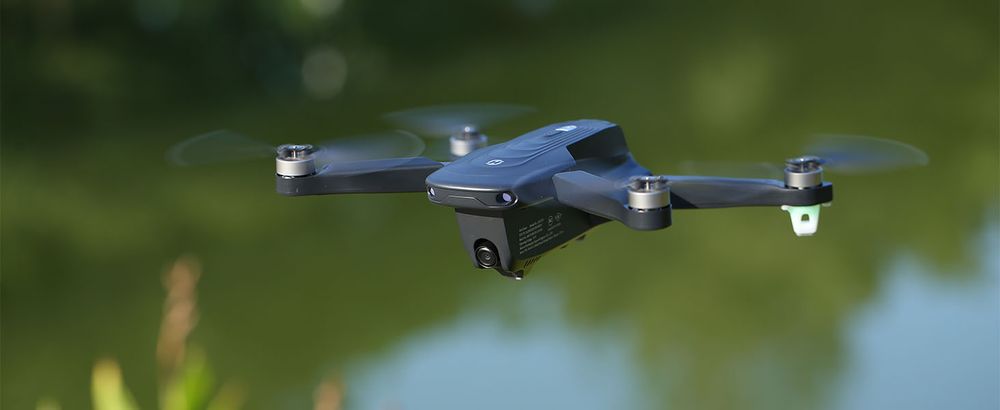
Holy Stone HS175D
The complete budget GPS package: a 215 g folder with GPS auto return, brushless motors, follow me and two batteries rated at 23 minutes each. The camera records 2.7K video to the card under a 4K photo headline, which is still the strongest honest spec at this end of the list.
View on Amazon Read the full review ↓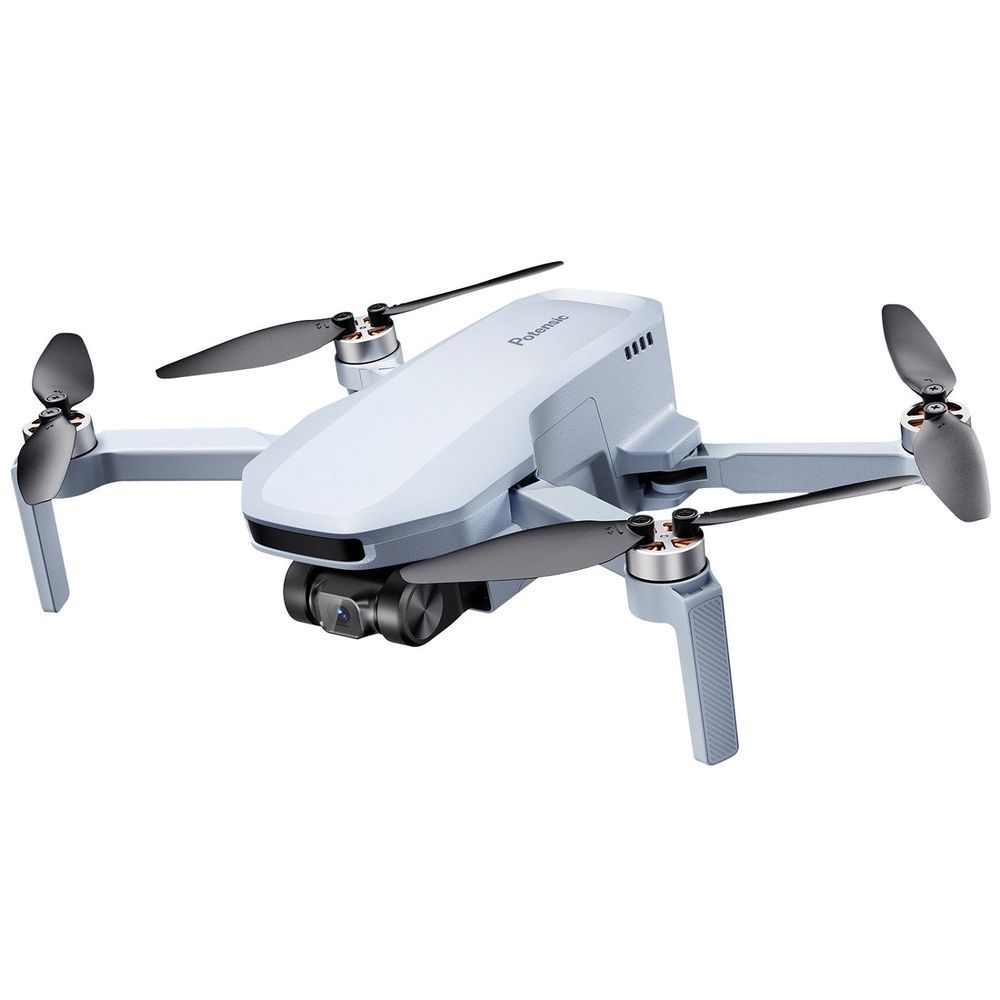
Potensic Atom SE
The value benchmark for GPS flying: under 249 g, GPS and GLONASS positioning with auto return, 31 minutes per battery and a 4K EIS camera. No obstacle sensing and no gimbal, but the fundamentals that keep a cheap drone safe are all present.
View on Amazon Read the full review ↓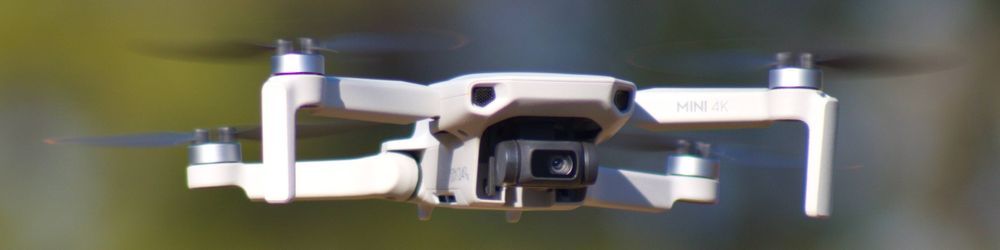
DJI Mini 4K
The DJI quality floor: a 246 g drone with true 4K/30 recording, a 3-axis gimbal and 31 minute flights. No obstacle sensing and no tracking tricks, just the smoothest, most reliable footage available anywhere near this budget.
View on Amazon Read the full review ↓The shortlist
Compare all 10 at a glance
At this end of the market, compare three honest numbers: flight minutes per single battery, what the camera records to the card, and whether GPS brings it home.
| Product / award | Best fit | Key decision point | Check current offer |
|---|---|---|---|
| 01. Holy Stone HS175DBest overall | Complete budget GPS package for beginners | Two 23 min batteries; brushless motors | View on Amazon |
| 02. Potensic Atom SEBest GPS value | GPS value benchmark under 249 g | Auto return and 31 min flights | View on Amazon |
| 03. DJI Mini 4KBest camera step-up | Camera-first step up with DJI polish | 3-axis gimbal; true 4K/30 recording | View on Amazon |
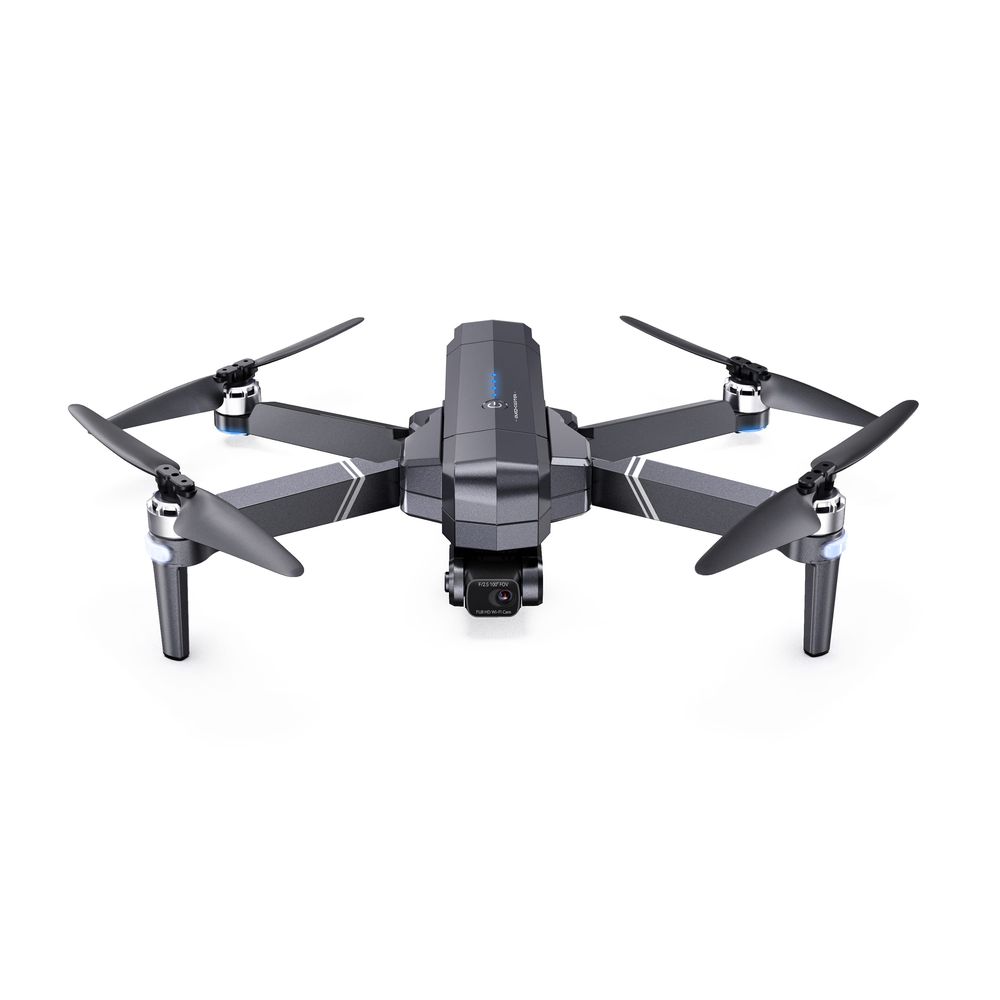 04. Ruko F11 GIM2Best gimbal pick | Full-size feel with a real gimbal | 2-axis gimbal; GPS smart modes; Remote ID | View on Amazon |
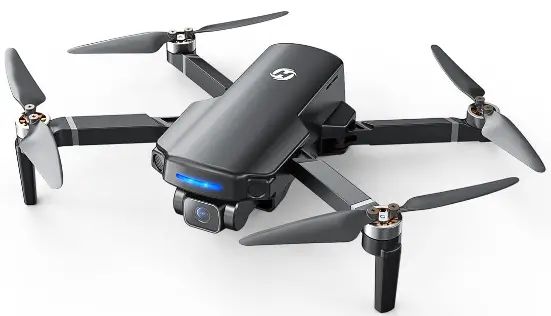 05. Holy Stone HS360SBest long-range budget pick | Long-range budget explorer | 9842 ft rated range; GPS smart modes | View on Amazon |
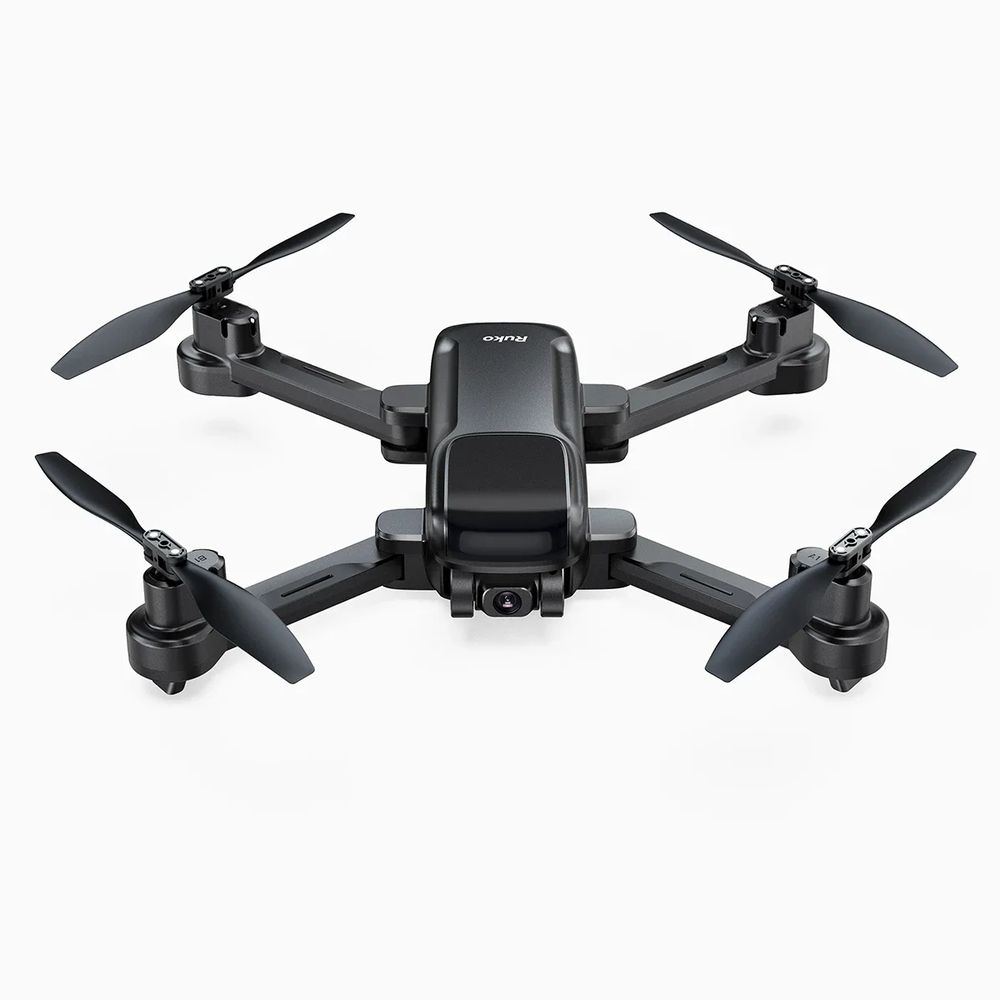 06. Ruko U11SBest two-battery kit | Two-battery starter kit with Remote ID | 40 min total flying from the box | View on Amazon |
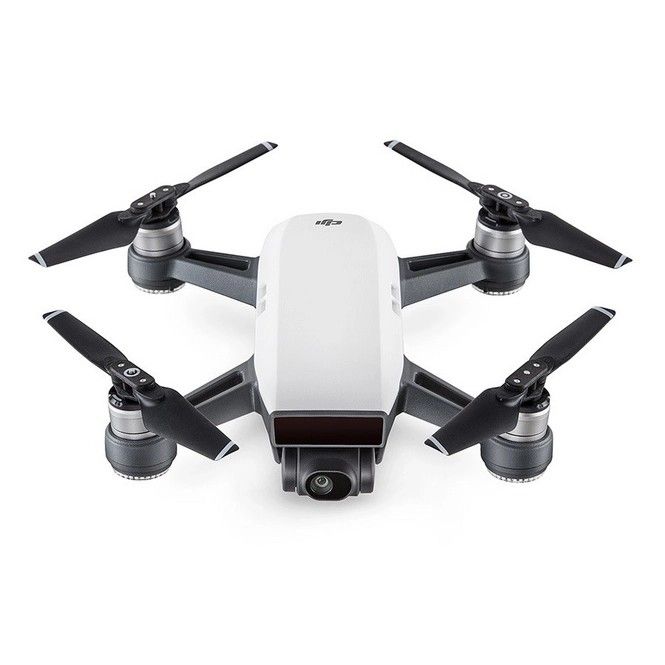 07. DJI SparkBest legacy DJI | Legacy DJI with sensing and gestures | 2-axis gimbal; forward 3D sensing | View on Amazon |
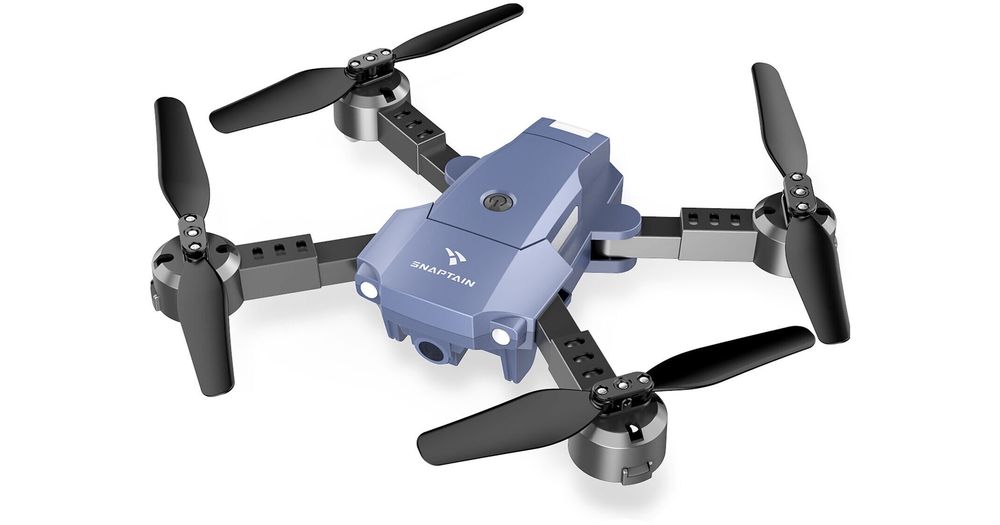 08. Snaptain A10Best foldable mini toy | Foldable mini toy for first tastes | 61 g folder; 80 m control range | View on Amazon |
 09. Holy Stone HS720Best full-size feel | Proven full-size GPS on a budget | 26 min batteries; follow me included | View on Amazon |
 10. Potensic Atom 2Best stretch pick | Stretch pick that ends the upgrade cycle | Sony 4K HDR sensor; sub-249 g | View on Amazon |
Look closer
Our 10 picks, explained
These picks come from desk research, not hands-on testing: we compared manufacturer spec sheets line by line, then cross-checked owner feedback and published reviews to separate the honest value picks from the spec-sheet fiction.
Holy Stone HS175D
Cheap drones usually cut the safety net first. The HS175D keeps it: GPS and GLONASS positioning with automatic return on low battery or lost signal, plus optical flow for steadier hovers. Brushless motors are the second surprise, lasting longer and handling light wind better than toy motors. Two batteries at 23 minutes each give real session time, and follow me, point of interest and tap fly cover the fun modes. The honest caveat is the camera: photos reach 4096 by 3072, but video records 2688 by 1512 to the card and 1080p to the phone, with no gimbal, so footage suits memories and social clips rather than projects. For the money asked, the balance is right.
- Takeoff weight
- 215 g
- Flight time
- 23 min per battery, two included
- Camera
- 4K photos; 2688 by 1512 video to card
Reasons to choose it
- GPS auto return at a budget level
- Two batteries and brushless motors
- Follow me and tap fly included
Trade-offs to know
- Video is 2.7K, not true 4K
- No gimbal, electronic stabilization only
Choose this if: you want one budget drone that does the GPS job properly.
Consider another option if: you want to spend the least on GPS, the Potensic Atom SE is the value benchmark.
Potensic Atom SE
The Atom SE built Potensic’s budget reputation by refusing the usual cuts. It carries real GPS plus GLONASS positioning, so return to home works when the battery fades or the signal drops, which is the feature that decides whether a cheap drone survives its first season. Flight time rates a genuine 31 minutes per battery, the 1/2-inch sensor records 4K video with electronic stabilization, and the whole aircraft stays under 249 g for simple recreational rules. What you give up is refinement: no obstacle sensors, no mechanical gimbal and a plainer app. For learning real GPS flying at the lowest sensible cost, it remains the benchmark.
- Takeoff weight
- Under 249 g
- Flight time
- 31 min per battery
- Camera
- 1/2-inch CMOS, 12MP, 4K EIS video
Reasons to choose it
- GPS plus GLONASS auto return
- 31 minute rated flights
- Sub-249 g for simple rules
Trade-offs to know
- No obstacle avoidance
- Electronic stabilization only
Choose this if: you want the cheapest honest route into GPS flying.
Consider another option if: you want a better camera in the same family, the Potensic Atom 2 is the stretch pick.
DJI Mini 4K
Most cheap drones stabilize video electronically and hope you will not notice the wobble. The Mini 4K carries a proper 3-axis mechanical gimbal, and the difference shows in every clip: level horizons, smooth pans, watchable footage straight off the card. The 1/2.3-inch sensor records genuine 4K/30, flight time rates 31 minutes, and DJI’s transmission and app polish remove the friction budget buyers usually tolerate. You give up obstacle sensing, subject tracking and the newest transmission range, and it costs more than the toy-grade picks. As the step up from a first drone, or the first drone for a camera-first buyer, it is the safe money.
- Takeoff weight
- 246 g
- Flight time
- 31 min per battery
- Camera
- 1/2.3-inch CMOS, 12MP, 4K/30, 3-axis gimbal
Reasons to choose it
- True 4K with a 3-axis gimbal
- DJI app and transmission polish
- 31 minute rated flights
Trade-offs to know
- No obstacle sensing or tracking
- Costs more than toy-grade picks
Choose this if: footage quality is why you are buying a drone.
Consider another option if: GPS return matters more than the gimbal, the HS175D brings the drone home for less.
Ruko F11 GIM2
The F11 GIM2 comes from Ruko’s larger F11 line, and the size buys steadiness: at 585 g it shrugs off breezes that ground the minis, while a 2-axis mechanical gimbal backed by EIS keeps 4K/30 footage smooth. GPS positioning enables follow me, waypoint routes and a proper auto return, current production carries built-in Remote ID, and digital transmission reaches up to 3 km in the clear. Flight time runs about 28 minutes per battery. The trade-offs are bulk, registration at this weight and a camera that still trails DJI processing. For a buyer who wants one capable budget drone for property, family events and travel scenes, it is the grown-up choice.
- Takeoff weight
- 585 g
- Flight time
- About 28 min per battery
- Camera
- 2-axis gimbal plus EIS, 4K/30 to card
Reasons to choose it
- Mechanical gimbal smoothness
- GPS follow me and waypoints
- Long transmission range
Trade-offs to know
- Registration required at 585 g
- Bulky next to the minis
Choose this if: you want one capable drone, not the smallest one.
Consider another option if: you want sub-250 g simplicity, the Atom SE keeps rules easy.
Holy Stone HS360S
Range is where cheap drones usually bluff, quoting fantasy numbers over toy Wi-Fi. The HS360S backs its claim with hardware: a dedicated 5 GHz link and a controller that connects to your phone by cable, removing the flakiest hop. Holy Stone rates both control and FPV to 9842 feet in the open, and GPS plus GLONASS positioning, follow me and a full set of one-tap shot modes make the distance usable. The 4K camera records 3840 by 2160 at 20 frames per second to the card, so treat it as a stills-first camera with video as a bonus. Twenty minutes per battery is the honest cost of the package.
- Takeoff weight
- 249 g
- Flight time
- 20 min per battery
- Camera
- 4K UHD video to card, 85 degree lens
Reasons to choose it
- 3 km rated control and FPV range
- GPS with follow me and smart shots
- Wired controller link stays stable
Trade-offs to know
- 4K video is only 20 fps
- Single battery in the standard kit
Choose this if: you fly open country and want real range on a budget.
Consider another option if: session time matters more, the HS175D includes two longer batteries.
Ruko U11S
Budget drones love a low headline number followed by essential extras. The U11S plays it straighter: the standard bundle carries two 20 minute batteries for 40 minutes of total flying, a hard carry case, spare props and a drone with GPS and GLONASS positioning, one-key return and a beginner mode that fences distance and altitude while you learn. Built-in Remote ID keeps a 270 g drone compliant without add-on modules. The camera shoots 4K stills and 2K video through a single-axis tilting mount, honest souvenir quality. Weight over 250 g means registration for recreational flying in the US, so factor that errand in. As a complete first kit, it is easy to recommend.
- Takeoff weight
- 270 g
- Flight time
- 20 min per battery, two included
- Camera
- 4K stills; 2048 by 1152 video
Reasons to choose it
- Two batteries and case included
- Built-in Remote ID
- Beginner mode fences early flights
Trade-offs to know
- Over 250 g, registration applies
- Camera is stills-first
Choose this if: you want the whole kit in one box with nothing to add.
Consider another option if: you want to stay under 250 g, the Atom SE does GPS for less weight.
DJI Spark
The Spark started the small-DJI story in 2017, and its formula holds up: a 1/2.3-inch camera on a 2-axis gimbal recording clean 1080p, forward 3D sensing that most modern budget drones still lack, ActiveTrack, QuickShots and the famous palm launch with gesture control. With the optional controller, range reaches 2 km over Wi-Fi, and 16 minutes per battery was respectable then and merely honest now. The caveats are age: batteries are the consumable to inspect, app support lives in maintenance mode, and 1080p is the ceiling. Priced as the used or old-stock classic it is, the Spark delivers DJI manners nothing else here matches.
- Takeoff weight
- 300 g
- Flight time
- 16 min per battery
- Camera
- 1/2.3-inch CMOS, 12MP, 1080p/30, 2-axis gimbal
Reasons to choose it
- Forward obstacle sensing
- Gesture control and palm launch
- Stabilized camera, DJI flight modes
Trade-offs to know
- 1080p ceiling
- Aging batteries and app support
Choose this if: you want DJI character and sensing at classic prices.
Consider another option if: you want current support and 4K, the Mini 4K is the modern heir.
Snaptain A10
Every budget list needs its honest toy, and the A10 earns the slot by folding: at 61 g it tucks into a footprint smaller than a phone, unfolds in seconds and flies with a proper little controller. The 720p camera covers snapshots and live view, voice commands and gesture selfies add party value, and trajectory flight, circle fly and flips fill the trick sheet. Two 380 mAh batteries fly about seven minutes each, control range is 80 m, and there is no GPS, so outdoors means dead calm and close range. Treat it as a first taste or a gift, and it delivers exactly what it promises.
- Takeoff weight
- 61 g
- Flight time
- 7 min per battery, two included
- Camera
- 720p video, live view to phone
Reasons to choose it
- Folds smaller than a phone
- Two batteries included
- Voice and gesture control
Trade-offs to know
- No GPS, calm air only
- Seven minute flights
Choose this if: you want the cheapest fun test of the hobby.
Consider another option if: you already know you enjoy it, the U11S kit is the real step up.
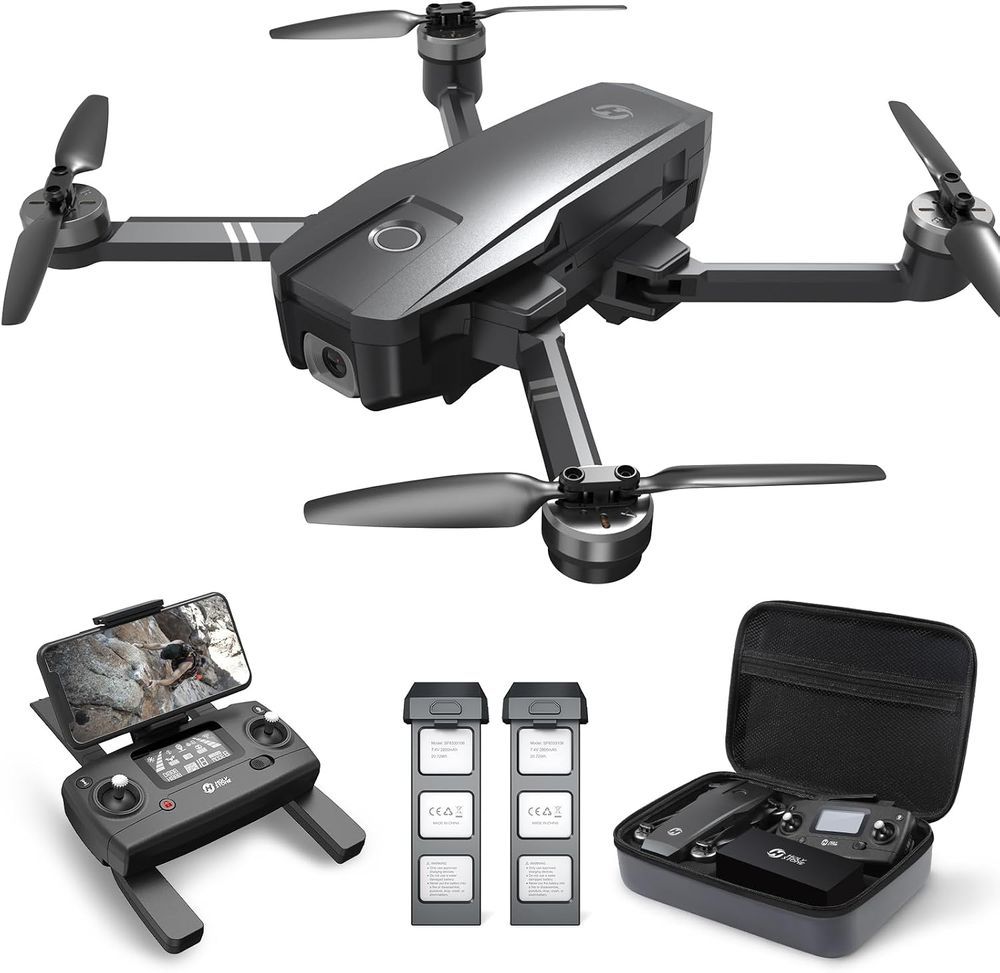
Holy Stone HS720
The HS720 earned its sales the slow way: a folding GPS drone that does the fundamentals without drama. Satellite positioning gives it auto return on command, low battery or lost signal, the 4K camera records with electronic stabilization, and follow me plus custom flight paths cover the smart basics. Around 26 minutes per battery keeps sessions practical, and the larger frame sits steadier in a breeze than sub-250 g rivals, though it crosses into registration territory. Newer Holy Stone models add brushless motors and better links, and the app experience is functional rather than slick. As a known quantity with deep owner knowledge online, it remains a safe budget buy.
- Positioning
- GPS with auto return
- Flight time
- 26 min per battery
- Camera
- 4K EIS video
Reasons to choose it
- GPS auto return and follow me
- Steady full-size frame outdoors
- Deep owner community knowledge
Trade-offs to know
- Registration applies at this size
- Older design and app
Choose this if: you want a proven full-size GPS drone for the least risk.
Consider another option if: you want the newest budget hardware instead, the HS175D is Holy Stone’s fresher package.
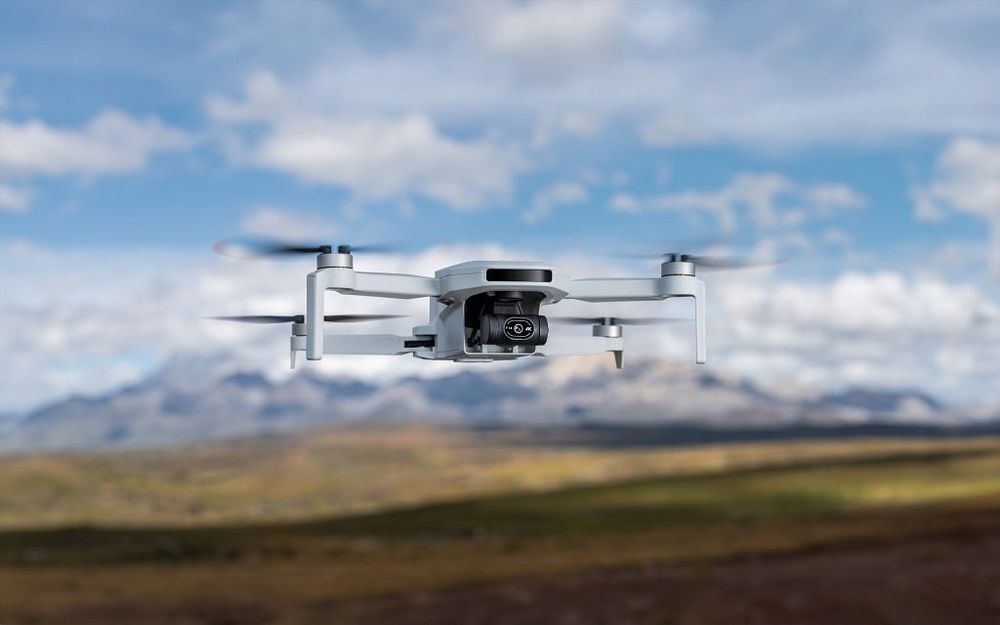
Potensic Atom 2
Budget advice usually ends with a warning that you will upgrade within a year. The Atom 2 is the exception buyers keep. Its 1/2-inch Sony sensor records 4K/30 with HDR that holds skies and shadows better than the class standard, GPS enables tracking, orbits and a trustworthy return, and rated endurance reaches 32 minutes per battery. The airframe folds under 249 g, so the simple-rule advantage survives the upgrade. It still skips obstacle sensing, and it costs meaningfully more than the Atom SE, which is the entire decision: pay once for the camera and polish, or save now and accept the ceiling. For a three-year drone, this is the value pick wearing a disguise.
- Takeoff weight
- Under 249 g
- Flight time
- 32 min per battery
- Camera
- 1/2-inch Sony CMOS, 4K/30 HDR
Reasons to choose it
- Best camera in this guide under 249 g
- GPS tracking and smart shots
- 32 minute rated flights
Trade-offs to know
- Costs more than the true budget picks
- No obstacle avoidance
Choose this if: you would rather stretch once than upgrade twice.
Consider another option if: the budget is firm, the Atom SE keeps the GPS core for less.
Buy with confidence
How to choose a low budget drone
Four checks that protect a small budget from the classic cheap-drone traps.
01. GPS is the first feature worth paying for
A cheap drone without GPS drifts with every breeze and stays lost when the signal drops. GPS positioning brings a hover that holds still and, critically, an automatic return when the battery fades. Everything else on a budget drone is negotiable; the return story is not. If the box cannot tell you how the drone comes home, keep shopping.
02. Decode the camera claims
Budget camera marketing compresses three different numbers into one headline. Check what resolution is recorded to the card for video, since 4K often describes stills while video runs at 2.7K or 1080p. Then check stabilization: a mechanical gimbal beats electronic smoothing every time, and electronic beats nothing. The honest picks in this guide state all three numbers plainly.
03. Count minutes per battery, not per box
Headline flight times at this level often add every included battery together. Divide by the battery count and judge the real number: 20 minutes per pack is respectable, 30 is excellent, and under 10 means your sessions are mostly charging. Two mid batteries beat one long one for beginners, because a crash or a gust never strands your whole day.
04. Register the real cost before you buy
The sticker is the start. Spare batteries, a carry case, a memory card and, for anything over 250 g in the US, registration all belong in the budget. Kits like the U11S that bundle batteries and a case often cost less in total than a bare drone with a lower headline number. Add it all up, then compare.
Behind the recommendations
How we selected these products
This guide is built on desk research, not hands-on testing. We compared official manufacturer spec sheets for every credible low budget drone, then cross-checked the shortlist against owner feedback and published reviews, paying special attention to where marketing numbers and recorded specs disagree. Figures were rechecked against the sources below in October 2026, and flight times are quoted per battery, never per box.
- Honest core specs: GPS positioning and return behavior, per-battery flight time and true video resolution to the card, taken from manufacturer data.
- Kit value: batteries, case and extras included in the box, because a low drone price with costly essentials is not low for long.
- Limitations: we did not fly these drones for this guide, and prices and bundles change often, so confirm the current kit contents before buying.
Common questions
Before you buy
How much should a first budget drone cost?
Enough to include GPS and a spare battery, which in practice means the middle of the budget band rather than the very bottom. Below that, you are buying a toy: fun for a weekend, but with no return to home and minutes of flight time. The picks here are ordered so the top entries show what the sensible money buys.
Is 4K on a cheap drone real 4K?
Sometimes. The Mini 4K, F11 GIM2 and Atom 2 record genuine 3840 by 2160 video. Others headline 4K for still photos while video records lower, like the HS175D at 2688 by 1512, which still looks good on a phone. Read the video-to-card figure in each review card before judging, and value a gimbal over raw pixels.
Do budget drones need registration?
It follows weight and country. In the US, recreational drones under 250 g skip registration, which covers the Atom pair, Mini 4K and HS360S here, while the U11S at 270 g, the Spark at 300 g and the bigger folders must register. Rules change and differ abroad, so check your aviation authority.
How long will a budget drone last?
The airframe usually outlives the batteries. Brushless models like the HS175D and HS360S age best, toy motors wear fastest, and every battery slowly loses capacity over a few hundred charges. Budget for a fresh battery each season of regular flying and any drone here can serve for years of weekends.
Choose the best fit for your budget
Start with the Holy Stone HS175D for the most complete budget GPS package. Choose the Potensic Atom SE for the strongest GPS value, or stretch to the Atom 2 if the camera matters. Whichever you pick, confirm what one battery flies and what the camera records before you buy: those two numbers tell the truth about any cheap drone.
Sources and verification
Product specifications and claims in this guide were checked against the following sources, listed by name as a record of what was consulted.
- Holy Stone HS175D, HS360S and HS720 official specifications (holystone.com)
- Potensic Atom SE and Atom 2 official specifications (potensic.com)
- DJI Mini 4K and Spark official specifications (dji.com)
- Ruko F11 GIM2 and U11S official specifications and user manuals (rukotoy.com)
- Snaptain A10 official product data; published reviews and owner feedback cross-checked in October 2026