As an Amazon Associate I earn from qualifying purchases. If you buy through links in this article, we may earn a commission at no extra cost to you.
These are the 10 best Holy Stone drones, ranked for the buyers the brand actually serves: beginners and families who want GPS safety and a real camera without flagship money. The range runs from the HS900, a sub-250 g drone with a 3-axis gimbal, down to the little HS110D trainer. We ranked all 10 on camera quality, flight time, positioning and how honest the spec sheet is, because Holy Stone marketing occasionally promises more than its own manuals do.
Short on time?
Start with these three picks
The flagship with a real gimbal, the long-flight value pick, and the folding GPS camera most beginners should start with.
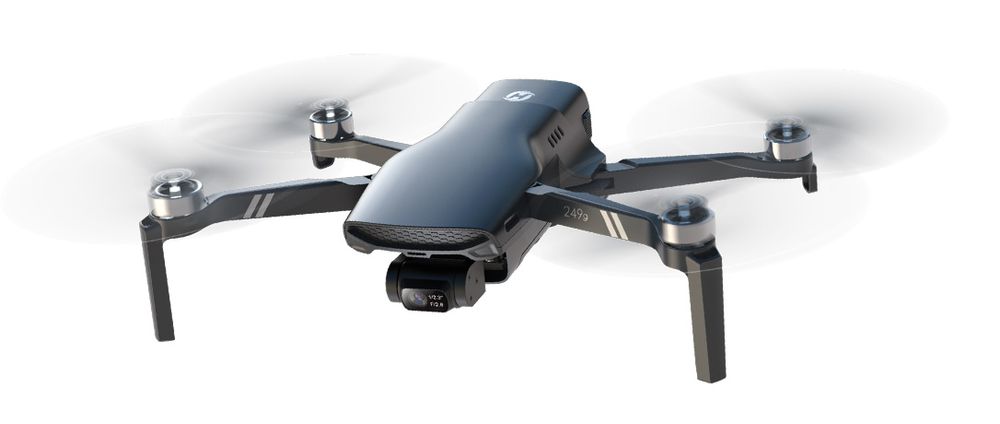
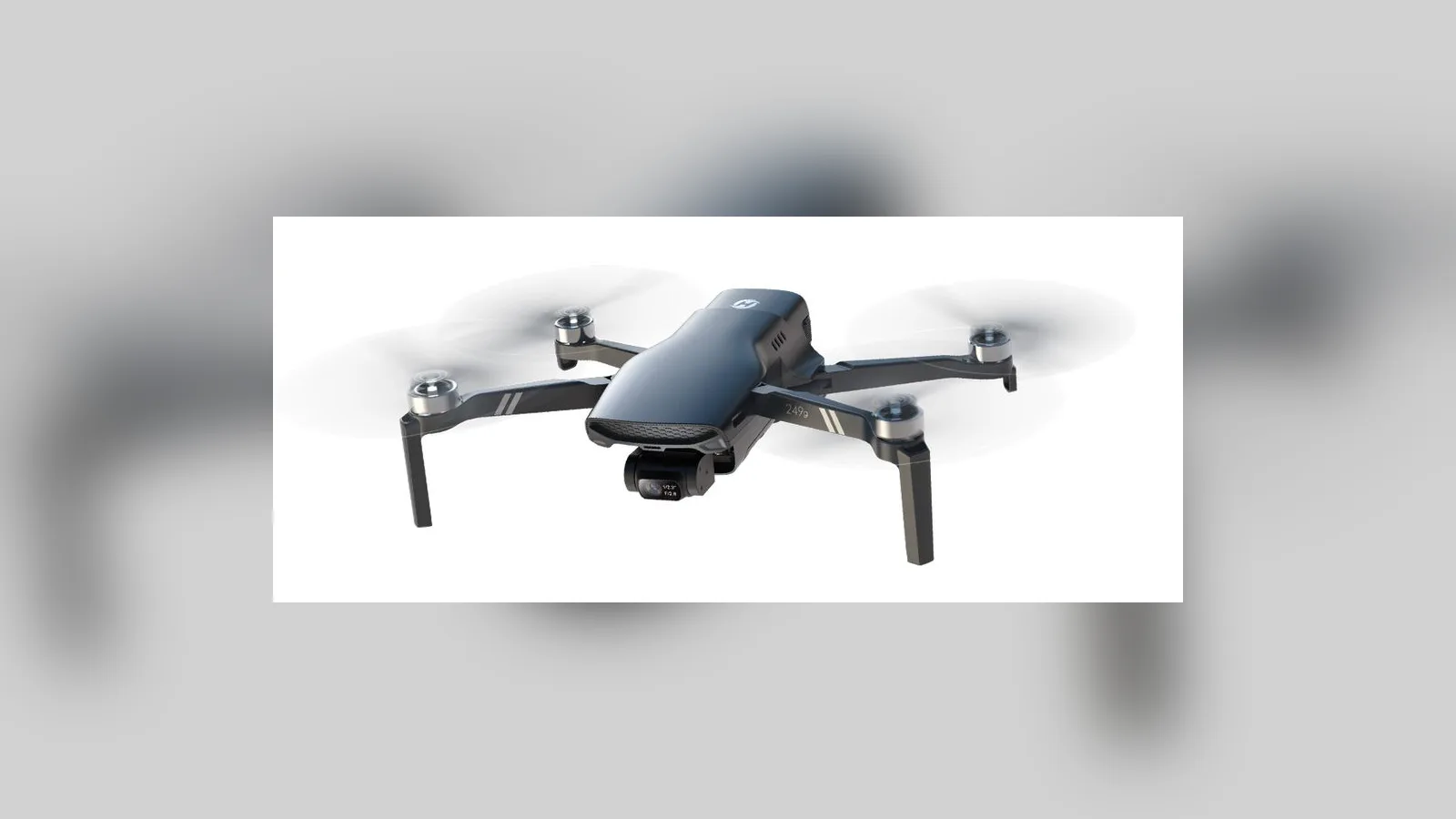
Holy Stone HS900
The most complete drone Holy Stone has made: a Sony 48MP camera on a real 3-axis gimbal, 30 minute flights and a 6 km wired link, all at 249 g. It is the one Holy Stone that argues with DJI on features, not just on value.
View on Amazon Read the full review ↓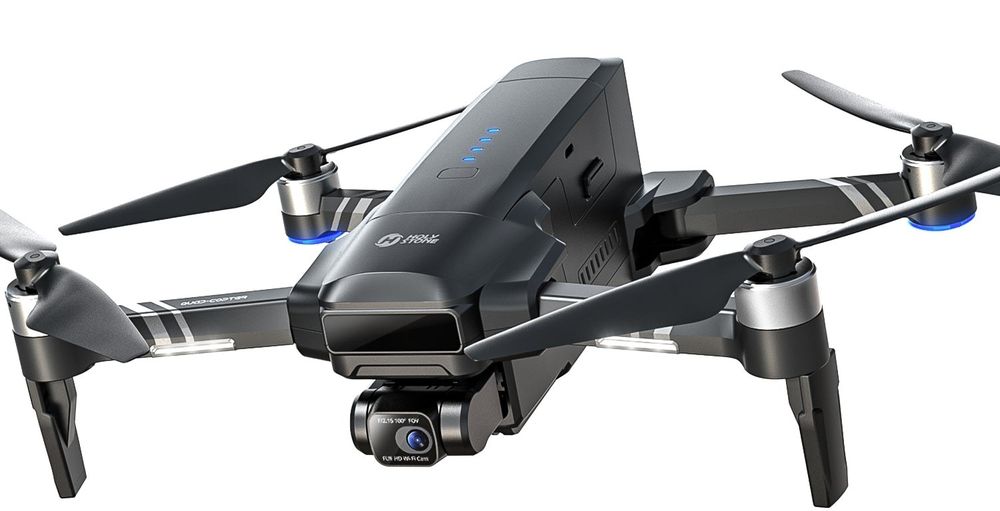
Holy Stone HS600
The long-flight heavyweight: a 603 g frame, up to 40 minutes per battery, a 2-axis gimbal with EIS and Remote ID built in. Just read its wind claim with care: the manual’s own figure is 7.9 m/s, whatever the banner says.
View on Amazon Read the full review ↓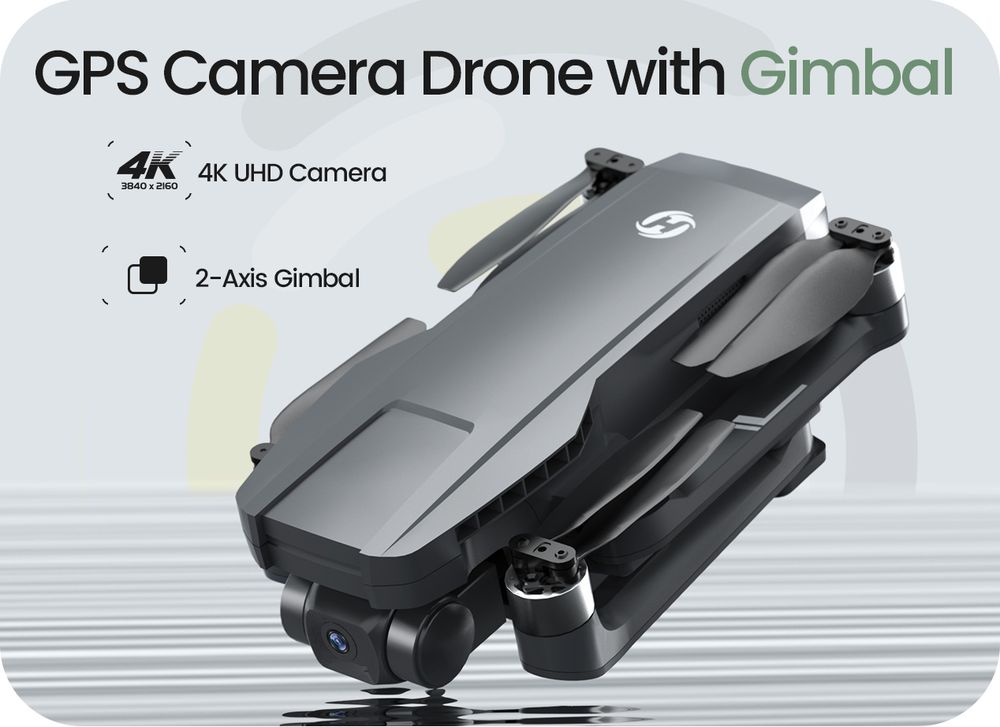
Holy Stone HS720G
The folding all-rounder that fixed the HS720’s big flaw: a 2-axis gimbal plus EIS behind the 4K Sony camera. Twenty-six minutes per battery and full GPS modes make it the classic beginner upgrade in this range.
View on Amazon Read the full review ↓The shortlist
Compare all 10 at a glance
Holy Stone drones split into three families: sub-250 g camera drones, bigger GPS all-rounders, and simple trainers with no GPS at all.
| Product / award | Best fit | Key decision point | Check current offer |
|---|---|---|---|
| 01. Holy Stone HS900Best overall | Beginners who want a gimbal and no registration | 3-axis gimbal and 48MP Sony camera; app polish trails DJI | View on Amazon |
| 02. Holy Stone HS600Best for long flights | Open-country flying and long sessions | 40 min flights and built-in Remote ID; 603 g, wind claim needs care | View on Amazon |
| 03. Holy Stone HS720GBest folding GPS camera | Beginners upgrading to gimbal footage | 2-axis gimbal + EIS and GPS modes; 999 m range is modest | View on Amazon |
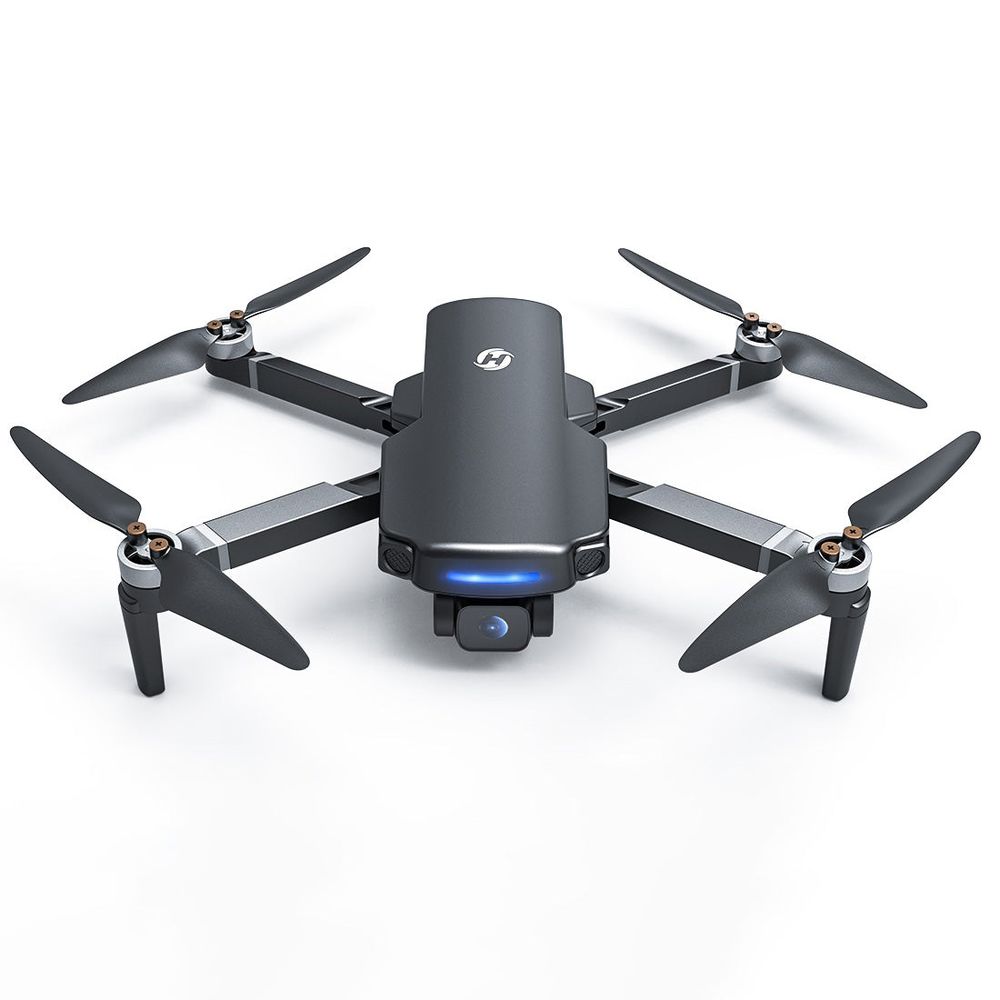 04. Holy Stone HS360SBest sub-250 g value | Travel and first GPS flights under 250 g | GPS, 3 km link and smart shots; video is 4K at 20fps to the card | View on Amazon |
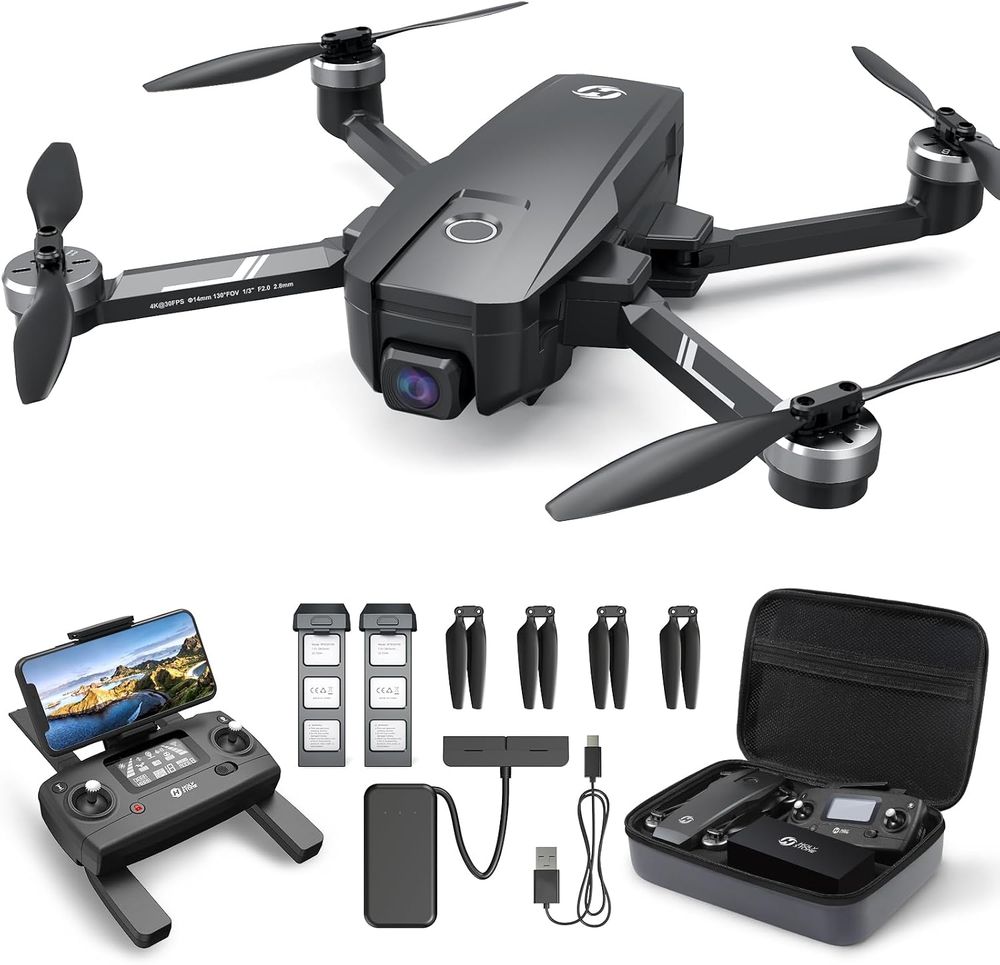 05. Holy Stone HS720EBest big-frame beginner GPS | Bigger-frame beginners who want EIS | Sony 4K with EIS and a 130° lens; 495 g, no gimbal | View on Amazon |
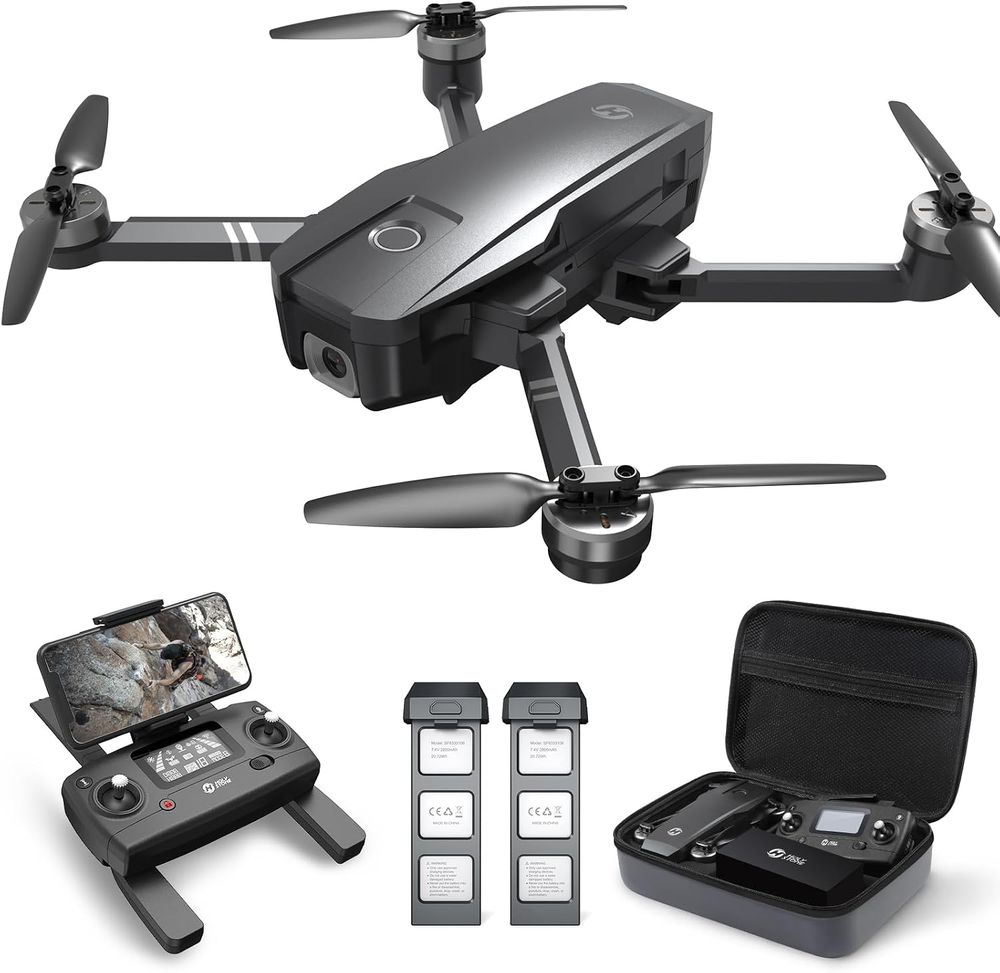 06. Holy Stone HS720Best proven classic | Proven first GPS drone on a budget | GPS modes and 26 min flights; no EIS, camera on a shock mount | View on Amazon |
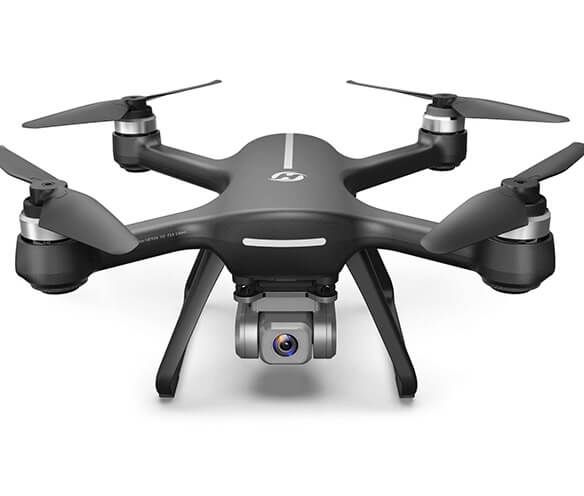 07. Holy Stone HS700EBest non-folding pick | Fans of the classic non-folding frame | GPS, EIS and a 130° lens; props come off for transport | View on Amazon |
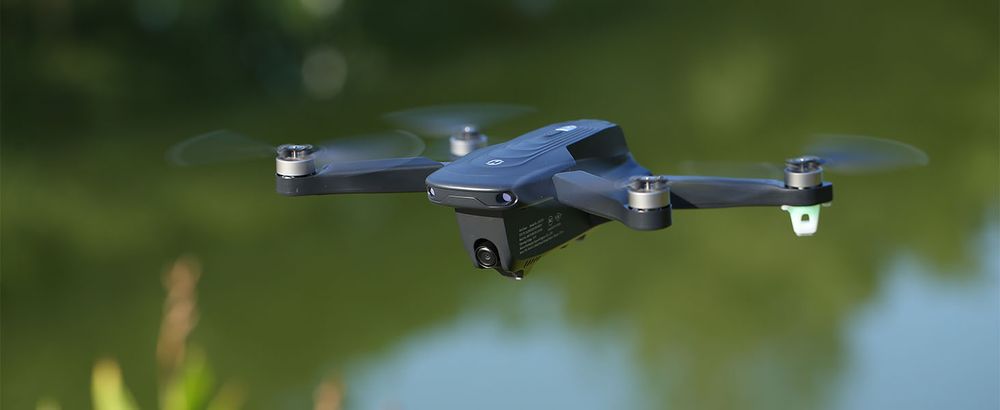 08. Holy Stone HS175DBest foldable budget GPS | Foldable GPS on the smallest budget | GPS return and Follow Me at 215 g; video is 2688×1512, not true 4K | View on Amazon |
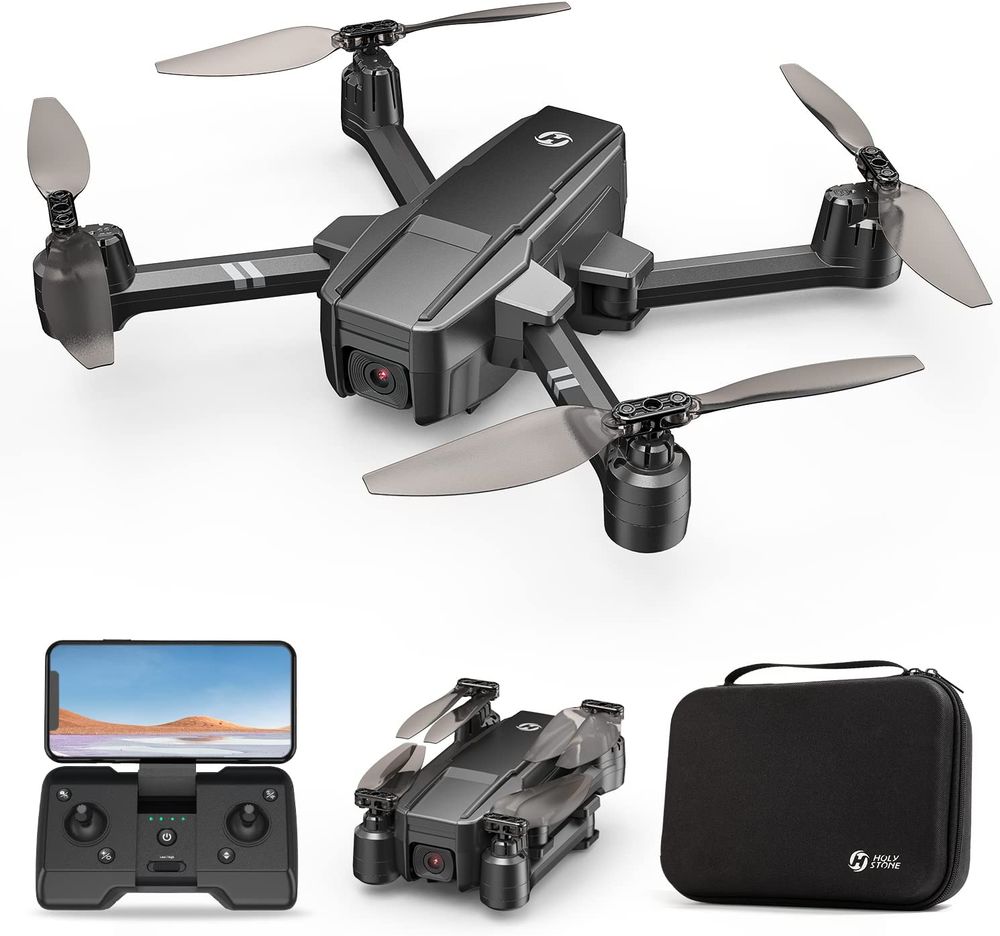 09. Holy Stone HS440Best first drone for families | First drone for families and kids | 20 min per battery and gesture control; no GPS at all | View on Amazon |
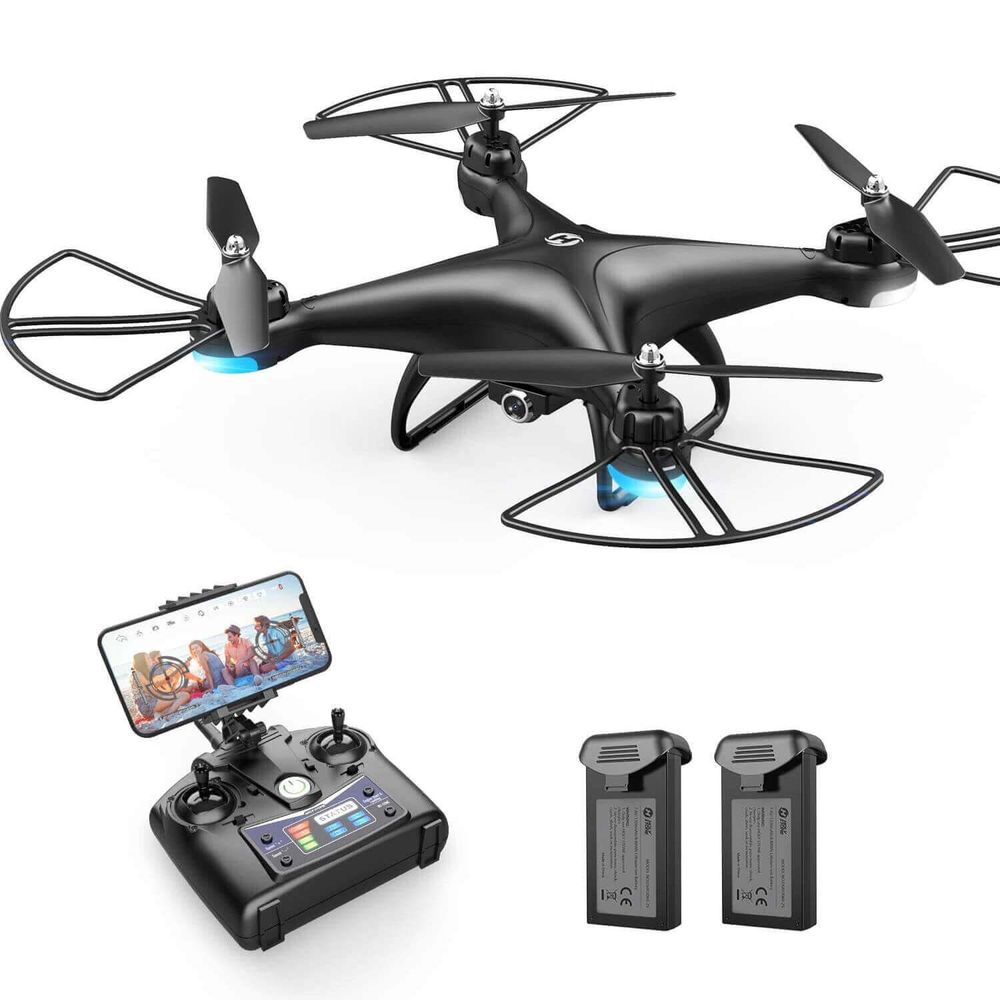 10. Holy Stone HS110DBest for total beginners | Total beginners and indoor-outdoor play | 1080p live view and simple controls; 10 min per battery, no GPS | View on Amazon |
Look closer
Our 10 picks, explained
These picks come from desk research, not hands-on testing: we compared Holy Stone’s official spec sheets and user manuals model by model, then cross-checked owner feedback and published reviews to see which claims hold up in real backyards and parks.
Holy Stone HS900
Most budget drones stabilize video with software and hope. The HS900 bolts on a real 3-axis brushless gimbal, rated to plus or minus 0.01 degrees, and the difference shows in every pan. The Sony 1/2.3-inch sensor shoots 48MP stills and 4K/30 video at up to 100 Mbps, the wired controller link reaches a claimed 20,000 ft, and smart modes include waypoints, cruise control and point of interest. It is also genuinely cold-tolerant for this brand, rated from -10 to 45 degrees C. The honest gaps are software-side: the app experience and image processing are a step behind the DJI drones it gets compared with, and there is no obstacle avoidance. As hardware, it is the strongest argument Holy Stone makes.
- Takeoff weight
- 249 g
- Flight time
- 30 min
- Camera
- Sony 1/2.3-inch CMOS, 48MP, 4K/30
Reasons to choose it
- Real 3-axis gimbal, rare at this level
- 48MP Sony camera with 100 Mbps video
- Sub-250 g with a 6 km wired link
Trade-offs to know
- App polish trails DJI Fly
- No obstacle avoidance
Choose this if: you want the best camera hardware Holy Stone sells, without registration weight.
Consider another option if: the same sub-250 g freedom matters more than the gimbal, the Holy Stone HS360S keeps GPS and 4K for less.
Holy Stone HS600
The HS600 does the unglamorous things right. A 3500 mAh battery flies up to 40 minutes, the 2-axis gimbal plus EIS keeps 4K/30 footage steady, the transmission reaches a claimed 6 km, and Remote ID is integrated, which matters because at 603 g this drone must be registered in the US anyway. Follow Me, waypoints and point of interest cover the smart-shot basics. Now the honesty note: Holy Stone markets Level 6 wind resistance for the HS600, but the manual’s specification table lists a max wind speed resistance of 7.9 m/s, closer to a fresh breeze than a gale. Its mass does help it sit steady, yet buyers in windy country should trust the number, not the banner.
- Takeoff weight
- 603 g
- Flight time
- Up to 40 min per battery
- Camera
- 4K/30, 2-axis gimbal + EIS, FOV 100°
Reasons to choose it
- Longest flights in the Holy Stone range
- Remote ID built in, nothing to add
- 2-axis gimbal plus EIS on 4K/30 video
Trade-offs to know
- Manual rates wind at 7.9 m/s, not the marketed level
- 603 g means registration and a real bag
Choose this if: you fly open land, want long sessions and value built-in compliance.
Consider another option if: you would rather skip registration entirely, the Holy Stone HS900 does gimbal duty at 249 g.
Holy Stone HS720G
The original HS720 sold in huge numbers with one obvious flaw: no real stabilization. The G model answers with a 2-axis motorized gimbal backed by EIS, a Sony sensor shooting 4K/30, and a wide 120 degree lens. The platform stays friendly: GPS plus GLONASS plus optical flow positioning, Follow Me, Tap Fly and point of interest, and 26 minutes per battery with two-battery kits stretching a session to 52. The manual claims wind resistance up to Level 6, a banner figure we could not match to a published m/s rating, so treat breezy-day confidence accordingly. Control range is 999 m, fine for legal line-of-sight flying.
- Takeoff weight
- 377 g
- Flight time
- 26 min per battery
- Camera
- 4K/30 Sony, 2-axis gimbal + EIS, FOV 120°
Reasons to choose it
- Gimbal plus EIS fixes the HS720 wobble
- Full GPS smart modes for beginners
- 26 min per battery, wide 120° lens
Trade-offs to know
- Wind claim has no published m/s figure
- 999 m range is shorter than newer models
Choose this if: you want the classic folding Holy Stone, with steadier video.
Consider another option if: a gimbal is not essential and a wider lens appeals, the Holy Stone HS720E covers similar ground with EIS alone.
Holy Stone HS360S
On paper the HS360S is the traveler’s Holy Stone: it folds to pocket size at 249 g, positions by GPS and GLONASS, and its controller connects by cable for a steadier feed than Wi-Fi drones manage. The smart-shot deck is generous for the class: Follow Me, waypoints, point of interest, Tap Fly, spiral and time-lapse. The camera needs honest framing: photos are 4K, but video to the card is 3840×2160 at 20fps, and stabilization is electronic rather than a gimbal, so pans can judder. Flight time is 20 minutes per battery and the operating range starts at -10 degrees C, unusually cold-tolerant here.
- Takeoff weight
- 249 g
- Flight time
- 20 min per battery
- Camera
- 4K UHD, FOV 85°, 90° adjustable, EIS
Reasons to choose it
- GPS and GLONASS at 249 g
- Wired link reaches a claimed 3 km
- Full one-tap smart shot deck
Trade-offs to know
- 4K video records at 20fps to the card
- Electronic stabilization only, no gimbal
Choose this if: you want GPS and smart shots in a sub-250 g folder.
Consider another option if: footage quality is the priority and the budget stretches, the Holy Stone HS900 adds a real 3-axis gimbal.
Holy Stone HS720E
The E was the HS720 refined for video: a Sony sensor behind a very wide 130 degree lens, electronic stabilization smoothing the output, and 4K recorded to the card. GPS with Follow Me, Tap Fly and point of interest covers the beginner shot list, and the 2800 mAh batteries fly 23 minutes each, 46 across a two-battery kit. Control reaches 999 m with a 500 m FPV feed. The frame does not pretend to be a mini: at 495 g it needs registration and a proper bag, and EIS cannot fully match a gimbal when gusts rock the airframe. It remains widely stocked with cheap spares.
- Takeoff weight
- 495 g
- Flight time
- 23 min per battery
- Camera
- 4K EIS Sony, FOV 130°
Reasons to choose it
- Wide 130° Sony lens for scenery
- EIS smooths 4K without gimbal cost
- 46 min across a two-battery kit
Trade-offs to know
- 495 g means registration
- EIS alone struggles in gusts
Choose this if: you like a bigger, sturdier frame and mostly film in daylight.
Consider another option if: steadier footage matters more than lens width, the Holy Stone HS720G adds a real 2-axis gimbal.
Holy Stone HS720
Few budget drones have taught more people to fly. The HS720 pairs GPS and optical flow positioning with Follow Me, point of interest and waypoint flight, folds for transport, and flies 26 minutes per battery, 52 across the usual two-battery kit. The camera records genuine 4K to the card, but it hangs on a shock-absorption mount rather than a gimbal, and there is no EIS, so the horizon rolls and jitters when the air gets busy. Owners forgive it because everything else is simple, tough and cheap to feed with spare parts. Buy it as a trainer you will not cry over, and its footage limits are a fair trade.
- Takeoff weight
- About 460 g
- Flight time
- 26 min per battery
- Camera
- 4K UHD, shock mount, FOV 120°
Reasons to choose it
- Proven, simple and tough trainer
- Full GPS modes, 52 min per kit
- Cheap spares and huge owner base
Trade-offs to know
- No EIS or gimbal, footage wobbles
- Camera is the weakest of the GPS picks
Choose this if: you want a first GPS drone to learn on, not to publish from.
Consider another option if: you like this platform but plan to keep the footage, the Holy Stone HS720G is the same idea with a gimbal.
Holy Stone HS700E
Before Holy Stone went all-in on folders, the HS700E was its flagship shape: a fixed quadcopter frame with tall landing gear, GPS plus GLONASS positioning and a 4K camera with EIS behind a 130 degree lens. Reviewers who flew it praised the calm, responsive handling, and the spec sheet backs the feel: brushless motors, 2800 mAh batteries at 23 minutes each and smart modes including Follow Me, orbit and waypoints. The compromises are packaging and polish: the propellers must come off for transport, the fixed frame fills a case, and image quality drew criticism even in its day. Weight figures vary by source between about 526 and 557 g.
- Takeoff weight
- 557 g
- Flight time
- 23 min per battery
- Camera
- 4K EIS, FOV 130°
Reasons to choose it
- Calm, steady handling reviewers praised
- GPS + GLONASS with smart modes
- Big fixed frame shrugs off breezes
Trade-offs to know
- Does not fold; props off to pack
- Camera quality is dated
Choose this if: you fly from home or a field and rarely pack a bag.
Consider another option if: the same money needs to travel, the Holy Stone HS720G folds into a small case.
Holy Stone HS175D
The HS175D’s job is to make a first GPS drone feel safe, and it does: GPS auto return on low battery or lost signal, Follow Me, circle fly and waypoints, all at 215 g with brushless motors and a folding frame. Two 1700 mAh batteries fly 23 minutes each. Read the camera line carefully, because this is where budget drones blur the truth: stills are a genuine 4096×3072, but video saved to the card is 2688×1512, closer to 2.7K than the 4K on the box. Holy Stone’s own spec also lists max wind resistance of just 2 m/s, so this is a calm-morning drone. Within those honest limits, it is a friendly, forgiving first aircraft.
- Takeoff weight
- 215 g
- Flight time
- 23 min per battery
- Camera
- 2688×1512 video to card, FOV 110°
Reasons to choose it
- Real GPS safety at 215 g
- Two batteries included, 46 min total
- Follow Me, waypoints and circle fly
Trade-offs to know
- Video is 2688×1512 despite the 4K badge
- Rated for only 2 m/s wind, calm days only
Choose this if: you want GPS confidence for the least spend.
Consider another option if: you can step up once, the Holy Stone HS360S adds true 4K photos and a 3 km link.
Holy Stone HS440
Not every first drone needs satellites. The HS440 holds altitude, answers gestures and voice commands, flies trajectory paths drawn on the phone, and its camera tilts 90 degrees by remote for 1080p video and group selfies. Two batteries at 20 minutes each give a family session real length, and the foldable 166 g frame travels in its own case. The limits are structural: with no GPS there is no position hold and no auto return, range is about 100 m, and any real breeze pushes it around. Treat it as a backyard and park trainer that teaches stick skills safely, and it is excellent.
- Takeoff weight
- 166 g
- Flight time
- 20 min per battery
- Camera
- 1080p, FOV 112°, 90° adjustable
Reasons to choose it
- Gesture, voice and trajectory control
- Two batteries, 40 min of family flying
- Light, foldable and forgiving
Trade-offs to know
- No GPS: no position hold or auto return
- About 100 m range, backyard scale
Choose this if: a first drone for the family, flown close and low.
Consider another option if: the kids are ready for real GPS safety, the Holy Stone HS175D adds auto return for a small step up.
Holy Stone HS110D
The HS110D has started more pilots than any other drone on this page. It weighs 149 g, holds altitude, flies headless so orientation never confuses a new thumb, and answers voice and gesture commands for party-trick selfies. The 120 degree camera streams live view to the phone and records 1080p to a card. Gravity sensor control lets a phone tilt steer it, which some beginners find easier than sticks. The honest limits: about 10 minutes per battery, a 100 to 150 m range, simple hardware and no GPS, so it belongs in calm air over soft ground. Spare parts cost very little.
- Takeoff weight
- 149 g
- Flight time
- 10 min per battery
- Camera
- 1080p to card, FOV 120°
Reasons to choose it
- Easiest controls in the range
- Voice, gesture and gravity control
- Light and cheap to replace
Trade-offs to know
- 10 min per battery is short
- No GPS and a 150 m ceiling on range
Choose this if: a first-ever drone for a kid or a nervous adult.
Consider another option if: the beginner is already hooked, the Holy Stone HS440 doubles flight time and adds remote camera tilt.
Buy with confidence
How to choose the right Holy Stone drone
Four checks that sort the range faster than any spec sheet.
01. Decide if you need GPS
GPS is the dividing line of this range. The HS900 down to the HS175D all position by satellite, which buys position hold, auto return on low battery or lost signal, and smart modes like Follow Me and waypoints. The HS440 and HS110D skip it to hit their prices: they are trainers for calm, close flying, and the first real breeze is theirs to lose.
02. Read the manual, not the banner
Holy Stone’s marketing occasionally outruns its manuals, and this guide used the manuals. The HS600’s wind banner says Level 6 while its spec table says 7.9 m/s; the HS175D’s 4K badge describes its photos while video records at 2688×1512; the HS360S shoots 4K at 20fps. None of this makes them bad drones. It makes the manual the document to trust before money moves.
03. Count batteries, not minutes
Holy Stone flight times are per battery, and most kits include two. A 23 minute drone with two batteries in the box flies a 46 minute session, which beats a 30 minute drone sold with one. Check the kit contents before comparing headline times, and note the slow chargers in this range: several batteries take hours, not minutes, to refill.
04. Know the 250 g line
Three picks here, the HS900, HS360S and HS175D, stay under 250 g and skip recreational registration in the US. Everything heavier, from the HS720G up to the 603 g HS600, must be registered, and the HS600 also builds Remote ID in. Weight is not a flaw, the heavier drones sit steadier in wind, but it is a paperwork decision to make on purpose.
Behind the recommendations
How we selected these products
This guide is built on desk research, not hands-on testing. We compared Holy Stone’s official product pages, store listings and user manuals model by model, and where marketing claims and manual specifications disagreed, we used the manual. The shortlist was then cross-checked against owner feedback and published reviews. Specs were rechecked against the sources below in October 2026. Where a figure is a lab rating, such as flight time, we treat it as a ceiling, not a promise.
- Camera and stabilization: sensor, video resolution as recorded to the card, and whether stabilization is a gimbal, electronic or a shock mount, taken from official manuals and spec sheets.
- Flight and positioning: takeoff weight, per-battery flight time, positioning systems and control range, compared like for like across the range.
- Limitations: we did not fly these drones for this guide, Holy Stone revises models and bundles without renaming them, and some figures differ between sources, so confirm the exact model and manual revision before buying.
Common questions
Before you buy
Which Holy Stone drone is best for a total beginner?
For a beginner who wants to film, the HS720G: GPS positioning, a real gimbal and forgiving smart modes in a folding frame. For a beginner who just wants to learn the sticks, the HS440 or HS110D cost less to crash.
Do Holy Stone drones need FAA registration?
The sub-250 g models, the HS900, HS360S and HS175D, do not need registration for recreational flying in the US. Everything heavier does, including the HS720 family, the HS700E and the HS600. The HS600 also has Remote ID built in. Commercial use changes the rules for every weight, so check the FAA guidance for your kind of flying.
Why do some Holy Stone drones say 4K but record less?
Because the badge often describes the photo resolution or the marketing name, not the video file. The HS175D shoots 4096×3072 stills but records 2688×1512 video to the card, and the HS360S records its 4K at 20fps. This guide lists the figure that lands on the memory card, which is the one your footage is made of.
Holy Stone or DJI at the same money?
DJI wins on app polish, obstacle sensing and resale, and its cameras process better in low light. Holy Stone wins on what comes in the box: two batteries, a case and spares are routine, and its GPS drones undercut DJI’s by a wide margin. If the drone is a learning tool or a family purchase, Holy Stone’s value is real. If it is a production tool, DJI earns the difference.
Choose the best fit from the Holy Stone range
Start with the HS900 if you want the brand’s best camera hardware without registration weight, or the HS720G for the classic folding all-rounder. Whichever you pick, read its manual’s spec table before the first flight, not after the first surprise. Every pick here includes the batteries to actually fly a session.
Sources and verification
Product specifications and claims in this guide were checked against the following sources, listed by name as a record of what was consulted.
- Holy Stone official product pages and specifications for the HS900, HS600, HS720G, HS360S, HS720E, HS720, HS700E, HS175D, HS440 and HS110D (holystone.com)
- Holy Stone official online store listings (store.holystone.com)
- Holy Stone user manuals for each shortlisted model (Holy Stone)
- Published reviews and owner feedback for the shortlisted models, cross-checked in October 2026