
As an Amazon Associate I earn from qualifying purchases. If you buy through links in this article, we may earn a commission at no extra cost to you.
These are the 10 best micro FPV drones in the two sizes that own indoor flying: 65mm and 75mm brushless whoops. Every pick is a ducted featherweight built to bounce off furniture and keep flying, from a DJI O4 HD machine at 66mm to analog racers that weigh less than 20 g. We ranked all 10 on weight, video system, flight time and value, using manufacturer specifications throughout, so you can pick the whoop that fits your rooms and your radio.
Short on time?
Start with these three picks
One HD flagship for the class, one 75mm all-rounder, and one 17 g racer that treats furniture as a slalom course.
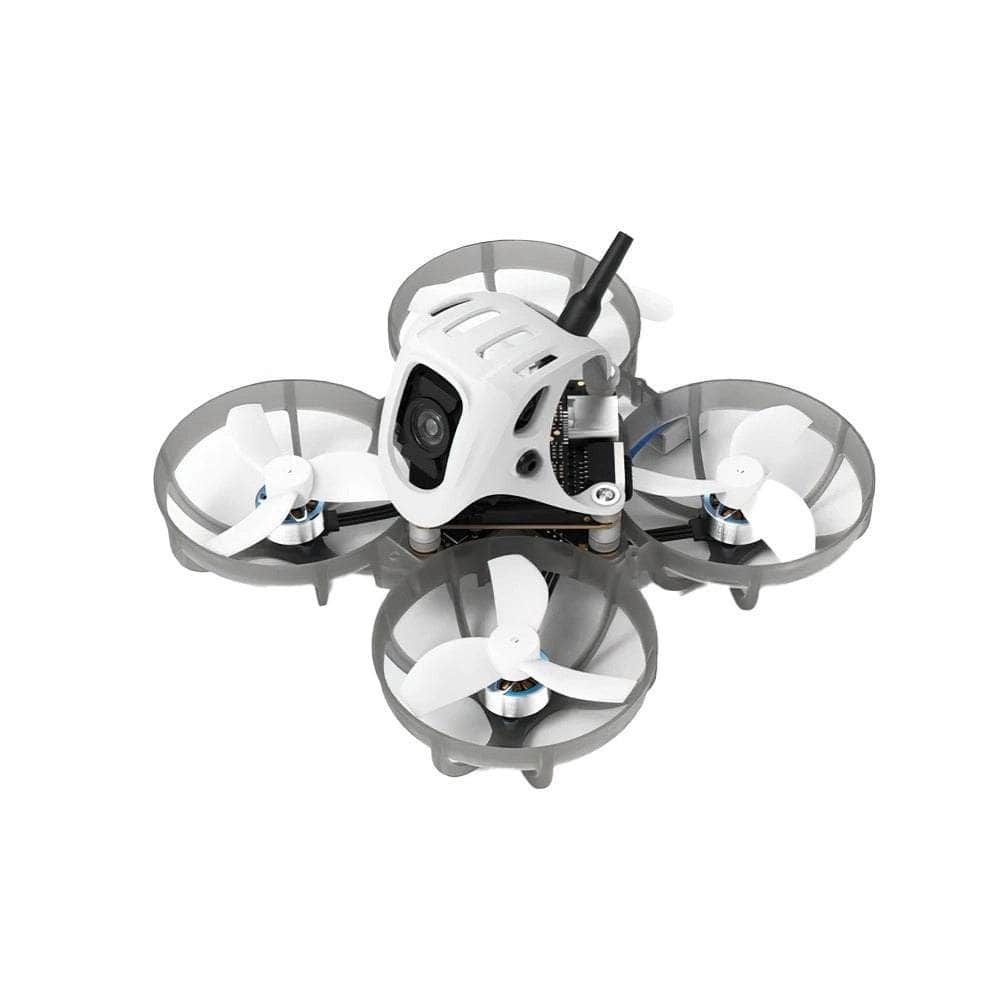
BETAFPV Meteor65 Pro
A DJI O4 air unit on a 66mm frame: true HD feed and 4K recording at 28.53 g. Flights run under three minutes, the tax every HD whoop pays, and creators pay it gladly.
View on Amazon Read the full review ↓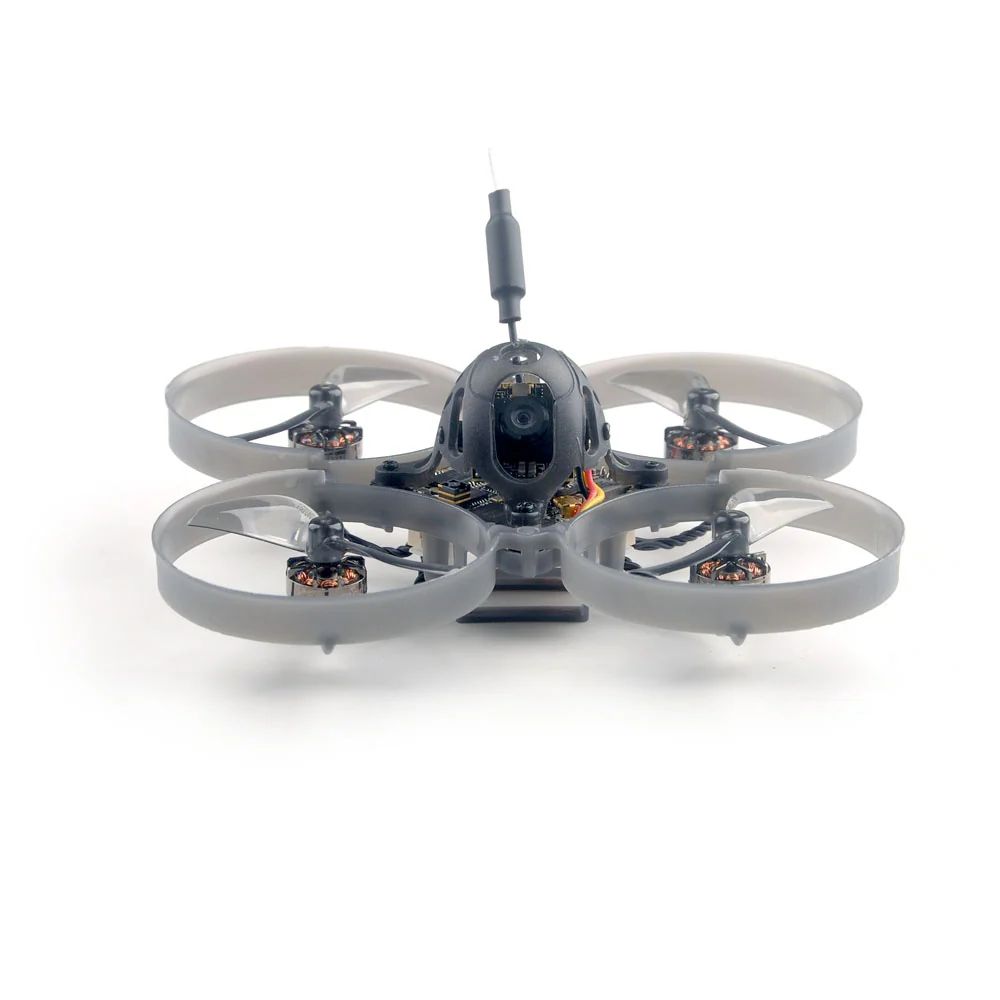
Happymodel Mobula7 1S
The 75mm default: 24 g, an X12 5-in-1 board with ELRS and 400mW OpenVTX, and calm manners that handle a whole house and a still garden. The whoop other 75s are compared to.
View on Amazon Read the full review ↓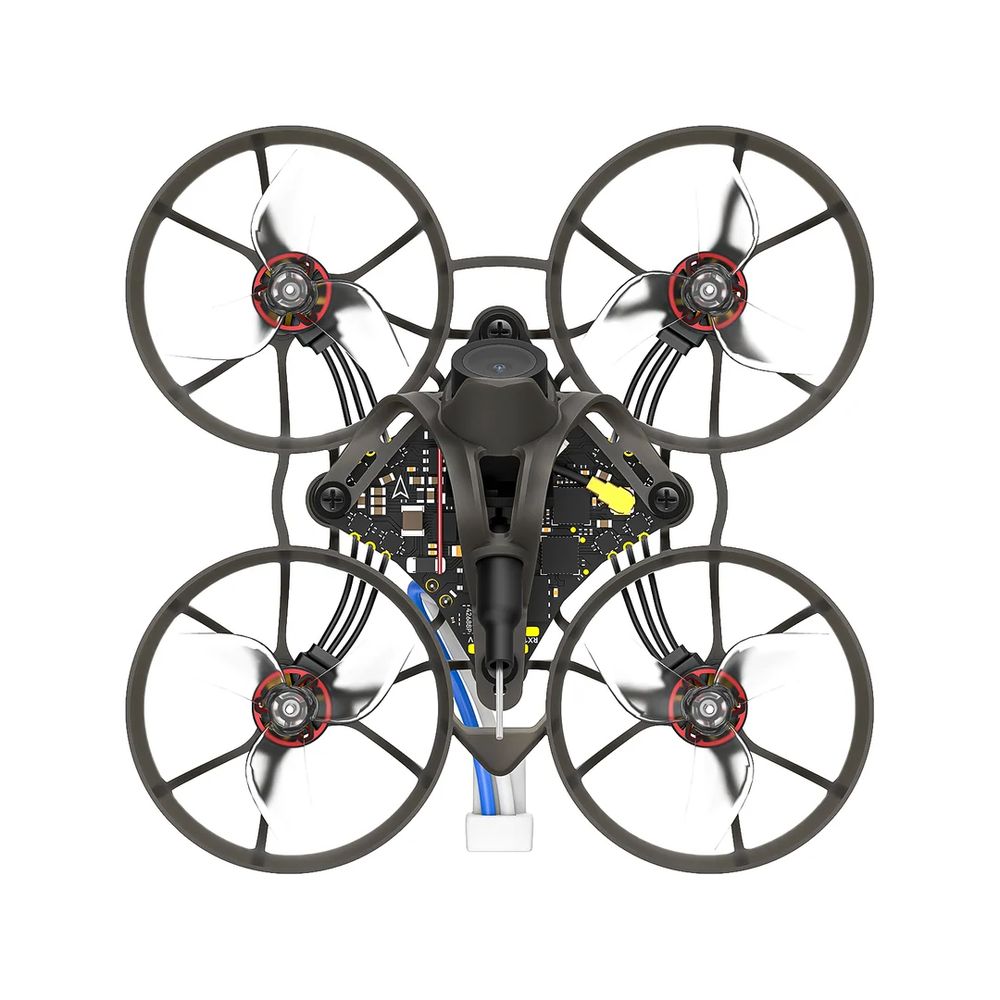
BETAFPV Air65
Whoop racing distilled: 17.3 g, 27000KV motors and a 5-in-1 Air board. Fragile in the way race gear is fragile, and faster around a living room than anything else here.
View on Amazon Read the full review ↓The shortlist
Compare all 10 at a glance
For a micro whoop, three things decide the flying: how much it weighs, which video system it feeds, and how long a 1S pack lasts.
| Product / award | Best fit | Key decision point | Check current offer |
|---|---|---|---|
| 01. BETAFPV Meteor65 ProBest overall | HD indoor flying and recording | DJI O4 at 66mm; under 3 min per pack | View on Amazon |
| 02. Happymodel Mobula7 1SBest 75mm all-rounder | House and garden all-rounder | ELRS and 400mW VTX; analog only | View on Amazon |
| 03. BETAFPV Air65Best for racing | Whoop racing and skilled pilots | 17.3 g racer; delicate frame | View on Amazon |
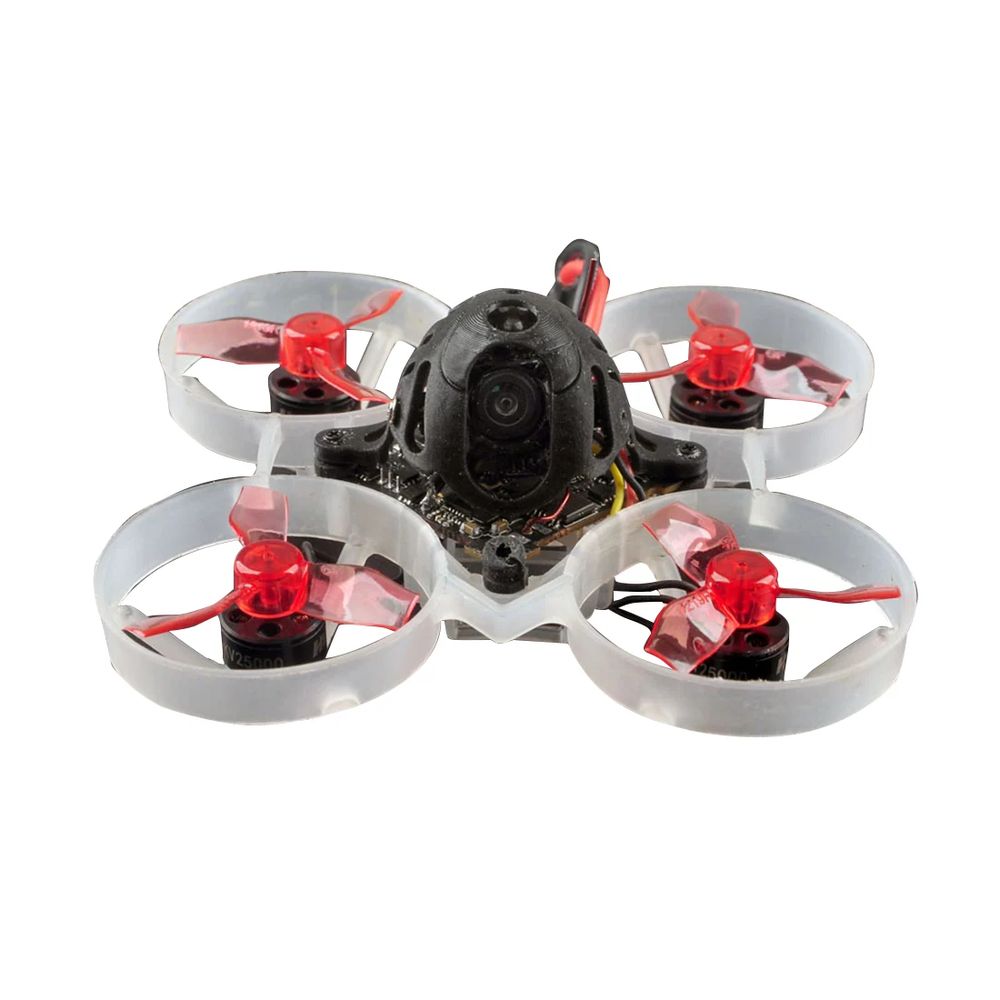 04. Happymodel Mobula6Best classic 65mm | First whoop, tight budgets | Proven and cheap; FrSky era receiver | View on Amazon |
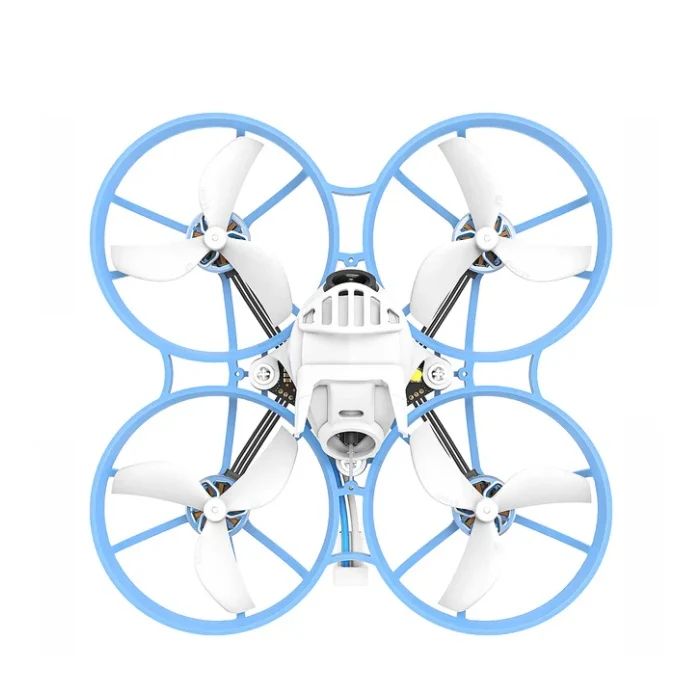 05. BETAFPV Meteor75 ProBest 75mm freestyle | Freestyle, inside and out | Big thrust and 400mW VTX; heavy for the class | View on Amazon |
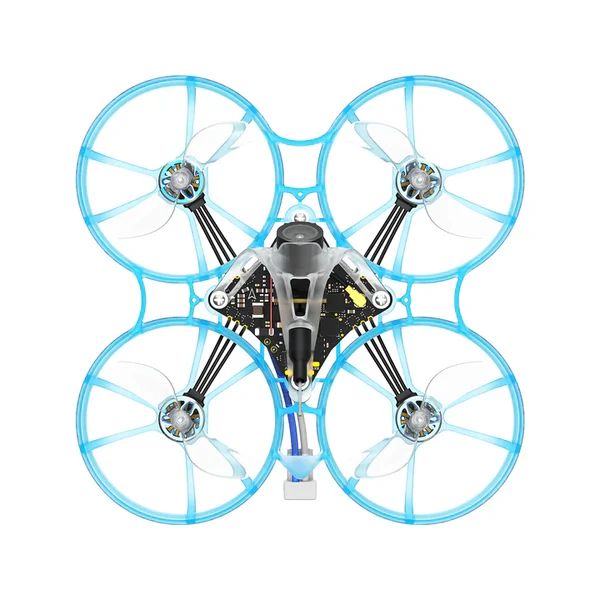 06. BETAFPV Air75Best lightweight 75mm | Long indoor lines, smooth flying | 6.5 min flights at 21 g; analog only | View on Amazon |
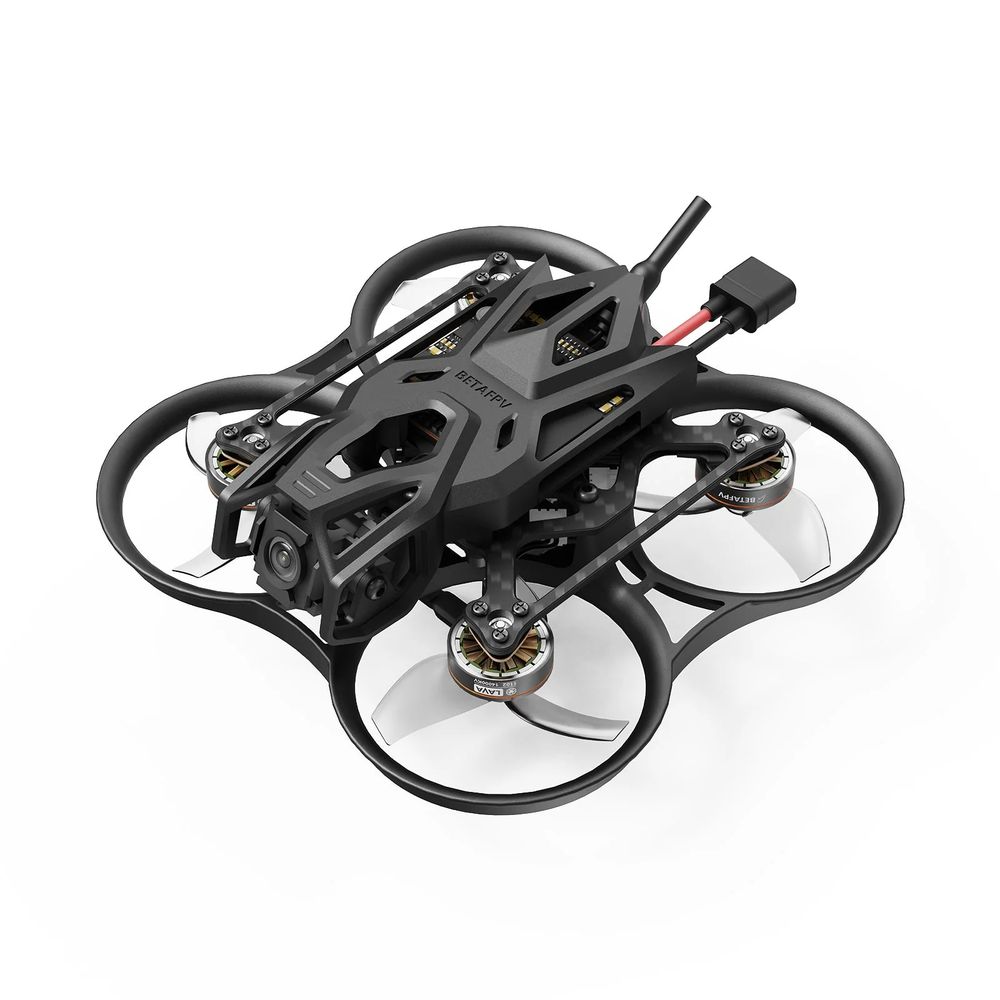 07. BETAFPV Pavo FemtoBest HD micro | Smallest DJI HD recording whoop | O4 Lite and 2S; 84 g with battery | View on Amazon |
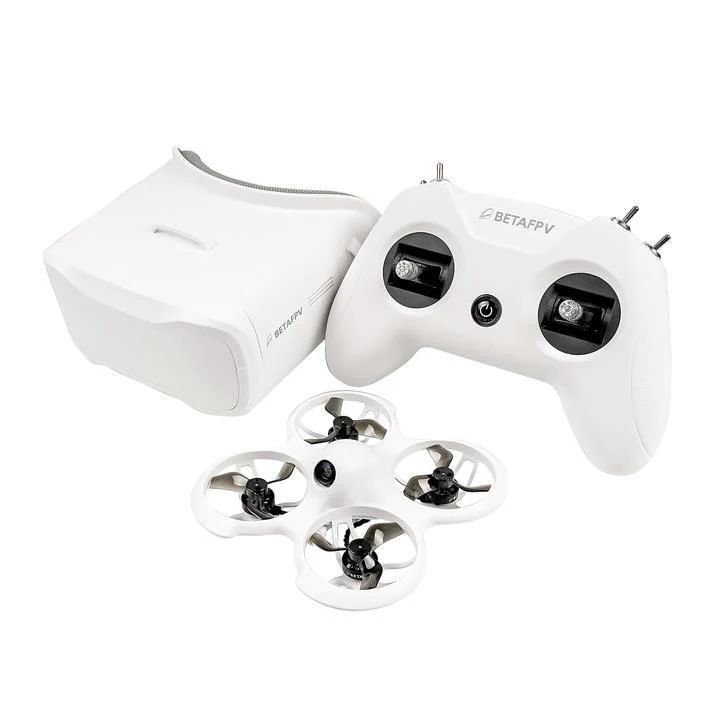 08. BETAFPV Cetus Pro FPV KitBest first FPV kit | First FPV kit for total beginners | Full kit with training modes; short range | View on Amazon |
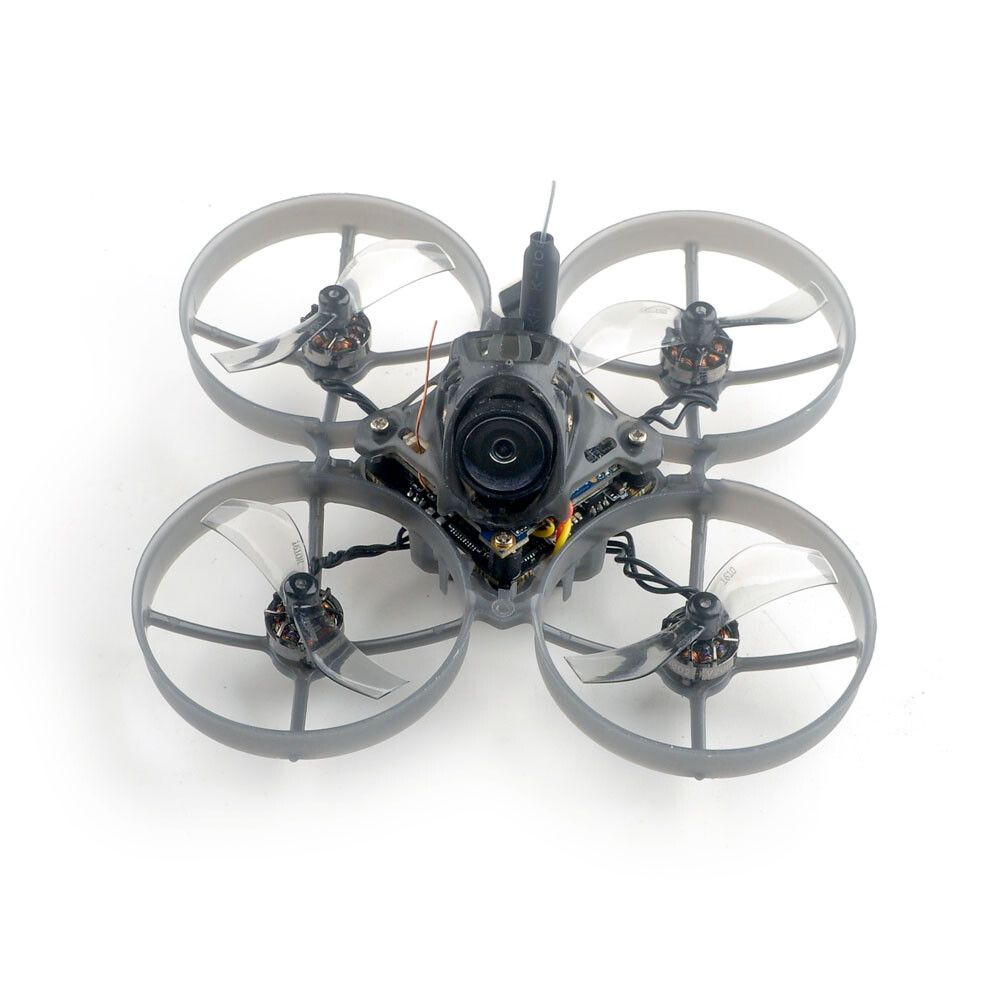 09. Happymodel Mobula7 1S HDBest for recording flights | Recording flights on a budget | 1080p onboard DVR; analog live feed | View on Amazon |
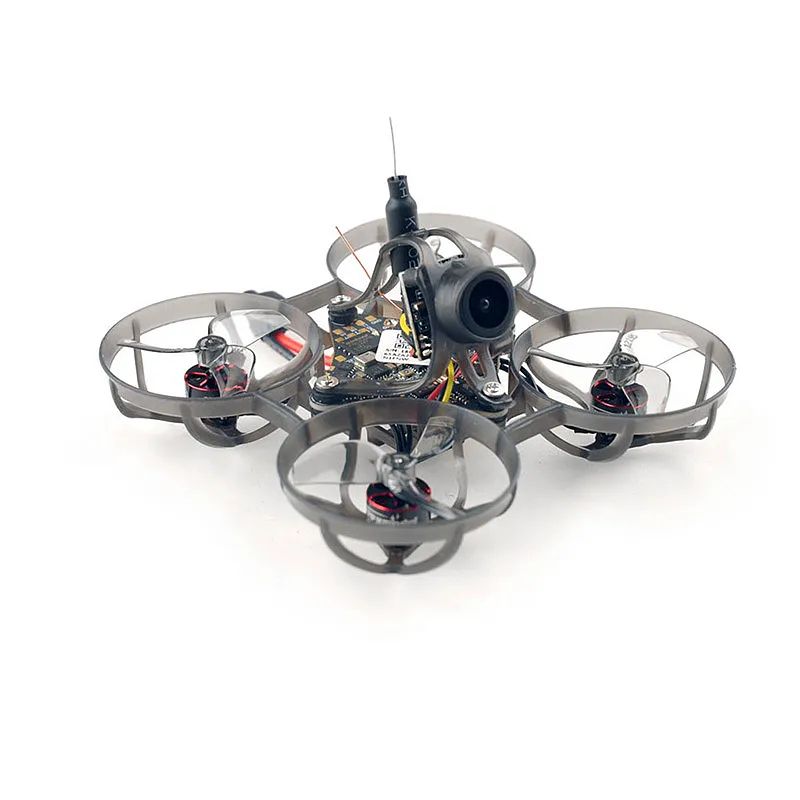 10. Happymodel Mobula6 2024Best ultralight racer | Fresh starts on ELRS | 28000KV and ELRS; same name as the old one | View on Amazon |
Look closer
Our 10 picks, explained
These picks come from desk research, not hands-on testing: we compared manufacturer spec sheets and manuals line by line, then cross-checked owner feedback and published reviews for each model.
BETAFPV Meteor65 Pro
Putting a DJI O4 unit on a 65mm whoop sounded like a stunt until BetaFPV shipped it. The Meteor65 Pro pairs the O4 with a Matrix 1S 3IN1 HD flight controller and 0802SE 19500KV motors, and the result is a whoop that feeds your goggles a crisp digital picture and records footage worth keeping, at 28.53 g ready to fly. The physics bill arrives as flight time: about two minutes forty from a 300mAh 1S pack, so a session means a charger and a strip of batteries. For indoor creators who want HD without stepping up to a 75mm or a cinewhoop, it stands alone in its class.
- Wheelbase
- 66mm
- Weight
- 28.53 g
- Video system
- DJI O4 HD, 4K recording
Reasons to choose it
- Real HD feed and recording at 65mm
- Still only 28.53 g ready to fly
- Serial ELRS receiver as standard
Trade-offs to know
- About 2 min 40 s per 300mAh pack
- Priciest way into the 65mm class
Choose this if: you want HD video and recording in the smallest class.
Consider another option if: flight time matters more, the analog 65mm picks fly twice as long per pack.
Happymodel Mobula7 1S
Happymodel’s Mobula7 defined the modern 1S 75mm whoop and the current version is the polished one: an X12 5-in-1 AIO with a built-in ELRS 2.0 receiver and OpenVTX up to 400mW, RS0802 20000KV motors and the Runcam Nano3 camera, all in a 99mm square frame at about 24 g. The extra size over a 65mm brings calm: it shrugs off air-conditioning drift and light outdoor breezes that bully smaller whoops, and carries 450 to 650mAh 1S packs for longer sessions. Analog video is the deliberate trade, keeping weight and cost down. For a first serious whoop or a house-and-garden all-rounder, this is the shape to beat.
- Wheelbase
- 75mm
- Weight
- About 24 g
- Video
- Runcam Nano3 analog, OpenVTX to 400mW
Reasons to choose it
- Calm, confident 75mm handling
- ELRS and 400mW VTX built in
- Takes 450 to 650mAh 1S packs
Trade-offs to know
- Analog feed only at this price
- Bigger footprint than 65mm for tight flats
Choose this if: you want one whoop for the whole house and garden.
Consider another option if: your rooms are small and tight, a 65mm pick turns in half the space.
BETAFPV Air65
BetaFPV built the Air series by removing everything a racer does not need. The Air65 weighs 17.3 g ready to fly, pairs 0702SE II 27000KV motors with Gemfan 1219S props, and runs a G473-based 5IN1 Air flight controller with a serial ELRS receiver and the little C03 analog camera. The result is the sharpest throttle response in this list: it changes direction like it is on rails and floats through gate courses laid out in a living room. The costs are delicacy and appetite: light frames crack in repeated wall strikes, and it sips 260 to 300mAh LAVA packs quickly. Racers and skilled indoor pilots will not care.
- Weight
- 17.3 g
- Motors
- 0702SE II 27000KV
- Video
- C03 analog camera, ELRS receiver
Reasons to choose it
- Lightest serious whoop here
- Race-bred response and handling
- Modern 5-in-1 board with ELRS
Trade-offs to know
- Light frame cracks under abuse
- Short flights on small packs
Choose this if: you race gates or want the sharpest indoor handling.
Consider another option if: you are still crashing every pack, the Mobula7 forgives more.
Happymodel Mobula6
Every class has a founding product, and for 65mm brushless whoops it is this one. The Mobula6 pairs SE0802 19000KV motors with Gemfan 1219-3 props on the Crazybee F4 Lite AIO, feeds a Runcam Nano3 800TVL picture through a built-in 25mW VTX, and does it all at about 20 g on a 300mAh 1S LiHV. It flies exactly as a house whoop should: quiet, nimble and nearly impossible to break anything with, including itself. The honest caveats are age: the FrSky receiver on this listing predates the ELRS era, and 25mW limits video range to a house and garden. At its current price, neither flaw is hard to forgive.
- Wheelbase
- 65mm
- Weight
- About 20 g
- Video
- Runcam Nano3 800TVL, built-in 25mW VTX
Reasons to choose it
- The proven 65mm formula, huge parts support
- Gentle, quiet, beginner-proof manners
- Cheap to buy and cheaper to crash
Trade-offs to know
- FrSky receiver predates ELRS
- 25mW VTX limits range to the house
Choose this if: you want the classic starter whoop at the lowest price.
Consider another option if: you are buying into ELRS now, the current Mobula6 at pick 10 is the updated version.
BETAFPV Meteor75 Pro
Where the Air75 chases lightness, the Meteor75 Pro chases thrust. The Matrix 1S 5-in-1 board (G473, serial ELRS, 25 to 400mW VTX) drives 1102 22000KV motors and 45mm three-blade props, sized for the bigger BT2.0 550mAh 1S packs, and the combination hauls this 30.43 g whoop around outdoor lines that leave 65mm machines weathervaning. The C03 analog camera keeps the feed simple and light. Indoors it is a handful in the best way: more momentum, more authority, and more respect for the furniture required. For pilots who fly one whoop inside and out and lean freestyle, this is the 75mm to buy.
- Weight
- 30.43 g without battery
- Motors
- 1102 22000KV
- Video
- C03 analog, VTX up to 400mW
Reasons to choose it
- Strongest thrust in this list
- 400mW VTX for outdoor range
- Built for 550mAh BT2.0 packs
Trade-offs to know
- Heaviest pick here at 30.43 g
- A handful in small rooms
Choose this if: you freestyle one whoop indoors and out.
Consider another option if: your flying is all indoors, the Air75 is calmer and lighter.
BETAFPV Air75
If the Air65 is a scalpel, the Air75 is the chef’s knife: still light at 21 g without battery, but with the calmer manners and longer legs of the 75mm class. The 5IN1 Air board (G473) runs serial ELRS, the 0802SE 23000KV motors spin Gemfan 40mm two-blade props, and the C03 camera feeds a VTX adjustable from 25 to 400mW. The standout number is endurance: about six and a half minutes on a 1S 450mAh LAVA pack, roughly double a racing 65. For pilots who fly whole houses, offices and warehouses and value smooth lines over gate speed, it is arguably the best-balanced analog whoop BetaFPV makes.
- Wheelbase
- 75mm
- Weight
- 21 g without battery
- Flight time
- About 6.5 min on 1S 450mAh
Reasons to choose it
- About 6.5-minute flights, double a racer
- Featherweight 21 g build
- ELRS and adjustable VTX power
Trade-offs to know
- Analog feed, no recording
- Light build dislikes hard crashes
Choose this if: you fly long indoor lines and value smooth endurance.
Consider another option if: you want onboard recording, look at the Mobula7 HD or the Femto.
BETAFPV Pavo Femto
BetaFPV’s Femto answers a specific brief: how small can a proper DJI HD whoop be? The answer is a 75mm frame on 2S power, LAVA 1102 14000KV motors and Gemfan 1611 props, with a shock-absorbed mount for the DJI O4 Lite air unit and its 4K recording. At 54.8 g without battery (84.4 g with the recommended 2S 550mAh) it is double the analog 75s, and it flies with a planted, cinewhoop-like calm rather than whoop twitchiness, hovering about five minutes per pack. The F4 2-3S 20A AIO and ELRS keep the electronics current. For creators who shoot interiors and want the smallest DJI-native tool, the Femto is it.
- Wheelbase
- 75mm, 2S power
- Weight
- 54.8 g without battery
- Video system
- DJI O4 Lite, 4K recording
Reasons to choose it
- DJI HD and 4K in a 75mm frame
- 2S punch, planted cinewhoop manners
- Shock-absorbed O4 mount
Trade-offs to know
- Heavy for a whoop at 84 g all-up
- About 5 minutes per pack
Choose this if: you record interiors and want DJI quality at minimum size.
Consider another option if: you fly for fun first, the analog 75s are lighter and cheaper.
BETAFPV Cetus Pro FPV Kit
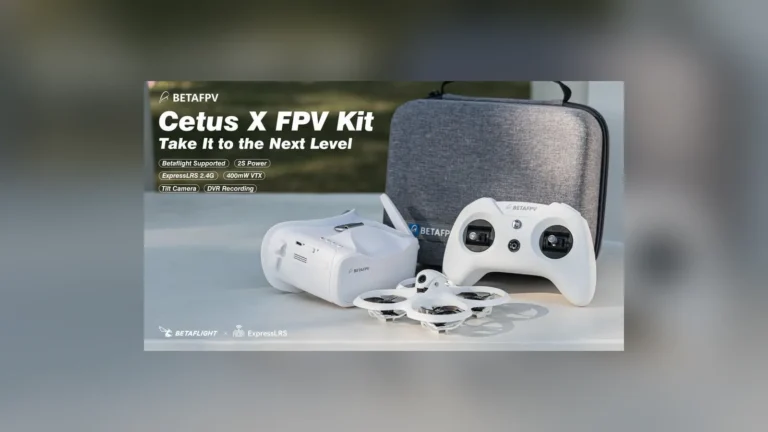
Every other pick here assumes a radio, goggles and a working knowledge of Betaflight. The Cetus Pro kit assumes nothing. Inside the box: a brushless whoop with 40mm three-blade props and a C02 1200TVL camera, the LiteRadio 2 SE transmitter, VR02 goggles, two BT2.0 450mAh batteries and a charger. Altitude hold, self-protection on crashes, Turtle mode for flipping back over and three flight modes from stabilized to manual make it a curriculum as much as a product, and the roughly 80 m range is a fair fence for a learner. You will outgrow parts of it; that is what a first kit is for.
- Props
- 40mm 3-blade, brushless whoop
- Camera
- C02, 1200TVL
- Kit
- LiteRadio 2 SE radio and VR02 goggles
Reasons to choose it
- Everything in the box, nothing else to buy
- Altitude hold and learner flight modes
- Turtle mode flips it back after crashes
Trade-offs to know
- Short range, about 80 m
- Gear is a starting point, not an endgame
Choose this if: you own nothing and want to learn FPV safely.
Consider another option if: you already own a radio and goggles, a BNF whoop spends better.
Happymodel Mobula7 1S HD
Analog whoops usually leave you with the goggles’ DVR mush. The Mobula7 1S HD fixes that: the same X12 5-in-1 platform and RS0802 20000KV motors as the standard Mobula7, but the camera is a RunCam Split3-Lite that records 1080p onboard while feeding the live analog picture, with an external blackbox logging gyro data for Gyroflow stabilization afterwards. The bill is weight, about 32 g against the standard model’s 24 g, which softens the punch slightly without changing the character. For creators who fly houses, offices and slow freestyle lines and want presentable footage without an HD digital system, it is the pragmatic middle path.
- Wheelbase
- 75mm
- Weight
- About 32 g
- Camera
- RunCam Split3-Lite, 1080p onboard recording
Reasons to choose it
- Real 1080p recording, not goggle DVR
- Gyro data for Gyroflow stabilization
- Proven Mobula7 platform and parts
Trade-offs to know
- Heavier than the standard Mobula7
- Live feed is still analog
Choose this if: you want postable footage from an analog whoop.
Consider another option if: you want HD live view too, the Meteor65 Pro and Femto carry DJI O4.
Happymodel Mobula6 2024
Happymodel quietly rebuilt its classic. The current Mobula6, the ELRS version in today’s listings, swaps the old 0802 motors for SE0702 28000KV units and the board for a SuperX ELRS AIO 5-in-1 with OpenVTX adjustable from 25 to 400mW, and keeps the recipe that matters: 65mm, an 800TVL camera and a ready-to-fly weight of about 28 g with its 1S pack, 17.7 g without. It feels like the original after a training montage: sharper, stronger on the link, and compatible with the ELRS radios everyone now owns. If the classic Mobula6 is the back-catalog bargain, this is the same idea in its current, correct specification.
- Wheelbase
- 65mm
- Weight
- 17.7 g without battery
- Motors
- SE0702 28000KV, SuperX ELRS board
Reasons to choose it
- Current ELRS standard, no legacy radio
- 28000KV motors, sharper than the original
- 400mW OpenVTX for a 65mm
Trade-offs to know
- Sold under the same name as the old model, check the listing
- Analog video only
Choose this if: you are starting fresh and want the current-spec 65mm.
Consider another option if: your radio is FrSky and staying that way, the classic Mobula6 costs less.
Buy with confidence
How to choose the right micro FPV drone
Four checks that matter more than motor KV when the drone weighs less than a tennis ball.
01. Choose 65mm or 75mm first
The size class is the whole decision. A 65mm whoop turns inside a small flat, flies quietly and sips 300mAh packs for two to four minutes. A 75mm carries bigger batteries, calmer manners and enough authority for a garden on a still day, at the cost of a wider turning circle. Buy for the smallest space you actually fly, and most pilots end up owning one of each.
02. Analog or HD at this size
Analog is light, cheap and instant, which is why seven of these ten picks use it: the whole video system can weigh under 5 g. HD systems like the DJI O4 in the Meteor65 Pro and the Femto bring a clear feed and real recording, but they add grams, cost and heat, and they shorten flights. Decide whether you fly for the feeling or for the footage.
03. Batteries and connectors rule your session
Every whoop here flies minutes, not tens of minutes, so sessions run on rotation: six to ten 1S packs and a multi-charger are the real kit. Check the connector before you stock up: modern whoops use the solid BT2.0 plug, older ones the looser PH2.0, and mixing them costs adapters and voltage sag. Buy the packs your pick actually takes.
04. Get the radio protocol right
ELRS is the current standard for micro whoops: cheap receivers, tiny antennas and range a house cannot challenge. Older listings, like the classic Mobula6 here, use FrSky instead, which is fine if your radio speaks it and a trap if it does not. Confirm the receiver in the exact listing against the radio you own or plan to buy.
Behind the recommendations
How we selected these products
This guide is built on desk research, not hands-on testing. We compared official manufacturer specifications and user manuals for the current 65mm and 75mm whoop classes, then cross-checked the shortlist against owner feedback and published reviews. Specs were rechecked against the sources below in October 2026. Where a figure is a lab rating, such as flight time, we treat it as a ceiling, not a promise.
- Size class and weight: wheelbase, ready-to-fly or without-battery weight, motor size and recommended battery for every pick, taken from manufacturer data.
- Video system and receiver: analog or HD system, VTX power, camera and radio protocol, checked against the exact Amazon listing configuration for each model.
- Limitations: we did not fly these drones for this guide, and most sell in several receiver and video variants, so confirm the exact configuration before buying.
Common questions
Before you buy
What size whoop is best for flying indoors?
For most homes, 65mm. It turns in half the space, flies more quietly and its low weight makes crashes a non-event. Choose 75mm if your rooms are large, you fly a warehouse or office, or you want to step into a calm garden: the bigger whoops carry larger batteries and handle drifting air better. Serious indoor pilots usually end up with one of each size.
How long do micro FPV drones fly?
Minutes, not tens of minutes. Racing 65mm whoops manage about two to three minutes per pack, endurance picks like the Air75 stretch to roughly six and a half, and the HD models sit in between. That is normal for 1S power at this weight. Sessions are built on rotation: a strip of charged packs and a multi-port charger matter more than any single flight time.
Do micro FPV drones need to be registered?
In most places, no: every pick here takes off far under 250 g, which keeps them in the lightest regulatory class for recreational flying in the US, UK and EU. Local rules still apply, and flying indoors is mostly a matter of the property owner’s permission and common sense around people and pets. Check your national rules once, then fly the house freely.
What radio and goggles do I need for a micro whoop?
Match the listing. Most current whoops use an ELRS receiver, so any ELRS radio works, and analog models pair with any 5.8 GHz analog goggles. The DJI O4 models, the Meteor65 Pro and the Pavo Femto, need DJI goggles instead. The Cetus Pro kit is the exception that includes its own radio and goggles, which is exactly why it is the beginner pick.
Pick your whoop and clear the living room
Start with the Meteor65 Pro for HD in the smallest class, the Mobula7 1S for the classic 75mm all-round brief, or the Air65 if racing is the point. Own nothing yet? The Cetus Pro kit is the classroom in a box.
Sources and verification
Product specifications and claims in this guide were checked against the following sources, listed by name as a record of what was consulted.
- BetaFPV Meteor65 Pro, Air65, Meteor75 Pro, Air75, Pavo Femto and Cetus Pro official product data and manuals (betafpv.com)
- Happymodel Mobula7 1S, Mobula7 1S HD, Mobula6 and Mobula6 ELRS official product data and manuals (happymodel.cn)
- Manufacturer user manuals for each shortlisted drone (BetaFPV, Happymodel)
- Published reviews and owner feedback for the shortlisted models, cross-checked in October 2026