As an Amazon Associate I earn from qualifying purchases. If you buy through links in this article, we may earn a commission at no extra cost to you.
These are the 10 best beginner camera drones under 100 dollars, and the filter was strict: every pick carries a real camera, verified on its manufacturer spec sheet, and every pick sits at or under the 100 dollar line at US retail at research time. We ranked all 10 on camera quality, flight time per battery, and how forgiving they are while a new pilot learns.
Short on time?
Start with these three picks
One flies longest and folds into its own case, one is the smartest teacher of the group, and one shoots the sharpest stills of the ten.
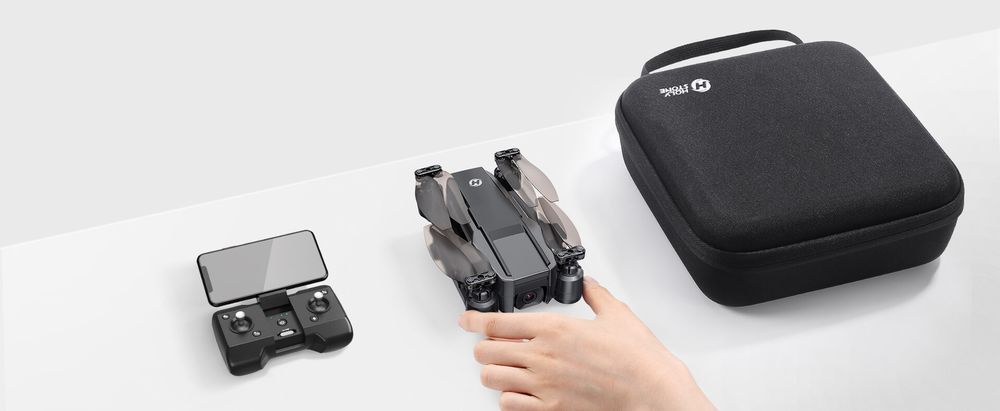
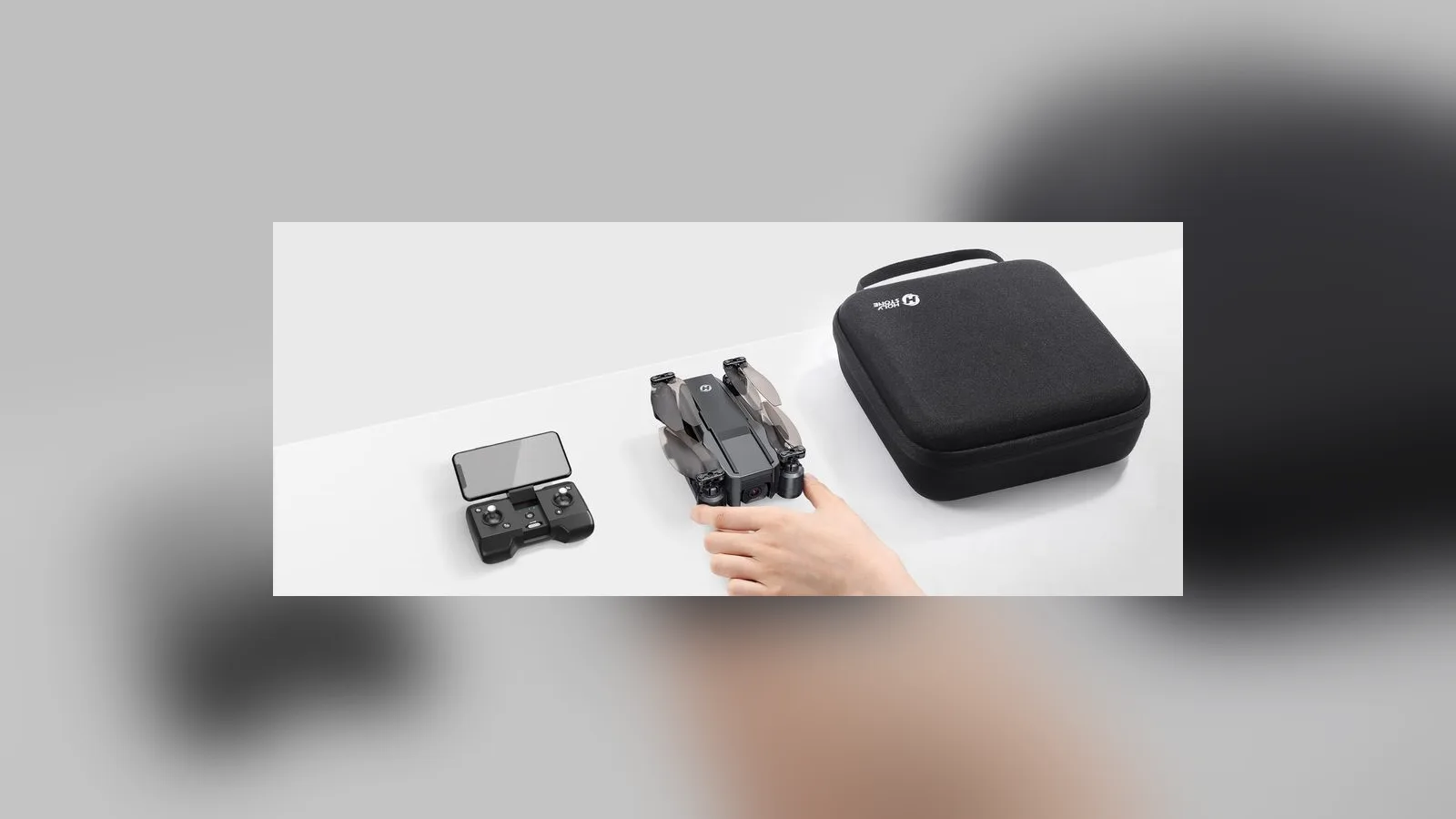
Holy Stone HS440
The endurance leader of the class: 20 minutes per battery, two batteries and a carry case in the box, a folding body and a 1080p camera that tilts from the remote. There is no GPS, so calm days only, but as a first package it is complete.
View on Amazon Read the full review ↓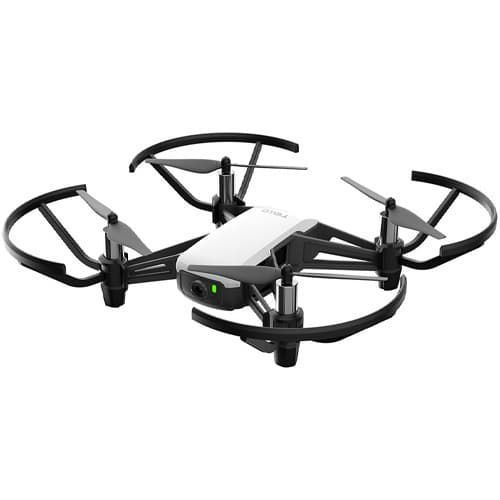
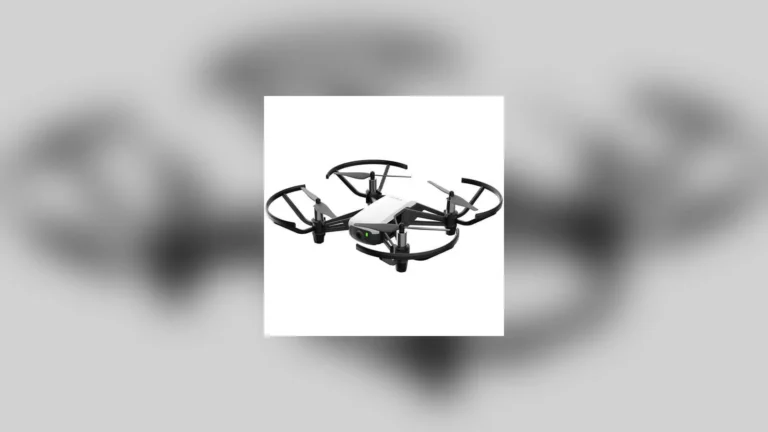
Ryze Tello
The teacher of the group: DJI flight tech and an Intel vision chip give it the steadiest hover here, a 720p camera with electronic stabilisation, 13 minute flights and full programmability for learners who code. It sits at the very top of the band.
View on Amazon Read the full review ↓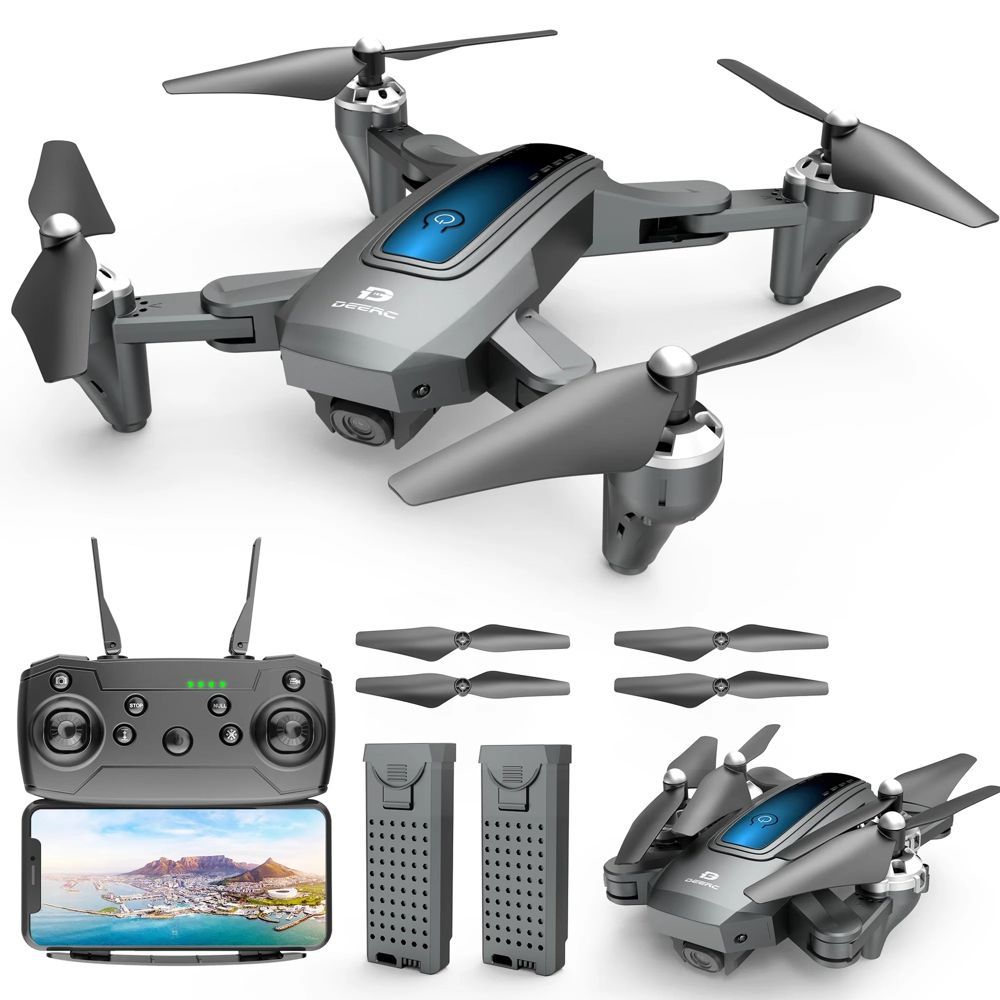
DEERC D10
The adult-shaped option: a folding 164 g drone with 1080p video, sharper 2K stills than anything else here, tap-fly routing in the app and 12 minutes per battery with two in the box. No GPS, so returns are manual.
View on Amazon Read the full review ↓The shortlist
Compare all 10 at a glance
Cameras separate this list: two picks reach 2K stills or better, most record 1080p or 720p video, and flight time per battery runs from 20 minutes down to 6.
| Product / award | Best fit | Key decision point | Check current offer |
|---|---|---|---|
| 01. Holy Stone HS440Best overall | Most complete first package | 20 minutes per battery; tilting 1080p camera | View on Amazon |
| 02. Ryze TelloBest for learning | Learners and young coders | Steadiest hover here; programmable | View on Amazon |
| 03. DEERC D10Best camera | Sharpest stills under the line | 2K stills and 1080p video; folding 164 g body | View on Amazon |
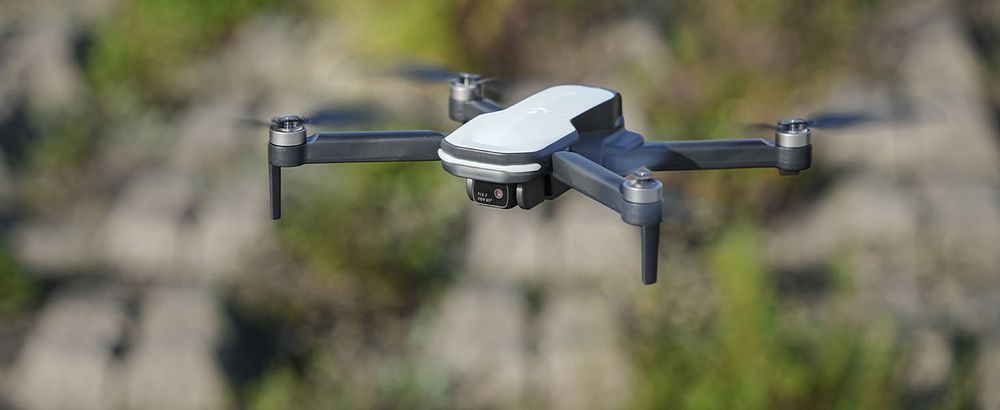 04. Holy Stone HS280DBest outdoor trainer | Stepping up from a first toy | Brushless motors and optical flow; 100 m range | View on Amazon |
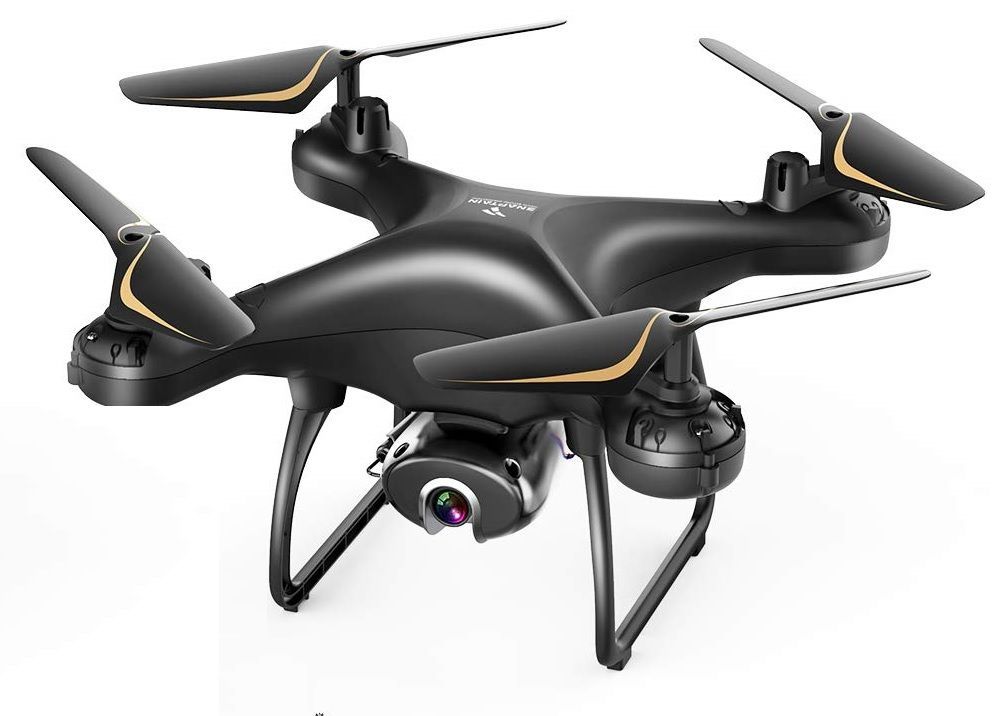 05. SNAPTAIN SP650Best session time | Long practice sessions | Two batteries, about 24 minute sessions | View on Amazon |
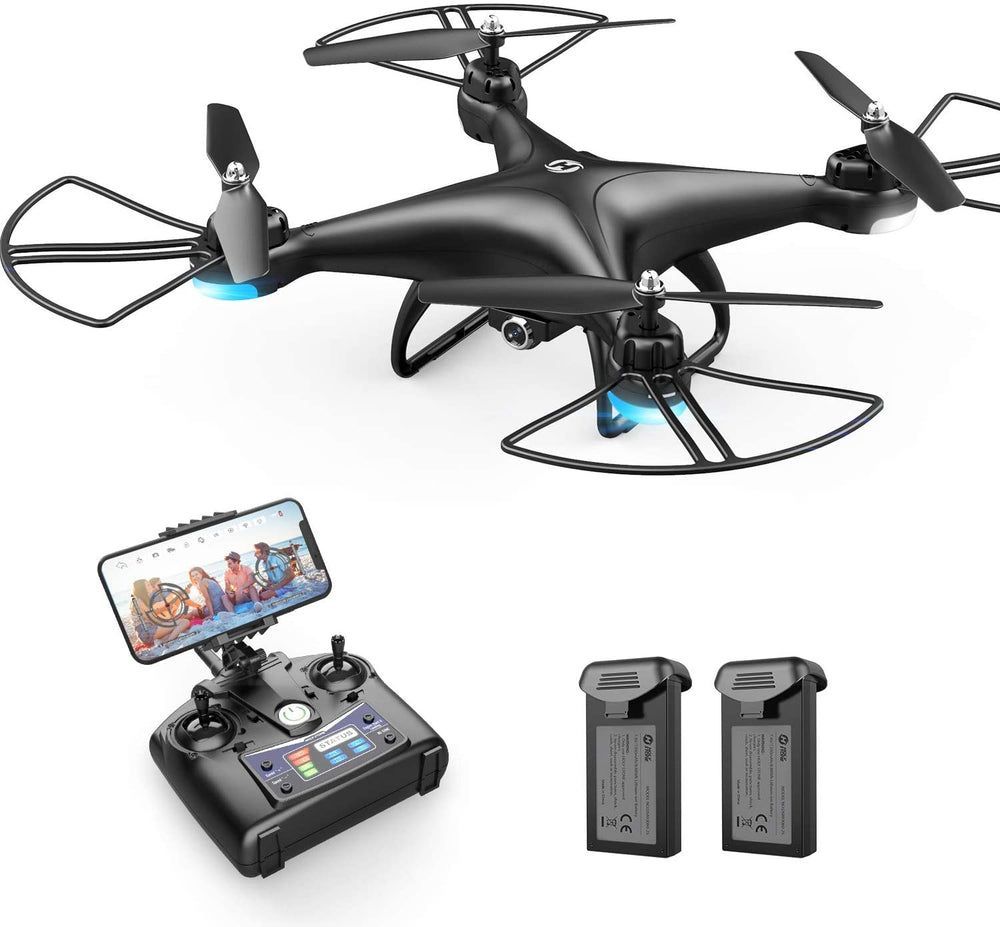 06. Holy Stone HS110DBest live view | First taste of live-view flying | 1080p live feed to the app; 10 minute batteries | View on Amazon |
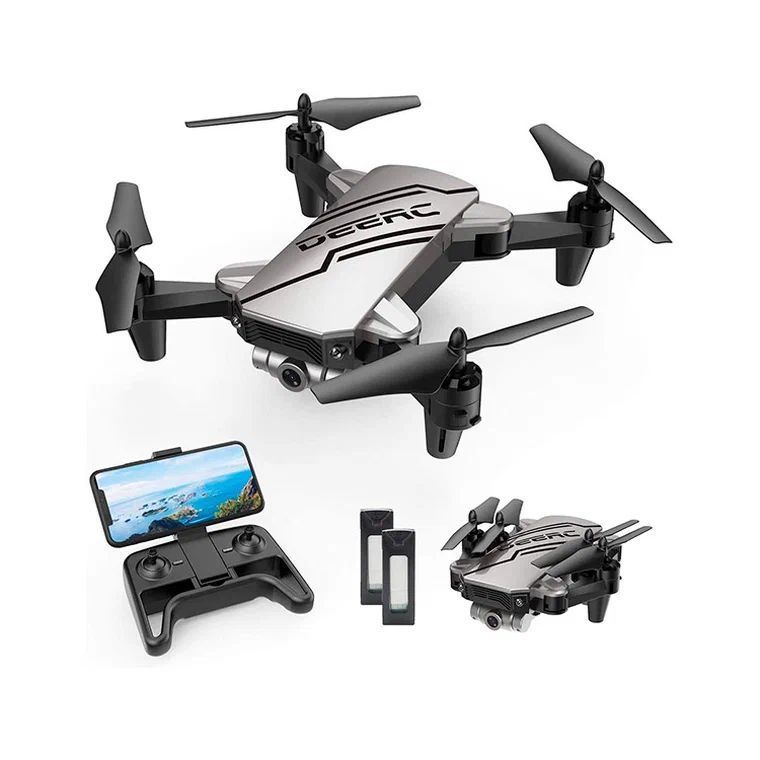 07. DEERC D20Best for kids | First drone for a child | 69 g folder; two 10 minute batteries | View on Amazon |
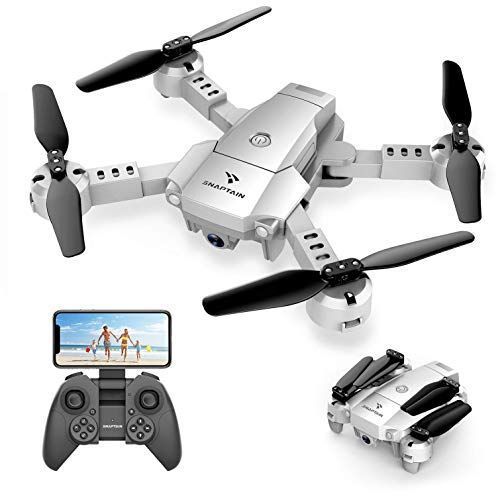 08. SNAPTAIN A10Best pocket pick | Take-anywhere pocket flying | 61 g folder; about 7 minutes per battery | View on Amazon |
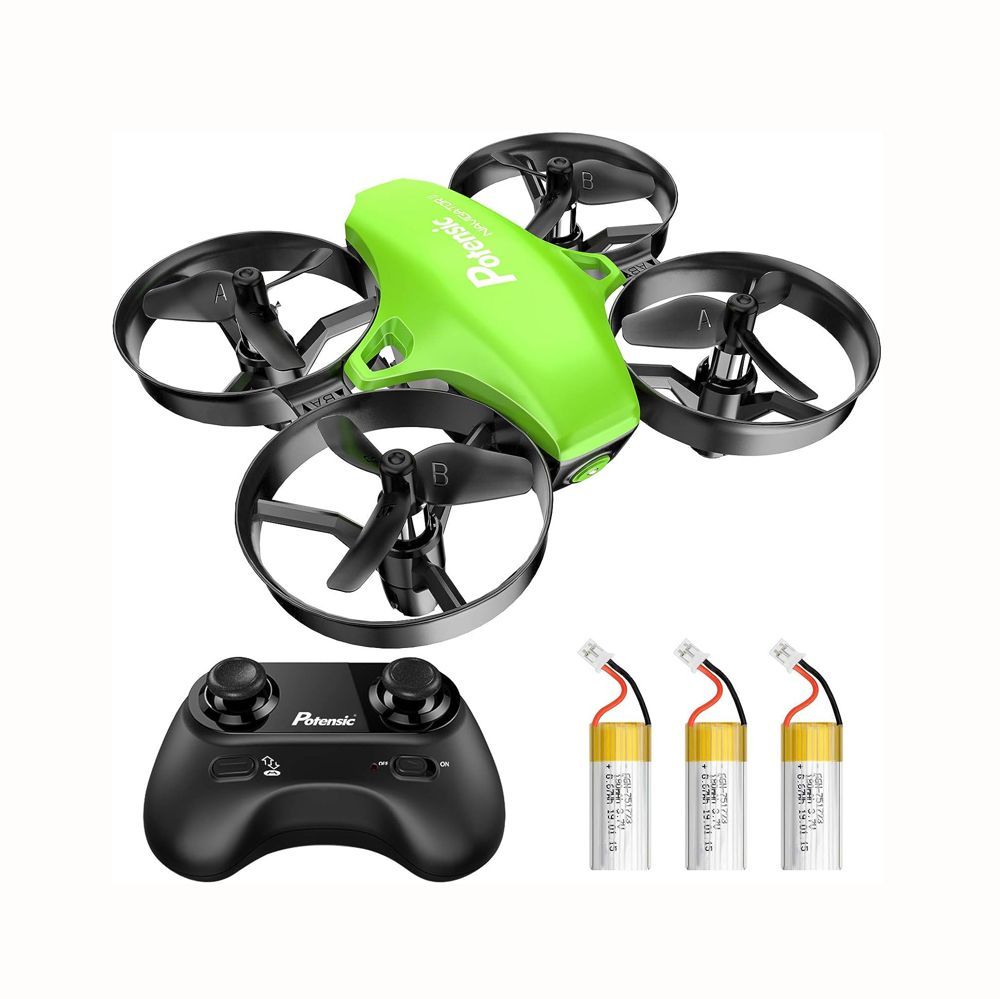 09. Potensic A20WBest nano with a camera | Indoor camera fun in a palm-size quad | 720p FPV camera; three batteries included | View on Amazon |
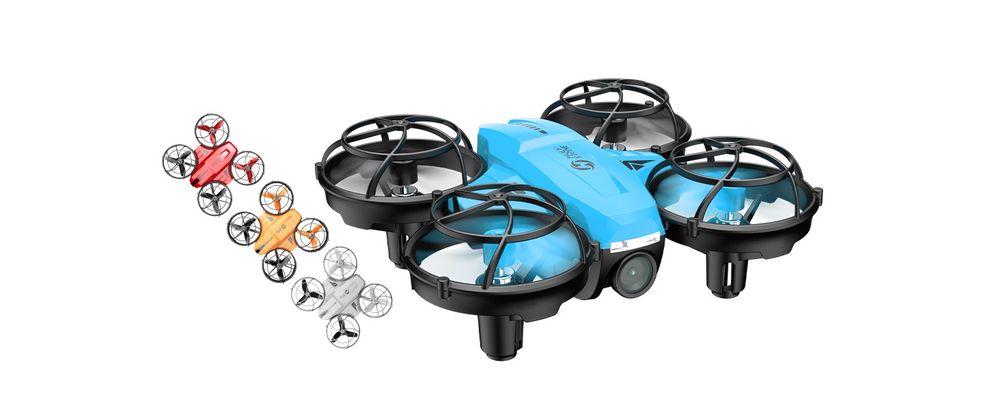 10. Holy Stone HS420Best indoor FPV | First FPV experience indoors | 31 g with full guards; 1080p at 20fps | View on Amazon |
Look closer
Our 10 picks, explained
These picks come from desk research, not hands-on testing: we compared manufacturer spec sheets line by line, then cross-checked owner feedback and published reviews to see which claims hold up in everyday beginner use.
Holy Stone HS440
Most drones at this level treat 10 minutes as a good result, so the HS440’s rated 20 minutes per battery stands out immediately: longer flights mean more practice per charge. Holy Stone pairs that battery with the features learners actually use: altitude hold, headless mode, one-key takeoff and landing, and a camera that tilts from the transmitter so framing does not mean repositioning the whole drone. It folds into a carry case with two batteries, which makes the real session about 40 minutes with a short swap in the middle. The honest limits are the class limits: no GPS, so wind pushes it around, and video is 1080p rather than 4K. As the default first camera drone under the line, it has no equal here.
- Flight time
- 20 min per battery
- Session time
- About 40 min with 2 batteries
- Camera
- 1080p, tilts from the remote
Reasons to choose it
- Longest per-battery flight time here
- Two batteries and a carry case included
- Tilting camera, folding body
Trade-offs to know
- No GPS, so it drifts in wind
- Video is 1080p, not 4K
Choose this if: you want one complete first package that maximises time in the air.
Consider another option if: you mostly fly indoors, the guarded minis at the bottom of this list bounce better.
Ryze Tello
The Tello looks like the other minis and behaves like nothing else here. Its flight controller descends from DJI engineering and its Intel vision processor holds a hover with a stillness the toy brands cannot match, which is exactly what a nervous first pilot needs. The camera records 720p video with electronic stabilisation and shoots 5MP stills, respectable output that stays smooth because the drone itself is calm. Flight time is rated at 13 minutes from its small battery. Then there is the second curriculum: the Tello is programmable in Scratch and through its education apps, so it teaches coding alongside stick skills. It sits at the very top of this guide’s price band, and for learners it justifies every bit of that position.
- Flight time
- 13 min rated per battery
- Camera
- 720p video with electronic stabilisation, 5MP stills
- Weight
- 80 g with propeller guards fitted
Reasons to choose it
- Steadiest hover in this guide
- Programmable for coding lessons
- DJI-grade flight manners
Trade-offs to know
- Sits at the very top of the band
- 720p video, no 1080p option
Choose this if: the pilot is a learner who will enjoy programming the drone as much as flying it.
Consider another option if: flight time matters most, the HS440 doubles the Tello’s minutes per battery.
DEERC D10
DEERC aims the D10 at grown-up beginners, and the spec sheet backs that up. The camera records 1080p video and takes 2048 x 1152 stills, the sharpest stills in this guide, and the folding frame packs down to pocket size between flights. Each 1000 mAh battery is rated at 12 minutes, and the pair in the box stretches sessions toward half an hour with a swap. The app adds tap-fly routes, where you draw a path and the drone follows it, Range reaches about 100 meters, altitude hold keeps things calm, and the sub-250 g weight keeps paperwork light everywhere. There is no GPS, so the return home is you, but as an all-round balance of minutes, camera and packability, little else at this level does more.
- Flight time
- 12 min per battery
- Session time
- About 24 to 30 min with 2 batteries
- Camera
- 1080p video, 2K stills, folding 164 g body
Reasons to choose it
- Sharpest stills in this guide
- Folds to pocket size
- Tap-fly and gesture controls
Trade-offs to know
- No GPS, manual return home
- Video tops out at 1080p
Choose this if: you want your first drone to take photographs you would actually keep.
Consider another option if: you want maximum minutes instead, the HS440 flies far longer per battery.
Holy Stone HS280D
The HS280D answers the natural next question after a first toy drone: what flies better without jumping to GPS prices? Its brushless motors are the headline, running quieter, lasting longer and pulling with more authority than the brushed units in cheaper models, and they give the folding 164 g frame real composure in light breezes. Optical flow positioning watches the ground to hold position indoors and at low altitude, the closest thing to GPS manners in this guide. The 1080p camera tilts up to 70 degrees from the remote across a 65 degree field of view, and two 1300 mAh batteries come in the box at about 14 minutes each. There is still no GPS, so range stays a modest 100 m and the pilot remains the return home system.
- Weight
- 164 g
- Flight time
- 14 min per battery, 2 included
- Camera
- 1080p at 25fps, 65-degree field of view
Reasons to choose it
- Brushless motors, longer lived
- Optical flow holds position without GPS
- Tilting camera and folding body
Trade-offs to know
- No GPS, 100 m range
- Narrower 65 degree lens
Choose this if: you want a trainer that copes with a park and a light breeze.
Consider another option if: you fly indoors only, the smaller guarded minis are cheaper to crash.
SNAPTAIN SP650
The SP650 sits at the large end of this class, and the size pays off in the air. SNAPTAIN rates each modular 1000 mAh battery at about 12 minutes, and with two in the box you fly roughly 24 minutes per session, swapping once. The camera records 1080p through a wide 120-degree lens, and the feature list covers the beginner bases thoroughly: altitude hold, headless mode, one-key return, trajectory flight, voice and gesture control and 3D flips. At 125 g it feels steadier outdoors than the mini folders. There is still no GPS, so the return button is a helper rather than a guarantee, and the pilot keeps the drone close. For sustained practice time at this budget, with a camera worth reviewing afterwards, it is a strong formula.
- Flight time
- 12 min per battery
- Session time
- About 24 min with 2 batteries
- Camera
- 1080p, 120-degree lens
Reasons to choose it
- Two batteries for long sessions
- Steadier 125 g frame outdoors
- Full beginner feature set
Trade-offs to know
- No GPS positioning
- Larger than the pocket minis
Choose this if: you want long, steady practice sessions in a park or big garden.
Consider another option if: portability comes first, the A10 folds to a fraction of the size.
Holy Stone HS110D
The HS110D has introduced a generation of pilots to flying by screen on a budget, and its recipe still works. The camera streams a live 1080p feed to the app while recording, so you frame shots instead of guessing, and the rated 10 minutes per battery matches what owners report in calm conditions. Altitude hold, headless mode and one-key takeoff cover the basics, while gravity-sensor steering, tilting the phone to steer, and gesture selfies keep younger pilots entertained between serious attempts. It is not the longest flier here and there is no GPS, so it stays a close-range, calm-day drone. None of that stops it being the right first live-view drone for many buyers, especially for visual learners.
- Flight time
- 10 min per battery
- Camera
- 1080p with live app view
- Controls
- Remote, app and gravity sensor options
Reasons to choose it
- Live 1080p view while you fly
- Gravity and gesture controls for fun
- Long-proven beginner design
Trade-offs to know
- 10 minute batteries are mid-pack
- No GPS or position hold in wind
Choose this if: you learn by seeing, and want to frame shots on the phone screen.
Consider another option if: you want longer flights, the HS440 and SP650 both outlast it per session.
DEERC D20
Everything about the D20 is calibrated for a young pilot’s first month. At 69 g it bounces where heavier drones break, the folding arms tuck it into a pocket, and DEERC rates each 500 mAh battery at 10 minutes, with two in the box for 20 minute sessions. The 720p camera is enough for garden videos and first proud uploads, and the control set is pitched exactly right: one-key takeoff, altitude hold, headless mode, voice control, gesture selfies and flips on demand. Its range is modest, which parents tend to file under features rather than flaws, since the drone stays where it can be seen and fetched. As the drone a young beginner learns orientation on, its combination of minutes and toughness is hard to beat.
- Weight
- 69 g, folding body
- Flight time
- 10 min per battery, 2 included
- Camera
- 720p video and stills
Reasons to choose it
- Featherweight and forgiving in crashes
- Voice and gesture controls kids love
- Two batteries in the box
Trade-offs to know
- 720p camera is the class floor
- Short range by design
Choose this if: a child is the pilot and toughness matters more than resolution.
Consider another option if: the pilot is an adult who wants more camera, the D10 is the step up in the same family.
SNAPTAIN A10
The A10’s argument is frequency. It folds to a pocketable block, weighs about 61 g, and still carries a 720p camera with a live phone view, voice and gesture control, circle fly and trajectory modes that draw a route on the screen. The honest cost of that size is endurance: SNAPTAIN’s little 380 mAh batteries are good for about 7 minutes each, and two in the box make sessions of roughly 14 minutes. Control range is about 80 meters on the remote, less on the phone feed, and its light weight means calm days only, ideally indoors or in a sheltered garden. None of that undermines the point: a drone this small gets carried, and a carried drone gets flown.
- Weight
- About 61 g, folding body
- Flight time
- About 7 min per battery
- Session time
- About 14 min with 2 batteries
Reasons to choose it
- Genuinely pocketable
- 720p camera with live view
- Trajectory and circle flight modes
Trade-offs to know
- Shortest per-battery time of the folders
- Calm conditions only
Choose this if: you want a camera drone that lives in a pocket or school bag.
Consider another option if: you want longer sessions, the SP650 doubles the A10’s session time.
Potensic A20W
Most palm-size drones force a choice between tiny and a camera; the A20W refuses it. The airframe is a true nano, wrapped in 360 degree propeller guards, and the added camera records 720p with a real-time FPV view to the phone, so indoor flights become sightseeing rather than line-of-sight guesswork. Potensic ships three batteries, which tells you the honest story about endurance: each small pack gives a short hop, and the rotation of three is what builds a session. Altitude hold, headless mode, gravity-sensor steering, where tilting the phone steers the drone, and a custom route mode round out a control set pitched at children and cautious adults. Judged as an indoor camera toy, it is complete.
- Camera
- 720p HD with live FPV view
- Batteries
- 3 included for rotation
- Controls
- Gravity sensor, headless mode, one-key start
Reasons to choose it
- A real camera in a nano body
- Three batteries in the box
- Full guards for indoor confidence
Trade-offs to know
- Short hops per battery
- Indoors and calm gardens only
Choose this if: you want the smallest drone that still shows you the view from its camera.
Consider another option if: you want a folding outdoor trainer instead, the D20 is the tougher all-rounder.
Holy Stone HS420
Holy Stone positions the HS420 as the step beyond a basic trainer, and the spec sheet agrees. At 31 g with full propeller guards it is built for living rooms, and its camera records 1080p video at 20fps with a live view through the HolyStone-FPV app, gesture photo and video, and an angle you set before takeoff. Flight time is 6 minutes per 300 mAh battery, with modular packs that swap in seconds, and control range is rated to 100 m outdoors, though the FPV feed reaches about 50 m. The beginner set is complete: one-key takeoff, altitude hold, headless mode, circle fly, trajectory flight and a throw-to-go launch that starts the motors with a gentle toss. For a first taste of flying through a camera, nothing this small does it better.
- Weight
- 31 g with full propeller guards
- Flight time
- 6 min per battery, modular packs
- Camera
- 1080p video at 20fps, adjustable angle
Reasons to choose it
- 1080p camera in a 31 g indoor mini
- Live app view and gesture selfies
- Throw-to-go and full beginner modes
Trade-offs to know
- 6 minutes per battery is the shortest here
- Indoor and calm conditions only
Choose this if: you want a first FPV camera experience around the house.
Consider another option if: you want outdoor sessions, the HS280D is the trainer built for parks.
Buy with confidence
How to choose a first camera drone under 100 dollars
Four checks that matter when every drone is cheap and the differences hide in the details.
01. Judge the camera, not the headline
At this level the honest ladder runs from 720p video up through 1080p to the D10’s 2K stills. All of them are fixed cameras without gimbals, so footage is steadiest in calm air with gentle turns. A camera that tilts from the remote, as on the HS440 and HS280D, is worth more than a small resolution bump, because framing without moving the drone is a core beginner skill.
02. Count batteries, not just minutes
Per-battery times here run from 6 to 20 minutes, and the box contents decide your real session. Two or three batteries with a swap between them beats one long battery for learning, because you can review footage while the spare charges. The HS440’s two 20 minute packs are the endurance ideal; the three-battery minis make the same point at smaller scale.
03. Match the drone to the flying space
None of these drones has GPS, so wind is the hard limit. The brushless HS280D and the heavier folders cope with a light breeze in a park; the palm-size minis, the A20W and HS420, belong indoors or in dead-calm gardens. Buy for the space you actually have, not the space you imagine, and the drone will fly weekly instead of gathering dust.
04. Prioritise guards and cheap spares
A first drone will meet furniture, trees and the ground, usually in week one. Full propeller guards, flexible frames and a maker with cheap spare props and batteries, Holy Stone, DEERC, SNAPTAIN and Potensic all qualify, turn crashes into pauses instead of purchases. Altitude hold, headless mode and one-key takeoff are the other three features worth insisting on.
Behind the recommendations
How we selected these products
This guide is built on desk research, not hands-on testing. We compared official manufacturer spec sheets for current beginner camera drones, admitted only models with a real camera on the sheet and a US street price at or under 100 dollars at research time in October 2026, then cross-checked the shortlist against owner feedback and published reviews. Prices move constantly at this level, so recheck the listing before buying. Where a figure is a lab rating, such as flight time, we treat it as a ceiling, not a promise.
- Camera verified: every pick’s camera resolution and live view confirmed on the manufacturer’s own specification data, no camera, no place on the list.
- Band checked: each pick’s current US street price confirmed at or under the 100 dollar line during October 2026 research; the basis is recorded with this guide’s production notes.
- Limitations: we did not fly these drones for this guide, bundles and prices at this level change weekly, so confirm the exact model and battery count on the listing before buying.
Common questions
Before you buy
Do any drones under 100 dollars have GPS?
Not in any form worth trusting, and none of these 10 pretends to. At this level you get altitude hold, optical flow on a couple of models and headless mode, which help, but the drone cannot hold position against wind or return home by itself. Fly close, fly calm, and step up to a GPS model from our other guides when those habits feel easy.
Is a 720p camera enough for a beginner?
For learning, sharing clips with family and posting to social feeds, yes. The gap between 720p and 1080p shows on a big television, but piloting skills, light and gentle flying matter more to how the footage feels. The Tello and D20 prove the point at 720p and stills level respectively, and the 1080p picks here are ready when you want the step up.
How long do these drones really fly?
Less than the box claims once wind, manoeuvres and older batteries get involved. Session time is the number that shapes your afternoon: the HS440 runs about 40 minutes across two batteries, the minis stack three short packs into a similar rhythm of fly, swap and fly again.
What age are these drones suitable for?
Manufacturers rate most of these at 14 and up, largely for liability, while the guarded minis are routinely flown by younger children with an adult supervising. The practical test is the pilot, not the birthday: one-key takeoff, altitude hold and headless mode, present across this list, make first flights manageable for any careful beginner with supervision.
Choose your first camera drone
Start with the Holy Stone HS440 if you want the most complete beginner package under the line: the longest flights, a tilting 1080p camera and a folding body with its own case. Choose the Ryze Tello when learning matters most, or the DEERC D10 for the sharpest stills. Buy the bundle with the most batteries, and fly it somewhere soft.
Sources and verification
Product specifications and claims in this guide were checked against the following sources, listed by name as a record of what was consulted.
- Holy Stone HS440, HS280D, HS110D and HS420 official specifications (holystone.com)
- Ryze Tello official specifications (ryzerobotics.com)
- DEERC D10 and D20 official specifications (deerc.com)
- SNAPTAIN SP650 and A10 official specifications (snaptain.com)
- Potensic A20W official specifications (potensic.com)
- Manufacturer user manuals for each shortlisted drone (Holy Stone, Ryze, DEERC, SNAPTAIN, Potensic)
- Published reviews and owner feedback for the shortlisted models, cross-checked in October 2026