

The DJI Lito X1 and the DJI Mini 3 are the same idea separated by a technology generation, and the gap is wider than their matching weight class suggests. The Mini 3 is the beloved 2022 bargain: a 1/1.3-inch camera, true vertical shooting, and a huge 38-minute flight rating, with no obstacle sensing and no subject tracking to keep the price down. The Lito X1, DJI’s newer entry-level platform, looks at that formula and adds the things the Mini 3 skipped: omnidirectional obstacle sensing with a 3D infrared LiDAR system that works in total darkness, FocusTrack subject following, palm launch and gesture control, 4K/100 slow motion, 10-bit D-Log M, and the O4 transmission system. It gives back a little flight time on paper and asks more money. If you are shopping the affordable end of DJI’s line today, this is the comparison that matters: yesterday’s endurance bargain against today’s sensing suite. We break down the cameras, the safety systems, the flight time trade, and the ownership reality, including the Lito X1’s regional availability wrinkle, so the right drone wins your wallet.
Affiliate disclosure: As an Amazon Associate I earn from qualifying purchases. This page contains affiliate links. If you buy through them, we may earn a commission.
Lito X1 for the full safety and tracking suite. Mini 3 for endurance value.
DJI Lito X1 is the pick if you fly anywhere with obstacles, film yourself moving, or shoot at dusk and dawn: omnidirectional sensing with LiDAR night vision, ActiveTrack-style FocusTrack following, 4K/100 slow motion, 10-bit D-Log M, palm launch, and O4 range to 20 km, all at 244 grams. DJI Mini 3 is the pick if the budget is firm and your skies are open: the same class of 1/1.3-inch camera, true vertical shooting, and the longest legs here at 38 rated minutes, for less money and with DJI’s deepest bargain ecosystem behind it. Safety and automation: Lito X1, comprehensively. Value and endurance: Mini 3, and it remains a genuinely lovely camera drone for careful pilots.
Run the two mornings test. Morning one is a school run of a shoot: a friend’s garden party, kids on bikes between trees, you filming and participating at once. The Lito X1 was built for that morning, tracking, sensing, launching from a palm between conversations. Morning two is a photographer’s dawn: an empty headland, thirty quiet minutes, one perfect frame as the light breaks. The Mini 3 was built for that morning, and its camera and endurance will not waste it. Count which morning your next year holds more of. The answer is rarely fifty-fifty, and it is never wrong, because both drones are excellent on the mornings they were designed for.
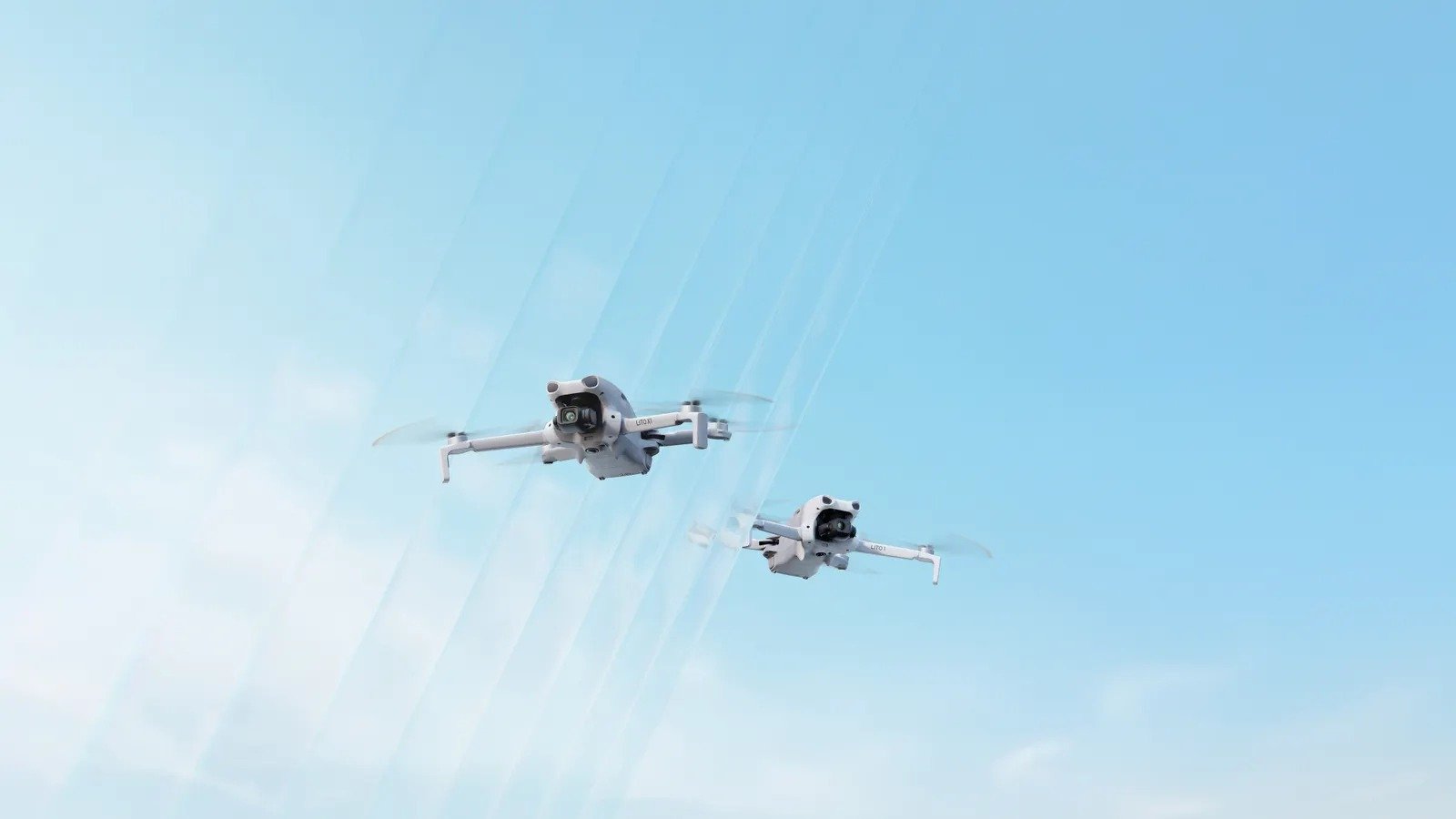
DJI Lito X1
For beginners and solo creators who want sensing, tracking, and low-light confidence
- Omnidirectional vision plus forward 3D infrared LiDAR, with night obstacle avoidance
- FocusTrack tracking, palm launch, gesture control, and 4K/100 slow motion
- Newer platform with regional availability quirks: check your market before falling in love
Check current availability and bundle options on Amazon
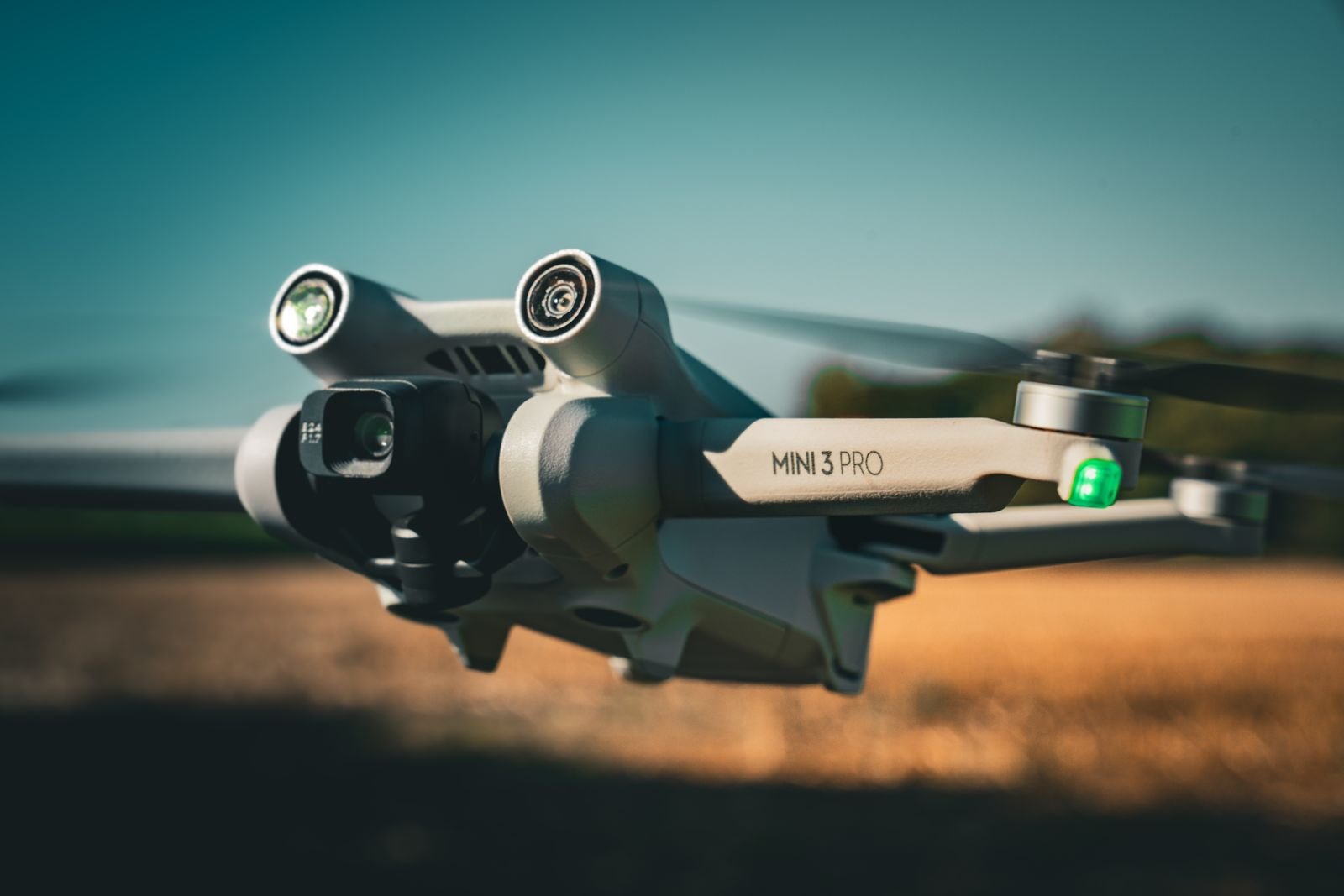
DJI Mini 3
For budget creators who fly open spaces and want maximum minutes per dollar
- Same sensor class as the Lito X1, with true vertical shooting for social feeds
- 38-minute standard battery, the longest legs in this pairing
- No obstacle sensing and no subject tracking: the pilot is the entire safety system
Check current availability and bundle options on Amazon
The Mini 3 skipped the safety net to hit its price. The Lito X1 is the reply.
DJI built the Mini 3 by subtraction and the Lito X1 by addition. Understanding which list describes your flying is the whole decision.
The Mini 3’s subtraction was surgical: remove obstacle sensing, remove subject tracking, keep everything that touches the image. What remained was a 249-gram drone with a 1/1.3-inch 48MP camera at f/1.7, 4K HDR video, a gimbal that rotates for true vertical shooting, and a flight time of 38 minutes that shamed drones costing far more. For careful pilots in open country it was, and is, a superb bargain, which is why it became a default recommendation for budget travel and social content. Its owners simply accept the contract: nothing electronic will stop you flying into the only tree in the field, and nothing will follow you down a trail.
The Lito X1 accepts higher ambitions at this tier. Its sensing suite would not look out of place two price classes up: omnidirectional vision, a forward 3D infrared LiDAR that keeps obstacle avoidance working in darkness DJI rates at 0.01 lux, and obstacle handling in Normal mode up to brisk speeds. FocusTrack follows subjects for solo creators, palm launch and gesture control shorten the path from pocket to footage, and the camera pipeline steps up to 4K/100 slow motion and 10-bit D-Log M for editors who grade. Its rated 36 minutes nearly match the Mini 3’s 38, and O4 transmission doubles the older drone’s rated range to 20 km. On paper, it is the Mini formula completed.
Two practicalities keep the Mini 3 in the fight. First, price: the Mini 3 is a mature, discounted product with a Fly More ecosystem in every channel, while the Lito X1 commands newer-platform money. Second, availability: the Lito line’s regional rollout has been uneven, and it is not sold through DJI’s US store, so American buyers in particular should confirm how they will buy batteries, parts, and support before committing. None of that dents the Lito X1’s engineering, but ownership is a logistics exercise as much as a spec sheet. The rows below quantify both sides.
Worth stating plainly: the Mini 3 is not obsolete, and owners deciding whether to upgrade should find our Lito X1 vs Mini 5 Pro comparison a useful map of how far the new entry platform reaches. The Lito X1’s case is aimed at new buyers choosing fresh, and at Mini 3 owners whose flying has outgrown open fields. If your Mini 3 still matches your map, its discount-era ecosystem keeps it rational for years. If you have started declining shots because of obstacles, darkness, or the subject walking out of frame, the Lito X1 is less an upgrade than an unlock, and unlocks are priced differently from upgrades for a reason.
Lito X1 vs Mini 3: The Spec Sheet, Line by Line
The cameras look like a draw until the video rows. The sensing, tracking, and transmission rows are where three years of entry-level progress live. Flight time is the Mini 3’s last stand, and it holds it.
| Feature | DJI Lito X1 | DJI Mini 3 |
|---|---|---|
| Best suited to | Beginners, vloggers, and solo creators who want tracking and night sensing | Budget travel, landscape, and social creators flying open spaces |
| Takeoff weight | 244 g | 249 g (standard battery) |
| Dimensions (folded) | 150 x 92 x 59 mm | 138 x 81 x 58 mm |
| Sensor and lenses | 1/1.3-inch CMOS, 48MP, 26mm equivalent, f/1.75 | 1/1.3-inch CMOS, 48MP, 24mm equivalent, f/1.7 |
| Video modes | 4K/60 HDR; 4K/100 slow motion; 1080p recording | 4K/30 HDR, 2.7K/60, 1080p/60 |
| Color and codecs | 10-bit D-Log M; H.264/H.265; JPEG and DNG RAW | Standard color; H.264/H.265 up to 100 Mbps; JPEG and DNG RAW |
| Vertical capture | 2.7K cropped vertical video | True vertical capture from the rotating gimbal |
| Gimbal | 3-axis mechanical | 3-axis mechanical with true vertical rotation |
| Obstacle sensing | Omnidirectional vision plus forward 3D infrared LiDAR; night sensing to 0.01 lux | Downward vision positioning only; no obstacle avoidance |
| Subject tracking | FocusTrack subject tracking, palm launch, gesture control | Not supported; QuickShots automated moves only |
| Rated flight time | 36 minutes | 38 minutes; 51 minutes with Battery Plus |
| Real-world flight time | Not tested by us; expect high twenties to low thirties in mixed conditions | Not tested by us; expect high twenties to low thirties in mixed conditions |
| Max speed | 18 m/s | 16 m/s (Sport) |
| Video transmission | DJI O4, up to 20 km FCC, 1080p/60 live view | DJI O2, up to 10 km FCC, 720p live view |
| Wind resistance | Level 5 (about 10.7 m/s) | 10.7 m/s (Level 5 class) |
| Internal storage | microSD only | microSD only |
| Controller and bundle | RC-N3 or RC 2 class controllers; combo bundles vary by region | RC-N1 or DJI RC; Fly More Combo widely sold |
| Main trade-off | Complete sensing and tracking suite, with regional availability to verify | Top value and endurance, with zero electronic protection |
Keep manufacturer ratings separate from measured results. Sources are listed by name in the methodology section below.
Read the weight row with a lawyer’s eye and a pilot’s heart. At 244 g against 249 g, both drones sit under the common 250 g recreational thresholds on their standard batteries, which is why both can promise paperwork-light flying in many regions. But the Lito X1 holds that status while carrying a full sensing suite, something the Mini 3 achieved only by leaving the electronics home. That single engineering fact explains the price difference better than any marketing line: sensing hardware, processing, and the LiDAR unit all cost money and grams, and the Lito X1 pays both bills while staying under the line its buyers care about.
Five Differences Between Yesterday’s Bargain and Today’s Baseline
The Mini 3 survives this comparison on two rounds. The other three describe what entry-level drones gained while it was busy being a bargain.
1. Obstacle sensing, including at night: the headline gap
Edge: Lito X1The Lito X1 watches in every direction with binocular vision sensors and adds a forward 3D infrared LiDAR, so its obstacle avoidance keeps working after dark, in the dawn and dusk light when mini-drone footage looks best. APAS routing flies it around obstacles rather than merely braking. The Mini 3, by design, has none of this: downward positioning sensors for a stable hover, and your eyes for everything else. For a beginner, the exact audience both drones court, this is the difference between a drone that forgives the classic mistakes and one that invoices them.
It also changes where you dare to fly. Garden filming, wooded trails, and city courtyards move from gamble to plan when the drone shares the lookout duty. Open-country pilots will call the suite unnecessary, and for their map they are right. Everyone else should treat this round as the comparison’s center of gravity.
2. Tracking and hands-free capture: being filmed against filming
Edge: Lito X1FocusTrack gives the Lito X1 the Mini 3’s most-requested missing feature: lock onto a person and the drone follows, reframing while you walk, ride, or present. Palm launch and gesture control complete the solo-creator toolkit, so the drone goes from pocket to following you without a controller in hand. The Mini 3 offers QuickShots, polished pre-programmed orbits and reveals around a fixed point, and then requires your thumbs for everything else. For static presenters QuickShots genuinely suffice. For anyone whose content moves, the difference is categorical.
This is also where the Lito X1’s generation shows its software depth: tracking is tied into the sensing suite, so follows stay aware of obstacles in ways a bolt-on feature never could. Solo athletes, vloggers, and parents filming kids should weight this round alongside the sensing round, because together they define the drone.
3. Video pipeline: 4K/100 and 10-bit against 4K/30 standard
Edge: Lito X1Both cameras use 1/1.3-inch 48MP sensors behind fast lenses, the Lito X1 at 26mm f/1.75 and the Mini 3 at 24mm f/1.7, so stills quality sits close: both shoot DNG raw, both resolve beautifully in daylight. Video separates them. The Lito X1 records 4K/60 HDR and 4K/100 slow motion with 10-bit D-Log M for grading, where the Mini 3 tops out at 4K/30 in a standard color profile. Slow water, action, and any edit with real color work all favor the newer pipeline, and the O4 transmission behind it feeds a 1080p/60 live view to 20 km against the Mini 3’s 720p O2 feed to 10 km.
The Mini 3 lands one clean counterpunch: true vertical shooting from its rotating gimbal, where the Lito X1 crops 2.7K for vertical. Social-first creators who shoot vertical all day will feel that difference on every upload, and it is the Mini 3’s most modern feature.
4. Endurance: the Mini 3’s crown, by a nose and a battery
Edge: Mini 3Thirty-eight rated minutes against thirty-six is a small margin, but the Mini 3 defends it with the Intelligent Flight Battery Plus, rated at 51 minutes for pilots whose local rules accept the extra weight that pushes the drone over 249 grams. In real mixed flying both drones land in a similar high-twenties-to-low-thirties band per standard battery, and the Lito X1’s sensing workload costs it nothing dramatic. Call it a genuine but narrow Mini 3 win, strongest for landscape shooters who work remote locations and count every minute aloft.
Practically, most owners of either drone solve endurance with a second battery rather than a spec sheet, and both ecosystems sell them. The Mini 3’s advantage is that its batteries, hubs, and Fly More kits are discounted everywhere by now.
5. Price, availability, and the ownership map
Edge: Mini 3The Mini 3 is the safer purchase in the most literal sense: sold everywhere DJI sells, discounted as a mature model, surrounded by cases, filters, batteries, and a Fly More Combo that remains the value benchmark of the class. The Lito X1’s rollout has been regional, and it is not offered through DJI’s US store, which complicates American purchases of the drone, its batteries, and its parts pipeline. Buyers in markets where the Lito line is fully supported face no such friction and get the better drone for it. Buyers elsewhere should confirm their supply chain before, not after, choosing.
This round is the Mini 3’s second win, and for many shoppers it will be the deciding one, because a drone you can service beats a drone you can only admire. The Lito X1’s counter is that its capability lead is large enough to justify effort for pilots who fly in sensing country.
The three-to-two scoreline hides the real structure: the Lito X1 wins the rounds about what a drone does in 2026, and the Mini 3 wins the rounds about what a drone costs and how long it stays up. That is generational succession in its normal form, the new platform assuming the old one’s virtues while repairing its famous omissions. Nothing here embarrasses the Mini 3, which remains exactly the bargain it always was. It simply means the question has changed from which drone is better to whether the repaired omissions are the ones your flying has been tripping over. For an increasing number of entry-level pilots, they are.
Lito X1 vs Mini 3: What You Gain, What You Give Up
DJI Lito X1
Reasons to choose it
- Omnidirectional sensing plus LiDAR night avoidance at 244 g
- FocusTrack following, palm launch, and gesture control for solo creators
- 4K/100 slow motion and 10-bit D-Log M for real editing
- O4 transmission rated to 20 km with a 1080p/60 feed
Reasons to reconsider
- Regional availability is uneven, including no DJI US store listing
- Vertical video is a 2.7K crop, not true vertical
- Newer-platform pricing above the discounted Mini 3
DJI Mini 3
Reasons to choose it
- Same 1/1.3-inch sensor class with true vertical shooting
- 38-minute standard battery, 51 with Battery Plus where allowed
- Mature, discounted pricing and a Fly More ecosystem everywhere
- Simple, proven, and endlessly documented by owners
Reasons to reconsider
- No obstacle sensing: protection is entirely the pilot’s job
- No subject tracking or palm-launch automation
- 4K/30 ceiling with standard color only
The lists double as a map of DJI’s own strategy. The Mini 3’s strengths, price, endurance, vertical, are the virtues of a mature platform being sold on value. The Lito X1’s strengths, sensing, tracking, transmission, low-light awareness, are the virtues of a platform being sold on capability. Companies run both plays at once because buyers genuinely split. If you recognize yourself as the value buyer, be proud and take the Mini 3 with its discounts. If you recognize yourself as the capability buyer, the Lito X1’s premium is not marketing. It is the itemized bill for everything the Mini 3 famously left out.
Availability, batteries, and the weight fine print
The Lito X1 asks one extra question the Mini 3 does not: can you actually buy and support it where you live? Work through this list before paying.
- Regional check, Lito X1: Confirm the drone, spare batteries, and parts are officially available in your market, and how warranty service works there, before ordering.
- Battery Plus, Mini 3: The 51-minute battery lifts the Mini 3 over 249 g, which can trigger registration and different rules. Check your local position before flying on it.
- Controllers: Confirm which controller the bundle includes on either drone, screen-equipped or phone-based, and price combos on equal terms.
- Storage: Neither drone has internal storage. Add a fast microSD card, rated for sustained 4K recording, to the real purchase price of both.
- Second battery: Rated times of 36 and 38 minutes become roughly half an hour in real air. A second battery is the highest-value accessory for both drones.
- Local requirements: Both drones sit at or under 249 g on standard batteries, simplifying recreational registration in many regions, but rules vary. Check your aviation authority’s current requirements.
If you choose the Lito X1, put the money you saved against flagship models into the boring places: the second battery first, then a quality card, then filters. Its sensing suite makes it the drone beginners keep longest in this pairing, and a well-supplied case is what converts that longevity into actual flight hours rather than shelf time between accessory orders.
The complete drone costs more. The bargain still flies beautifully.
Choose the DJI Lito X1 if it is properly available where you live and your flying involves obstacles, movement, or low light: its sensing, tracking, and modern video pipeline make it the most complete entry-level DJI of its generation, and the one a beginner is least likely to crash or outgrow. Choose the DJI Mini 3 if the budget rules and your locations are open: its camera, true vertical mode, and class-leading endurance deliver the footage most people actually want, at a price the newer drone cannot match. The Mini 3 asks for a careful pilot. The Lito X1 forgives a learning one. That sentence, plus your region’s availability, is the decision.
Either drone also makes a defensible gift, which settles many real purchases. The Mini 3 is the safer gift where the recipient’s region, habits, and support access are unknown, because its ecosystem catches every beginner mistake except the flying itself. The Lito X1 is the better gift where you know the recipient will fly near the interesting obstacles of real life, because it watches alongside them while they learn. Match the gift to the pilot you know, not the spec sheet you admire, and both choices stay generous.
Still deciding?
Is the Lito X1 a replacement for the Mini 3?
In spirit, yes: it takes the Mini formula of a light, capable camera drone and adds the sensing, tracking, and transmission the Mini 3 skipped. In the market, they coexist: the Mini 3 remains the discounted value option with the deeper accessory ecosystem, while the Lito X1 is the more complete and more expensive machine.
Which drone is better for beginners?
The Lito X1. Its omnidirectional sensing, LiDAR-assisted night avoidance, subject tracking, and palm launch make it the most forgiving starter DJI has offered at this weight. The Mini 3 is stable and simple, but a beginner’s mistakes meet no electronic safety net.
Which takes better video?
The Lito X1 for most work: 4K/60 HDR, 4K/100 slow motion, and 10-bit D-Log M outgun the Mini 3’s 4K/30 standard color. The Mini 3 answers with true vertical shooting, where the Lito X1 crops to 2.7K, so vertical-first creators have a real reason to pick the older drone.
Why is the Lito X1 hard to find in some countries?
DJI rolled the Lito line out regionally, and it is not sold through DJI’s own US store. Availability of the drone, batteries, and service varies by market, so confirm your local supply chain before buying. Where it is fully supported, ownership is straightforward.
Does the Mini 3 have any obstacle avoidance at all?
No. The Mini 3 carries downward vision sensors that help it hold position and land precisely, but it cannot detect or avoid obstacles in any flight direction. That is the single biggest functional gap in this comparison, and the main reason the Lito X1 exists at its price. Mini 3 pilots compensate with route planning and conservative flying.
How were these drones compared?
This is a research-based comparison built from DJI’s published specifications and documentation for both models, checked figure against figure. We did not fly either drone for this article. The full method is described below.
How this comparison was prepared
This comparison is research-based. We did not fly either drone for this article, and nothing here should be read as hands-on testing. Every specification in the table was taken from DJI’s published documentation for the DJI Lito X1 and DJI Mini 3, including official specification listings and user manuals, and each figure was checked against the matching figure for the other drone so that rated values are compared like for like. Flight times quoted are manufacturer rated maximums under ideal conditions; real flights are shorter. Sources are listed by name only below, in line with this site’s editorial policy.
Regional variants deserve a specific note for this pairing: the Lito line’s launch markets, kit contents, and controller pairings differ by country, so where a figure could vary by region, such as transmission range under CE against FCC rules, we cite the headline manufacturer rating and say so, and we advise confirming the exact regional specification on DJI’s page for your market before purchase.
Sources
- DJI Lito X1 official specifications
- DJI Mini 3 official specifications
- DJI Lito X1 user manual
- DJI Mini 3 user manual
- DJI O4 transmission documentation
Last verified: October 20, 2026. Specifications, bundles, and availability may vary by region and version.


