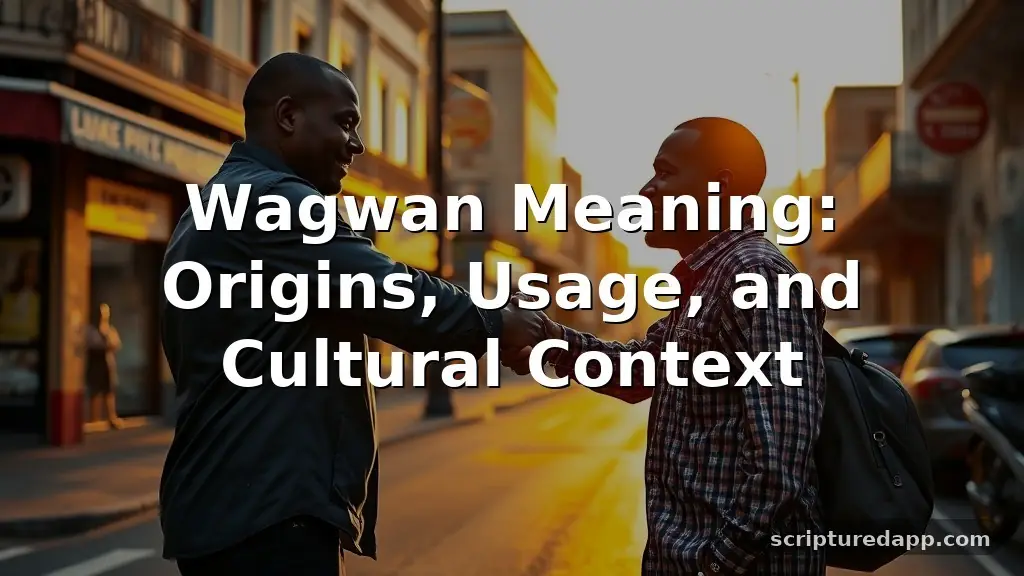

The wagwan meaning is rooted deeply in the linguistic evolution of Jamaican Patois, serving as one of the most recognizable greetings in contemporary global street culture. Often heard in music, film, and casual conversation, this term has transcended its geographic origins to become a staple of urban vernacular, particularly within the United Kingdom.
At its core, the phrase acts as a functional greeting, functioning similarly to “what’s going on” or “how are you.” While it is frequently adopted by youth subcultures, understanding its nuances requires looking beyond a simple translation to appreciate the sociolinguistic history that shapes its usage.
The Linguistic Roots and Etymology of Wagwan
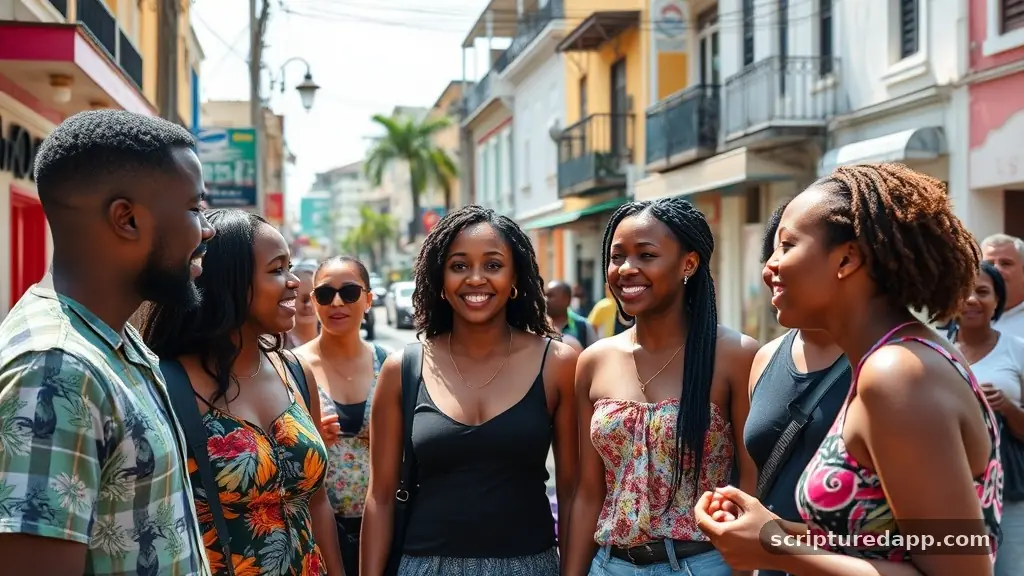
The term “wagwan” is a contraction of the phrase “what is going on.” In the context of Jamaican English, specifically Patois, words are often compressed to increase the speed and rhythm of speech. The “wa” represents “what,” while “gwan” is the phonetic realization of “going on.”
This linguistic shorthand is characteristic of the creole language, which blends English vocabulary with West African grammatical structures and rhythmic sensibilities. By stripping away auxiliary verbs and focus markers, the phrase becomes a punchy, efficient way to acknowledge another person’s presence.
Historically, this word emerged from the post-colonial landscape of Jamaica, where English was repurposed to reflect the lived experience of the local population. It was not merely a sign of greeting but a way to establish rapport in communal settings. As Jamaican migration patterns increased in the mid-20th century, particularly toward London, the term traveled across the Atlantic.
It took root in the Caribbean diaspora, eventually becoming a hallmark of British multicultural urban slang. Today, it is used by people from diverse backgrounds, though its authenticity often depends on the speaker’s connection to the culture from which it emerged.
Wagwan as a Cultural Signifier in Street Culture
In the context of street culture, the wagwan meaning goes beyond a simple “hello.” It acts as a social marker, signaling a level of informality and camaraderie between the speaker and the listener.
Using the term implies that the parties involved are on familiar, if not friendly, terms. It is rarely used in formal settings or professional environments; instead, it is reserved for the “yard”—a colloquial term for one’s home territory or social circle.
The proliferation of this term is heavily tied to the influence of Reggae, Dancehall, and Grime music. Artists from the Caribbean and the UK have exported the lexicon through their lyrics, turning regional slang into a global phenomenon. For many, the term represents a bridge between heritage and modern identity.
When a young person in London uses it, they are often participating in a linguistic tradition that honors the history of the Windrush generation while asserting their own place in a shifting urban landscape. It is a personal expression of connectivity that helps define social boundaries and group belonging.
How to Respond to Wagwan
One of the most common questions regarding the wagwan meaning is how to provide an appropriate reply. Because it functions as a question—”what is going on?”—the response should ideally address the status of the speaker or the situation.
However, because it is more of a phatic expression (a way to maintain social contact) than a literal inquiry into one’s life, the answer is often equally casual. Common responses include “nuttin'” (nothing), “everything cool,” or simply repeating the greeting back to the person.
The flexibility of the response is a testament to the term’s versatility. Depending on the closeness of the relationship, a person might follow up with a more detailed account of their day, or they might keep the exchange brief to acknowledge the social ritual of greeting. It is important to note that the term is never used to ask for a formal status report.
If someone says “wagwan” to you, they are opening a door for interaction. Choosing to ignore the greeting or responding with extreme formality can be seen as a sign of social distance or disrespect, depending on the context of the interaction.
Regional Variations and Global Adoption

While the wagwan meaning is generally consistent, the way it is delivered can vary significantly depending on the speaker’s accent and regional dialect. In the Caribbean, the pronunciation is deeply tied to the rhythmic cadence of Patois, often involving a longer emphasis on the “gwan” portion.
In contrast, in the UK, the pronunciation has been adapted to fit into the flow of Multicultural London English (MLE). These shifts demonstrate how language is a living, breathing entity that changes as it moves through different communities.
The internet has played a massive role in the global spread of this term. Platforms like TikTok and various social media hubs have allowed the word to escape the confines of physical geography. You might find a user with a specific username on a site like Oxford Learner’s Dictionaries exploring the nuances of international slang, yet the reality is that digital usage often strips away the cultural weight of the word.
When people use the term online without an understanding of its origins, it can sometimes lead to accusations of cultural appropriation or misuse. Understanding the history is essential for anyone who wishes to use the term respectfully.
Wagwan in Digital Communication and Social Media
In the digital age, the way we communicate has changed, and slang has moved from spoken word to text. Using “wagwan” in a direct message or as a comment on a post is common, though it carries a slightly different weight than face-to-face interaction.
When you are typing, you lose the tone of voice and the body language that usually accompanies the greeting. Consequently, the term is often paired with emojis or other slang to clarify the intent of the message.
Many users on social platforms use it to initiate a conversation, especially when they haven’t spoken to someone in a while. It is a low-pressure way to reach out, as it doesn’t demand a long explanation of one’s current life events. However, because it is so informal, it should be used with caution.
Sending a message that starts with “wagwan” to a potential employer or a stranger in a professional context would likely be perceived as inappropriate. The digital sphere requires a high level of “social intelligence” to know when the term is appropriate to deploy versus when a more standard greeting is required.
Comparative Analysis of Common Slang Greetings
To better understand the wagwan meaning, it is helpful to compare it with other similar greetings. Language is a comparative system, and placing a term next to its counterparts helps highlight its unique function in a social hierarchy.
| Term | Origin | Formality Level | Primary Usage |
|---|---|---|---|
| Wagwan | Jamaica/UK | Very Casual | Greeting/Checking in |
| What’s up? | USA | Casual | Greeting/Inquiry |
| How do you do? | England | Formal | Greeting/Courtesy |
| Alright? | UK | Casual | Greeting/Question |
As shown in the table, “wagwan” holds a specific niche in the spectrum of greetings. It is distinctly more informal than standard English greetings and carries a heavier cultural weight than the generic “what’s up.” The people who use it are often signaling an affinity for the culture that birthed the term, or they are simply participating in the common vernacular of their immediate social environment.
Common Misconceptions and Topical Gaps

A significant gap in the public understanding of the term is the assumption that it is purely “slang” with no grammatical structure. In reality, Jamaican Patois is a full-fledged language with complex rules.
Another misconception is that “wagwan” is exclusively used by men. While it is often associated with masculine posturing in certain media depictions, it is used broadly across genders in the Caribbean and the UK.
Furthermore, there is a tendency for outsiders to treat the term as a “cool” accessory to their vocabulary. This leads to the “please” factor—the idea that one should ask or be invited into the usage of certain cultural markers. When a term is used without knowledge of its history, it can sound performative.
The best way to bridge this gap is through education. By learning about the history of the Windrush generation, the development of reggae music, and the social conditions that necessitated the creation of such a strong, communal language, users can better appreciate the weight of the words they choose to use.
The Role of Music and Media in Popularization
If one were to trace the trajectory of the wagwan meaning, they would inevitably end up in the recording studios of Kingston and the pirate radio stations of London. Music has been the primary vehicle for the dissemination of this term.
When a popular artist includes the word in a chorus, it is instantly broadcast to millions of listeners who may have never encountered the term before. This is not a new phenomenon; the influence of music on language is a historical constant.
However, the speed at which this happens today is unprecedented. A track can go viral on a streaming account, and within days, the lyrics become a part of the daily vocabulary of teenagers on the other side of the world. This rapid adoption is a double-edged sword.
It keeps the language alive and evolving, but it also risks diluting the original meaning. When a word is used by everyone for everything, it loses its specificity. The challenge for the culture is to ensure that the roots of the word remain visible even as its branches stretch across the globe.
Ethical Considerations in Using Regional Slang
When adopting a term like “wagwan,” it is important to consider the ethics of language adoption. Is it respectful to use a term that is deeply tied to a specific history if you do not share that history? This is a question that many in the digital era are grappling with.
There is no hard rule, but there is a general consensus that authenticity matters. If you are using the term to mock or to appear “edgy,” it is generally viewed poorly. If you are using it because it is the natural language of your community and your peers, it is simply a reflection of the reality you live in.
The wagwan meaning is fundamentally about connection. If you are using it to connect with others in a way that is genuine and grounded in mutual respect, it serves its purpose. If you are using it as a performative tool, it creates distance rather than closeness.
The key takeaway is to be aware of the context, the history, and the people with whom you are speaking. Language is a shared resource, but it is also a legacy. Treating that legacy with respect is a hallmark of a thoughtful and engaged communicator.
Evolution of Slang in the 21st Century
Looking ahead, it is clear that language will continue to evolve, and terms like “wagwan” will likely see further shifts in their usage. As the world becomes more interconnected, regional slang will continue to bleed into the global mainstream.
This is not necessarily a bad thing, provided that the origins are not forgotten. The future of language lies in this blend of local identity and global reach.
The way we define our social circles is increasingly tied to the language we use. Whether it is through text, social media, or face-to-face interaction, the words we choose signal who we are and where we come from. “Wagwan” is more than just a greeting; it is a testament to the resilience and creativity of the people who created it.
As we continue to use and adapt these terms, we should strive to do so with an awareness of the rich history that made them possible. By doing so, we ensure that the language remains vibrant, respectful, and meaningful for generations to come.
Frequently Asked Questions
Is it appropriate to use wagwan in a professional email?
No, it is highly recommended to avoid using “wagwan” in professional or formal communication. As a highly casual, culture-specific greeting, it lacks the decorum required for workplace environments. Stick to standard business greetings to ensure your message is received as intended and maintains a professional tone.
Does wagwan always mean “what’s going on”?
While its etymological origin is “what is going on,” it functions primarily as a general greeting rather than a literal question. It is often used to say “hello” or “how are you,” and in many cases, it does not require a detailed response about your current activities.
Can anyone use the word wagwan?
While language is fluid and constantly evolving, using slang from a culture you are not part of should be done with awareness and respect. It is most authentic when used within the social circles where it originated or has been naturally adopted as part of the local dialect.
How did wagwan become so popular in the UK?
The term became popular in the UK primarily due to the influence of the Caribbean diaspora. Through the migration of Jamaican communities, their language, music, and cultural traditions became integrated into the fabric of British urban life, eventually influencing the development of modern multicultural slang.
Meta Description: Discover the true wagwan meaning, its origins in Jamaican Patois, and how it evolved into a staple of global street culture and modern slang.