

You have likely heard that grinding your beans right before extraction transforms your morning cup, but figuring out how to use a coffee grinder effectively requires understanding a few core mechanics. Freshly milled beans release volatile aromatic compounds that fade within minutes of processing, meaning proper preparation directly impacts flavor clarity. Whether you operate a sleek machine on your kitchen counter or a compact hand-powered device at a campsite, mastering the relationship between physical technique and bean extraction elevates your daily ritual.
Every brewing method demands a specific particle profile to extract optimal flavors without bitterness or sourness. When you approach this process with intention, you control variables like resistance, flow rate, and contact time. Let us explore the essential mechanics, daily habits, and adjustment techniques required to harness your equipment and unlock the true potential hidden inside every single bean.
Selecting the Ideal Particle Size for Your Brewing Method
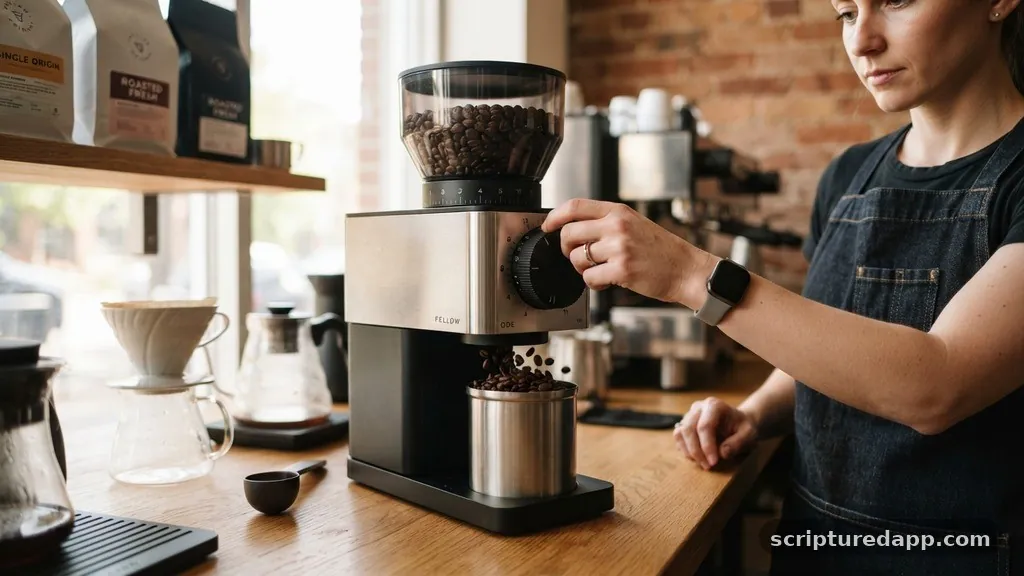
Selecting the correct grind size is the single most critical factor in determining whether your final extraction tastes balanced or disastrously bitter. When learning how to use a coffee grinder, you must match your particle dimensions to your brewing vessel.
A coarse texture resembles sea salt, allowing water to pass rapidly through French press filters. Conversely, a fine consistency resembles powdered sugar or flour, creating significant resistance required for pressurized espresso extraction.
Mismatched particle dimensions create severe extraction flaws. If your particles are too small for a filter machine, water lingers too long, dissolving undesirable tannins and creating an overwhelmingly bitter cup.
If your particles are too large for a stovetop moka pot, water rushes through prematurely, leaving behind a sour, under-extracted liquid. Achieving consistency requires understanding your equipment’s specific capabilities and making deliberate adjustments before every session.
- Coarse Grind: Ideal for French press, cold brew, and percolators, featuring large, chunky particles.
- Medium Grind: Perfect for standard drip machines and pour-over cones, resembling smooth sand.
- Fine Grind: Designed specifically for espresso machines and Turkish coffee pots, feeling silky to the touch.
Understanding Burr Mechanics Versus Blade Mechanisms
The internal cutting architecture of your equipment dictates the uniformity of your grounds. When evaluating how to use a coffee grinder, distinguishing between flat or conical burrs and spinning blades is essential for achieving flavor clarity.
Burr grinders crush beans between two revolving abrasive surfaces, producing uniform particles that extract at identical rates. Blade devices act like miniature food processors, chopping beans haphazardly into a chaotic mix of boulders and fine dust.
Uniformity prevents channeling during extraction. When grounds vary wildly in size, the tiny particles over-extract while the large chunks under-extract, muddying the flavor profile of your drink. Investing in quality equipment with adjustable burrs ensures repeatable results every morning, minimizing frustration and maximizing sweetness, acidity, and body in your finished cup.
Step-by-Step Instructions for Operating Electric and Manual Devices
Operating your equipment efficiently involves a repeatable workflow that keeps your station clean and your extractions consistent. While specific operational steps vary depending on whether you power your device manually or plug it into a wall socket, the foundational principles remain remarkably similar across different models. Developing a reliable routine prevents spills, preserves motor health, and ensures you never waste precious specialty beans.
- Measure your whole beans using a digital scale to maintain a precise brew ratio, typically starting near a one-to-sixteen proportion.
- Adjust your grind setting dial to match your intended brewing vessel before adding any coffee to the chamber.
- Pour the measured beans into the top hopper, ensuring the lid sits securely to prevent bouncing beans.
- Activate the motor or begin turning the hand crank smoothly, maintaining a steady, consistent rhythm until all beans pass through.
- Tap the housing gently to dislodge any trapped static grounds, then transfer the fresh material immediately into your filter.
Calibrating Grind Settings and Managing Retention
Calibration is an ongoing process of tasting your extractions and tweaking your equipment to correct flavor imbalances. If your pour-over tastes astringent and heavy, your particles are likely too small; back your adjustment ring toward a coarser setting for your next attempt. Conversely, a watery, sour cup indicates that your water rushed past oversized particles, demanding a finer adjustment to increase extraction resistance.
Bean retention is another important operational consideration. Older grounds often linger inside the chute or burr chamber, mixing with your fresh batch and introducing stale, rancid notes into your clean brew. Purging a small amount of coffee before your main dose or utilizing specialized bellows helps clear out residual material, ensuring every cup tastes vibrant and pure.
| Brewing Method | Ideal Particle Texture | Extraction Time |
|---|---|---|
| French Press | Coarse (Sea Salt) | 4 Minutes |
| Pour Over | Medium (Sand) | 3 Minutes |
| Espresso | Fine (Powder) | 25 Seconds |
Cleaning and Maintenance Protocols for Longevity
Routine maintenance protects your financial investment and prevents rancid coffee oils from ruining your daily ritual. Over time, residual coffee oils coat the burrs and internal chambers, turning bitter and imparting stale flavors onto freshly milled beans. Cleaning your device every few weeks removes these stubborn buildups and keeps your motor or hand crank operating smoothly without unnecessary friction.
To clean a burr device properly, disassemble the removable outer burr and hopper components carefully. Use a stiff-bristled brush to sweep away trapped grounds from the cutting edges, avoiding water immersion if your manufacturer advises against it. For stubborn residue, specialized food-safe grinding tablets can be run through the mechanism to absorb old oils before vacuuming out the remaining dust.
Troubleshooting Common Extraction Flaws
Even experienced coffee enthusiasts occasionally encounter unexpected extraction challenges that ruin an otherwise promising morning brew. Understanding how to diagnose these issues through visual inspection and taste allows you to adjust your technique rapidly. Whether dealing with excessive static cling, stalling burrs, or inconsistent dosing, methodical troubleshooting keeps your coffee station running efficiently.
Static electricity often causes fine grounds to cling stubbornly to plastic chutes and surrounding countertops during dry winter months. Applying a tiny drop of water to your whole beans before milling—a technique known as the Ross Droplet Technique—drastically reduces static generation without harming your equipment. If your motor stalls mid-cycle, never force it; turn off the power immediately, clear out the jammed beans, and adjust to a coarser setting before restarting.
Frequently Asked Questions
How often should I clean my coffee grinder?
You should perform a light brush-cleaning every two weeks to remove loose grounds and oils. For a deep cleaning, disassemble the burrs and clear out residue every one to two months, depending on how frequently you brew coffee at home.
Can I grind flavored coffee beans in a burr grinder?
It is generally best to avoid flavored beans because synthetic oils leave sticky residues that coat the burrs. This buildup goes rancid quickly, ruins subsequent batches of specialty coffee, and requires extensive cleaning to remove completely.
Why does my coffee taste sour even after adjusting the setting?
A persistently sour taste usually indicates under-extraction caused by particles that are too coarse or water that is too cool. Try shifting your adjustment ring toward a finer setting to slow down the water flow and extract more soluble compounds.
Should I weigh my beans before grinding?
Weighing your beans on a digital scale ensures precise consistency across every single brewing session. Measuring by weight rather than volume accounts for density variations between different roast profiles, leading to predictable, delicious results.
Conclusion
Mastering the mechanics behind processing whole beans transforms your daily kitchen routine from a chore into a reliable craft. By paying close attention to particle size, equipment maintenance, and calibration, you ensure every single cup reaches its absolute flavor potential. Start experimenting with small adjustments during your next brewing session, and enjoy the remarkable difference that freshly processed beans bring to your cup.
Best Coffee Grinders Hub guide bestcoffeegrindershub.com best coffee grinder for espresso this coffee grinder guide how to choose the right coffee grinder Best Coffee Grinders Hub guide burr vs blade grinder guide Best Coffee Grinders Hub Best Coffee Grinders Hub buying guide Best Coffee Grinders Hub coffee grinder reviews and ratings best coffee grinder guide burr vs blade grinder guide coffee grinder reviews and ratings how to choose the right coffee grinder bestcoffeegrindershub.com best budget coffee grinder guide coffee grinder buying tips BestCoffeeGrindersHub.com burr vs blade grinder guide Best Coffee Grinders Hub buying guide Best Coffee Grinders Hub guide Best Coffee Grinders Hub Best Coffee Grinders Hub reviews Best Coffee Grinders Hub guide how to choose the right coffee grinder burr vs blade grinder guide Best Coffee Grinders Hub guide Best Coffee Grinders Hub bestcoffeegrindershub.com