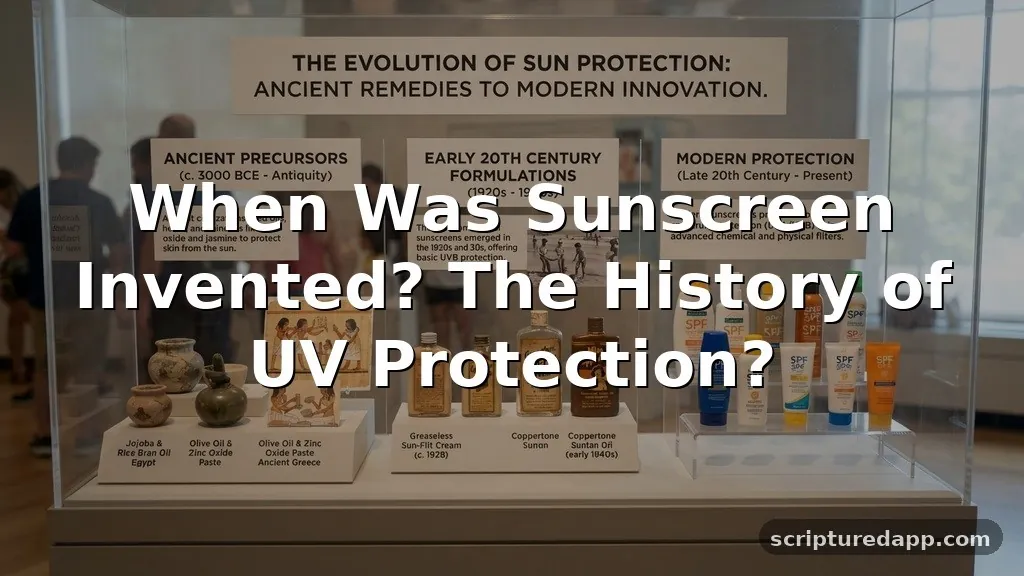

When people look into when sunscreen was invented, they usually discover a fascinating timeline stretching from ancient botanical concoctions to modern laboratory formulations. Long before commercial lotions filled pharmacy shelves, ancient civilizations experimented with rice bran, jasmine extracts, and olive oil to shield themselves from harsh solar rays.
However, the timeline of modern sunscreens as we know them today began in earnest during the early and mid-20th century. Understanding this evolution reveals how our approach to blocking ultraviolet radiation transformed from simple aesthetic preferences into a vital medical defense against skin cancer.
Ancient Remedies and Early Precursors to Modern Protection
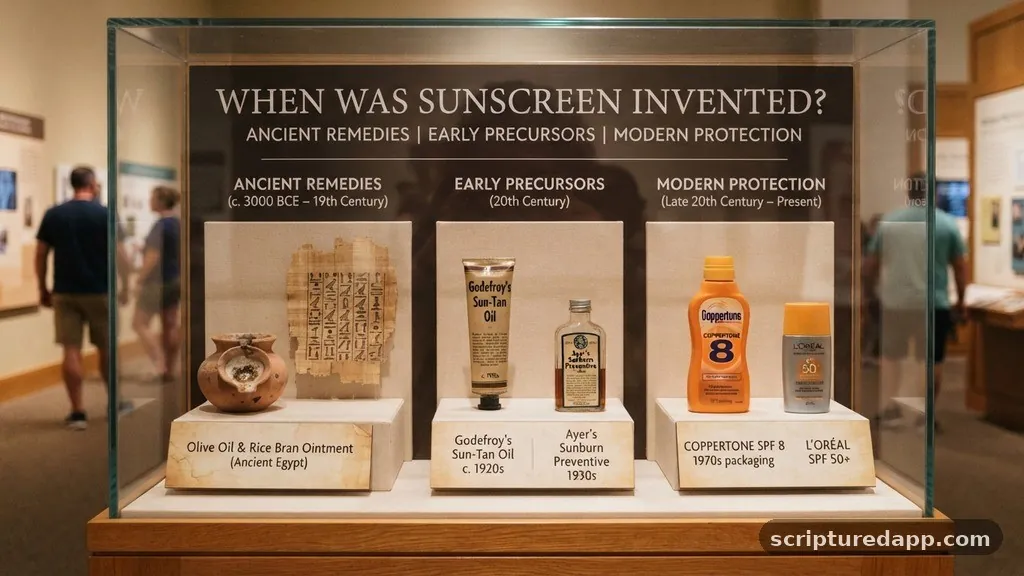
Long before modern chemical laboratories existed, ancient peoples developed innovative ways to protect skin from the blistering sun. Archaeological records show that ancient Egyptians used concoctions derived from rice bran, jasmine, and lupine plants, many of which contain natural compounds that absorb or reflect light. Similarly, civilizations in ancient Greece applied olive oil and sand to block the burning rays of the Mediterranean sun during outdoor athletic events.
Indigenous populations across the globe also relied on natural substances to shield their skin. In Southeast Asia, women traditionally applied Thanaka powder, a yellowish-white paste made from ground bark, which acts as both a cooling agent and a physical barrier against sunlight. These historical practices demonstrate that humanity has recognized the damaging effects of excessive solar exposure for millennia, even if they lacked the scientific terminology for ultraviolet radiation.
Natural Materials Used Before Modern Formulas
Before commercial lotions hit the market, individuals relied on pantry staples and botanical extracts. Common early methods included:
- Olive oil combined with various herbal extracts to moisturize and shield the surface.
- Rice bran and jasmine extracts utilized by the ancient Egyptians for skin protection.
- Thanaka paste crafted from ground tree bark in Myanmar for daily sun defense.
- Animal fats mixed with soot or mineral dust to create physical sun-blocking layers.
The Breakthrough of Red Vet Pet During World War II
The pivotal moment that directly answered when sunscreen was invented for military use occurred during World War II in the Pacific theater. American airmen stationed in tropical regions suffered from severe sunburns that hindered their operational effectiveness. In response, a pharmacologist named Benjamin Greene developed a heavy, red, sticky substance known as Red Vet Pet, which stood for Red Veterinary Petrolatum.
Red Vet Pet functioned primarily as a physical barrier, blocking out almost all incoming sunlight by coating the skin in an opaque layer. While effective at preventing painful burns, it was highly unpleasant to wear, looking like a layer of red grease on the face and body. Despite its cosmetic drawbacks, this military necessity proved that chemical and physical barriers could successfully mitigate sun damage on a mass scale.
Commercialization and the Birth of Coppertone
Following the conclusion of the second world war, civilian demand for reliable sun protection surged as beach culture and outdoor recreation grew in popularity. In 1944, an airman and pharmacist named Benjamin Green improved upon his wartime invention by combining Red Vet Pet with cocoa butter and coconut oil. This new formulation marked the birth of Coppertone, one of the most recognizable brands in the history of sun protection.
The early commercial formulas were still quite thick and greasy compared to modern options, but they offered a much more pleasant experience than pure petroleum derivatives. Marketing campaigns featuring the iconic Coppertone girl and her dog pulling down her swimsuit bottoms helped normalize regular sun protection among beachgoers throughout the 1950s and 1960s.
The Introduction of SPF and Modern Chemical Filters
A major turning point in sun protection history occurred in 1962 when Austrian chemist Franz Greiter invented a product called Glacier Cream after suffering severe sunburns while climbing Mount Piz Buin. Greiter subsequently introduced the concept of the Sun Protection Factor, commonly known as SPF, which became the universal standard for measuring how well a cream shields the body against UVB rays.
During the 1970s and 1980s, manufacturers began refining their formulas to protect against both UVB rays, which cause sunburns, and UVA rays, which penetrate deeper and contribute to premature aging and skin cancer. The regulatory bodies, including the FDA, began establishing guidelines for testing and labeling these products to ensure consumers received accurate protection claims.
| Era | Key Innovation | Primary Ingredients |
|---|---|---|
| Ancient Times | Botanical and physical barriers | Rice bran, olive oil, Thanaka bark |
| 1944 | Red Vet Pet for military use | Petrolatum, red dye |
| 1950s | First commercial consumer lotions | Cocoa butter, coconut oil |
| 1962 | Invention of the SPF rating system | Early chemical UV filters |
Evolution of Mineral Filters and Broad Spectrum Protection
As consumer awareness grew regarding the safety and efficacy of various chemical filters, interest in mineral options experienced a significant revival. Compounds like zinc oxide and titanium dioxide had been used in rudimentary forms for decades, but modern manufacturing processes allowed companies to micronize these particles. This technological advancement eliminated the chalky white cast traditionally left behind by physical sunblocks while maintaining their ability to reflect harmful solar radiation.
Today’s formulations are engineered to offer broad spectrum defense, meaning they shield against both UVA and UVB rays simultaneously. Researchers continue to develop lightweight, invisible textures that integrate seamlessly into daily skincare routines, encouraging higher compliance and more consistent use across all demographics and skin types.
Addressing Historical Gaps in Sun Protection Science
While the popular narrative often credits mid-20th-century scientists with inventing sun protection, historical documentation reveals a more fragmented global timeline. Many indigenous cultures utilized sophisticated sun-blocking techniques long before European and American chemists patented their commercial formulas. Furthermore, the medical understanding of how solar radiation damages cellular DNA took decades to catch up with the commercial availability of protective lotions.
The transition from a simple sunburn preventative to a clinically proven preventative measure against skin cancer marks one of modern medicine’s greatest public health achievements. Regulatory agencies now enforce strict testing protocols to verify that the claims printed on every tube align with actual laboratory performance, ensuring that consumers receive reliable protection every time they apply a lotion.
Frequently Asked Questions
When did people in the United States start using sunscreen widely?
Commercial sunscreen use began to take off in the United States during the late 1940s and 1950s, following the post-war introduction of Coppertone. However, widespread daily use as a health precaution did not become common until the late 20th century, when the medical community heavily emphasized the dangers of skin cancer.
What did people use for sun protection before commercial sunscreen existed?
Before commercial lotions were invented, people relied heavily on physical barriers like wide-brimmed hats, parasols, and protective clothing. When applying topical solutions, they often used natural oils, olive oil, cocoa butter, or heavy mineral pastes containing zinc and petroleum.
Did effective sunscreen exist in the 1970s and 1980s?
Yes, sunscreens were widely available during the 1970s and 1980s, featuring the newly introduced SPF rating system. However, these earlier formulas primarily blocked UVB rays that caused sunburns, offering limited protection against the UVA rays linked to deep skin aging and long-term cellular damage.
Who invented the Sun Protection Factor rating?
The Sun Protection Factor rating system was introduced in 1962 by Austrian chemist Franz Greiter. He developed the metric after experiencing a bad sunburn while mountain climbing, creating a standardized way to measure how much longer skin protected by a cream takes to burn.
Conclusion
The history of when sunscreen was invented shows a remarkable journey from ancient botanical pastes and greasy wartime petroleum to sophisticated, elegant daily skincare formulas. What started as a military necessity to prevent painful burns has evolved into a cornerstone of preventative dermatology and public health. Incorporating broad spectrum protection into your daily routine remains one of the most effective habits for maintaining long-term skin health.
Sunscreens Expert SPF reviews sunscreensexpert.com best mineral sunscreen 2026 choosing the right SPF best sunscreen for oily skin SunscreensExpert.com Sunscreens Expert buying guide Sunscreens Expert buying guide best mineral sunscreen 2026 mineral vs chemical sunscreen guide Sunscreens Expert guide Sunscreens Expert guide Sunscreens Expert guide Sunscreens Expert guide sunscreensexpert.com this sunscreen guide SunscreensExpert.com Sunscreens Expert Sunscreens Expert buying guide Sunscreens Expert buying guide sunscreensexpert.com mineral vs chemical sunscreen guide best sunscreen guide sunscreensexpert.com check out this buying guide best sunscreen guide Sunscreens Expert top sunscreen brands sunscreen reviews and ratings best mineral sunscreen 2026