
Understanding the true skink meaning involves traversing a path that leads from ancient biological classifications to regional culinary traditions. While most people immediately associate the word with a specific type of lizard, the term carries historical and cultural weight that extends far beyond herpetology.
By examining how this word has evolved through various languages and contexts, we can better appreciate its dual nature as both a scientific classification and a term deeply embedded in local vernacular. Whether you are curious about the origins of the creature’s name or the history behind a hearty bowl of soup, this exploration clarifies the various ways the term is utilized today.
The Biological Classification of the Skink
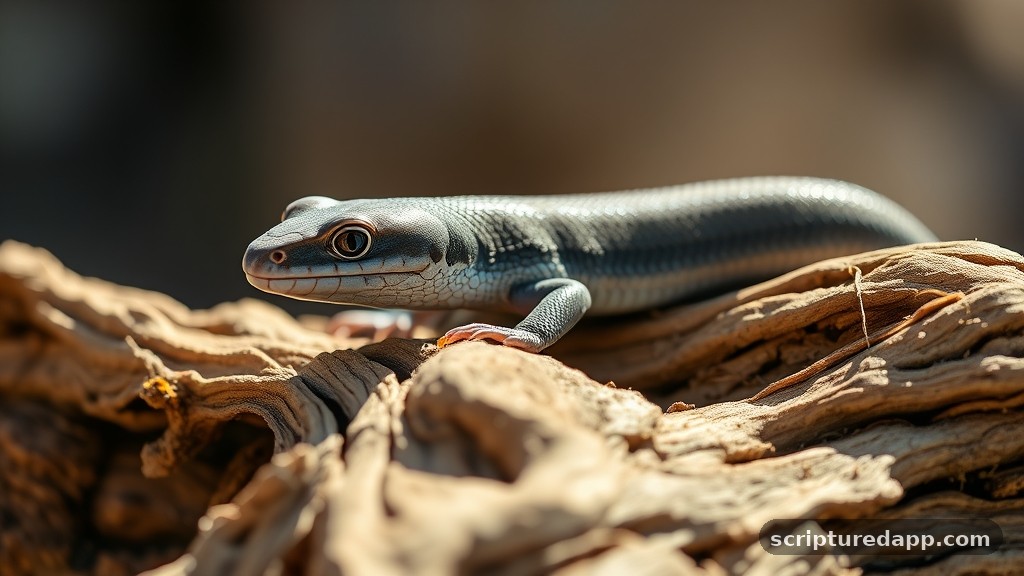
At its most fundamental level, the word refers to a diverse family of lizards known as Scincidae. These creatures are often defined by their shiny, overlapping scales, which provide a sleek appearance that distinguishes them from other reptiles.
When biologists discuss the skink meaning in a scientific context, they are usually referencing the vast array of species that inhabit almost every continent, excluding high-latitude regions. Many of these animals possess an elongated body, which is a key evolutionary adaptation for maneuvering through dense leaf litter or narrow crevices.
The physical characteristics of these lizards are quite fascinating. Many species exhibit reduced limbs or, in some cases, have limbs that are almost entirely vestigial, giving them a serpentine appearance. This adaptation allows them to burrow effectively, which is a primary survival strategy for many members of the Scincidae group.
Their reliance on touch and vibration, rather than just sight, helps them navigate their environments with surprising speed. Because they are often shy and elusive, seeing one in the wild is frequently a matter of patience and luck.
Etymology and Ancient Roots
The linguistic history of the word is a classic example of how scientific terminology borrows from ancient languages. The term traces its lineage back to the Latin scincus, which was itself derived from the Greek skinkos.
These ancient terms were used to describe a specific type of lizard found in the Mediterranean and North Africa. Interestingly, the scincus greek roots suggest a long history of human interaction with these animals, as they were often mentioned in early medical texts and natural history journals.
Tracing the evolution of the word reveals how it transitioned from a scholarly label to a common name used by naturalists and the general public alike. As scientific classification systems became more formalized, the term became permanently attached to the Scincidae family.
This transition highlights a common pattern in vocabulary development, where specialized academic terms slowly permeate daily language. By looking at the old roots of the term, we gain insight into how early observers classified the natural world based on physical appearance and behavior.
Differentiating Between Species and Types
Because the family is so large, the term covers a massive variety of animals. Some are small, ground-dwelling creatures, while others are robust and highly visible. Researchers often look at the Eumeces genus as a prime example of the classic, shiny-scaled lizard that most people imagine when they hear the name.
Understanding the distinction between these various types is crucial for anyone interested in herpetology. The diversity within the family is truly staggering, with over 1,500 described species currently recognized by science.
Key Physical Distinctions
* Elongated body shapes that facilitate burrowing.
* Shiny, smooth scales that reduce friction.
* Limbs elongated or reduced depending on the species’ specific habitat.
* Distinctive movement patterns that often involve lateral undulation.
These physical traits are not random; they are highly specialized tools for survival. For instance, the transition toward limbs elongated or reduced is a clear indicator of whether a species spends more time climbing or digging.
By observing these features, one can often deduce the environment in which the animal evolved. This level of detail is why the study of these reptiles remains a vibrant field for evolutionary biologists today.
The Culinary Connection: Cullen Skink
A significant departure from the reptilian definition is found in the Scottish culinary tradition, specifically the famous dish known as Cullen skink. In this context, the skink meaning shifts entirely away from biology toward a hearty, traditional soup.
This dish typically consists of smoked haddock, potatoes, and onions, resulting in a creamy and nutrient-dense meal. The term in this specific instance is believed to stem from the Middle English scencan, which relates to pouring or serving a drink.
It is a common point of confusion for visitors to Scotland who might be surprised to see the word on a menu. However, the etymology here is distinct from the lizard. The regional usage of the word to describe a soup or a drink reflects the evolution of language within the British Isles.
Understanding this nuance is essential for anyone interested in linguistics, as it demonstrates how the same phonetic sequence can hold vastly different meanings depending on the cultural history of the speaker. You can learn more about the cultural significance of traditional Scottish dishes through the National Library of Scotland records on regional heritage.
Linguistic Evolution and Regional Variations
Languages are never static, and the way we use specific terms changes over time and geography. The French influence on English, as well as the impact of Dutch and other Germanic languages, has played a role in how terms like this have settled into our modern lexicon. When we analyze the skink meaning across different dialects, we find that the reptilian definition is dominant globally, but the culinary definition remains a strong cultural marker in specific parts of Scotland.
This divergence is a perfect example of semantic shift. A term that once described a simple act—like pouring a liquid—eventually became attached to a specific recipe, while the scientific term remained tethered to the natural history of reptiles.
Tracking these shifts requires looking at how words move between social groups and how they are adapted to fit new contexts. It is a reminder that language is a living, breathing entity that changes based on how we interact with our environment and our history.
Addressing Topical Gaps in Common Knowledge
Many online sources provide a surface-level definition, but they often ignore the nuances regarding why the name is shared between such disparate things. To fill these gaps, we must recognize that the convergence of these terms is largely coincidental, arising from different linguistic roots.
One relates to the Greek and Latin observation of a lizard, while the other relates to the act of serving or pouring. This distinction is the most important takeaway for anyone trying to understand the full scope of the term.
Another gap involves the myth-making surrounding these creatures. In some cultures, the lizard has been viewed with suspicion or superstition, while in others, they are seen as harmless, beneficial residents of the garden.
The skink meaning in a spiritual or symbolic sense varies wildly, often depending on the specific species and the local folklore. By moving past the basic dictionary definition, we can begin to see how these animals have been woven into the human experience through stories, medicine, and food.
Symbolism and Cultural Perception
Throughout history, animals have served as potent symbols in art and literature. The shiny appearance of the lizard has often been interpreted as a sign of quickness, adaptability, and transformation.
Because many of these reptiles can shed their tails to escape predators, they are frequently associated with the concept of renewal. This biological trick, known as autotomy, is a powerful metaphor that has found its way into various cultural narratives.
It is interesting to note how humans project their own values onto these creatures. While some see them as pests, others view them as indicators of a healthy ecosystem.
The way we define and name these animals often reveals more about our own relationship with nature than it does about the animals themselves. Whether they are seen as tiny, shiny companions in the garden or as a nuisance, the skink meaning remains tied to our observation of their unique behaviors and their place within the natural order.
Practical Identification in Nature
If you are trying to identify these animals in the wild, look for the subtle cues that define the family. Most are diurnal, meaning they are active during the day and often spend their time basking on a sunny log or rock.
Their movement is distinct; they often move with a slight lateral wiggle, making them look like a cross between a lizard and a snake. If you spot one, keep your distance, as they are easily startled and will quickly dart into a burrow or under a leaf.
Identification Checklist
- Check the texture of the skin: Is it notably shiny or glossy?
- Observe the head shape: Is it blunt and well-integrated into the elongated body?
- Watch the gait: Does it move with a snake-like fluidity?
- Look for hiding spots: Are they near loose soil, rotting wood, or dense vegetation?
These simple observations can help you distinguish a member of the Scincidae family from other common garden lizards. Because their limbs elongated or reduced depending on the species, you might find that some individuals are much better climbers than others. Paying attention to these subtle differences is the first step toward becoming a more observant naturalist.
Comparison of Terms and Origins
To clarify the differences, we can look at the origins of the word in a side-by-side format. This helps separate the biological usage from the culinary and linguistic ones that often cause confusion.
| Context | Origin | Primary Meaning |
|---|---|---|
| Biological | Latin/Greek | A family of shiny-scaled lizards. |
| Culinary | Middle English | A traditional smoked haddock soup. |
| Linguistic | General Germanic | Related to the act of pouring or serving. |
This table demonstrates that while the word is identical, the roots are entirely separate. The Latin scincus and Greek skinkos refer to a physical creature, while the culinary usage is a regional evolution of a verb. Recognizing these distinct categories prevents the common mistake of assuming that the soup is made from the lizard, which is a misunderstanding that occasionally pops up in casual conversation.
The Role of Environment in Evolutionary Success
The success of these lizards is largely due to their adaptability to various environments. From the arid deserts of Australia to the humid forests of Southeast Asia, they have managed to thrive by modifying their body structure.
The body covered in overlapping, protective scales is a key factor in their ability to survive in environments where others might struggle with desiccation. This evolutionary armor is one of the most successful designs in the reptile world.
When we discuss the skink meaning in a broader ecological context, we are talking about a group of animals that serve as both predator and prey. They consume insects and small invertebrates, helping to keep garden and forest populations in check. At the same time, they are a vital food source for birds, snakes, and small mammals.
Their presence is a strong indicator of a balanced environment. By protecting their habitats, we ensure that these fascinating creatures continue to play their part in the natural world.
Final Thoughts on the Terminology
Exploring the skink meaning reveals a fascinating intersection of science, history, and culture. We have moved from the ancient Latin scincus and the Greek skinkos to the modern kitchen, uncovering how one word can represent both a tiny, shiny reptile and a comforting bowl of soup. This journey highlights how language evolves, how biology shapes our names for the world, and how regional traditions can preserve words long after their original meanings have shifted.
Whether you are a nature enthusiast looking for these elusive lizards in your own backyard or a food lover interested in the history of a traditional Scottish dish, the word holds a unique place in your vocabulary. It serves as a reminder that every word has a story and that the way we use language is a reflection of our curiosity about the world around us. Keep exploring, keep observing, and you will find that even the simplest terms are packed with depth.
Frequently Asked Questions
What does the term mean in slang?
In most common slang, the word does not have a widely recognized or standard definition beyond its biological and culinary uses. If encountered in informal speech, it is usually a mispronunciation or a highly localized term that lacks a broad dictionary-defined meaning in modern English.
Is the term related to an alcoholic drink?
No, the term is not typically used to describe an alcoholic beverage. While the word relates to the act of serving or pouring in its Middle English roots, it is specifically tied to the traditional fish soup, not to spirits or other types of liquor.
What do these lizards symbolize?
These lizards are often seen as symbols of adaptability and renewal. Because they can regrow their tails and move through diverse, challenging environments, they are frequently associated with the ability to survive in changing circumstances and the resilience required to thrive in harsh, hidden places.
What is the difference between the lizard and the soup?
The lizard refers to the Scincidae family of reptiles, which are defined by their shiny scales and burrowing behavior. The soup, known as Cullen skink, is a traditional Scottish dish made from smoked haddock and potatoes, derived from an entirely different linguistic root related to pouring.