
You have arrived here because you found yourself staring down a bag of whole coffee beans while realizing your kitchen lacks the essential piece of hardware needed to prep them for morning brewing. Learning how to grind coffee beans without a grinder is an indispensable kitchen survival skill that saves your daily routine when appliances break or you find yourself traveling without gear. Mastering this process requires understanding how alternative household implements manipulate bean structures to achieve the uniform texture required for a decent extraction.
The Blender Method for Quick Pulverization
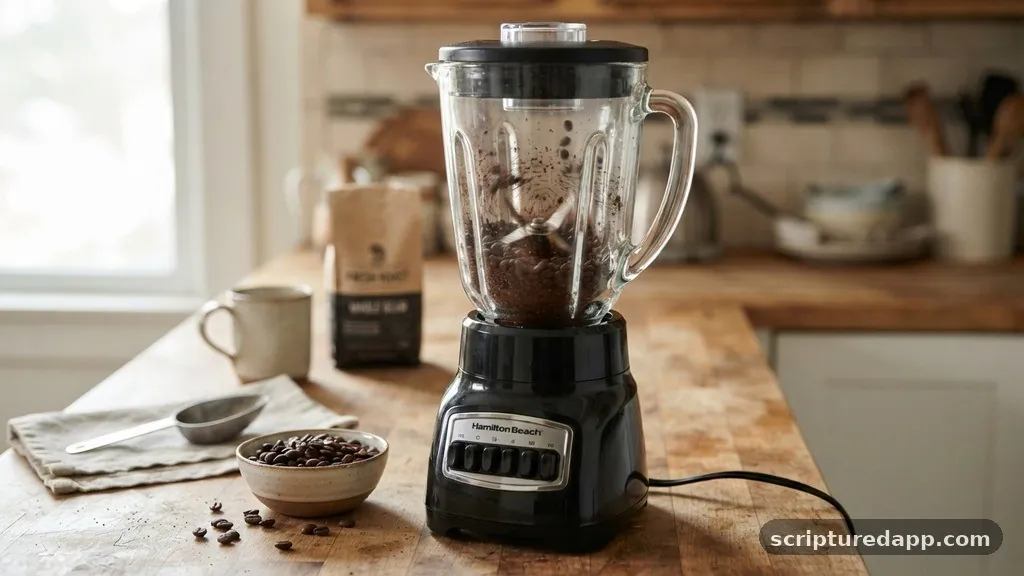
The kitchen blender stands as the most common household appliance people reach for when they need to grind coffee beans without a grinder. While blenders are designed to liquefy and puree rather than fracture beans uniformly, they can produce passable coffee grounds if you use the right technique.
The primary challenge with a blender involves the height of the blades, which often sit too high above the bottom of the pitcher to catch small quantities of whole coffee beans. To combat this design flaw, you should always process a larger volume of beans at once, ensuring the blades have enough material to engage.
Pulse the blender in short, sharp bursts rather than running it on a continuous high setting. Continuous spinning creates friction and heat, which cooks the coffee beans prematurely and strips away delicate volatile aromatics before the water ever touches them.
Watch the consistency closely through the glass or plastic pitcher, stopping frequently to shake the container or stir the beans down toward the blades. This prevents the formation of massive boulders at the bottom while the top layer remains completely untouched.
Achieving a consistent grind size in a blender remains nearly impossible due to the random motion of the blades. You will inevitably end up with a mixture of fine dust and large chunks, which leads to over-extraction and bitterness alongside under-extraction and sourness.
To mitigate this issue, pass your finished product through a fine-mesh kitchen sieve or sifter after blending. The sifter catches the oversized boulders, allowing you to return them to the blender for another quick pulse while keeping the ultra-fine silt out of your final brew.
Using a Food Processor for Larger Batches
A food processor offers a wider surface area and a flatter blade profile compared to a tall blender pitcher, making it an interesting alternative when grinding coffee beans without a grinder. The broader base allows the beans to spread out more evenly, reducing the likelihood that whole beans will escape the blades entirely during processing.
However, food processor blades are typically much duller than blender blades, meaning they tend to crush and shatter the beans rather than slice cleanly through them. This crushing action generates more fines, which can easily clog paper filters and muddy the body of your cup coffee.
When operating a food processor for this task, pulse the machine rhythmically to maintain control over the particle size distribution. Do not walk away or let the motor run continuously, as the friction generated inside the enclosed bowl will quickly scorch the delicate oils coating the exterior of your coffee beans.
* Spread the coffee beans in a single, even layer across the bottom of the processor bowl before starting.
* Pulse the motor five to ten times, then pause to inspect the particle consistency and redistribute the grounds.
* Tilt the bowl gently while pulsing to encourage trapped beans to slide toward the spinning blades.
* Dump the contents onto a tray and inspect the distribution before transferring the material to your brewing device.
The Rolling Pin and Cutting Board Technique
Crushing your coffee beans manually using a heavy rolling pin and a sturdy wooden cutting board gives you maximum control over the physical fracturing process. This method takes inspiration from traditional mortar and pestle techniques, allowing you to apply direct, measured force to individual clusters of beans.
Start by pouring your measured beans into a heavy-duty ziplock bag or wrapping them tightly inside a clean, thick kitchen towel to prevent them from flying across the room. Lay the bagged beans flat on a stable, durable countertop that can withstand heavy impacts without wobbling.
Press down firmly with the rolling pin while rolling it back and forth across the bag, applying your body weight to crack the outer shells. Once the initial cracking phase is complete, transition from a rolling motion to a direct pounding motion, using the heavy cylinder of the rolling pin like a mallet. This rhythmic tapping helps break down the smaller fragments into the desired particle size.
Monitoring your progress visually is extremely easy with this manual technique because you can see the grounds right through the clear plastic bag. If you need a coarse grind for a French press, stop rolling as soon as all the whole beans are broken into halves or quarters.
If you require a finer consistency for a drip machine or pour-over, keep rolling and tapping until the texture resembles coarse sand. This tactile approach prevents the overheating issues that plague motorized appliances, preserving the pure flavor profile of your beans.
Hammer and Mallet Options for Manual Crushing
When dealing with tough, dense light-roast coffee beans, standard kitchen implements like rolling pins might require more physical exertion than you care to expend. A clean household hammer, a rubber mallet, or even a heavy metal meat tenderizer can step in as a heavy-duty alternative to traditional grinding equipment.
Place your beans inside a thick canvas pouch or a double-layered plastic bag to ensure the metal head of the hammer does not come into direct contact with the food material. Set the bag on a concrete floor or a very sturdy workbench that absorbs heavy shock waves efficiently.
Apply gentle, controlled taps rather than swinging the hammer with full force, as excessive violence will pulverize the beans into an unusable powder. The goal is to fracture the cellular structure of the coffee beans progressively, mimicking the crushing action of burrs inside a dedicated coffee grinder.
| Alternative Tool | Best Grind Size | Effort Level | Risk of Overheating |
|---|---|---|---|
| Blender | Medium to Fine | Low | High |
| Food Processor | Medium to Coarse | Low | Medium |
| Rolling Pin | Coarse to Medium | Medium | None |
| Hammer or Mallet | Coarse | High | None |
Mortar and Pestle Precision for Small Servings
A traditional stone, ceramic, or wooden mortar and pestle represents the most authentic manual way to grind coffee beans without a grinder. This ancient kitchen tool allows you to grind small batches of coffee with incredible precision, making it the ideal choice for a single morning serving.
Pour a small handful of beans into the mortar bowl, ensuring you do not overcrowd the vessel, which makes it difficult for the pestle to make direct contact with the surfaces. Grasp the pestle firmly and use a grinding motion, pressing down and rotating the heavy head against the sides of the bowl.
The grinding action of stone against stone shears the coffee beans apart rather than merely smashing them, resulting in a much more uniform distribution of grounds. You can easily adjust the pressure and rotation speed to switch between a coarse texture for immersion brewing and a finer consistency for espresso-style stovetop pots. While this method demands physical effort and a few minutes of continuous arm work, the reward is a quiet process that yields remarkably balanced extraction notes.
Addressing Topical Gaps in Improvised Grinding
Attempting to brew coffee without proper equipment introduces several hidden variables that can ruin an otherwise promising cup if you do not account for them. Static electricity is a major nuisance when using plastic bags, blenders, or plastic containers, causing fine coffee particles to cling stubbornly to every available surface.
To minimize static charge buildup, you can employ the RDT technique, which involves dampening your hand with a single drop of water and stirring the whole beans before processing them. This microscopic amount of moisture completely eliminates static cling without introducing enough water to prematurely extract the beans.
Another critical factor involves the temperature of your makeshift tools during the processing phase. Motorized appliances like blenders heat up rapidly, transferring thermal energy directly into your coffee grounds and baking away the delicate floral and fruity notes before brewing. If you must use a blender, place the pitcher in the refrigerator for twenty minutes before adding your beans to counteract the motor heat.
| Challenge | Cause | Solution |
|---|---|---|
| Static Cling | Friction in dry plastic containers | Add a single drop of water to beans before processing |
| Bitter Flavor | Motor friction overheating the grounds | Use pulse mode and chill equipment beforehand |
| Muddy Brew | Excessive fine dust from crushing | Sift the finished grounds through a kitchen sieve |
Frequently Asked Questions
Can I use a spice grinder instead of a coffee grinder?
Yes, an electric spice grinder works identically to a blade coffee grinder and will chop up your coffee beans effectively. Just ensure you thoroughly clean out any residual onion, garlic, or spice oils from the blades before processing your coffee to avoid savory contamination.
Why is grind consistency so important for brewing?
Uniform particle size ensures that water extracts flavors from every coffee particle at the exact same rate. Uneven grounds lead to a chaotic extraction where small particles over-extract into bitter flavors while large chunks under-extract into sourness.
How do I make fine espresso grounds without a proper grinder?
Achieving a true espresso-fine powder without professional burrs is extremely difficult using makeshift tools. Your best option is combining a blender pulse cycle with a manual mortar and pestle finish, followed by sifting out any remaining coarse boulders.
Does manual crushing ruin the taste of the coffee?
Manual crushing actually preserves the flavor better than electric blenders because it produces zero frictional heat. As long as you keep your tools clean and avoid contaminating the beans with foreign odors, manual methods yield a bright, clean cup.
Conclusion
Improvising a way to grind coffee beans without a grinder tests your resourcefulness, but it easily bridges the gap until your equipment is replaced. Whether you choose the pulsing blades of a kitchen blender or the quiet control of a rolling pin, controlling your particle size and managing heat generation remains paramount.
Experiment with these alternative techniques to discover which method best fits your kitchen setup and brewing preferences. Enjoy your improvised cup and dive into your next morning routine with absolute confidence.
Best Coffee Grinders Hub bestcoffeegrindershub.com bestcoffeegrindershub.com Best Coffee Grinders Hub guide bestcoffeegrindershub.com bestcoffeegrindershub.com Best Coffee Grinders Hub reviews coffee grinder buying tips Best Coffee Grinders Hub Best Coffee Grinders Hub buying guide coffee grinder reviews and ratings Best Coffee Grinders Hub guide best burr coffee grinder Best Coffee Grinders Hub guide best coffee grinder guide Best Coffee Grinders Hub guide Best Coffee Grinders Hub reviews Best Coffee Grinders Hub reviews Best Coffee Grinders Hub best coffee grinder guide bestcoffeegrindershub.com best coffee grinder guide bestcoffeegrindershub.com bestcoffeegrindershub.com bestcoffeegrindershub.com BestCoffeeGrindersHub.com top coffee grinder brands Best Coffee Grinders Hub best manual coffee grinder 2026 best burr coffee grinder