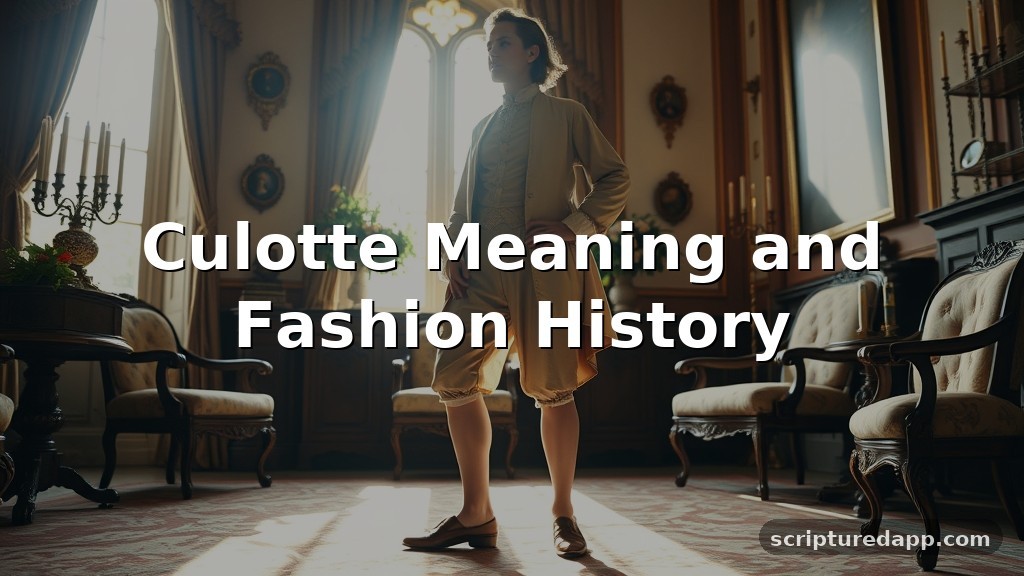

Understanding the true culotte meaning often requires looking beyond modern runways to the garment’s complex historical roots. While many people identify them today as a specific style of wide-legged, cropped trousers, the term carries a legacy that spans centuries, moving from aristocratic attire to a symbol of political revolution. Grasping the nuances of this fashion staple helps you distinguish it from similar silhouettes like palazzos or gauchos.
By exploring how these pieces evolved from restrictive historical breeches into a versatile, contemporary wardrobe essential, you can better appreciate their structural design and cultural significance. Whether you are interested in historical semantics or current styling trends, this breakdown clarifies everything about the garment.
The Historical Origins of the Term

The word culotte finds its roots in the French language, derived from the word culot, which refers to the lower part or the base of an object. Historically, the term described a specific style of tight-fitting knee-length breeches worn by European men of the upper classes from the late Middle Ages through the 18th century.
These garments were often fastened with a buckle or buttons just below the knee, serving as a distinct marker of social status. You can find more information about these historical shifts in clothing terminology at the Britannica entry on fashion history.
During the French Revolution, the attire took on a powerful political dimension. The working-class revolutionaries, who rejected the aristocratic silk breeches, became known as the sans-culottes, literally meaning “without culottes.” They wore long trousers instead, signaling their rejection of the nobility and their solidarity with the common people.
This historical context highlights how a simple garment can evolve into a potent symbol of social identity. The transition from a literal piece of men’s clothing to a modern feminine fashion term is a fascinating study in how linguistic labels adapt to changing cultural norms.
Defining Culottes in Modern Fashion
In current usage, the culotte meaning has shifted entirely away from its aristocratic origins. Today, it describes a pair of trousers that are cut with a wide leg and typically fall to mid-calf or just below the knee.
Because of their volume and length, they are frequently mistaken for a skirt at first glance, leading to their common classification as “skirt-pants.” This visual deception is a core feature of their design, offering the aesthetic appeal of a midi skirt with the comfort and practicality of pants.
Modern versions are constructed from a vast array of materials, ranging from structured wool and denim to flowing silks and linen. Designers often incorporate high-waisted cuts to elongate the silhouette, making them a popular choice for both professional and casual environments.
Unlike their historical counterparts, these garments are designed for ease of movement and modern versatility. They serve as a bridge between formal tailoring and relaxed, everyday wear, proving that a specific silhouette can survive centuries by reinventing its purpose.
Distinguishing Culottes from Similar Silhouettes
One of the most frequent points of confusion for shoppers involves distinguishing between various wide-leg trousers. While many people use these terms interchangeably, there are distinct structural differences that define the culotte meaning compared to other styles like palazzos or gauchos. Understanding these differences allows for better wardrobe curation and more accurate fashion terminology.
| Garment Type | Typical Length | Key Characteristic |
|---|---|---|
| Culottes | Knee to mid-calf | Structured, skirt-like flare |
| Palazzo Pants | Ankle to floor | Extremely wide, flowing leg |
| Gauchos | Mid-calf | Often sportier, sometimes pleated |
Palazzo pants are characterized by their extreme width and full-length cut, which creates a dramatic, sweeping motion when walking. In contrast, culottes are strictly defined by their cropped length.
Gauchos are perhaps the closest relative, often featuring a similar length, but they frequently lean toward a more athletic or rugged aesthetic, whereas modern culottes are generally associated with tailored, polished looks. Recognizing these nuances prevents the common mistake of mislabeling a floor-length wide-leg pant as a culotte.
The Linguistic Evolution of the Word
The journey of the term from a specific male garment to a general fashion noun is a classic example of linguistic drift. In the English dictionary, the word has undergone significant semantic expansion.
Originally, it was a precise translation of the French word for knee-breeches, but as the item fell out of fashion for men, the term became available for repurposing. By the early 20th century, the word began to appear in contexts related to women’s sports and activewear, specifically for cycling and horse riding.
The adoption of the word into the common lexicon reflects a broader trend of borrowing French fashion terminology to describe specific silhouettes. Because the garment looks so much like a skirt, it often requires a unique identifier to distinguish it from standard trousers.
This is why the term stuck; it filled a vocabulary gap for a garment that didn’t fit neatly into the “pants” or “skirt” categories. The persistence of this label in contemporary fashion magazines and retail sites confirms its status as a permanent fixture in the modern sartorial dictionary.
Cultural Impact of the Sans-Culottes
To truly understand the weight behind the word, one must consider the radical history of the sans-culottes. During the French Revolution, the phrase was not merely a description of clothing but a badge of honor for the Parisian laboring classes.
By wearing long trousers rather than the knee-length breeches favored by the elite, these individuals signaled their political allegiance. This history adds a layer of irony to the modern fashion context, where the word is now almost exclusively associated with high-end, aesthetic choices rather than political agitation.
The transition from a revolutionary symbol to a high-fashion staple is a testament to how fashion absorbs and neutralizes historical tension over time. Today, when a fashion brand uses the term, the historical connection is rarely intended; rather, the focus is entirely on the silhouette.
However, for those interested in the etymology of fashion, the connection to the French Revolution remains a critical piece of the puzzle. It serves as a reminder that the clothes we wear often carry echoes of past struggles, even when the original context has been stripped away by time and trends.
Styling Culottes for Contemporary Looks
Styling these versatile pieces effectively requires balancing the volume of the wide leg with the rest of your outfit. Since they add significant width to the lower half of the body, many people prefer to pair them with more fitted tops to create a balanced silhouette. A tucked-in blouse or a slim-fit sweater can provide a sharp contrast to the fullness of the trousers, highlighting the waist and creating a clean, architectural look.
Footwear is another critical component of the styling process. Because they hit at the mid-calf, the choice of shoe can dramatically alter how the garment looks on the frame.
- Ankle boots can create a seamless transition, especially in cooler weather.
- Heels or pointed-toe flats often help elongate the legs, which can be beneficial if the length of the pant feels shortening.
- Sneakers offer a relaxed, modern aesthetic that works well for casual weekend outings.
- Loafers or brogues add a touch of preppy sophistication, playing up the tailored nature of the cut.
Experimenting with different proportions is the best way to determine what works for your personal style. The beauty of the piece lies in its adaptability; it can be dressed up for a formal office environment or kept casual for a coffee date, provided the accessories and fabrics are chosen with the setting in mind.
Addressing Common Misconceptions
Many people encounter the word in a dictionary or a fashion blog and feel confused by the conflicting definitions. One common misconception is that the term applies to any short pant, including shorts or capris. However, the true definition relies on the combination of a wide, skirt-like cut and a specific cropped length.
If a garment is tight-fitting or short-short, it is not a culotte. This distinction is vital for maintaining the integrity of the fashion term.
Another gap in common knowledge is the pronunciation. Because it is a loanword from French, the pronunciation can be tricky for English speakers. It is typically pronounced “koo-lot,” with the emphasis on the second syllable.
Mispronouncing it is a common hurdle, but it doesn’t change the underlying meaning. By clearing up these small points of confusion, you can navigate fashion discussions with greater confidence and accuracy, ensuring you are using the terminology correctly in both written and spoken contexts.
The Role of Fabric and Tailoring
The structural success of these pants depends heavily on the fabric choice. Because the design relies on a specific flare, the material must have enough weight to hold its shape while remaining fluid enough to move gracefully.
Stiff fabrics like heavy denim or wool blend twill are excellent for creating a sharp, structured look that maintains the “skirt” illusion. In contrast, softer fabrics like rayon or silk lend themselves to a more relaxed, bohemian aesthetic.
Tailoring is equally important. Since they hit at the mid-calf, the hemline must be perfectly placed to avoid looking like a pair of trousers that were simply cut too short. A well-tailored pair will have a clean finish that emphasizes the intentionality of the design.
When shopping, pay attention to the rise as well; a high-waisted cut is generally more flattering because it accentuates the narrowest part of the torso, balancing the volume of the legs. Investing in quality tailoring can elevate a basic pair into a signature piece that feels custom-made for your frame.
Seasonal Versatility
One of the most compelling reasons to add these to your wardrobe is their ability to transition across seasons. They are remarkably effective in moderate temperatures, providing more coverage than shorts but offering more airflow than standard full-length trousers. In the summer, lightweight linen or cotton versions are breathable and cool, making them a perfect alternative to skirts for outdoor events.
As the weather cools, you can easily transition them into autumn and winter outfits. Pairing them with tall boots that disappear underneath the hem creates a warm, layered look that hides the fact that the pants are cropped.
Adding tights or leggings underneath is another practical styling trick that extends their wearability into the colder months. This seasonal flexibility makes them a high-utility item, ensuring that you get value out of the garment throughout the year rather than relegating it to a single season.
The Future of the Silhouette
Fashion is cyclical, and the popularity of this specific cut has seen many peaks and valleys over the last century. From the wide-legged styles of the 1940s to the bold, colorful patterns of the 1970s and the minimalist iterations of the modern era, the silhouette remains a consistent presence in design history. As we look forward, it is likely that designers will continue to experiment with the proportions and materials, perhaps moving toward more sustainable fabrics or innovative tech-textiles that enhance the drape and structure.
The enduring nature of this item suggests that it is not a fleeting trend but a classic design element. By understanding the history, the linguistic roots, and the styling potential, you can confidently integrate these pieces into your collection. Whether you appreciate them for their revolutionary history or their modern, chic aesthetic, the garment remains a fascinating subject for anyone interested in the intersection of language and style.
Frequently Asked Questions
What is the main difference between culottes and palazzo pants?
The primary difference is the length and the volume. Culottes are cropped at the knee or mid-calf and often feature a structured, skirt-like flare. Palazzo pants are usually floor-length and are characterized by an extremely wide, flowing leg that does not necessarily mimic a skirt.
Is the term culotte strictly for women’s clothing?
While the modern fashion industry primarily uses the term for women’s wear, the word historically referred to men’s knee-breeches. In current English usage, it is almost exclusively associated with the women’s garment, though historical contexts will always link it to the men’s attire of the 18th century.
How do you pronounce the word correctly?
The word is of French origin and is commonly pronounced “koo-lot” in English. The emphasis is typically placed on the second syllable, and the final “e” is silent. It is a straightforward loanword that has become standard in the international fashion lexicon.
Are culottes considered professional attire?
Yes, they can be appropriate for professional environments depending on the fabric and styling. Tailored versions in neutral colors like black, navy, or camel, paired with a blouse and closed-toe heels or loafers, can create a sophisticated and polished office-appropriate ensemble that maintains a modern edge.
Conclusion
Grasping the culotte meaning involves appreciating both its revolutionary past and its evolution into a staple of modern wardrobes. From the political statements of the French Revolution to the tailored, chic silhouettes seen on today’s streets, this garment has proven its staying power. By understanding how to distinguish it from other wide-leg styles and how to style it for maximum impact, you can make this unique piece a functional and fashionable part of your rotation.
Whether you are building a professional wardrobe or looking for a comfortable yet elevated casual option, the versatility of these trousers is hard to beat. I encourage you to experiment with different lengths and fabrics to see how this classic silhouette works for your personal style.