

A burr coffee grinder is a specialised kitchen device that crushes coffee beans between two revolving abrasive surfaces, known as burrs, rather than chopping them with a spinning metal propeller. If you have ever wondered what is burr coffee grinder technology actually doing to your morning brew, the secret lies in precision and uniformity rather than brute force. Upgrading your daily routine with a proper coffee grinder transforms how flavours extract from your favourite coffee beans, ensuring a much richer cup every single time you brew.
Mechanics and Operation: How Burr Grinders Work
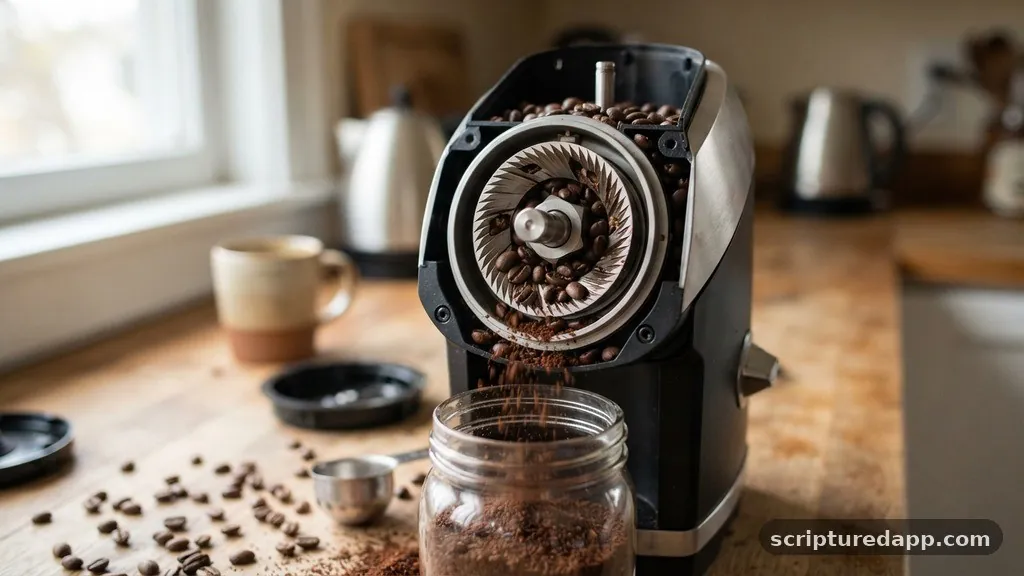
A burr coffee grinder operates by feeding coffee beans down into a tight chamber where they are mechanically crushed between two revolving abrasive surfaces. Unlike simple chopping devices that rely on high-speed spinning metal, these machines use a stationary outer ring and a moving inner component to crack the beans into uniform pieces. The distance between these surfaces dictates the final grind size, which can be adjusted via a dial to suit everything from coarse French press to ultra-fine Turkish coffee. As the beans pass through the narrow gap, they experience consistent pressure rather than random impact, resulting in a much more predictable output. This mechanical design prevents the creation of oversized chunks alongside powdery dust, which is a common flaw in cheaper alternatives.
Comparing Blade and Burr Grinders
The primary difference between a traditional blade grinder and a modern burr grinder comes down to particle uniformity and extraction control. Blade grinders act more like tiny food processors, using a spinning propeller to hack at the beans haphazardly, which creates wildly inconsistent particles ranging from boulders to fine powder. This uneven extraction leads to a bitter cup because the dust over-extracts while the larger chunks under-extract. Conversely, quality coffee grinders utilise interlocking teeth to fracture the beans systematically, preserving delicate aromatic compounds. Many casual drinkers start with a cheap propeller model before realising that investing in a dedicated burr coffee grinder is the single best upgrade for their daily caffeine ritual.
| Feature | Blade Grinder | Burr Grinder |
|---|---|---|
| Grind Consistency | Inconsistent, mixes dust and boulders | Highly uniform and predictable |
| Heat Generation | High heat from friction | Low heat preservation |
| Price Range | Budget-friendly | Mid-tier to premium investment |
| Brew Suitability | Basic drip machines only | All methods including espresso |
Conical Versus Flat Burrs
When exploring types burr equipment, enthusiasts generally choose conical burrs or flat burrs based on their specific flavor preferences and budget constraints. Conical burr sets feature a cone-shaped inner cutter nested inside a matching ring, offering quiet operation, less retention, and a slightly wider flavor profile that many people enjoy for standard drip brewing. On the other hand, flat burrs consist of two horizontal rings facing each other, shearing the coffee with extreme precision to produce exceptionally uniform particle sizes prized by professional baristas. While flat geometry often excels at clarity and separation in light roast coffees, conical sets are generally more forgiving, less prone to clogging, and popular in home kitchens.
Impact of Heat and Friction on Flavor
Managing heat during the grinding process is crucial because excessive thermal energy can scorch delicate volatile oils inside the coffee beans before they even touch hot water. Cheap spinning blades whip air into the chamber and generate significant friction, which literally cooks the coffee and ruins subtle floral or fruity notes. A well-engineered burr coffee grinder rotates at much slower RPMs, ensuring that the beans remain cool and their aromatic integrity stays fully intact. This preservation of flavor compounds makes a massive difference in the cup, allowing you to taste the true origin characteristics of specialty beans rather than a flat, toasted bitterness.
Choosing the Right Grind Size for Every Method
Achieving the correct grind size is essential for optimal brewing, whether you are pulling a rich shot of espresso or steeping a coarse immersion pot. Different extraction methods demand specific physical dimensions for the ground coffee to control water flow resistance and extraction rates properly.
- Coarse: Ideal for cold brew, French press, and percolator setups where water contacts the grounds for several minutes.
- Medium: Perfect for standard drip coffee makers, pour-over cones, and siphon brewers requiring balanced extraction.
- Fine: Necessary for stovetop moka pots and traditional espresso machines that require high pressure and fast extraction.
Adjusting your equipment properly allows you to dial in any bean origin, turning a mediocre cup into a cafe-quality experience right in your kitchen.
Maintenance and Longevity of Your Grinder
Proper maintenance ensures that your burr grinder continues to deliver consistent results over years of daily use, preventing rancid oil buildup and mechanical jams. Over time, coffee oils cling to the metal teeth and hopper walls, going stale and imparting a bitter, sour taste to fresh batches of beans. Regular cleaning involves running specialized cleaning tablets or disassembling the chamber to brush away trapped chaff and residual powder from the cutting surfaces. High-end brands like grinder baratza units are specifically designed with easily removable components, making routine upkeep straightforward for home users who want to protect their investment.
Frequently Asked Questions
What is the difference between a coffee grinder and a burr grinder?
A standard coffee grinder is a broad category that includes cheap blade models, whereas a burr grinder specifically uses two revolving abrasive surfaces to crush beans uniformly instead of chopping them.
Do burr grinders really make a difference?
Yes, they produce evenly sized particles that extract at the same rate, resulting in a cleaner, more balanced cup of coffee without the bitterness caused by fine dust.
How often should grinder burrs be replaced?
Home users rarely need to replace them unless they grind hundreds of pounds of coffee, as steel burrs typically last for several years before showing signs of dullness.
Is a burr coffee grinder worth the money?
Investing in this equipment is worthwhile if you care about flavor clarity, as it dramatically improves extraction consistency across all brewing methods compared to basic blades.
Conclusion
Understanding what a burr coffee grinder brings to your daily routine highlights why mechanical precision matters just as much as bean quality. By crushing rather than chopping your coffee, these machines protect delicate aromatic oils and deliver the uniform extraction needed for a truly exceptional cup. Whether you are upgrading from a basic blade model or diving into specialty coffee for the first time, selecting the right machine elevates every morning brew. Take the time to explore different burr geometries and find a model that fits your preferred brewing style, and enjoy the rich flavours waiting in your next cup.
Best Coffee Grinders Hub buying guide burr vs blade grinder guide coffee grinder buying tips best coffee grinder guide best coffee grinder guide BestCoffeeGrindersHub.com Best Coffee Grinders Hub guide this coffee grinder guide Best Coffee Grinders Hub this coffee grinder guide bestcoffeegrindershub.com bestcoffeegrindershub.com Best Coffee Grinders Hub Best Coffee Grinders Hub bestcoffeegrindershub.com Best Coffee Grinders Hub guide check out this buying guide BestCoffeeGrindersHub.com check out this buying guide coffee grinder buying tips this coffee grinder guide bestcoffeegrindershub.com Best Coffee Grinders Hub guide BestCoffeeGrindersHub.com burr vs blade grinder guide BestCoffeeGrindersHub.com BestCoffeeGrindersHub.com bestcoffeegrindershub.com bestcoffeegrindershub.com coffee grinder reviews and ratings