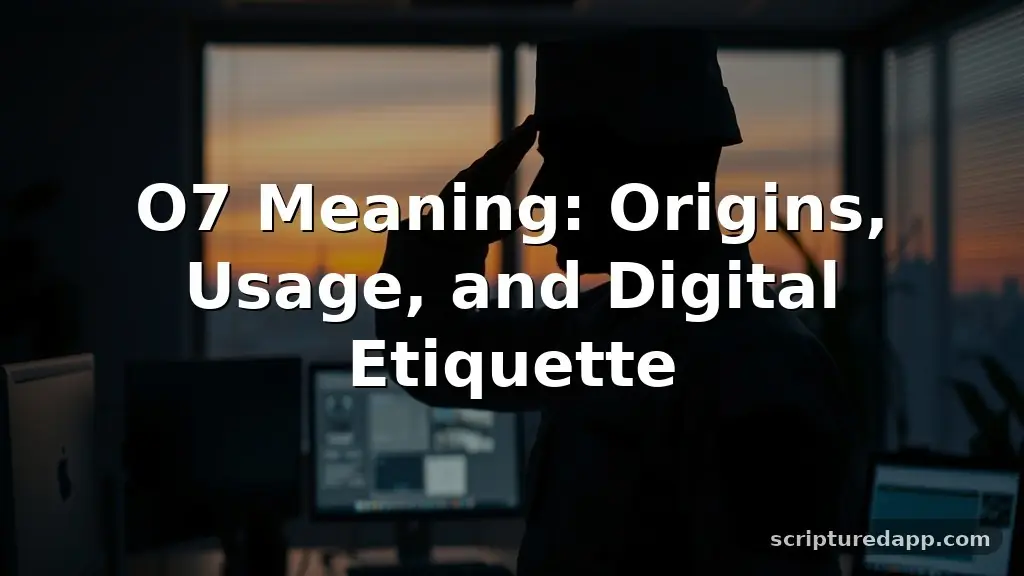

The o7 meaning is rooted in the visual representation of a salute, serving as a primary way for individuals to show respect or acknowledge a departure in digital environments. At its simplest, the character ‘o’ represents a head, while the number ‘7’ serves as the arm and hand raised to the temple in a gesture of military-style salutation.
This text-based emoticon has transcended its niche origins to become a staple in modern internet communication, particularly within gaming and live-streaming cultures. By recognizing this symbol, users can better navigate the nuances of online interactions, where subtle gestures often replace physical body language.
The Visual Anatomy of the o7 Emoticon
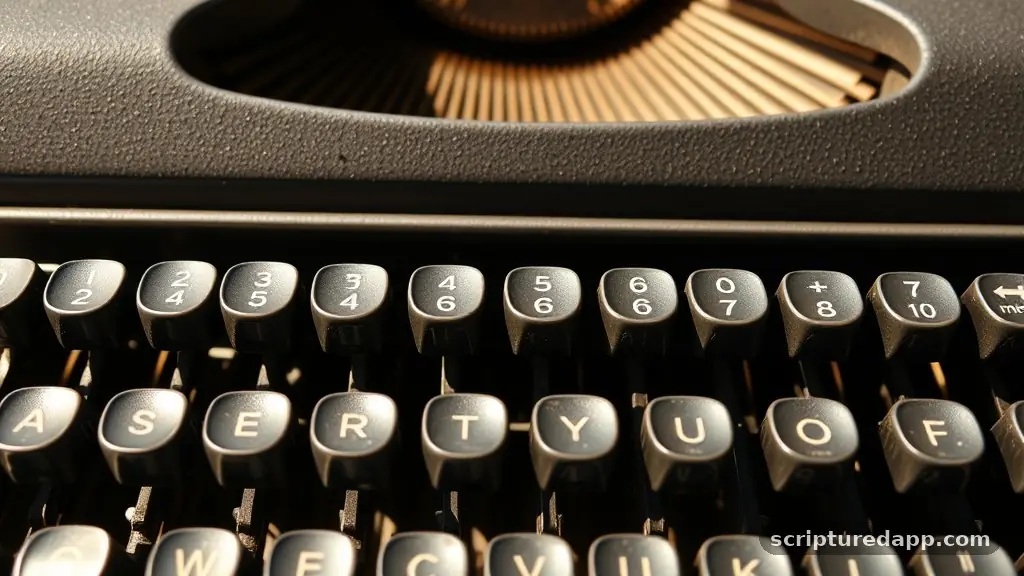
At the core of the o7 meaning is a simple yet effective piece of ASCII art. When you look at the characters side-by-side, the visual logic becomes immediately apparent.
The lowercase ‘o’ functions as the circular silhouette of a person’s head, while the ‘7’ mimics the bent angle of an arm performing a formal salute. This design choice is clever because it uses standard keyboard characters that are accessible on every device, from mobile phones to high-end gaming rigs.
Because this symbol relies on character geometry, it is widely used across almost all communities that rely on text-based chat. Unlike graphical emotes that require server-side support or specific platform plugins, the o7 emoticon is platform-agnostic. Whether a user is in a Discord server, a Twitch chat, or an in-game lobby, the meaning remains consistent.
It provides a shorthand way to convey complex social sentiments—like honor, camaraderie, or a final goodbye—without needing to type out a full sentence. This efficiency is exactly why it has persisted for decades in the fast-paced world of digital communication.
Historical Roots in Gaming Communities
The popularity of the o7 meaning is inextricably linked to the history of massively multiplayer online games, specifically Eve Online. In this complex space-faring simulation, players formed massive alliances and engaged in long-term strategic warfare.
Within these highly organized groups, the culture mirrored military structures, leading players to adopt formal gestures to acknowledge their peers. It was in these dense, high-stakes environments that the o7 gesture became the standard way to greet a comrade or offer a sign of respect before a major fleet engagement.
Over time, the symbol migrated from the niche, tactical environments of space simulators to the broader landscape of competitive gaming. As streamers began to broadcast their gameplay to thousands of viewers, they adopted the terminology and shorthand of their respective subcultures.
When a streamer would finish a broadcast or achieve a difficult victory, their audience would flood the chat with rows of ‘o7’ to signify their support. This transition solidified the emoticon’s place in the broader lexicon of the internet, moving it from a specific military roleplay element to a general signifier of digital solidarity.
Usage in Twitch Chat and Live Streaming
In the ecosystem of Twitch chat, the o7 meaning serves several distinct functions. It is most often deployed when a streamer announces they are logging off for the night, effectively serving as a collective farewell from the audience.
In this context, it acts as a digital version of a standing ovation or a respectful send-off. It acknowledges the time the creator spent entertaining the community and signals that the viewers appreciate the effort.
Beyond just saying goodbye, users type ‘o7’ to show solidarity during moments of failure or loss. If a player loses a hard-fought match or encounters a frustrating bug, the chat might fill with ‘o7’ to show that they are “saluting” the player’s effort despite the setback.
This is a fascinating aspect of online behavior: using a symbol of military discipline to provide emotional support and camaraderie. It transforms the chat from a chaotic stream of text into a unified front, helping to foster a sense of belonging among anonymous users who may never meet in person.
The Evolution of Digital Salutes
While ‘o7’ is the most recognizable version, digital culture has produced several variations that carry slightly different nuances. Understanding these variations helps in deciphering the specific intent behind a message. For example, some users might use capital letters or different numbers to adjust the angle or size of the gesture.
| Emoticon | Visual Interpretation | Primary Context |
|---|---|---|
| o7 | Standard Salute | Respect, Farewell, Acknowledgment |
| O7 | Large Salute | Emphasis, Loudness, Exclamation |
| o/ | Waving Hand | Casual Greeting or “Hi” |
| o77 | Double Salute | Extra Emphasis or Group Solidarity |
Each of these variations serves as a unique way for a user to express themselves. The o7 meaning remains the most “formal” of these iterations, but the presence of alternatives like ‘o/’ (which looks like a waving hand) demonstrates how text can evolve to mimic human physical expression. When someone uses one of these, they are participating in a shared language that bypasses the need for complex software, relying instead on the creative use of the standard QWERTY keyboard.
Why o7 Represents Respect
The core reason the o7 meaning centers on respect is the historical and cultural weight of the physical saluting gesture. In military traditions across the world, the salute is a sign of mutual respect between service members or a mark of deference to authority.
By bringing this gesture into the digital realm, users are consciously adopting a tone of reverence. When someone types ‘o7’ after a particularly moving story or a display of skill, they are essentially saying, “I recognize your contribution and I honor it.”
This is particularly common in communities that value high performance or dedication. In competitive esports, for instance, a player might type ‘o7’ to an opponent after a very close, fair game.
This gesture signals that the intense competition did not result in animosity, but rather a mutual appreciation for the skill displayed. It is a powerful tool for de-escalating potential toxicity in online games, turning what could be a heated confrontation into a moment of shared sportsmanship.
Answering Topical Gaps: The Psychological Impact

One might wonder why such a simple string of text has such staying power. The psychological appeal of the o7 meaning lies in its ability to create a “parasocial” bond between the sender and the recipient.
When a streamer sees hundreds of ‘o7’ messages in their chat, they receive immediate, visual feedback that their audience is engaged and supportive. This creates a feedback loop of positive reinforcement.
Furthermore, the brevity of the symbol allows for rapid communication. In a fast-moving chat room, typing a long paragraph of praise often gets lost in the “scroll.” A short ‘o7’ is easy to read, easy to spot, and easy to replicate.
This creates a “herd effect” where one person starts the salute, and others follow suit, creating a wave of solidarity that is visually striking even in a simple text feed. This collective action is a significant factor in why the symbol hasn’t faded away, unlike many other fleeting internet memes.
Cultural Nuances in Global Communities
The o7 meaning is not limited to English-speaking regions. Because the symbols ‘o’ and ‘7’ are universal, the emoticon has been adopted globally.
However, the exact context can shift depending on the local culture of the gaming community involved. In some regions, the salute might be used more sarcastically, while in others, it remains strictly a gesture of honor.
For instance, in certain highly competitive Asian gaming circles, the use of such emotes is often tied to professional courtesy. Meanwhile, in Western communities, it is often tied to the “bro-culture” of online gaming, where it serves as a way to bond with teammates. It is fascinating to observe how a single digital gesture takes on the characteristics of the people using it.
This adaptability is the hallmark of a successful internet communication tool. You can find more information on the history of internet shorthand at the Library of Congress, which tracks the evolution of digital communication.
Common Misunderstandings and Errors
Despite its widespread use, the o7 meaning is occasionally misunderstood by those new to internet culture. A common error is confusing it with other numeric emoticons or assuming it refers to specific dates or codes. For example, some users might see ‘o7’ and think it relates to a specific day of the week or a numerical reference to a product.
Additionally, because it is an ASCII-based symbol, it can be confused with other similarly constructed emotes. For example, ‘o/’ is frequently typed by accident when a user intends to type ‘o7’, leading to a confusion between a “salute” and a “wave.” While both are generally positive, the intent is slightly different.
A salute implies honor, while a wave implies a simple greeting. Correcting these minor errors is usually done through context clues within the chat, as most users quickly learn the difference through observation.
The Role of Emotes in Modern Interaction
We live in an era where emotes have become a primary language for the internet. From the custom badges on Twitch to the massive libraries of stickers on messaging apps, human communication is increasingly visual.
The o7 meaning fits perfectly into this landscape because it bridges the gap between old-school text chat and modern visual communication. It is a “low-fidelity” emote that feels authentic and human.
This authenticity is crucial. In an age of high-definition avatars and complex 3D animations, there is something charmingly lo-fi about ‘o7’. It reminds users that at the other end of the screen, there is another person typing on a keyboard.
It strips away the digital artifice and focuses on the core human interaction: the acknowledgement of one person by another. This is why, despite the rise of sophisticated graphical tools, the humble text-based salute remains a dominant force in online social dynamics.
Future Outlook for Digital Salutes
As virtual reality and the metaverse continue to evolve, the way we represent gestures like the salute will likely change. We may soon see haptic feedback or motion-tracked avatars that perform a physical salute in real-time.
However, the o7 meaning will likely persist as a shorthand for “text chat” environments. Just as we still use “LOL” despite having the ability to send voice notes or video reactions, the text-based salute has become a permanent part of the digital lexicon.
The o7 gesture will continue to be used as a way to maintain the culture of respect and camaraderie in online spaces. It is a reminder that even as technology advances, the basic human desire to acknowledge, honor, and greet one another remains constant. Whether it is a pilot in a space sim or a viewer watching their favorite creator, the o7 remains a simple, powerful way to say, “I am here, I see you, and I respect you.”
Frequently Asked Questions
What does o7 mean in gaming?
In gaming, o7 is a text-based emoticon representing a person saluting. It is used to show respect, acknowledge a teammate, or provide a formal farewell when a player or streamer logs off. It is a staple of digital etiquette in competitive and social gaming environments.
Is o7 used outside of gaming?
While it originated in gaming, o7 is now used across various internet communities. You will often see it on social media platforms, forums, and live-streaming chats whenever users want to express solidarity, honor someone’s actions, or offer a respectful goodbye in a digital space.
Why is it called o7?
It is called o7 because of the visual characters used to form the gesture. The ‘o’ represents the head of a person, and the ‘7’ represents the arm raised to the temple in a military-style salute. It is a simple, effective piece of ASCII art.
Can o7 be considered offensive?
Generally, o7 is a positive gesture of respect and camaraderie. However, like any internet slang, context matters. It is almost exclusively used in a friendly or respectful manner. It is not considered offensive in standard online discourse, though users should always be mindful of the specific community context.
Meta Description: Discover the o7 meaning in gaming and streaming. Learn why this simple salute emoticon is used for respect, farewells, and community solidarity.