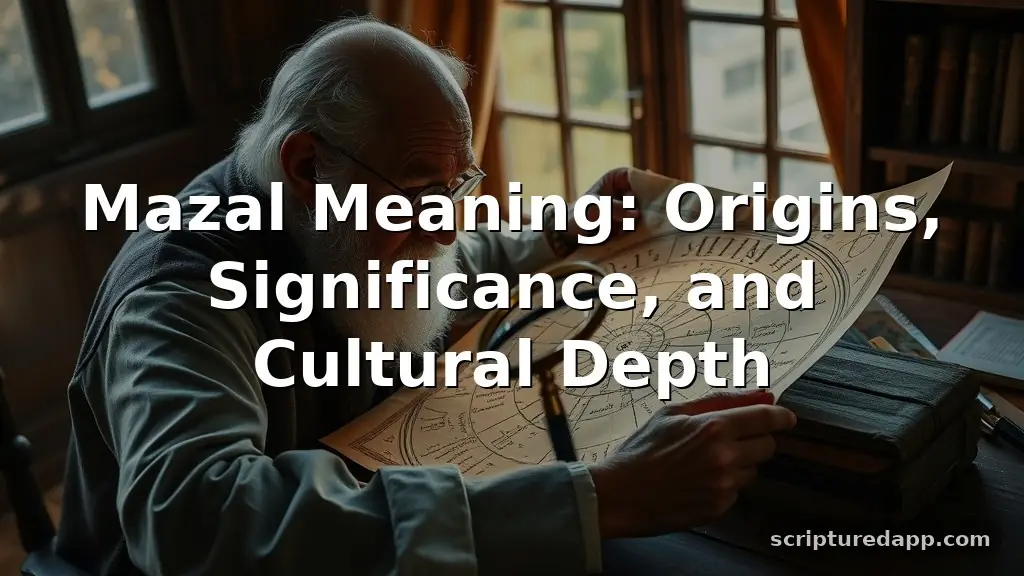

The term mazal carries a weight of history, spirituality, and cultural nuance that far exceeds its common translation as mere luck. While many encounter the word through the celebratory phrase mazel tov, its true mazal meaning is rooted in an ancient understanding of the cosmos, personal agency, and the intersection of human effort with divine providence. To understand this concept is to step into a multi-layered linguistic tradition that spans from the ancient Near East to modern-day global business transactions.
Etymological Roots and Celestial Origins
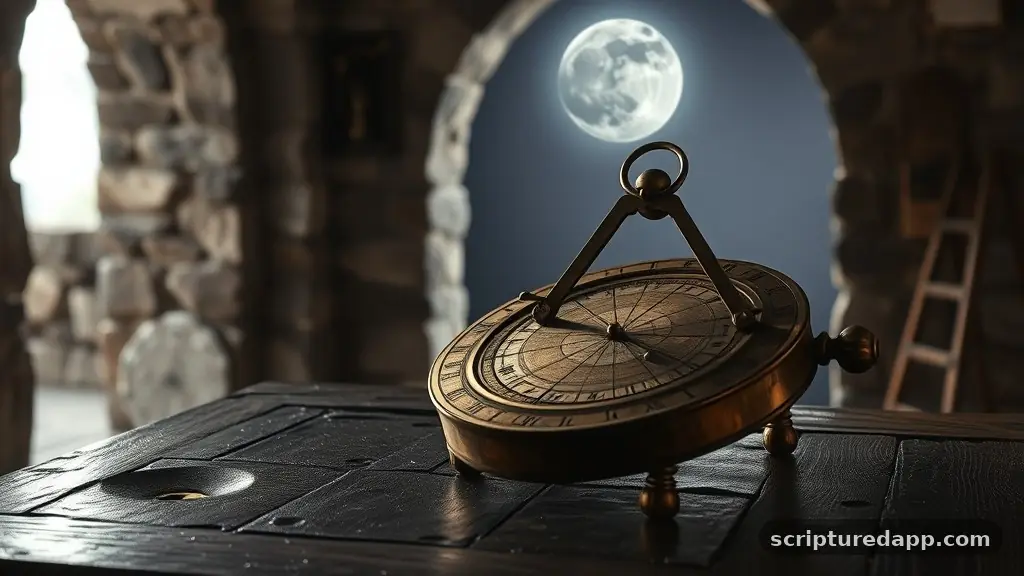
The hebrew word mazal finds its primary Etymological Roots and Celestial Origins in the study of the heavens. Linguistically, it is connected to the plural term mazalot, which appears in the Bible and refers to the constellations or the signs of the zodiac.
In the ancient world, the movement of the stars was not merely a matter of scientific curiosity but a reflection of celestial influence on the terrestrial realm. The root of the word suggests a flowing or a dripping down, implying that influence—whether physical, spiritual, or temporal—descends from the stars to affect life on Earth.
This connection to astrology and the zodiac is foundational. In antiquity, the mazal of an individual was often viewed as their specific planetary alignment at the moment of birth. Unlike modern deterministic views of fate, early thinkers often debated whether an individual was bound by these celestial configurations or if they possessed the capacity to transcend them.
The notion that one could change their mazal through specific actions, prayer, or acts of charity became a central tenet in Jewish philosophy. This transformation of the concept from a fixed celestial coordinate to a malleable state of being highlights the depth of the term.
Mazal in Biblical and Rabbinic Thought
Within the context of biblical hebrew, the term appears in various forms, though its usage as a synonym for “luck” is a much later evolution. In the Talmudic tradition, the concept of mazal is frequently discussed in the context of personal merit versus predestination.
The sages debated the extent to which human life is governed by destiny. While there is a common saying that “Israel has no mazal“—suggesting that the Jewish people are not subject to the ordinary rules of astrology and planetary influence—this is often interpreted as a call to rely on divine intervention rather than the stars.
This theological distinction is crucial. It shifts the mazal meaning away from passive reliance on fortune toward an active engagement with moral responsibility. If one’s life is not merely a product of the zodiac, then individual choices, ethical behavior, and spiritual dedication become the primary drivers of success.
This perspective effectively democratizes the concept, moving it from a cold, mechanical reading of the heavens to a warm, relational interaction with the divine. It suggests that while external conditions may be set, the internal response to those conditions remains within the individual’s control.
The Evolution of Mazel Tov
One cannot discuss the mazal meaning without addressing the ubiquitous mazel tov. While often misunderstood by non-speakers as a simple “congratulations,” the phrase is more accurately a wish for a favorable constellation to shine upon the recipient. It is a blessing that invokes a state of alignment with the good.
Over centuries, this expression has become the standard way to mark bar mitzvahs, weddings, birthdays, and other major life milestones. The shift from the singular mazal to the compound phrase reflects a linguistic evolution from yiddish influence, where the term was adopted and adapted into the daily vernacular of European Jewish communities.
The transition of the word into yiddish allowed it to permeate various social spheres. As the language spread, so did the usage of the term, eventually becoming a staple in secular life.
Despite this widespread adoption, the core intent remains consistent: it is an affirmation of joy and a hope that the recipient’s current success will continue. In many cultural traditions, the phrase is not just a polite social nicety; it is an acknowledgement that success is often a combination of hard work and a favorable turn of events, a nod to the celestial influence that many still feel governs the outcome of human endeavors.
Mazal in the Diamond District and Business Ethics
Perhaps nowhere is the word more practically applied today than in the global diamond trade. In the diamond district of cities like Antwerp, New York, and Tel Aviv, the word mazal is not just a greeting; it is a binding legal term. When two merchants conclude a deal, they shake hands and declare “Mazal u’bracha”—meaning “luck and blessing.” In this high-stakes environment, this simple phrase acts as a verbal contract that is considered more binding than a signed document in many jurisdictions.
This practice highlights the importance of business ethics and reputation. To renege on a deal sealed with the word mazal is considered a cardinal sin in the diamond trade, leading to immediate expulsion from the community. It serves as a reminder that the original meaning of the word—favorable alignment—is something that must be earned through integrity.
The trust required to conduct business on one’s word alone is, in itself, a form of good fortune that is cultivated over a lifetime of honest dealing. You can find more about the history of these commercial traditions through the Gemological Institute of America official records on trade history.
Comparison of Interpretations
The interpretation of mazal varies significantly depending on the context in which it is used. The table below outlines how the term shifts across different domains of life and practice.
| Context | Primary Interpretation | Practical Application |
|---|---|---|
| Astrology | Celestial alignment | Determining birth signs |
| Business | Binding contract | Sealing a transaction |
| Social/Family | Well-wishing | Celebrating milestones |
| Spirituality | Divine providence | Aligning with moral truth |
Common Idiomatic Usage and Cultural Nuance

Beyond the formal settings of the diamond trade or the synagogue, the term is woven into the fabric of daily life through Common Idiomatic Usage. People might say someone has “a good mazal” to describe someone who seems to thrive despite the odds. Conversely, one might lament a “bad mazal” when things do not go as planned.
This usage mirrors the human tendency to look for patterns in the chaos of life. By attributing outcomes to mazal, individuals can process both success and failure in a way that feels meaningful rather than random.
This linguistic habit serves several social functions:
- It provides a framework for humility during periods of success, acknowledging that not everything is under one’s total control.
- It offers a sense of comfort during periods of hardship, suggesting that a shift in fortune may be just around the corner.
- It reinforces community bonds, as people share in each other’s mazal through blessings and celebrations.
- It helps maintain a sense of perspective on destiny and the role of the individual in the grander scheme of the universe.
Addressing Topical Gaps: Is Mazal Just Luck?
A common misconception is that mazal is a synonym for blind luck or chance. However, this is a significant oversimplification. In the context of semitic languages, words rarely exist in a vacuum; they carry the weight of the values of the culture that produced them.
Luck implies a random occurrence, whereas mazal—in its deeper sense—implies a flow of energy that can be influenced by one’s actions. This is where the concept of personal merit becomes essential. If you live a life of integrity, you are, in essence, “aligning your stars” to be more receptive to positive outcomes.
Another gap in understanding is the relationship between mazal and fate. While fate is often viewed as an unchangeable trajectory, mazal is more fluid. It is the difference between a static map and a dynamic current.
You cannot change the map of the stars, but you can learn how to navigate the current. This distinction is vital for those who use the term in a spiritual sense. It transforms the word from a fatalistic shrug into a proactive tool for personal development and moral alignment.
The Influence of Yiddish on Modern Usage
The migration of mazal from hebrew into yiddish was the catalyst for its global recognition. As Jewish communities migrated across Europe and eventually to the Americas, the word traveled with them, shedding some of its more rigid theological connotations and picking up a more colloquial, everyday flair. Yiddish, known for its expressive and often humorous nature, allowed the word to be used in a variety of emotional states—from genuine joy to cynical irony.
This linguistic journey is a testament to how cultural traditions adapt to new environments. In the modern, secularized world, mazal has become a bridge between the ancient and the contemporary. It allows people who may not be deeply religious to connect with a sense of history and tradition.
It is a word that survives because it is useful; it captures a feeling that “luck” or “fortune” simply cannot match. It connects the individual to a lineage of speakers who have used the same word to express the same human desire for goodness and success for thousands of years.
Integrating Ancient Wisdom into Modern Life
How does one apply the mazal meaning in a world dominated by data and technology? The answer lies in the balance between preparation and openness. In a high-tech, fast-paced society, we often feel that we can control every variable of our lives.
Yet, the concept of mazal serves as a necessary check on this hubris. It reminds us that there are forces, connections, and timing issues beyond our immediate control.
Integrating this wisdom means maintaining a high standard of business ethics, trusting in the value of one’s word, and recognizing that even the most well-laid plans require a touch of “favorable alignment.” It is about cultivating an attitude of gratitude when things go right and resilience when they do not. By viewing our lives through the lens of mazal, we can move away from the anxiety of trying to force outcomes and toward a more harmonious existence where we do our part and remain open to the potential for grace in the unexpected.
Ultimately: The Enduring Power of the Word
Ultimately, the word remains a powerful vessel for human meaning. Whether it is whispered in a quiet prayer, shouted in celebration at a wedding, or spoken with gravity in a million-dollar deal, the word retains its core essence.
It is a recognition of the interconnectedness of our lives with the cosmos, our community, and our own moral choices. It is a bridge between what we do and what we receive.
As we navigate the complexities of the 21st century, the need for such concepts has not diminished. If anything, it has increased. We are constantly searching for ways to make sense of our successes and failures.
The mazal meaning provides a framework that is both ancient and remarkably relevant. It teaches us that while we are indeed governed by forces larger than ourselves, we are not mere pawns.
We are active participants in our own story, capable of influencing the very “stars” that we once thought controlled us. By understanding the depth of this term, we gain a new perspective on what it means to live a life of prosperity and purpose.
Frequently Asked Questions
Why do jewelers say mazal when making a deal?
In the diamond and jewelry industry, the word signifies a binding verbal contract. It carries a cultural weight that equates one’s word with their honor. Breaking a deal sealed with this phrase is considered a severe breach of professional conduct, ensuring trust in a high-stakes, international market.
What is the difference between luck and mazal?
While often used interchangeably, luck implies a random occurrence. In contrast, the traditional understanding of the term suggests an alignment of one’s personal actions, merit, and timing with divine or cosmic influences. It is seen as more of a dynamic state than a stroke of random chance.
Is mazal considered a religious term?
It has roots in biblical and rabbinic tradition, making it religious in origin. However, it has evolved into a secular cultural term used by many, regardless of their religious affiliation. It is widely recognized as a sign of well-wishing and communal celebration in diverse social settings.
Can one change their mazal?
Many philosophical and theological traditions argue that one can influence their state of being through moral choices, charity, and prayer. Rather than being a fixed, unchangeable fate, it is often viewed as a malleable condition that responds to the ethical and spiritual trajectory of an individual’s life.
Meta Description: Discover the true mazal meaning, exploring its ancient celestial origins, its role in modern business, and how it shapes cultural traditions today.