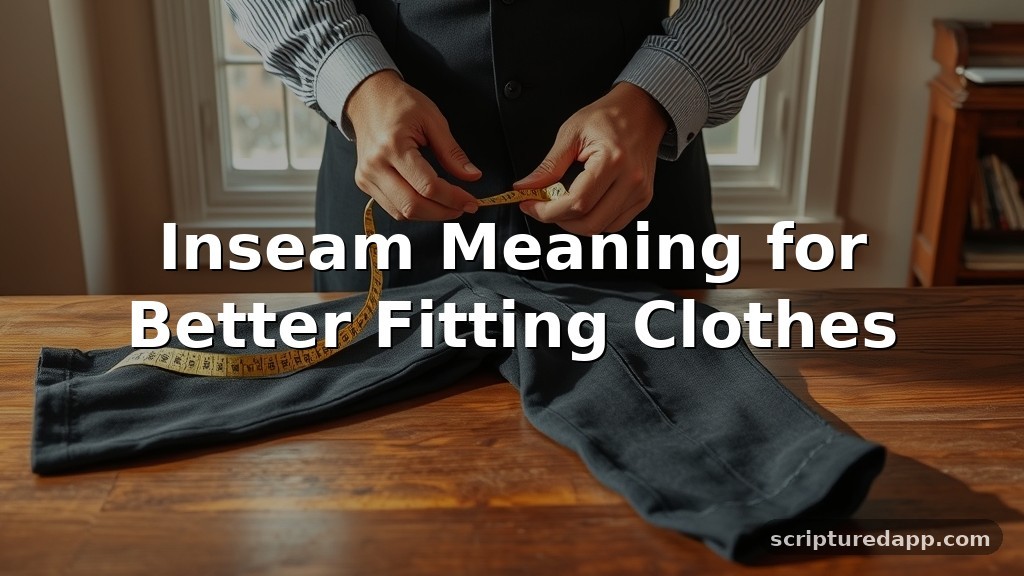

Understanding the true inseam meaning is the secret to finding pants that actually fit your body. Many shoppers struggle with trousers that are either too long, causing fabric to bunch at the shoes, or too short, leaving an awkward gap above the ankle. By mastering this simple measurement, you eliminate the guesswork when browsing online or shopping in-store.
It transforms your wardrobe from a collection of “almost rights” into pieces that feel custom-made for your frame. Whether you are buying casual denim or formal slacks, knowing your specific number ensures you always get the perfect silhouette.
Defining the Inseam Measurement
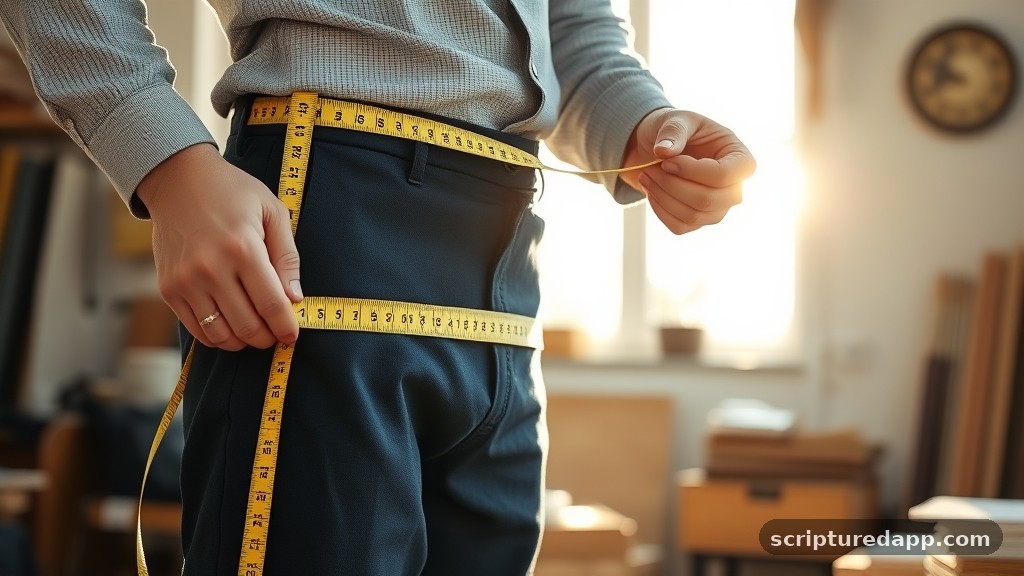
At its most basic level, the inseam refers to the distance from the innermost point of the crotch seam down to the bottom of the leg hem. This measurement is critical because it dictates exactly where your pants will sit in relation to your footwear.
Unlike the waist size, which measures the circumference of your torso, the inseam is a linear vertical distance. It is the primary factor in determining how a garment drapes across your legs.
When you look at a label on a pair of jeans, you typically see two numbers. The first represents the waist, while the second indicates the inseam. If you see a tag that reads 32×30, the 30 represents that vital inner leg length.
Understanding this distinction prevents the frustration of buying a pair of pants that fits perfectly around the midsection but drags on the floor or sits far too high. It is a fundamental aspect of garment construction that separates off-the-rack clothing from tailored attire.
Why the Inseam Differs from the Outseam
Many people confuse the inseam with the outseam, but they represent entirely different parts of a garment. While the inseam starts at the crotch, the outseam begins at the top of the waistband and runs down the side of the leg to the hem. Because the outseam includes the length of the rise—the distance from the crotch to the waist—it will always be significantly longer than your inseam.
Focusing on the inseam is generally more accurate for finding a good fit because it bypasses variations in how different brands design their rise. High-rise pants, for example, have a longer rise but might have the same inseam as a low-rise pair.
By isolating the leg length, you ensure that the hem falls exactly where you want it. Using the outseam as a guide is often misleading because it fluctuates wildly based on the cut and style of the trousers.
How to Measure Your Inseam Accurately
To get the most precise result, you should avoid measuring your own body while standing, as this often leads to errors. Instead, the most reliable method involves taking a pair of pants you already own that fits you perfectly. Lay them flat on a hard surface, such as a table or a clean floor, and smooth out any wrinkles.
Take a flexible measuring tape and place the end at the crotch intersection where the front and back seams meet. Extend the tape down the inside of the leg until you reach the very bottom hem.
This distance in inches is your ideal inseam. If you are between whole numbers, it is usually safer to round up, as you can always have a tailor shorten a hem, but you cannot add fabric to one that is too short.
Common Inseam Lengths and Their Effects
Standard sizing in the apparel industry usually increments inseams by two-inch intervals, such as 28, 30, 32, and 34 inches. These increments are designed to accommodate a wide range of heights, but they rarely account for individual leg proportions. Someone who is 5’10” might have longer legs than someone who is 6’0″, making the standard “average” size irrelevant for their specific body type.
When you choose a length, consider the type of footwear you intend to wear. A 32-inch inseam might create a clean break over a dress shoe, but that same length could drag under a pair of flat sneakers.
Many modern styles, such as cropped trousers, intentionally use shorter inseams to highlight the ankle or showcase footwear. Being aware of how these lengths interact with your shoes is a key part of personal styling.
Addressing Topical Gaps in Sizing Knowledge
A frequent point of confusion for shoppers is how height correlates to inseam length. While there is no universal rule, there are general ranges that can help you narrow down your search. Many people assume that a certain height dictates a specific inseam, but this ignores the reality of body proportions.
Does Height Equal Inseam?
- People under 5’4″ often find that a 26 to 28-inch inseam provides the best fit for standard pants.
- Individuals between 5’5″ and 5’9″ frequently land in the 29 to 31-inch range.
- Those standing 5’10” and taller typically require a 32-inch inseam or longer.
It is important to remember that these are merely starting points. Your torso-to-leg ratio plays a massive role in how clothing hangs.
A person with a long torso and shorter legs might need a 28-inch inseam despite being six feet tall. Always prioritize your actual measurement over generic height charts.
The Role of Fabric and Shrinkage
Not all fabrics behave the same way after a few trips through the laundry. Raw denim, for instance, is notorious for shrinking after the first wash, which can drastically alter the inseam length. If you are buying high-quality, non-sanforized jeans, you should account for this potential shrinkage by opting for an inch or two of extra length.
Synthetic blends, like those found in performance leggings or athletic gear, tend to hold their shape better. However, heat from a dryer can still cause minor adjustments to the hemline over time.
Always check the garment’s care instructions before assuming the length will remain static. If you are unsure about the material’s stability, washing on cold and hang-drying is the safest way to maintain your preferred fit.
Comparing Inseam Measurements Across Styles
Different clothing cuts require different inseam considerations. A wide-leg trouser is designed to drape differently than a slim-fit chino, and the way the fabric settles against your shoe changes the perception of length. The following table provides a quick reference for how style impacts your target measurement.
| Style | Recommended Break | Inseam Strategy |
|---|---|---|
| Slim Fit | No break or slight break | Exact measurement |
| Wide Leg | Full break | Add 0.5 to 1 inch |
| Athletic/Joggers | Above the ankle | Subtract 1 to 2 inches |
| Classic Chinos | Half break | Exact measurement |
As shown in the table, the “break” of your pants—where the fabric folds against your shoe—is heavily dependent on the silhouette. A wide-leg cut looks best when it covers more of the shoe, whereas a slim fit can look messy if it bunches up too much at the bottom.
The Impact of Tailoring on Your Wardrobe
If you find a pair of pants that you love but the inseam is slightly off, do not immediately put them back on the rack. A professional tailor can adjust the hem of almost any pair of trousers. This is a relatively inexpensive service that makes a massive difference in how you look and feel.
When buying pants to be tailored, it is always better to have them be too long than too short. You can easily remove length, but you cannot add it back once it has been cut.
If you find a pair with a perfect waist but an inseam that is two inches too long, consider that an easy fix. Many high-end clothing retailers even offer complimentary hemming services when you purchase a full-priced item.
Inseam Meaning for Petite and Tall Frames
Finding the right fit is a common challenge for those at the extreme ends of the height spectrum. Petite shoppers often struggle with pants that are too long in the rise, which makes the inseam start at the wrong place. Conversely, tall shoppers often deal with “high-water” pants that do not reach the ankle.
For petite frames, look for labels that offer “short” or “petite” sizing, as these brands often adjust the entire proportion of the garment, not just the leg length. For tall individuals, “long” or “tall” sizes are essential.
These versions provide extra fabric in the leg to ensure a proper drape. Do not settle for clothes that don’t fit; seeking out brands that specialize in your stature will save you money and frustration in the long run.
Common Mistakes When Determining Length
One of the biggest mistakes people make is wearing the wrong shoes while testing the fit of their pants. If you try on trousers while barefoot, you will likely choose a length that is too short for when you are wearing boots or dress shoes. Always try on potential purchases with the footwear you plan to pair them with most often.
Another common error is failing to account for the way pants sit on the hips. Some styles are meant to sit at your natural waist, while others are designed to sit lower on the hips.
If you measure your inseam based on high-waisted pants but try to apply that to low-rise jeans, you will end up with a poor fit. Always measure based on where the waistband of the specific style will actually rest on your body.
FAQ
How do I measure my inseam if I don’t have a tape measure?
If you lack a flexible measuring tape, use a piece of string or a shoelace to measure the distance from your crotch to your ankle. Once you have the length marked on the string, lay it against a rigid ruler or a yardstick to determine the exact number of inches.
Is there a standard inseam for men’s pants?
There is no universal standard, but 30 and 32 inches are the most common inseams found in retail stores. These lengths are intended to fit the “average” height, but they rarely work for everyone. If you fall outside this range, look for stores that offer custom lengths.
Why do my jeans feel shorter after washing?
Natural fibers like cotton are susceptible to shrinkage, especially when exposed to high heat in a dryer. If your jeans are made of 100% cotton or raw denim, the heat can cause the fibers to contract, effectively shortening the inseam by a small but noticeable amount.
Does the inseam measurement change with age?
While your actual leg length does not change significantly as an adult, your posture and the way you carry yourself can evolve. Additionally, as you age, you might prefer different shoe heights, which may require you to adjust the inseam length you choose to ensure the pants break correctly.
Final Thoughts on Finding Your Perfect Fit
Mastering the inseam meaning gives you the confidence to navigate the clothing aisle with precision. By understanding that your leg length is a specific, measurable distance, you stop relying on inconsistent brand sizing and start taking control of your personal style. Remember that the right length is a balance between your physical measurements, the cut of the garment, and the shoes you choose to wear.
Next time you head out to update your wardrobe, bring your own measuring tape or a pair of perfectly fitting trousers as a reference. You will quickly notice how much better your clothes look when the hem hits exactly where it should. If you have questions about specific brands or styles, feel free to reach out or leave a comment below to share your experiences with finding the perfect fit.