
When you encounter a document with blacked-out lines or missing names, you are looking at a classic case of the redacted meaning in action. This process isn’t just about hiding secrets; it is a formal method used to protect privacy while allowing the public or other parties to access the remaining non-sensitive portions of a record.
Whether you see it in government files, medical records, or legal transcripts, understanding why information is obscured helps clarify the transparency and security balance maintained in modern administration. By peeling back the layers of this practice, you gain a clearer view of how organizations handle data integrity across various sectors.
The Core Definition and Linguistic Origins
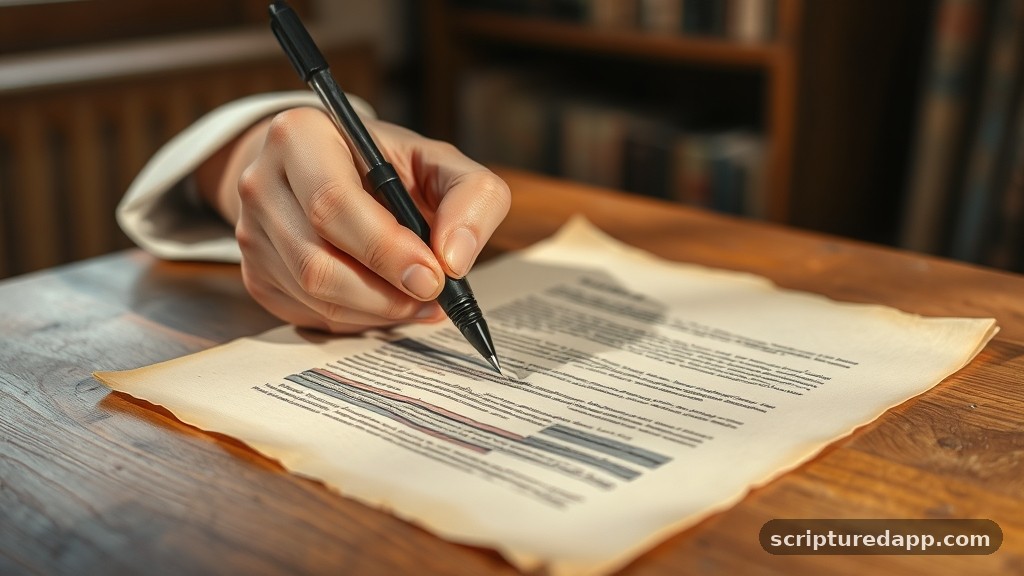
At its simplest level, the term refers to the act of editing text to remove or conceal specific parts of a document. If you look up the dictionary entry, you will find that the word originates from the Latin term redactus, which means to bring back or collect. While the modern usage focuses on censorship or protection, the historical root was much more about organizing or refining a body of work.
In contemporary English, the word is strictly associated with the removal of sensitive information. When someone asks about the redacted meaning in a professional context, they are usually inquiring about why certain names, dates, or financial figures have been replaced with black bars or empty placeholders. It is not merely a deletion; it is a strategic edit that maintains the structure of the original text while safeguarding specific details that could lead to harm, identity theft, or a breach of confidentiality.
Legal Applications and Courtroom Transparency
The most common environment where you will see this practice is within the judicial system. Courts often handle massive amounts of evidence, including personal addresses, social security numbers, and witness identities. Before a public filing occurs, clerks or attorneys must ensure that all sensitive information is scrubbed to comply with privacy laws.
When a document is filed in a court, the redacted information acts as a shield. Judges require this to prevent the public disclosure of private data that is not relevant to the legal argument but is unavoidably present in the exhibits.
This ensures that the public interest in judicial proceedings does not override the fundamental right of individuals to keep their private lives out of the public record. If you are reviewing case files, you will often find that the redaction is accompanied by a notation explaining the legal justification for the removal.
Medical Privacy and Patient Confidentiality
Healthcare providers deal with some of the most private data imaginable. When medical records are shared for research, billing, or insurance audits, the redacted meaning takes on a protective role for the patient. By removing identifiers, hospitals can share valuable data sets with researchers without ever compromising the anonymity of the individuals involved.
This process is governed by strict regulations, such as the Health Insurance Portability and Accountability Act in the United States. These laws mandate that any data shared outside of a clinical setting must be scrubbed of specific identifiers. This ensures that while the medical community can learn from patterns and patient outcomes, the individual patient remains shielded from unwanted exposure.
Distinguishing Between Redaction and Deletion
A common point of confusion is whether the term implies a permanent deletion. In the world of word processing and document management, these two concepts are distinct.
Deleting text usually means the information is gone entirely, often leaving a gap or requiring the text to be reformatted. Redaction, however, is an overlay.
When you apply a redaction to a digital document, the underlying data might still exist in the file’s metadata if not handled correctly. This is why software tools are specifically designed to permanently remove the content rather than just drawing a box over it.
If you only place a black shape over a word in a PDF, a savvy user might be able to move that shape and see what is underneath. True redaction involves stripping the character data from the file itself.
The Role of Government and Freedom of Information
Governments frequently use redaction to balance the public’s right to know with national security requirements. When a citizen requests files under freedom of information laws, the agency must review every page. If a document contains details that could jeopardize an ongoing investigation or reveal intelligence sources, those specific lines are removed.
This creates a tension between transparency and state protection. Critics often argue that redaction is used to hide political embarrassment, while officials maintain that it is a necessary tool for maintaining public safety. Understanding this distinction is vital for researchers and journalists who spend their time analyzing redacted documents to piece together historical narratives.
Common Synonyms and Related Terminology
If you are expanding your vocabulary or writing a formal report, you might look for a synonym in a thesaurus. Words like “expurgated,” “censored,” or “bowdlerized” are often used, though they carry slightly different connotations. “Expurgated” usually refers to the removal of offensive material from literature, while “censored” implies a more heavy-handed suppression of ideas.
In other languages, the concept remains similar but the terminology shifts. For instance, the French term rédaction actually refers to the act of writing or drafting a document, which can be confusing for English speakers.
Meanwhile, the Spanish equivalent often uses terms related to “tachar,” which specifically means to cross out. Recognizing these linguistic nuances helps when you are working with international documents or translations.
Technological Tools for Secure Data Removal
In the digital age, you cannot rely on a physical marker to hide information. Software developers have created advanced tools that automate the process of finding and removing sensitive strings across thousands of pages. These tools use pattern matching to identify social security numbers, phone numbers, and email addresses automatically.
Features of Modern Redaction Software
- Automated pattern detection for sensitive strings
- Permanent removal of underlying text layers
- Batch processing for large document sets
- Audit logs to track who performed the edits
- Integration with cloud storage and document management systems
Using these tools is the industry standard for law firms and government agencies. It minimizes human error, which is the biggest risk in the process. If a human editor misses a single instance of a name in a fifty-page document, it can lead to a significant privacy breach.
Challenges in Manual Document Review
Despite the rise of AI and automated tools, manual review remains a critical part of the process. Machines are excellent at finding numbers that follow a specific format, but they struggle with context. A machine might not realize that a specific phrase in a narrative paragraph identifies a person just as clearly as their name would.
Human reviewers must be trained to recognize nuances that software misses. They need to understand the intent behind the document and the context of the information being shared. This is why many organizations use a hybrid approach: they use software to catch the obvious data points and human eyes to review the final output for contextual leaks.
The Impact of Metadata and Hidden Data
One of the biggest pitfalls when managing redacted information is the presence of metadata. Metadata is data about data, such as the author of a file, the date it was created, or track changes that were never accepted. Even if you black out every word in a document, the metadata might still reveal the identity of the person who wrote it or the location where it was saved.
To properly secure a document, you must scrub the metadata alongside the visible text. This involves using “save as” functions that strip out hidden information or using dedicated cleaning software. Ignoring this step often results in the very leaks that the redaction was intended to prevent.
Comparing Methods of Information Protection
The table below outlines the differences between various methods used to secure documents. Each has its own place depending on the sensitivity of the information and the intended audience.
| Method | Primary Goal | Permanence |
|---|---|---|
| Redaction | Protect privacy while keeping context | High (if done correctly) |
| Anonymization | Remove all identifiers | Absolute |
| Encryption | Restrict access entirely | High (requires key) |
| Masking | Hide parts of the display | Low (temporary) |
Each of these methods is a tool in the data security professional’s kit. Understanding the difference ensures that you choose the right level of protection for the specific document you are handling.
Addressing Topical Gaps and Common Misconceptions
Many people wonder if a “redacted person” is a specific legal status. In reality, it is just a way to describe an individual whose identity has been hidden in a public record. There is no special status; the person is simply anonymous for the sake of the document.
Another common gap is the confusion between “unredacted” and “original.” An unredacted document is simply the version of a file that has had the black bars removed, revealing the full, original text.
People also frequently ask if redaction is illegal. It is not only legal but often required.
Failing to redact sensitive information in a public filing can actually lead to legal penalties for the person or organization that released the document. It is a mandatory compliance step in most professional fields today.
Frequently Asked Questions
What does it mean if something is redacted?
Redaction means that sensitive or private information has been intentionally removed or obscured from a document. This is done to protect personal privacy, trade secrets, or national security while still allowing the rest of the document to be viewed by the public or other authorized parties.
Does redact mean delete?
While they both involve removing information, they are different in practice. Deletion usually refers to removing text entirely, which changes the document’s layout. Redaction is an overlay or a process that ensures the information is non-recoverable while keeping the surrounding text intact for context.
What is the difference between redacted and unredacted?
A redacted document contains blacked-out or hidden sections to protect sensitive data. An unredacted document is the full, complete version of that same text where all information, including the sensitive parts, is visible and legible to the reader.
Is there a specific software for redaction?
Yes, there are many specialized software tools designed for this purpose. These programs can automatically scan for sensitive patterns like phone numbers or addresses and permanently remove that data from both the visual layer and the underlying file metadata, which is critical for security.
Conclusion
Navigating the nuances of the redacted meaning helps you understand how organizations protect sensitive information in an increasingly digital world. Whether you are dealing with court records, medical history, or government archives, the process of obscuring specific details is a fundamental part of maintaining privacy and trust. By recognizing that this is a systematic, necessary practice rather than a mysterious act of censorship, you can better interpret the documents you encounter.
Always prioritize the use of secure software to prevent metadata leaks and ensure that the information you share remains protected. If you found this overview helpful, consider exploring how privacy laws are evolving to meet the challenges of modern data sharing.