As an Amazon Associate I earn from qualifying purchases. If you buy through links in this article, we may earn a commission at no extra cost to you.
These are the 10 best drones in the under-500 class with a genuine 4K camera, and genuine is the operative word. Every pick here records 3840 by 2160 video to its memory card according to its manufacturer spec sheet. Drones that only shoot 4K stills, or upscale 2.7K video and call it 4K, did not make the cut. We ranked all 10 on footage quality, gimbal stabilization, flight time and how much drone the budget actually buys.
Short on time?
Start with these three picks
One was DJI’s flagship mini, one films you hands-free, and one simply flies longer than anything else here.
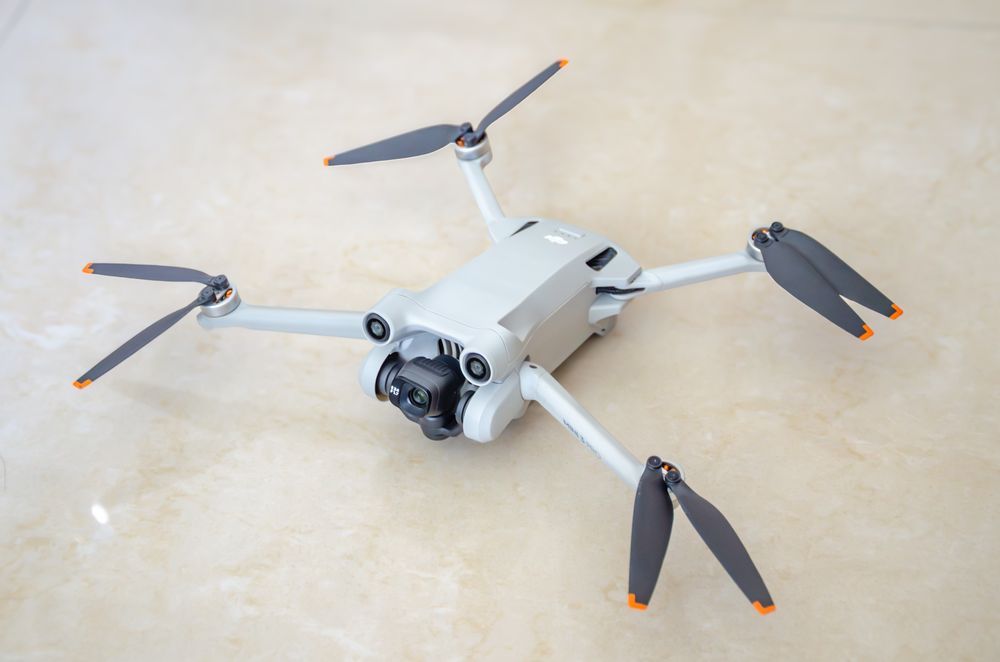
DJI Mini 3 Pro
A former flagship that now sits inside this budget: 4K/60 HDR, 10-bit color, tri-directional sensing and ActiveTrack, still under 249 g. Only the newer Minis beat it, and they cost more than this class allows.
View on Amazon Read the full review ↓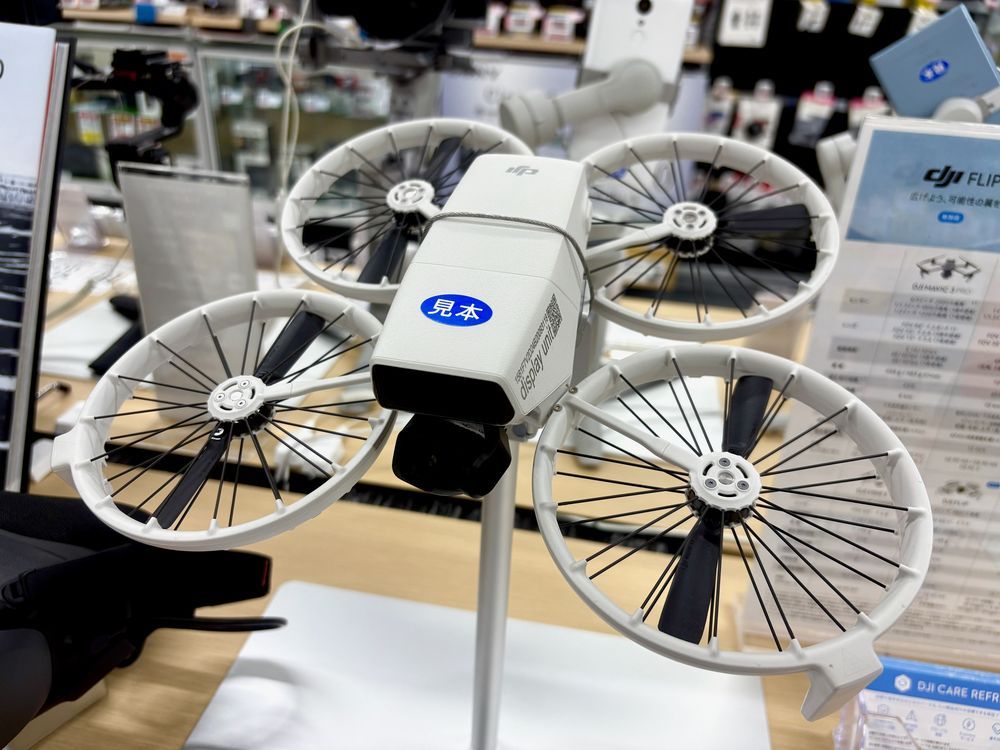
DJI Flip
Made for filming yourself: palm launch, subject tracking and full propeller guards, with the same 4K/60 HDR sensor class as the Mini 4 Pro. You trade long-range scenic flying for effortless follow shots.
View on Amazon Read the full review ↓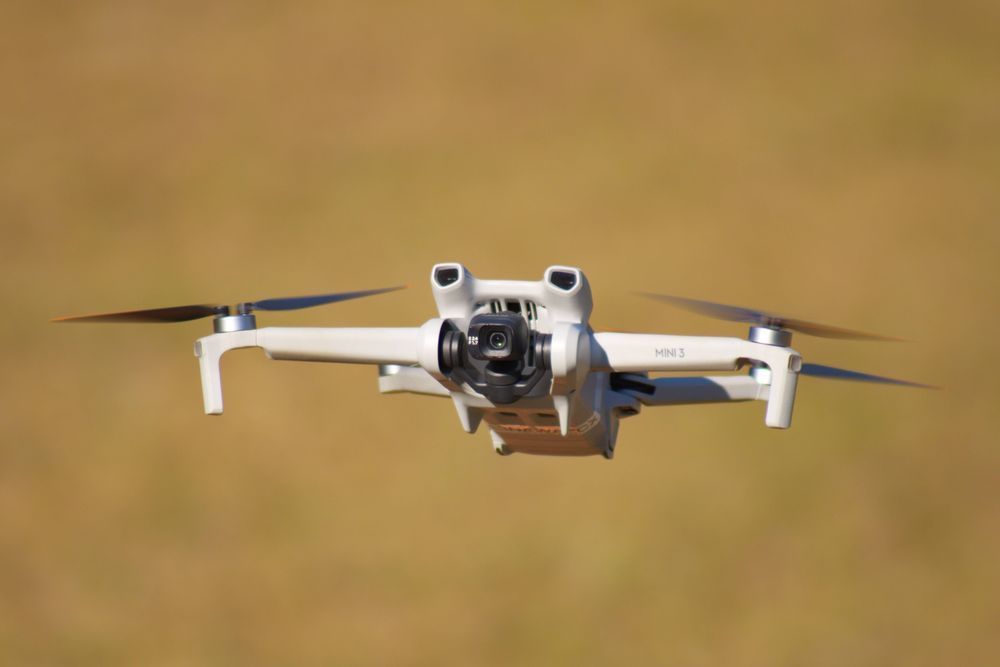
DJI Mini 3
The endurance pick: 38 minutes per standard battery, 4K HDR video and true vertical shooting under 249 g. What you skip is obstacle sensing, so it rewards pilots who pick their spots with care.
View on Amazon Read the full review ↓The shortlist
Compare all 10 at a glance
At this level the decision usually comes down to three things: sensor size, whether the gimbal is a full 3-axis unit, and how long each battery lasts.
| Product / award | Best fit | Key decision point | Check current offer |
|---|---|---|---|
| 01. DJI Mini 3 ProBest overall | Serious footage on a mid-range budget | 4K/60 with 10-bit color; Plus battery crosses 250 g | View on Amazon |
| 02. DJI FlipBest for solo creators | Solo creators filming themselves | Palm launch and tracking; forward-only braking | View on Amazon |
| 03. DJI Mini 3Best for long flights | Long, calm scenic flights | 38 minute flights; no obstacle sensing | View on Amazon |
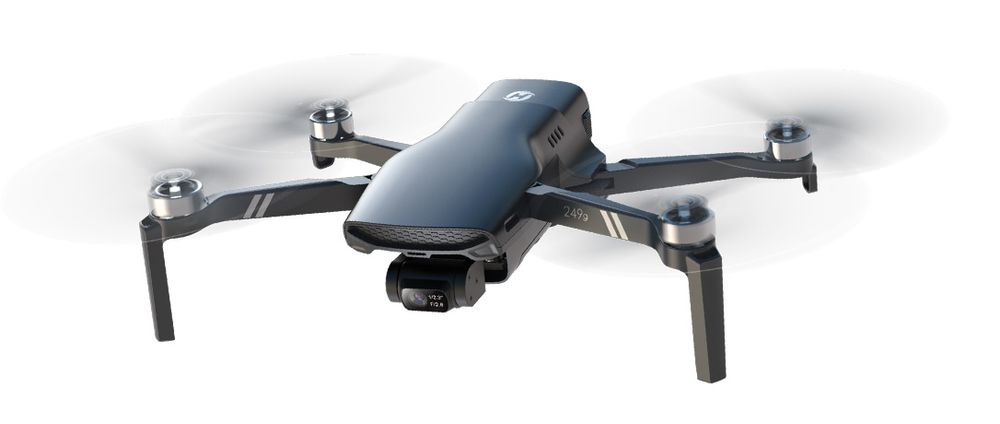 04. Holy Stone HS900Best value gimbal drone | Gimbal smoothness on a budget | 3-axis gimbal and 6 km link; 1/2.3-inch sensor | View on Amazon |
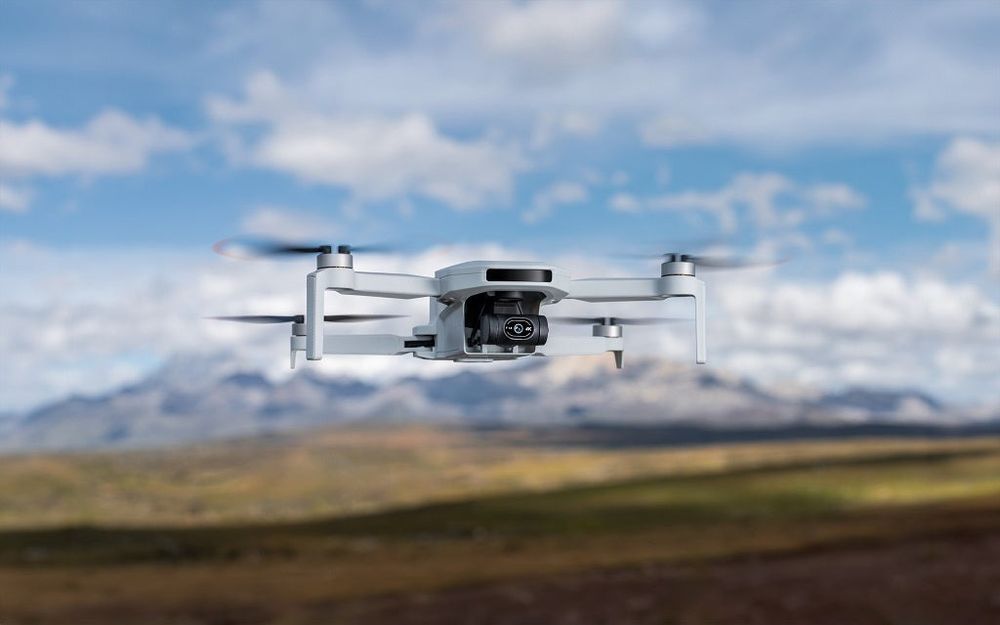 05. Potensic Atom 2Best DJI alternative | Mini-class features, no DJI account | 4K HDR and AI tracking; no obstacle sensing | View on Amazon |
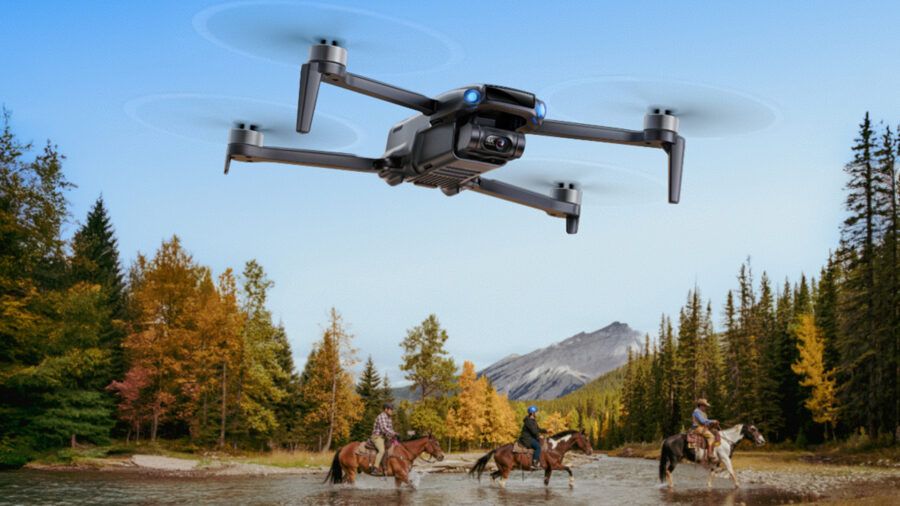 06. Ruko U11MINI 4KBest screen-controller pick | Phone-free flying with a real gimbal | 3-axis gimbal, 6 km link; JPEG stills only | View on Amazon |
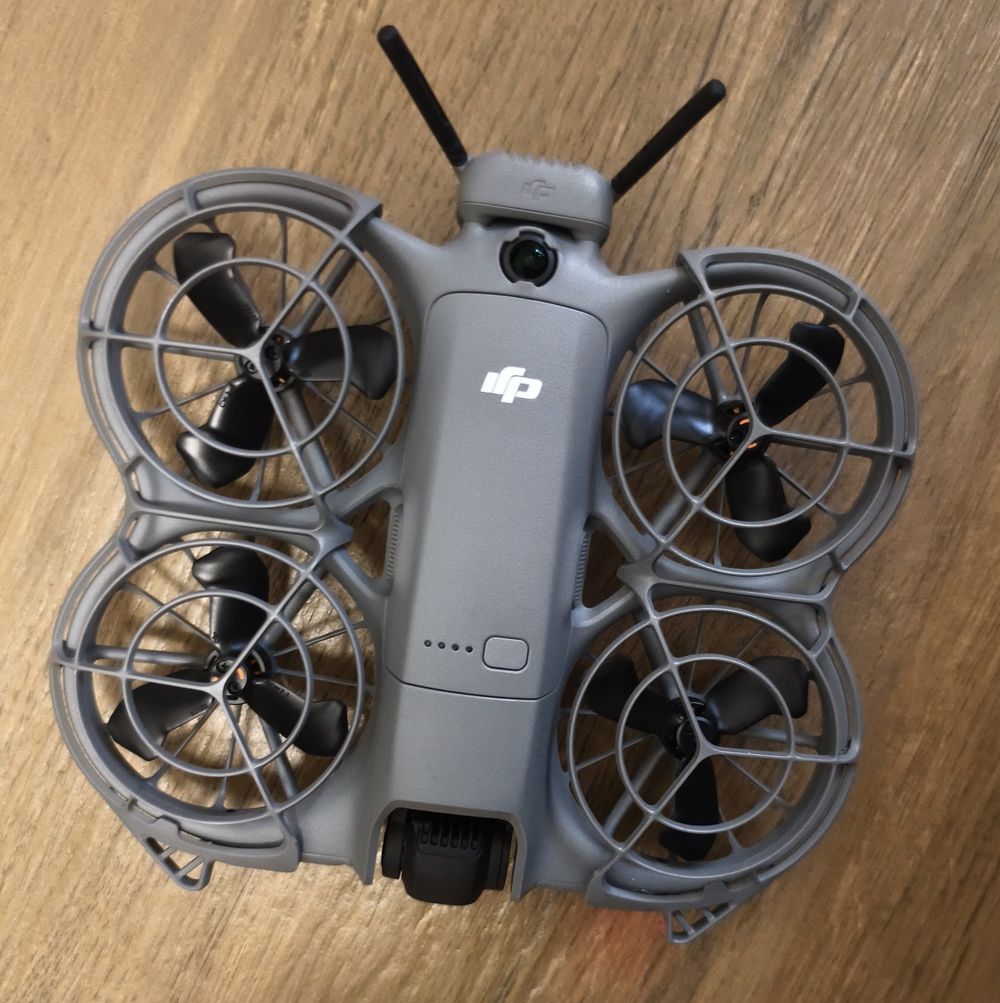 07. DJI Neo 2Best palm-launch 4K | Pocketable follow-cam footage | 151 g with full sensing; 19 minutes per battery | View on Amazon |
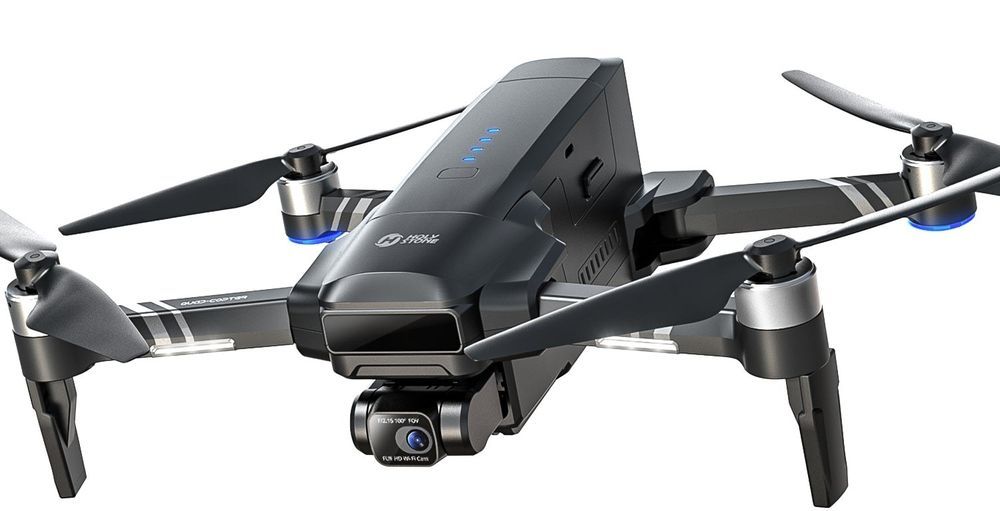 08. Holy Stone HS600Best for wind | Coastal and mountain flying | Level 6 wind rating; 603 g needs registration | View on Amazon |
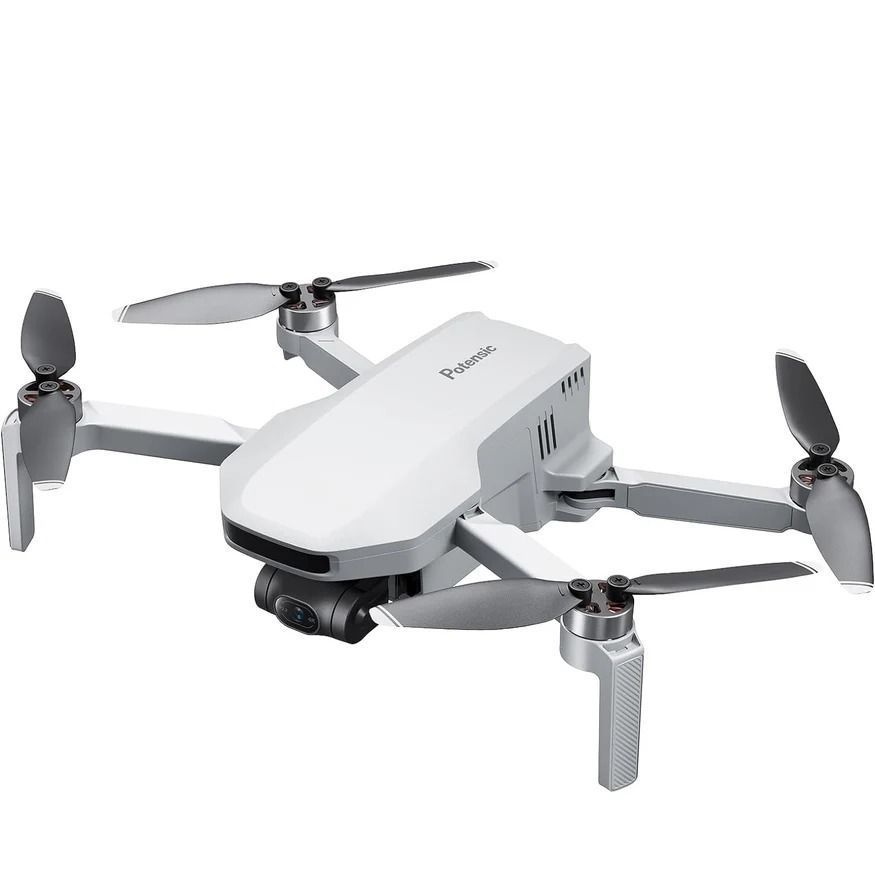 09. Potensic AtomBest 3-axis value | A real gimbal for the least money | 3-axis gimbal at 249 g; 720p live view | View on Amazon |
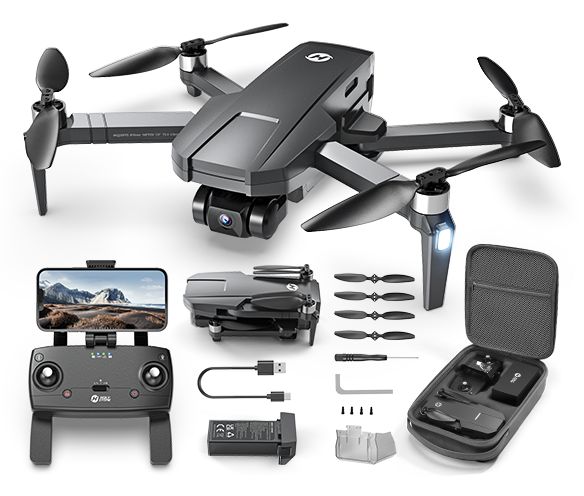 10. Holy Stone HS720RBest big-frame budget pick | Wide scenic shots on a budget | 3-axis gimbal, 140° lens; 1/3-inch sensor | View on Amazon |
Look closer
Our 10 picks, explained
These picks come from desk research, not hands-on testing: we compared manufacturer spec sheets line by line, then cross-checked owner feedback and published reviews to see which claims hold up at this price.
DJI Mini 3 Pro
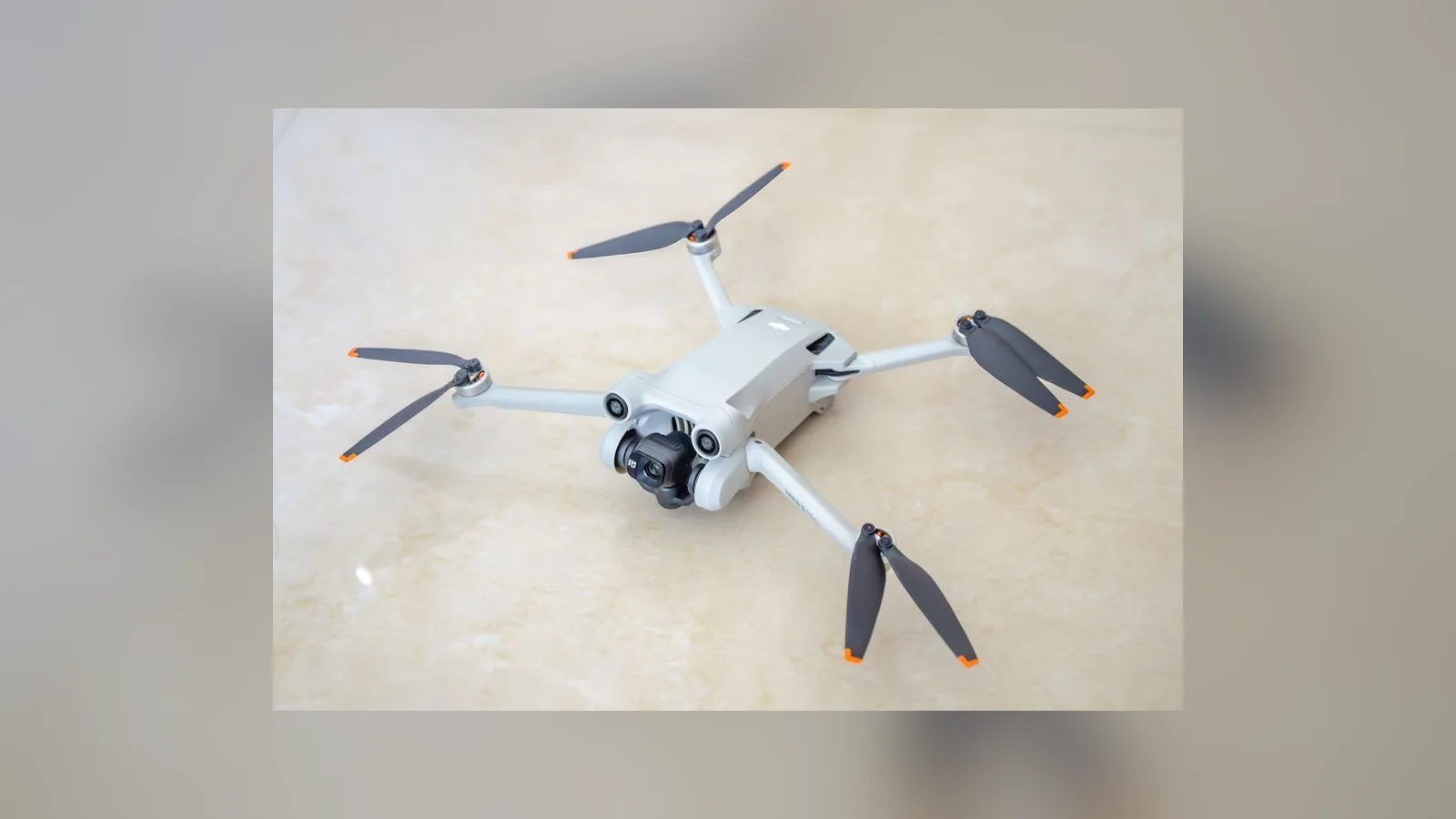
Most drones in this roundup are built to a price. The Mini 3 Pro was built to be DJI’s best small drone, and it shows in the details that matter on a shoot. The 1/1.3-inch sensor records 4K/60 HDR video and 48MP stills, with a 10-bit D-Cinelike profile that gives editors real room to grade. Tri-directional obstacle sensing watches forward, backward and downward, and ActiveTrack, FocusTrack and MasterShots automate the moves beginners take months to learn. Flight time is 34 minutes on the standard battery, and the whole aircraft stays under 249 g, which keeps registration simple in many countries. It is not the newest Mini, but at this budget it is the most complete one.
- Takeoff weight
- Under 249 g with standard battery
- Flight time
- 34 min (47 min with Plus battery)
- Camera
- 1/1.3-inch CMOS, 48MP, 4K/60, 10-bit D-Cinelike
Reasons to choose it
- 4K/60 HDR with 10-bit color for grading
- Tri-directional sensing and ActiveTrack
- Under 249 g with the standard battery
Trade-offs to know
- Plus battery crosses the 250 g line
- No sideways obstacle sensing
Choose this if: you want flagship footage and features without flagship money.
Consider another option if: you mostly film yourself, the DJI Flip launches from your palm and tracks you hands-free.
DJI Flip
The Flip answers a specific question: how do you film yourself from the air without a crew? Set it on your palm, choose a mode, and it rises to track you walking, riding or paddling, using the same 1/1.3-inch sensor and 4K/60 HDR video as DJI’s Mini 4 Pro. The full propeller guards fold out around the rotors, which makes close-quarters flying near people and property far less tense, and the aircraft still weighs under 249 g. Flight time is 31 minutes, generous for a tracking drone. The limits are deliberate: obstacle braking relies on a forward 3D infrared sensor rather than all-direction vision, and tracking flights stay close by design, so distance pilots will feel boxed in.
- Takeoff weight
- Under 249 g
- Flight time
- 31 min
- Camera
- 1/1.3-inch CMOS, 48MP, 4K/60 HDR
Reasons to choose it
- Palm launch and landing, no controller needed
- Full propeller guards for close work
- 4K/60 HDR from a proven sensor
Trade-offs to know
- Braking faces forward only
- Folded shape is bulkier than a Mini
Choose this if: your videos star you, and you film alone.
Consider another option if: you shoot landscapes at distance, the Mini 3 Pro senses more directions and grades better.
DJI Mini 3
Flight time is the Mini 3’s whole argument, and it is a strong one. A rated 38 minutes on the standard battery means one pack covers a sunrise session instead of two, and it does this while staying under 249 g. The camera shares the family’s 1/1.3-inch sensor, recording 4K/30 HDR video and 48MP stills, and the gimbal rotates for true vertical shooting rather than a cropped compromise. The O2 link is rated to 10 km in FCC regions. What you give up is the safety net: there is no obstacle sensing beyond downward positioning, and no subject tracking. Pilots who fly deliberately, in open country and coastal light, will not miss either. Nervous beginners should budget for the sensing on the Mini 3 Pro instead.
- Takeoff weight
- Under 249 g
- Flight time
- 38 min
- Camera
- 1/1.3-inch CMOS, 48MP, 4K/30 HDR
Reasons to choose it
- Longest standard-battery flights here at 38 minutes
- True vertical shooting for social video
- Same sensor family as the Pro
Trade-offs to know
- No obstacle sensing or tracking
- Video tops out at 4K/30
Choose this if: long scenic flights matter more than automation.
Consider another option if: you want the drone to watch for obstacles, the Mini 3 Pro adds tri-directional sensing and tracking.
Holy Stone HS900
Holy Stone built the HS900 around the two features budget drones usually fake: a real 3-axis brushless gimbal and a proper digital link. The gimbal keeps 4K/30 footage level in a way electronic stabilization alone cannot, and the transmission system is rated to 6 km with an HD live view, far beyond the Wi-Fi links on older budget models. The Sony 1/2.3-inch sensor shoots 48MP stills and handles daylight scenes well, GPS positioning brings smart return and tracking modes, and flight time is 30 minutes per battery. The honest limits are sensor size, which trails the DJI picks in low light, and an app experience that is functional rather than polished. For daylight flying, the value is hard to argue with.
- Takeoff weight
- 249 g
- Flight time
- 30 min
- Camera
- Sony 1/2.3-inch CMOS, 48MP, 4K/30
Reasons to choose it
- Real 3-axis gimbal, rare at this level
- 6 km transmission with HD live view
- Visual tracking and QuickShots built in
Trade-offs to know
- Small sensor limits low-light footage
- App polish trails DJI
Choose this if: you want gimbal-smooth 4K without paying for a flagship.
Consider another option if: you grade footage or shoot at dusk, the Mini 3 Pro has the bigger sensor and 10-bit color.
Potensic Atom 2
Travelers who like the Mini formula but not the ecosystem should look hard at the Atom 2. It folds to a similar pocketable size, stays under 249 g, and carries a 3-axis gimbal with a bright f/1.8 lens on a 1/2-inch Sony sensor. Footage is 4K with HDR, stills are a punchy 48MP, and the PixSync 4.0 link is rated to 10 km with a 1080p live view. AI tracking modes follow, spotlight or parallel you, which covers most solo shooting. Two honest gaps: there is no obstacle sensing, so you are the collision avoidance, and stills are JPEG only, which limits editing flexibility. Neither matters much for daylight video work, which is what this drone does best.
- Takeoff weight
- Under 249 g
- Flight time
- 32 min per battery
- Camera
- 1/2-inch Sony CMOS, 48MP stills, 4K/30 HDR
Reasons to choose it
- 4K HDR, 48MP stills and AI tracking
- 3-axis gimbal, fast f/1.8 lens
- 10 km link, 1080p live view
Trade-offs to know
- No obstacle sensing at all
- JPEG stills only, no RAW
Choose this if: you want Mini-class features outside the DJI ecosystem.
Consider another option if: you want the drone to brake for obstacles, the Mini 3 Pro adds tri-directional sensing.
Ruko U11MINI 4K
Ruko aimed the U11MINI 4K squarely at pilots who find phone-based flying annoying, and the hardware backs the pitch. The camera pairs a 1/2-inch CMOS sensor and f/1.8 lens with a 3-axis brushless gimbal plus electronic stabilization, recording 4K/30 video and 48MP stills. The range-topping RC3 version swaps the phone holder for a controller with a built-in 5.5-inch touchscreen, so you power on and fly. Positioning layers GPS and GLONASS with optical flow and a time-of-flight sensor for steady low hovers, transmission is rated to 6 km, and each battery is rated for 32 minutes. The trade-offs are JPEG-only stills, a 720p live view, and a shorter owner track record than the DJI and Potensic names above it.
- Takeoff weight
- 249 g
- Flight time
- 32 min per battery
- Camera
- 1/2-inch CMOS, 48MP, 4K/30, 3-axis gimbal
Reasons to choose it
- Touchscreen controller option, no phone needed
- 1/2-inch sensor with f/1.8 lens
- GPS, optical flow and TOF positioning
Trade-offs to know
- JPEG stills only, no RAW
- 720p live view
Choose this if: you want a proper gimbal drone that does not depend on your phone.
Consider another option if: you edit RAW stills, the Atom 2 is the alternative, though it is JPEG only too; the Mini 3 Pro shoots DNG.
DJI Neo 2
The Neo 2 is built for the trips where a camera bag never makes the cut. At 151 g it rides in a jacket pocket, launches from your palm, and needs no controller for its core tricks. The upgrade over the original Neo matters most away from home: omnidirectional sensing and forward LiDAR help it dodge the obstacles that crowd viewpoints and campsites, and video steps up to 4K/60 with proper vertical shooting for social clips. ActiveTrack follows at up to 12 m/s, fast enough for cycling and easy trail running. The catch is endurance, with about 19 minutes per battery, so treat it as a moment-catcher rather than a survey tool, and budget for spare batteries from day one.
- Takeoff weight
- 151 g
- Flight time
- About 19 min per battery
- Camera
- 1/2-inch CMOS, 12MP, 4K/60
Reasons to choose it
- Lightest sensing drone here at 151 g
- 4K/60 and native vertical video
- Palm flights need no controller
Trade-offs to know
- About 19 minutes per battery
- Long range needs an add-on module
Choose this if: every gram counts and your shots stay close.
Consider another option if: you need longer flights, the Mini 3 flies 38 minutes per battery.
Holy Stone HS600
Every other drone on this list chases the 250 g line. The HS600 ignores it, and the payoff is stability. At 603 g with a Level 6 wind rating, it holds position in coastal and mountain gusts that push the folders around, and its batteries are rated for up to 40 minutes each, the longest per-pack endurance here. The camera is a Sony unit recording 4K/30, stabilized by a 2-axis gimbal with electronic help on the third axis, and built-in Remote ID keeps it compliant in the US. Transmission runs to 3 km. The costs are the ones you would expect: registration duties at this weight, a bigger bag footprint, and stabilization that is very good rather than flagship smooth.
- Takeoff weight
- 603 g
- Flight time
- Up to 40 min per battery
- Camera
- 4K/30, 2-axis gimbal + EIS, FOV 100°
Reasons to choose it
- Level 6 wind resistance, best here
- 40 minute batteries
- Built-in Remote ID
Trade-offs to know
- 603 g means registration in most places
- 2-axis gimbal, not a full 3-axis
Choose this if: you fly in real wind and want long batteries.
Consider another option if: you travel light, the HS900 keeps the gimbal at 249 g.
Potensic Atom
Potensic’s original Atom is the drone that proved a budget folder could stabilize footage mechanically instead of digitally, and that core strength still carries it. The 3-axis gimbal keeps 4K/30 video level through turns and gusts, the airframe folds under 249 g, and batteries are rated at 32 minutes. GPS positioning brings return to home and the basic smart shots, and the PixSync link reaches a claimed 6 km. Age shows in the supporting cast: the live view is 720p, there is no HDR video, and the tracking smarts of the Atom 2 are absent. None of that stops it being the right answer for a pilot who cares about smooth footage first and features second.
- Takeoff weight
- 249 g
- Flight time
- 32 min
- Camera
- Sony CMOS, 12MP, 4K/30, 3-axis gimbal
Reasons to choose it
- Genuine 3-axis gimbal at this price
- 32 minute flights under 249 g
- GPS return to home
Trade-offs to know
- 720p live view feels dated
- No HDR video or AI tracking
Choose this if: smooth footage matters more than smart features.
Consider another option if: you want tracking and HDR, the Atom 2 adds both.
Holy Stone HS720R
The HS720R refreshes Holy Stone’s long-running 720 formula with the upgrade owners always wanted: a proper 3-axis gimbal. Paired with electronic stabilization, it smooths the 4K/30 video the camera records to the card, and the 140 degree lens takes in wide scenes without backing the drone into trouble. GPS positioning brings follow, waypoint and point-of-interest modes plus smart return, flight time is 26 minutes per battery, and the transmission system is rated near 3 km. The ceilings are clear: a 1/3-inch sensor that prefers daylight, a Wi-Fi repeater link that is less robust than the digital systems on the DJI and Potensic picks, and slow five-hour battery charging. As a wide-angle scenic tool on a budget, it works.
- Takeoff weight
- 389 g
- Flight time
- 26 min
- Camera
- 1/3-inch Sony CMOS, 4K/30, 3-axis gimbal
Reasons to choose it
- 3-axis gimbal plus EIS
- 140° wide lens forgives framing
- GPS smart modes and return
Trade-offs to know
- Small sensor prefers daylight
- Slow five-hour charging
Choose this if: you want wide, stable scenic footage for the least spend.
Consider another option if: you want a stronger link and sensor, the HS900 steps both up.
Buy with confidence
How to choose a 4K drone in this class
Four checks that separate a real 4K camera drone from a spec-sheet illusion.
01. Check the video spec, not the photo spec
The oldest trick in budget drones is a camera that shoots 4K stills and 2.7K video, sold under a 4K badge. Every pick here was shortlisted on its video specification: 3840 by 2160 recorded to the memory card. When you compare any other model, find the video resolution line in the manual, not the headline, before you believe the badge.
02. A gimbal beats electronic stabilization
Electronic stabilization crops and warps the frame to hide shakes. A 3-axis gimbal removes them mechanically, which keeps horizons level and detail intact. Most picks here carry a full 3-axis unit; the HS600 pairs a 2-axis gimbal with electronics. If your footage matters, treat the gimbal as the feature worth paying for.
03. Decide how you feel about 250 g
Eight of these ten drones stay under 249 g, which keeps recreational registration simple in many countries. The HS600 and HS720R cross the line for wind ability and frame size, and earn registration duties in return. Neither answer is wrong, but know which side of the line you are buying before the drone ships.
04. Spend the change on batteries and cards
At this level, a second battery improves your flying more than any accessory. It doubles your session and covers the gap while the first pack charges. Pair it with a fast, high-endurance memory card rated for sustained 4K writing, and buy the card from a reputable seller, since 4K drones expose fake cards quickly.
Behind the recommendations
How we selected these products
This guide is built on desk research, not hands-on testing. We compared official manufacturer spec sheets for every current drone in this price class, shortlisting only models whose manuals list 3840 by 2160 video recording, then cross-checked the shortlist against owner feedback and published reviews. Prices were checked against current US listings in October 2026 and are never printed here, because they move with sales and bundles.
- Camera honesty: video resolution, sensor size and gimbal type taken from manufacturer manuals, never from marketing headlines.
- Price band: each pick’s standard kit was inside the band in current US listings at research time; bundle pricing varies, so confirm the exact kit on the product page.
- Limitations: we did not fly these drones for this guide, and lab-rated figures such as flight time are ceilings, not promises.
Common questions
Before you buy
Do all of these drones record true 4K video?
Yes. That was the entry ticket for this list. Every pick records 3840 by 2160 video to its memory card according to its manufacturer spec sheet. Several drones in this price class advertise 4K while recording 2.7K video and 4K stills; those were excluded, which is why some familiar budget names are missing.
Which of these is best for YouTube and social video?
The Mini 3 Pro, for its 4K/60 capture and 10-bit color, which grades well and crops cleanly to vertical. The Mini 3 and Flip shoot true vertical video natively, which suits Shorts and Reels without cropping. If your channel is mostly you talking to camera while moving, the Flip’s tracking is the shortcut.
Is a 3-axis gimbal worth paying for at this level?
Yes, more than any other single feature. It is the difference between footage you publish and footage you apologize for. Every pick here except the HS600 has a full 3-axis gimbal, and the HS600 pairs a 2-axis unit with strong electronic stabilization and the best wind rating on the list.
Do I need a special memory card for 4K recording?
You need a fast one. Look for a microSD card with a U3 or V30 rating from a known brand, sized 64 GB or larger, since 4K video fills small cards quickly. Budget drones are less forgiving of slow cards than flagship models, and dropped frames on a cheap card look exactly like a camera fault.
Choose the best fit for your flying
Start with the DJI Mini 3 Pro if you want the most complete camera drone in this budget. Choose the DJI Flip when the filming is mostly of yourself, or the Holy Stone HS900 when a 3-axis gimbal matters more than a famous badge. Whichever you pick, confirm the exact bundle on the product page before you buy.
Sources and verification
Product specifications and claims in this guide were checked against the following sources, listed by name as a record of what was consulted.
- DJI Mini 3 Pro, Mini 3, Flip and Neo 2 official specifications (dji.com)
- Potensic Atom 2 and Atom official specifications (potensic.com)
- Holy Stone HS900, HS600 and HS720R official specifications and user manuals (holystone.com)
- Ruko U11MINI 4K official specifications and user manual (ruko.net)
- Manufacturer user manuals for each shortlisted drone (DJI, Potensic, Holy Stone, Ruko)
- Published reviews and owner feedback for the shortlisted models, cross-checked in October 2026