The mavic 2 pro vs air 3s debate is really a question about time. On one side sits a legend: the 2018 flagship that put a Hasselblad camera on a folding drone and defined the prosumer camera drone. DJI discontinued it years ago, so today you can only buy it used, renewed, or as old stock from third-party sellers. On the other side sits DJI’s 2024 dual-camera travel drone, available brand new with a warranty, a 1-inch main sensor of its own, a 70mm telephoto camera, and 45 minutes of rated flight time. Six years of progress separate them, and the used market has made the older drone shockingly cheap. We compared the camera, flight performance, intelligent features, and real-world value so you can decide whether the legend still deserves your money or the newcomer has made it history.
Affiliate disclosure: As an Amazon Associate I earn from qualifying purchases. This page contains affiliate links. If you buy through them, we may earn a commission.
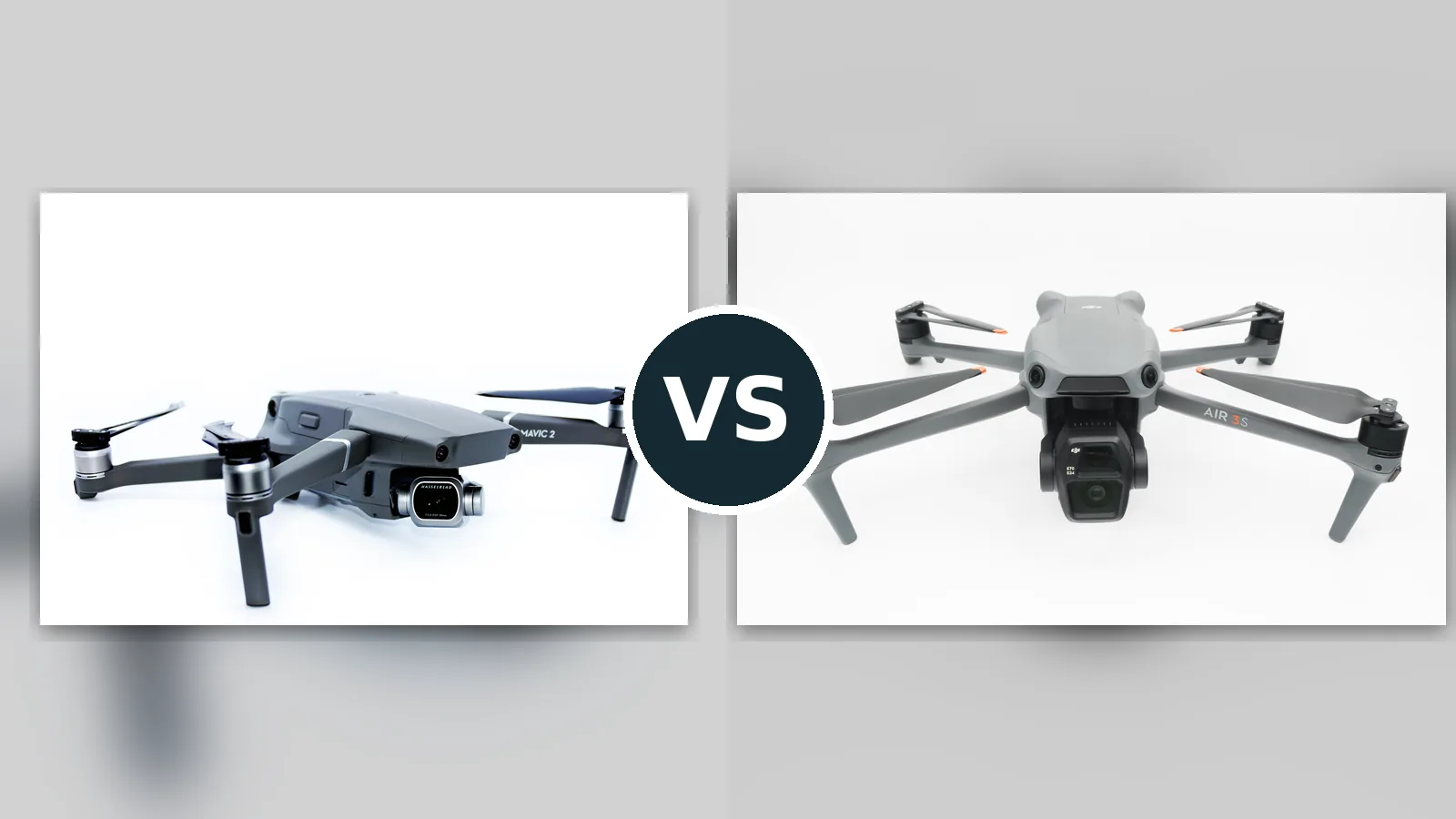
DJI Mavic 2 Pro (left) and DJI Air 3S (right):
Air 3S for most. Mavic 2 Pro for the bargain.
DJI Air 3S wins for most buyers: sharper video at higher frame rates, a 70mm telephoto camera, 45-minute flights, LiDAR-assisted nightscape sensing, and you buy it brand new with a warranty. DJI Mavic 2 Pro wins on value if you buy used: a 1-inch Hasselblad camera with a real adjustable aperture for used-market money is still a serious photography tool, as long as you accept 4K/30 video, the older DJI GO 4 app, and no factory warranty. Camera: Air 3S. Flight time: Air 3S. Range: Air 3S. Adjustable aperture: Mavic 2 Pro, and nothing else near its price has one.
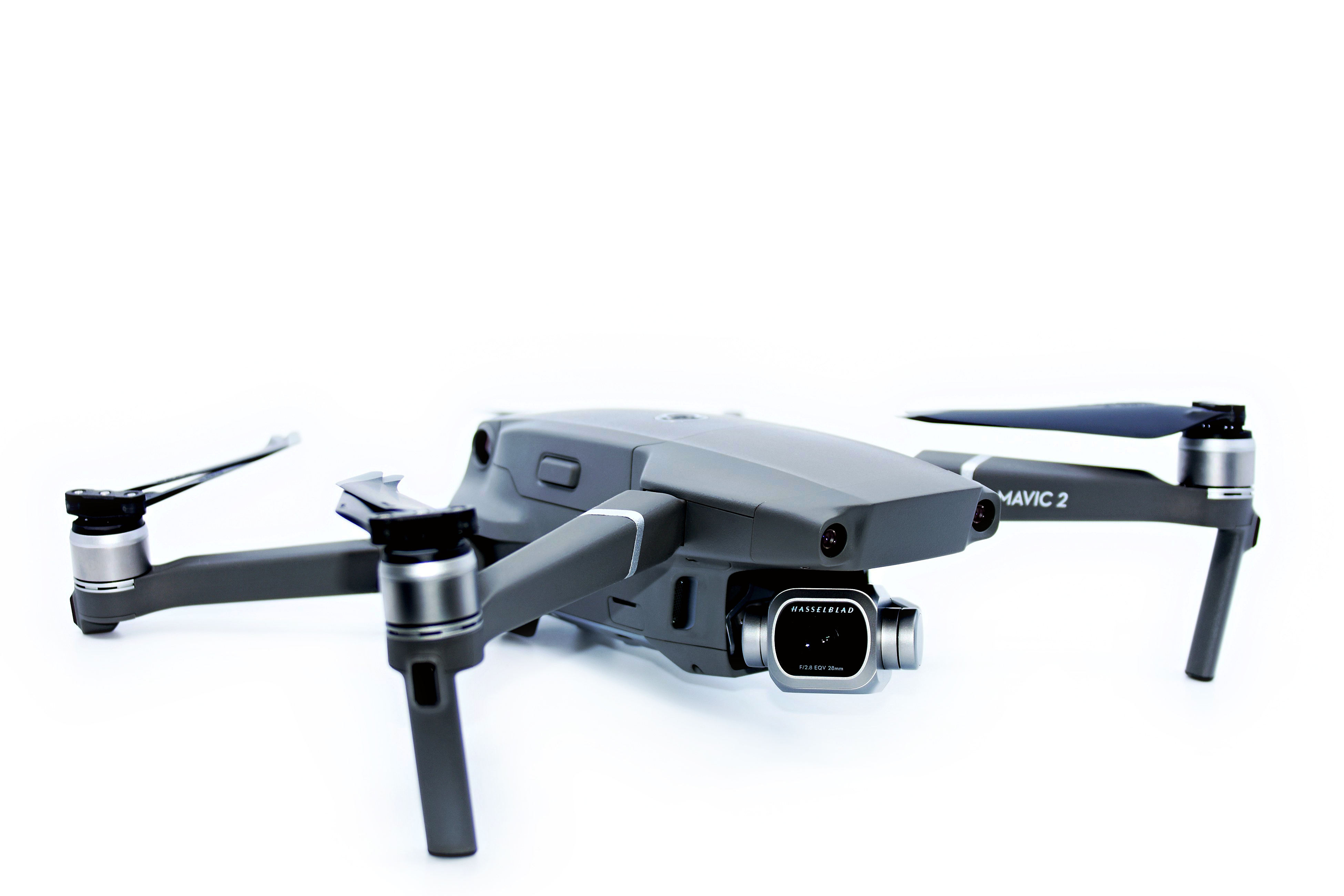
DJI Mavic 2 Pro
For photographers who want a 1-inch Hasselblad camera with adjustable aperture at used-market prices
- Hasselblad L1D-20c with a real adjustable aperture, a creative tool no current mid-range drone offers
- Discontinued, so used and renewed examples sell for a fraction of a new Air 3S
- 4K tops out at 30fps, it runs the older DJI GO 4 app, and there is no factory warranty on used units
Discontinued model: Amazon listings are renewed or third-party sellers
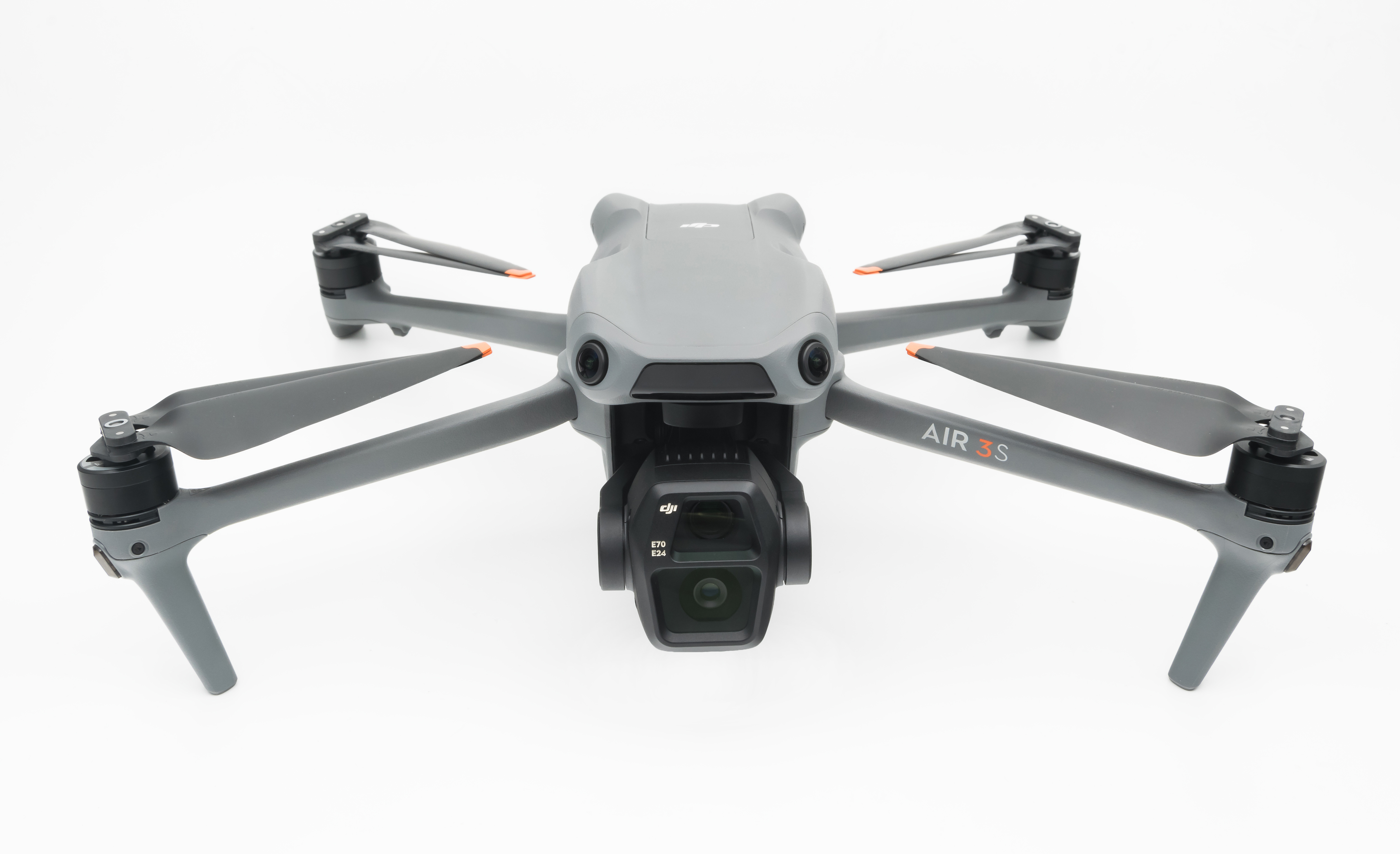
DJI Air 3S
For creators who want a new dual-camera drone with 45-minute flights and night-ready sensing
- Dual cameras: 1-inch 50MP wide plus 70mm telephoto, both with 4K/60 HDR and 10-bit color
- Forward LiDAR with nightscape omnidirectional sensing keeps flights safer after dark
- Costs more than a used Mavic 2 Pro and lacks the adjustable aperture photographers love
Check current price and available bundles on Amazon
Which drone fits your flying?
Start with your main use case. The best choice should solve your needs, without charging you for features you will rarely use.
The Mavic 2 Pro is the drone that made the 1-inch sensor mainstream. When DJI launched it in August 2018 at $1,449, the headline was the Hasselblad L1D-20c camera: a 20MP 1-inch sensor co-engineered with Hasselblad, wearing that company’s Natural Colour Solution and, crucially, a real adjustable aperture from f/2.8 to f/11. That aperture is still rare air. It lets you control exposure and depth of field optically instead of stacking ND filters, which working photographers appreciate every flight. Around that camera DJI built the complete 2018 flagship package: a 3-axis gimbal, 4K/30 video with 10-bit Dlog-M, omnidirectional obstacle sensing, OcuSync 2.0 transmission reaching 8 km, 31 minutes of rated flight time, and the folding airframe that defined the modern prosumer drone.
Here is the honest catch, and it shapes this whole comparison. DJI discontinued the Mavic 2 Pro years ago, replacing it with the Mavic 3 in late 2021. You cannot buy a new one with a warranty; the market is renewed units, open-box examples, and private sales at prices unthinkable in 2018. The hardware is frozen in 2018: 4K tops out at 30fps, transmission and sensing are two generations old, and in the United States the airframe has no built-in Remote ID, so you need an add-on broadcast module to fly legally. Batteries are aging and replacements are getting scarce. None of that erases what the camera can do, but buy with eyes open.
The Air 3S is the opposite proposition: the current thing, bought new, with the full modern stack. Launched in October 2024 at $1,099 with the RC-N3 controller, it centers on a dual-camera system DJI claims out-resolves even the pricier Mavic 3 Pro’s main camera. The wide camera is a 50MP 1-inch sensor with a bright f/1.8 lens, and next to it sits a 48MP 1/1.3-inch telephoto at 70mm equivalent, a genuine 3x optical perspective without moving the drone. Both cameras shoot 4K/60fps HDR and 4K/120fps slow motion with 10-bit color even in the standard profile, plus D-Log M and HLG for grading, with up to 14 stops of dynamic range claimed. Around the cameras: 45 minutes of rated flight time, O4 transmission to 20 km, omnidirectional sensing with a forward-facing LiDAR, and nightscape sensing that keeps obstacle detection working in low light. It runs the current DJI Fly app, stores 42 GB internally, and the Fly More combos add batteries, a charging hub, ND filters, and a bag.
So the real question is not which drone is better in a vacuum. On pure specifications the Air 3S wins nearly every row, as six years of progress should. The real question is whether the used Mavic 2 Pro’s price and its adjustable-aperture Hasselblad camera make it the smarter buy for your work. A stills photographer who shoots landscapes at golden hour and grades carefully may genuinely prefer the Mavic 2 Pro’s files and pocket the savings. A videographer who needs 4K/60, slow motion, and a telephoto lens has no real choice to make.
Choose DJI Mavic 2 Pro if…
- Still photography on a budget is your main concern, and you want a 1-inch sensor for used-market money.
- You value the adjustable f/2.8 to f/11 aperture for optical exposure control without ND filters.
- You mostly shoot 4K/30 or stills, and 60fps video and slow motion are not part of your work.
- You can accept a used or renewed unit with no factory warranty, aging batteries, and the DJI GO 4 app.
Choose DJI Air 3S if…
- Modern video capability is your main concern, from 4K/60 HDR to 4K/120 slow motion.
- You want the 70mm telephoto camera for compressed perspectives and parallax-style shots without flying close.
- You value buying new: full warranty, fresh batteries, the DJI Fly app, and 42 GB of internal storage.
- You can accept the higher price and the fixed apertures on both cameras.
Mavic 2 Pro vs Air 3S: The Specs That Actually Matter
Compare the exact battery, controller and bundle versions you intend to buy.
| Feature | DJI Mavic 2 Pro | DJI Air 3S |
|---|---|---|
| Best suited to | Stills photography on a budget, landscapes, pilots who love manual exposure control | Travel photo and video, creators, night and low-light flying, telephoto perspectives |
| Takeoff weight | 907 g | 724 g |
| Dimensions (folded) | 214 x 91 x 84 mm | 214.2 x 100.6 x 89.2 mm |
| Sensor and lenses | 1-inch CMOS, 20MP, 28mm equivalent, f/2.8 to f/11 adjustable aperture, Hasselblad colour science | Dual: 1-inch 50MP, 24mm f/1.8; plus 1/1.3-inch 48MP, 70mm f/2.8 telephoto |
| Video modes | 4K up to 30fps, 2.7K up to 60fps, 1080p up to 120fps | 4K up to 60fps HDR, 4K up to 120fps, 1080p up to 240fps, 2.7K vertical |
| Color and codecs | 10-bit Dlog-M, 10-bit HLG HDR, H.264/H.265, 100 Mbps; JPEG and DNG stills | 10-bit standard profile, D-Log M and HLG, H.264/H.265, 130 Mbps; JPEG and DNG stills |
| Vertical capture | Cropped in post; no native vertical mode | 2.7K vertical shooting mode (1512 x 2688) up to 60fps |
| Gimbal | 3-axis mechanical (tilt, roll, pan) | 3-axis mechanical (tilt, roll, pan) |
| Obstacle sensing | Omnidirectional (sides active in tracking modes); APAS | Omnidirectional plus forward LiDAR; nightscape low-light sensing |
| Subject tracking | ActiveTrack 2.0, POI 2.0, Waypoint 2.0, QuickShots, Hyperlapse | ActiveTrack 360, Free panorama, next-gen Smart RTH, RC Track support |
| Rated flight time | 31 minutes maximum (29 minutes hovering) | 45 minutes maximum |
| Real-world flight time | Not tested by us; 2018-era tests reported roughly 25 to 27 minutes of mixed flying on a fresh battery | Not tested by us; independent reviewers report roughly 30 to 35 minutes of real shooting per battery |
| Max speed | 72 kph in Sport mode | 21 m/s (75.6 kph) in Sport mode |
| Video transmission | OcuSync 2.0, up to 8 km FCC, 1080p live view, 120 ms latency | DJI O4, up to 20 km FCC, 1080p/60fps 10-bit live view |
| Wind resistance | 29 to 38 kph | Level 5 rated |
| GNSS | GPS plus GLONASS | GPS plus Galileo plus BeiDou |
| Internal storage | 8 GB, plus microSD up to 128 GB | 42 GB, plus microSD up to 512 GB, off-state QuickTransfer |
| Controller and bundle | Standard RC with phone mount (DJI GO 4); Smart Controller and Goggles compatible | DJI RC-N3 ($1,099) or DJI RC 2 with screen; Fly More combos to $1,599 |
| Availability and price | Discontinued; renewed and used listings only | Current model; $1,099 to $1,599 new |
| Main trade-off | 2018 video specs, older app, aging batteries, no built-in Remote ID, no warranty on used units | Higher price, fixed apertures, no Hasselblad color science |
Manufacturer ratings are lab figures; real-world flight time is lower. The Mavic 2 Pro is discontinued: prices shown for it reflect the used and renewed market, not a new retail price. Last verified: October 20, 2026.
DJI Mavic 2 Pro (left) and DJI Air 3S (right):
Mavic 2 Pro vs Air 3S: Five Differences That Matter
For each category, here is the difference, its practical impact and which buyer benefits.
1. Camera and image quality: two 1-inch sensors, two philosophies
Edge: Air 3S (with one big asterisk)This is the most interesting camera battle in DJI’s lineup because both drones carry a 1-inch main sensor, yet they could hardly be more different. The Mavic 2 Pro’s Hasselblad L1D-20c shoots 20MP stills through a 28mm equivalent lens with an aperture that physically stops down from f/2.8 to f/11. That adjustable aperture is the asterisk, and it is a meaningful one. It gives you optical control over exposure and depth of field, which means shooting video at proper shutter speeds in bright light without screwing on ND filters, and stopping down for sharper landscape corners. For pure stills work, a well-flown Mavic 2 Pro produces files that hold up remarkably well in 2026.
The Air 3S answers with overwhelming firepower. Its main camera is a 50MP 1-inch sensor with a brighter f/1.8 lens, which gathers noticeably more light than the Mavic 2 Pro’s f/2.8 wide open, a real advantage at dusk and dawn. Then there is the second camera, and this is the category killer: a 48MP 1/1.3-inch telephoto at 70mm equivalent. The Mavic 2 Pro has no zoom at all beyond cropping. The Air 3S gives you compressed telephoto perspectives and the ability to frame distant subjects without flying closer, which matters for both creativity and safety. On video the gap is wider still: 4K/60fps HDR and 4K/120fps slow motion against 4K/30, 10-bit color in the standard profile, and 130 Mbps bitrate. The Mavic 2 Pro’s 4K/30 with 10-bit Dlog-M was excellent in 2018, but it cannot match the Air 3S for motion, detail, or grading latitude today.
2. Flight time, range, and staying power
Edge: Air 3SDJI rates the Mavic 2 Pro at 31 minutes of maximum flight time on its 3850 mAh battery, and 2018-era testing put real mixed flying at roughly 25 to 27 minutes on a fresh pack. In 2026, there are no fresh packs. Every Mavic 2 Pro battery in circulation is years old, and lithium batteries lose capacity with age and cycles. A used Mavic 2 Pro that delivers 20 minutes of honest flight time is doing well, and replacement batteries are increasingly scarce and expensive. Budget for this reality, not the 2018 brochure number.
The Air 3S is rated at 45 minutes on a 4276 mAh battery, and independent reviewers report roughly 30 to 35 minutes of real shooting, a full location more per battery than the Mavic 2 Pro ever offered. Transmission tells the same generational story: OcuSync 2.0 reaching 8 km against O4 reaching 20 km under FCC rules, with a 1080p/60fps 10-bit live feed that stays cleaner at distance. The Air 3S also carries 42 GB of internal storage against the Mavic 2 Pro’s 8 GB, supports microSD cards up to 512 GB against 128 GB, and its charging hub can consolidate remaining charge from multiple batteries into the fullest one.
3. Design, portability, and the weight question
Edge: Air 3SThe two airframes are closer in size than six years would suggest. Folded, the Mavic 2 Pro measures 214 by 91 by 84 mm and the Air 3S measures 214.2 by 100.6 by 89.2 mm, essentially the same footprint in a camera bag. The difference is weight: 907 g against 724 g, a 183-gram saving you feel on a long hike. Both are well over the 250-gram threshold, so neither enjoys relaxed sub-250g registration rules; in the United States both need FAA registration for recreational flight.
There is one regulatory wrinkle that favors the newer drone and that every used-Mavic 2 Pro buyer must know about. The Mavic 2 Pro predates Remote ID and has no built-in broadcast. Since the FAA’s Remote ID rule took effect, flying a Mavic 2 Pro in the United States legally requires an add-on broadcast module: an extra purchase, extra weight, and extra hassle. The Air 3S ships with Remote ID built in. Check your own aviation authority’s current requirements before either purchase, but do not treat this as a tie.
4. Intelligent features and obstacle sensing
Edge: Air 3SThe Mavic 2 Pro was the sensing king of 2018: ten vision and infrared sensors giving omnidirectional coverage, with APAS routing the drone around obstacles front and back. Its intelligent modes became the template everything since has followed: ActiveTrack 2.0 with 3D environment mapping, four Hyperlapse modes that made one-tap time-lapses mainstream, QuickShots including Asteroid and Boomerang, Point of Interest 2.0, and Waypoint 2.0. All of it still works. But note the fine print time has exposed: the side sensors only activate in specific tracking modes, and APAS is a 2018 algorithm on 2018 processing.
The Air 3S builds on all of it and adds the one thing the Mavic 2 Pro cannot do: see in the dark. A forward-facing LiDAR joins the vision sensors, and the nightscape omnidirectional sensing keeps obstacle detection working in low light where the older drone’s sensors go blind. Vision Assist shows more of the surroundings on screen, ActiveTrack 360 keeps subjects framed from any angle, Free panorama stitches huge detailed panoramas from either camera, and the next-generation Smart RTH plots safer return paths. It even supports the DJI RC Track beacon for precise subject tracking.
5. Price, value, and the used-market equation
Edge: Mavic 2 Pro (on price), Air 3S (on value)This category needs splitting in two, because price and value point in opposite directions. On price, the Mavic 2 Pro wins without contest. It launched at $1,449 in 2018, and today renewed and open-box units change hands for a fraction of the Air 3S’s $1,099 to $1,599 new price, with private used sales lower still. For a photographer who wants a 1-inch sensor and could never justify flagship money, the used Mavic 2 Pro is one of the great bargains in drones.
On value, the Air 3S makes the stronger case for most people. You get a new aircraft with a factory warranty, fresh batteries, the current DJI Fly app with ongoing updates, 45-minute flights, dual 4K/120-capable cameras, LiDAR sensing, and 42 GB of internal storage. The used Mavic 2 Pro’s true cost includes its risks: no warranty, aging batteries, the Remote ID module for US pilots, and the chance that a private seller’s “mint condition” is optimistic. Add those up and the price gap narrows.
Mavic 2 Pro vs Air 3S: What You Gain and Give Up
DJI Mavic 2 Pro
Reasons to choose it
- Hasselblad L1D-20c with a real f/2.8 to f/11 adjustable aperture: optical exposure control that no current mid-range drone offers
- 20MP 1-inch stills with RAW (DNG) support and Hasselblad Natural Colour Solution that many photographers still prefer
- Discontinued pricing: used and renewed units sell for a fraction of a new Air 3S, making it the cheapest route to a 1-inch sensor
- Proven, mature platform: omnidirectional sensing, ActiveTrack 2.0, four Hyperlapse modes, and years of community knowledge
Reasons to reconsider
- Video tops out at 4K/30 with no 60fps or slow-motion 4K, and no zoom camera of any kind
- Used-only market: no factory warranty, aging batteries with reduced capacity, and dwindling spare parts
- Runs the older DJI GO 4 app with no guarantee of future updates or new features
- No built-in Remote ID, so US pilots must buy and mount an add-on broadcast module to fly legally
- Heavier at 907 g, with older OcuSync 2.0 transmission limited to 8 km
DJI Air 3S
Reasons to choose it
- Dual cameras: 50MP 1-inch f/1.8 wide plus 48MP 70mm telephoto, a two-lens storytelling kit in one drone
- Modern video: 4K/60fps HDR, 4K/120fps slow motion, 10-bit color in every profile, 130 Mbps bitrate
- 45 minutes of rated flight time and O4 transmission to 20 km, roughly double the older drone’s staying power
- Forward LiDAR with nightscape omnidirectional sensing keeps obstacle detection working in low light
- Bought new with warranty, fresh batteries, the DJI Fly app, 42 GB internal storage, and built-in Remote ID
Reasons to reconsider
- Costs significantly more than a used Mavic 2 Pro, especially in Fly More trim at $1,399 to $1,599
- Fixed apertures on both cameras, so bright-light video still needs ND filters
- No Hasselblad color science for photographers attached to the Mavic 2 Pro’s rendering
- At 724 g it is lighter, but still well over 250 g with the same registration requirements
- Telephoto camera uses a smaller 1/1.3-inch sensor that shows its limits in very low light
Check the bundle, not just the drone
The drone on the box is only half the purchase. Run through this checklist before you tap buy.
- Condition: This is the big one for the Mavic 2 Pro. Renewed units from reputable sellers include some buyer protection; private sales do not. Ask for the battery cycle count, check the gimbal for smooth movement, and inspect the airframe for crash damage before money changes hands.
- Batteries: Every Mavic 2 Pro battery is years old now. Ask how many charge cycles each pack has and budget for replacements, which are getting scarce. For the Air 3S, the Fly More combos include three batteries, the right number for real shooting days.
- Remote ID: US buyers of a used Mavic 2 Pro need a Remote ID broadcast module to fly legally, an extra purchase that adds cost and weight. The Air 3S has Remote ID built in. Check your own country’s current rules either way.
- Controller and app: The Mavic 2 Pro needs a phone or tablet and the DJI GO 4 app; confirm the app still runs well on your device. The Air 3S uses the current DJI Fly app, and the RC 2 bundle includes a controller with a built-in screen.
- Accessories: The Mavic 2 Pro’s adjustable aperture reduces the need for ND filters, a genuine saving. The Air 3S’s fixed apertures make an ND set almost mandatory for video; the Fly More combos include one. Both drones need a fast microSD card.
- Listing: On Amazon, confirm the exact model name in the listing title before ordering. Mavic 2 Pro listings vary between renewed, open-box, and third-party used stock with different bundle contents. For the Air 3S, confirm the controller (RC-N3 or RC 2) and battery count.
- Local requirements: Both drones weigh over 250 g, so registration is required for recreational flight in the US, and simplified rules do not apply in most of Europe either. Check your aviation authority’s current training, registration, and airspace rules before your first flight.
The right choice comes down to new versus used.
Six years of progress is a long time in drones, and it shows in almost every row of the spec table: the Air 3S flies longer, sees farther, shoots sharper video, adds a telephoto camera, senses obstacles in the dark, and arrives new with a warranty. For most buyers it is the right answer. But the Mavic 2 Pro refuses to die quietly, because its one great trick, a 1-inch Hasselblad camera with a real adjustable aperture at used-market prices, is something no new drone near its price can replicate. If you shoot stills, love manual exposure, and buy carefully, the old flagship remains one of the smartest photography buys in drones. Everyone else should buy the Air 3S and never look back.
Still deciding?
Is the Air 3S worth the upgrade over the Mavic 2 Pro?
For video work, absolutely: 4K/60 HDR, 4K/120 slow motion, a 70mm telephoto camera, 45-minute flights, and night-capable sensing are transformative upgrades. For stills photography the answer is murkier, since the Mavic 2 Pro’s 20MP Hasselblad files with its adjustable aperture remain genuinely good. A photographer who already owns one and shoots mostly stills has less reason to switch than a videographer does.
Can I still buy a brand-new Mavic 2 Pro?
Effectively no. DJI discontinued the Mavic 2 Pro years ago, and remaining retail stock is long gone. What you will find on Amazon and marketplaces are renewed units, open-box examples, and used drones from third-party sellers. Treat every listing as used stock: verify the seller, the return terms, and the battery condition before buying.
Which drone is better for photography?
It depends on what you value. The Air 3S offers more resolution (50MP against 20MP), a brighter f/1.8 lens for low light, and a 70mm telephoto for compositional variety. The Mavic 2 Pro counters with its adjustable f/2.8 to f/11 aperture for optical exposure control and the Hasselblad colour rendering many photographers prefer. For most photographers the Air 3S’s versatility wins; for aperture devotees, the Mavic 2 Pro remains special.
Which drone is better for video?
The Air 3S, and it is not close. It shoots 4K/60fps HDR and 4K/120fps slow motion with 10-bit color in every profile, against the Mavic 2 Pro’s 4K/30 maximum. If video is more than an occasional extra for you, the six-year gap is decisive.
Do I need to register either drone, and what about Remote ID?
Both drones weigh over 250 g, so recreational registration is required in the United States and most countries have their own requirements. The key difference is Remote ID: the Air 3S has it built in, while the Mavic 2 Pro predates the rule and needs an add-on broadcast module for legal flight in the US. Check your national aviation authority’s current rules before flying either one.
How were these drones compared?
This is a research-based comparison: we compiled specifications from DJI’s official spec pages, launch announcements, and documentation for both drones, then cross-checked them against independent reviews from outlets including DPReview, DroneXL, Trusted Reviews, Loiter Point, B&H Photo, and CineD. We did not fly either drone for this article, so rated figures are DJI’s lab numbers and real-world figures are attributed to the reviewers who measured them. Amazon ASINs were verified against the exact product model across Amazon-indexed listing data and corroborating sources before any affiliate link was written.
How this comparison was prepared
This is a research-based comparison. We did not fly either drone for this article, and we do not imply otherwise. Every specification in the table above comes from DJI’s official documentation, primarily the DJI Air 3S specifications page and DJI’s archived Mavic 2 Pro materials, with launch pricing and bundle contents cross-checked against DJI’s official launch announcements and the DJI Store. Where this article mentions real-world flight times, those figures are attributed to independent reviewers who measured them, not to us. Statements about the Mavic 2 Pro’s discontinued status reflect current retailer listings, including B&H Photo marking the model discontinued. Amazon ASINs were verified by matching each ASIN against the exact product model across Amazon-indexed listing data and corroborating sources before any affiliate link was written. No tagged affiliate URL was ever opened or clicked during research.
Sources and verification
- DJI Air 3S official specifications (dji.com, accessed October 20, 2026): aircraft, dual-camera, gimbal, sensing, transmission, and battery figures
- DJI Air 3S launch announcement (DJI newsroom, October 2024): launch pricing, bundle contents, and nightscape sensing
- DJI Mavic 2 launch coverage (August 2018): launch pricing, Hasselblad L1D-20c camera details, and feature descriptions
- Mavic 2 Pro technical specification datasheet: weight, dimensions, camera, video modes, battery, transmission, and GNSS figures
- B&H Photo Mavic 2 Pro and Air 3S listings: specification cross-checks and discontinued status confirmation
- DPReview Air 3S launch coverage: sensor sizes, lens specifications, video modes, and ISO figures
- DroneXL Air 3S coverage: launch date, pricing, LiDAR, and feature details
- Trusted Reviews Air 3S review: specification table including ASIN cross-check
- Loiter Point Air 3S review: rated versus real-world battery observations
- ASIN verification: Mavic 2 Pro (B07GPHGVZD, model K3.2018082121) via manuals.plus ASIN-indexed manual page; Air 3S (B07FVZFX73, RC-N3 edition) via Trusted Reviews ASIN field and Amazon-indexed listing data showing first availability October 15, 2024
Last verified: October 20, 2026. Bundle availability, pricing, and specifications may vary by region and version. The Mavic 2 Pro is discontinued; its pricing reflects the used and renewed market. Check the live Amazon listing for the current price.