

When you start digging into the seneca meaning, you quickly find that it isn’t just one thing. Depending on whether you’re looking at a history book, a classical philosophy text, or a map of North America, the name carries vastly different connotations.
At its most basic level, the term functions as a proper noun, but its roots are buried deep in both the ancient Roman world and the complex social structures of the indigenous peoples of the Great Lakes region. To really grasp what this name stands for, you have to look at it from these two distinct, yet equally important, perspectives.
The Roman Legacy: Lucius Annaeus Seneca
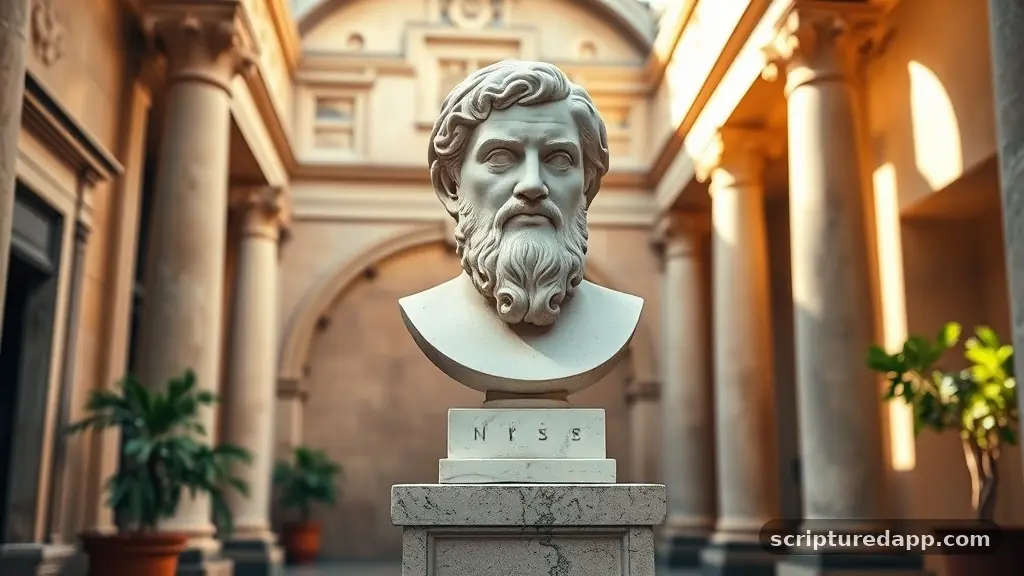
For most students of history, the name immediately calls to mind Lucius Annaeus Seneca, the prominent roman philosopher and statesman. Born in Corduba, Hispania, he became one of the most influential figures of the first century AD.
His writings on Stoicism remain foundational, focusing on the importance of logic, internal discipline, and the rejection of excessive emotional responses to the unpredictable nature of human life. He wasn’t just a thinker; he was a man deep in the political trenches.
His life was defined by his proximity to power, most notably his role as a tutor and advisor to the emperor Nero. This relationship eventually turned sour, leading to a forced suicide that has been debated by historians for nearly two millennia. When people talk about “Seneca” in a literary or philosophical context, they are almost always referring to his moral essays and tragedies.
His plays, in particular, influenced the development of Renaissance drama, leaving an indelible mark on how we think about power, corruption, and the human psyche. His work teaches that we should see our own vulnerabilities as points of strength if we can master our reactions to them.
The Indigenous Perspective: The Seneca People
Shift your focus across the Atlantic and the seneca meaning changes entirely. The Senecas are a member of the Haudenosaunee, or Iroquois Confederacy, one of the oldest participatory democracies on earth. Historically, they were known as the “Keepers of the Western Door,” occupying vast territories in what is now western New York.
Their name for themselves, Onondowahgah, translates roughly to “People of the Great Hill.” The word “Seneca” itself is an exonym, a name given to them by outsiders rather than one they chose for themselves.
Understanding their history requires looking past the dictionary definition. These people developed a sophisticated society based on matrilineal clans, complex agricultural practices, and a diplomatic system that influenced the formation of the United States. They didn’t just survive; they thrived by managing trade routes and political alliances across a massive geographic area.
Their culture is rooted in a deep, spiritual connection to the land, which remains a central pillar of their identity today. When you hear the name in a North American context, it is a testament to resilience and a long-standing, vibrant cultural heritage that persists despite centuries of colonial pressure.
Etymological Roots and Linguistic Origins
Where does the name actually come from? The word has a fascinating etymological path. In the case of the Roman philosopher, the name Seneca is derived from the Latin “senectus,” which means “old age.”
It was a cognomen, a family name that likely indicated a lineage known for longevity or wisdom. It’s a simple, descriptive name that fits well with the gravity of his philosophical contributions. You can find the roots of this name in many Latin-derived languages today, including french, italian, and spanish, where the root relates to the concept of being an elder or an old man.
Conversely, the name given to the North American tribe has a much murkier origin. Many scholars believe the term “Seneca” evolved through a series of mispronunciations and transmutations by Dutch traders and later English settlers. It likely originated from a corruption of an Iroquoian language term used by their neighbors to describe them.
Because there isn’t a single, definitive log of how this specific phonetic shift occurred, linguists often debate the exact point of origin. It is a classic example of how colonial contact reshaped the names of indigenous groups, often obscuring the original, self-identified names in favor of something easier for European tongues to pronounce.
Topical Gaps: Nuances Often Missed
Most resources that discuss the seneca meaning gloss over the crucial distinction between the Roman family name and the indigenous ethnonym. This conflation is a significant oversight. By treating them as a single entity, we lose the historical context that makes both subjects so compelling.
Another gap is the lack of connection between the linguistic evolution of the term and the sociopolitical climate of the 17th-century colonial frontier. We often see lists of facts about the tribe without explaining how the naming convention itself was a tool of colonial mapping.
Furthermore, there is a lack of focus on how the term is currently used in contemporary legal and land-rights discussions. The Seneca Nation is a sovereign entity with its own government and legal system.
When outsiders discuss the “Seneca” without acknowledging their current political status, they reduce a living, breathing nation to a historical relic. It is essential to recognize that the name is not just a label from a com-based search result; it is a legal and cultural designation that carries real-world weight in modern courtrooms and legislative chambers.
Comparative Data on Naming Conventions
To better understand how these two disparate entities share a name, it helps to look at the differences in their societal roles and origins. This table breaks down the core distinctions between the Roman philosopher and the indigenous tribe.
| Category | Roman Philosopher | Seneca Nation |
|---|---|---|
| Origin | Latin (Senectus – Old) | Iroquoian/Exonymic |
| Primary Region | Ancient Rome/Spain | Western New York |
| Historical Scope | 1st Century AD | Pre-Colonial to Present |
| Cultural Impact | Stoic Philosophy/Drama | Haudenosaunee Confederacy |
Stoicism and the Influence of Seneca
The philosophical seneca meaning is inextricably linked to the practice of Stoicism. He wrote extensively on themes like anger, the brevity of life, and the necessity of poverty.
Unlike some philosophers who preferred to keep their distance from the world, he believed that one should participate in society while maintaining an internal detachment. This is why his letters, often addressed to his friend Lucilius, remain so popular; they feel like advice from a mentor who has seen the worst of human nature and still believes in the possibility of virtue.
He argued that we shouldn’t fear death because it is a natural part of the cycle of existence. His advice often centers on being prepared for misfortune before it happens, a concept known as “premeditatio malorum.” By imagining the worst-case scenario, you strip it of its power to paralyze you.
This is a practical, grounded way of living that has seen a massive resurgence in recent years. People are looking for ways to stay calm in a chaotic world, and his traditional approach to self-control provides a framework that is surprisingly compatible with modern psychological techniques.
The Haudenosaunee Confederacy and Governance
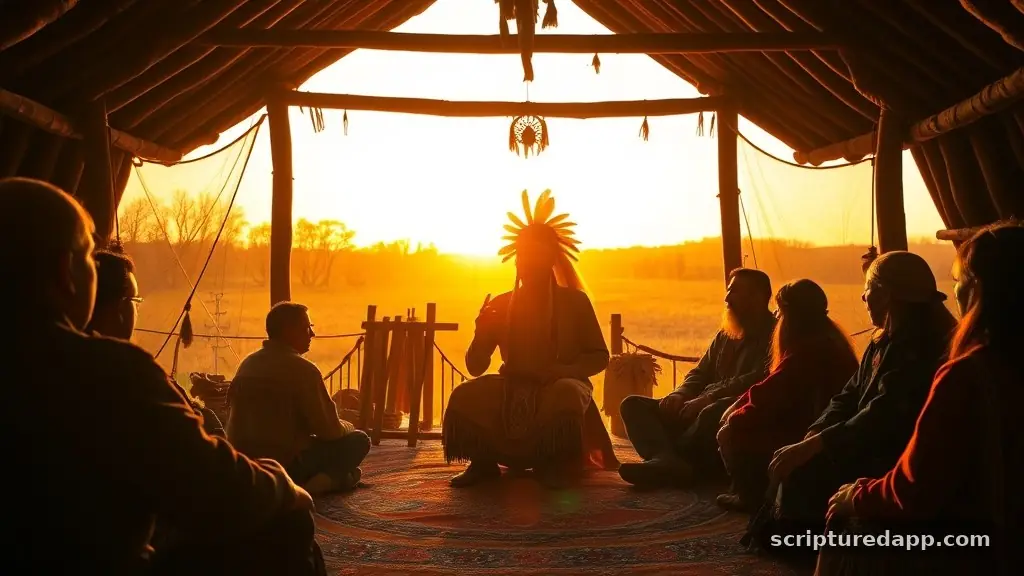
To understand the Seneca people, you have to look at the Great Law of Peace, the founding document of their confederacy. This is one of the most sophisticated systems of governance in human history. It emphasized consensus, the inclusion of women in political decision-making, and the protection of future generations.
The Senecas were a core part of this structure, serving as the defenders of the western border. Their role was to keep the peace and manage the relations between the confederacy and the nations to the west.
This political structure was designed to prevent the kind of infighting that often plagues large groups. By focusing on collective welfare rather than individual gain, they created a stable environment that lasted for centuries.
The influence of this system on early American political thought is well-documented, even if it is often under-credited in standard history textbooks. When we talk about the seneca meaning in this context, we aren’t just talking about a group of people; we are talking about a political philosophy that valued freedom and shared responsibility.
Linguistic Evolution and Cultural Identity
Language is always shifting, and the way we use words reflects our changing values. The English language is full of names that were borrowed, adapted, or simply imposed during the era of exploration.
The name “Seneca” is a perfect example of how an outsider’s label can stick, regardless of whether it accurately reflects the group’s self-perception. It is a reminder that names are often the first thing to be colonized.
In modern times, there is a movement to reclaim indigenous names and ensure they are used correctly. This is part of a broader effort to respect the sovereignty of tribal nations. When we use the term in spoken or written communication, it is important to be aware of the history behind it.
Using a name is an act of identification, and identifying someone correctly is a basic form of respect. Whether you are discussing the Roman writer or the indigenous nation, being specific about who you are referring to is the best way to avoid confusion and demonstrate cultural literacy.
Impact of Geography on Naming
Geography plays a huge role in how the name is perceived. In the Finger Lakes region of New York, there is a Seneca Lake, a Seneca County, and numerous other sites that bear the name.
Locals use it as a matter of course, often without thinking about the underlying history. This geographic ubiquity can sometimes lead to a “geographic erasure,” where the name becomes so associated with a place that the human history behind it is forgotten.
It is important to remember that these places were named by colonial powers, often to mark their own footprint on the landscape. The lakes and rivers were already named by the people who lived there for millennia. When we see the name on a map, it should serve as a prompt to dig deeper into the history of that specific area.
It is a way to bridge the gap between our current surroundings and the deep history that preceded us. By doing this, we move from being passive consumers of labels to active participants in historical awareness.
Philosophy as a Way of Life
Returning to the Roman context, we find that the seneca meaning is also about the idea of philosophy as a therapy. He didn’t write for an academic audience; he wrote for the people who were struggling to live well in a difficult city.
His letters are full of practical advice on how to handle difficult colleagues, how to deal with grief, and how to spend your time wisely. This is why his work is often categorized as self-help, though that term feels too modern and trivial for the depth of his insights.
He was a realist. He knew that people were flawed, that power was corrupting, and that life was inherently fragile. Instead of telling people to be perfect, he told them to be consistent.
He encouraged his readers to track their progress, to reflect on their actions, and to be honest about their shortcomings. This is the core of his seneca meaning: it is not about reaching an ideal state of being, but about the constant, daily effort to live with integrity. It is an active process, not a destination you reach and then stop working.
Global Perspectives on the Name
It is worth considering how the name is viewed outside of North America and Europe. In global intellectual history, the Roman philosopher is a universal figure, studied in universities from Tokyo to Buenos Aires.
His ideas about Stoicism have been adopted and adapted by countless cultures, often integrated into local philosophical frameworks. This universality is a testament to the power of his writing; it speaks to the fundamental human experience of struggle and the desire for peace of mind.
Meanwhile, the history of the Seneca people is increasingly being recognized as a vital part of global indigenous studies. There is a growing interest in how traditional ecological knowledge and democratic governance can offer solutions to contemporary global problems.
By studying both, we get a complete picture of the human capacity for wisdom and organization. It shows us that whether we are looking at an ancient empire or a modern nation, the core human concerns—how we live together, how we manage our emotions, and how we relate to the land—remain remarkably consistent across time and space.
The Importance of Context
If you take anything away from this, let it be that context is everything. You cannot approach the seneca meaning with a one-size-fits-all definition. You have to ask yourself: “Am I in a history class, a philosophy seminar, or a geography lecture?”
The word is a shell that holds different contents depending on where you place it. This is true for many historical terms, but it is especially pronounced here, where two entirely unrelated traditions have been brought together under the same phonetic umbrella.
By being mindful of this, you avoid the trap of oversimplification. You also show respect for the distinct legacies of both the Roman writer and the Haudenosaunee nation. It is a small but important step in becoming a more precise and empathetic thinker.
We should always be curious about the origins of the words we use, especially when those words carry the weight of entire cultures and lifetimes of thought. For a deeper dive into the historical records of the indigenous peoples in the region, you can consult the National Park Service resources on tribal history.
Frequently Asked Questions
Is the name Seneca originally Roman or Indigenous?
The name has two separate origins. It is a Roman cognomen derived from the Latin word for “old age,” and it is also an exonym (an outsider’s name) for the Haudenosaunee people in North America, which likely evolved from a mispronounced term used by neighboring groups.
What does the philosopher Seneca teach?
He taught Stoicism, focusing on internal discipline, the acceptance of fate, and the importance of living in accordance with reason. His work emphasizes maintaining emotional equilibrium in the face of political corruption, personal loss, and the unpredictable nature of life.
Why are the Seneca people known as Keepers of the Western Door?
This title refers to their geographical position within the Iroquois Confederacy. Located in the western part of the territory, they were responsible for guarding the western boundary, managing diplomacy, and protecting the confederacy from external threats coming from that direction.
Are there modern descendants of the Seneca?
Yes, the Seneca Nation is a sovereign indigenous government based in western New York. They maintain their language, culture, and political autonomy, operating as a modern tribal nation while preserving their traditional heritage and history within the Haudenosaunee Confederacy.
Meta Description: Discover the true seneca meaning by exploring the history of the Roman philosopher and the indigenous Seneca people in this detailed, nuanced guide.