

The primary difference between a useful tool and a frustrating paperweight is the optical quality paired with a stable mount. I have analyzed these National Geographic options by weighing buyer feedback against technical specifications to clarify which models are worth your time. In my view, selecting the right telescope depends entirely on your patience for setup. Let us examine how these seven models rank from basic curiosities to serious stargazing instruments.
1. National Geographic Directional STARAPP 70mm Telescope Fully Coated Glass Optics – Adjustable Height Tripod – Bonus Astronomy App

This model earns its spot because of the integrated app connectivity, which acts as a digital roadmap for your evening. It is a fantastic choice if you want to eliminate the guesswork that usually plagues beginners.
I find the app integration to be a clever solution for those who are easily intimidated by the night sky. While the optics are sufficient for lunar viewing, you should not expect professional planetary detail.
Users appreciate the guided navigation provided by the companion app.
The 70mm aperture provides a decent light-gathering capacity for beginners.
The tripod height is adjustable for different ages.
Get It From Amazon Now: Check Price on Amazon & FREE Returns
2. National Geographic 70mm Astronomical Refractor Telescope | Adjustable Tripod, Smartphone Adapter, For Young Astronomers, For Adult Sky Watchers

This telescope is best suited for the general hobbyist who wants a straightforward instrument for backyard observations. It offers a classic refractor design that appeals to those who prefer traditional manual control over complex digital interfaces.
I think this is the most reliable option for families who want to spend time outdoors without needing a degree in physics. The included smartphone adapter is a nice touch for capturing snapshots of the moon.
The mount is intuitive for those new to manual tracking.
It includes the necessary accessories to start viewing immediately.
Buyers often highlight the convenience of the included smartphone mount.
Get It From Amazon Now: Check Price on Amazon & FREE Returns
3. National Geographic 70Mm Refractor Telescope by Explore Scientific – Computerized Telescope For Adults – Automatic Telescope with Telescope Tripod Stand – Telescopes For Astronomy Beginners

The most surprising feature here is the automatic tracking motor, which keeps objects centered as the earth rotates. Once you align the computer, it does the heavy lifting, which effectively turns a complex hobby into a relaxed activity.
This is my number one recommendation for a serious beginner because it removes the steep learning curve of manual navigation. It is truly the best balance of technology and accessibility in this lineup.
The motorized mount is the standout feature for long viewing sessions.
It provides a more precise experience than manual mounts.
The computer system simplifies the process of locating celestial objects.
Get It From Amazon Now: Check Price on Amazon & FREE Returns
4. National Geographic 50mm Refractor Telescope for Kids and Beginners | Tripod mount, 2 eyepieces, star diagonal, 360mm focal length, moon and nature viewing, beginner astronomy

A common limitation reported by buyers is the instability of the tripod during breezy nights. While it is certainly not a high-end observatory tool, it remains a charming entry point for young children interested in the moon.
I would suggest keeping expectations realistic, as the 50mm lens is quite small. However, for a young child, it serves as a perfect introduction to the basics of optics.
The small size makes it manageable for younger users.
It includes two different eyepieces for varying levels of magnification.
The 360mm focal length is suited for wide-field lunar observations.
Get It From Amazon Now: Check Price on Amazon & FREE Returns
5. National Geographic 76MM Compact Reflector Telescope

This model offers a slightly more robust light-gathering ability than the 50mm refractor mentioned above, yet it maintains a similar footprint. It is a step up for those who want a wider view of the heavens while staying within a portable form factor.
I admire how this design condenses a reflector system into a small space. It is a solid choice for someone who prioritizes compact storage without sacrificing all optical power.
The 76mm mirror provides a brighter image than smaller refractors.
Its compact design is frequently praised by those with limited storage.
It is easy to transport for weekend trips.
Get It From Amazon Now: Check Price on Amazon & FREE Returns
6. National Geographic 114Eq Telescope

This telescope became popular due to its large aperture, which theoretically allows for better deep-sky viewing. In practice, I find that while it gathers plenty of light, the equatorial mount requires a fair amount of mechanical adjustment.
The reputation for deep-sky performance is well-earned, though you must be prepared to learn how to balance the mount properly. It is a powerful tool for those who are ready to move past basic lunar gazing.
The 114mm aperture is significantly better for faint objects.
The equatorial mount is preferred for tracking objects across the sky.
Buyers note that assembly requires some patience and attention to detail.
Get It From Amazon Now: Check Price on Amazon & FREE Returns
7. Explore Scientific National Geographic 50Mm Telescope for Kids Table Top Telescope Mount – Kids Portable Telescope with Compact Telescoping Tripod – Telescopes for Astronomy Beginners
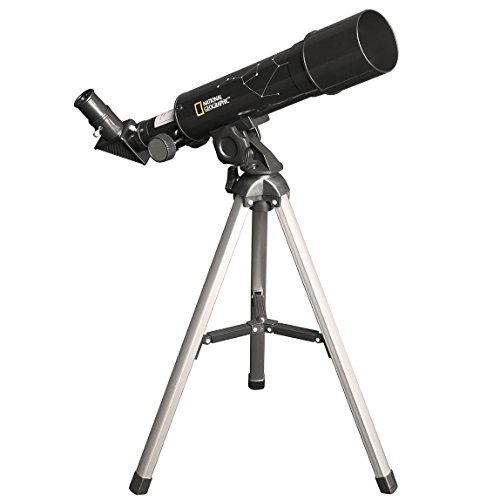
The single biggest strength of this unit is its tabletop portability, which allows you to set up on any patio or balcony surface. It earned its ranking by solving the issue of bulky, awkward tripods that take up too much floor space.
I find this to be an ideal candidate for casual, last-minute viewing sessions. It is simple, effective, and does not require you to haul heavy equipment outside.
The compact mount is ideal for small balconies or decks.
It is very easy to store in a closet when not in use.
The optics are designed specifically for simple, entry-level stargazing.
Get It From Amazon Now: Check Price on Amazon & FREE Returns
Choosing Between Them
For the app-guided stargazer, the STARAPP model is excellent, while the general hobbyist will appreciate the standard 70mm refractor. My top pick is the National Geographic 70mm Computerized Telescope, as it provides the most satisfying experience for the serious beginner who wants to see results without constant manual adjustments. The 114Eq is best for those seeking deep-sky performance, whereas the 50mm tabletop unit serves as the most convenient choice for casual, quick sessions.
Please remember that even with the best equipment, atmospheric conditions play a massive role in what you can actually see. Entry-level optics often require a bit of patience and practice to master, so do not feel discouraged if your first view of a planet is smaller than the pictures on the box. Enjoy the process of learning the night sky, and you will find these tools to be rewarding companions for many years.
As an Amazon Associate, this site earns from qualifying purchases. Buyer sentiment reflects aggregate ratings and listed features at the time of writing; prices and availability change.