
Language is a dynamic landscape, and understanding the precise hurtle meaning is essential for anyone looking to refine their vocabulary or improve their descriptive writing. At its core, the verb “hurtle” conveys a sense of rapid, often violent or uncontrolled motion.
When an object or person is described as hurtling, they are not merely moving; they are traveling with significant speed and force, often creating a sense of urgency or impending impact. Distinguishing between this term and its near-homophone, “hurdle,” is a common challenge for many speakers and writers, making it a perfect subject for a deep dive into English semantics and etymology.
The Etymological Roots of Hurtle

To truly grasp the hurtle meaning, one must look back at its origins. The word evolved from the Middle English hurtelen, which carried connotations of striking or colliding. Its roots are tied to the Old French hurter, meaning to strike, ram, or collide.
This historical context is vital because it explains why the modern usage of the word often carries a hint of danger or lack of control. Unlike a word such as “sprint” or “dash,” which implies a purposeful, controlled human effort, “hurtle” suggests a physical momentum that might be difficult to stop.
Historically, the word has been used to describe the chaotic clashing of armored knights in battle or the forceful movement of objects in a storm. Over time, the definition shifted slightly to emphasize the movement itself rather than just the impact.
Today, when we say something has hurtled through the air, we are focusing on the velocity of its journey. This evolution highlights how languages adapt; we have taken a term that once specifically meant “to clash” and repurposed it to describe the high-speed transit of cars, debris, or even metaphorical concepts like the passage of time.
Differentiating Hurtle from Hurdle
One of the most frequent sources of confusion involves the distinction between hurtle and the hurdle noun. While they share a phonetic similarity, their definitions and grammatical applications are entirely different. A hurdle is a barrier, either physical or metaphorical, that one must jump over or overcome.
When used as a verb, to hurdle means to leap over an obstacle. In contrast, hurtle describes the act of moving at high velocity.
To avoid confusion, remember that “hurtle” is almost exclusively a verb associated with motion, whereas “hurdle” serves as both a noun (the obstacle itself) and a verb (the act of clearing that obstacle). If you are writing a sentence and find yourself wondering which to use, ask yourself if the subject is jumping over something or traveling at a high rate of speed. If they are jumping, use “hurdle.”
If they are zooming past a stationary point, “hurtle” is the correct choice. This distinction is crucial for maintaining clarity in professional and creative communication.
Grammatical Classification: Transitive vs Intransitive
In the study of English grammar, understanding whether a verb is transitive or intransitive is key to proper usage. Hurtle is primarily an intransitive verb, meaning it does not require a direct object to complete its meaning.
For example, you might say, “The rock hurtled through the air.” Here, the rock is the subject, and the motion is directed through space without acting upon an object in the direct sense.
However, the dictionary definition occasionally allows for transitive usage in archaic or specialized contexts, where one might “hurtle” something (meaning to hurl or cast it). In modern standard English, this is rare and often considered non-standard.
Most speakers and writers will find that “hurtle” flows most naturally when describing the subject’s own movement. Whether you are describing kids playing in a park who hurtled through the playground or a sports car that rushed down the highway, the intransitive construction remains the standard approach for ensuring your writing is both accurate and readable.
Descriptive Power in Creative Writing
When you want to convey a sense of chaos or rapid progression, “hurtle” is a powerful tool in your literary arsenal. Because the meanings associated with the word include a lack of total control, it is often more evocative than simpler verbs like “run” or “fly.”
If you describe a character who has hurtled into a room, the reader immediately senses that the entry was not calm or measured. It implies a sense of urgency, perhaps even panic or intense excitement.
Consider the difference in impact between these two phrases: “The car moved down the road” versus “The car hurtled down the road.” The latter immediately creates a vivid, cinematic image. It suggests that the car is moving so fast that it seems to be defying the usual constraints of the road.
Using this word effectively is about selecting the right context where speed and potential instability are the primary themes. It allows the writer to show rather than tell, providing the reader with a visceral experience of the scene.
Comparing Velocity Verbs
To understand the specific niche that “hurtle” occupies, it helps to compare it to other verbs of motion. Each word carries a subtle nuance that changes the tone of the sentence. The following table provides a breakdown of how “hurtle” compares to similar terms in common usage.
| Verb | Primary Nuance | Common Context |
|---|---|---|
| Hurtle | High speed, lack of control | Falling objects, chaotic movement |
| Dash | Purposeful, human effort | Running to catch a train |
| Race | Competition, high speed | Vehicles or athletes in a contest |
| Rush | Urgency, haste | Completing a task quickly |
| Zoom | High speed, often noisy | Small vehicles or insects |
As seen in the table, the hurtle meaning is distinct because it lacks the element of competition found in “race” and the element of intentionality found in “dash.” It is a raw expression of kinetic energy.
Hurtle in Modern Media and Communication
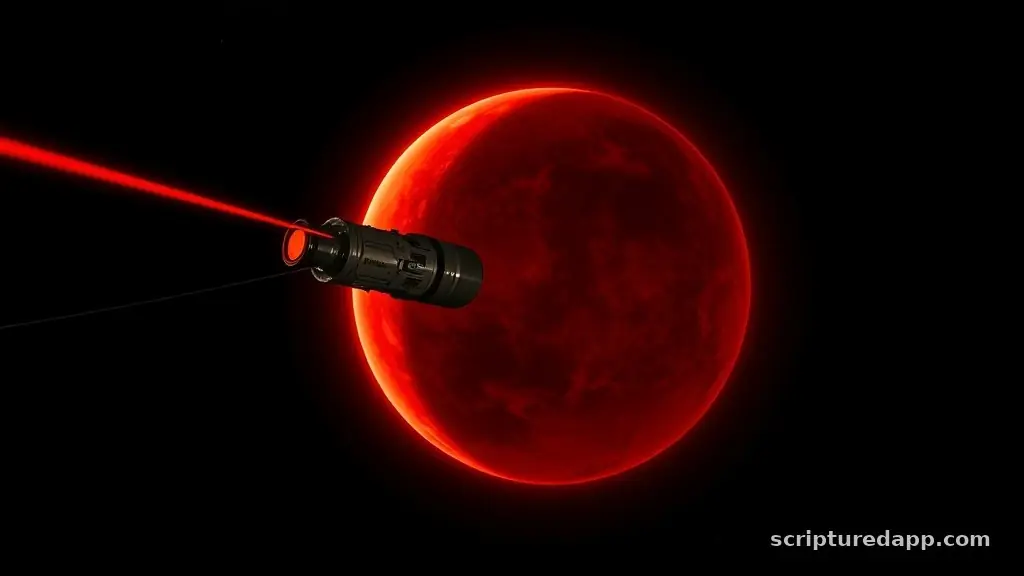
In contemporary journalism and digital content, “hurtle” is frequently used to describe high-stakes scenarios. You might see headlines stating that a country’s economy is “hurtling toward a recession” or that a space probe is “hurtling through the solar system.”
These usages highlight the word’s ability to convey a sense of inevitability. When something is hurtling, it is on a path, and that path is being traversed with such intensity that the outcome feels predetermined or imminent.
Interestingly, the word is also used in casual conversation, though less frequently than in formal writing. You might hear someone say, “I hurtled across the room to catch the phone before it fell.”
While this is a slight hyperbole—since the person is likely moving quickly but with control—it serves to emphasize the desperation of the moment. This demonstrates how the word has migrated from its rigid, physical definition to one that can be used for dramatic effect in everyday speech.
Common Collocations and Usage Patterns
When using this word, certain prepositions tend to follow it naturally. “Hurtle through” is arguably the most common collocation, as it emphasizes the medium or space through which the subject is traveling. “Hurtle down” is also frequently used, particularly when describing movement along a path, such as a street, a mountain, or a hallway.
* Hurtling toward an object or destination (emphasizing the target).
* Hurtling through space or a medium like air or water.
* Hurtling down a track, road, or incline.
* Hurtling past a stationary point, such as a bystander or a landmark.
By mastering these collocations, you can ensure that your use of the word sounds natural and authoritative. When you get the preposition right, the image of the movement becomes much clearer to the reader. It is not just about the speed; it is about the trajectory and the environment in which that speed is occurring.
Addressing Topical Gaps: Hurtle as a Metaphor
A common gap in existing explanations of this term is the lack of focus on its metaphorical utility. Many sources focus solely on physical objects, but the hurtle meaning is frequently applied to abstract concepts. For example, we often speak of “hurtling toward a deadline” or “hurtling into the future.”
In these instances, the “speed” is not literal, but the sense of urgency is very real. This metaphorical usage allows speakers to describe the feeling of being overwhelmed by the pace of modern life.
When a project is “hurtling toward completion,” it implies that the momentum is now so great that the project is almost finished whether we like it or not. This is a subtle but important distinction from “racing toward completion,” which implies active effort.
If you are looking to add depth to your writing, consider using “hurtle” to describe the momentum of social trends, technological advancements, or personal life transitions. It captures the essence of being swept along by forces that are moving faster than our ability to react.
Pronunciation and Phonetic Nuances
The pronunciation of “hurtle” is straightforward, but it is often misspoken by those who confuse it with “hurdle.” The “t” sound in “hurtle” is sharp and crisp, reflecting the suddenness of the movement it describes.
In contrast, the “d” sound in “hurdle” is softer and more resonant. For those learning English as a second language, practicing the difference between the “t” and “d” sounds in these two words is a classic exercise in phonetic clarity.
You can find official audio guides and pronunciation keys on platforms like Merriam-Webster, which provides comprehensive entries on these terms. Mastering the correct pronunciation not only improves your speaking confidence but also reinforces the cognitive link between the word and its intended meaning. When you hear the word spoken correctly, the sense of “sharp, sudden movement” becomes easier to associate with the “t” sound, helping to solidify the definition in your memory.
The Importance of Contextual Accuracy
Ultimately, the key to using “hurtle” correctly lies in the context. Because it is a strong, evocative verb, it should be used sparingly.
If you use it in every sentence describing motion, the impact is diluted. Instead, save it for those moments where the motion is truly significant—where the speed is high, the movement is potentially dangerous, or the momentum is unstoppable.
If you are describing a person walking, “hurtle” would be an incorrect choice. If you are describing a falling star, a runaway train, or a sudden, panicked movement, it is the perfect selection.
Always check that your subject is capable of such speed. By being mindful of these nuances, you elevate your writing from simple communication to a display of linguistic precision that resonates with your audience.
FAQ
What is the core difference between hurtle and hurdle?
The primary difference is that hurtle describes rapid, often uncontrolled motion, while hurdle refers to an obstacle or the act of jumping over one. They are distinct in meaning and usage, despite their similar sound.
Can I use hurtle to describe a person walking?
No, using “hurtle” to describe walking would be incorrect and confusing. Hurtle implies high speed and often a lack of total control, which contradicts the nature of walking. Use “dash,” “hurry,” or “stride” for faster walking speeds.
Is it ever correct to use hurtle as a noun?
In modern standard English, “hurtle” is almost exclusively used as a verb. While some older texts might have used it differently, you should avoid using it as a noun to ensure clarity and adherence to contemporary grammatical standards.
Why does hurtle imply a lack of control?
The etymology of the word, which relates to striking or colliding, gives it a connotation of chaos. Unlike “sprint,” which is an athletic, controlled movement, “hurtle” suggests a force that is moving so quickly that it might strike something, making it feel less deliberate.
Meta Description: Discover the precise hurtle meaning. Learn the difference between hurtle and hurdle, how to use it in a sentence, and its nuances in creative writing.