
The term “hoe” is a fascinating example of how a single word can evolve across centuries, shifting from a fundamental agricultural implement to a complex piece of modern slang. Understanding the hoe meaning requires looking at both its literal, physical roots in farming and its metaphorical, often controversial, evolution in popular culture.
At its core, the word represents a bridge between manual labor and linguistic adaptation, reflecting how human society projects meaning onto simple objects and concepts over time. Whether you are interested in the history of gardening tools or the nuances of contemporary English vernacular, the term offers a rich study in semantic shifts.
The Agricultural Origins of the Hoe
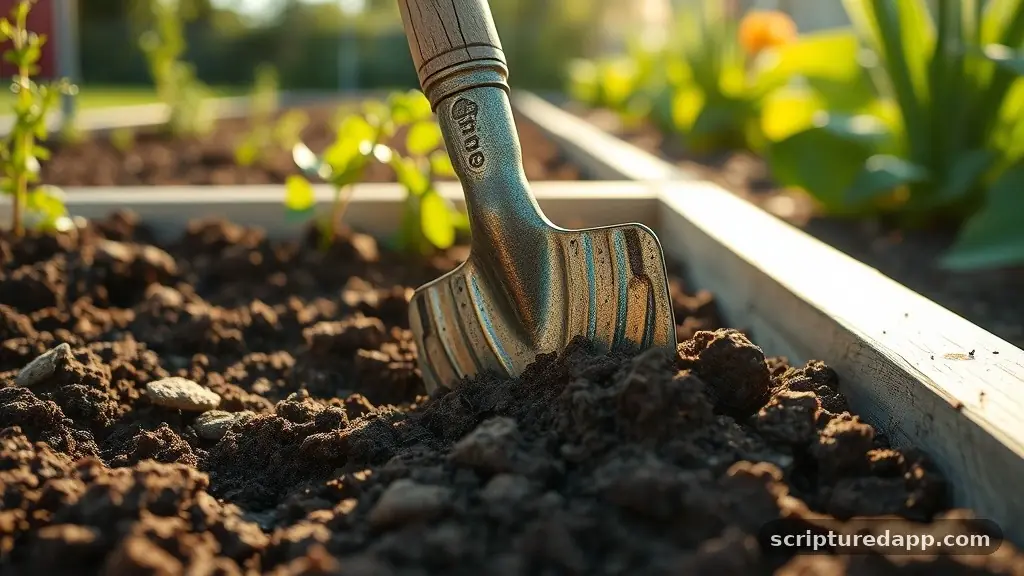
In its most literal and historical sense, a hoe is a hand tool used for the cultivation of soil. Its primary function involves the movement of dirt to control weeds, clear soil, or create mounds for planting crops. The physical design of a hoe typically consists of a long handle attached to a flat, often metal, blade.
This blade is angled to allow the user to scrape the surface of the earth or chop into the ground with minimal effort. The act of hoeing has been a cornerstone of human agriculture for thousands of years, dating back to the Neolithic period.
Before the advent of mechanized farming, the hoe was the primary tool for small-scale farmers and gardeners. It allowed individuals to perform essential tasks like aerating the soil and removing invasive plants that would otherwise compete with crops for water and nutrients.
Because the tool required significant physical exertion, it became deeply embedded in the cultural consciousness as a symbol of hard, honest, and manual work. Historically, one could see the tool used across nearly every civilization, from ancient Egypt to the Americas, where variations like the “coa” were used by indigenous populations.
Linguistic Evolution and the English Language
The word “hoe” itself has a clear etymological path in the English language. It derives from the Middle English “howe,” which traces back to the Old French “houe,” likely of Germanic origin.
This linguistic trajectory highlights how basic tools often carry their names across borders and eras. When linguists study the definition hoe, they focus on how the sound and spelling remained relatively stable while the connotations shifted.
Over time, as farming practices modernized, the tool became less central to daily survival for the average person, yet the word remained common. It is in this transition—from a ubiquitous tool to a more specialized implement—that the word became available for repurposing in slang and colloquialisms.
The shift from a physical object to a term of social commentary is a common occurrence in language evolution. By examining the dictionary entries for the term, one can observe how lexicographers have had to balance the technical, agricultural definition with the informal, often derogatory, slang usage that has gained prominence in the 21st century.
The Modern Slang Context
In contemporary popular culture, the hoe meaning has taken on a significantly different, often contentious, layer of interpretation. When used as slang, the term is a pejorative reference to a person, typically a woman, characterized by perceived promiscuity.
This usage is heavily prevalent in hip-hop music, social media, and casual conversation. Unlike the agricultural tool, which represents utility and grounding, the slang term is used to police or criticize social behavior.
This evolution is a stark example of how words can be reclaimed or weaponized. Within certain subcultures, some individuals have attempted to reclaim the term, stripping it of its derogatory power, though it remains widely considered offensive in general discourse.
The tension between these two meanings—the helpful tool and the insulting label—creates a complex semantic environment. When you search for the term online, you are often met with a mixture of gardening advice and urban slang, illustrating the vast divide between the two distinct applications of the word.
Comparing Agricultural and Slang Definitions
To better understand how these two usages coexist, it is helpful to look at the differences in context, intent, and impact. The agricultural usage is descriptive and neutral; the slang usage is evaluative and often aggressive. The following table provides a breakdown of how the word functions in these two distinct spheres.
| Feature | Agricultural Context | Slang Context |
|---|---|---|
| Origin | Ancient farming practices | Urban vernacular/social commentary |
| Primary Function | Cultivating soil/weed control | Social labeling/insult |
| Tone | Objective and technical | Subjective and derogatory |
| Evolution | Stable, historical | Fluid, culturally dependent |
This comparison highlights why the term can be so confusing for non-native speakers or those unfamiliar with the cultural nuances of American English. The word is essentially a homophone that carries entirely different emotional weights depending on the setting in which it is spoken.
The Role of Media and Digital Platforms
Platforms like YouTube and various social media sites have played a significant role in the proliferation of the slang usage. Because digital communication often favors short, punchy, and provocative language, the slang version of the term has found a permanent home in online discourse. When a video or a meme features the word, it almost exclusively refers to the social label rather than the gardening tool.
Furthermore, the internet has accelerated the spread of this term across global borders. Where once the slang usage might have been confined to specific regional dialects in the United States, it is now recognized worldwide.
This global reach often leads to misunderstandings, as international users may encounter the term in music or film without understanding the loaded social history attached to it. The digital age has essentially forced the two meanings into closer proximity, making it essential for users to be aware of the context before using the word in any natural conversation or written email.
Addressing Topical Gaps: Why Is the Meaning So Polarized?

A common gap in existing articles on this topic is the failure to explain why the term became so polarized. The polarization stems from the intersection of class and gender.
Historically, the agricultural hoe was a tool of the working class. When the term was eventually repurposed as a slur, it retained a class-based undertone, often used to dismiss or denigrate women who were perceived as violating social norms regarding sexuality.
To bridge this gap, it is important to recognize that the word functions as a reflection of societal values. In the early 20th century, the term was largely absent from the derogatory lexicon of the general public. Its rise in popularity corresponds with the rise of mass media, where labels could be broadcast to millions.
By understanding this, we can see that the word itself is not “bad”; rather, the usage of the word is tied to the intent of the speaker. Educators and linguists often emphasize that context is the ultimate arbiter of meaning, a principle that applies perfectly to the dual nature of this term.
Proper Usage and Etiquette
Given the highly charged nature of the slang version, it is generally wise to exercise extreme caution. In professional or academic settings, the term should be used only in its agricultural or literal context.
If you are discussing gardening or history, there is no need to avoid the word, as its utility in those fields remains essential. However, using the word in a social context can lead to immediate offense and misunderstanding.
If you are looking to choose the right word in casual conversation, it is often better to opt for more neutral language unless you are specifically referencing the tool. The risk of the slang meaning being inferred by your audience is high, and the potential for misinterpretation can damage relationships or professional credibility.
When in doubt, stick to descriptive language that avoids the ambiguity inherent in the term. For those interested in the historical development of language, you can find more information on the evolution of terminology through the Online Etymology Dictionary, which provides scholarly insights into word origins.
Common Variations and Misconceptions
There are several misconceptions regarding the term. One is that “hoe” is a misspelling of another word, such as “ho,” which is also used in slang. While they are often used interchangeably in modern text, they have different roots.
“Ho” is frequently treated as a shortening of “whore,” whereas “hoe” is a direct lift from the agricultural tool. This distinction is often lost in digital text, where phonetic similarity leads to orthographic confusion.
Another common issue is the phrase “hoe hoe,” which sometimes appears in internet searches. This is usually a result of phonetic repetition or, in some cases, a reference to seasonal imagery or musical lyrics that play on the sound of the word.
It is rarely a standard term and should be treated as an anomaly rather than a recognized linguistic construction. Understanding these nuances helps in navigating the confusing landscape of online search results, where bots and algorithms often group unrelated meanings together based on simple keyword association.
The Impact of Manual Labor on Language
It is worth reflecting on why a farming tool became the root of such a loaded term. Language often draws from the tangible world to describe the intangible.
Just as we use metaphors like “plowing through work,” the idea of “hoeing” was once deeply connected to the rhythm of the seasons and the effort of survival. When people began using the word to describe human behavior, they were essentially stripping the tool of its utility and applying the action of the tool—digging, clearing, or working—to a person.
This process of metaphorical extension is how most languages develop. However, when the metaphorical extension becomes more popular than the original meaning, the original meaning risks being forgotten or obscured.
The fact that the agricultural meaning is still widely taught in schools and used in gardening circles is a testament to the persistence of physical culture in the face of digital slang. It serves as a reminder that the most “popular” usage of a word is not always its most historically significant or accurate one.
Navigating Future Semantic Shifts
As language continues to evolve, the hoe meaning may shift yet again. We are currently in a period where many words that were once considered derogatory are being reclaimed or retired in favor of more inclusive language. It is possible that the slang usage will eventually fade, or perhaps it will become so detached from its roots that the word loses its offensive weight entirely.
For now, the best approach is to remain aware of the duality. By recognizing both the historical importance of the tool and the contemporary sensitivity of the slang, you can navigate conversations with greater awareness.
The word is a perfect case study for the hard work of communication: it requires us to be attentive to the speaker, the context, and the shared history of the language we use. As we look ahead, the way we use such words will continue to be a mirror for the changing values of our society.
Frequently Asked Questions
What is the literal meaning of hoe?
The literal meaning of the word refers to a long-handled agricultural tool used for weeding, loosening soil, and shaping the earth around plants. It has been a fundamental implement in farming and gardening since the earliest periods of human agriculture, serving as a primary tool for crop cultivation.
How do I use the word hoe in a sentence correctly?
To use the word correctly in a neutral context, you should focus on its agricultural function. For example, you might say, “I used a garden hoe to clear the weeds from the vegetable patch.” This usage is clear, descriptive, and avoids the controversial slang connotations entirely.
Why is the term considered offensive in some contexts?
The term is considered offensive because it has evolved into a pejorative slang label used to disparage individuals, particularly women, based on their perceived sexual behavior. This usage is derogatory and is often associated with social shaming, which is why it should be avoided in most social settings.
Is there a difference between hoe and ho?
While the two are often used interchangeably in casual digital text or pop culture, they have different origins. “Hoe” is the actual agricultural tool, whereas “ho” is frequently used as a phonetic shorthand for a derogatory term for a person. In formal writing, the distinction is important to maintain.
Meta Description: Explore the dual nature of the term hoe, covering its origins as an essential agricultural tool and its evolution into modern, often controversial, slang.