
The term habibti meaning is a frequent point of curiosity for those encountering Arabic for the first time. At its core, the word is a term of endearment used primarily to address a female. If you have ever spent time in the Middle East or interacted with Arabic speakers, you have likely heard this melodic phrase floating through conversations.
It carries a warmth that is hard to translate directly into English, as it functions as a social lubricant, a sign of affection, and a way to establish immediate closeness. Understanding the context of this word is key to using it correctly without crossing social boundaries.
The Linguistic Roots and Translation

To grasp the habibti meaning, one must look at the Arabic root H-B-B, which relates to love and affection. The word itself is a derivation of “habib,” which translates to “beloved” or “my love.” When you add the “ti” suffix, you are effectively feminizing the term, making it specific to a female recipient.
Think of it as the feminine counterpart to “habibi,” which is used for males. It is a classic example of how Arabic morphology allows for highly specific, personalized address.
Grammatically, it is a possessive construction. “Habib” is the noun for beloved, and the “i” suffix indicates “my.” The “ti” suffix then marks the gender of the person being addressed as female.
Therefore, the literal translation is “my beloved” or “my dear,” but its functional usage is far broader than a direct translation suggests. You might hear it used between mothers and daughters, between close female friends, or even by a shopkeeper addressing a female customer to create a sense of rapport. It is a word that softens the edges of a conversation, turning a transaction or a brief interaction into something more human and connected.
Difference Between Habibi and Habibti
People often confuse the two, but the distinction is vital for accurate communication. Habibi is the masculine form, while habibti is strictly used for the female gender. In the Arab world, failing to distinguish between the two can occasionally lead to awkward, though rarely offensive, misunderstandings.
It is not just about grammar; it is about acknowledging the identity of the person you are speaking with. Using the correct gendered term shows that you have paid attention to the nuances of the Arabic language.
While men can use habibti to address their wives, daughters, or sisters, they would never use it to address another man. Conversely, women use the term with other women quite freely. It is a staple in the vocabulary of women across the Arab world.
When you are learning to say these terms, focus on the placement of the stress, which usually falls on the second syllable. Practicing the pronunciation helps you transition from sounding like a tourist to sounding like someone who respects the local culture and its linguistic traditions.
Contextual Usage in Daily Life
The use habibti is not limited to romantic relationships. In fact, it is arguably used more often in non-romantic contexts. You will hear it in marketplaces, at family dinners, and during casual phone calls between friends.
It signals a level of intimacy or, at the very least, a desire to be friendly. When someone says it to you, they are essentially lowering the barriers of formality. It is a way of saying, “I am speaking to you with kindness.”
Consider the scenario of a neighbor greeting another. If they are close, the term adds a layer of warmth that “hello” or “good morning” lacks. However, context is everything.
If you are in a professional setting, such as a high-stakes business meeting, using such an informal term might be considered inappropriate. It is best reserved for settings where personal connection is the priority. Always gauge the level of familiarity before tossing it into a sentence, as being overly familiar with a stranger can sometimes be misconstrued, even if your intentions are perfectly pure.
Cultural Significance and Social Bonding

In many Arab cultures, communication is high-context. This means that the words themselves are only part of the message; the relationship between the speaker and the listener matters just as much. Habibti serves as a tool for building these bonds.
By using it, you are aligning yourself with a culture that values communal ties and the expression of care for one’s loved ones. It reinforces a sense of belonging.
The frequency with which it is used reflects the general warmth found in many Middle Eastern societies. It is not uncommon for teachers to use it with students, or for older women to use it with younger ones in a protective, mentorship-like capacity. It essentially functions as a social glue.
When you use it correctly, you are participating in a tradition of kindness that spans centuries. It is a way to bridge the gap between “I” and “you,” creating an “us” instead. This is why it remains one of the most enduring words in the region.
Topical Gaps: Nuances Often Ignored
Most resources focus on the romantic aspect of the word, but there is a significant gap in how it is used to express empathy during difficult times. When a friend is going through a loss or a hardship, the way someone uses the word changes. It becomes softer, more elongated, and carries a weight of genuine support.
This is a subtle nuance that is rarely captured in dictionaries but is immediately felt by native speakers. It is a form of emotional shorthand that signals, “I am here for you.”
Another often ignored aspect is the regional variation in how the word is pronounced. While the standard Arabic pronunciation is consistent, local dialects—or ‘ammiya’—can shift the sound slightly. In some regions, the final ‘i’ might be dropped or shortened, depending on the speaker’s accent.
Furthermore, the term is sometimes used ironically or sarcastically in very specific, playful contexts between close friends, which is a layer of meaning that is almost never documented in formal guides. Recognizing this sarcasm requires a deep understanding of the local social landscape.
Habibti in Family Dynamics
Within the family, the term is ubiquitous. A mother will almost always address her daughter as “habibti.” It is a term of protection and deep, unconditional love.
Fathers also use it, though they might lean more toward “habibi” for their sons. The dynamic between family members is strengthened by these small, constant verbal affirmations. It is a way of maintaining an emotional tether, even when distance separates family members.
When you see siblings interacting, you might hear it used to negotiate, to comfort, or even to tease. It is part of the domestic soundtrack of many households. Because it is so ingrained in childhood, it carries a sense of nostalgia for many people.
Hearing the word can instantly transport an adult back to their childhood home, surrounded by the care of their parents. It is a powerful linguistic anchor that ties personal history to the present moment.
Table: Common Terms of Endearment in Arabic
| Term | Literal Meaning | Typical Usage |
|---|---|---|
| Habibi | My beloved (masculine) | Male friends, partners, family |
| Habibti | My beloved (feminine) | Female friends, partners, family |
| Hayati | My life | Deeply loved ones |
| Ya Rouhi | My soul | Extreme affection |
The Role of Gender and Social Hierarchy
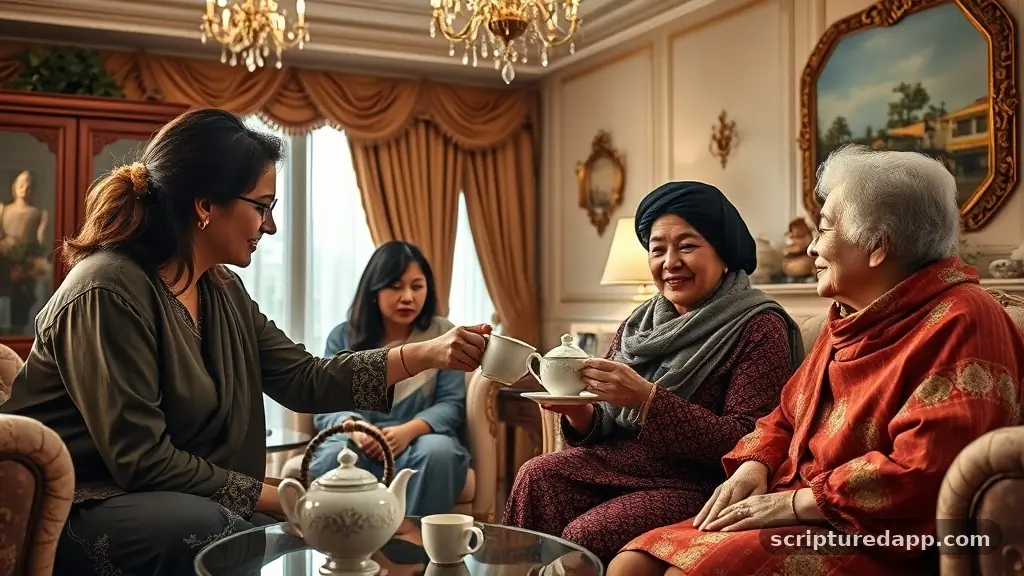
The habibti meaning is inextricably linked to the social hierarchy of the region. While it is a term of affection, it also acknowledges the gender roles that have historically shaped Middle Eastern society.
Because it is specifically for women, it is used to affirm the feminine presence in a conversation. In older, more conservative settings, a man might address a woman as “habibti” to show respect and familial-style care, effectively placing her within the circle of people he protects.
However, modern usage is evolving. As women gain more autonomy and public space in the Arab world, the term is increasingly used in professional and social settings among peers. It is no longer just a word used by men to address women; it is a word used by women to address each other as equals.
This shift reflects broader societal changes. It shows that the language is not static; it grows and adapts alongside the people who speak it. The term remains a constant, but the power dynamics behind its usage are becoming more balanced.
Common Mistakes to Avoid
If you are not a native speaker, there are a few pitfalls to watch out for. The most common mistake is using it with someone you have only just met in a formal setting. While the intent is friendly, it can come across as overly intrusive.
Another mistake is using it as a filler word in English sentences, which can strip it of its cultural weight and make it sound like a caricature. It is better to use it sparingly and with intention.
Always consider the religion and cultural background of the person you are speaking with. While it is widely used by Muslims and Christians alike in the Arab world, there are some ultra-conservative circles where any term of endearment between unrelated men and women is avoided. In such cases, sticking to formal address is the safer, more respectful route.
Understanding the cultural pulse of your environment is just as important as knowing the dictionary definition. For more information on the complexities of linguistic cultural exchange, you can look into UNESCO’s work on linguistic diversity and the importance of preserving these nuances.
When and How to Use It Appropriately
To use the word effectively, you should wait until a relationship has moved beyond the initial acquaintance phase. You will know the time is right when the atmosphere of your conversations becomes more relaxed and informal. Start by observing how others use it.
Do they use it when saying hello? When saying goodbye?
When asking for a favor? Copying these natural patterns is the best way to integrate the word into your own speech without sounding forced.
- Use it with close female friends to show warmth and camaraderie.
- Use it with family members to express love and affection.
- Avoid it in formal business meetings or with strangers in highly conservative environments.
- Pay attention to the tone of voice; it should be gentle and sincere.
- Ensure you are using the correct gendered form to avoid confusion.
When you do finally use it, do so with confidence but without overdoing it. A single, well-placed “habibti” is much more effective than peppering your sentences with it.
It should be the seasoning in your conversation, not the main ingredient. If you feel hesitant, it is perfectly acceptable to stick to standard greetings until you feel more comfortable with the flow of the language.
The Emotional Impact of Using the Term
There is a unique emotional resonance that comes with habibti. Because it is a word of love, it carries the weight of the speaker’s intention. When someone uses it to comfort you, you feel the sincerity of their concern.
When they use it to greet you, you feel the warmth of their welcome. It is not just a word; it is a gesture of emotional labor. It requires the speaker to step out of a purely functional role and engage in a personal, human way.
This is why the word has such longevity. In a world that is increasingly digitized and detached, these small, physical, and verbal expressions of affection are vital. They remind us that we are part of a community.
Even if you are a non-native speaker, learning to use this word with respect and understanding allows you to participate in that community. It is a small key that can open many doors to deeper, more meaningful human connections.
FAQ
Is it okay for a man to call a woman habibti?
Yes, it is very common. Men use it to address their wives, daughters, sisters, or close female relatives. However, using it with a woman you do not know well or in a professional environment can be seen as inappropriate or overly familiar, depending on the local culture.
Can I use habibti if I am not an Arabic speaker?
You certainly can, provided you do so with respect. Native speakers generally appreciate when foreigners take an interest in their language. Just ensure you understand the context and the gendered nature of the word so you don’t use it incorrectly or at the wrong time.
Does habibti have a religious meaning?
No, it is not a religious term. It is a linguistic term of endearment used by Arabic speakers of all faiths, including Muslims, Christians, and others. It is purely social and cultural, meant to express affection, closeness, and care between people in various types of relationships.
How do I pronounce habibti correctly?
Pronounce it as “ha-BEB-tee.” The stress is placed on the middle syllable, and the “h” at the beginning is a soft, breathy sound. It is a melodic word, so try to keep the flow smooth and avoid making it sound too harsh or clipped when you say it.
Meta Description: Discover the true habibti meaning. Learn how to use this Arabic term of endearment, understand its cultural context, and avoid common usage mistakes.