

The term greco is a linguistic marker that carries significant weight in the study of etymology, history, and cultural identification. When investigating the greco meaning, one quickly realizes that it is not merely a standalone word but a powerful prefix and descriptive identifier used to bridge the gap between ancient civilizations and contemporary thought.
Primarily derived from the Latin word Graecus, the term serves as a foundational building block for describing anything related to the people, culture, language, or history of Greece. Whether found in academic textbooks, art history journals, or casual conversation, the term acts as a sign pointing toward a legacy that has shaped Western philosophy, architecture, and political systems for millennia.
Etymological Roots and Historical Context
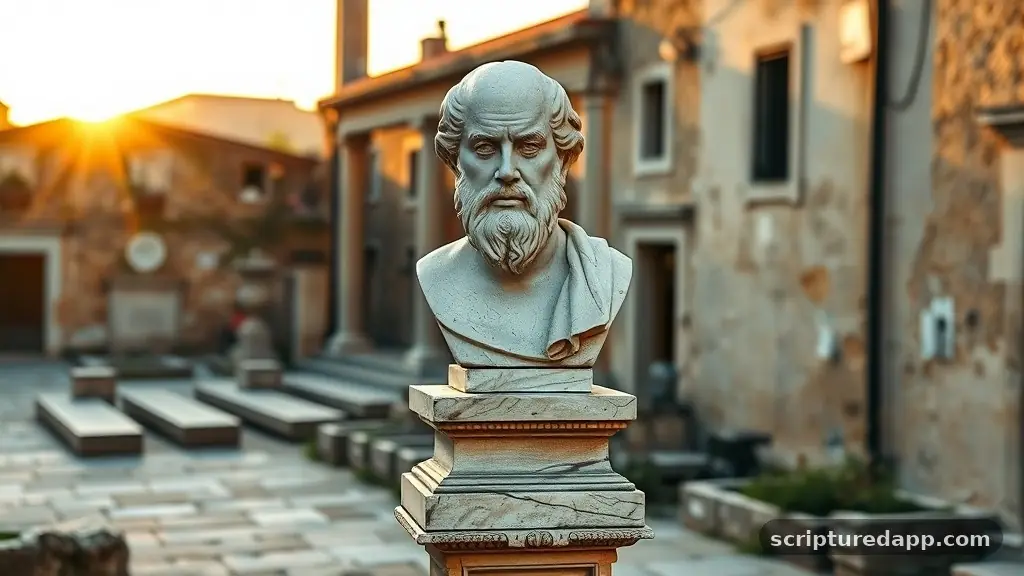
To truly grasp the greco meaning, one must look back to the transition from Ancient Greek to Latin. The roots of the word are deeply embedded in the history of the Mediterranean.
The term Graecus was the Latin name for the people of Greece, a name that eventually supplanted the native term Hellas. Historically, the Roman Empire adopted this nomenclature, which then filtered through various European languages, including Italian and Spanish, where the word remains greco to this day.
This linguistic evolution highlights how words travel across borders. As the old world transitioned into the medieval period and eventually into the Renaissance, the term became a staple in the dictionary of scholars.
It signifies a connection to the classical past, acting as a bridge that allows modern speakers to reference the specific cultural contributions of the Greeks without needing to explain the entire historical context. Understanding that the term is born from a desire to categorize and identify the influence of Hellenic culture is essential for any student of linguistics.
Greco as a Combining Form
In modern English, greco- is frequently used as a combining form, often appearing with a hyphen or as part of a compound word. This variant of the prefix is essential for describing hybrid cultural phenomena.
When we discuss a Greco-Roman influence, we are identifying a specific synthesis of two major classical powers. This usage is common in art history, where the fusion of Greek aesthetic ideals and Roman structural engineering defines a distinct era of production.
The utility of this prefix lies in its precision. Instead of using a long, cumbersome phrase to describe the intersection of two cultures, the prefix allows for a concise, efficient entry in both academic and casual discourse.
It categorizes concepts into a class that is immediately recognizable to the reader. By utilizing this form, writers can pack a significant amount of historical nuance into a single word, demonstrating the efficiency and descriptive power of language in action.
Geographic and Linguistic Variations
While the core greco meaning remains consistent, its application varies across different languages. In Italian, for instance, the word functions as both an adjective and a noun, referring to the Greek language or a person from Greece. In Spanish, the term takes on a similar role, often used to describe specific artistic styles, most famously associated with the painter El Greco, whose name literally translates to “The Greek.”
These variations demonstrate how language is a living, breathing world of interconnected meanings. When searching a free online lexicon or a reputable etymological dictionary, one can see how the term has been adapted to suit the phonetic and grammatical needs of various cultures. This diversity in usage does not dilute the meaning; rather, it enriches it, showing how a single concept can be translated and transformed while maintaining its original, identifying purpose.
Common Usage in Art and Architecture
One of the most prominent areas where the greco meaning is applied is in the field of art history. The term is frequently used to describe the “Greco-Buddhist” art of Gandhara or the “Greco-Roman” sculpture styles that dominated the Mediterranean for centuries. These classifications are not just arbitrary labels; they serve as important markers that help historians date and categorize artifacts.
The Influence of Greco-Roman Aesthetics
The Greco-Roman aesthetic is characterized by a commitment to realism, proportion, and the idealization of the human form. When we see the term applied to a piece of architecture, such as a temple or a public building, it immediately signals the presence of columns, pediments, and a specific sense of symmetry. This stylistic influence has persisted for thousands of years, appearing in the neoclassical buildings of the 18th and 19th centuries throughout Europe and the Americas.
Greco in Modern Cultural Discourse
In contemporary settings, the greco meaning often extends beyond history into the realm of identity and heritage. People who identify as Greco-descended or those who study the diaspora use the term to maintain a connection to their roots.
This highlights the emotional and social weight that such words carry. It is not just about a dictionary definition; it is about how these words function as symbols of belonging and continuity.
Furthermore, the term appears frequently in discussions regarding the Mediterranean diet, which is often described as having a greco or Mediterranean origin. In this context, the term acts as a shorthand for health, tradition, and a specific way of life that has been studied for its longevity benefits. The way we incorporate these terms into our daily usage reflects our ongoing fascination with the origins of modern habits and cultural practices.
Semantic Distinctions: Greco vs. Graeco

A common point of confusion for many writers is the difference between the greco- and graeco- prefixes. While both share the same origin, their usage can be regional or stylistic. In North American English, the “Greco-” spelling is generally preferred, whereas “Graeco-” is more common in British English and in older, more academic texts.
| Prefix Variant | Common Usage Context | Regional Preference |
|---|---|---|
| Greco- | General academic and casual writing | North American English |
| Graeco- | Formal, classical, or historical texts | British/Commonwealth English |
Understanding these minor differences is important for maintaining consistency in professional writing. Whether a published work uses one or the other often depends on the style guide being followed, such as the Chicago Manual of Style or the Oxford Style Manual. Recognizing this variant allows authors to tailor their writing to their intended audience.
Historical Figures and the Greco Label
The term is often attached to historical figures to denote their cultural or national origins. Perhaps the most famous example is the Renaissance painter Doménikos Theotokópoulos, known universally as El Greco.
His name is a testament to how the greco meaning transcends simple nationality to become a marker of identity. Even though he was born in Crete and spent his most productive years in Spain, the world identifies him by his Greek roots.
This phenomenon is common in history. Many scholars, artists, and political leaders have been categorized under this label to help future generations understand their intellectual lineage. By studying these individuals, we gain a better understanding of how the Greco-Roman tradition spread across Europe, influencing the development of the Renaissance and the subsequent Enlightenment.
Addressing Topical Gaps: Why the Term Matters
One of the primary gaps in understanding the greco meaning is the assumption that it only applies to ancient times. In reality, the term is highly relevant in modern linguistic studies, international relations, and cultural anthropology. It serves as a bridge between the past and present, allowing us to discuss complex historical relationships with brevity.
Furthermore, many people struggle with how to use the word in a sentence. It is not a standalone noun in most English contexts; it is almost always a modifier. For instance, you would say “The Greco-Turkish war,” but you would not say “He is a Greco.”
In the latter case, you would use “Greek.” Distinguishing between these parts of speech is vital for grammatical accuracy and clear communication in professional writing.
The Role of Greco in Digital Lexicons
In the digital age, the way we look up words has changed. When you visit a site like com or any online repository of definitions, you are interacting with a structured system designed to make sense of thousands of years of linguistic history. The greco see functionality in many digital dictionaries allows users to cross-reference terms, helping them understand how “Greco” links to “Hellenic,” “Mediterranean,” or “Classical” traditions.
This interconnectedness is a hallmark of modern lexicography. It allows for a more holistic understanding of the greco meaning. By exploring related entries, a reader can see the entire network of concepts that surround this single prefix, providing a much deeper level of context than a standard, static definition could ever provide.
Grammatical Structure and Sentence Integration
To use the term effectively, one must understand its role as an adjective. It is rarely used as a standalone noun in contemporary English.
Instead, it modifies other nouns to establish a relationship with Greece. Whether it is in a formal academic paper or a casual blog post, the placement of the word is crucial.
Consider these examples of proper usage:
- The architecture displays a clear Greco-Roman influence.
- Scholars continue to debate the nuances of Greco-Persian relations during the classical era.
- The menu features several dishes inspired by Greco-Cypriot culinary traditions.
- Many of his early works are categorized as Greco-inspired paintings.
By following these patterns, you ensure that your writing remains professional, grammatically sound, and easy for the reader to digest. The goal is to let the word work for you as a precise descriptive tool rather than an awkward addition to your sentences.
FAQ Section
What is the primary difference between Greco and Greek?
The term “Greek” is an adjective or noun used to describe a person, language, or object from Greece. “Greco” is a prefix or combining form used primarily to connect Greece with another culture or entity, such as in “Greco-Roman” or “Greco-Turkish.”
Is Greco a standalone word in English?
In standard English, “Greco” is not typically used as a standalone noun. It functions almost exclusively as a prefix or part of a compound word. If you are referring to a person from Greece, use the term “Greek” instead of “Greco.”
Why do some people spell it Graeco instead of Greco?
The spelling “Graeco-” is a common variant, particularly in British English and in academic or historical contexts. It is closer to the Latin root Graecus. “Greco-” is the more common spelling in North American English and in general, non-academic usage.
Does the term always refer to ancient history?
While the term is heavily associated with classical history and the Greco-Roman period, it is also used in modern contexts to describe contemporary cultural, political, and culinary fusions. It remains a flexible tool for identifying any modern entity with strong Greek roots.
Meta Description: Explore the Greco meaning, its origins as a prefix, and how it is used in modern language. Learn about its historical roots and proper usage in writing.