
The term has become a permanent fixture in the lexicon of modern internet culture, yet its roots and evolution are far more complex than a casual observer might assume. At its core, the chungus meaning functions as a malleable piece of digital nomenclature, often used to describe something—or someone—that possesses an exaggerated, rotund, or humorous physical presence. While it originated from a specific piece of cartoon history, the word has transcended its initial boundaries to represent a broader aesthetic of irony, absurdity, and late-night internet humor that resonates deeply with Gen Z and millennial digital natives.
The Origin Story: Looney Tunes and the Birth of a Legend
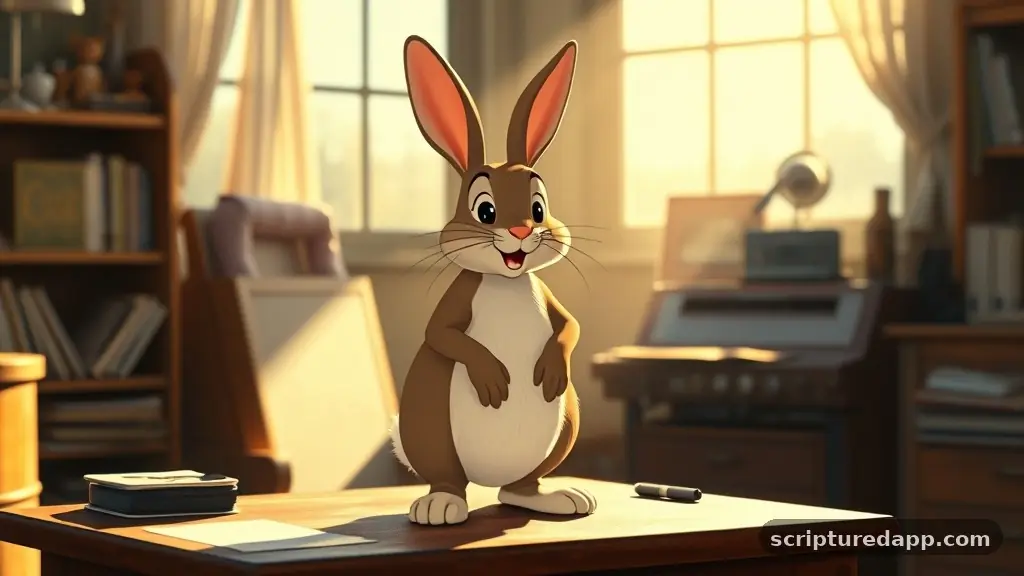
To truly grasp the chungus meaning, one must look back to the source material: the 1941 Looney Tunes short titled Wabbit Twouble. In this animated video, the iconic Bugs Bunny character performs a caricature of his antagonist, Elmer Fudd.
During a specific sequence, Bugs mimics Fudd’s gait and body shape, creating a temporary, distorted, and significantly obese version of his own frame. For decades, this frame remained a footnote in animation history, appreciated primarily by animation historians and hardcore fans of classic Warner Bros. shorts.
However, the transition from a forgotten frame to a global phenomenon occurred when the internet began to deconstruct and recontextualize vintage media. The word chungus was coined by video game journalist Jim Sterling in 2012, though he used it in a nonsensical, humorous context without a specific definition.
The term was later paired with that specific, fat version of Bugs Bunny, creating the Big Chungus image that would eventually dominate forums and social media. This fusion of a nonsensical name with an absurd visual representation is a hallmark of how internet subcultures generate meaning out of thin air, turning obscure references into shared cultural capital.
Evolution of the Meme: From Obscurity to Ubiquity
Once the image of the oversized rabbit began to circulate, the meme underwent a rapid metamorphosis. It was no longer just about the character; it became a symbol of “dank” humor, where the comedy lies in the sheer lack of context.
On platforms like Reddit, the image was frequently paired with ironic captions, often intentionally poorly formatted or intentionally unfunny, to signal a level of post-ironic detachment. This is where the chungus meaning shifted from a noun describing a character to an adjective describing a state of being or an aesthetic preference.
As the image spread across the digital landscape, it was adopted into various niches. In gaming communities, particularly those surrounding Minecraft, the term was used to describe custom skins, mods, or structures that were intentionally cumbersome or oversized. It became a way to mock the “try-hard” nature of certain gaming trends.
By the time it reached the mainstream, it had become a shorthand for any large, round, or vaguely comical object. The ability of the internet to take a niche, surreal visual and turn it into a universal signifier is perhaps the most defining characteristic of the digital era.
The Linguistic Shift: How Chungus Became Slang
In modern slang, the term has evolved far beyond its roots in animation. When people ask about the chungus meaning, they are often trying to understand how a word can signify “heaviness” or “absurdity” simultaneously. Unlike words that have static dictionary definitions, this term is highly contextual.
It can be used affectionately to describe a pet, or sarcastically to describe a piece of media that is bloated and poorly optimized. This fluidity is why it persists, even as the original image fades from the spotlight.
The usage of the word often reflects a form of linguistic play. Because it sounds inherently silly—a combination of hard consonants and a soft, rounded vowel—it naturally lends itself to humor.
When someone refers to a “big chungus,” they are rarely talking about weight in a literal sense; they are usually invoking the spirit of the meme, which is one of playful irreverence. Understanding this requires an appreciation for how language evolves in digital spaces, where the sound and “vibe” of a word often matter more than its etymological history.
The Role of Social Media in Cultural Persistence
Platforms like Twitter and TikTok played a pivotal role in keeping the term relevant long after its initial peak. On Twitter, the word chungus became a tool for reaction-based humor.
Users would post the image or use the word to comment on news cycles, politics, or even corporate branding, effectively stripping the word of its “rabbit” origins and turning it into a blank slate for social commentary. This is a common pattern in internet culture: a meme is born in a niche, explodes in popularity, and is then repurposed as a tool for broader communication.
TikTok, in particular, has seen a resurgence of the term through “Chungus life” content. This refers to a specific, often surreal style of video editing where the subject is portrayed as larger-than-life, or where the term is used to describe a lifestyle of extreme, ironic comfort.
The media consumption habits of younger generations favor these kinds of rapid-fire, high-context jokes. A video that features a “chungus” aesthetic is instantly recognizable to those in the know, creating a sense of in-group belonging that is vital to the functioning of modern online communities.
Addressing the Topical Gaps: Why Does It Matter?
A common point of confusion for those researching the chungus meaning is why it remains so popular despite being “old” in internet years. The answer lies in the nature of postmodern irony. Many people perceive the term as a relic of a “stupid chungus” era, yet it continues to appear in memes, merchandise, and even casual conversation.
This is because the term has become a foundational element of internet vernacular. To understand it is to understand the history of how the web generates, consumes, and discards humor.
Another gap often missed is the transition of the term into non-English speaking markets. The chungus meaning has transcended language barriers, appearing in Spanish-speaking meme communities and beyond.
The physical nature of the joke—a round, ridiculous-looking creature—is universally understood, which has allowed it to maintain global relevance. This universality is a testament to the power of visual language in an era where text-based communication is increasingly supplemented by imagery and shorthand.
The Anatomy of the Meme: A Comparative Look
To understand the nuance of how the term is used, it is helpful to look at how it compares to other internet phenomena. The following table highlights the differences between the “Chungus” phenomenon and other classic meme archetypes that have dominated the digital space over the last decade.
| Meme Type | Primary Characteristic | Longevity |
|---|---|---|
| Chungus | Absurdist/Surreal | High (Cultural fixture) |
| Reaction Face | Emotional Expression | Medium (Subject to trend cycles) |
| Advice Animal | Text-based template | Low (Dated format) |
| Viral Challenge | Action-oriented | Very Low (Burnout risk) |
As demonstrated, the chungus big phenomenon occupies a unique space. It is not tied to a specific action or a specific text format, which allows it to adapt to new contexts. This adaptability is the primary reason why it has survived while other, more rigid meme formats have vanished into obscurity.
Understanding the “Chungus Life” Phenomenon
The phrase “Chungus life” is a specific sub-genre of the term’s usage. It generally refers to an ironic embrace of laziness, comfort, or a lack of productivity.
In the context of the internet, where the pressure to be constantly “on” and productive is high, the “chungus life” acts as a form of rebellion. It is a way to say, “I am not participating in the grind; I am embracing the absurd.”
This lifestyle is often depicted through low-effort, high-irony content. Whether it is a video of someone lounging in an oversized hoodie or a post about eating comfort food, the label is used to frame these mundane actions as part of a larger, humorous identity. It is a form of self-deprecation that is deeply rooted in the Looney Tunes spirit of the original character—a chaotic, unbothered, and ultimately harmless figure who exists outside the rules of the world.
The Intersection of Gaming and Internet Culture
The relationship between the word chungus and the gaming industry is profound. Because the term originated in a gaming context (via Jim Sterling), it has always been linked to the way gamers view their hobby.
When a game is released that is overly long, bloated with unnecessary features, or simply “fat” in its file size, it is frequently labeled as a “chungus” game. This is a critique of modern game design, where the pursuit of “content” often leads to a dilution of quality.
This usage has even influenced developers. Some indie game creators have intentionally included “chungus” references in their work as a nod to the community.
This circular relationship—where the internet mocks a concept, the concept becomes a meme, and creators then lean into the meme—is a standard cycle in modern digital media. It shows that the chungus meaning is not just a passive observation but an active force that influences the culture it came from.
The Role of Visual Media in Meme Longevity
Visual media is the lifeblood of the internet, and the reason this specific meme persists is the strength of the original image. The visual of the character is inherently funny; it plays with proportion and scale in a way that is immediately satisfying to the human brain. We are hardwired to notice things that are “off” or distorted, and the image of the oversized rabbit is a perfect example of this.
Even when the word chungus is used in a text-only context, the image is almost always present in the reader’s mind. This psychological “anchoring” is why the term has such staying power.
It is a visual shorthand for a specific type of humor—one that is chaotic, nostalgic, and slightly surreal. For further reading on the history of animation and its intersection with modern digital culture, the Library of Congress digital collections provide an excellent look at how classic cartoons have been archived and preserved over the decades.
The Future of the Term: Will It Fade?
Many wonder if the chungus meaning will eventually lose its potency. In the world of internet trends, nothing lasts forever.
However, this term has reached a level of “cultural saturation” where it is likely to remain in the lexicon as a nostalgic reference. It is already being used by younger generations as a way to reference the “early” internet, much like how previous generations use terms like “groovy” or “radical.”
As long as people continue to find humor in the absurd and the oversized, the term will find a place in the conversation. It has successfully moved from a specific cartoon frame to a broad descriptor of irony. While the intensity of its usage may fluctuate, the concept of the “chungus” is now a permanent part of the digital vocabulary, serving as a reminder of how the internet can transform the most unexpected things into symbols of a generation.
Frequently Asked Questions
Is Big Chungus a real character?
The character is an edited, distorted version of Bugs Bunny from a 1941 short. While the rabbit himself is real, the “Big Chungus” persona is an internet-created entity that does not exist in the official Looney Tunes canon as a standalone character.
What does it mean when someone calls something a chungus?
In modern slang, calling something a “chungus” usually implies that it is large, round, or comically bloated. It is often used ironically to describe anything that is perceived as excessive, clunky, or just inherently silly, regardless of its actual physical size.
Why is the term associated with Gen Z?
The term gained massive popularity on platforms like Reddit and TikTok, which are heavily populated by Gen Z. The generation’s penchant for post-ironic, surreal, and decontextualized humor made them the perfect demographic to turn a random, obscure cartoon frame into a viral sensation.
Is the term offensive?
Generally, no. While it is used to describe things that are “fat” or “obese,” the usage in memes is almost exclusively focused on the absurdity of the character’s proportions rather than a targeted insult toward individuals. It is viewed as a form of lighthearted, nonsensical internet humor.
Meta Description: Discover the true chungus meaning. Learn about its Looney Tunes origins, its evolution into a viral meme, and how it became a staple of internet slang.